
A FIELD OF WALLS
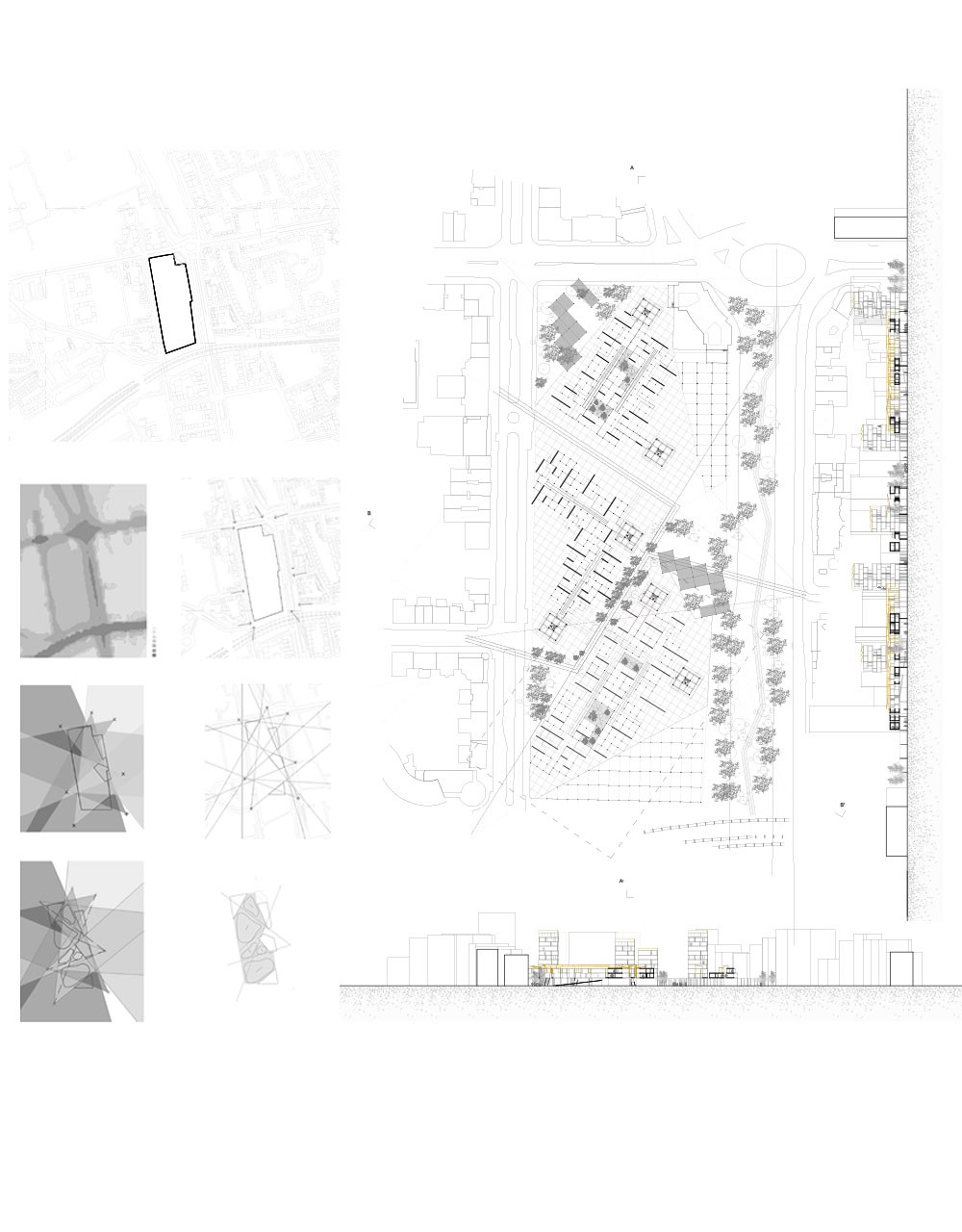
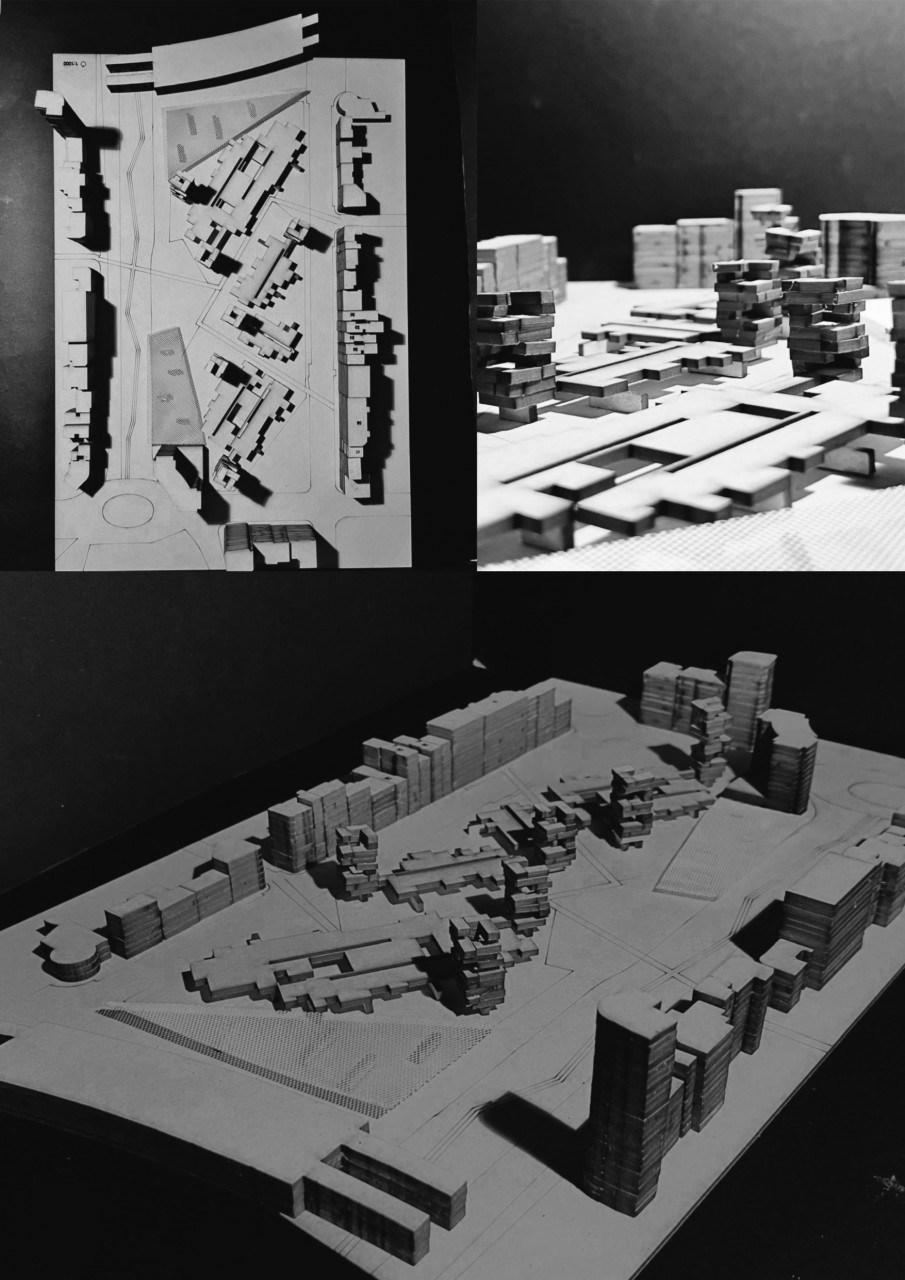
Field of Walls is located in northern Lisbon, adjacent to Avenida da República, on a site defined by the presence of railway infrastructure, heavy traffic, and contrasting residential and academic contexts. Positioned between these conditions, the project operates as a transitional territory where mobility, housing, and public space intersect.
The proposal emerges from an analysis of pedestrian routes and visual axes generated from the site's six access points. Combined with acoustic and circulation studies, this process identifies areas exposed to noise and movement alongside quieter zones better suited for residential use.
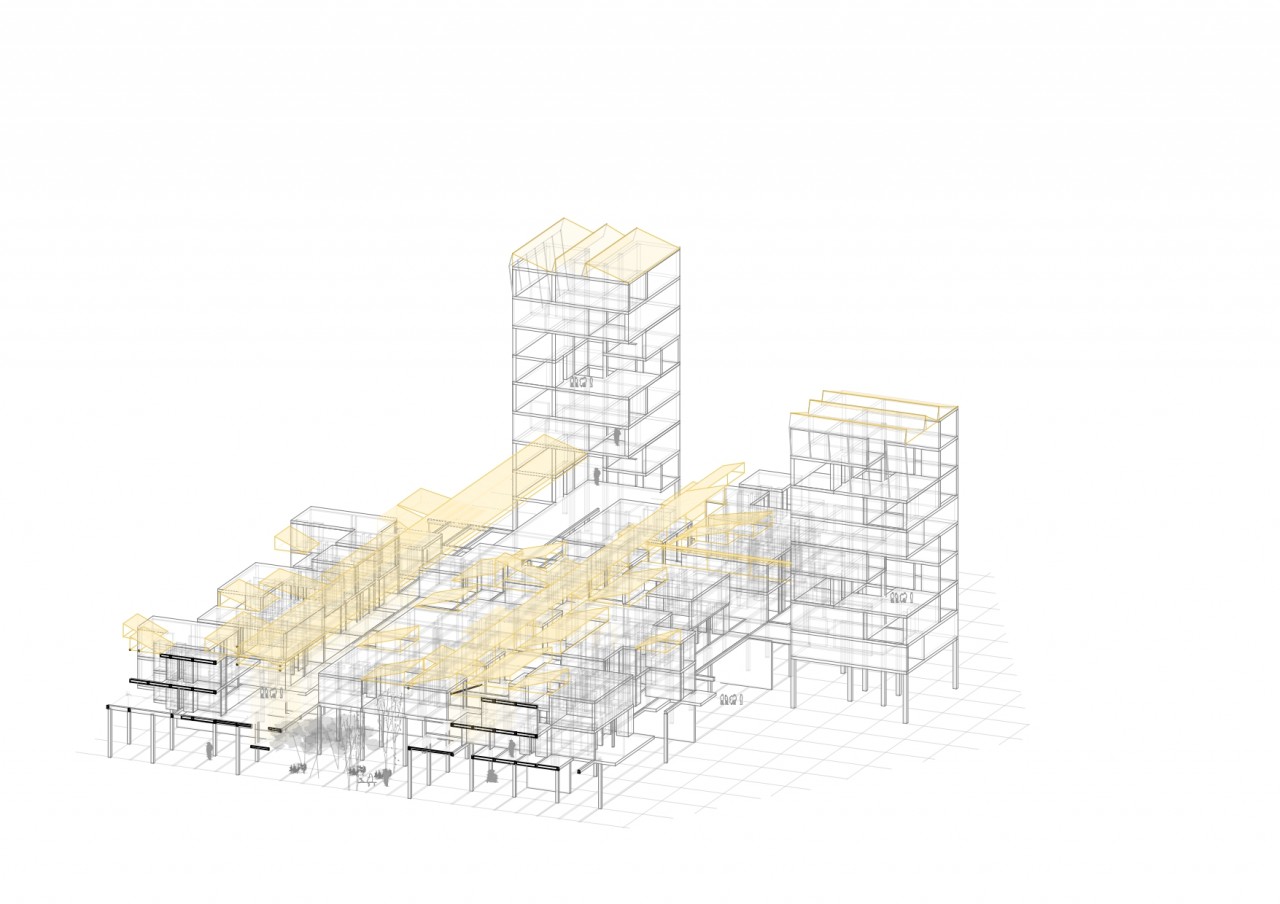
The project is organised through three complementary systems: public programs associated with commercial and hospitality uses, a network of green spaces and public plazas that act as acoustic buffers, and a series of residential clusters.
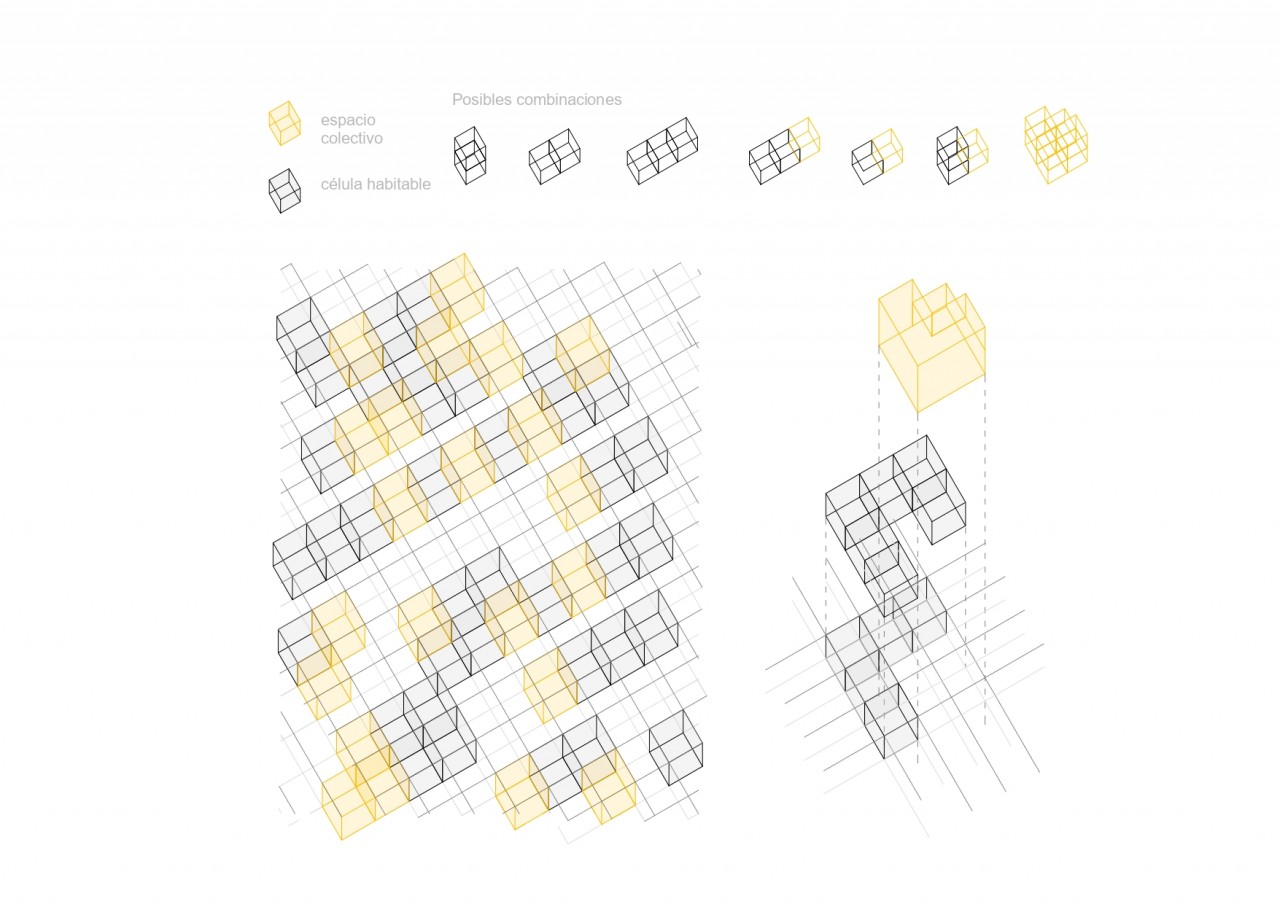
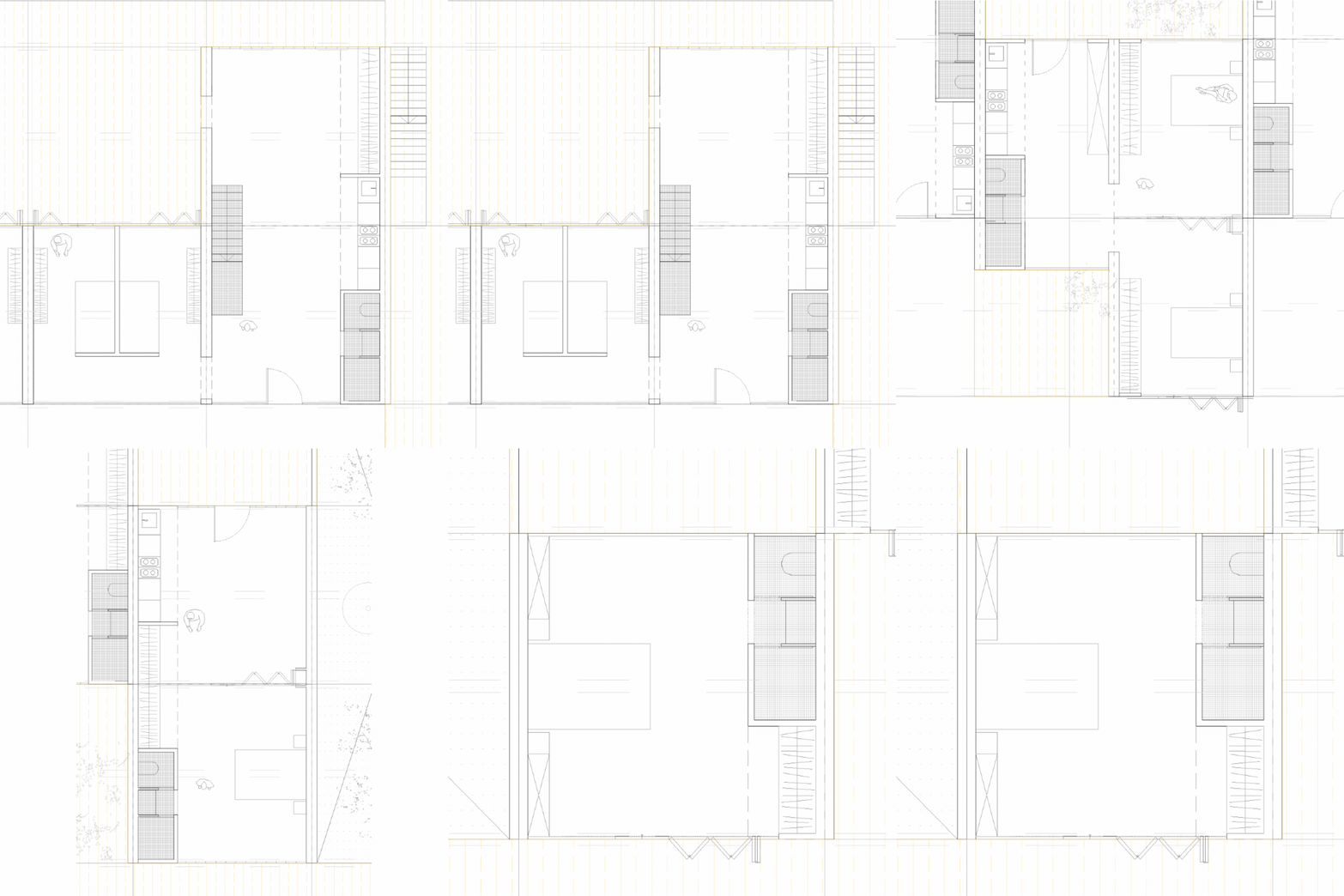
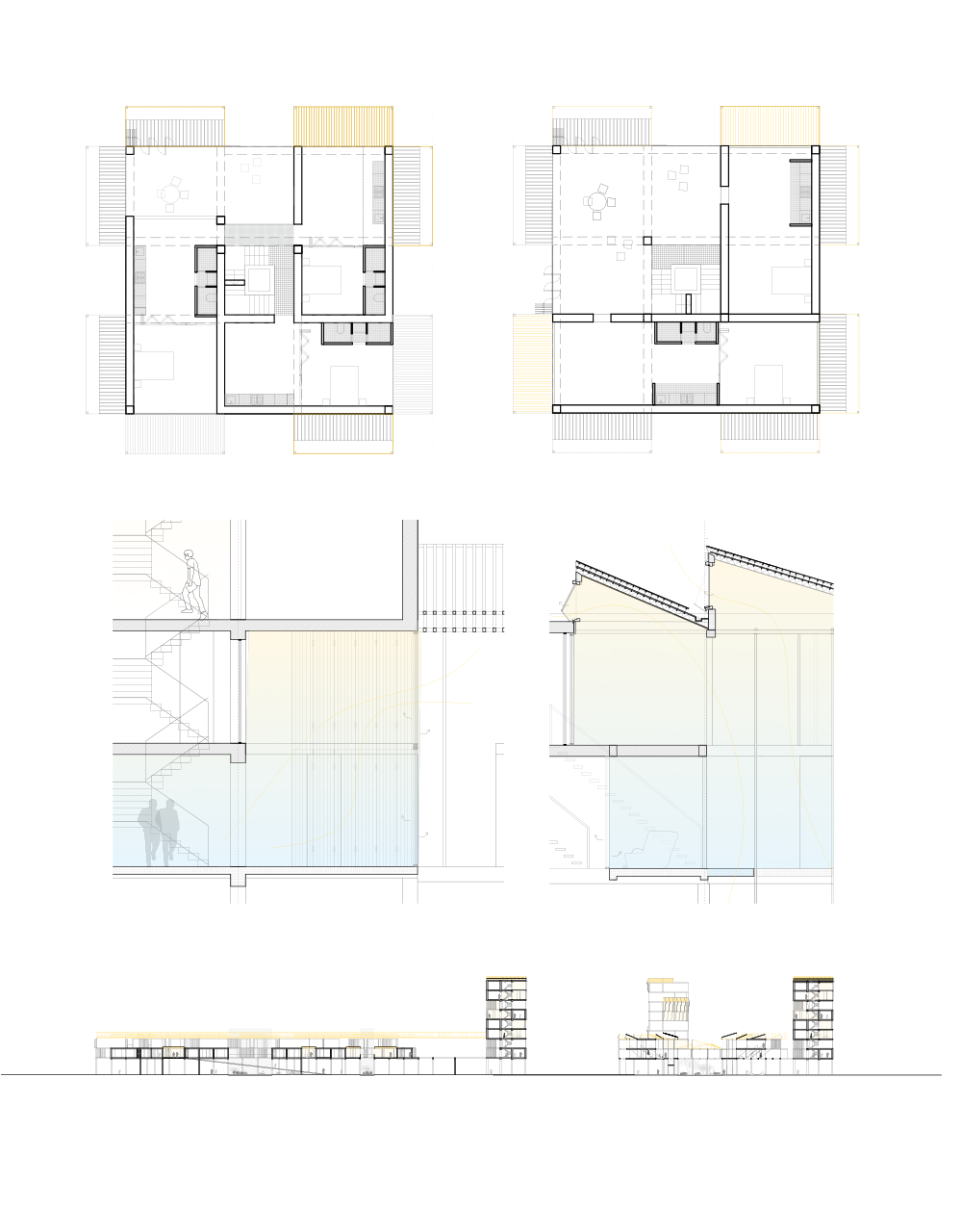
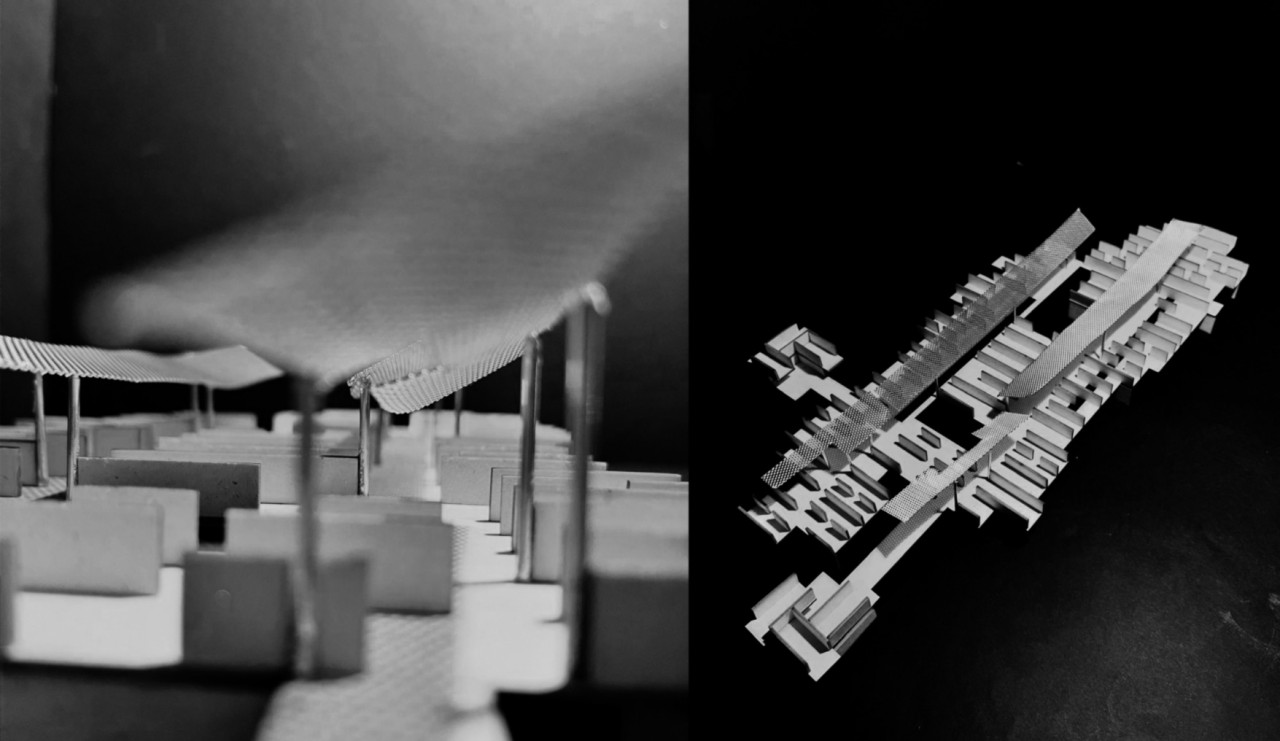
Inspired by Lacaton & Vassal’s Cité Manifeste, the residential system combines low-rise horizontal growth with vertical elements that respond to the surrounding urban scale. A system of load-bearing walls structures the project, integrating infrastructure, storage, kitchens, and bathrooms within its thickness. Following Louis Kahn’s distinction between served and servant spaces, this strategy frees the remaining space for flexible occupation.
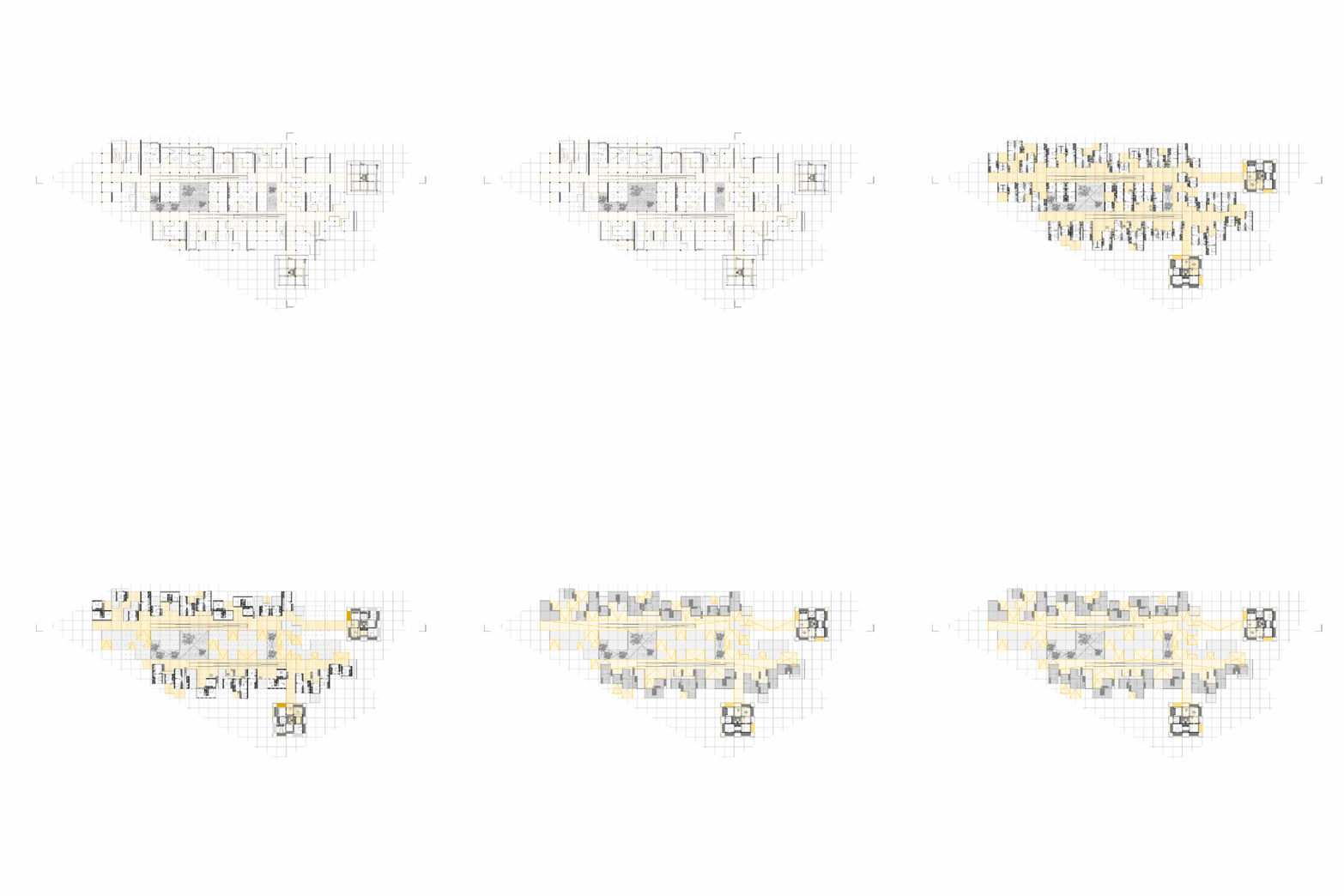
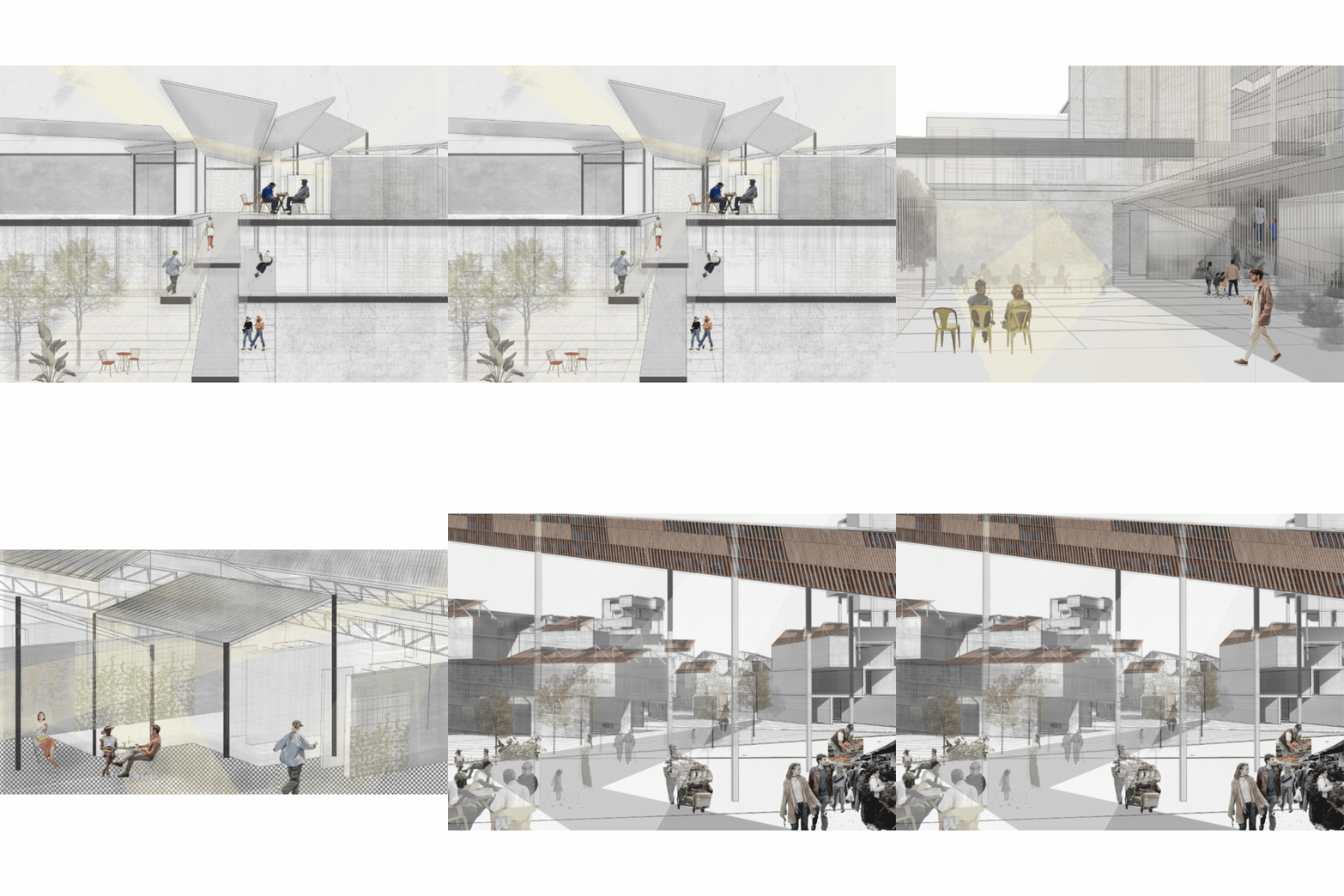
The ground floor accommodates collective functions, including workspaces, shared kitchens, recreational facilities, and communal areas that extend domestic life beyond the dwelling unit.
Residential levels are organised through the interaction of two systems: a more private structure containing the housing units and a lighter circulation framework that connects both the horizontal and vertical components of the project. This system is enclosed by a greenhouse-like envelope incorporating timber solar shading and natural ventilation strategies adapted to Lisbon’s climate.
Through a variety of housing typologies, from compact student units to larger duplex apartments, the project establishes a framework that reconnects city, community, and dwelling.
The proposal emerges from an analysis of pedestrian routes and visual axes generated from the site's six access points. Combined with acoustic and circulation studies, this process identifies areas exposed to noise and movement alongside quieter zones better suited for residential use.
The project is organised through three complementary systems: public programs associated with commercial and hospitality uses, a network of green spaces and public plazas that act as acoustic buffers, and a series of residential clusters.
Inspired by Lacaton & Vassal’s Cité Manifeste, the residential system combines low-rise horizontal growth with vertical elements that respond to the surrounding urban scale. A system of load-bearing walls structures the project, integrating infrastructure, storage, kitchens, and bathrooms within its thickness. Following Louis Kahn’s distinction between served and servant spaces, this strategy frees the remaining space for flexible occupation.
The ground floor accommodates collective functions, including workspaces, shared kitchens, recreational facilities, and communal areas that extend domestic life beyond the dwelling unit.
Residential levels are organised through the interaction of two systems: a more private structure containing the housing units and a lighter circulation framework that connects both the horizontal and vertical components of the project. This system is enclosed by a greenhouse-like envelope incorporating timber solar shading and natural ventilation strategies adapted to Lisbon’s climate.
Through a variety of housing typologies, from compact student units to larger duplex apartments, the project establishes a framework that reconnects city, community, and dwelling.
- 00 - Description
- 01 - floor generation
- 02 - diagram
- 03 - 1:500
- 04 - 1:100
- 05 - cluster
- 06 - collages
- 07 - details
- 08 - model 1:1000
- 09 - model 1:300