
Agri[Cultural]Lab
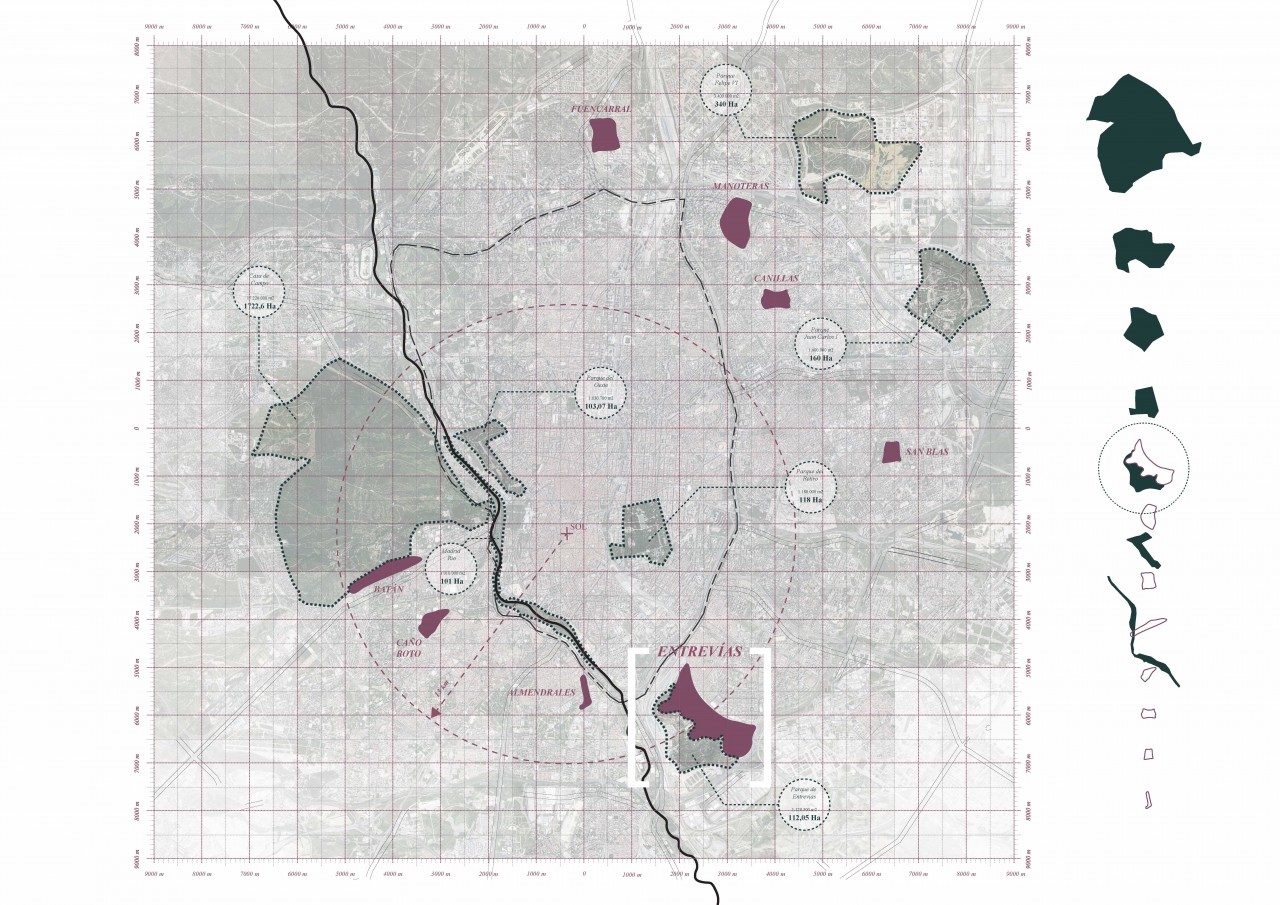
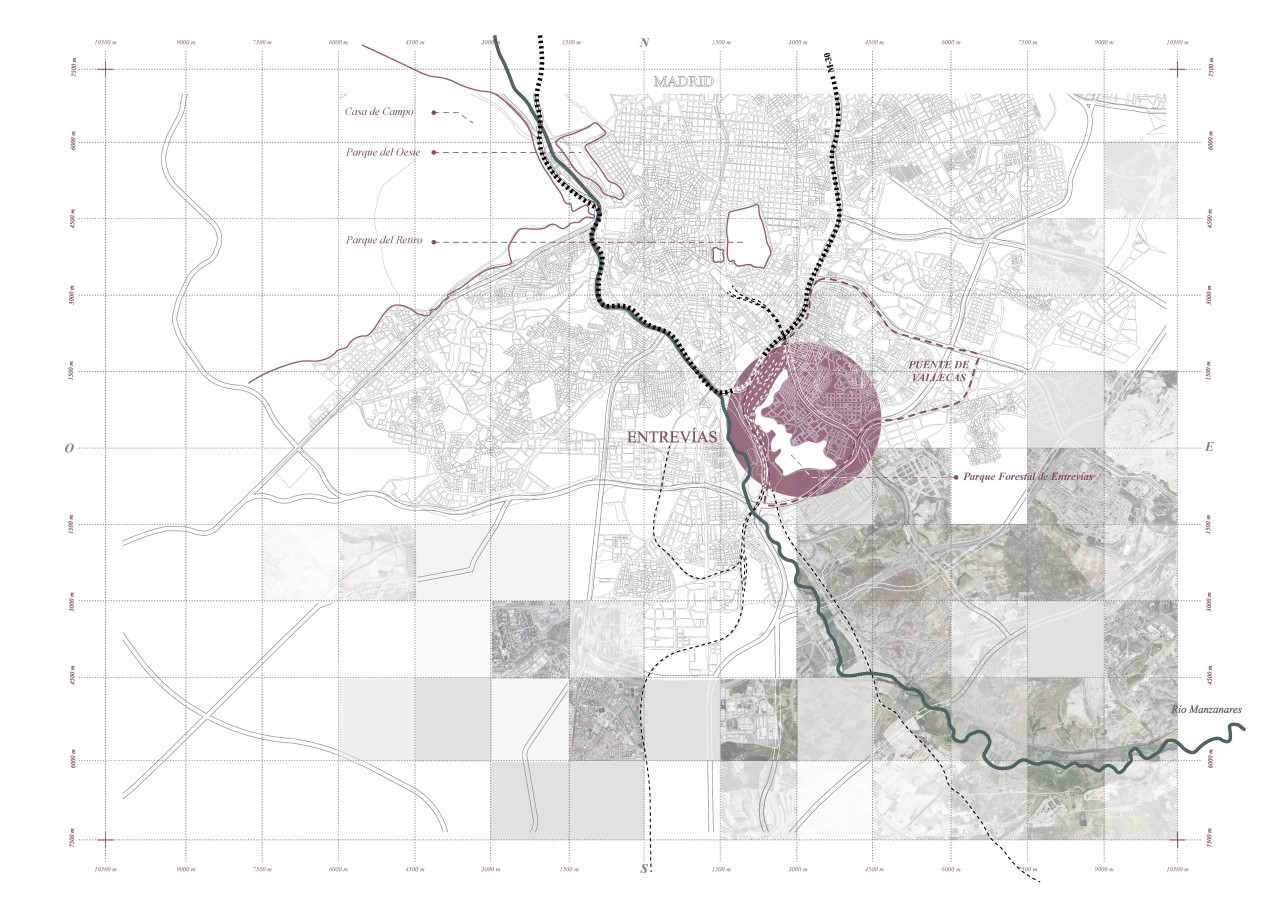
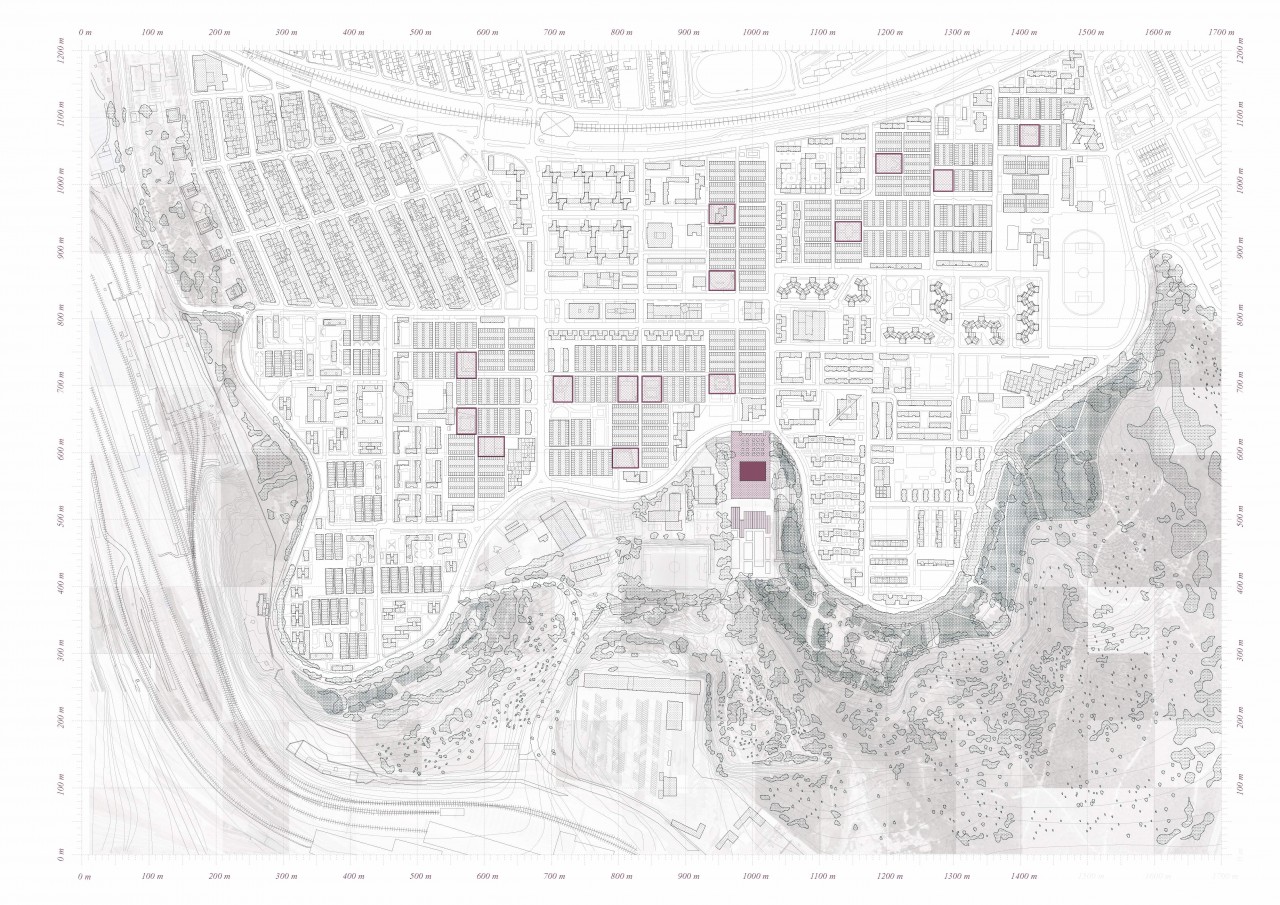
The project is located in Entrevías, on the outskirts of Madrid. It is a place with little economic and social activity, which aggravates its isolation and abandonment. The project is inserted in the urban fabric and extends towards a natural environment, taking advantage of the existing empty spaces.
It seeks to promote agricultural research in cities, creating an attraction spot within the Community of Madrid, which not only activates the neighborhood but generates new income.
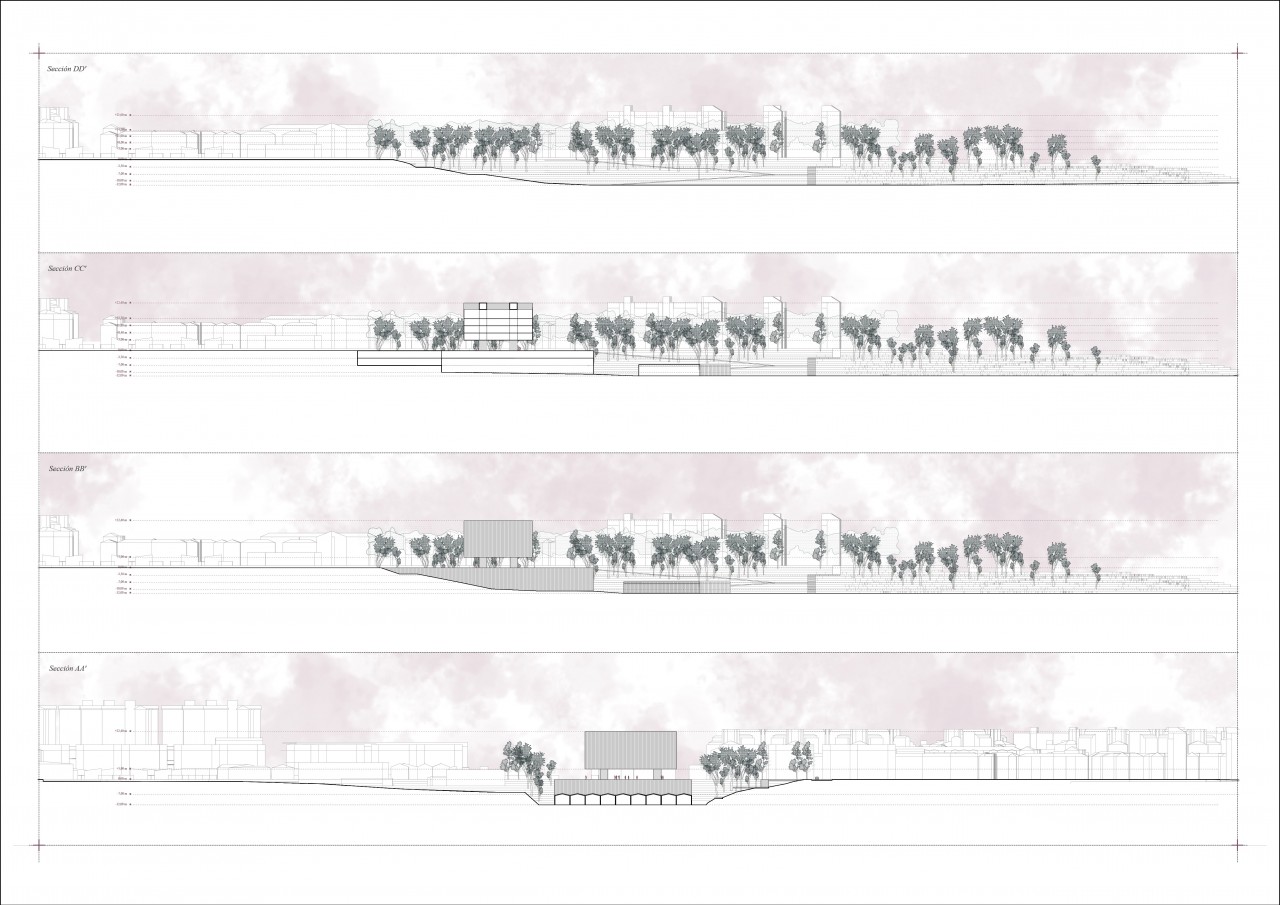
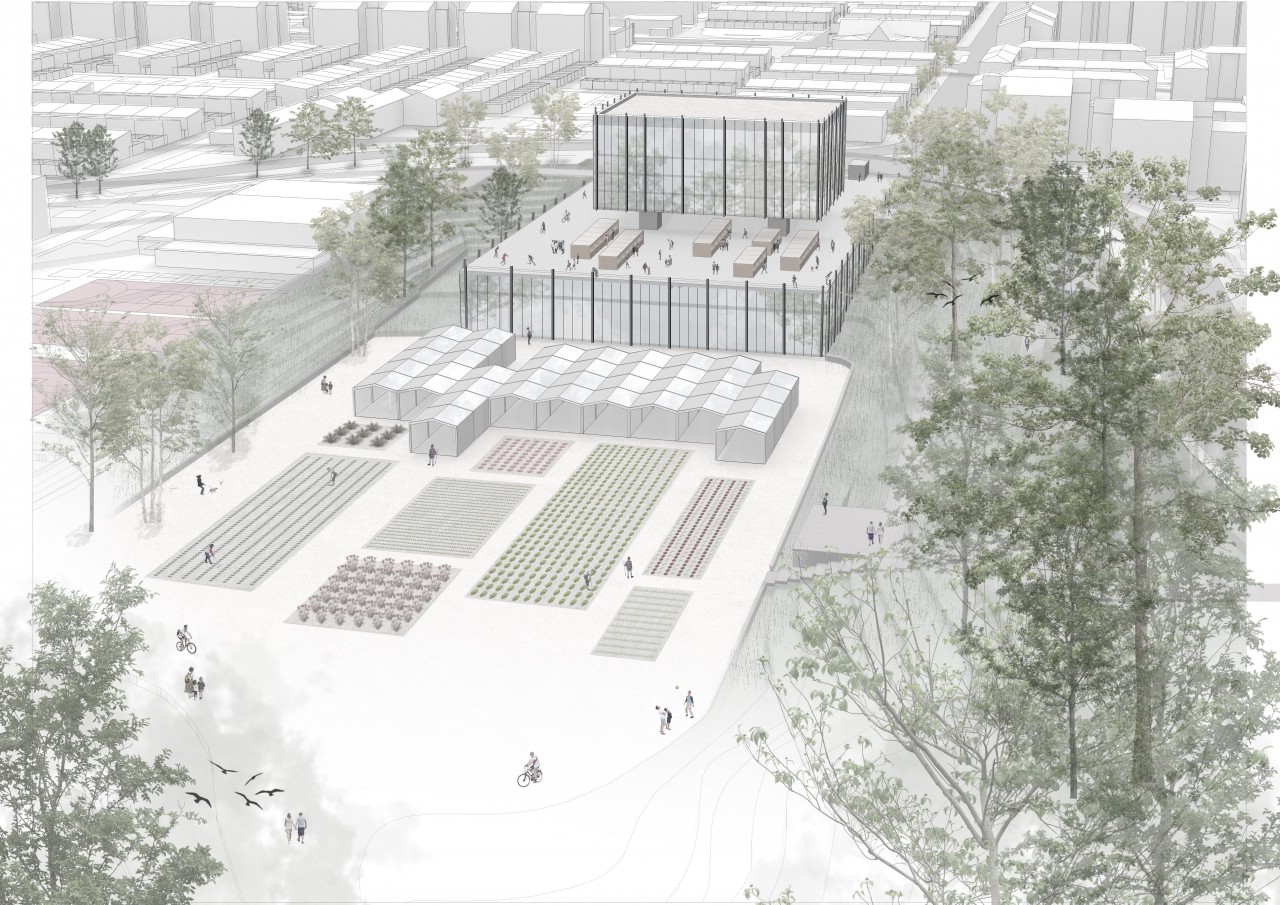
On the one hand, the empty spaces of the urban grid are used to create a system of experimental gardens. There it is analyzed the effect that agriculture can generate in society. On the other hand, a public research building is carried out, promoting necessary, sustainable knowledge related to the agriculture of the future, responding to the current problems of population growth and climate change. It has different spaces for agricultural research and experimentation.
As architects, we must attend to the needs of society, adapting to change and evolution.
This project starts from a neighborhood anchored to the past, Entrevías, and tries to reactivate it looking towards the future. A future in which the city acquires a fundamental role and takes density as a value of sustainability. It will concentrate activities that once were limited to the countryside or the periphery, such as agriculture.
Therefore, architecture must adapt to this new city model, relying on technology to make it more sustainable, thus improving the quality of life of its inhabitants.
It seeks to promote agricultural research in cities, creating an attraction spot within the Community of Madrid, which not only activates the neighborhood but generates new income.
On the one hand, the empty spaces of the urban grid are used to create a system of experimental gardens. There it is analyzed the effect that agriculture can generate in society. On the other hand, a public research building is carried out, promoting necessary, sustainable knowledge related to the agriculture of the future, responding to the current problems of population growth and climate change. It has different spaces for agricultural research and experimentation.
As architects, we must attend to the needs of society, adapting to change and evolution.
This project starts from a neighborhood anchored to the past, Entrevías, and tries to reactivate it looking towards the future. A future in which the city acquires a fundamental role and takes density as a value of sustainability. It will concentrate activities that once were limited to the countryside or the periphery, such as agriculture.
Therefore, architecture must adapt to this new city model, relying on technology to make it more sustainable, thus improving the quality of life of its inhabitants.


- 00 - Description
- 01 - Situation
- 02 - Situation
- 03 - Situation_Entrevías
- 04 - Axonometric
- 05 - Experimental gardens
- 06 - Sections
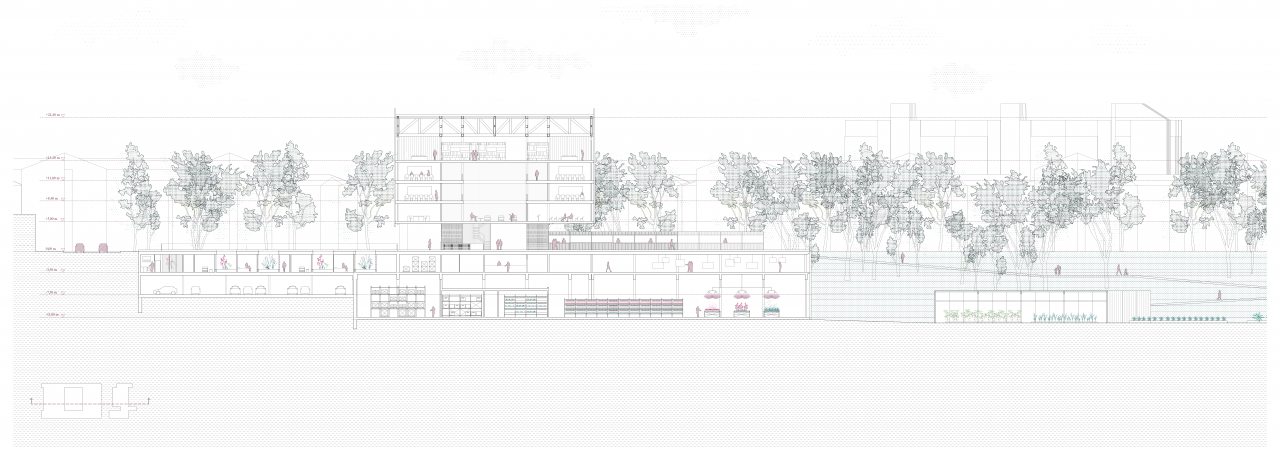
- 07 - Longitudinal section
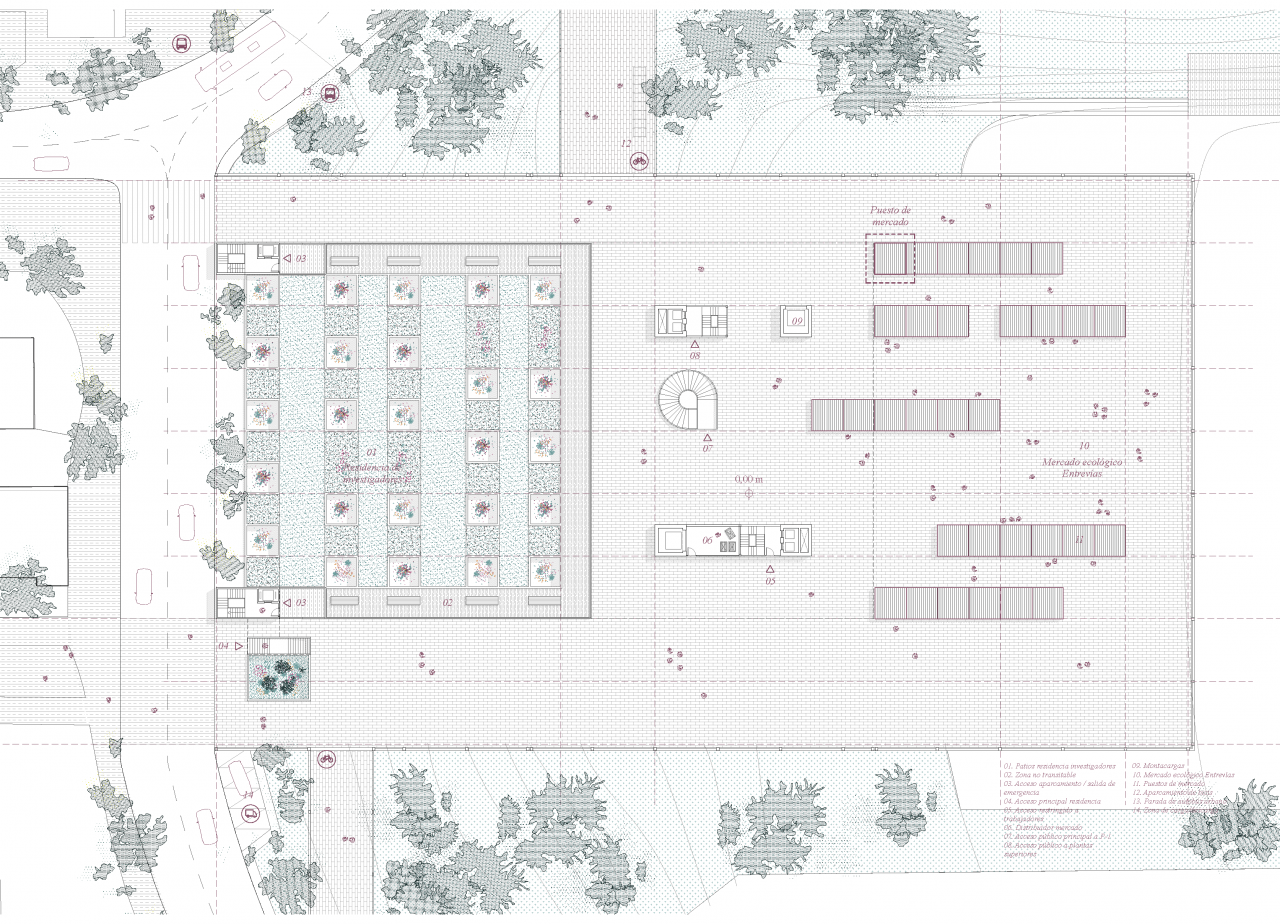
- 08 - Ground floor
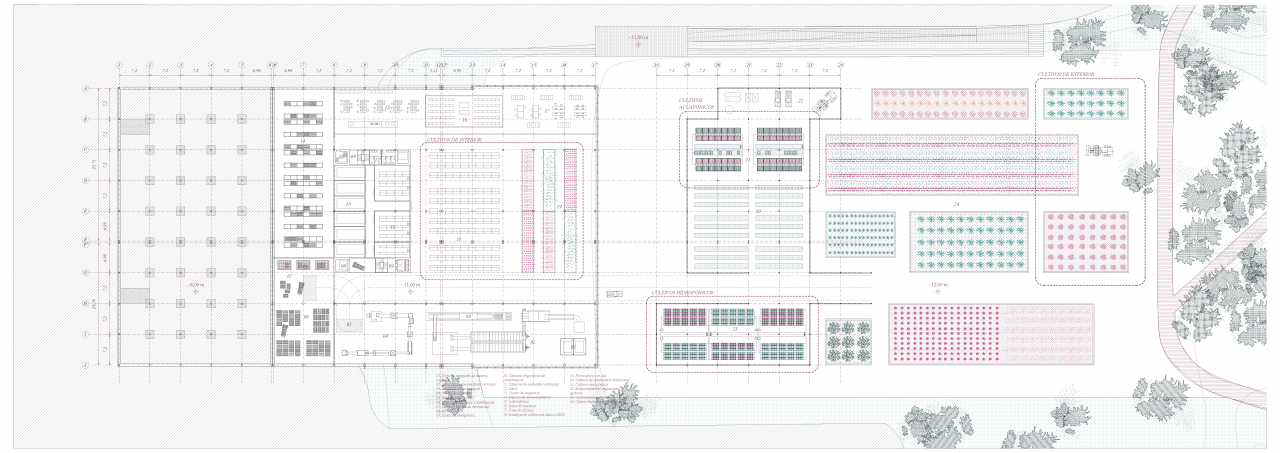
- 09 - Floor -3
- 10 - Agrarian research Bd