
ALEPPO: RELATIONS & PATHS
Due to the war in which Syria is involved, most of its cities have been devastated,and Aleppo is not an exception.
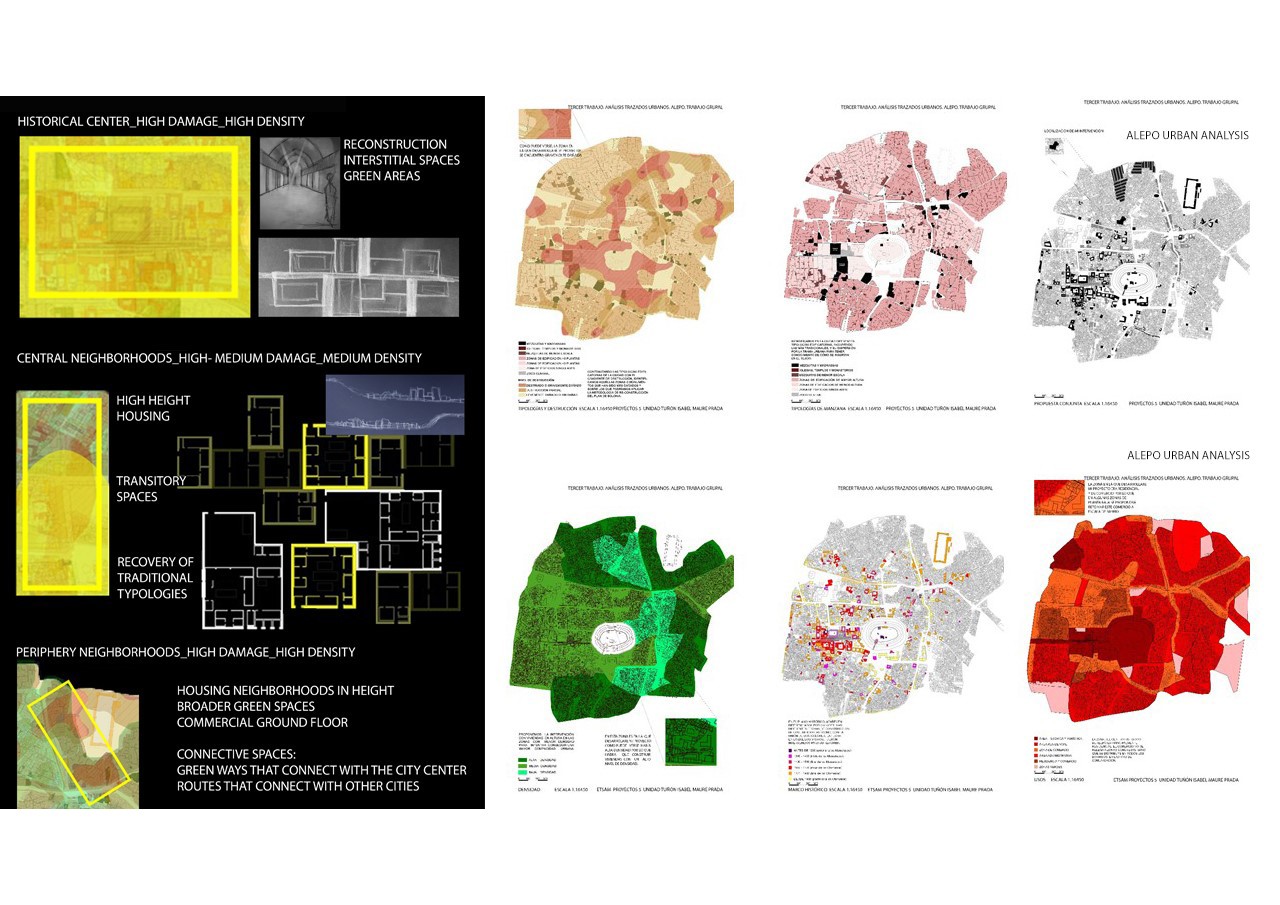
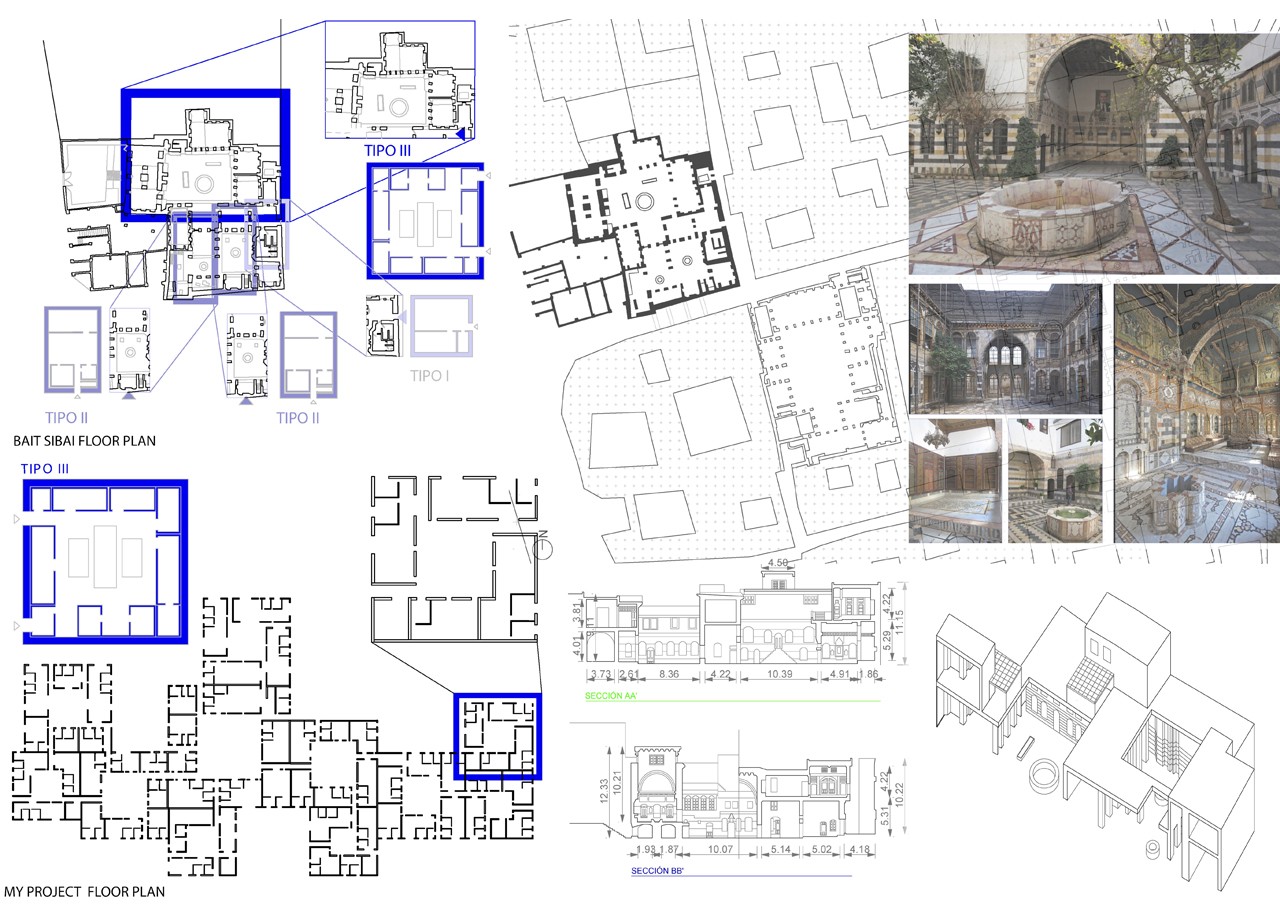
During this course I have been firstly analysing the context in which we were moving, studying their traditional architecture, their urbanistic pattern and facts as population density, the heights of dwellings, destruction levels...
To be able to analyse Aleppo, I imported the methodology of the Bolonia´s plan, in which a classification by damage, density, history, typologies… is made. If I intersect the resulting type areas with two visual radios whose centres are the citadel and the souks, 3 possible areas of intervention are located. The purpose of these radios is establishing an area in which no high towers could be built because it would probably damage the urban landscape.
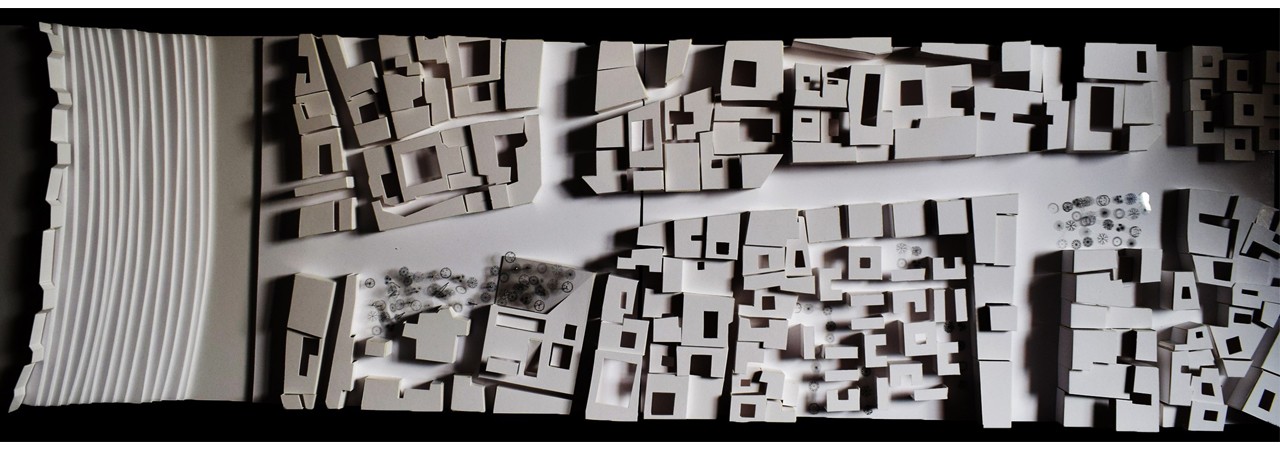
When it comes to focusing on the project level intervention I did a model of this zone and I focused on an especially destroyed area. As it was one of these transition points I thought that at the street level the height of the building should be proportionate to the human scale so I projected a building with different heights, increasing the height the further away they were from the street.
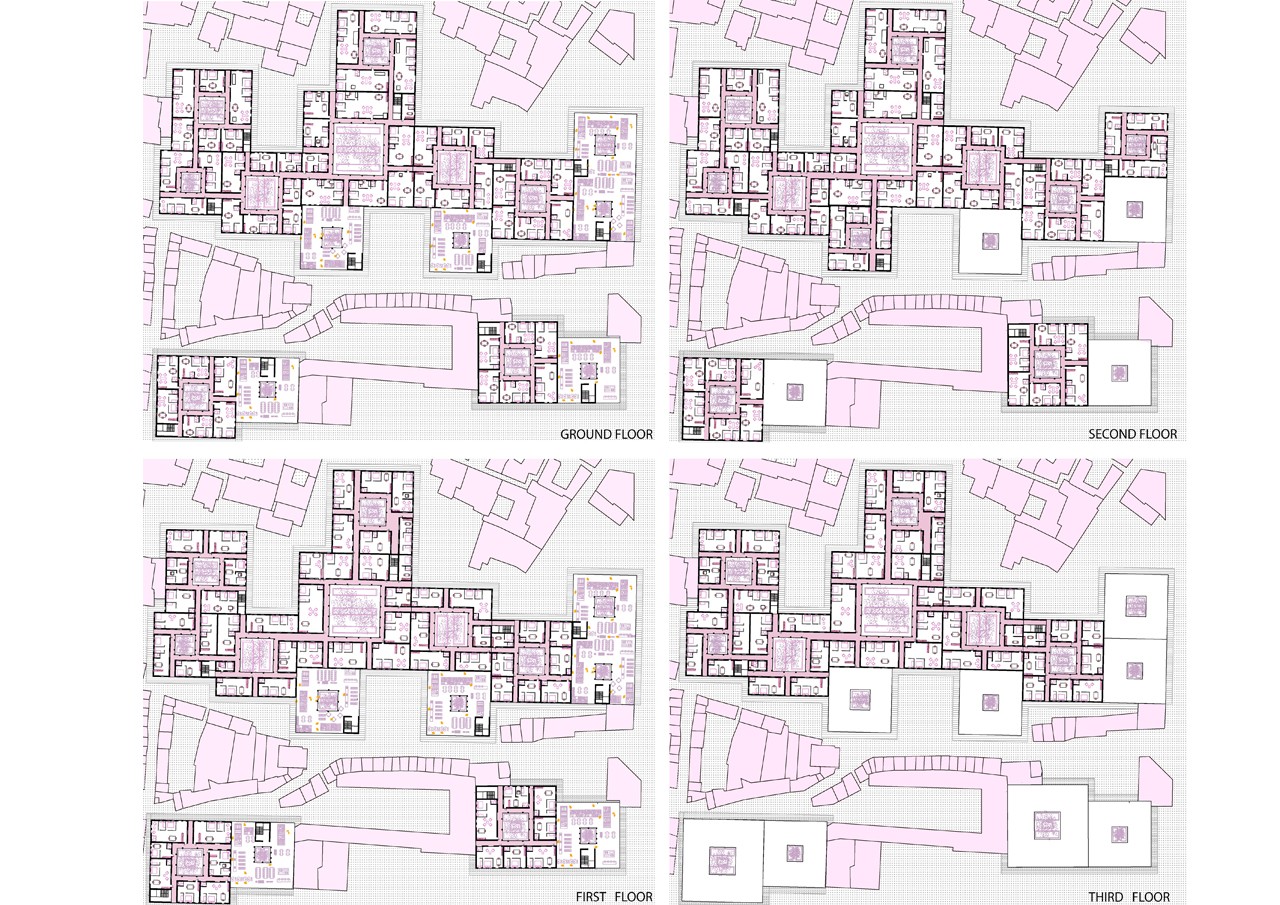
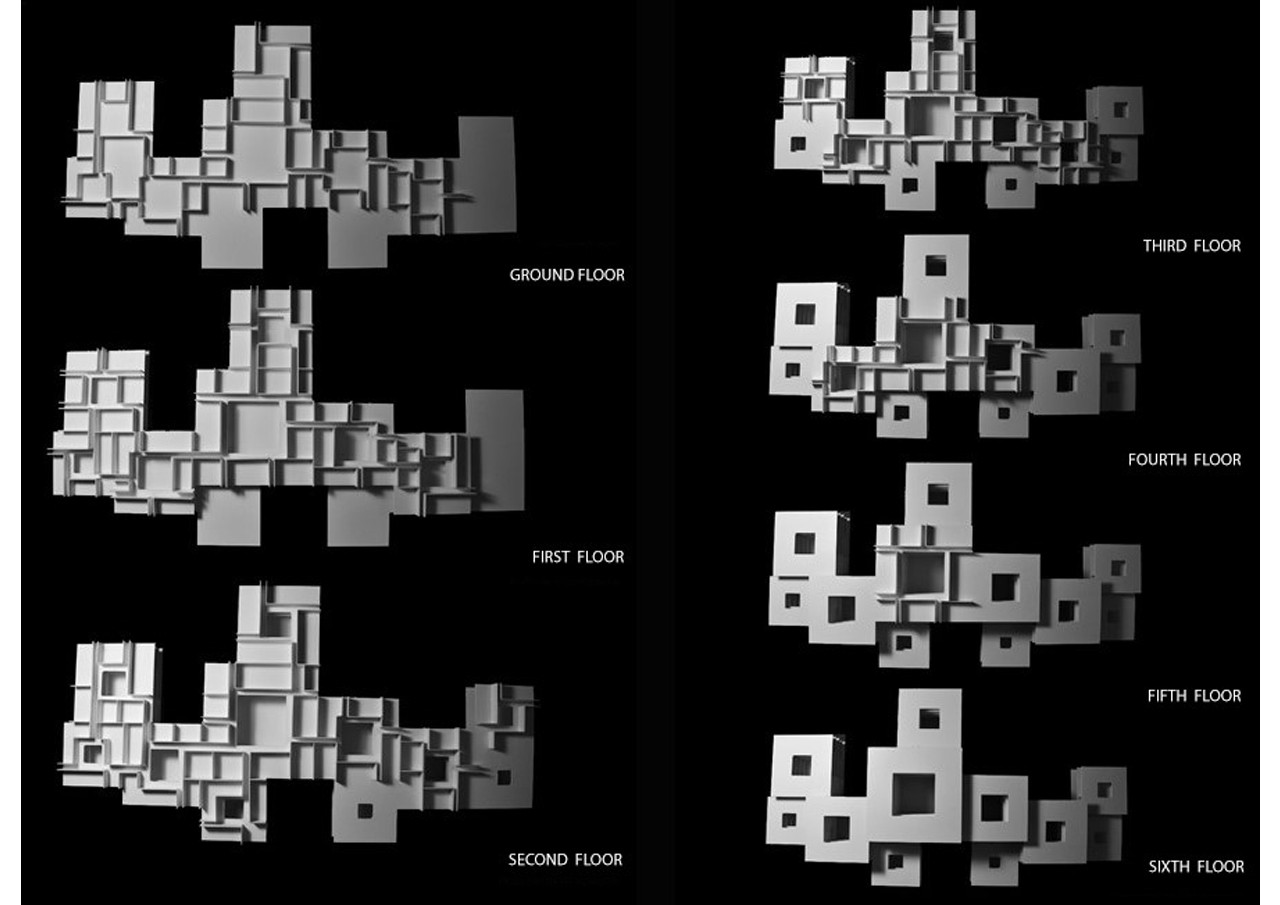
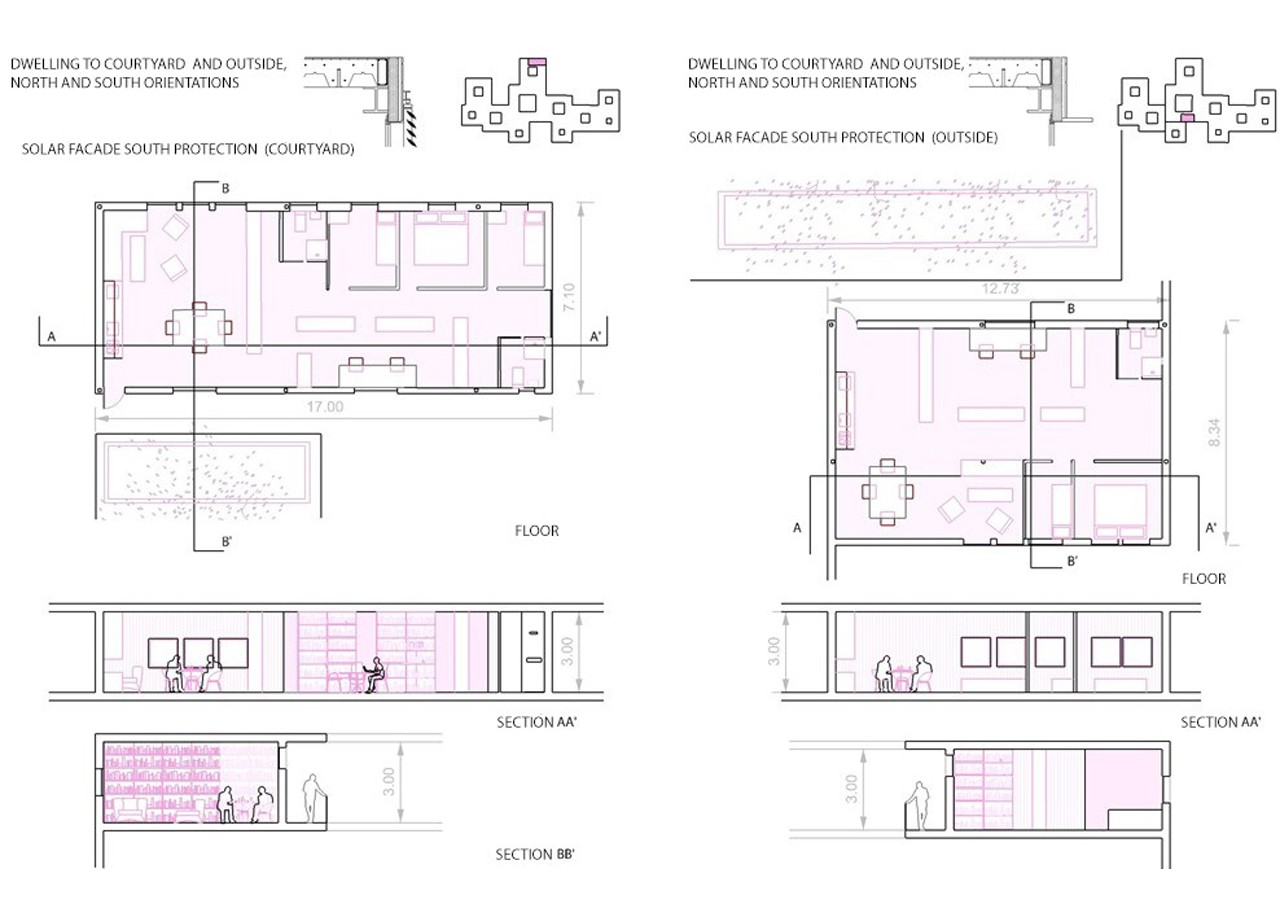
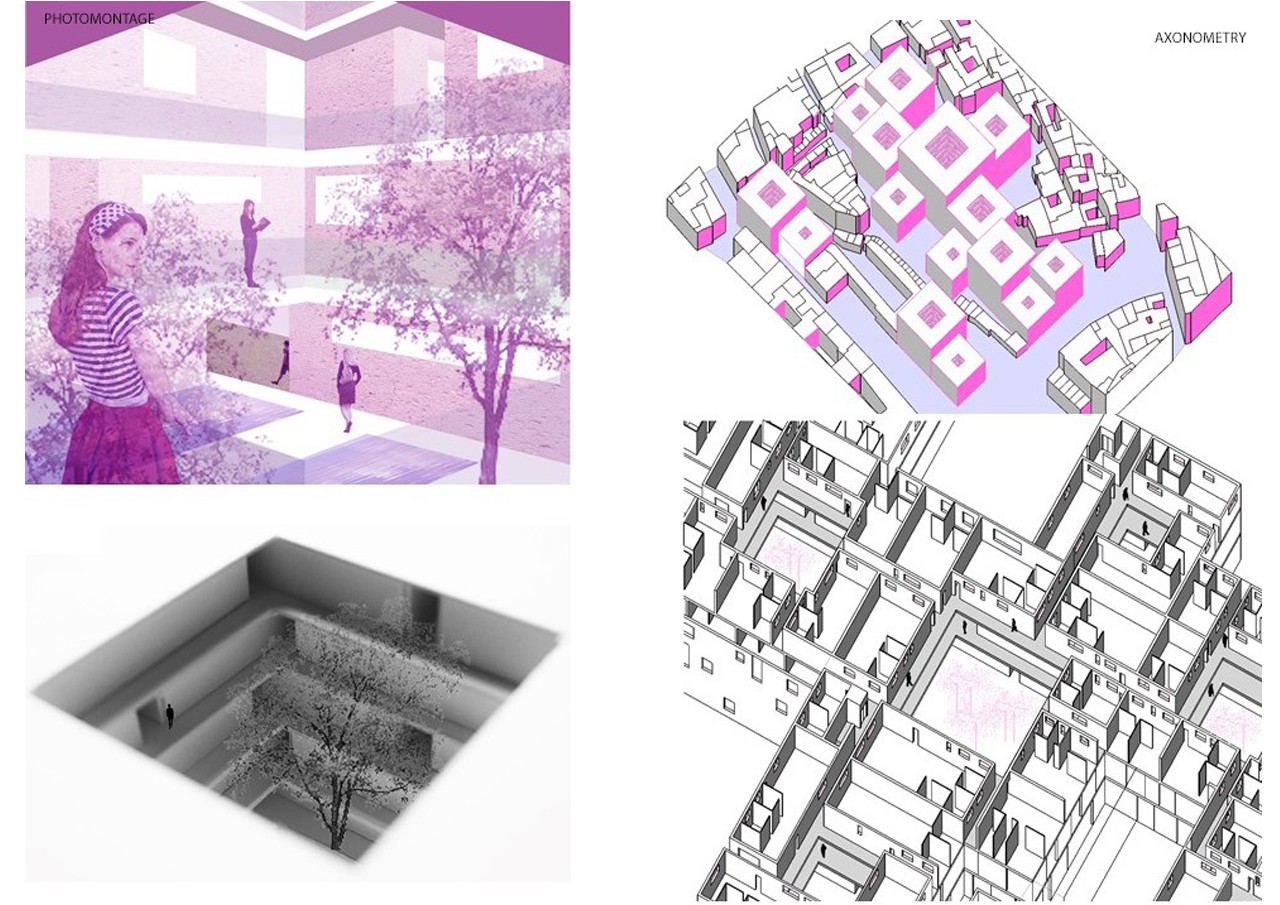
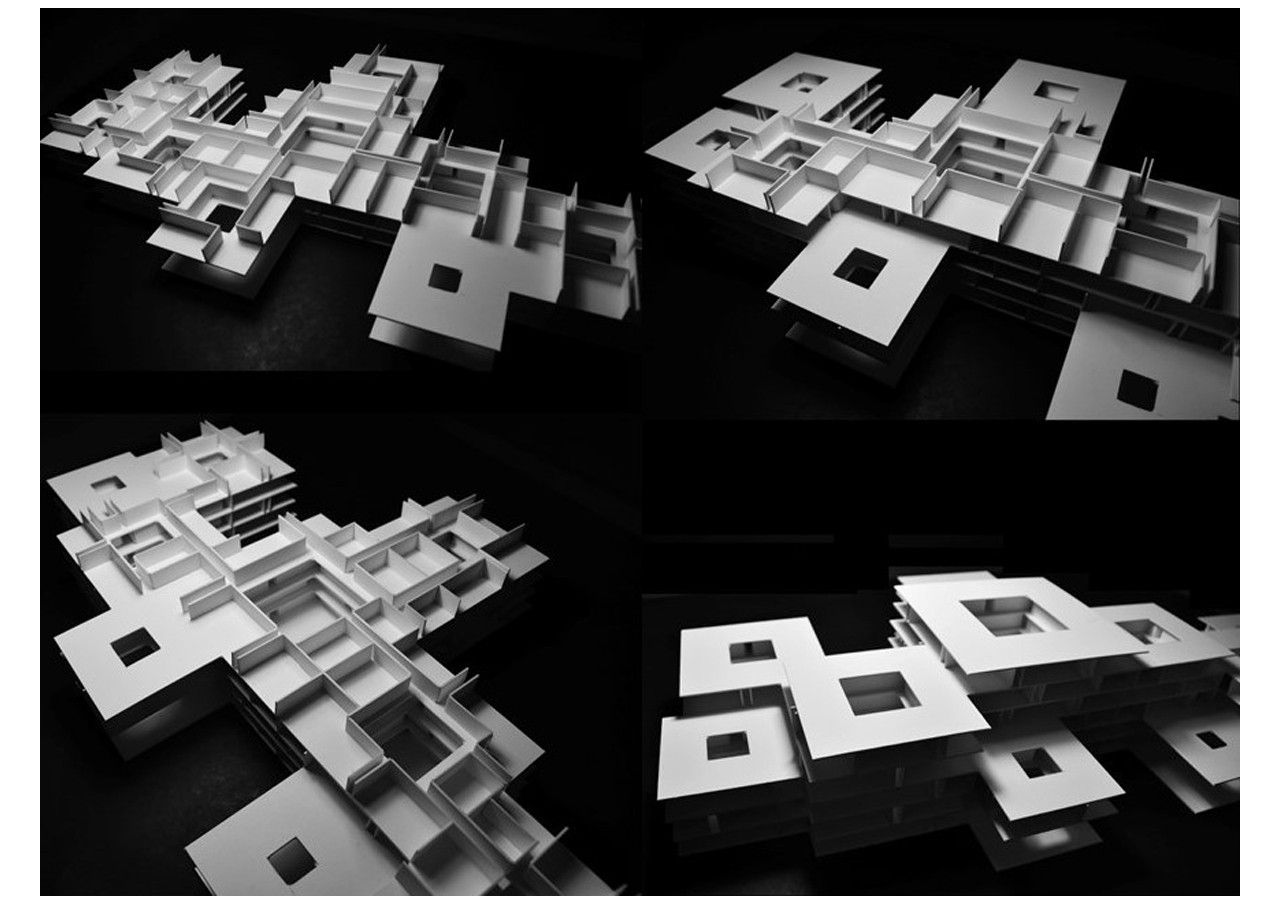
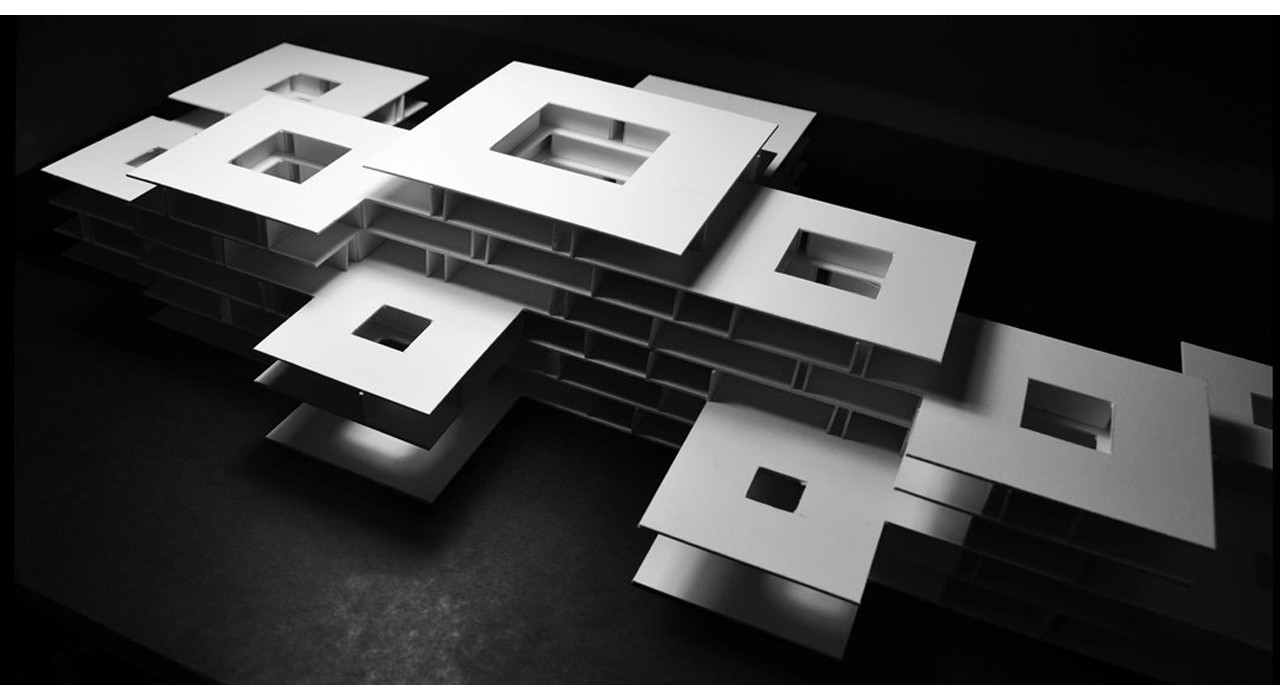
Eleven squares of different sizes are grouped together, sharing paths, cores and courtyards. The courtyard’s sizes are stablished proportionally to their height, to allow the sunlight entrance to be able to make gardens inside. The squares nearest to the street have commercial use on their ground floor to avoid separated uses. The dwellings are more overturned to the courtyard than to the exterior as in the Sirian traditional architecture , to allow a better regulation of the building´s microclimate.
The most important characteristics of the project are:
-Relation with the city, thanks to: the spaces created by the bursts, the differentation between sunlight regulation depending on the orientations, the scale, the density, the choice of the intervention due to the previous analysis, the courtyards scale and the materials.
-The interior paths that relate the different courtyards: Thanks to these routes, there is a succession of common spaces. The routes changes between different floor levels is allowed by the structure of pillars.
During this course I have been firstly analysing the context in which we were moving, studying their traditional architecture, their urbanistic pattern and facts as population density, the heights of dwellings, destruction levels...
To be able to analyse Aleppo, I imported the methodology of the Bolonia´s plan, in which a classification by damage, density, history, typologies… is made. If I intersect the resulting type areas with two visual radios whose centres are the citadel and the souks, 3 possible areas of intervention are located. The purpose of these radios is establishing an area in which no high towers could be built because it would probably damage the urban landscape.
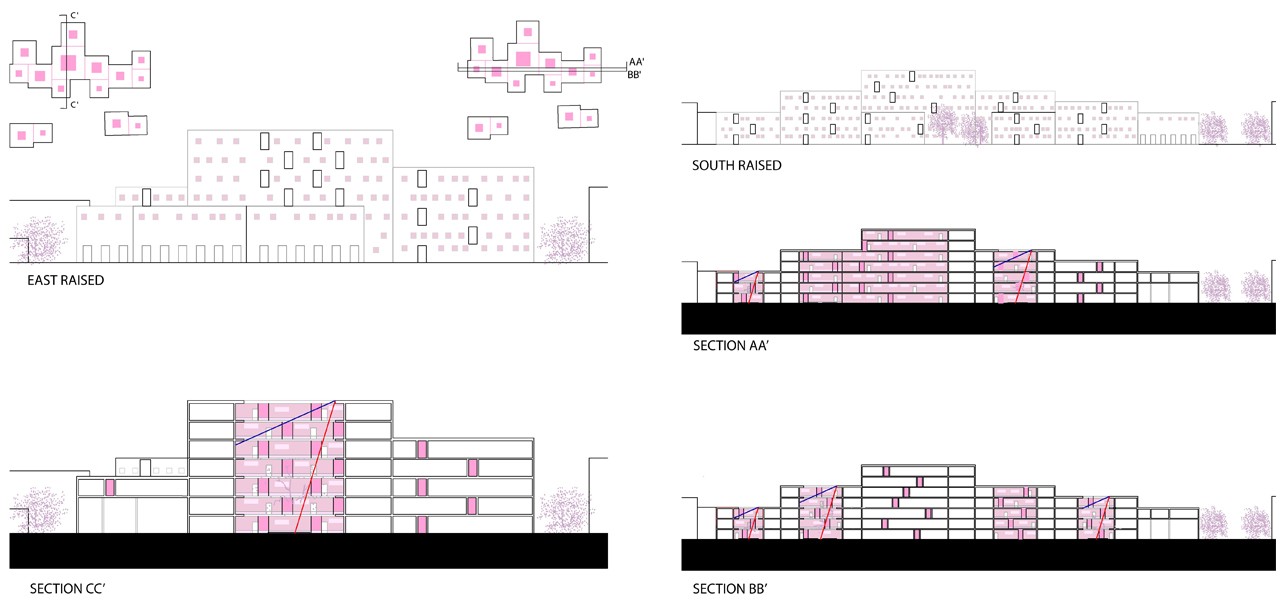
When it comes to focusing on the project level intervention I did a model of this zone and I focused on an especially destroyed area. As it was one of these transition points I thought that at the street level the height of the building should be proportionate to the human scale so I projected a building with different heights, increasing the height the further away they were from the street.
Eleven squares of different sizes are grouped together, sharing paths, cores and courtyards. The courtyard’s sizes are stablished proportionally to their height, to allow the sunlight entrance to be able to make gardens inside. The squares nearest to the street have commercial use on their ground floor to avoid separated uses. The dwellings are more overturned to the courtyard than to the exterior as in the Sirian traditional architecture , to allow a better regulation of the building´s microclimate.
The most important characteristics of the project are:
-Relation with the city, thanks to: the spaces created by the bursts, the differentation between sunlight regulation depending on the orientations, the scale, the density, the choice of the intervention due to the previous analysis, the courtyards scale and the materials.
-The interior paths that relate the different courtyards: Thanks to these routes, there is a succession of common spaces. The routes changes between different floor levels is allowed by the structure of pillars.
- 00 - Description
- 01 - Alepo Urban Analysis
- 02 - Traditional types
- 03 - Chosen area_model 1
- 04 - Floor plans
- 05 - Floor paths_model 2
- 06 - Section & Raised
- 07 - Dwelling types
- 08 - Views
- 09 - Photograph_model 2
- 10 - Photograph_model 2