
arquea-TEC. innovación
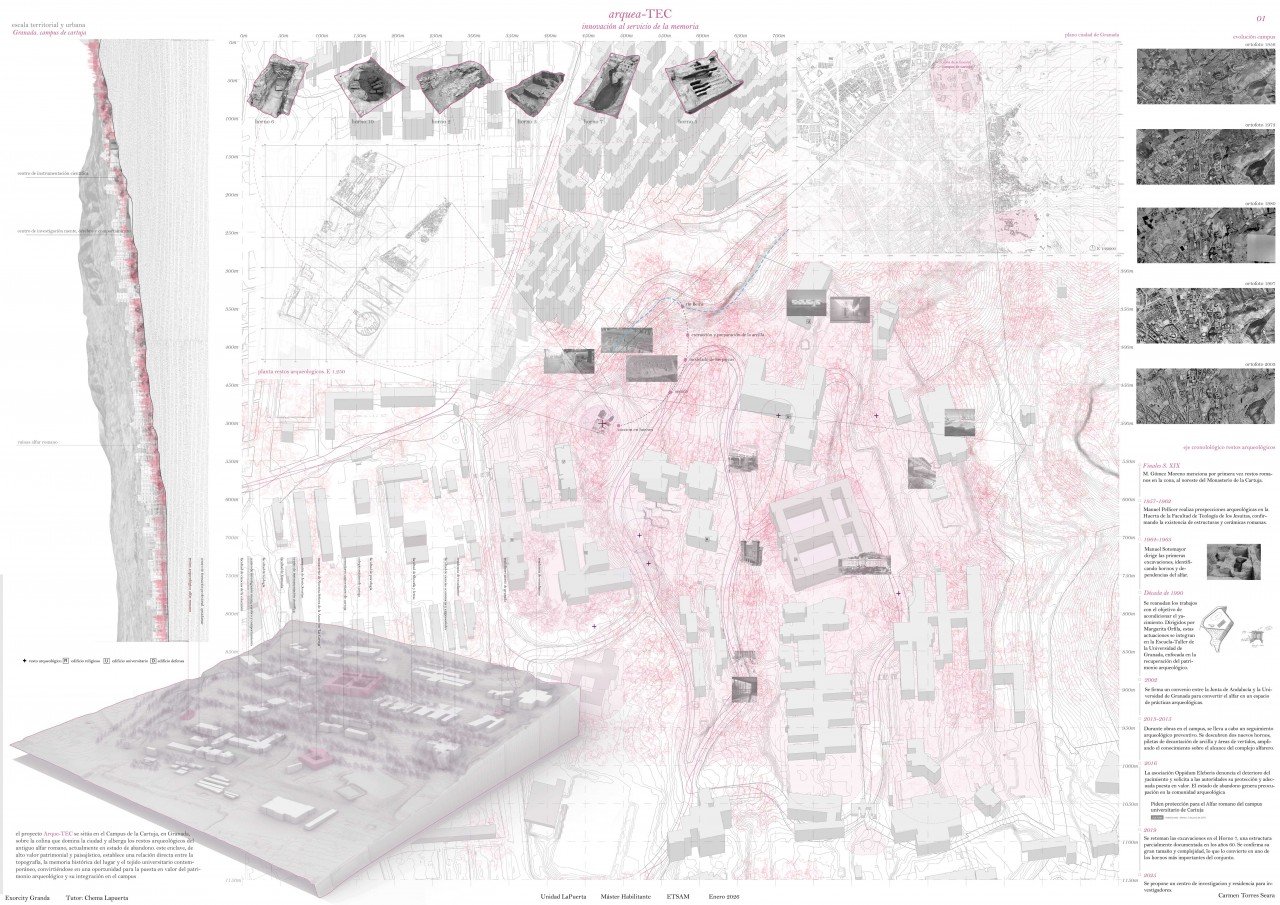
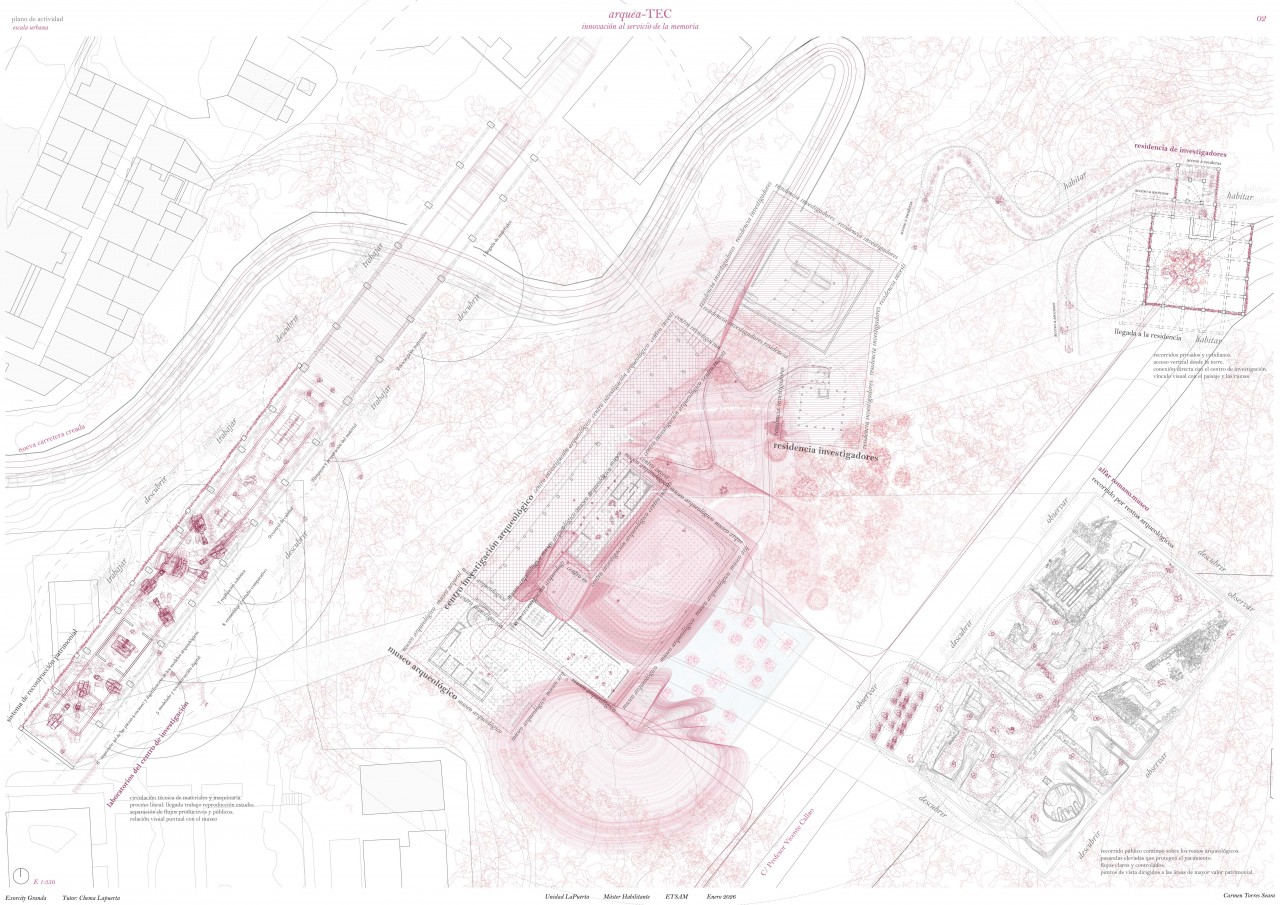
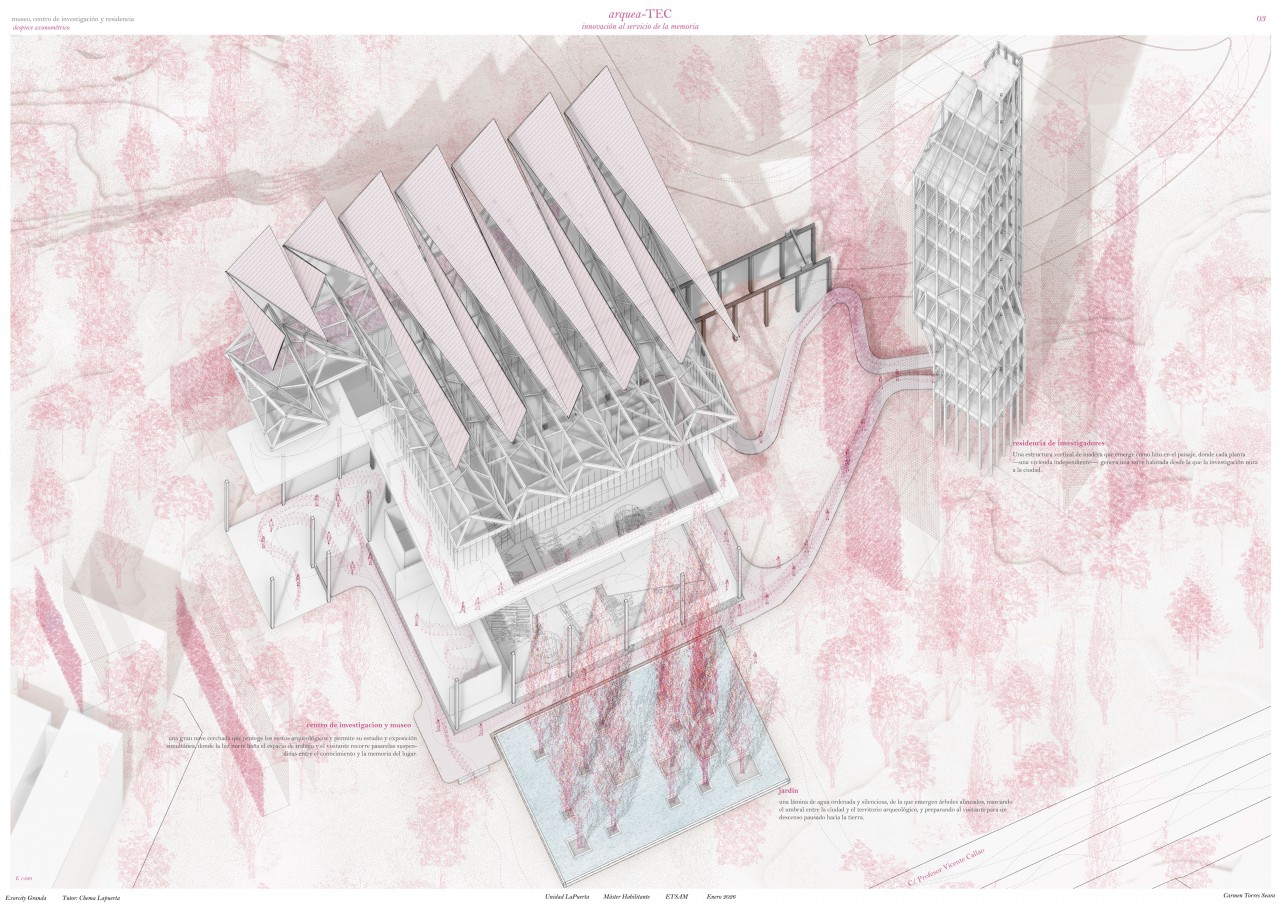
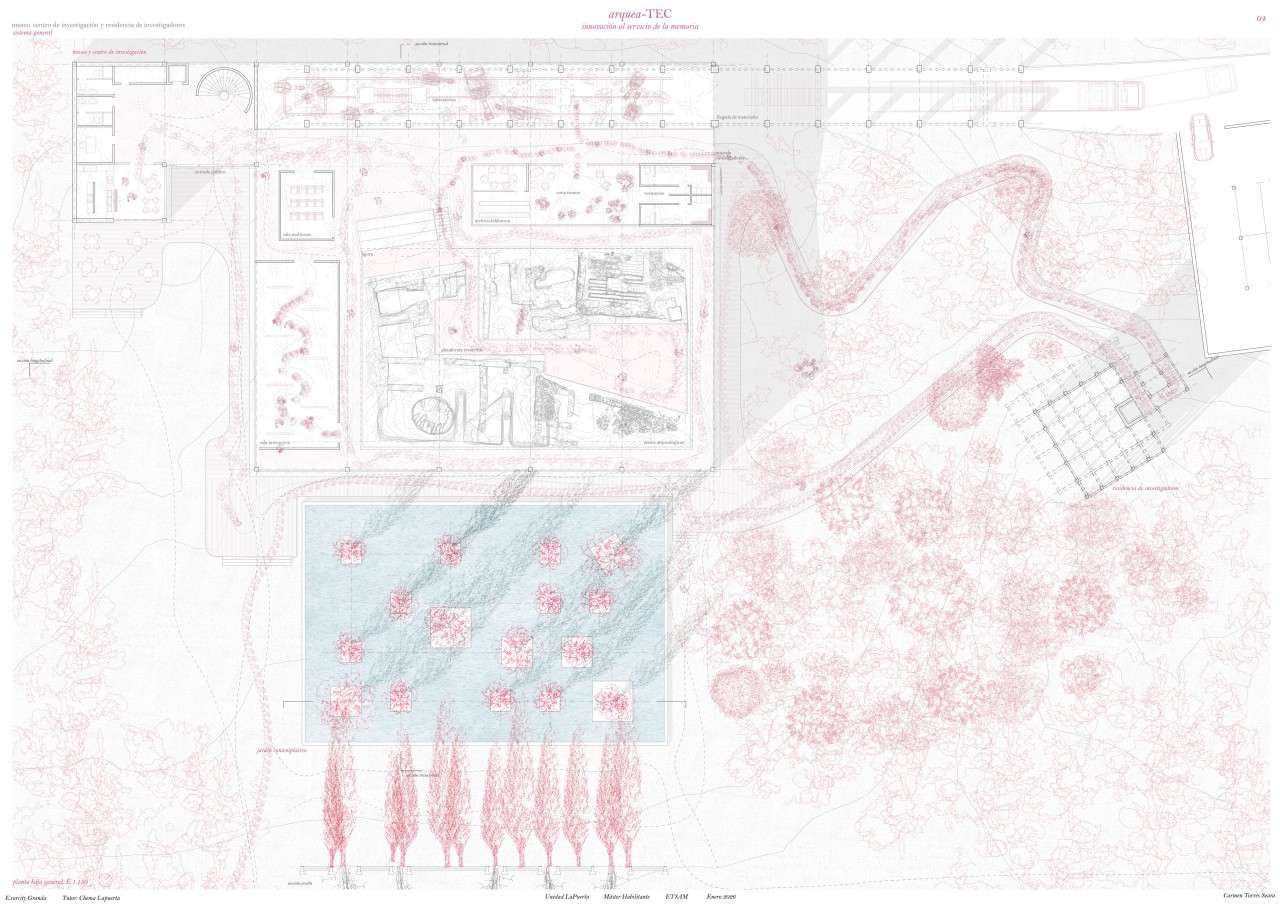
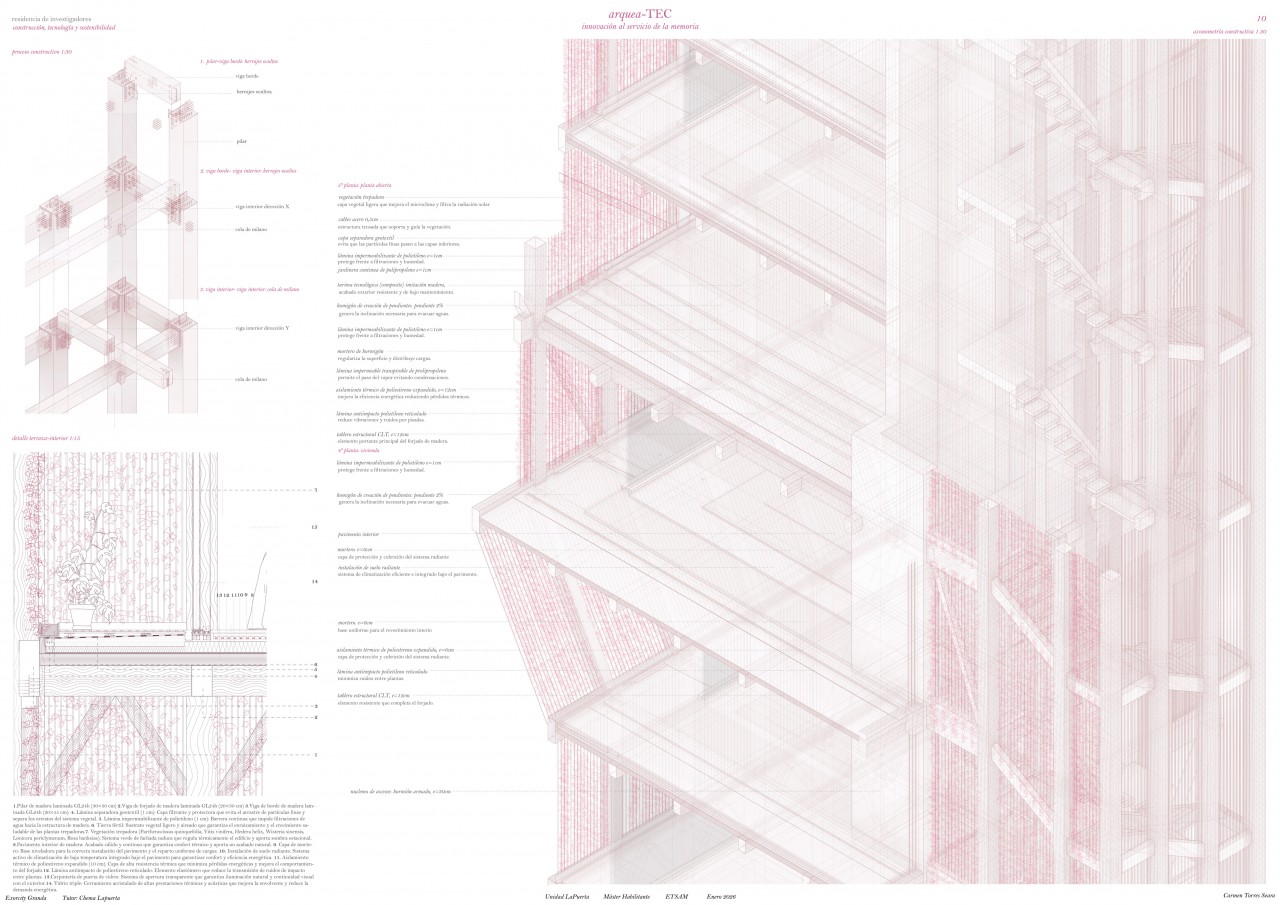
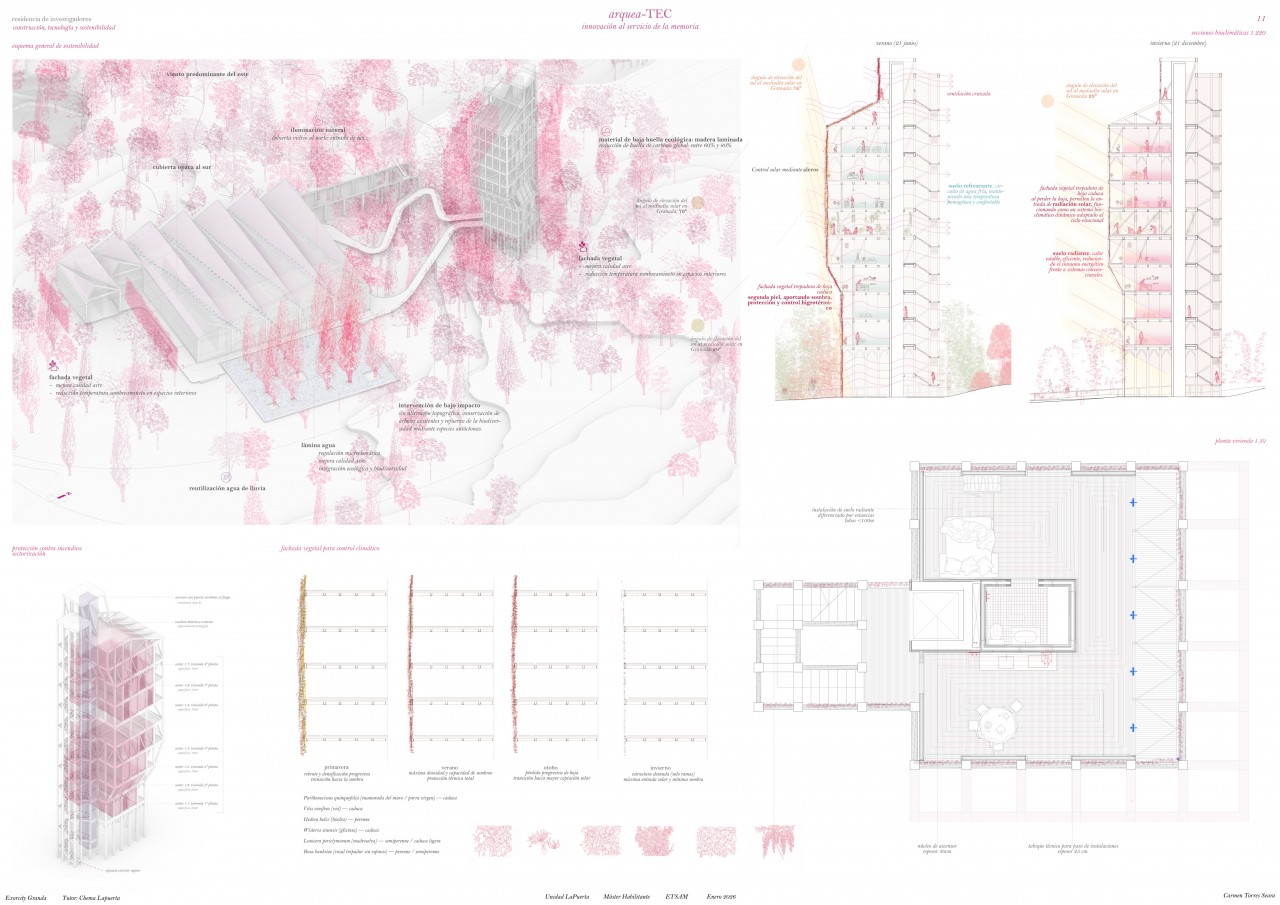
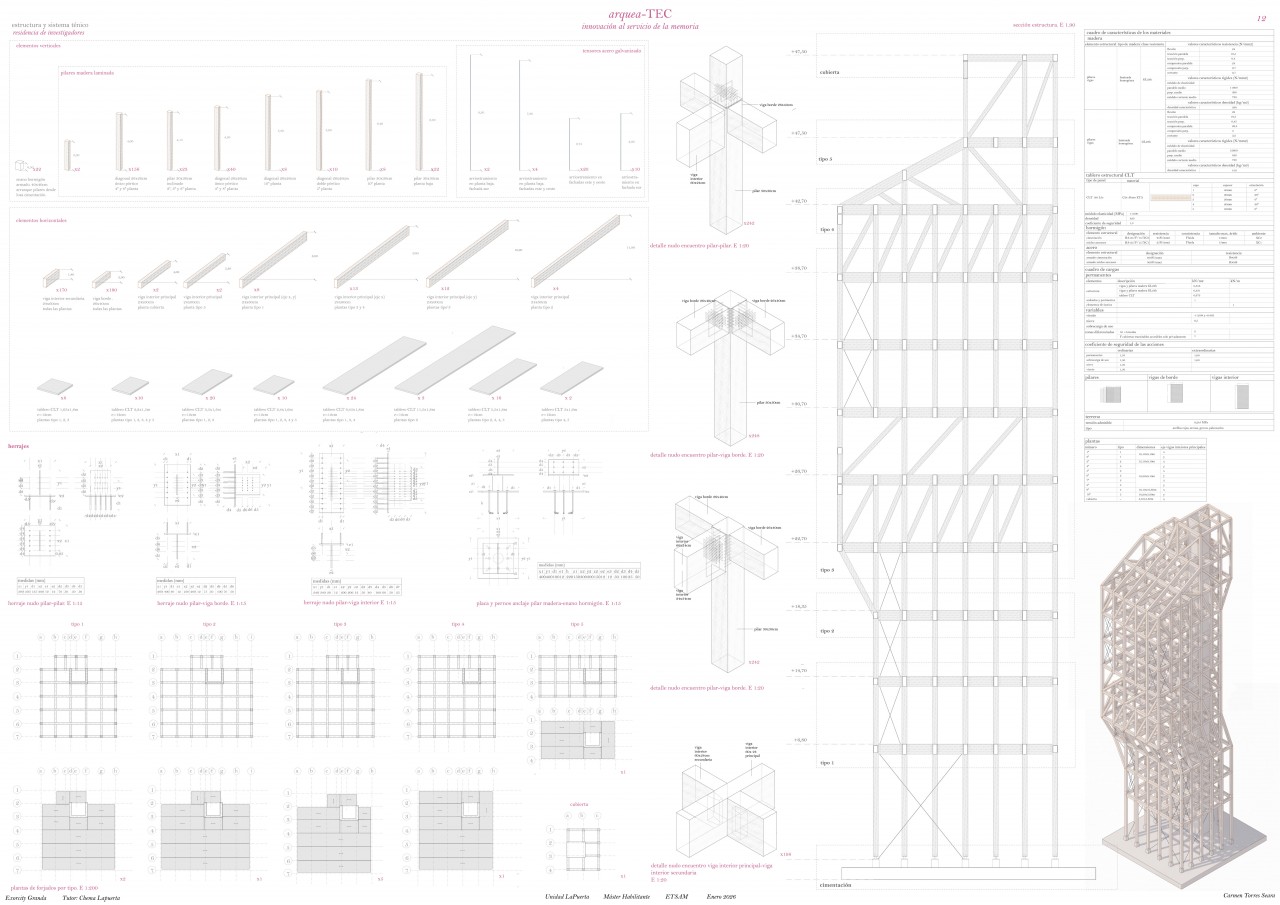
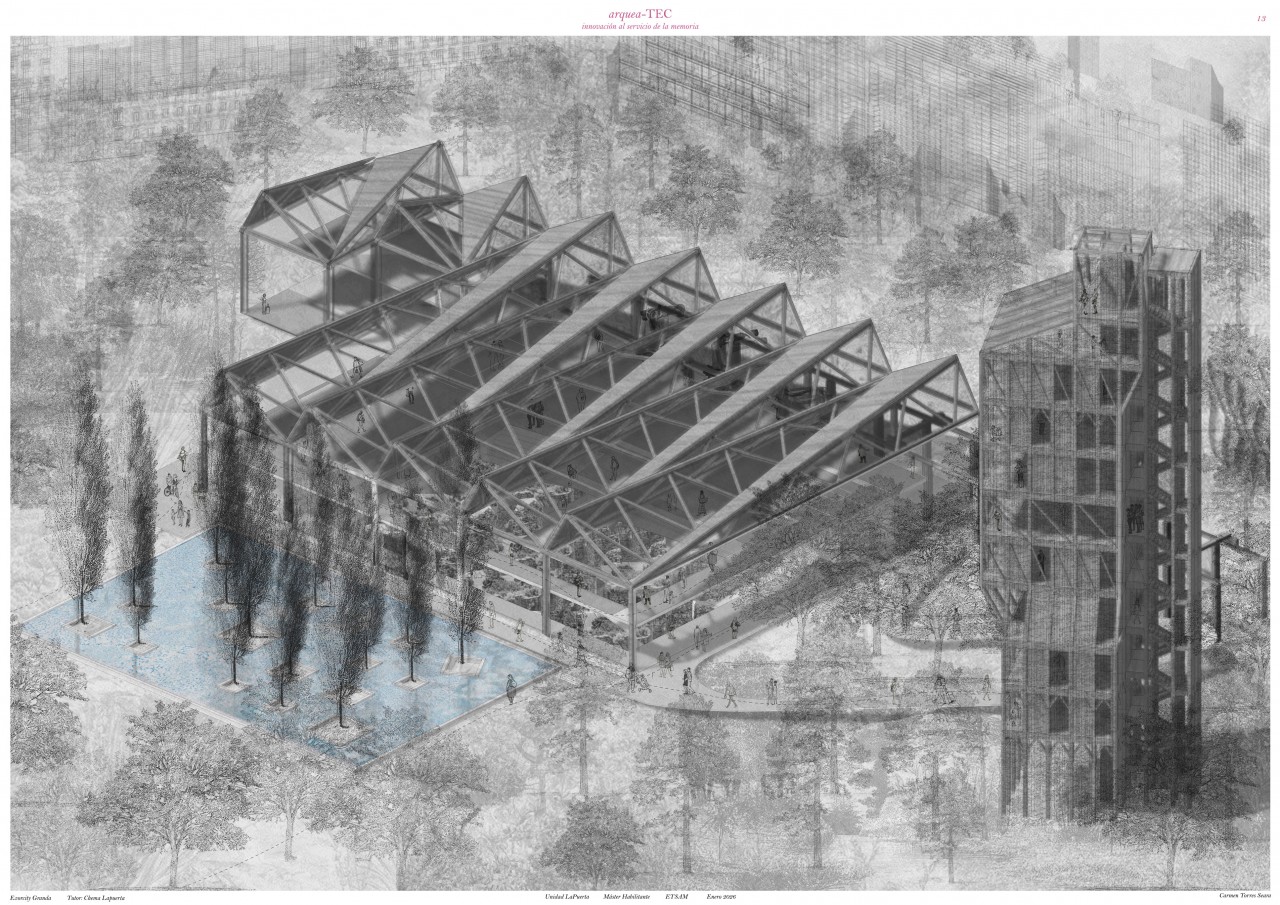
Granada unfolds as a landscape of light and stone, built layer by layer over time. Long before the Alhambra, Iliberri existed, a Roman city that valued its resources. On the slopes of the Cartuja Campus, between the first and second centuries, a Roman pottery workshop operated, where clay was shaped and fired in kilns to produce ceramic pieces for the city and its surroundings. After decades of neglect, the site remains hidden, disconnected from the campus and its academic life. In response, Arquea-TEC emerges, a project exploring contemporary interventions in archaeological heritage, conceiving the site not as a passive relic but as an active cultural infrastructure capable of generating knowledge, research, and life. The architectural journey begins in the garden, a threshold of water, shade, and vegetation preparing the visitor. From here, the museum hall covers the remains without touching them, using laminated wood trusses to span large spaces and control lighting. Visitors explore the site both at ground level and from elevated walkways, observing kilns, courtyards, and structures. In continuity, the research center carries out heritage reconstruction through cleaning, documentation, 3D scanning, and rebuilding, creating a dialogue between past and present. The residential tower concentrates the program vertically, with timber structure and bioclimatic green façade, forming a sustainable laboratory. Wood and materials express lightness and precision, consistent with the investigative spirit. The visitor’s experience unfolds as a moving narrative: museum, garden, laboratories, and tower consolidate history and the community connected to the site, activating heritage and keeping it alive.
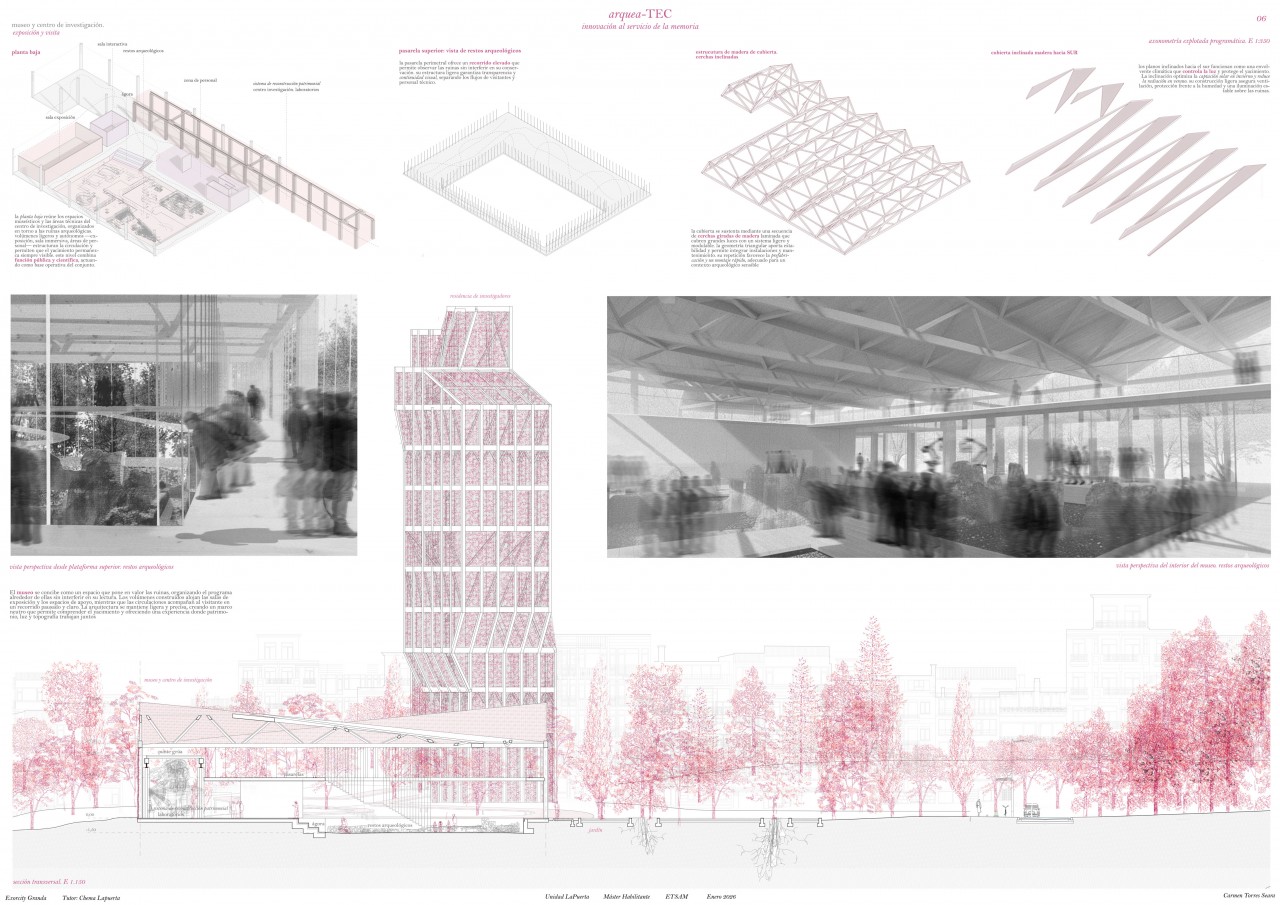
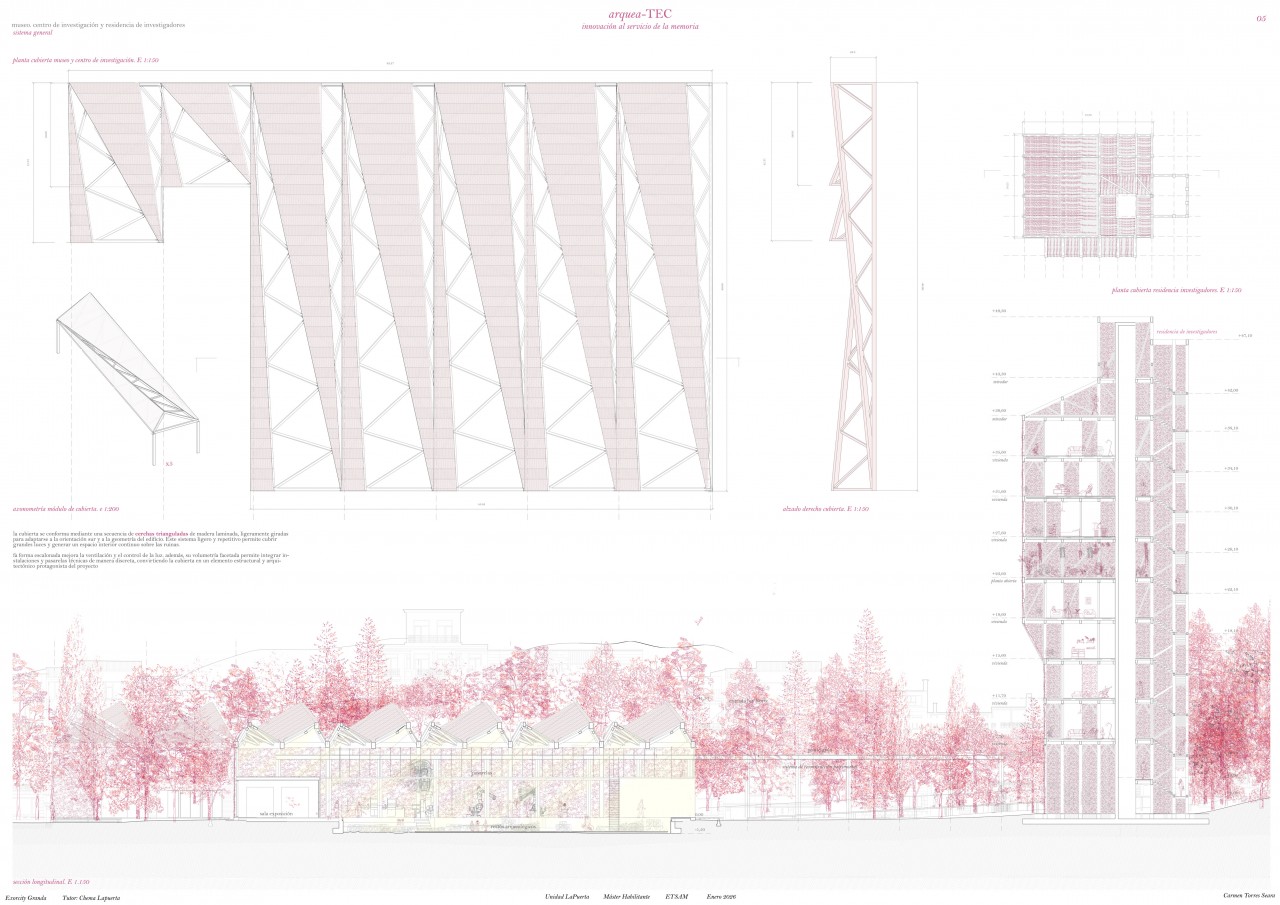
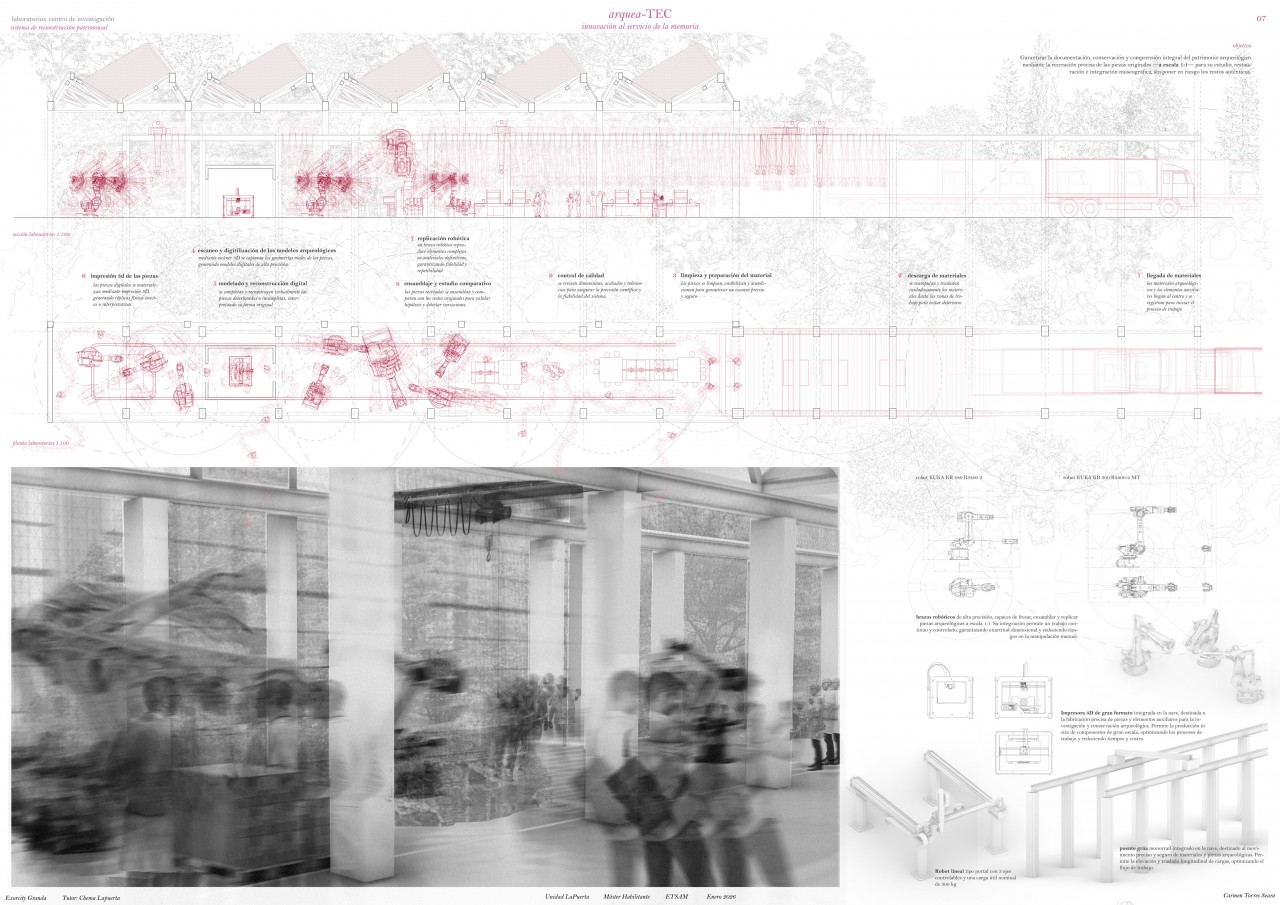
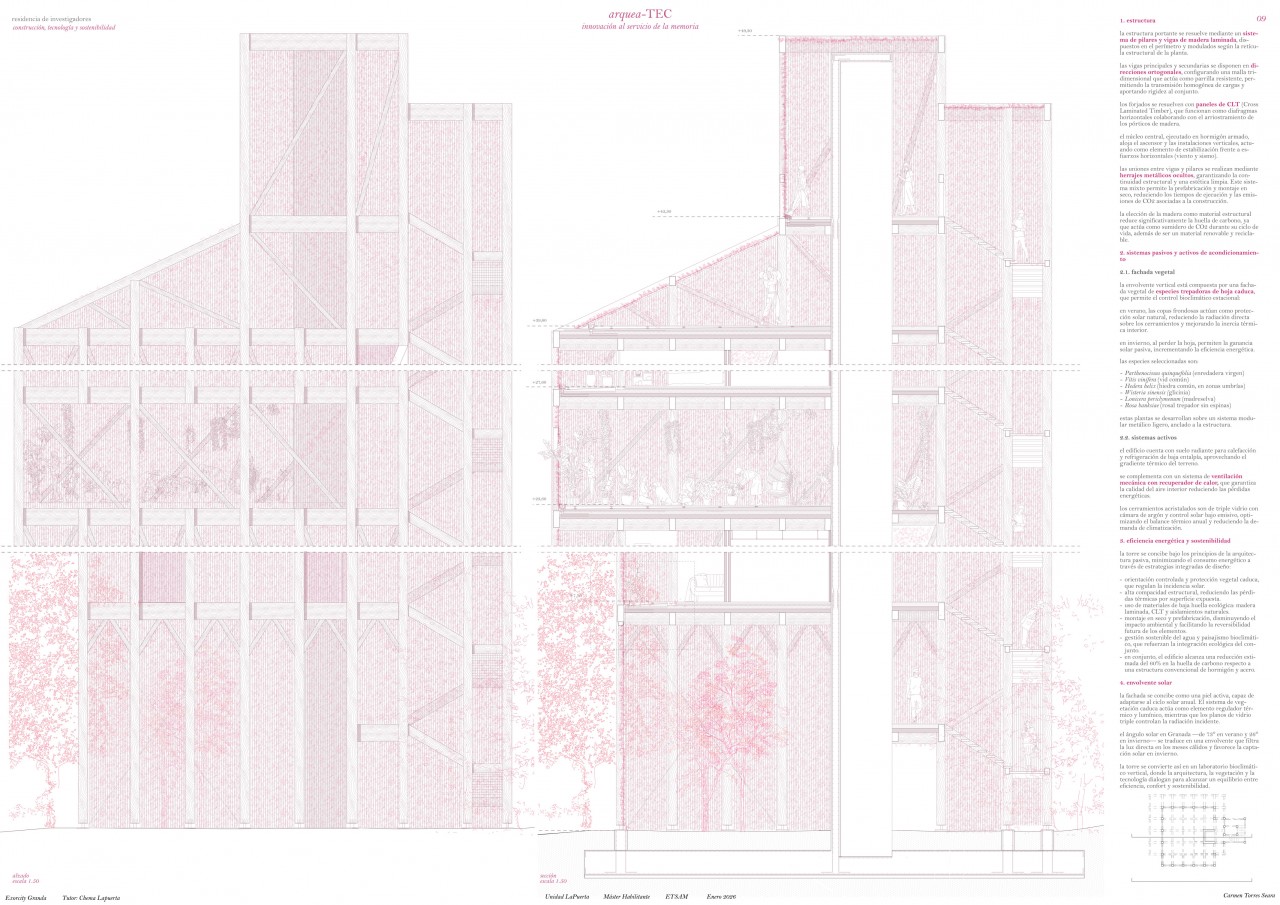
- 00 - Description
- 01 - urban scale
- 02 - activity plan
- 03 - axonometric view
- 04 - ground floor
- 05 - cross section
- 06 - longitudinal section
- 07 - system
- 08 - construction I
- 09 - construction II
- 10 - sustainability
- 11 - structure
- 12 - final view
- 13 - Video