
ATERPE
Set within the forest of Chillida-Leku, the project proposes a series of live-work units for students, exploring how architecture can coexist with nature through a minimal intervention.
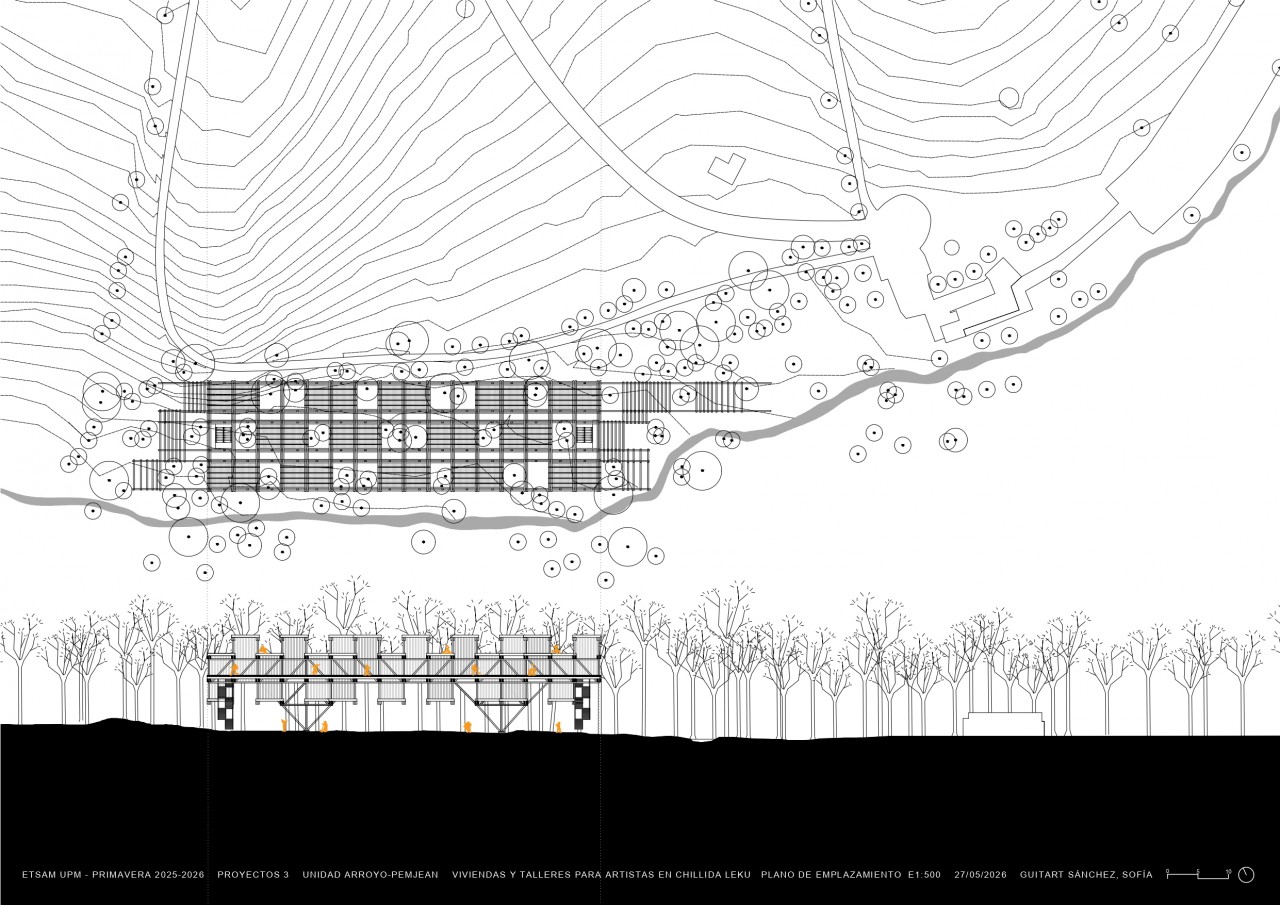
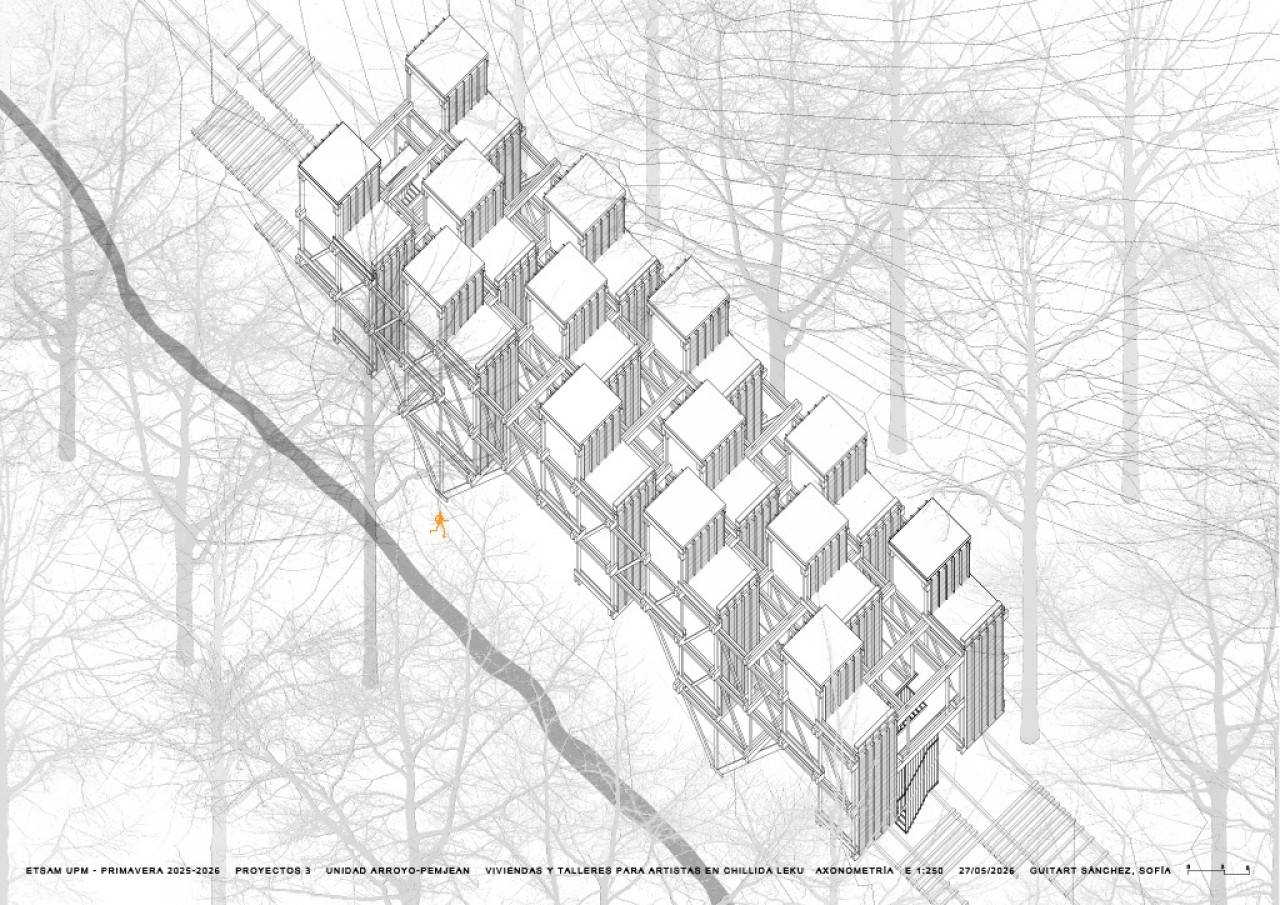
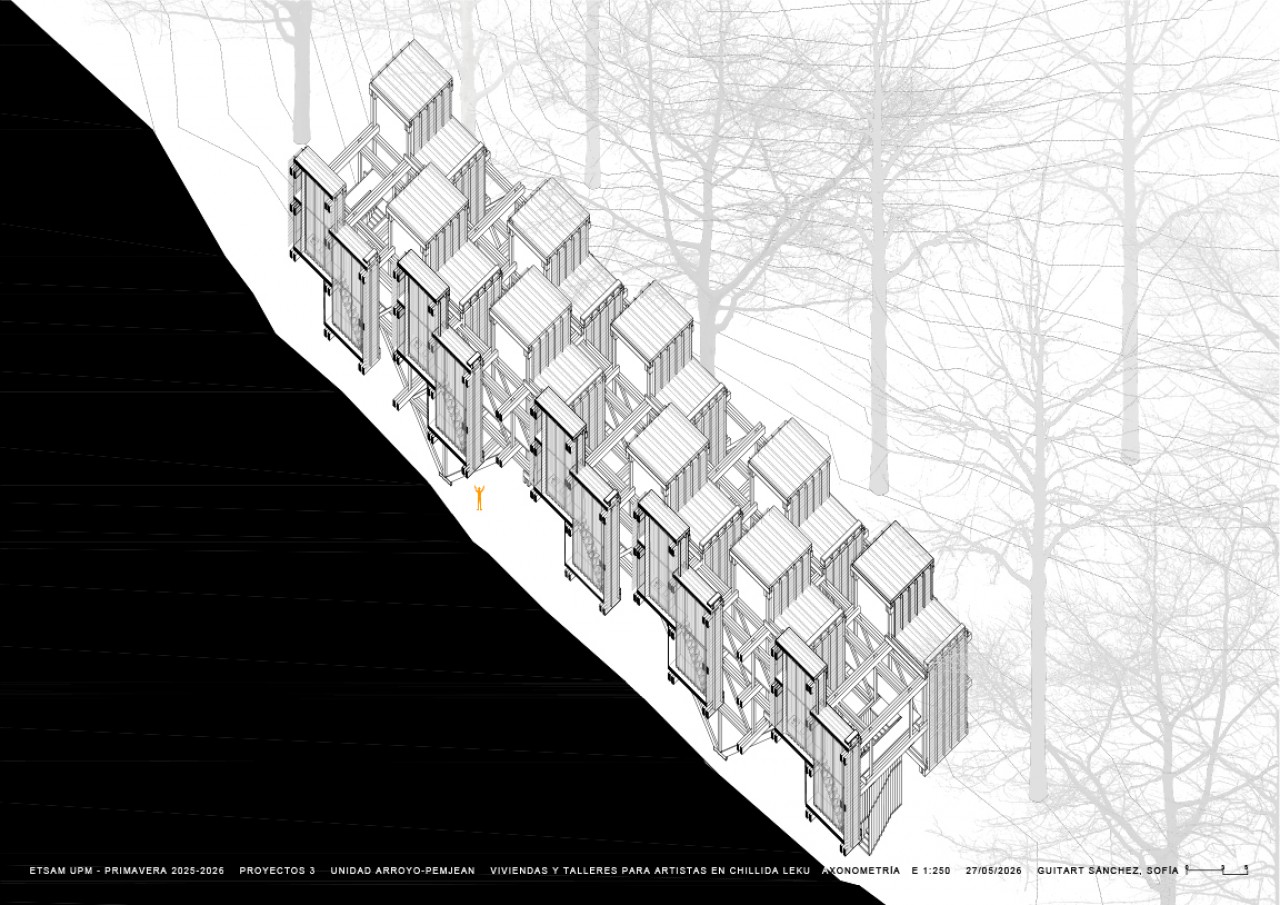
The project is conceived as an elevated tapestry that lightly rests on the ground and, at certain points, transforms into a walkable roof. Access occurs by ascending through the treetops, allowing visitors to experience the scale of the forest before entering the building. Rather than occupying the site, the architecture seeks to coexist with it.
The organization of solids, voids, and courtyards is inspired by the spatial rhythm of Sachio Otani, preserving the existing trees and creating a continuous dialogue between nature and architecture.
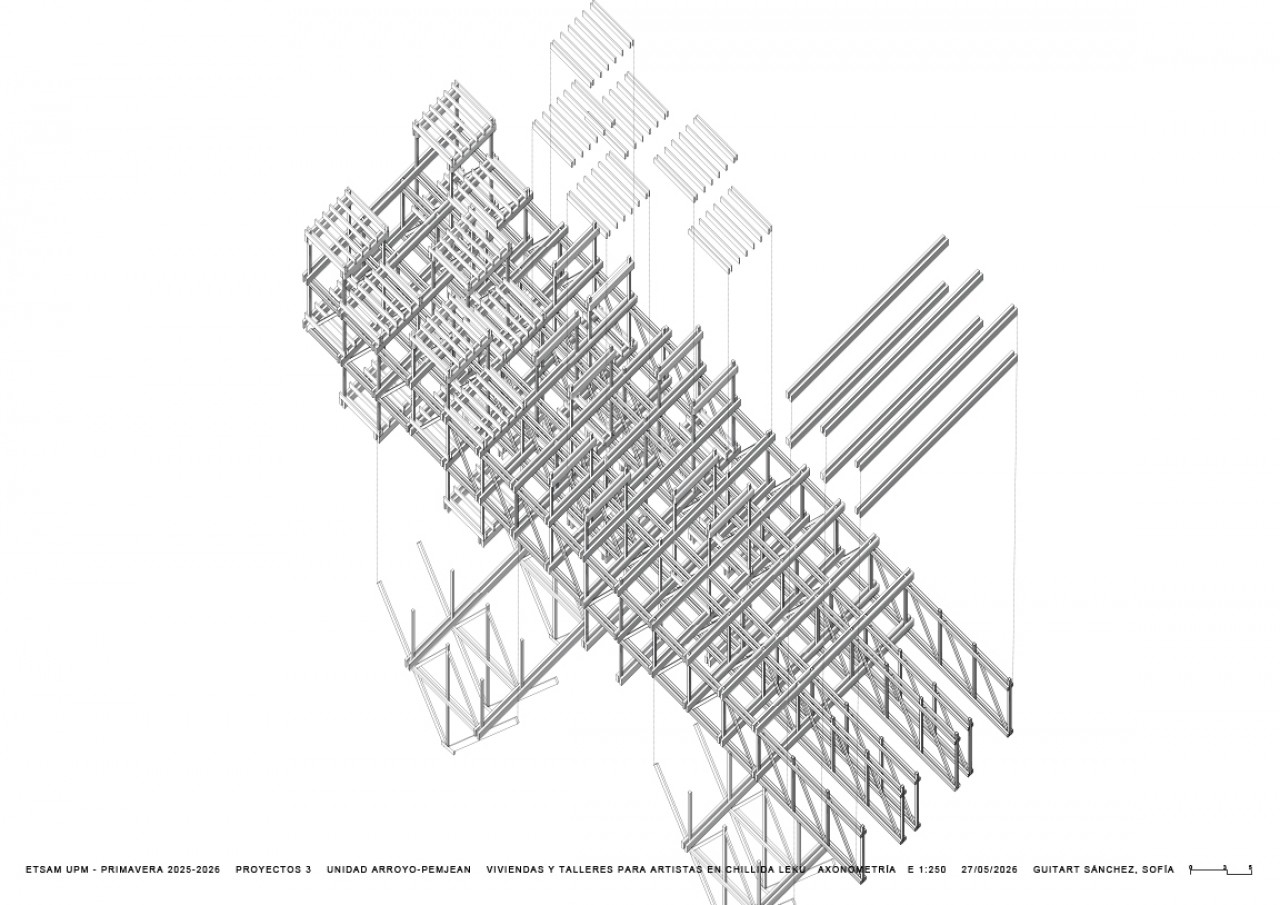
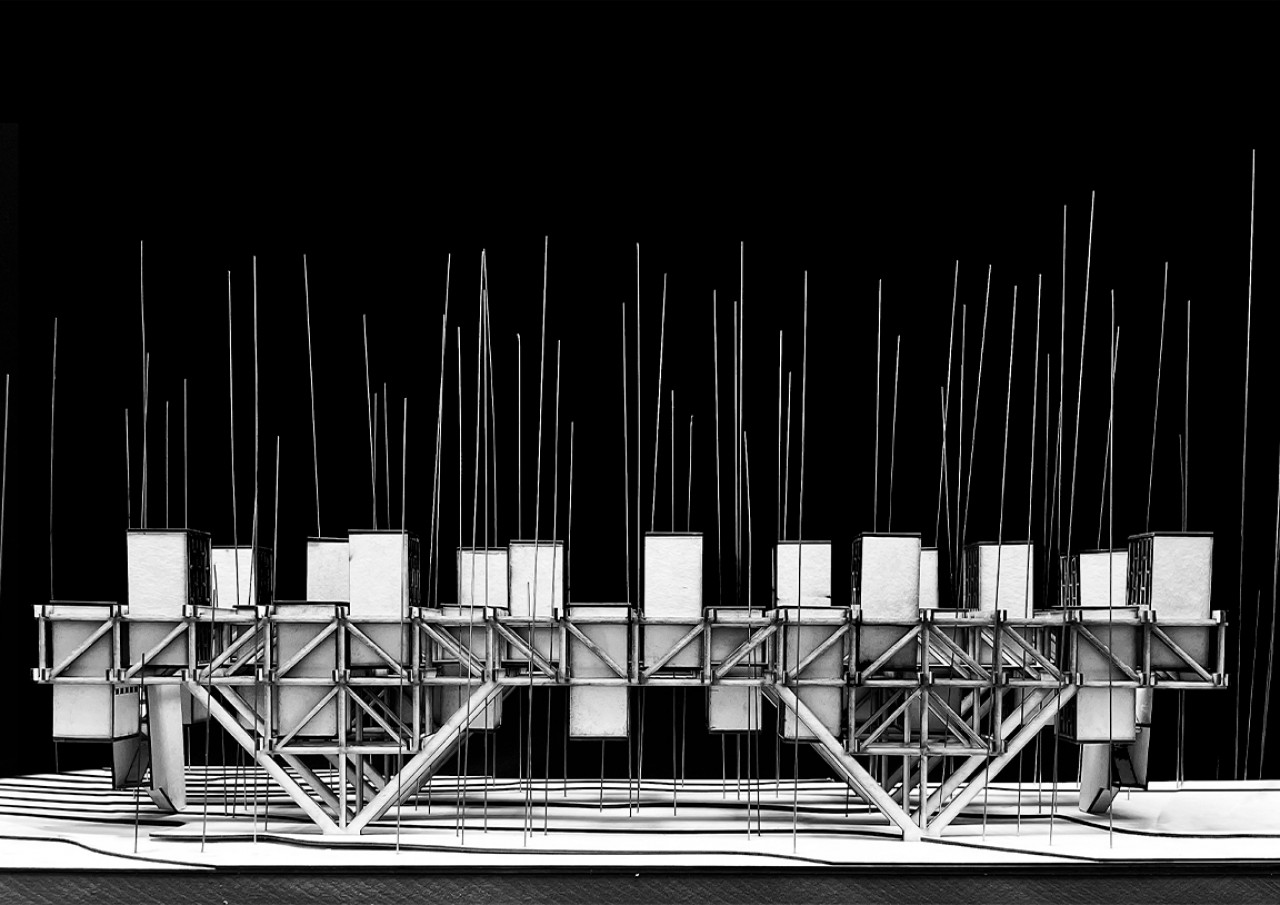
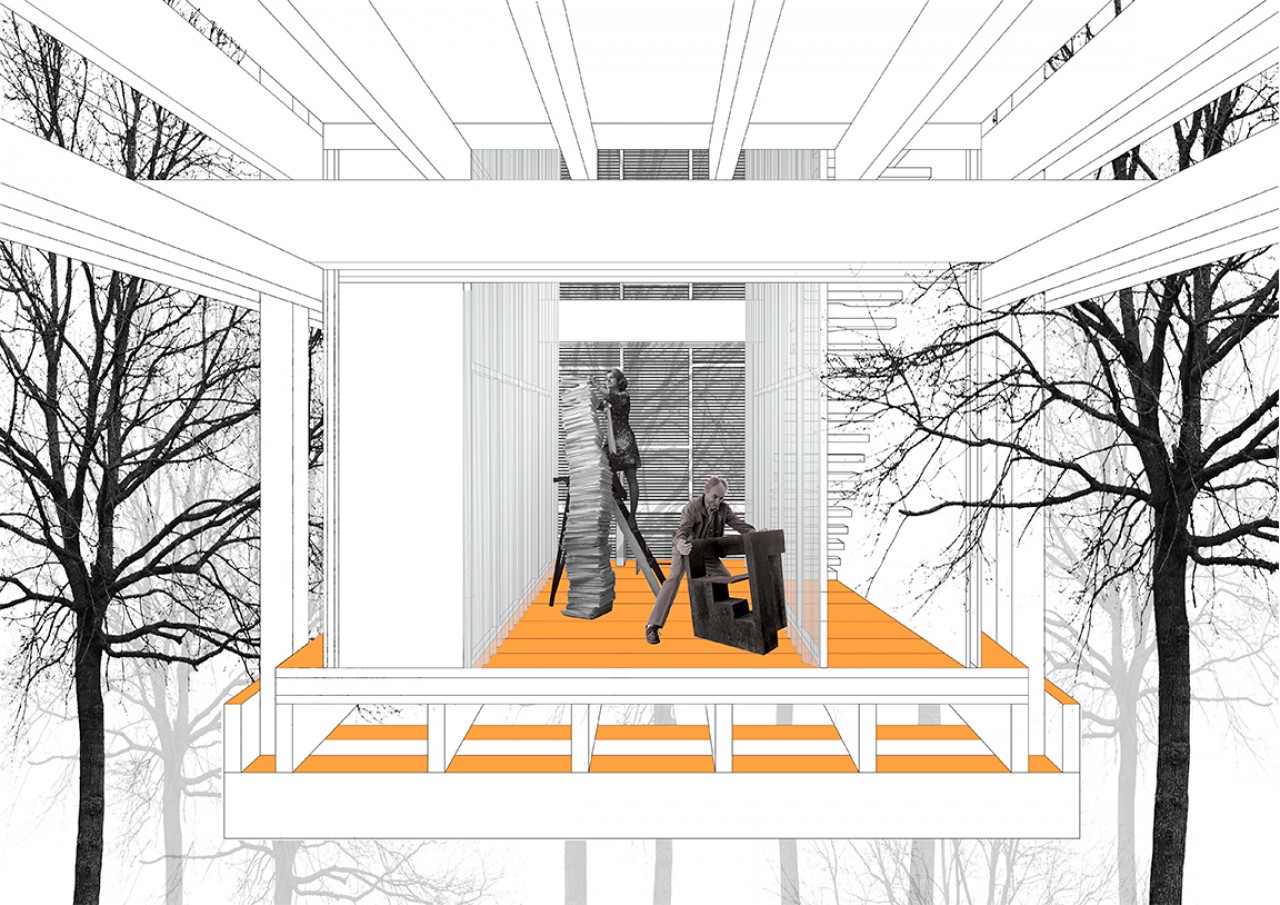
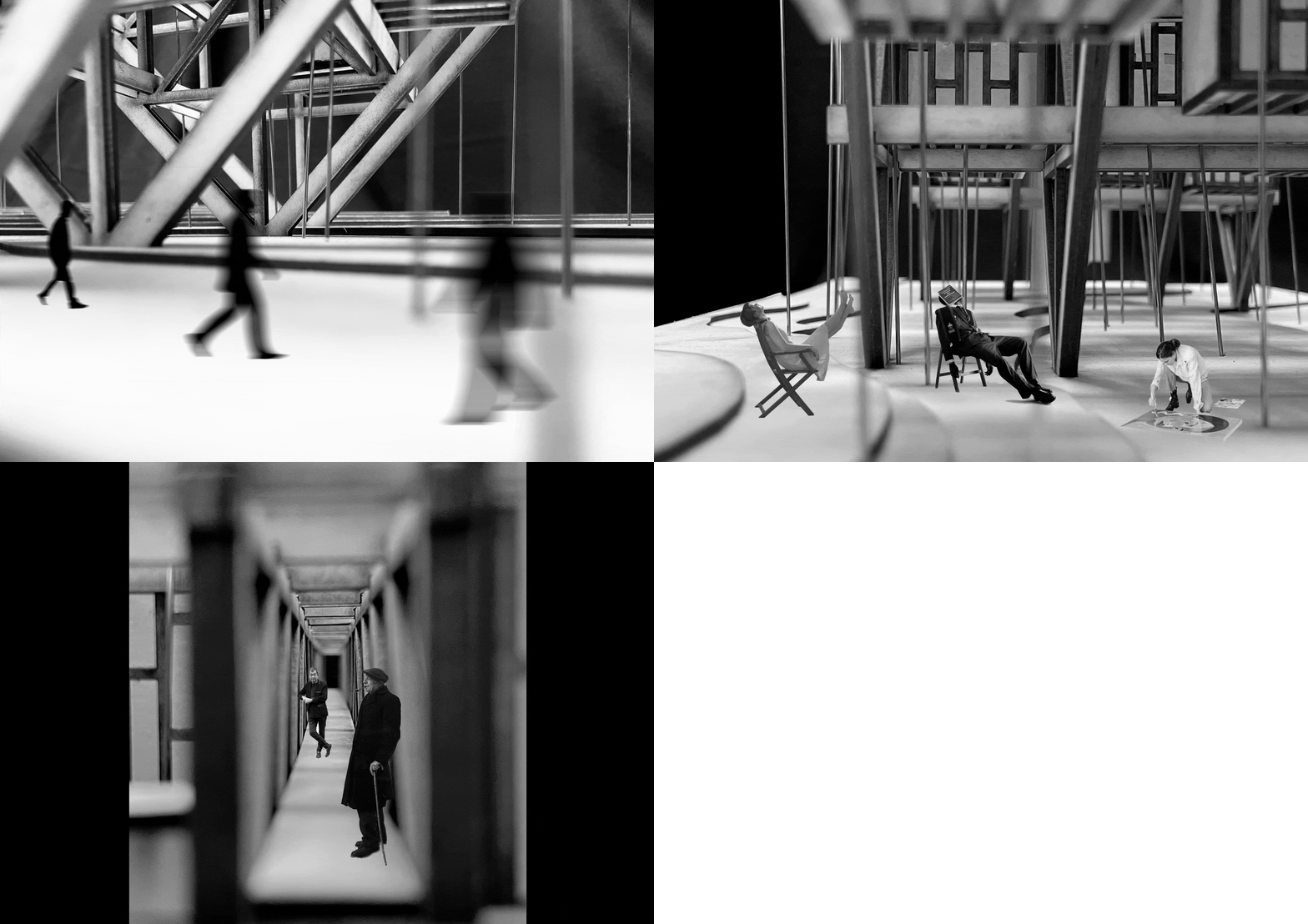
Structurally, the project is organized through three hierarchical timber systems: large trusses spanning the main distances, a secondary layer of joists, and a lighter final structure that introduces a domestic scale to the space. The structure becomes both technical and spatial.
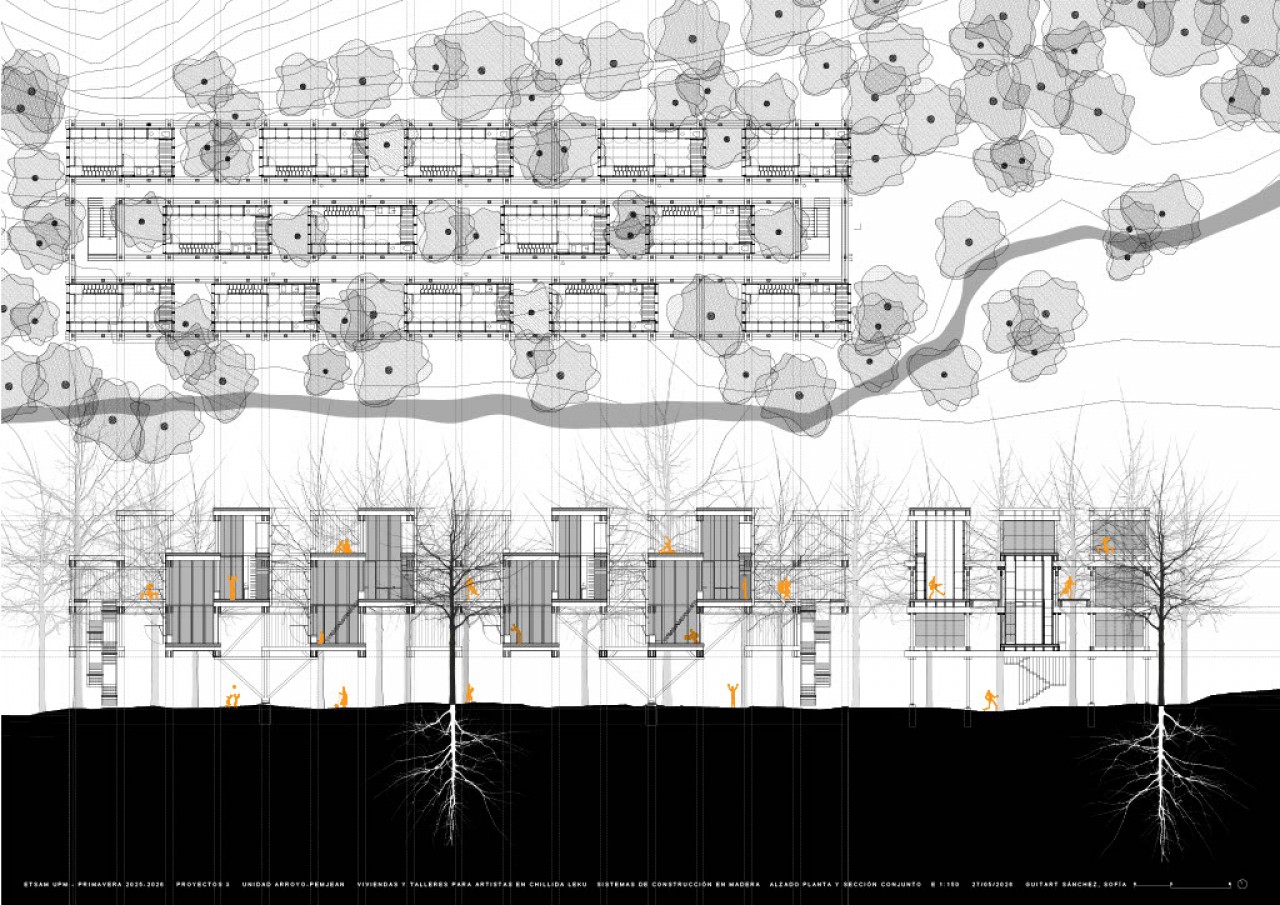
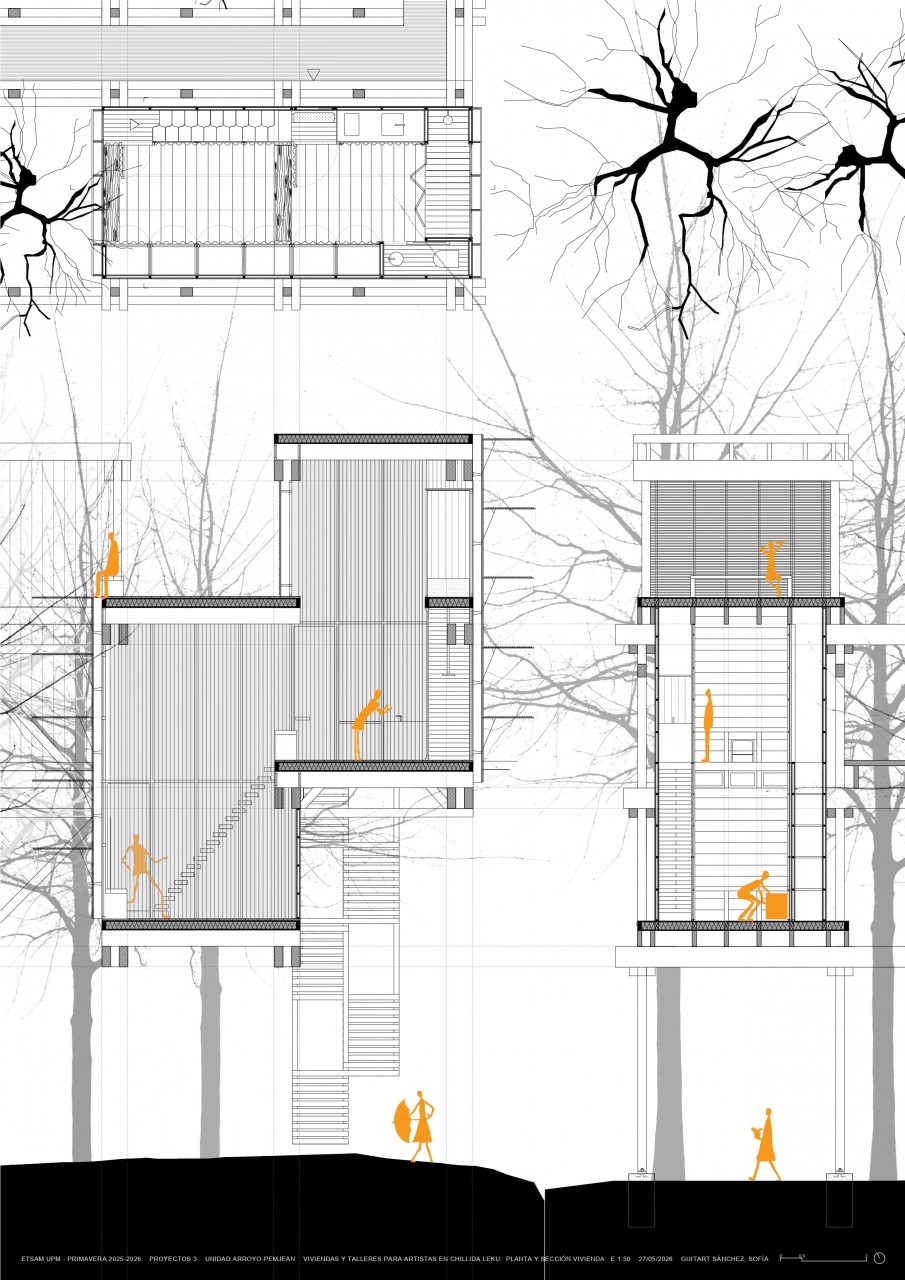
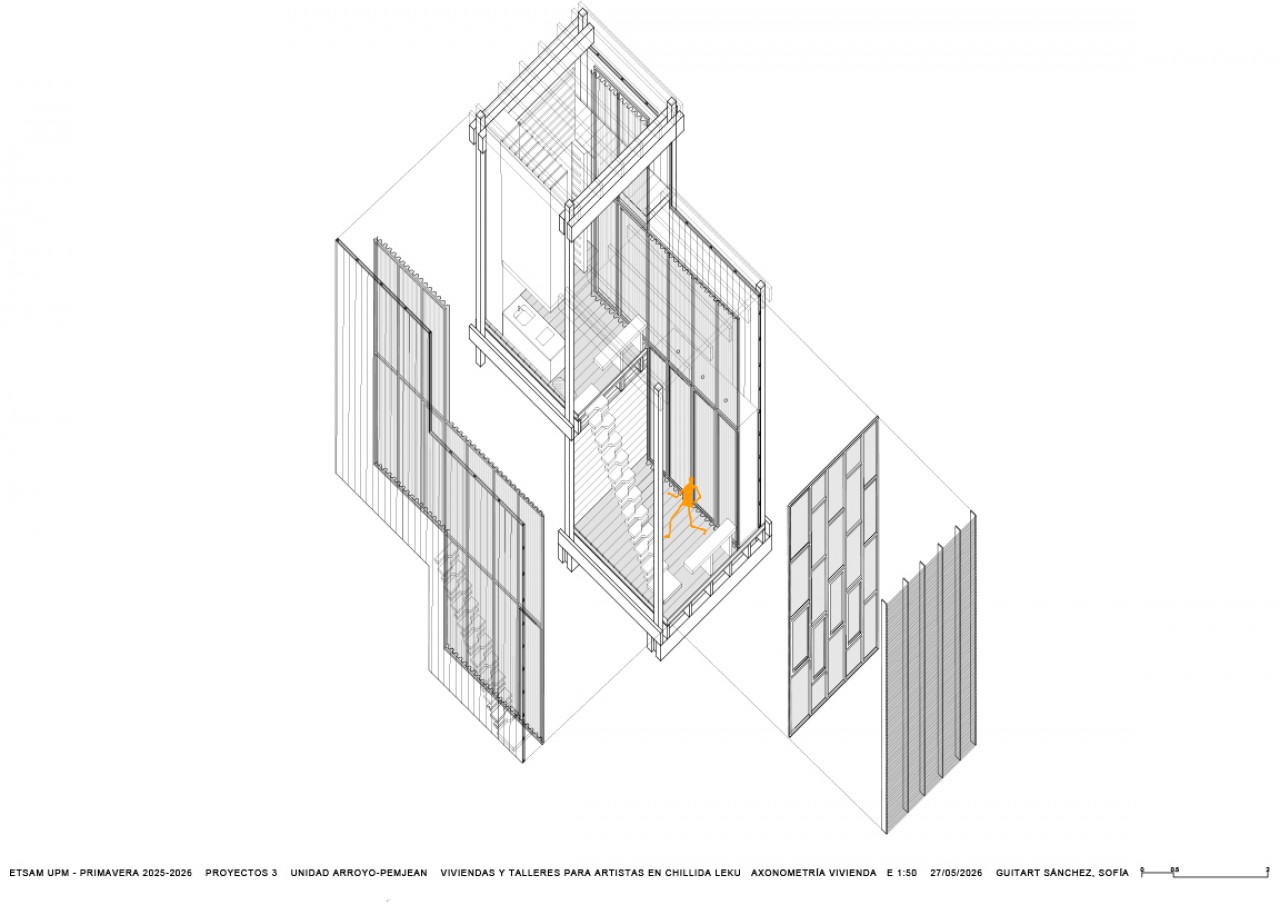
The live-work units are arranged across two levels: living above and working below. Two equipped side walls organize the interior, while a secondary façade skin acts as a climatic filter and unifies the building within the forest.
The project ultimately proposes a respectful way of inhabiting the landscape, elevating the architecture to preserve the natural ground and strengthen the relationship with the surrounding environment.
The project is conceived as an elevated tapestry that lightly rests on the ground and, at certain points, transforms into a walkable roof. Access occurs by ascending through the treetops, allowing visitors to experience the scale of the forest before entering the building. Rather than occupying the site, the architecture seeks to coexist with it.
The organization of solids, voids, and courtyards is inspired by the spatial rhythm of Sachio Otani, preserving the existing trees and creating a continuous dialogue between nature and architecture.
Structurally, the project is organized through three hierarchical timber systems: large trusses spanning the main distances, a secondary layer of joists, and a lighter final structure that introduces a domestic scale to the space. The structure becomes both technical and spatial.
The live-work units are arranged across two levels: living above and working below. Two equipped side walls organize the interior, while a secondary façade skin acts as a climatic filter and unifies the building within the forest.
The project ultimately proposes a respectful way of inhabiting the landscape, elevating the architecture to preserve the natural ground and strengthen the relationship with the surrounding environment.
- 00 - Description
- 01 - SITE PLAN
- 02 - GENERAL PLAN-SECTION
- 03 - STRUCTURAL ORDER
- 04 - OVERALL AXONOMETRIC
- 05 - SECTION AXONOMETRIC
- 06 - MODEL
- 07 - Live-Work
- 08 - L-W AXONOMETRIC
- 09 - PHOTOMONTAGE
- 10 - MODEL PHOTOS