
BLIND BERLIN
Before the proposed statement (Drift x Berlin), we adopted a radical theoretical position: we decided to "blind ourselves" (Blind Berlin): we did not want to "see" Berlin in the traditional way that architects usually adopt. We set out to analyze and learn about Berlin through the web: analyze it from a social point of view with virtual tools. Then social networks appear.
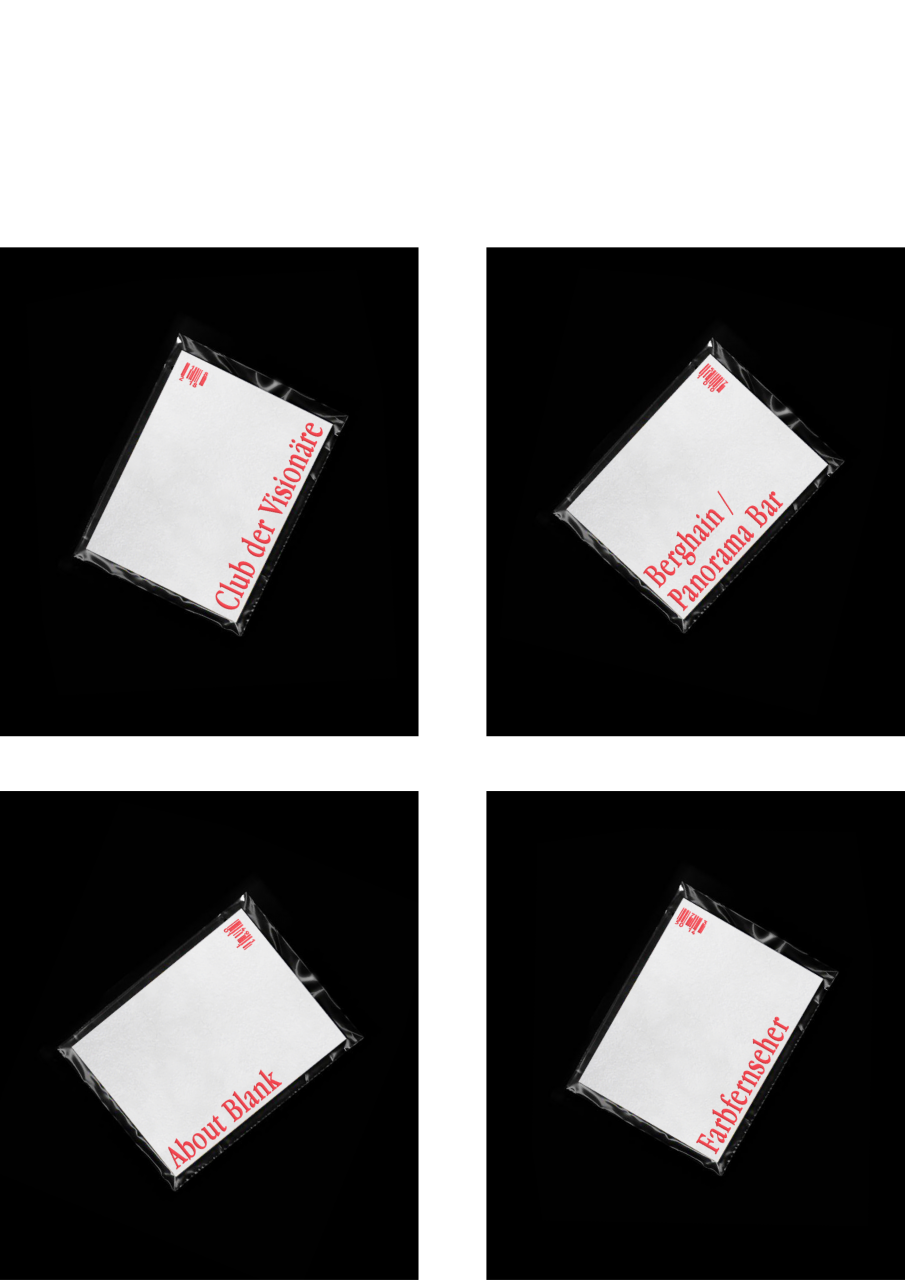
This analysis starts from a "drift" that emerges from a conversation through whatsapp (Jesús Escudero) that made us a series of recommendations related to certain places that are characterized by their intensity and social activity (of greater social intensity). It was, in short, to opt for a language of beginning opposed to the academic one; a language, in a sense, apparently inconsistent, "macarra" (in the sense understood by amid.cero9). A language that knows the rules but deliberately subverts them.
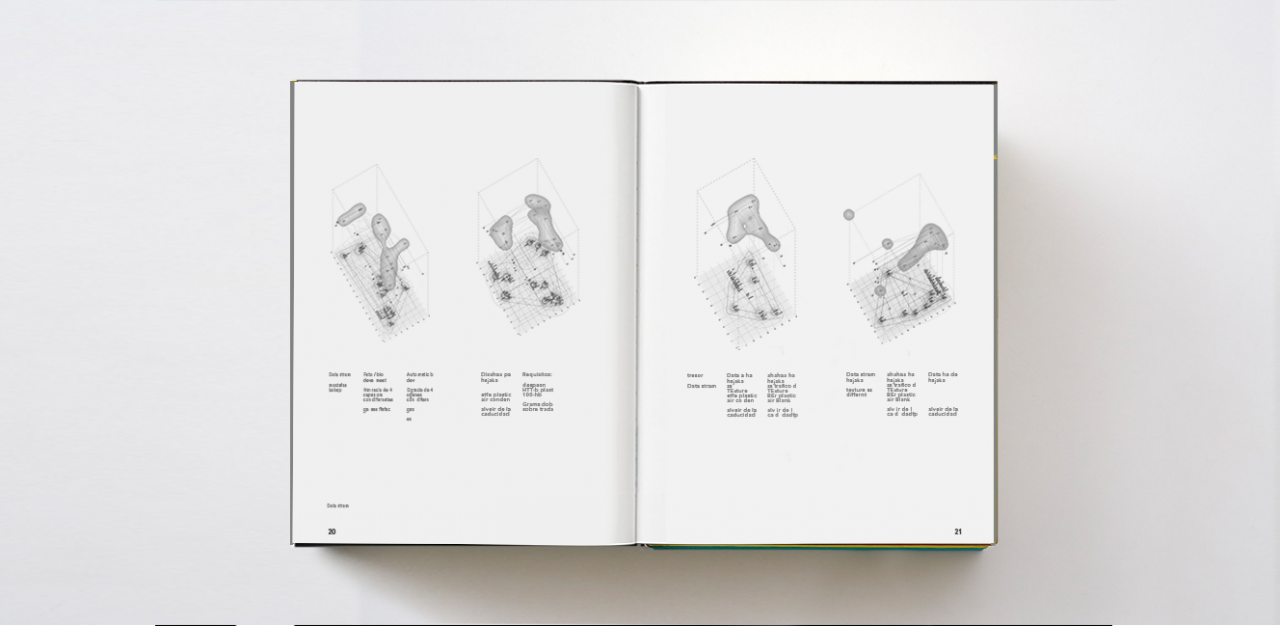
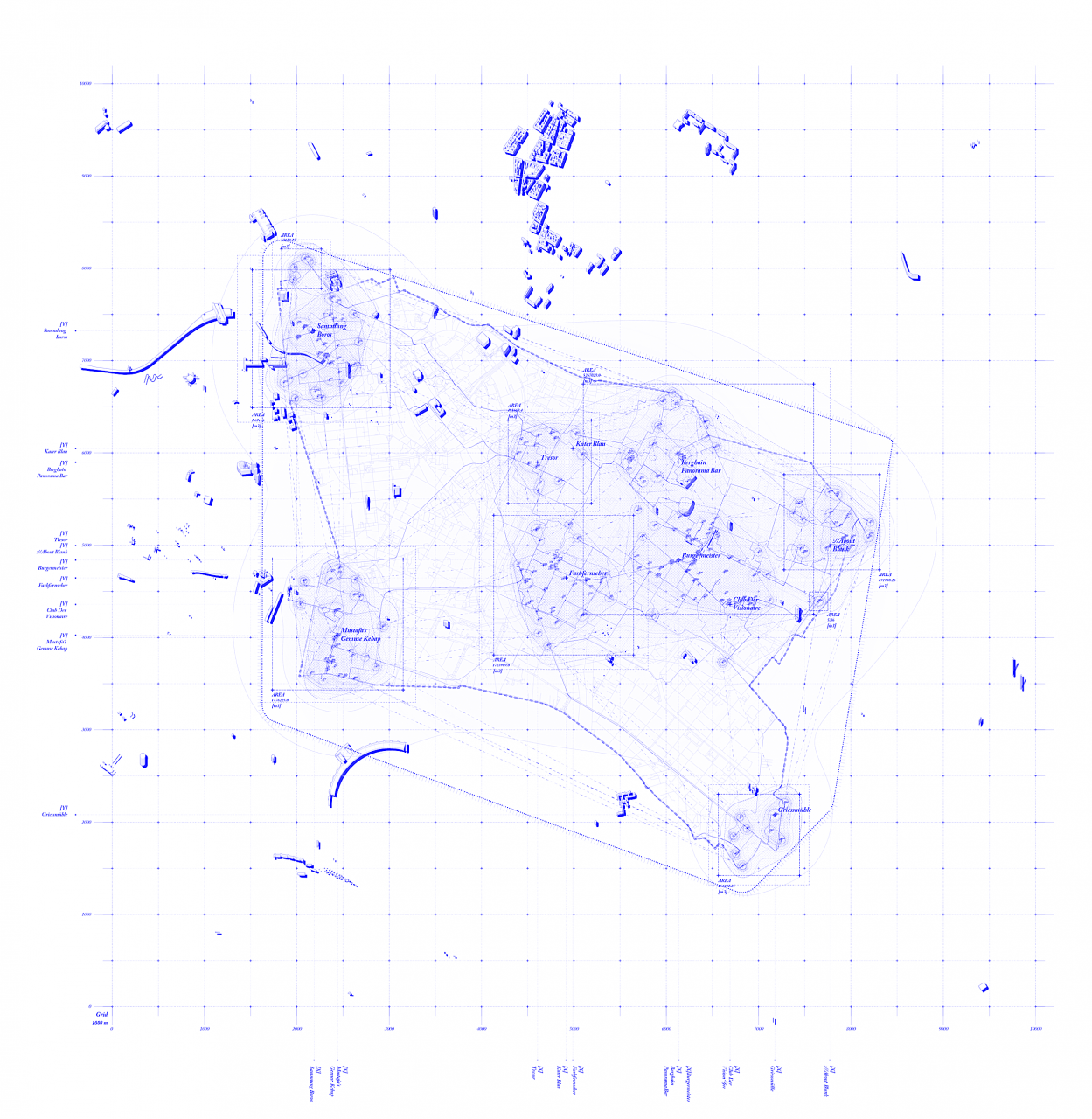
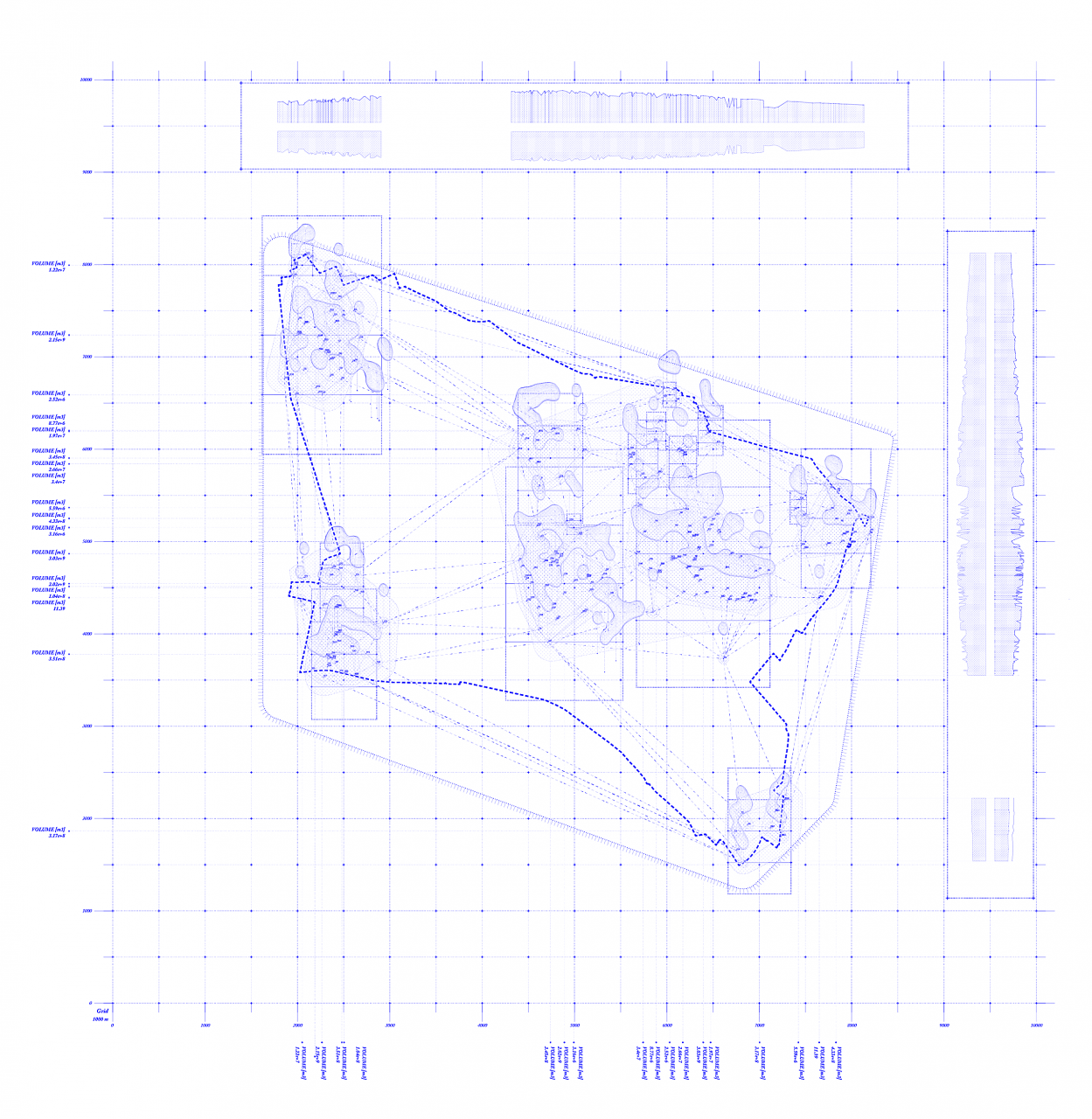
The objective was the reworking of a pre-existing architecture and pre-existing social situations, but analyzed through the prism of the technological processes that govern our societies and the ubiquity of digital networks. We map and investigate virtual flows, the density of interconnections through social networks, etc. (a job of extracting data from social networks).
Then we face a conflict between the virtual urban scale and the real and concrete scale of the city.
I placed myself in the plane of the virtual scale to rework the extracted data: it was to speculate with the possibility of an architecture that had a series of conditions analogous to those that occur in social networks: relationships should be analyzed spatially and then between users, in number of users, trends, flows, movements ...
Several models are generated (corresponding to the different locations studied) and then a selection is made according to the different situations (contexts). These models can be understood as sensors and storage of the activity that takes place in the virtual "social network". Spaces (virtual?) That involve ("wrap") infinite connections between agents of different nature and origin, and between these and materials of all kinds (cultural, biological, physical and technological). In a way, it would be as if we saw an abstract "entity" formed by that amalgam of connections, communications, (des) information and interrelationships in which we live immersed and of which we are part as an uncontrollable gear. The dystopian connotations are, therefore, evident.
As it is also evident that we are located in a territory in which the dominant categories in conventional architectural thinking are no longer useful -especially the links between construction, function, program, uses and spatial organizations-.
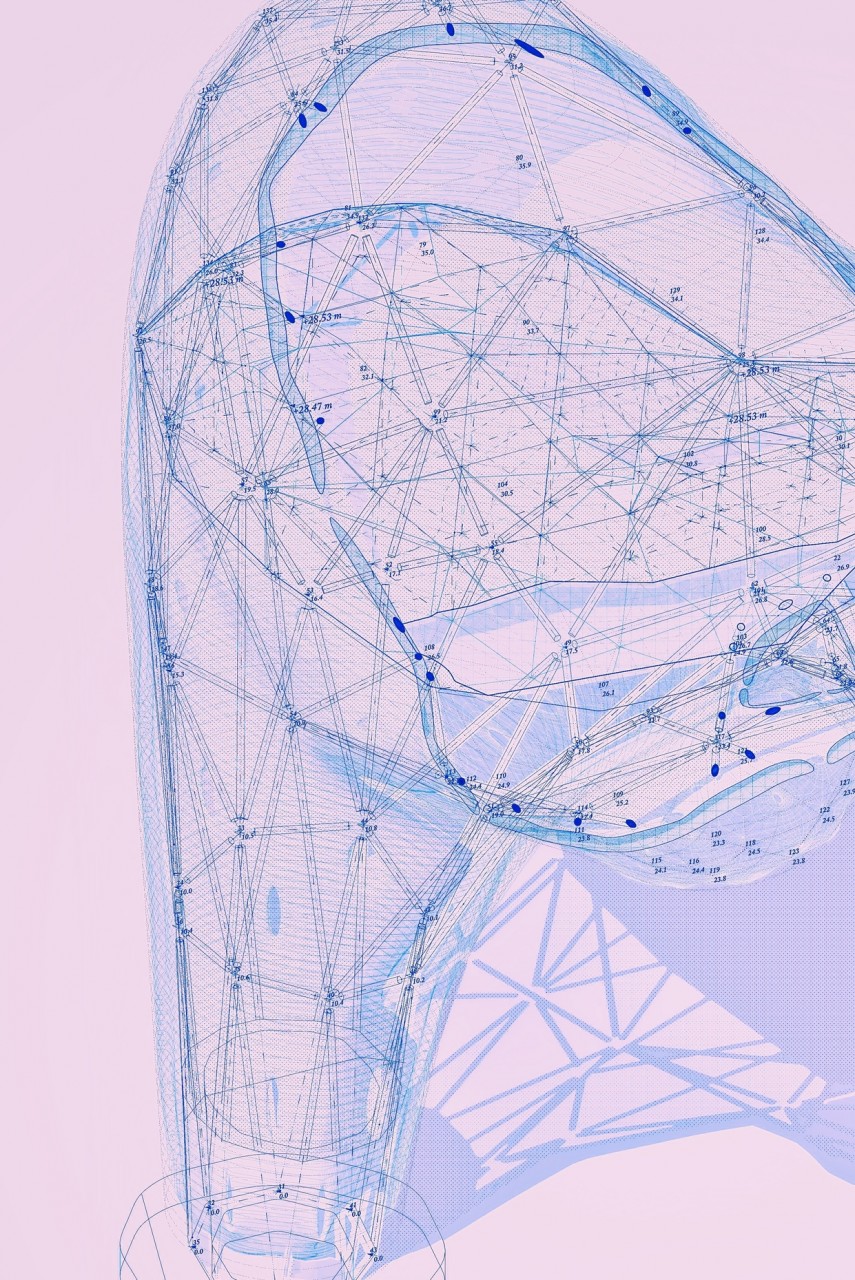
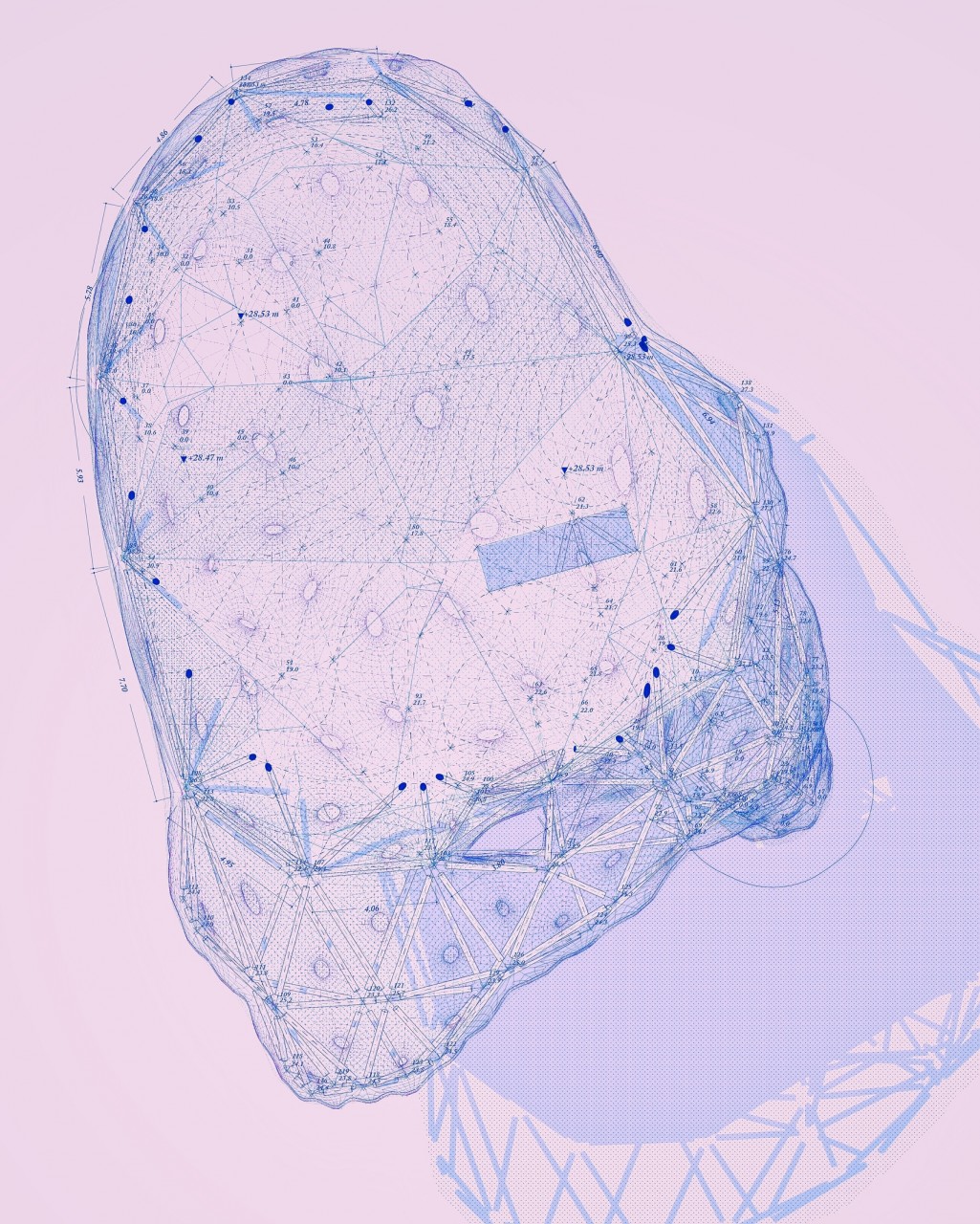
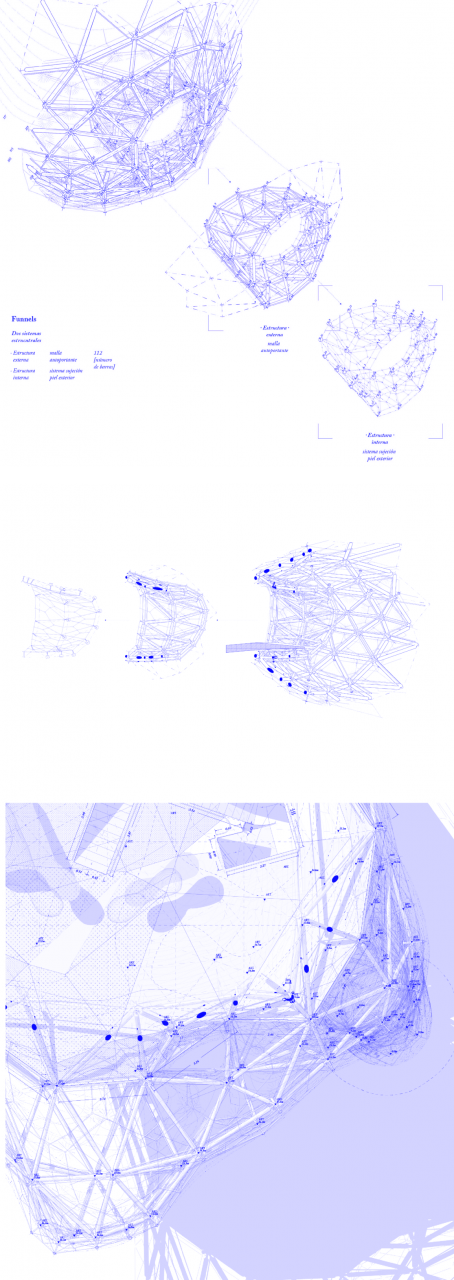
The different artifacts (Trésor and About Blank) are configured by a self-supporting tubular structure, which in turn supports two secondary structures: one interior (optimization) and another exterior (support for the exterior "skin").
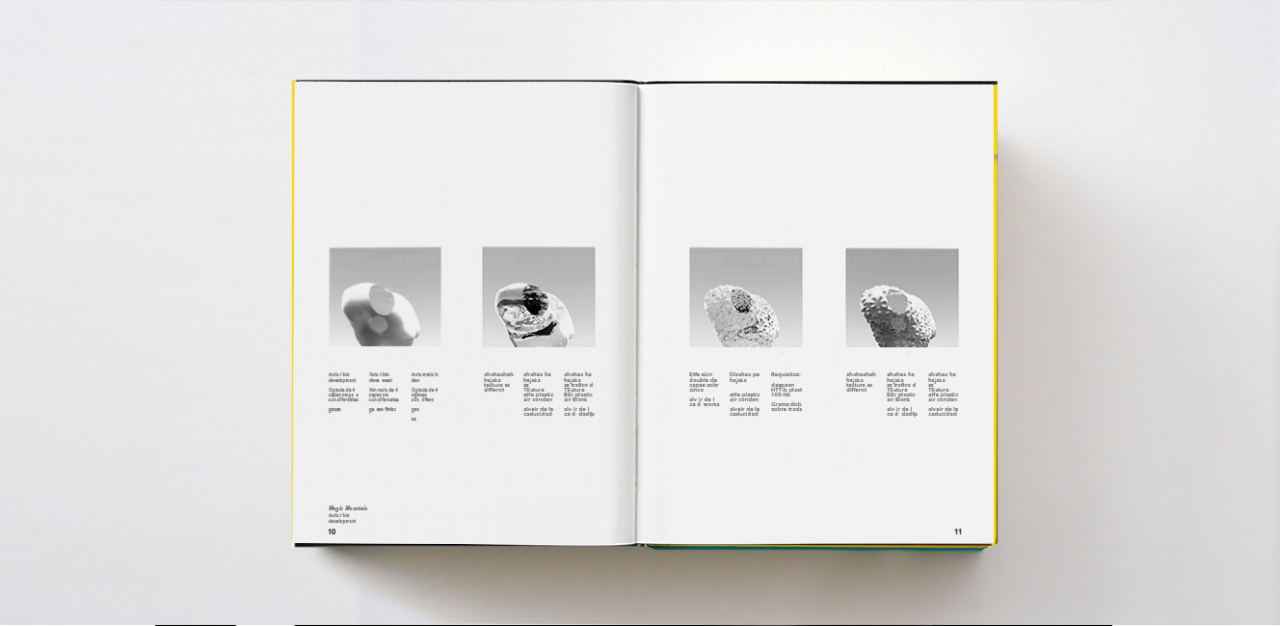
Both artifacts are surrounded by different pneumatic "coatings", each of which has different material characteristics.
The color and light inputs respond to the colors and luminance patterns found in Instagram photos.
This analysis starts from a "drift" that emerges from a conversation through whatsapp (Jesús Escudero) that made us a series of recommendations related to certain places that are characterized by their intensity and social activity (of greater social intensity). It was, in short, to opt for a language of beginning opposed to the academic one; a language, in a sense, apparently inconsistent, "macarra" (in the sense understood by amid.cero9). A language that knows the rules but deliberately subverts them.
The objective was the reworking of a pre-existing architecture and pre-existing social situations, but analyzed through the prism of the technological processes that govern our societies and the ubiquity of digital networks. We map and investigate virtual flows, the density of interconnections through social networks, etc. (a job of extracting data from social networks).
Then we face a conflict between the virtual urban scale and the real and concrete scale of the city.
I placed myself in the plane of the virtual scale to rework the extracted data: it was to speculate with the possibility of an architecture that had a series of conditions analogous to those that occur in social networks: relationships should be analyzed spatially and then between users, in number of users, trends, flows, movements ...
Several models are generated (corresponding to the different locations studied) and then a selection is made according to the different situations (contexts). These models can be understood as sensors and storage of the activity that takes place in the virtual "social network". Spaces (virtual?) That involve ("wrap") infinite connections between agents of different nature and origin, and between these and materials of all kinds (cultural, biological, physical and technological). In a way, it would be as if we saw an abstract "entity" formed by that amalgam of connections, communications, (des) information and interrelationships in which we live immersed and of which we are part as an uncontrollable gear. The dystopian connotations are, therefore, evident.
As it is also evident that we are located in a territory in which the dominant categories in conventional architectural thinking are no longer useful -especially the links between construction, function, program, uses and spatial organizations-.
The different artifacts (Trésor and About Blank) are configured by a self-supporting tubular structure, which in turn supports two secondary structures: one interior (optimization) and another exterior (support for the exterior "skin").
Both artifacts are surrounded by different pneumatic "coatings", each of which has different material characteristics.
The color and light inputs respond to the colors and luminance patterns found in Instagram photos.
- 00 - Description
- 01 - book 1
- 02 - book 2
- 03 - book 3
- 04 - situation
- 05 - diagram berlin
- 06 - flayers
- 07 - book 4
- 08 - axonometric
- 09 - plant
- 10 - detail
- 11 - Video