
Broken brick
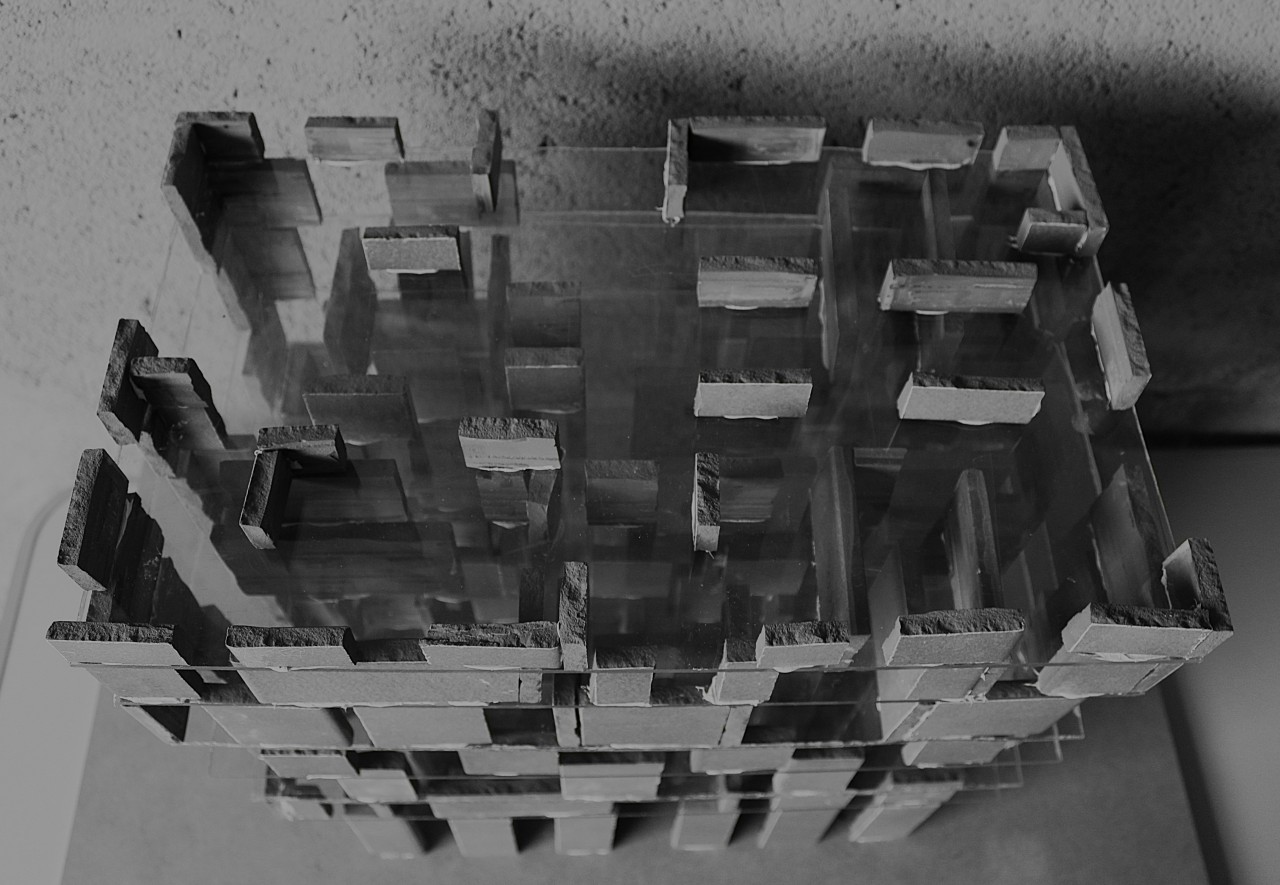
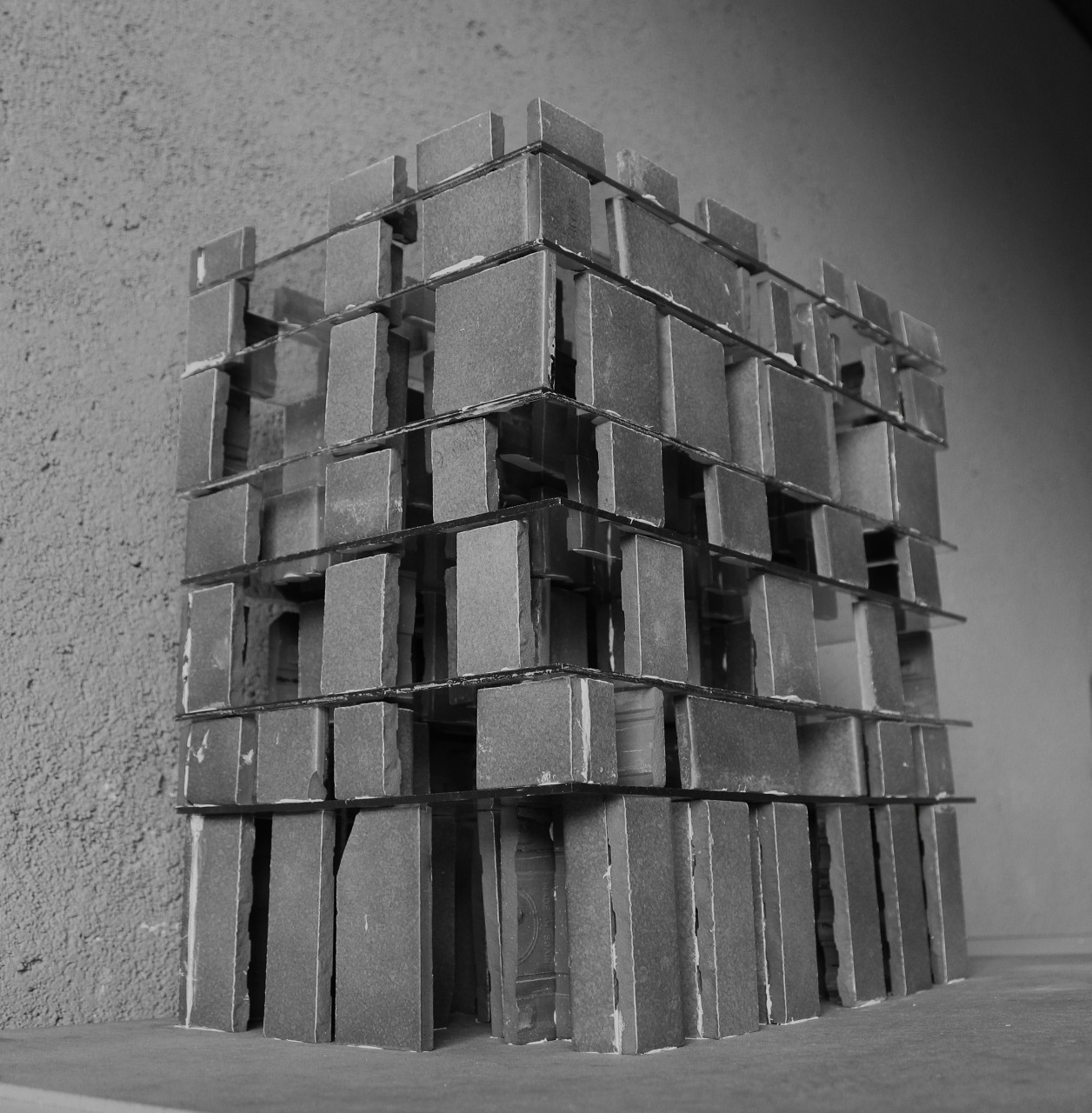
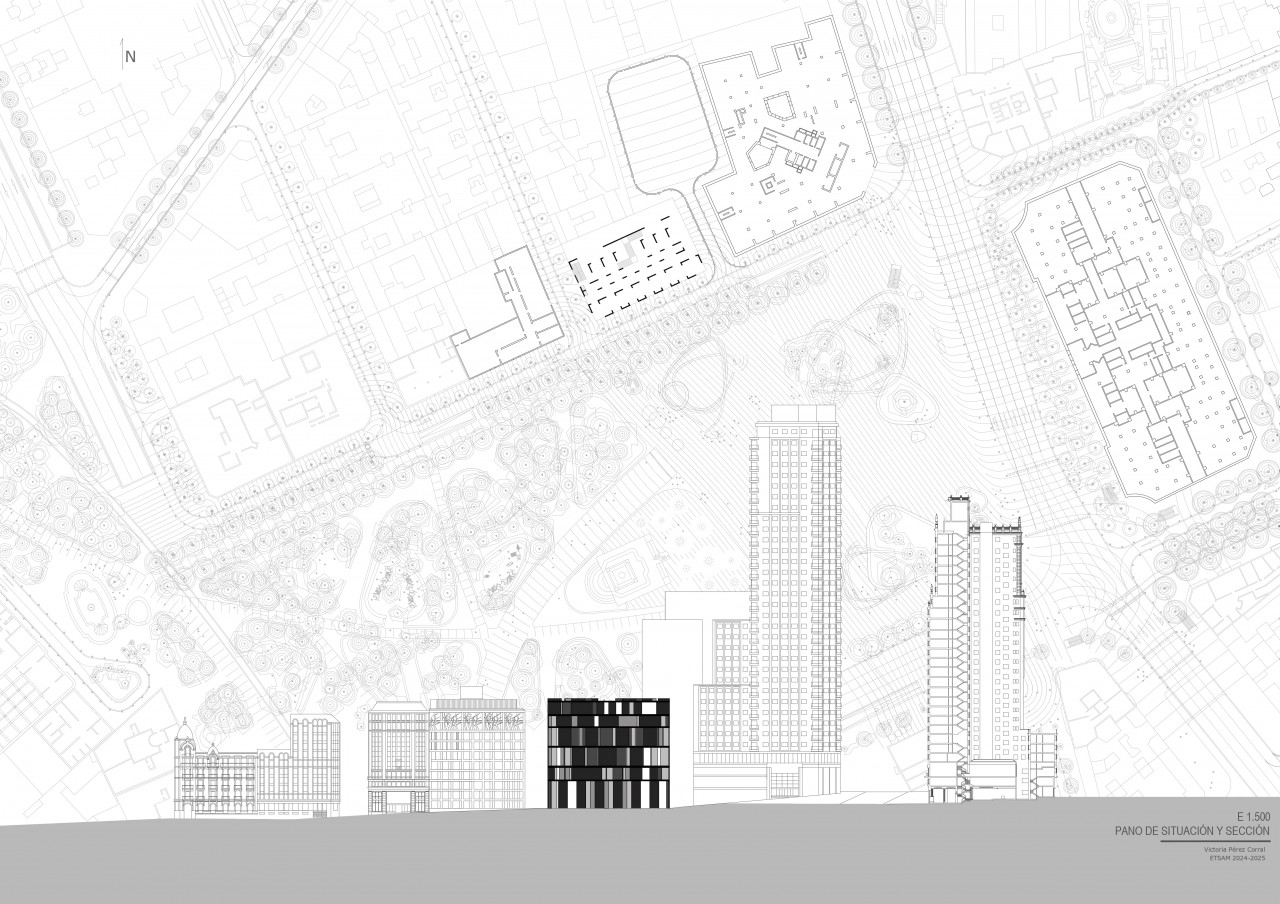
This project was born from a conceptual model created in class. The model consisted simply of a broken brick. By placing the pieces of the brick with gaps between them, we managed to create an architectural "plan" that is permeable and allows for free circulation. This idea aligned with the analyses we conducted on the project's site, Plaza España (Madrid), as my group and I had focused on the movement patterns in the square, specifically the relationship between Plaza España and the smaller square located behind our project's plot: Plaza Emilio Jiménez Millas. That small square is isolated and rarely used, whereas on the other side of our site, we find the chaos and bustle of Plaza España.
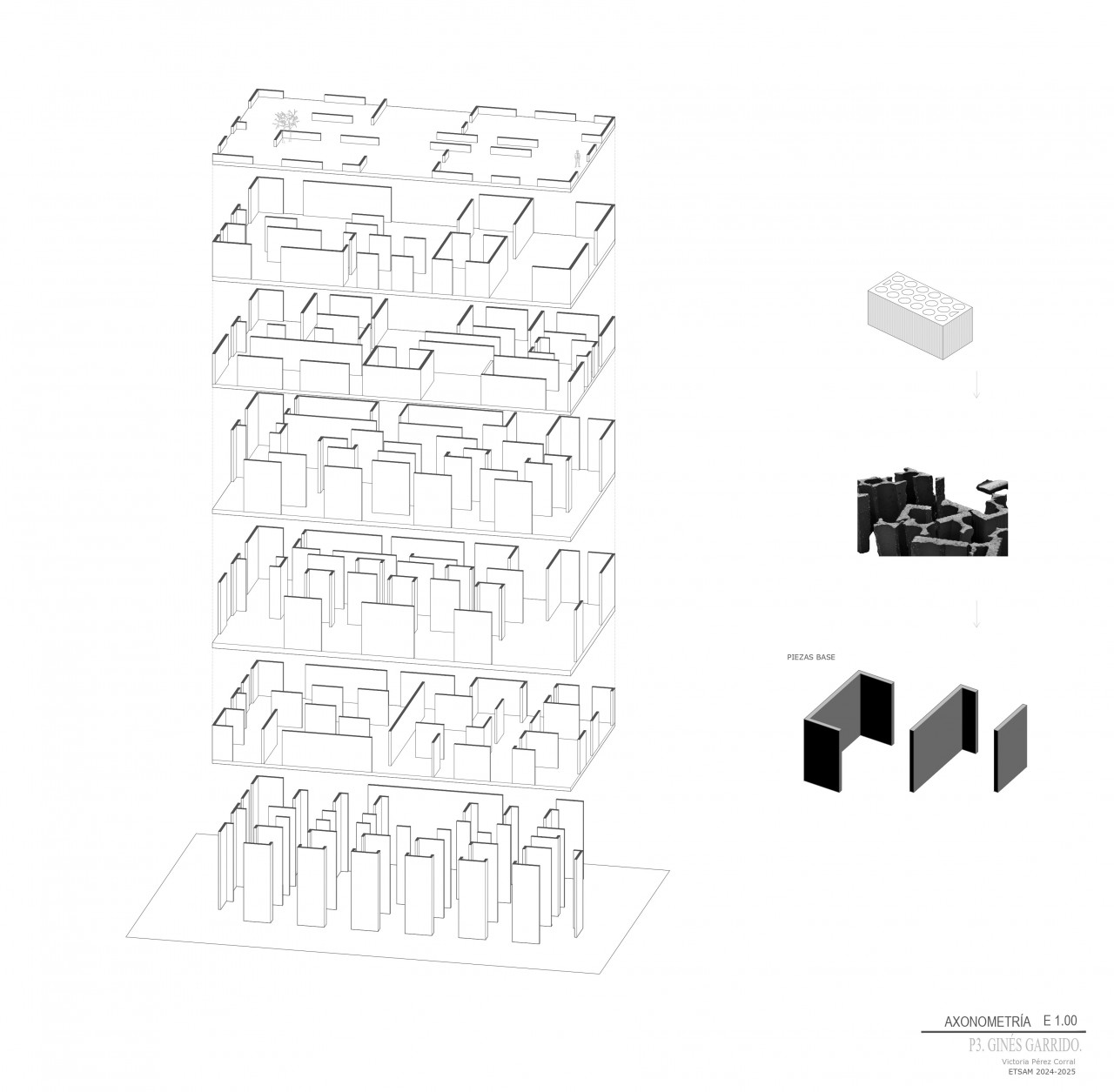
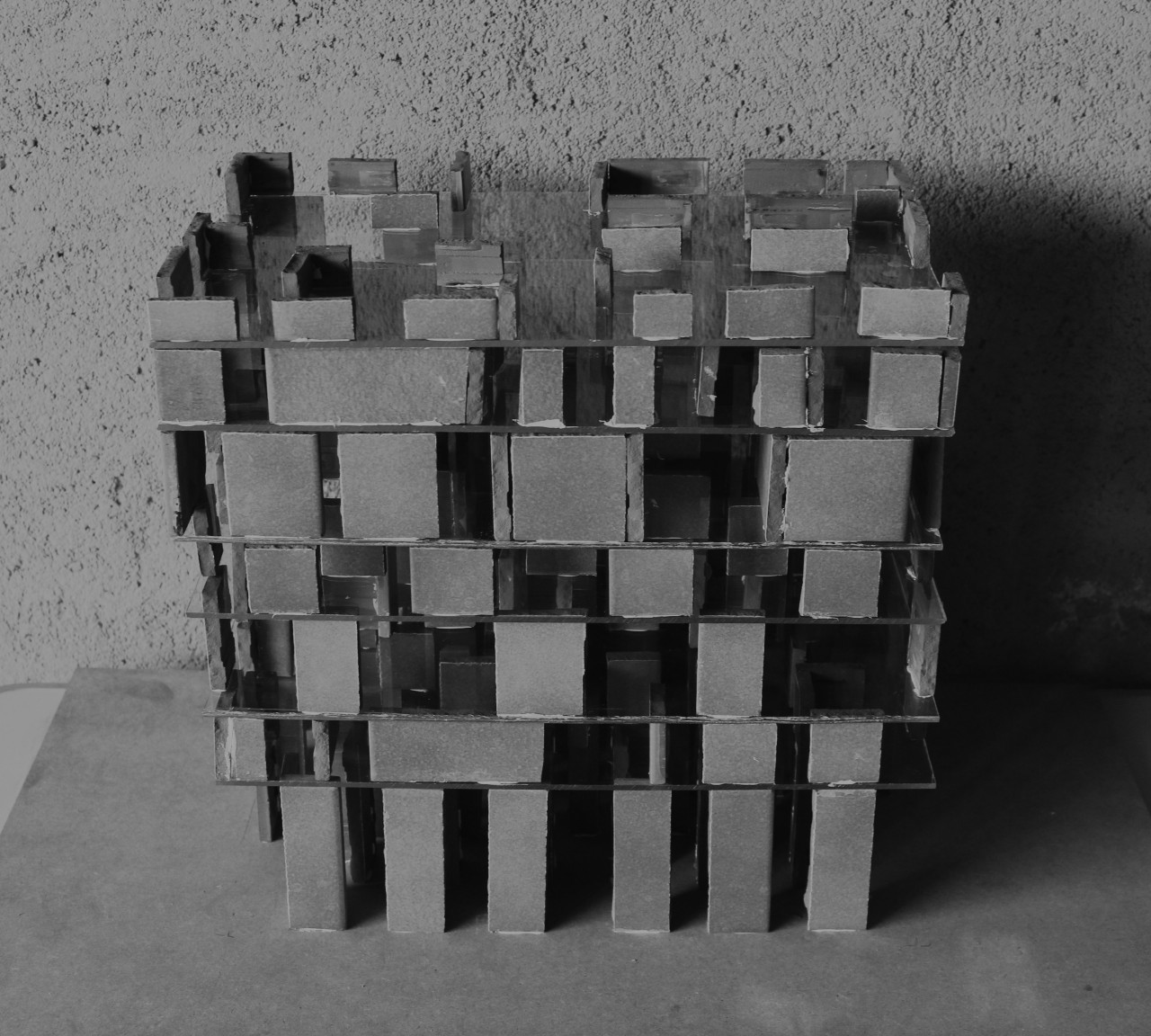
Taking all of this into account, in order to avoid working with the random geometry of a broken brick, I simplified those forms into three basic working pieces: L-shapes, C-shapes, and planes or walls. Using these elements, I began to design the ground floor, making it an extension of the plaza by keeping it completely open—essentially creating a "forest of columns" that encourages the connection between Plaza España and Plaza Emilio Jiménez Millas.
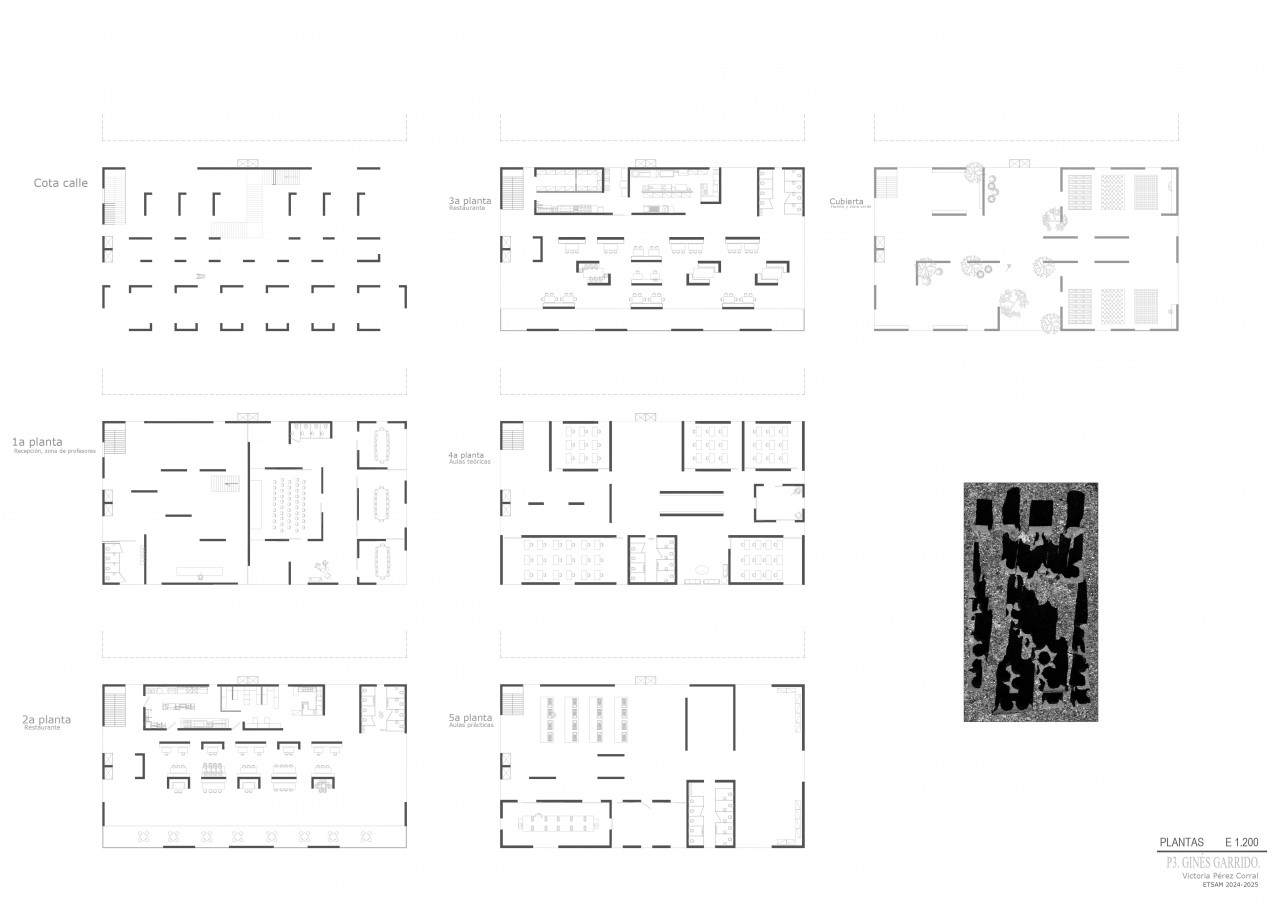
Once this was established, I began developing the rest of the floors of our building, a culinary research center. To do so, I considered which rooms were needed, how many, and what dimensions they should have. With that clear, I used the basic pieces to articulate each floor, creating open plans and spaces that were never fully enclosed.
Taking all of this into account, in order to avoid working with the random geometry of a broken brick, I simplified those forms into three basic working pieces: L-shapes, C-shapes, and planes or walls. Using these elements, I began to design the ground floor, making it an extension of the plaza by keeping it completely open—essentially creating a "forest of columns" that encourages the connection between Plaza España and Plaza Emilio Jiménez Millas.
Once this was established, I began developing the rest of the floors of our building, a culinary research center. To do so, I considered which rooms were needed, how many, and what dimensions they should have. With that clear, I used the basic pieces to articulate each floor, creating open plans and spaces that were never fully enclosed.
- 00 - Description
- 01 - Model photograph
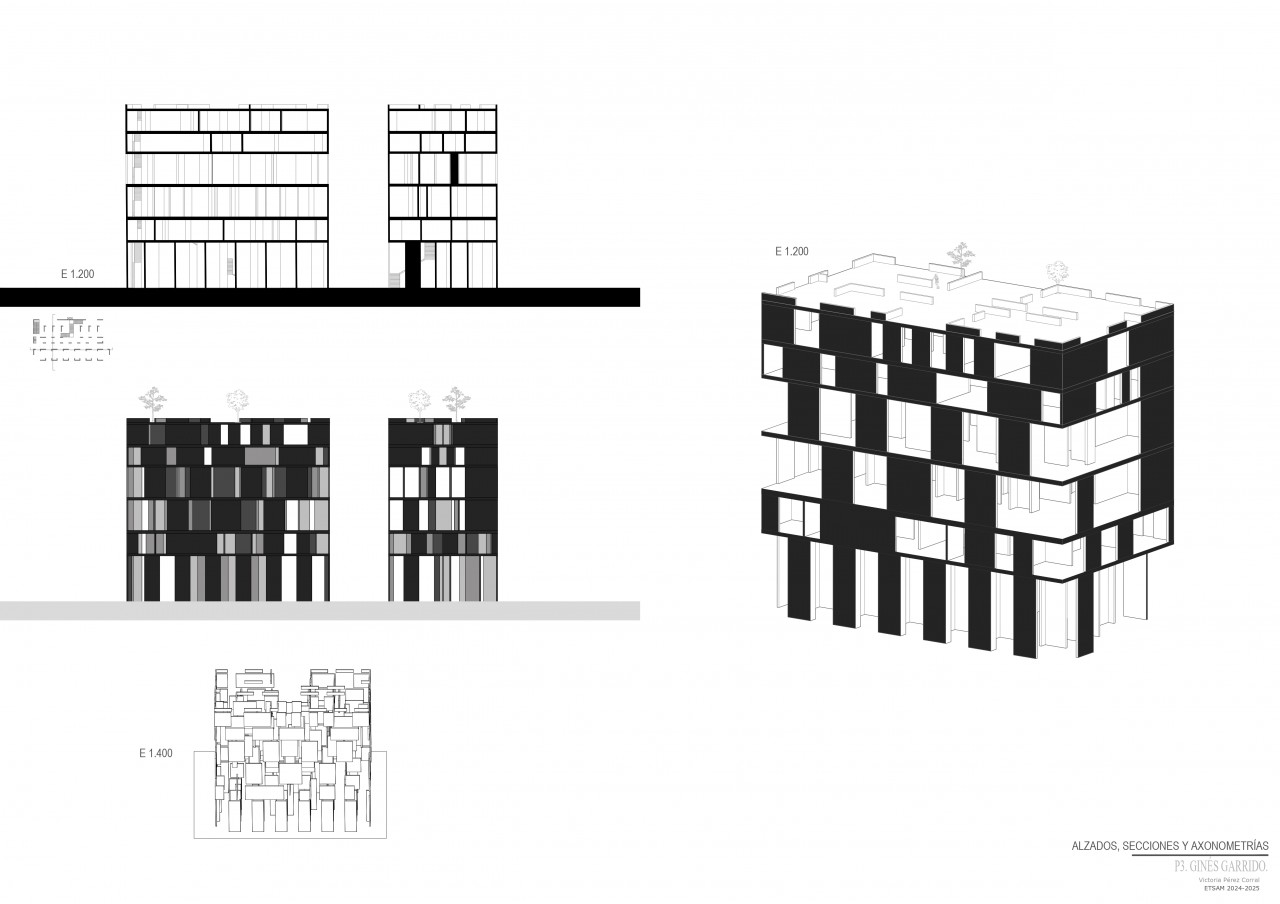
- 02 - Axonometric, views
- 03 - Exploded axonometry
- 04 - Plans
- 05 - Model photograph
- 06 - Model photograph
- 07 - Situation plan