
c[er]ritos
The Cerro de Almodóvar, more than a mere landscape feature, is reimagined in this project as a living entity that sings and yearns, a lovesick hill that never ceased waiting for its forgetful visitors. This concept, inspired by the tale of a hill that sings Juan Gabriel songs, shapes a unique architectural proposal: to transform the relationship between people and the landscape, making the hill not merely a physical space but an emotional and tangible bridge to its former visitors. In this reinterpretation, the hill transcends its static nature and finds a way to reach those who, due to distance or neglect, have stopped visiting it.
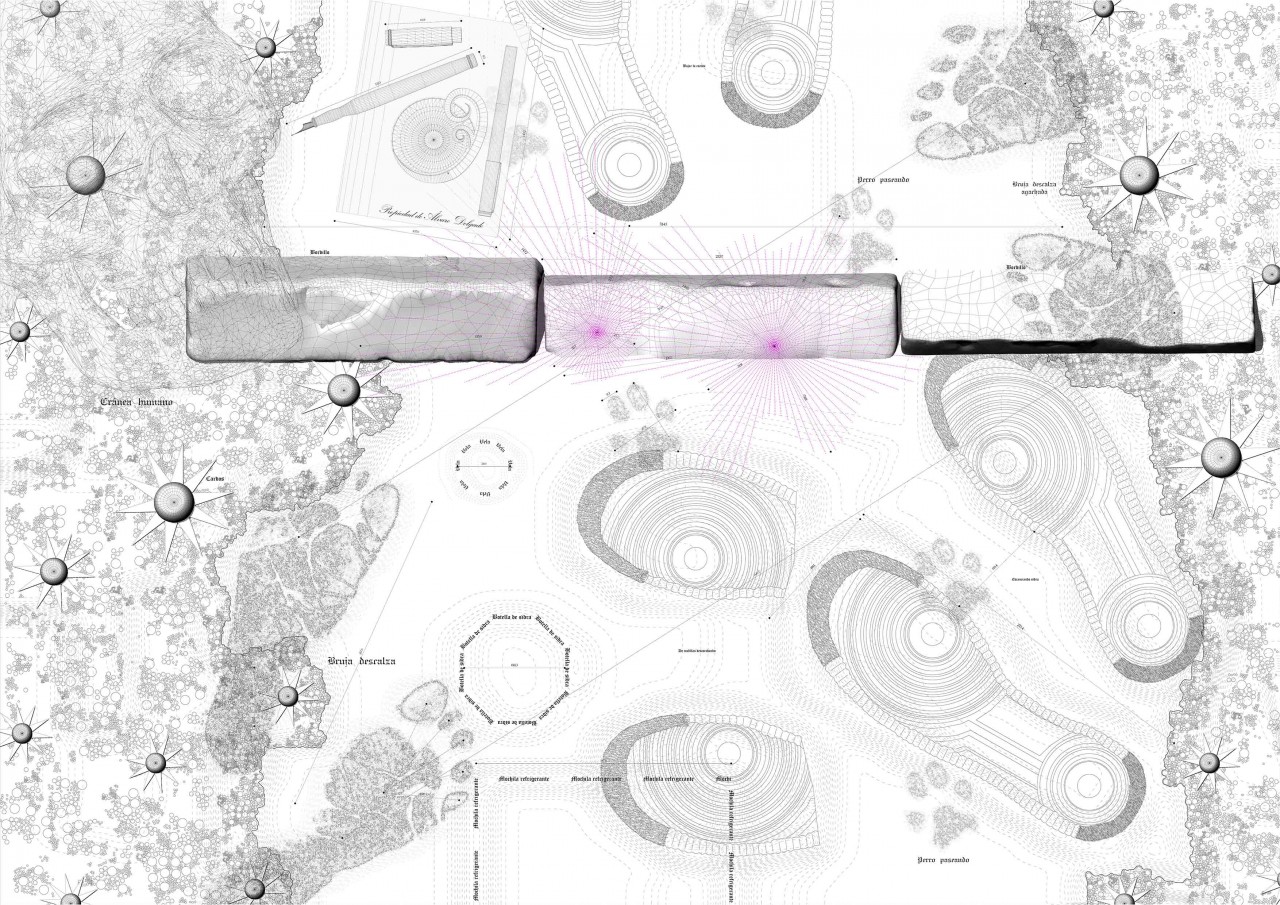
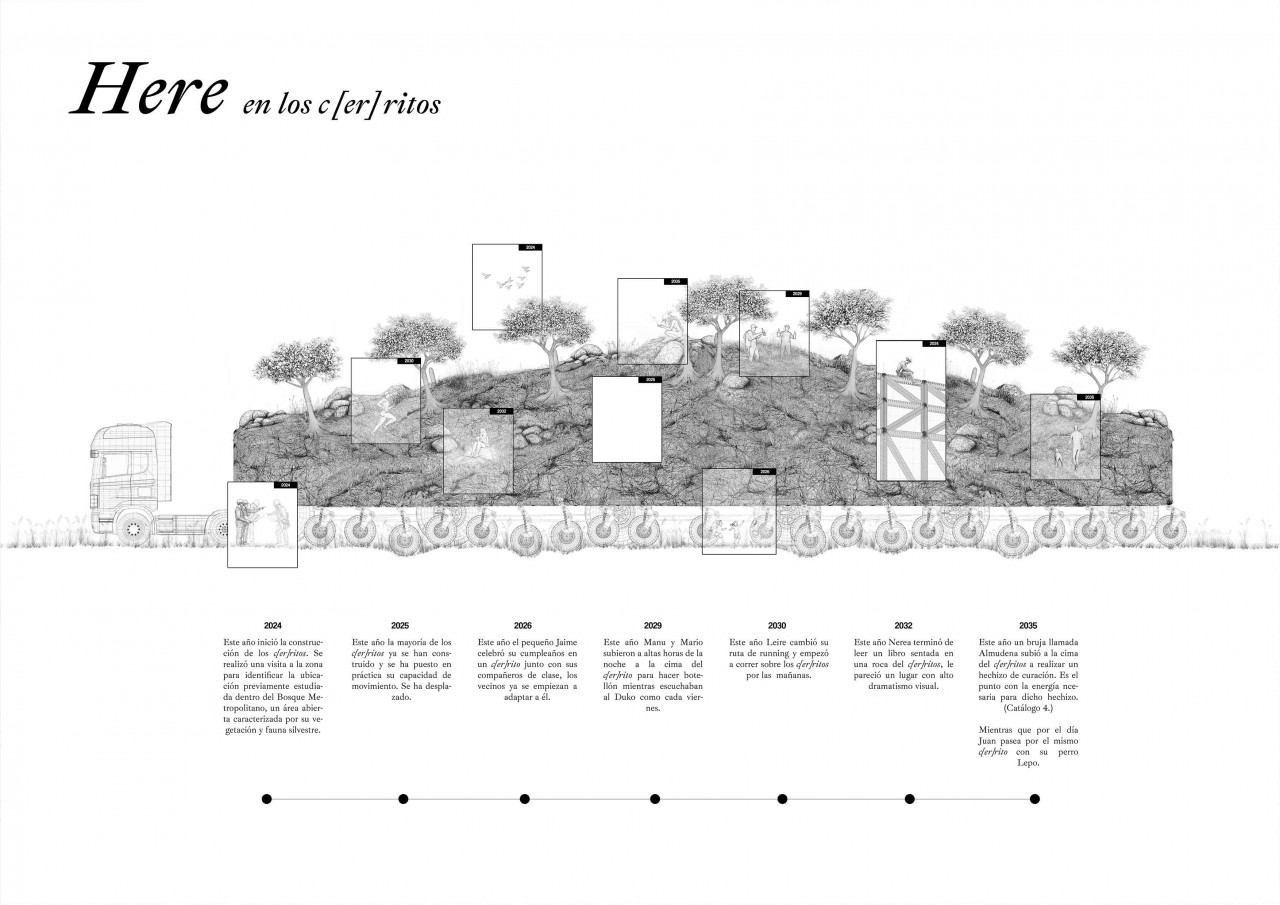
Legend has it that, in an act of selflessness, the hill decided to break off small fragments of itself and send them out into the world. These “traveling cerritos” would carry not only the hill’s natural essence but also its mystical energy, its memories, and its love for those who once gave it life through their presence. According to the story, it was a witch who, through her magic, enabled these cerritos to move. While this narrative may be fantastical, the architectural project brings the dream to life through a careful combination of technology, sustainable design, and poetic inspiration.
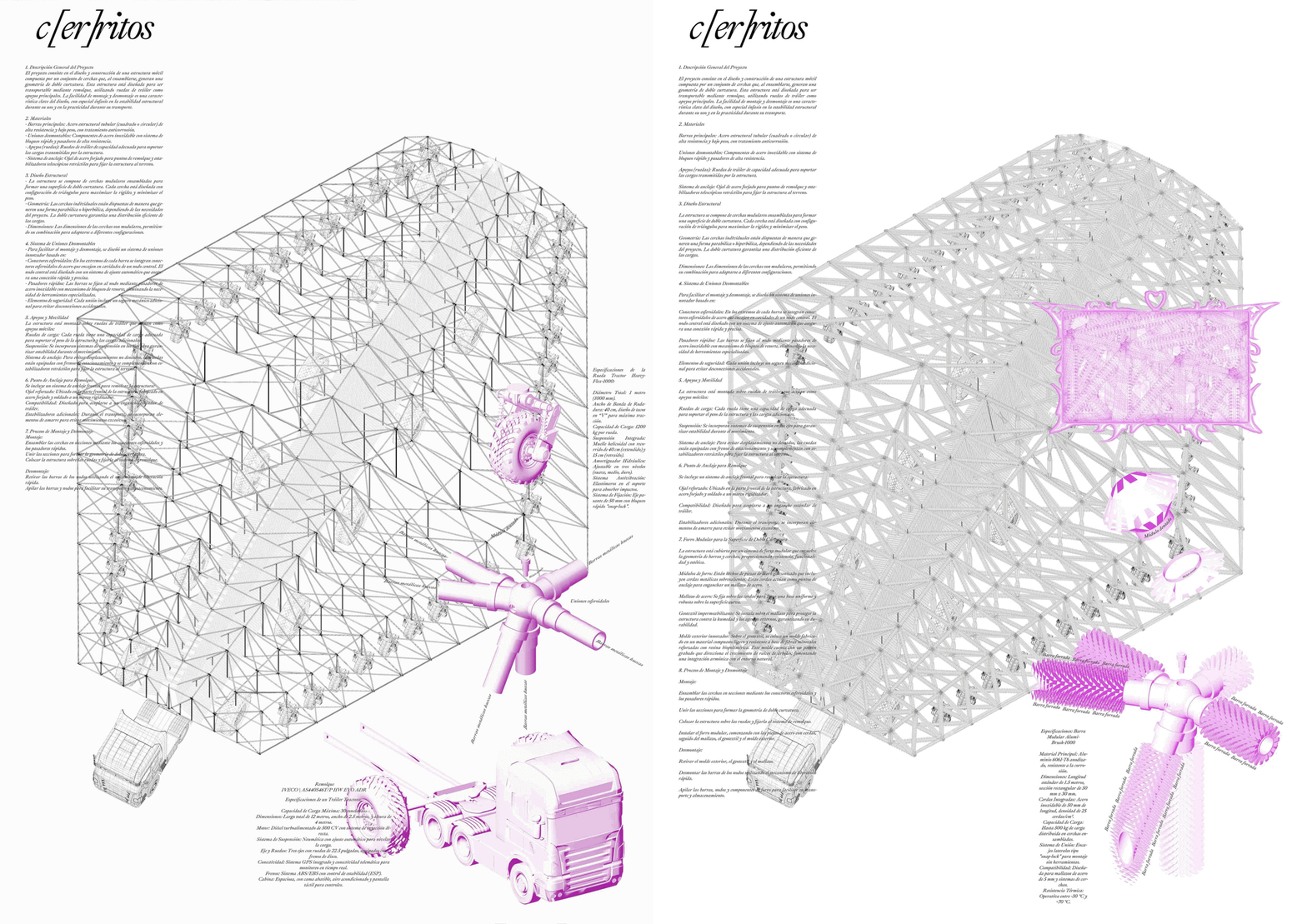
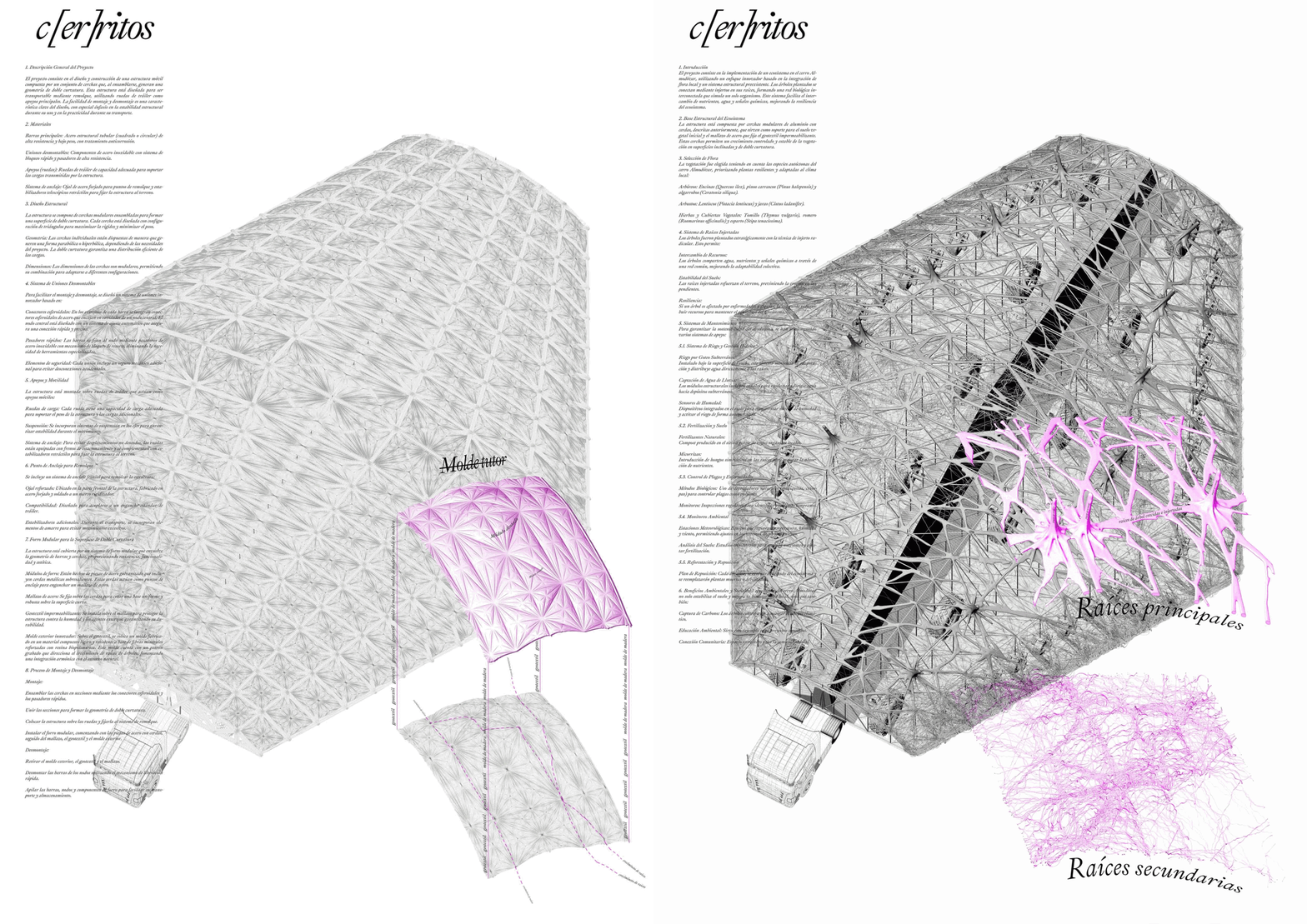
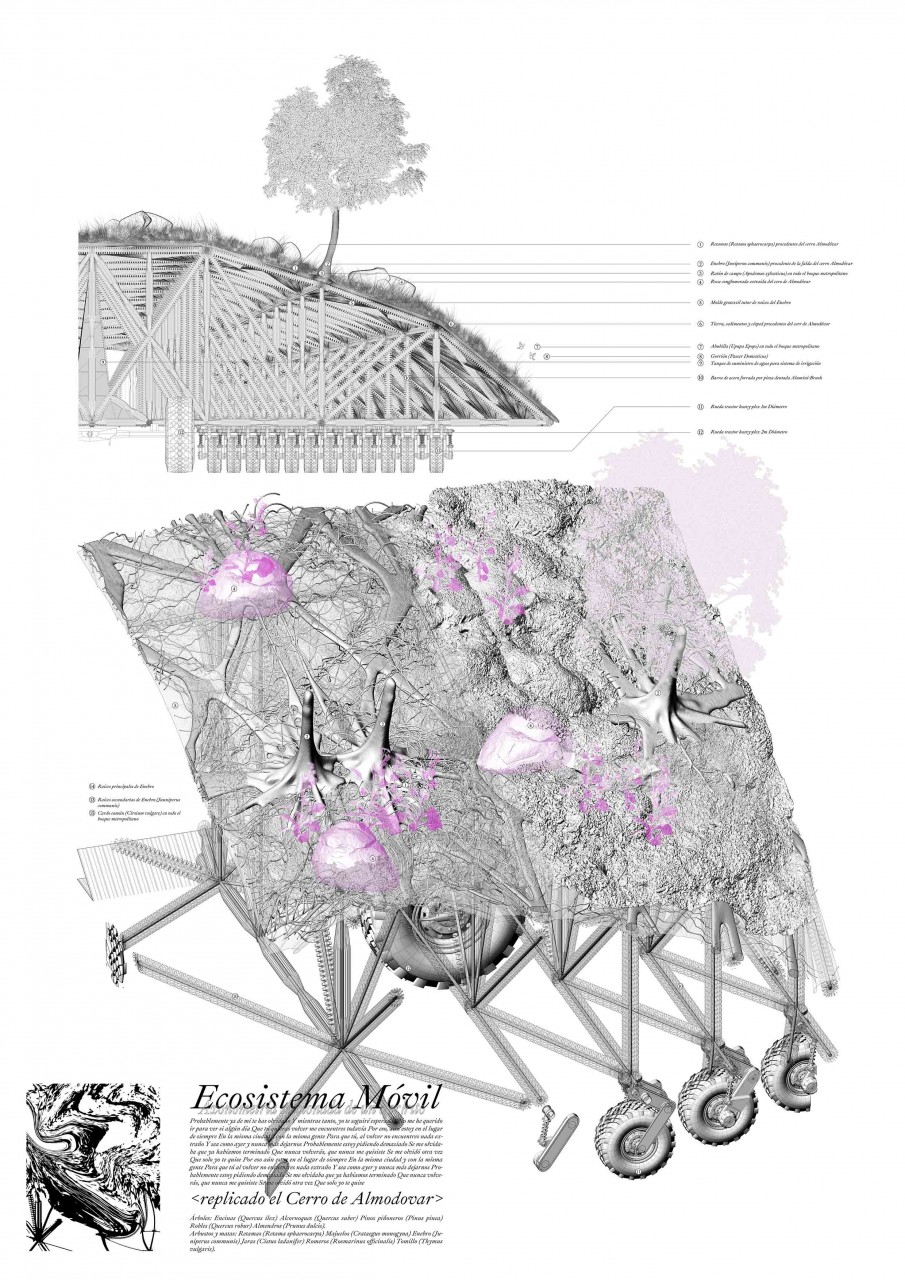
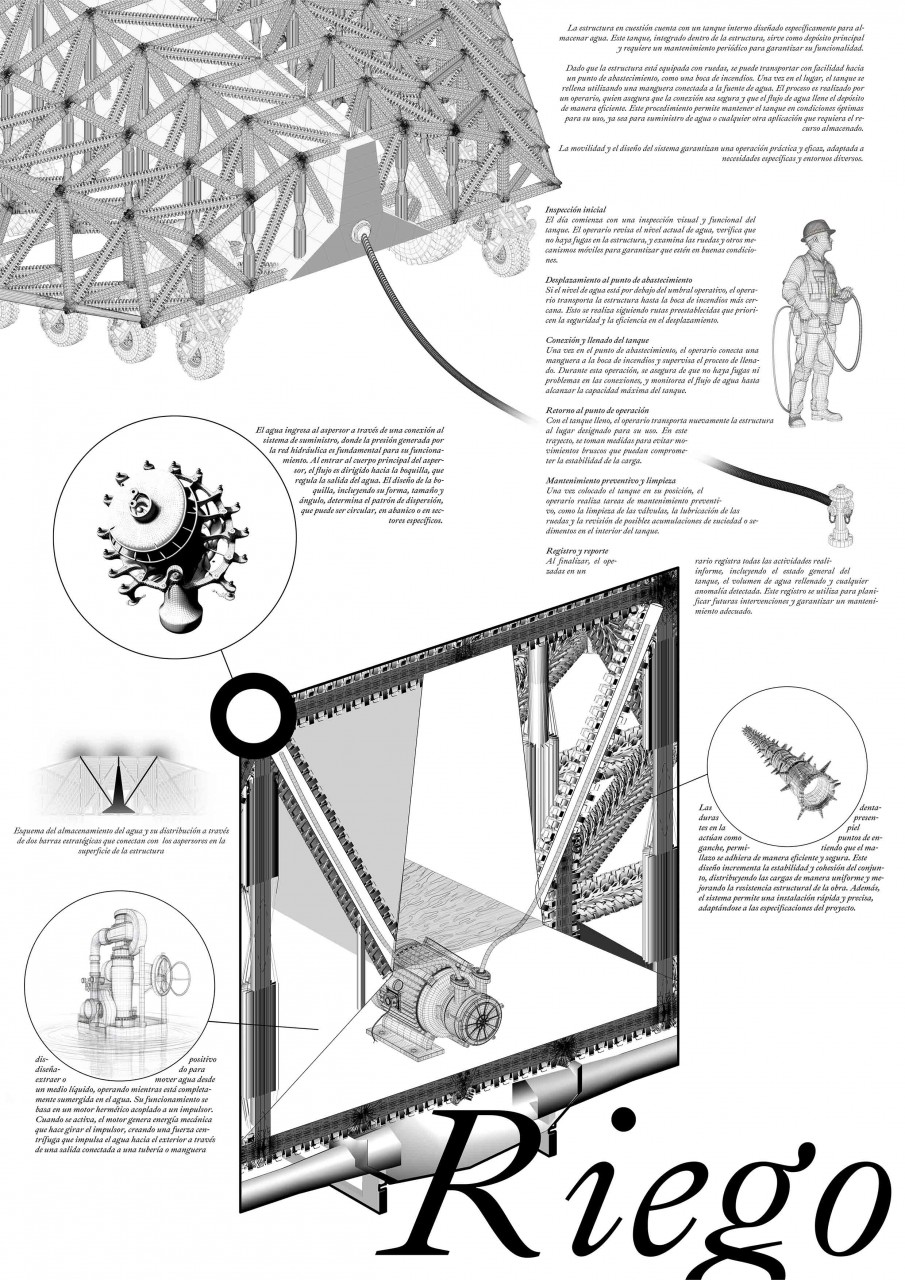
Each cerrito is a living structure, designed to resemble a fragment of the original hill but endowed with mobility. At their core, advanced systems ensure the preservation of vegetation and water resources. A framework of lightweight, sustainable materials supports a complete ecosystem where trees, shrubs, and flowers thrive, recreating the biodiversity of Cerro de Almodóvar. Additionally, the cerritos are equipped with water reservoirs that can be refilled at nearby stations, ensuring their self-sufficiency as they move through urban or rural areas.
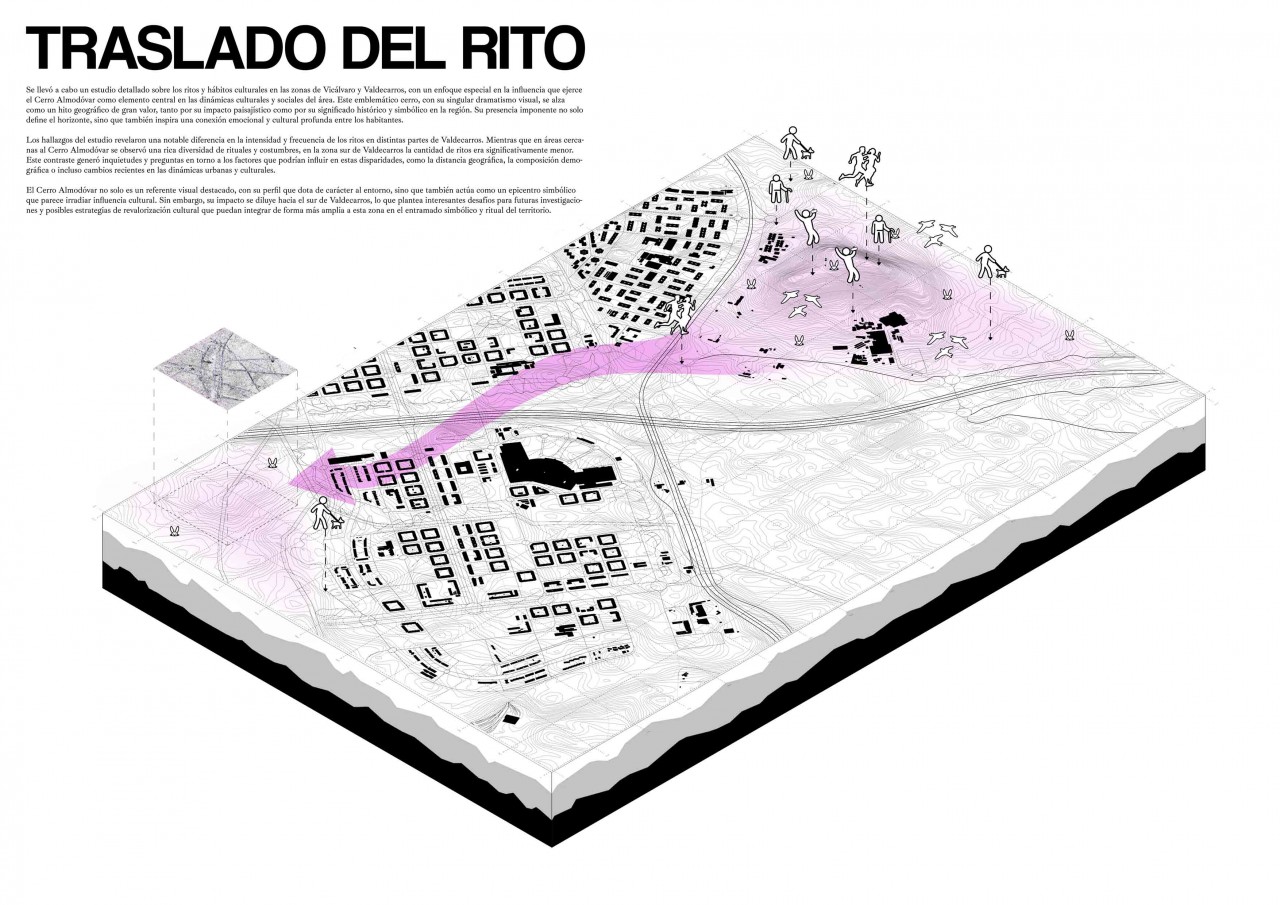
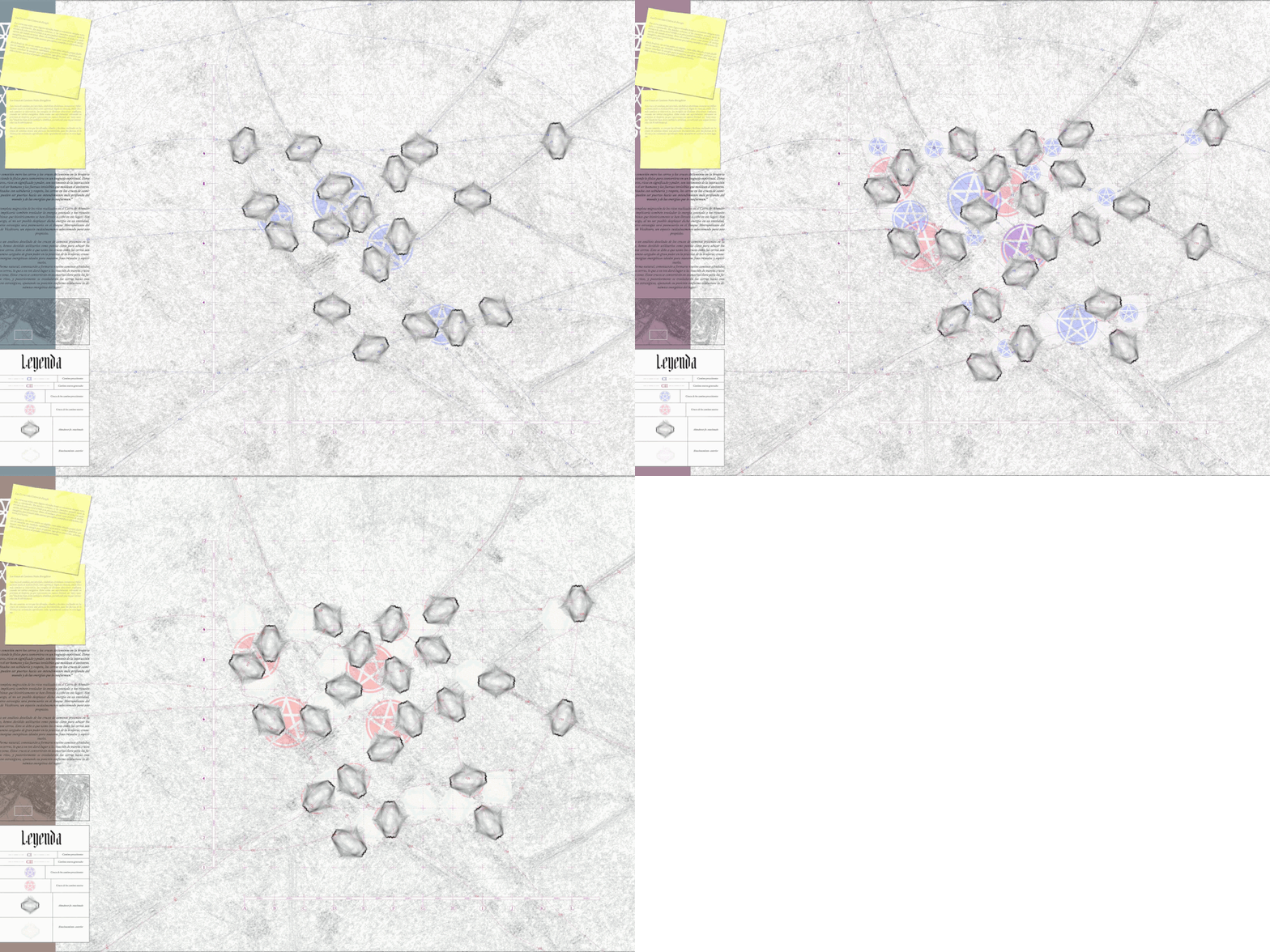
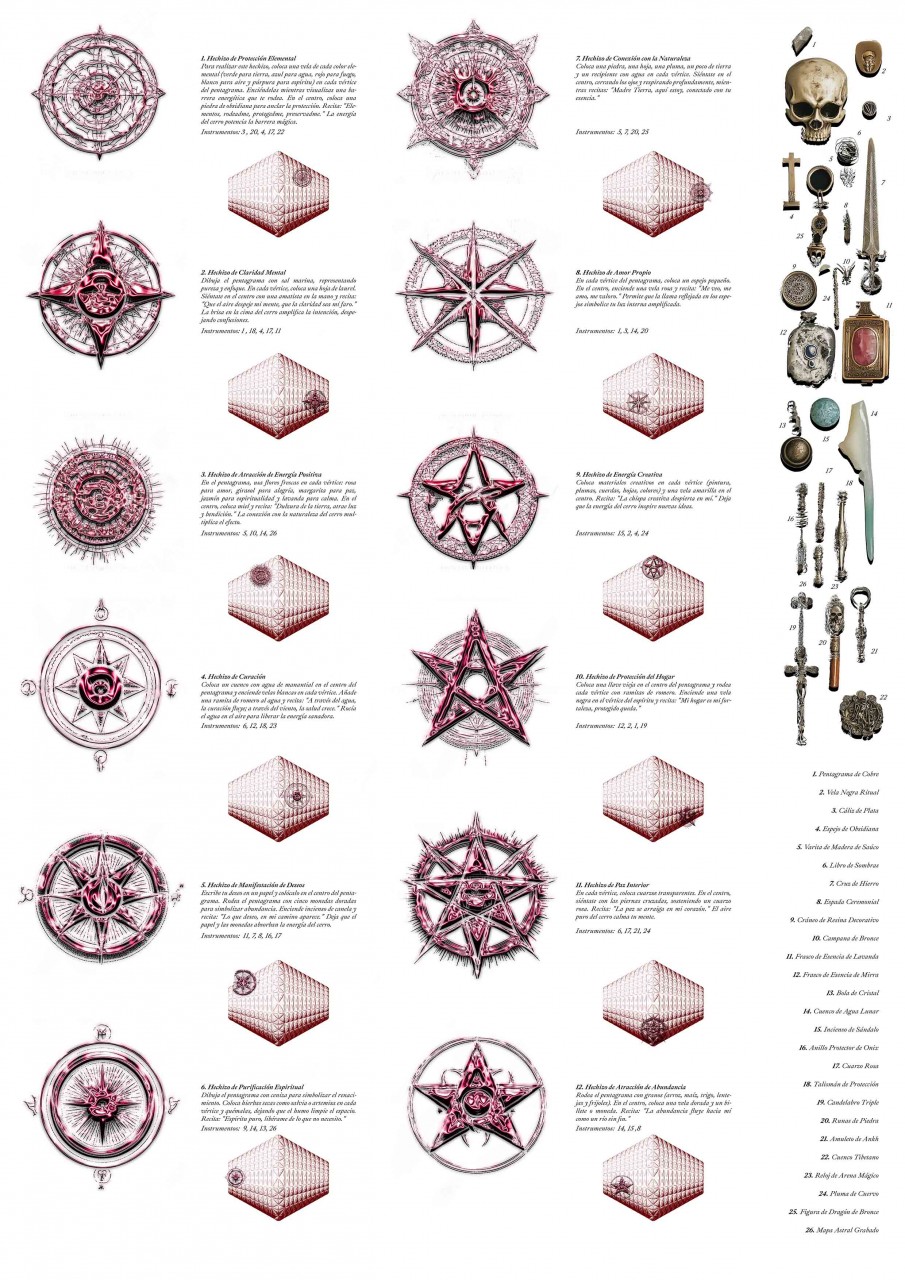
The movement of the cerritos, however, is not random. In a nod to the esoteric tales and rituals once associated with the hill, these fragments follow patterns that respect crossroads and points of mystical energy. In doing so, they become part of a dynamic game, akin to a “find the pea under the cup,” inviting visitors to discover them and explore new spaces to reconnect with them. This continuous movement not only revitalizes the places the cerritos visit but also keeps the connection between people and the original hill alive, ensuring its presence remains both tangible and close.
Beyond its technical and ecological aspects, the project is imbued with a narrative that makes it accessible to all audiences. For children, it tells the story of a singing hill that sends magical pieces of itself to find distant friends. For adults, it offers a reflection on the importance of preserving emotional connections with nature and how architecture can serve as a vehicle to revive collective memory and regenerate neglected spaces.
In this way, Cerro de Almodóvar not only reclaims its place in the lives of those who have forgotten it but also reinvents itself as a symbol of connection and transformation. The traveling cerritos are much more than fragments of a landscape; they are pieces of history, nostalgia, and love that invite us to walk, to remember, and to care for what, though sometimes forgotten, remains essential in our lives.
Legend has it that, in an act of selflessness, the hill decided to break off small fragments of itself and send them out into the world. These “traveling cerritos” would carry not only the hill’s natural essence but also its mystical energy, its memories, and its love for those who once gave it life through their presence. According to the story, it was a witch who, through her magic, enabled these cerritos to move. While this narrative may be fantastical, the architectural project brings the dream to life through a careful combination of technology, sustainable design, and poetic inspiration.
Each cerrito is a living structure, designed to resemble a fragment of the original hill but endowed with mobility. At their core, advanced systems ensure the preservation of vegetation and water resources. A framework of lightweight, sustainable materials supports a complete ecosystem where trees, shrubs, and flowers thrive, recreating the biodiversity of Cerro de Almodóvar. Additionally, the cerritos are equipped with water reservoirs that can be refilled at nearby stations, ensuring their self-sufficiency as they move through urban or rural areas.
The movement of the cerritos, however, is not random. In a nod to the esoteric tales and rituals once associated with the hill, these fragments follow patterns that respect crossroads and points of mystical energy. In doing so, they become part of a dynamic game, akin to a “find the pea under the cup,” inviting visitors to discover them and explore new spaces to reconnect with them. This continuous movement not only revitalizes the places the cerritos visit but also keeps the connection between people and the original hill alive, ensuring its presence remains both tangible and close.
Beyond its technical and ecological aspects, the project is imbued with a narrative that makes it accessible to all audiences. For children, it tells the story of a singing hill that sends magical pieces of itself to find distant friends. For adults, it offers a reflection on the importance of preserving emotional connections with nature and how architecture can serve as a vehicle to revive collective memory and regenerate neglected spaces.
In this way, Cerro de Almodóvar not only reclaims its place in the lives of those who have forgotten it but also reinvents itself as a symbol of connection and transformation. The traveling cerritos are much more than fragments of a landscape; they are pieces of history, nostalgia, and love that invite us to walk, to remember, and to care for what, though sometimes forgotten, remains essential in our lives.

- 00 - Description
- 01 - Concept
- 02 - Mapped rites
- 03 - Witchcraft Enhancer
- 04 - Spell catalog
- 05 - C[er]rito structure
- 06 - C[er]rito structure
- 07 - C[er]rito Axo
- 08 - Irrigation
- 09 - "Here"
- 10 - Render
- 11 - Video