
Cooperativa Obradoiro
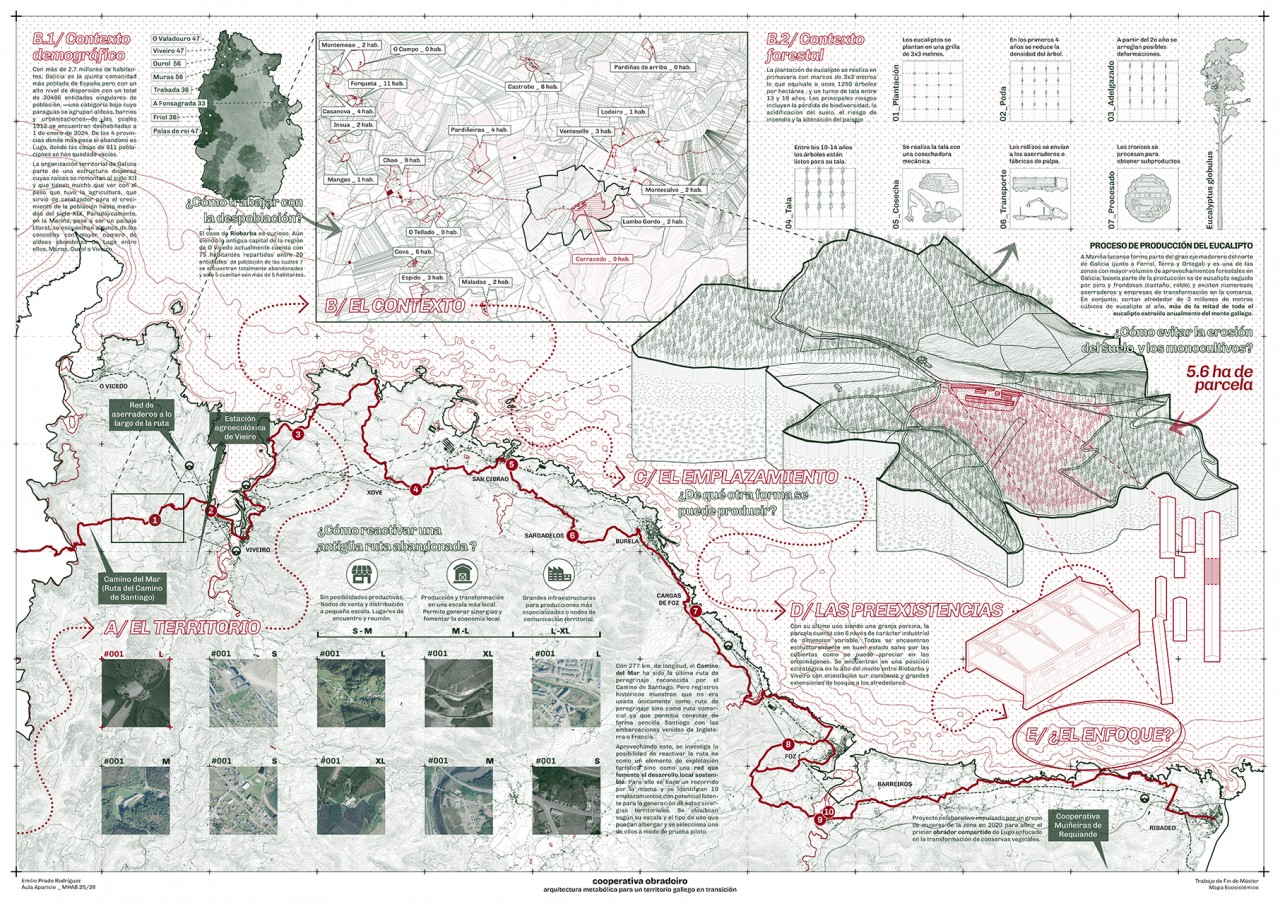
Riobarba, in the municipality of O Vicedo, is part of a rural Galicia deeply affected by depopulation, demographic aging, and the decline of agricultural activity. This situation leads to underused buildings and large extensions of land dominated by eucalyptus monocultures. How can we work with this set of conditions operating within the territory? How can we recover a food sovereignty that fosters local and sustainable production and consumption?
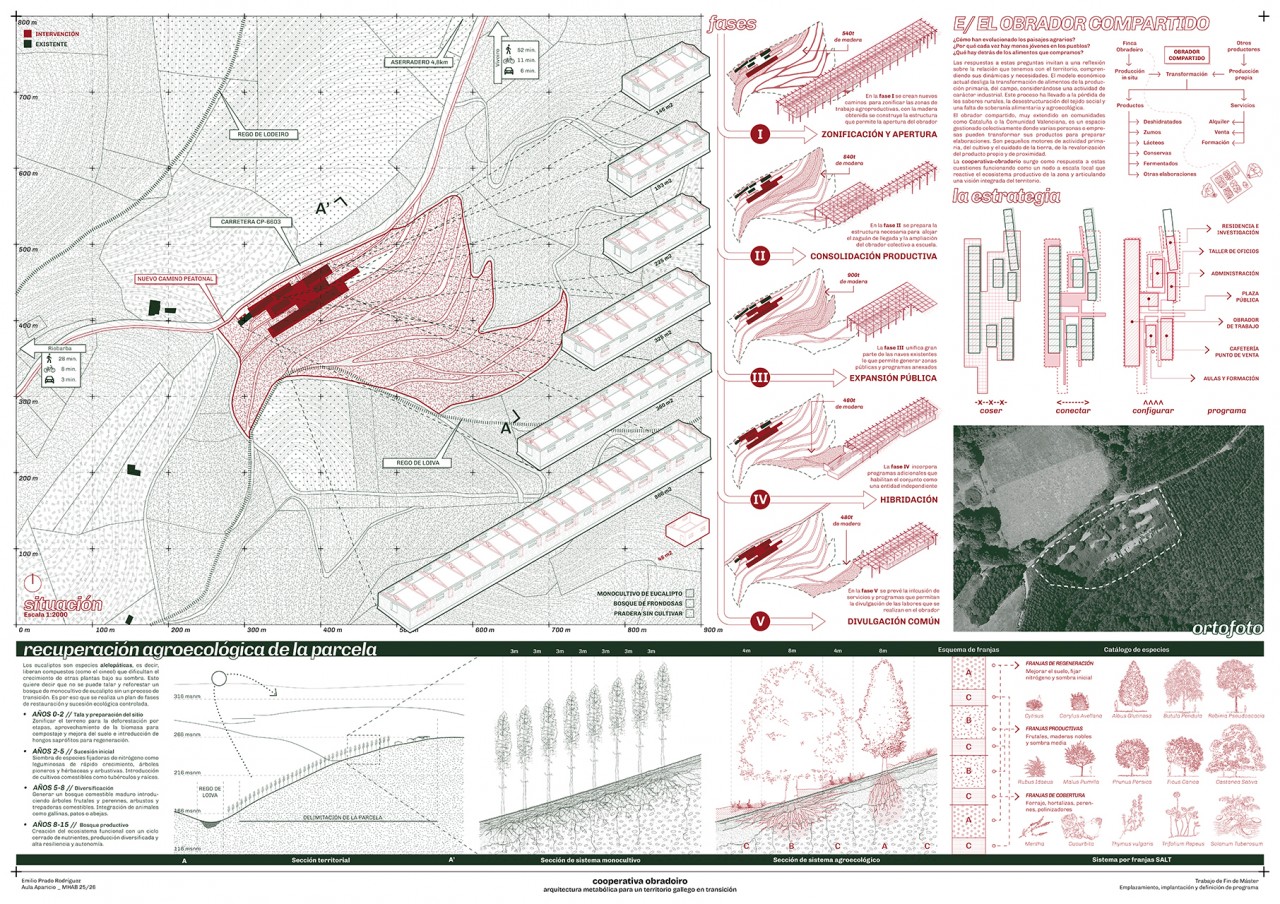
The project, located in a series of abandoned warehouses, is proposed as an intervention that can serve as a test for the future creation of a living network to sustainably revitalize the local economy. Cooperativa Obradoiro emerges as a local response to a clear need: the reactivation of an abandoned productive ecosystem where local producers can access the necessary facilities to process their own crops. Alongside this, a series of complementary programs are introduced, creating synergies not only among the local population but also acting as a central attractor for the entire region.
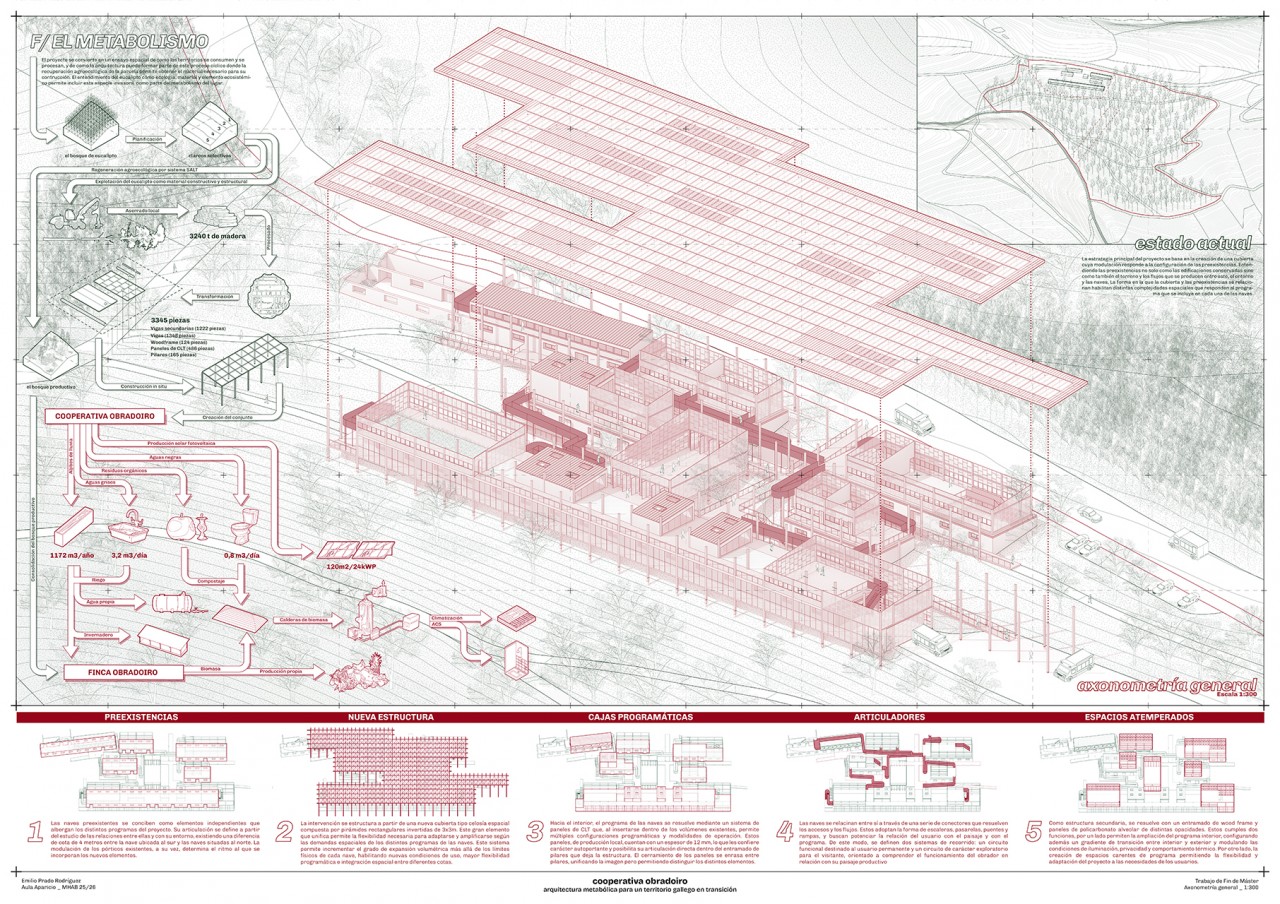
At the same time, the wood obtained from clearing the monoculture on site through selective thinning is repurposed for the construction of the complex, thereby closing the material cycle. This way, the cooperative becomes a spatial experiment on how territories are consumed, processed, and transformed, and how architecture can play a role in this metabolism. Understanding the eucalyptus as part of the ecosystem, rather than merely an invasive species, allows for its integration into this process of socio-environmental transformation.
The project not only addresses the shortcomings of its surroundings —such as a lack of employment, services, or social cohesion— but also builds an integrated vision of the galician territory in which production, community, and sustainability are articulated within a single system.
A place where producing means caring, and inhabiting means returning.
The project, located in a series of abandoned warehouses, is proposed as an intervention that can serve as a test for the future creation of a living network to sustainably revitalize the local economy. Cooperativa Obradoiro emerges as a local response to a clear need: the reactivation of an abandoned productive ecosystem where local producers can access the necessary facilities to process their own crops. Alongside this, a series of complementary programs are introduced, creating synergies not only among the local population but also acting as a central attractor for the entire region.
At the same time, the wood obtained from clearing the monoculture on site through selective thinning is repurposed for the construction of the complex, thereby closing the material cycle. This way, the cooperative becomes a spatial experiment on how territories are consumed, processed, and transformed, and how architecture can play a role in this metabolism. Understanding the eucalyptus as part of the ecosystem, rather than merely an invasive species, allows for its integration into this process of socio-environmental transformation.
The project not only addresses the shortcomings of its surroundings —such as a lack of employment, services, or social cohesion— but also builds an integrated vision of the galician territory in which production, community, and sustainability are articulated within a single system.
A place where producing means caring, and inhabiting means returning.
- 00 - Description
- 01 - [1] Ecosystem Map
- 02 - [2] Manifesto
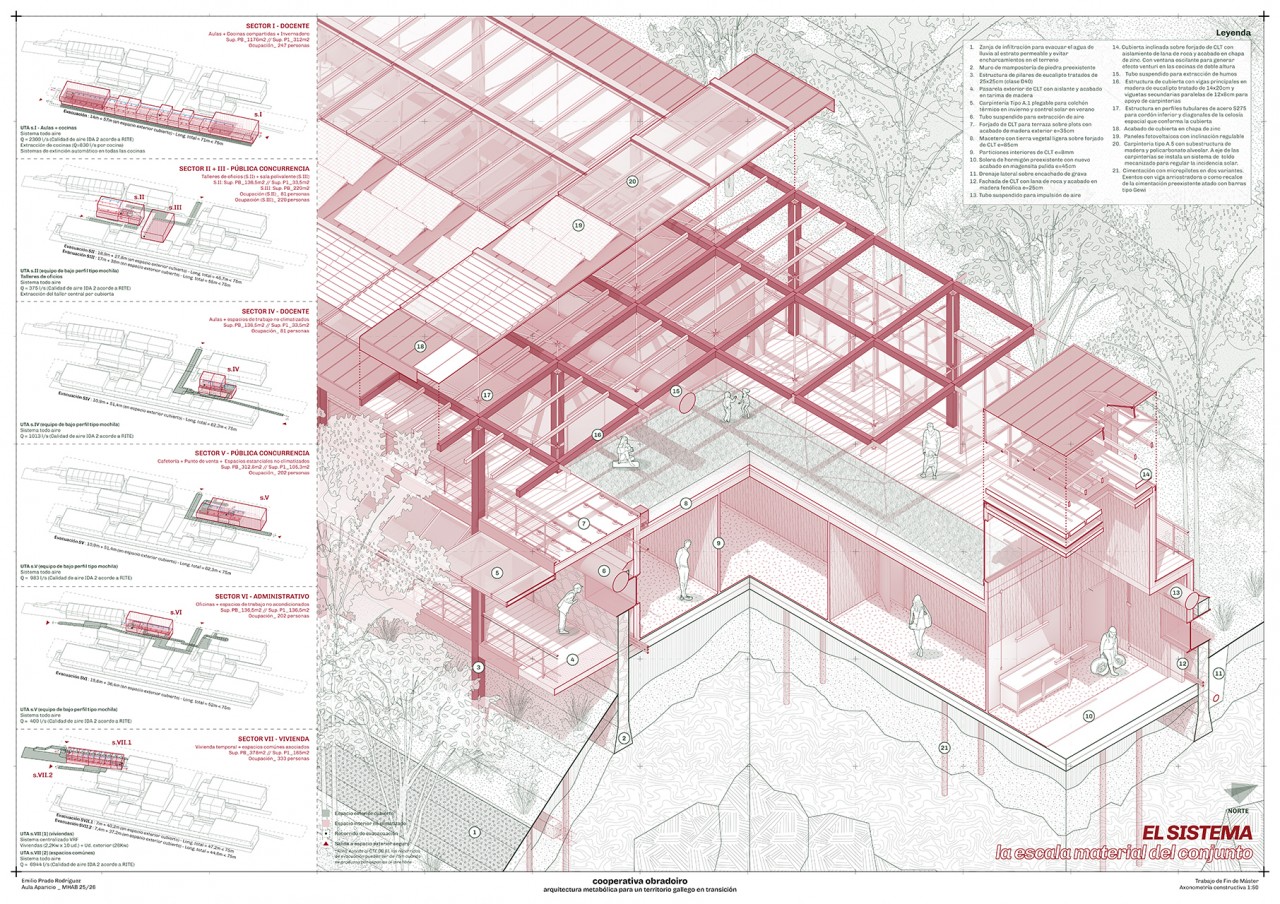
- 03 - [3] Axonometry
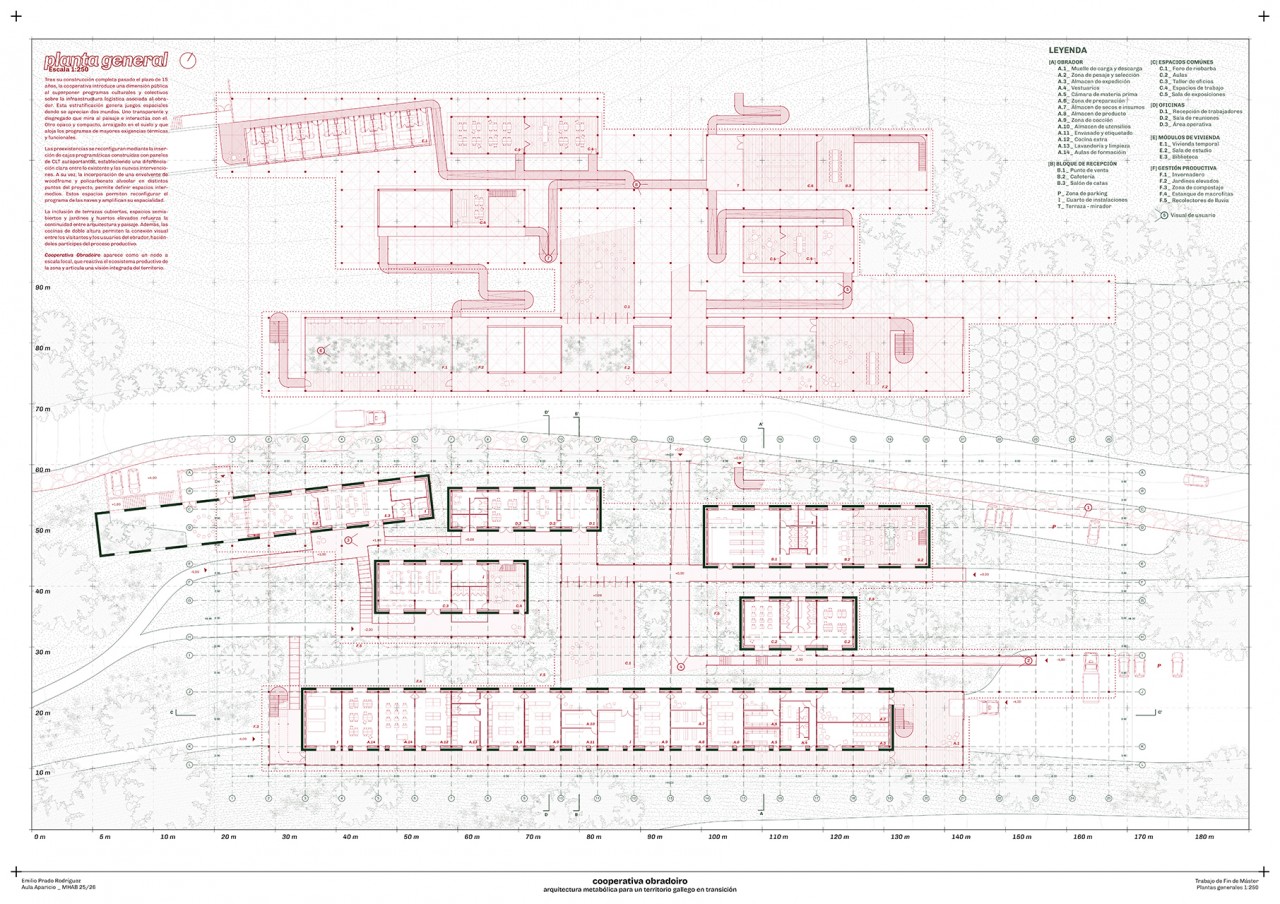
- 04 - [4] Floor Plans
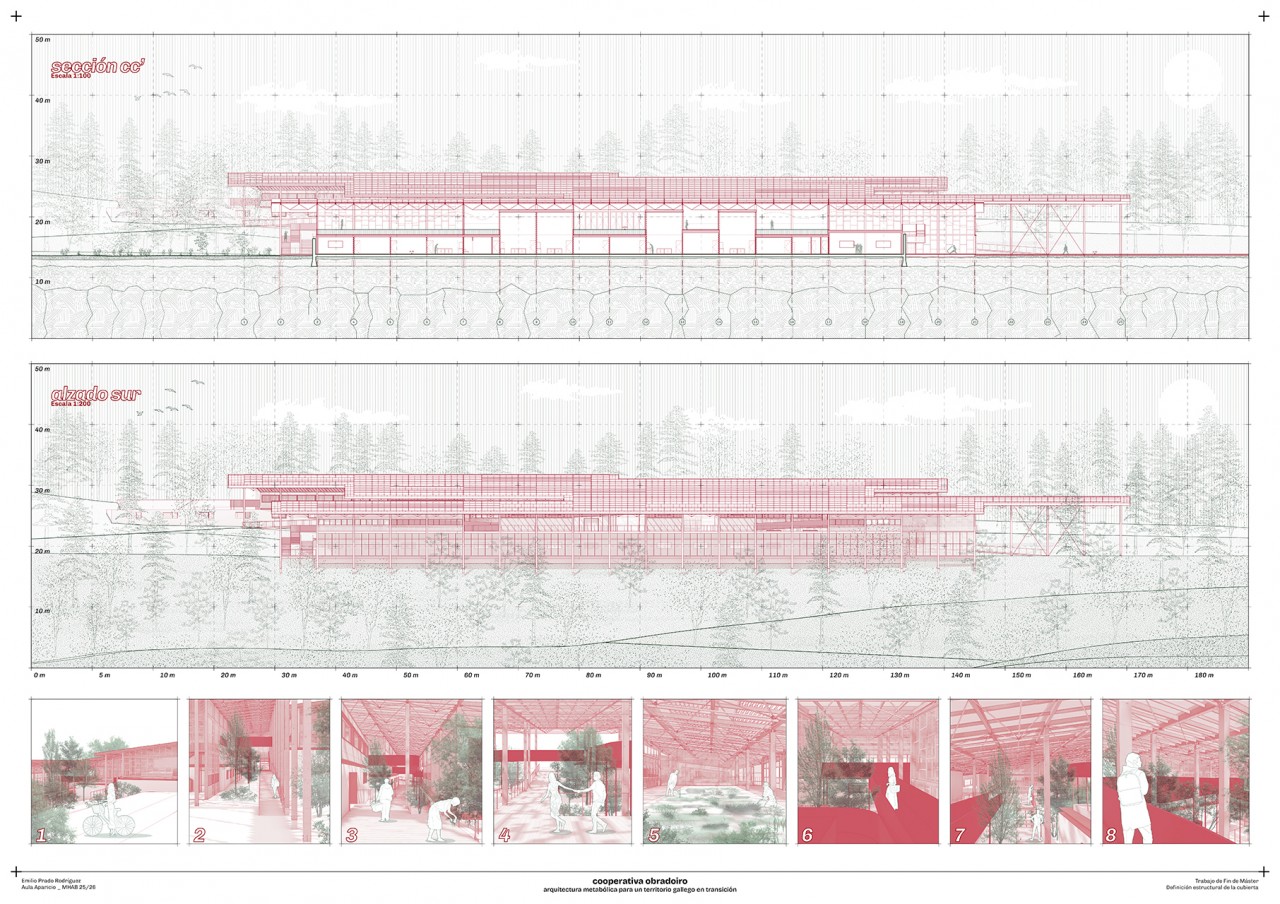
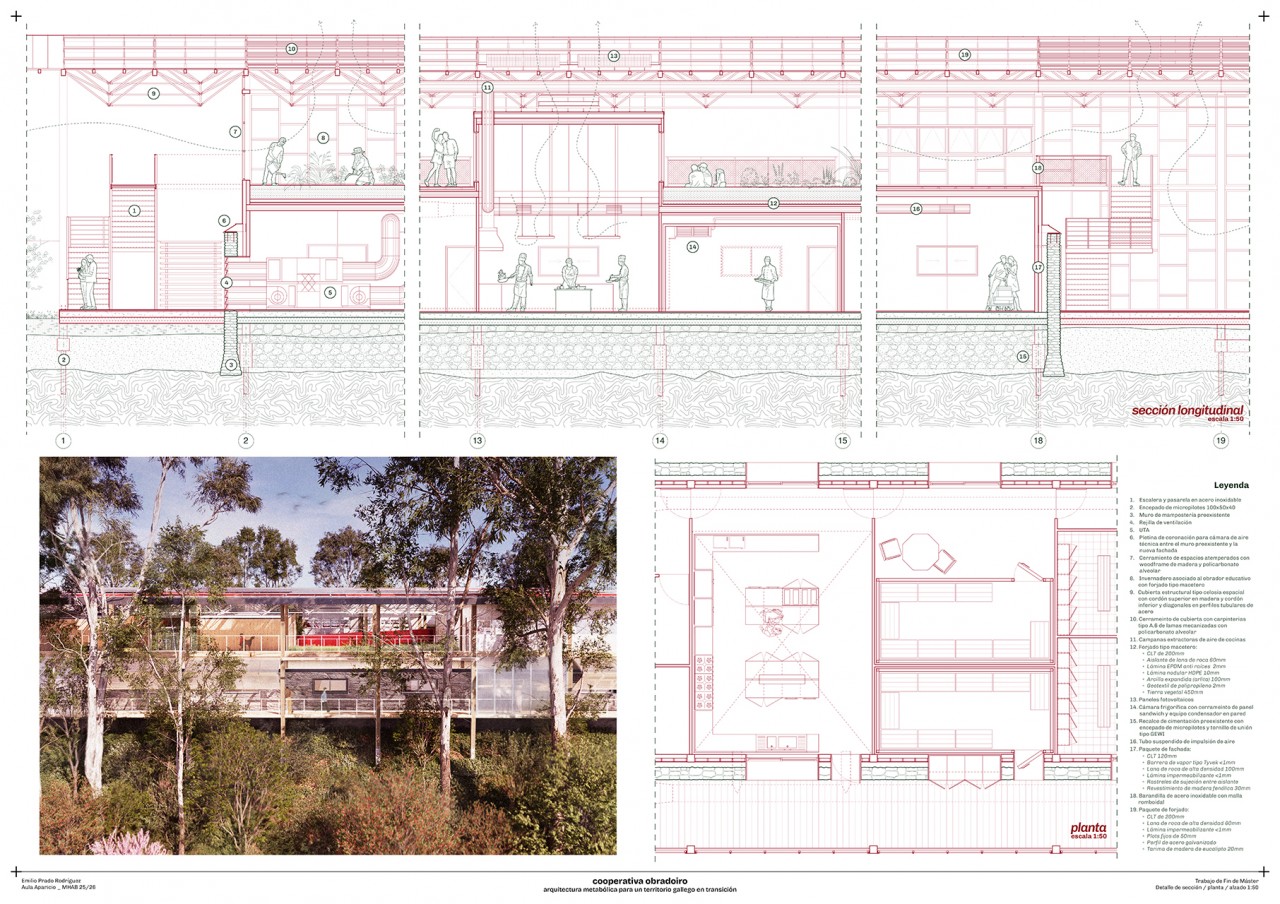
- 05 - [5] Facade + Section
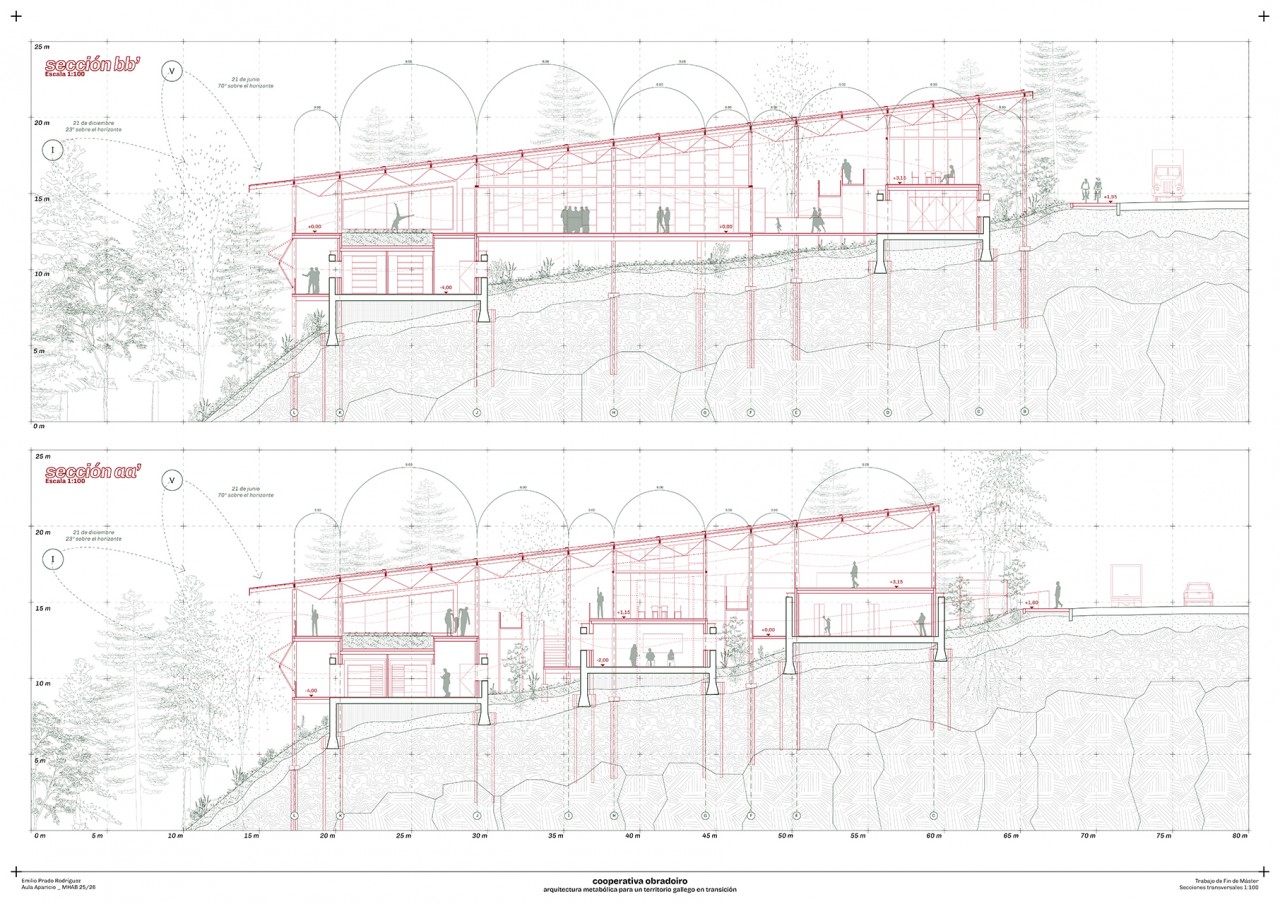
- 06 - [6] Cross-sections
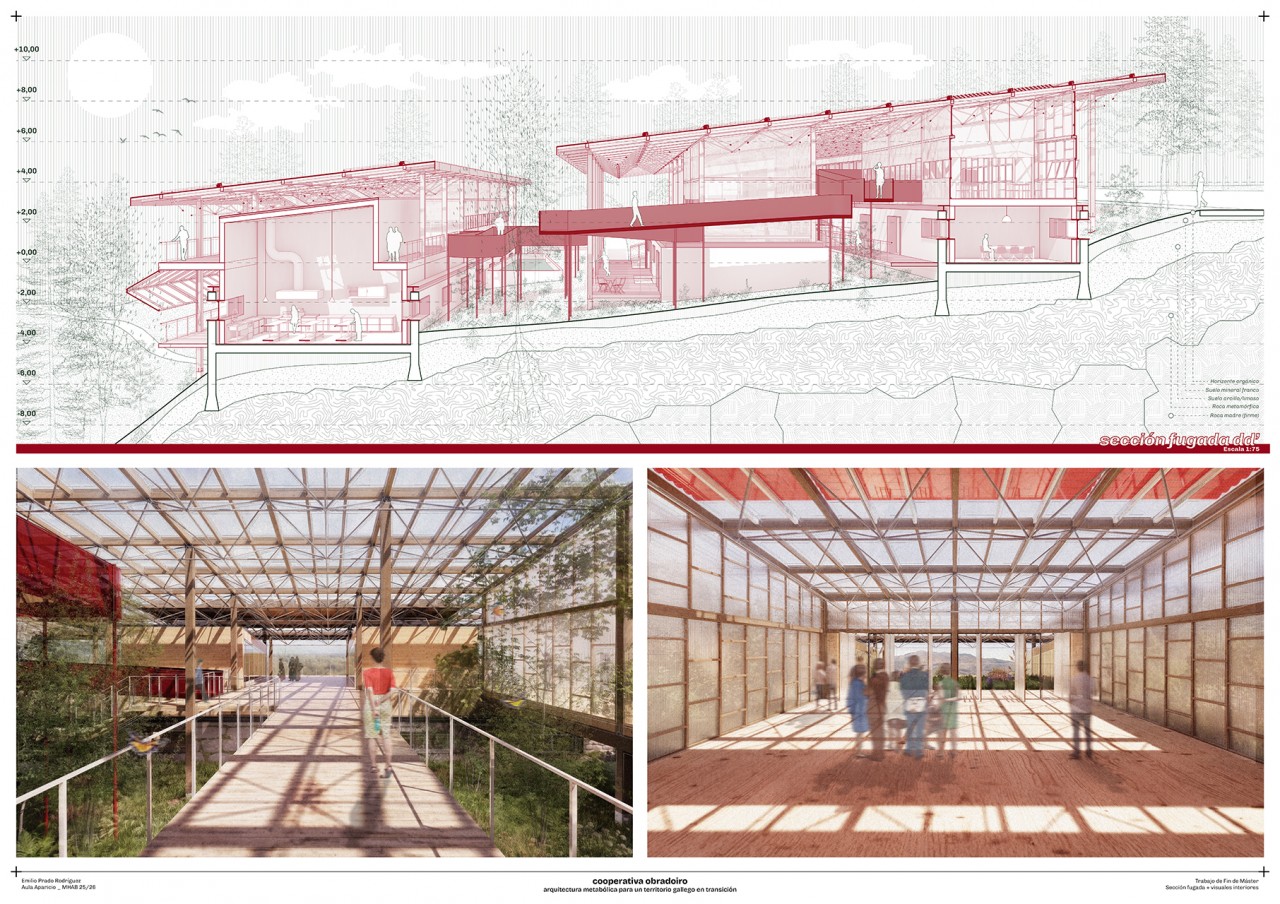
- 07 - [7] Persp. Section
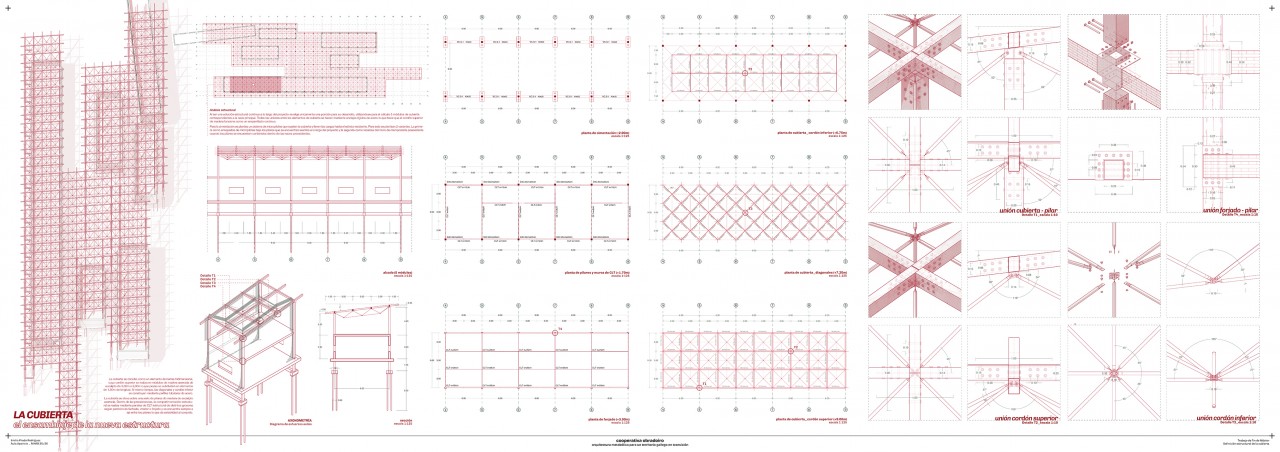
- 08 - [8] Structure
- 09 - [9] Axonometry 1:50
- 10 - [10] Section 1:50
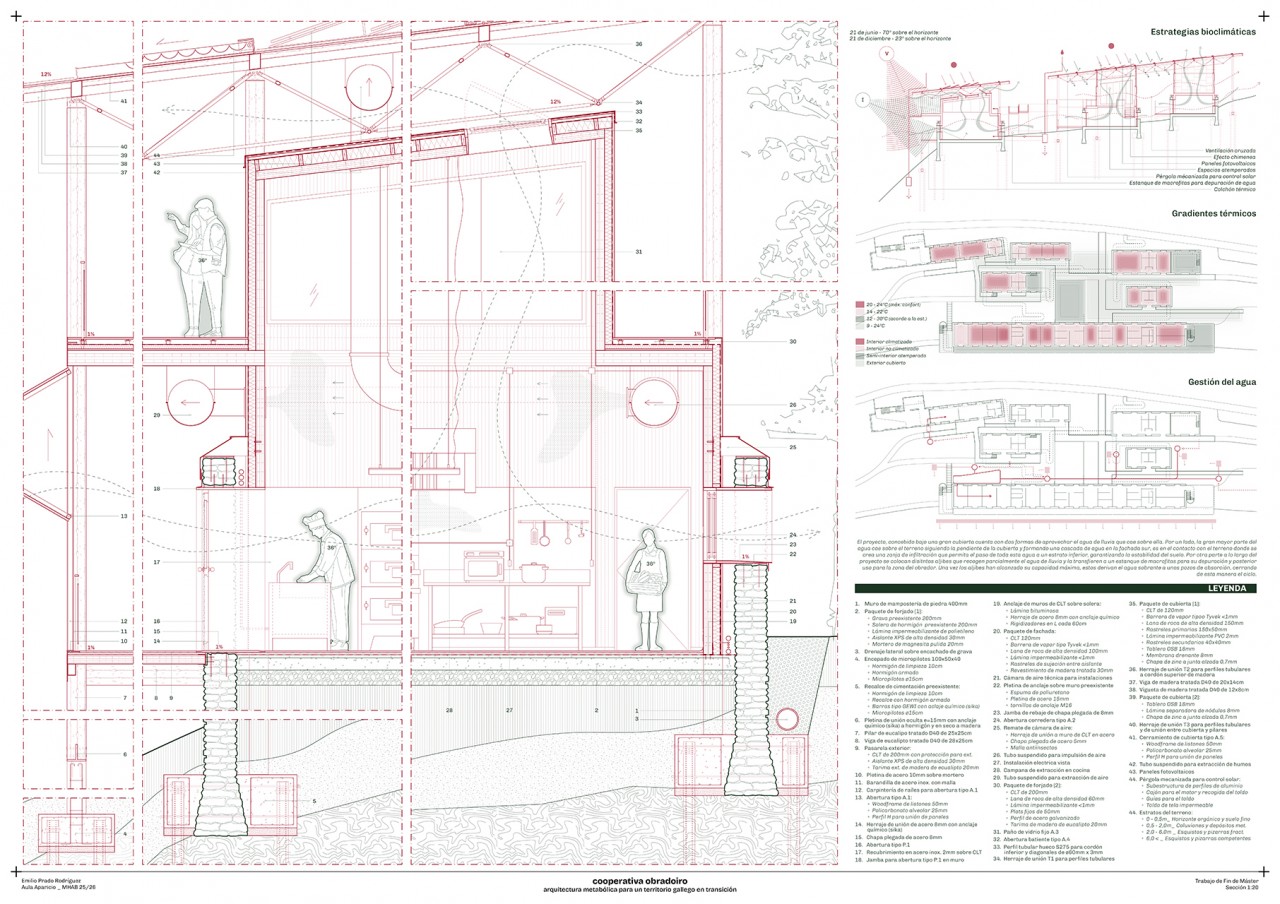
- 11 - [11] Section 1:20
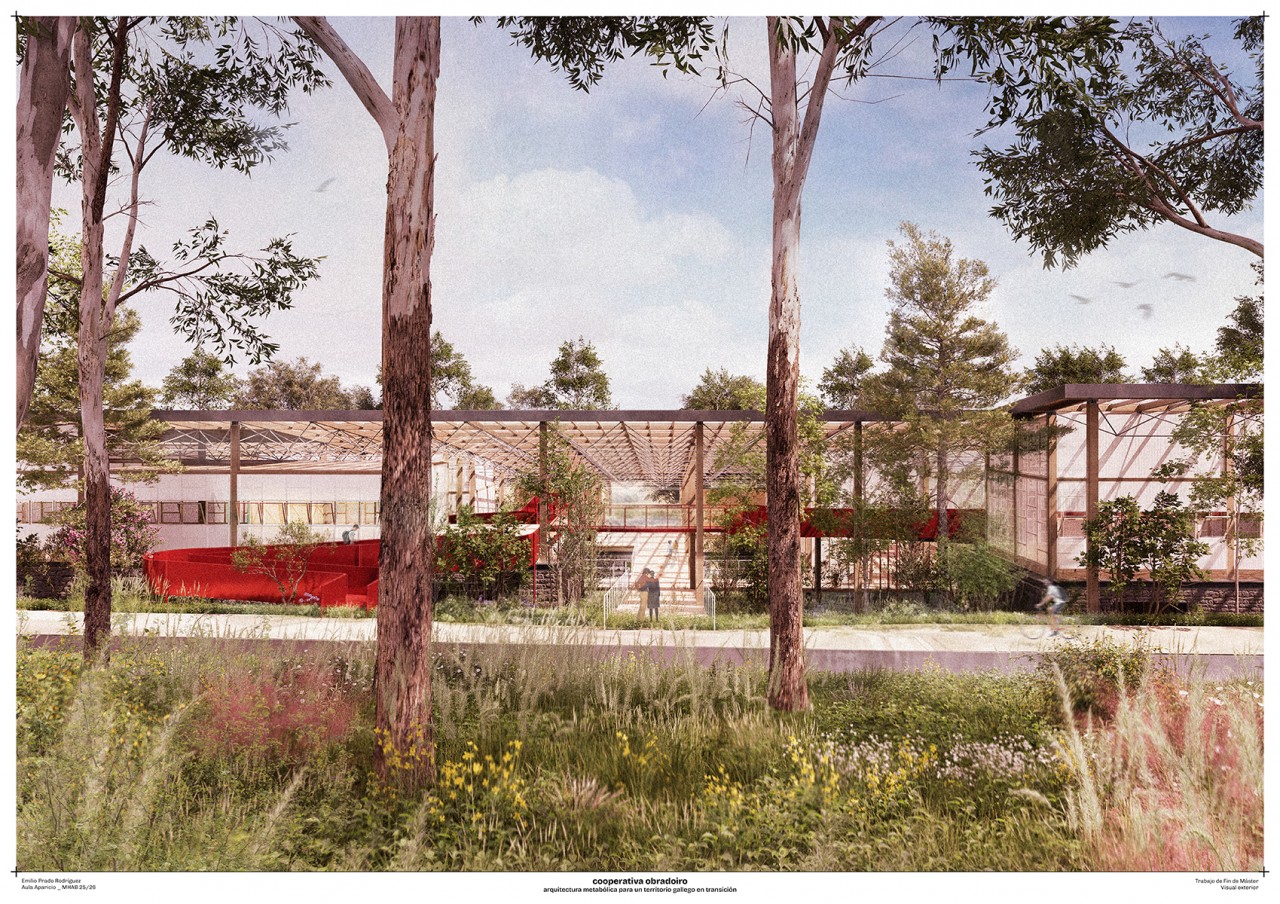
- 12 - [12] Final image
- 13 - Video