
Densificar para enfriar
This urban densification project, located on Calle Paterna in San Cristóbal, south of Madrid, harnesses the potential of blind facades to transform the urban environment and improve the thermal comfort of the homes. These facades only accumulate heat, and their poor thermal insulation causes heat to transfer into the building’s interior.
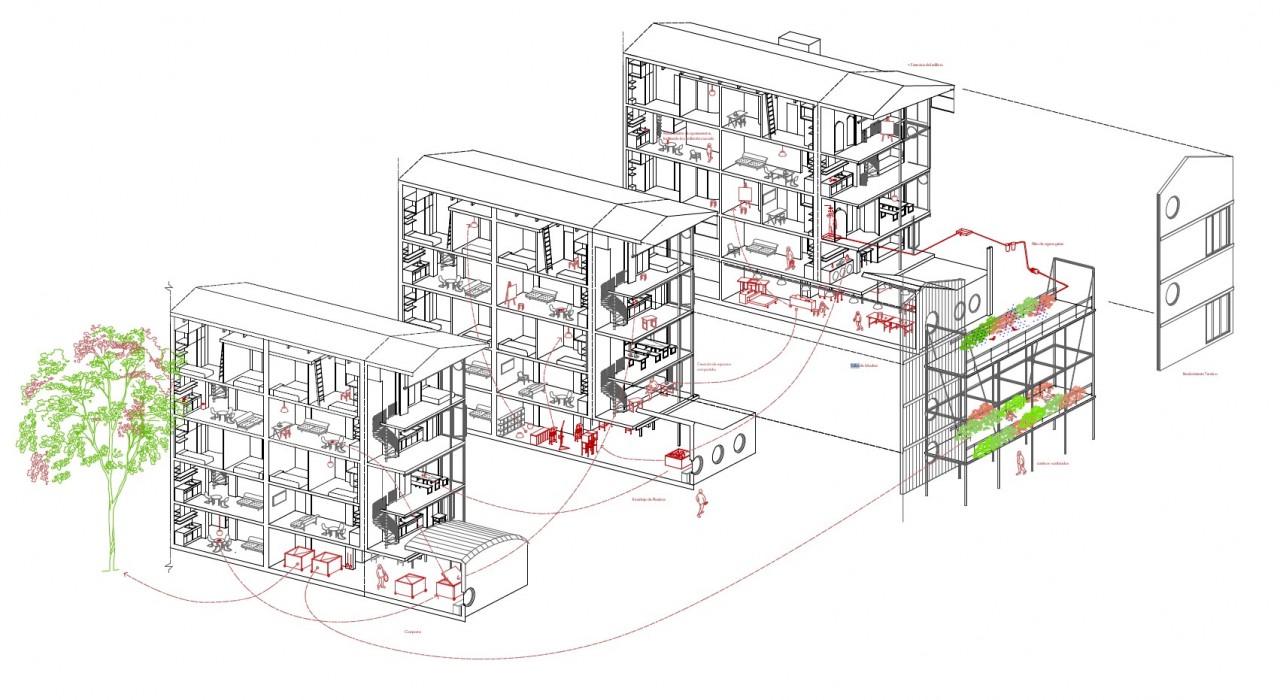
The proposal integrates various sustainable strategies, including greywater treatment systems for irrigation, composting for green facades, and plastic recycling to create new products. Additionally, structural modifications are made to enhance cross-ventilation and improve the energy efficiency of the buildings.
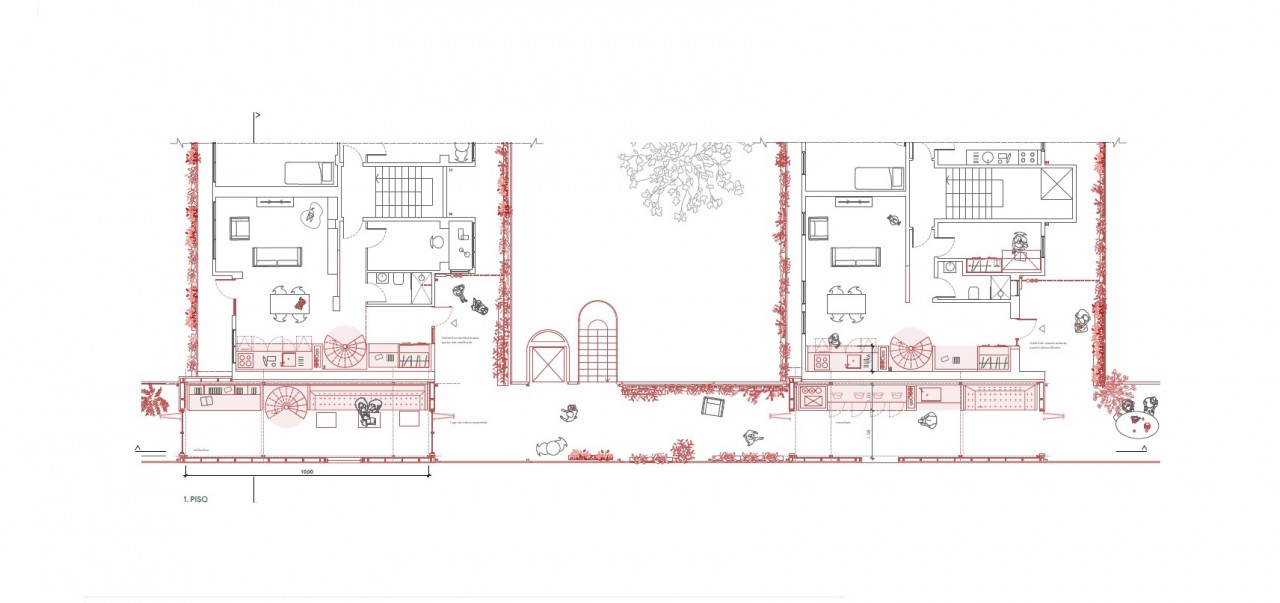
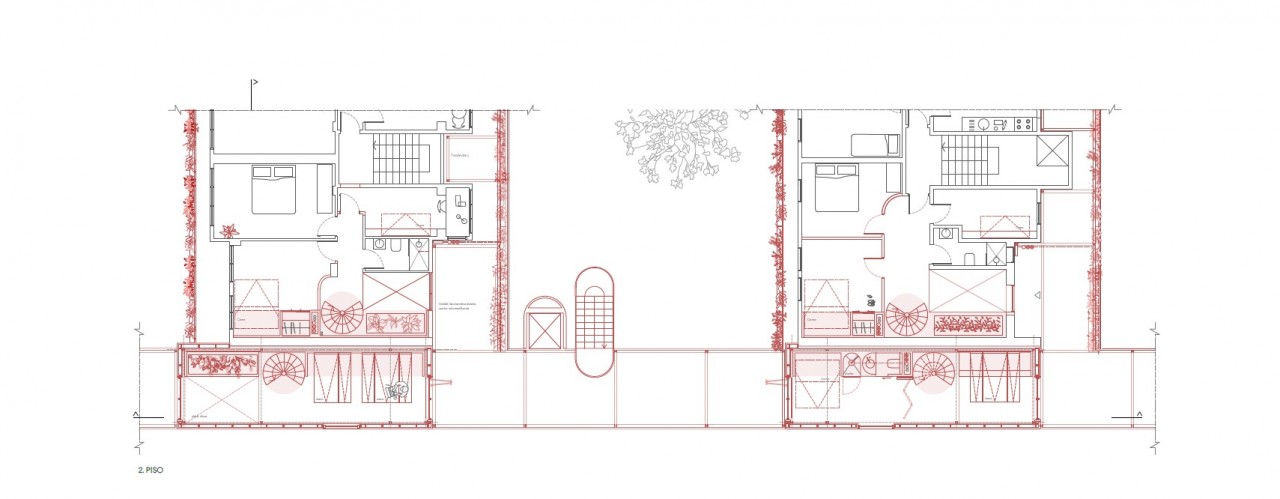
The functional design introduces new public spaces on the ground floor, such as workshops and meeting rooms, revitalizing urban life. On the upper levels, duplex homes are included with compact service modules that optimize space by integrating kitchens, showers, and more, along with shared areas like work zones and living rooms.
The project also complements urban strategies such as the proposed green facades, creating a sustainable urban ecosystem that enhances both habitability and the quality of public spaces.
Finally, the bioclimatic design ensures optimal thermal comfort, contributing to a lower environmental impact and improved quality of life during Madrid’s hot summers.
The proposal integrates various sustainable strategies, including greywater treatment systems for irrigation, composting for green facades, and plastic recycling to create new products. Additionally, structural modifications are made to enhance cross-ventilation and improve the energy efficiency of the buildings.
The functional design introduces new public spaces on the ground floor, such as workshops and meeting rooms, revitalizing urban life. On the upper levels, duplex homes are included with compact service modules that optimize space by integrating kitchens, showers, and more, along with shared areas like work zones and living rooms.
The project also complements urban strategies such as the proposed green facades, creating a sustainable urban ecosystem that enhances both habitability and the quality of public spaces.
Finally, the bioclimatic design ensures optimal thermal comfort, contributing to a lower environmental impact and improved quality of life during Madrid’s hot summers.



- 00 - Description
- 01 - PROTOTIPO
- 02 - Sistema
- 03 - Sección Bioclimatica
- 04 - Mueble
- 05 - Sección
- 06 - Collage
- 07 - Primera planta
- 08 - Segunda planta
- 09 - Planta baja
- 10 - La Parte
- 11 - Video