
El Territorio del Cable
Is Spain prepared to receive 100 million tourists per year?
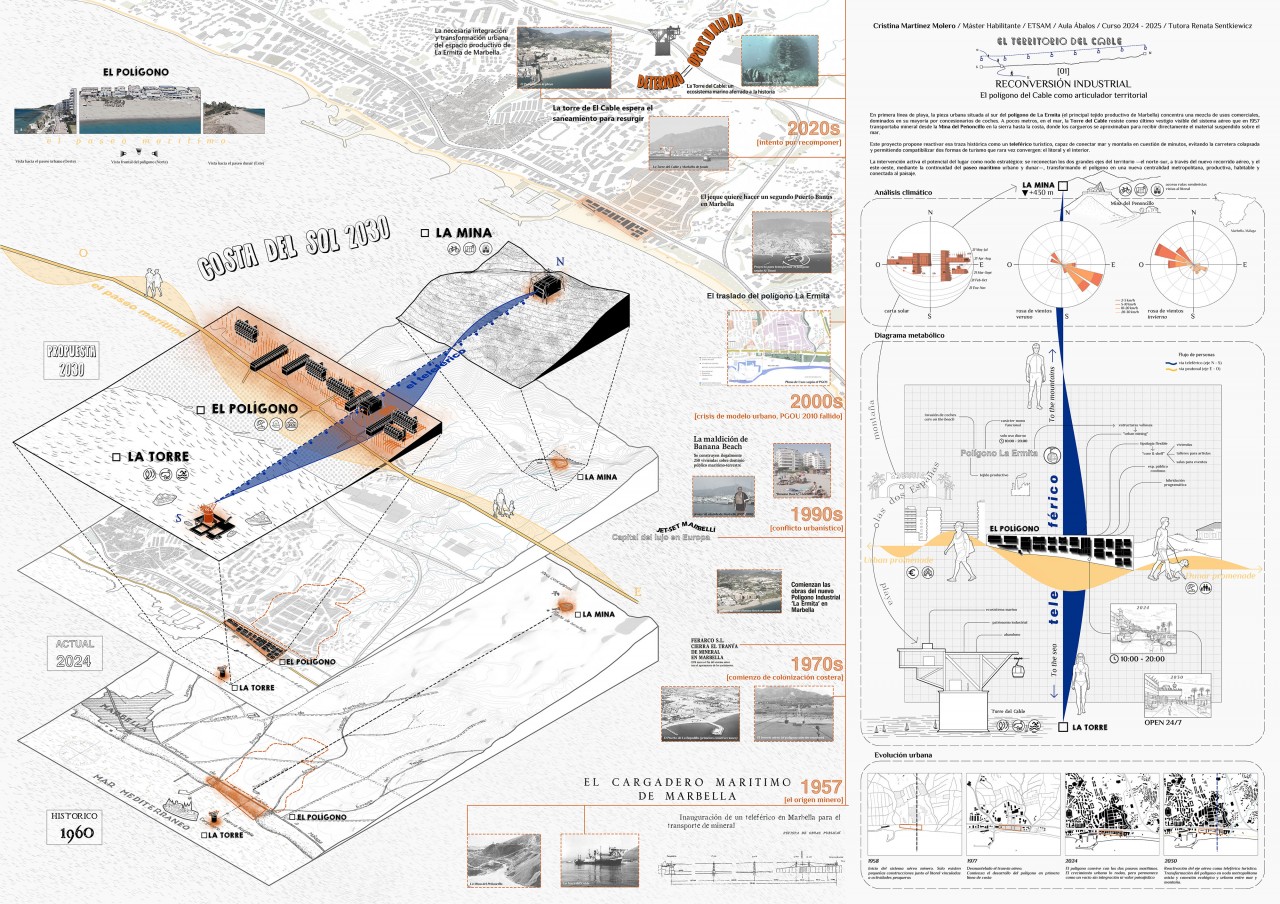
This project emerges from this question, using Marbella as a case study to critically examine the spatial consequences of the contemporary tourism model. Known primarily for its leisure-based economy, Marbella also contains a less visible industrial past that has left significant traces on the territory.
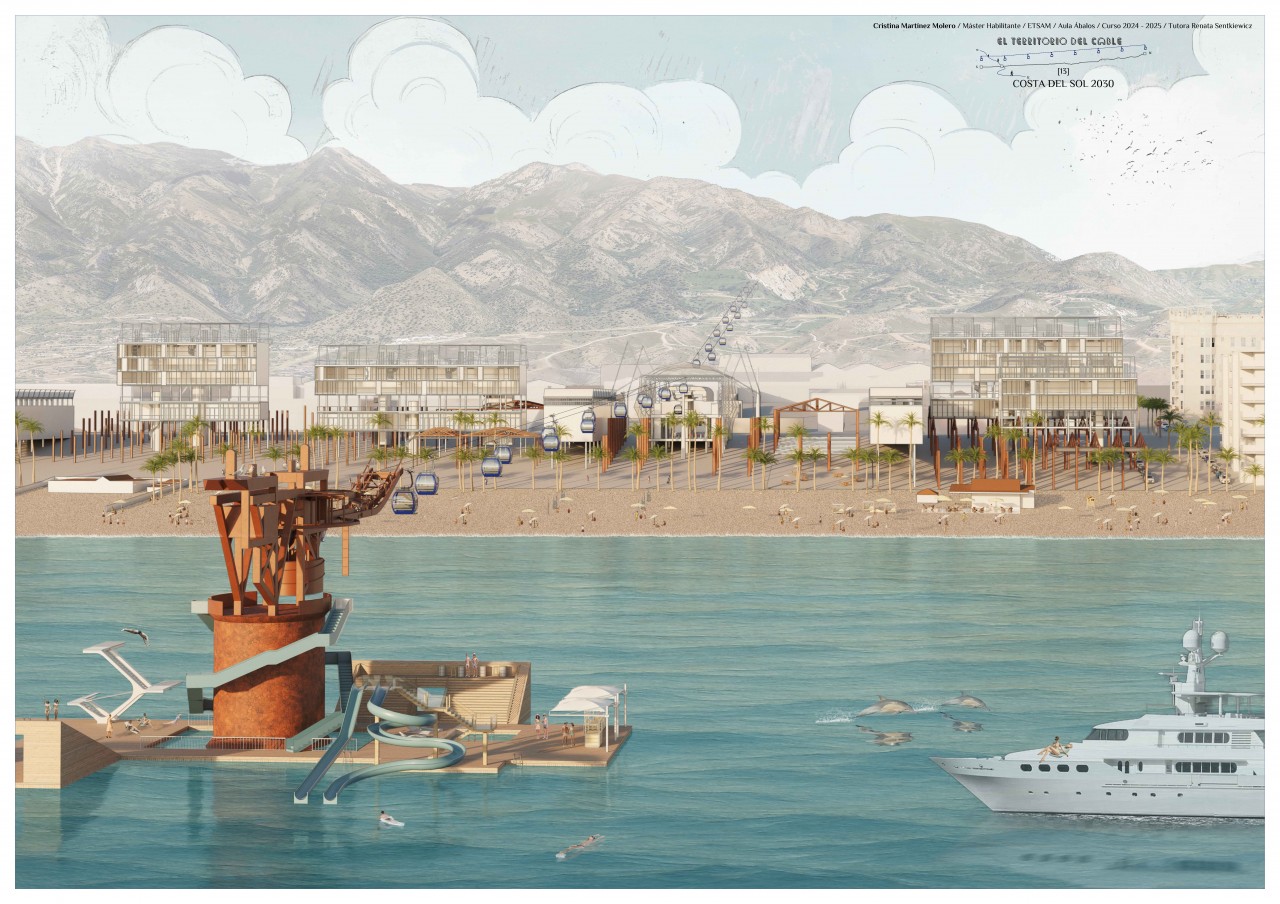
"El Territorio del Cable" focuses on one of the city’s main urban anomalies: an industrial estate located directly on the beachfront, disconnected from the seaside promenade, the city center, and the sea. Rather than replacing it, the project reinterprets this condition through the recovery of the former aerial mining cableway, inaugurated in 1958, which connected the "Mina del Peñoncillo" with the offshore "Torre del Cable".
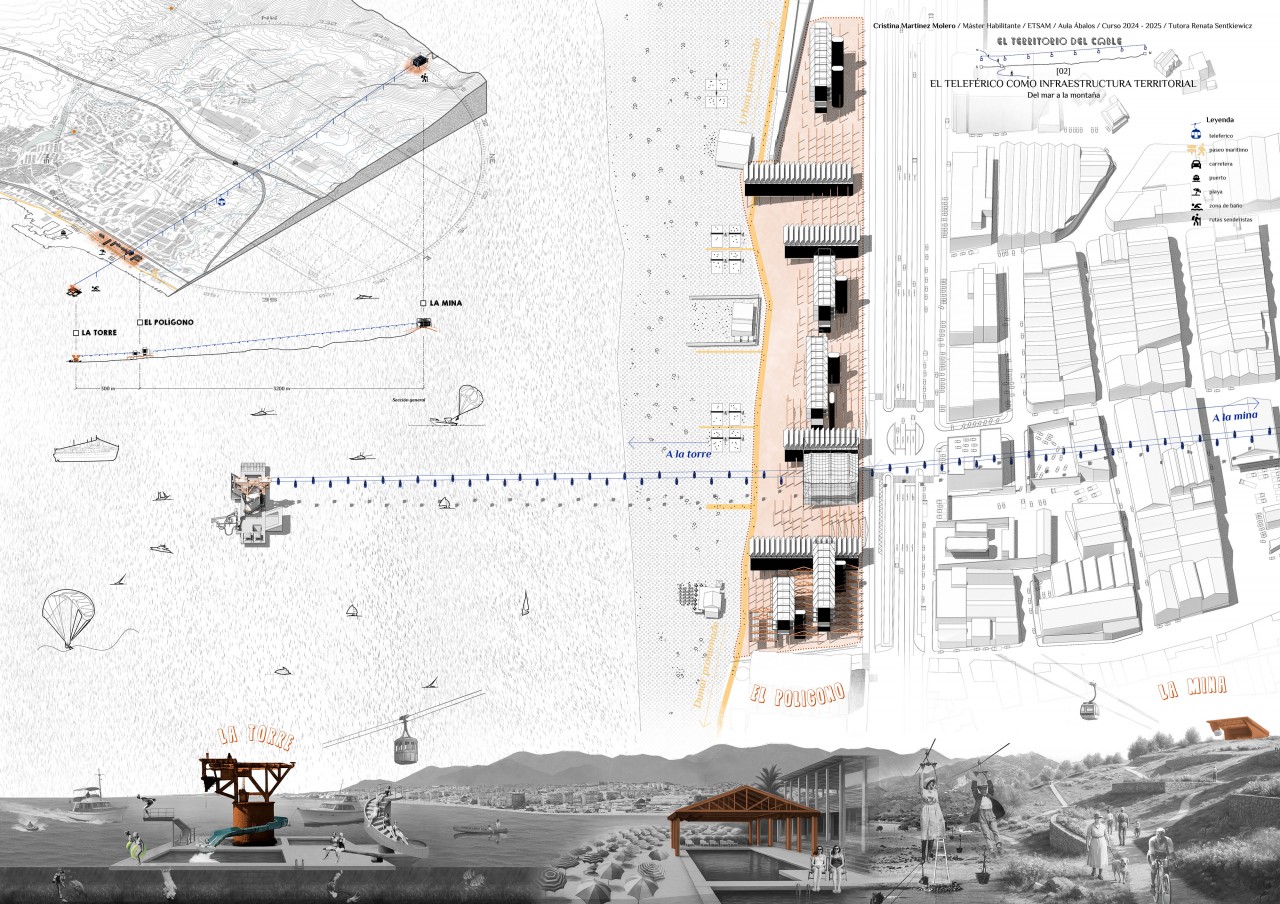
This linear infrastructure becomes the backbone of the proposal, redefined as a new inhabited route linking mountain, city, and sea. The project is organized around three key nodes: the "Mina del Peñoncillo" as an entry from the natural landscape; the industrial estate, transformed into an active urban center; and the Torre del Cable, preserved and reactivated as a recreational space in the marine environment.
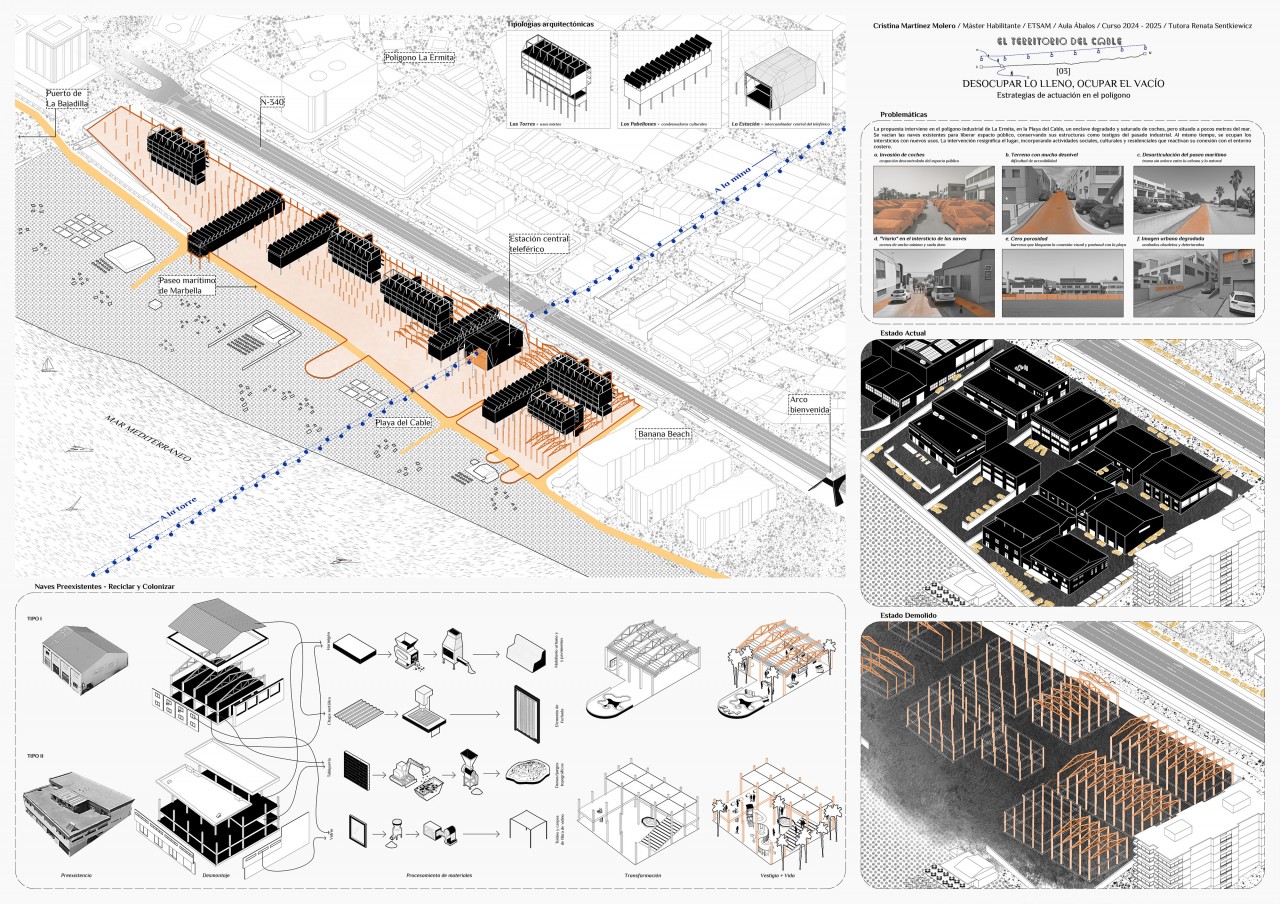
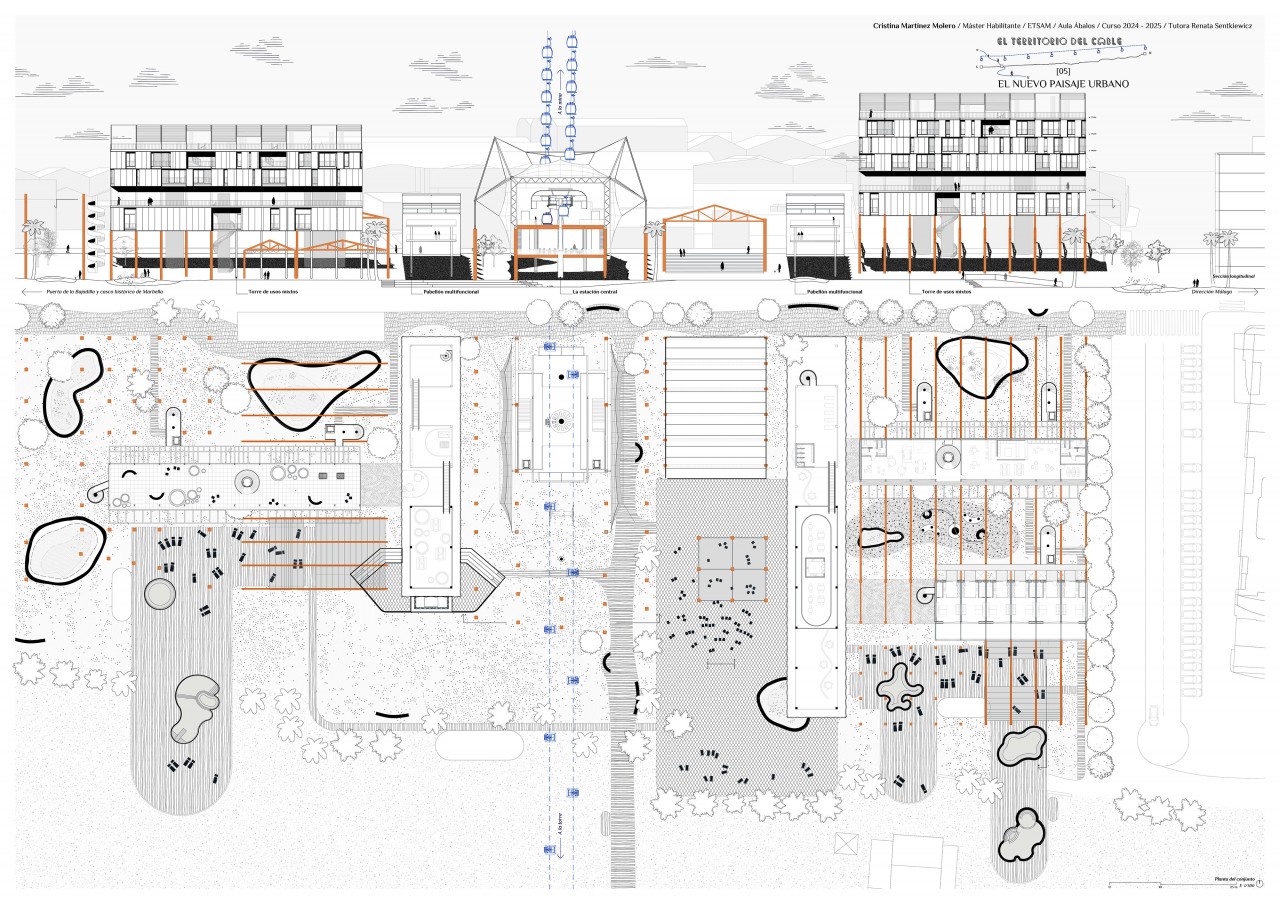
The intervention concentrates on the industrial estate, where two axes intersect: a north–south axis following the former mining route, now transformed into a cable car for people, and an east–west axis that restores the continuity of the seaside promenade between the urban waterfront and the natural dune corridor.
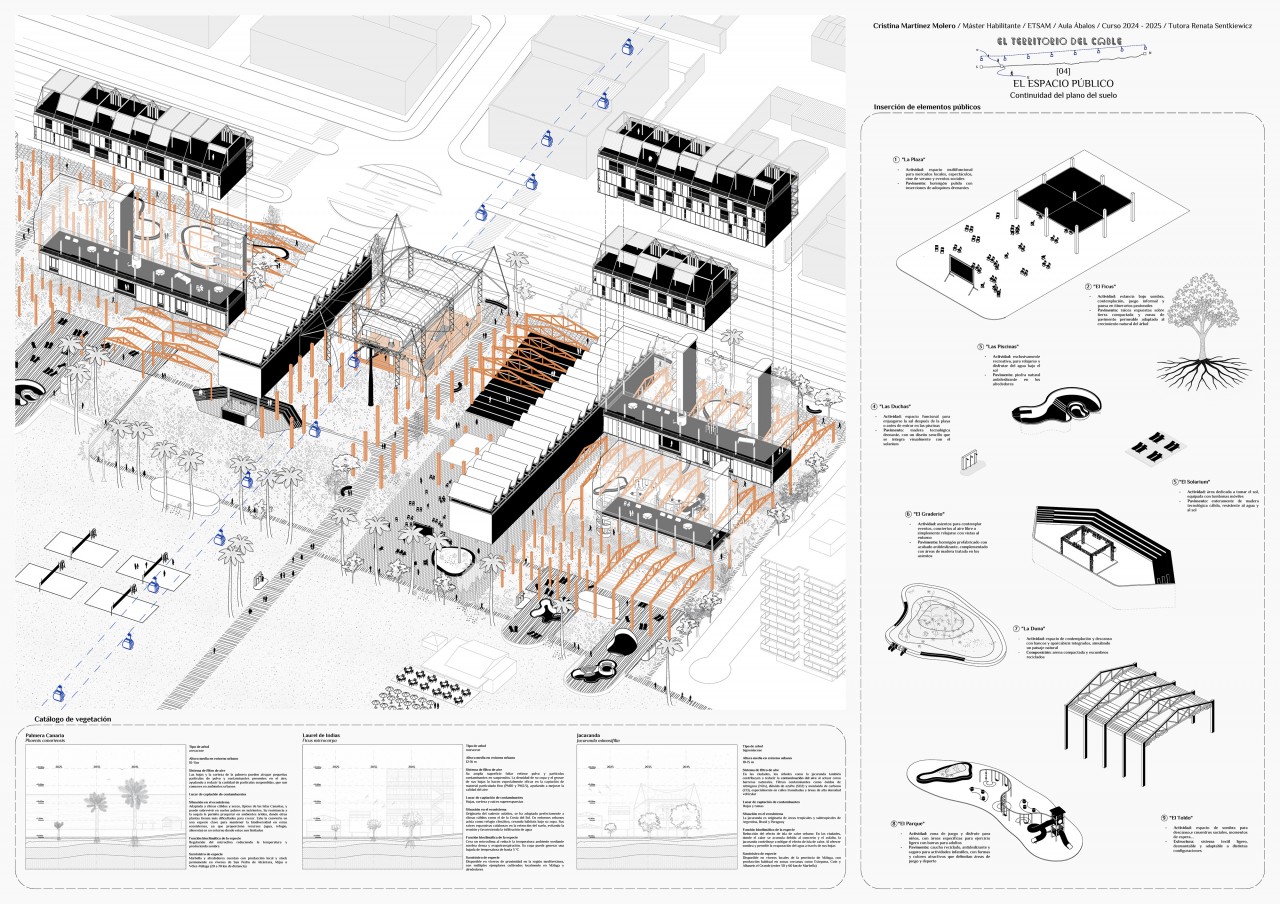
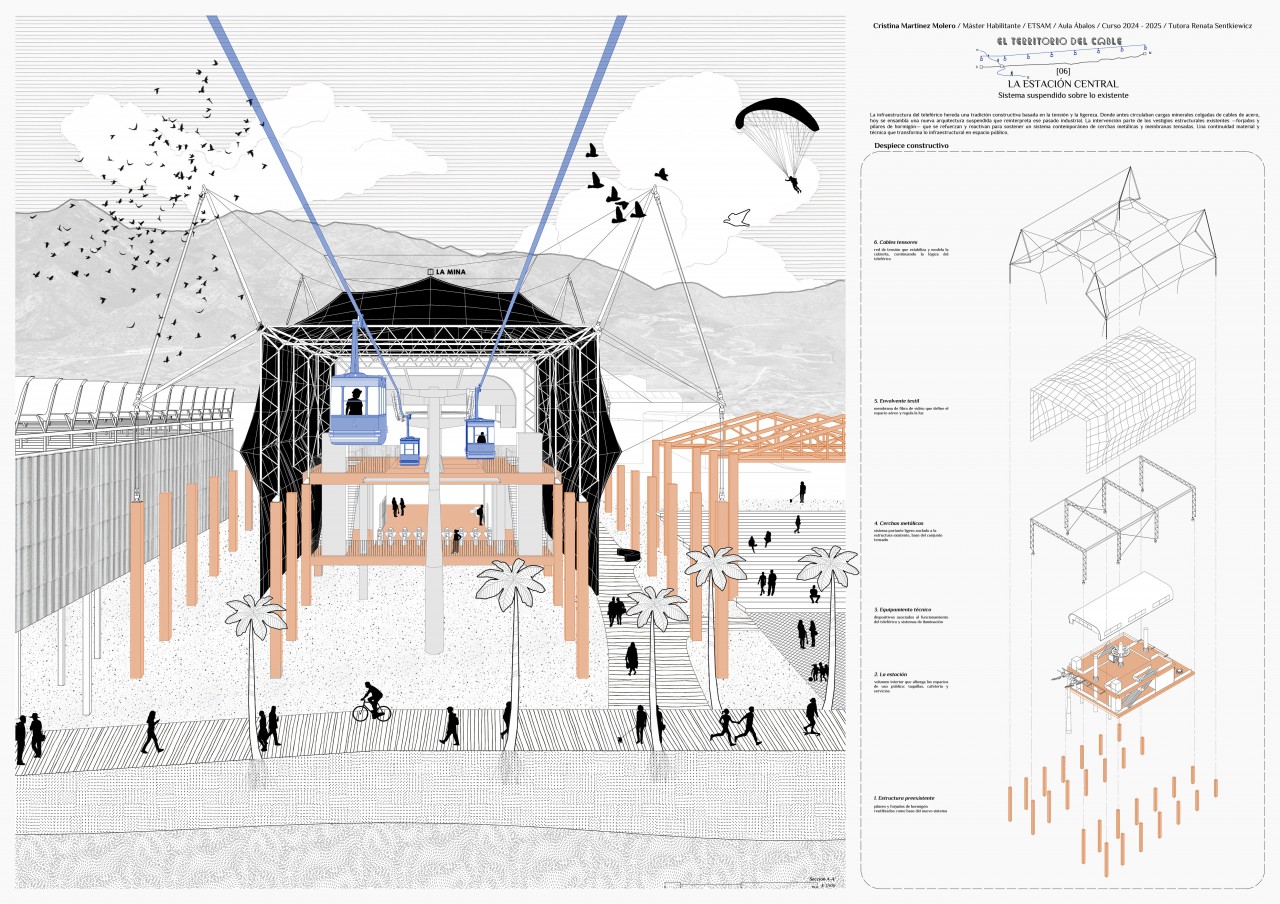
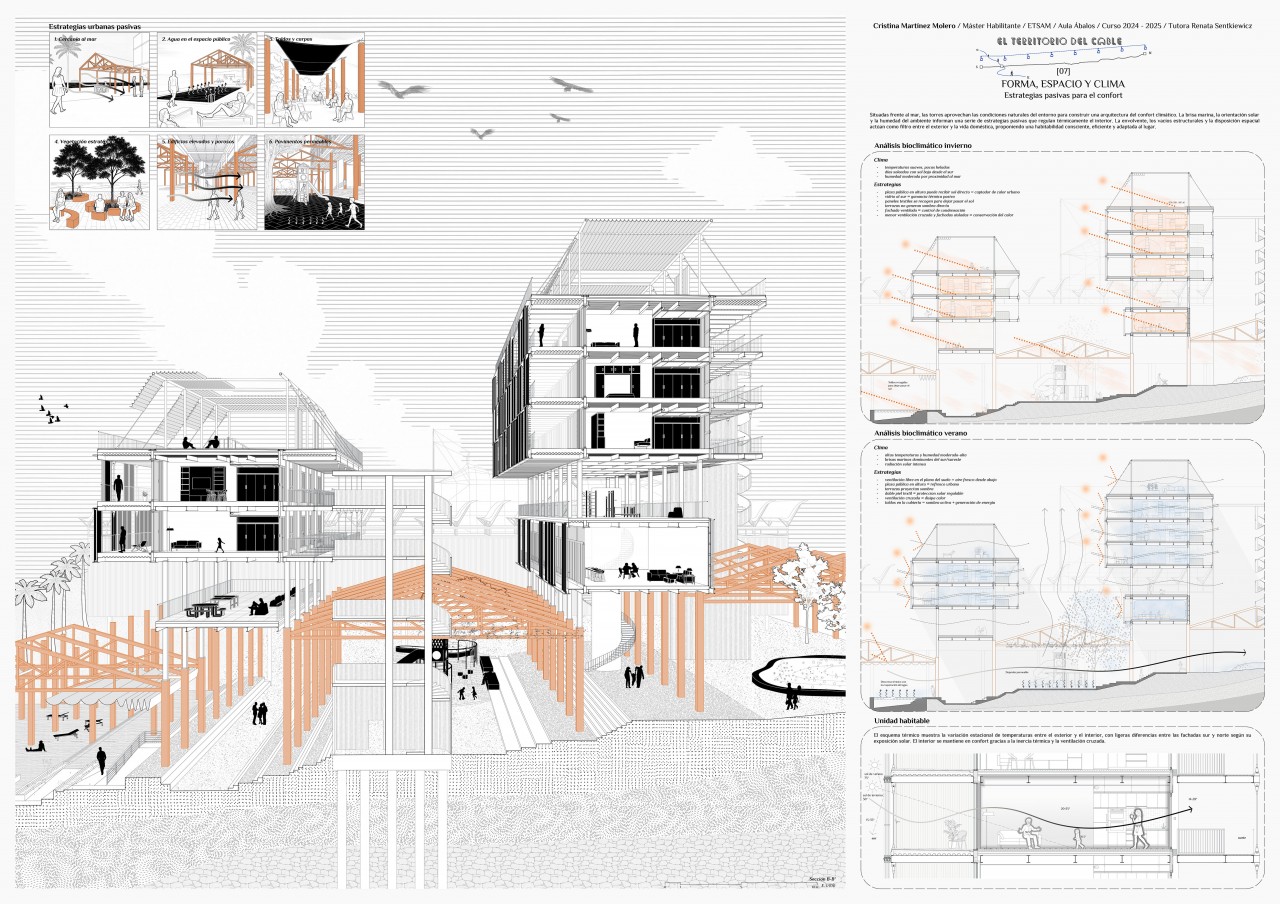
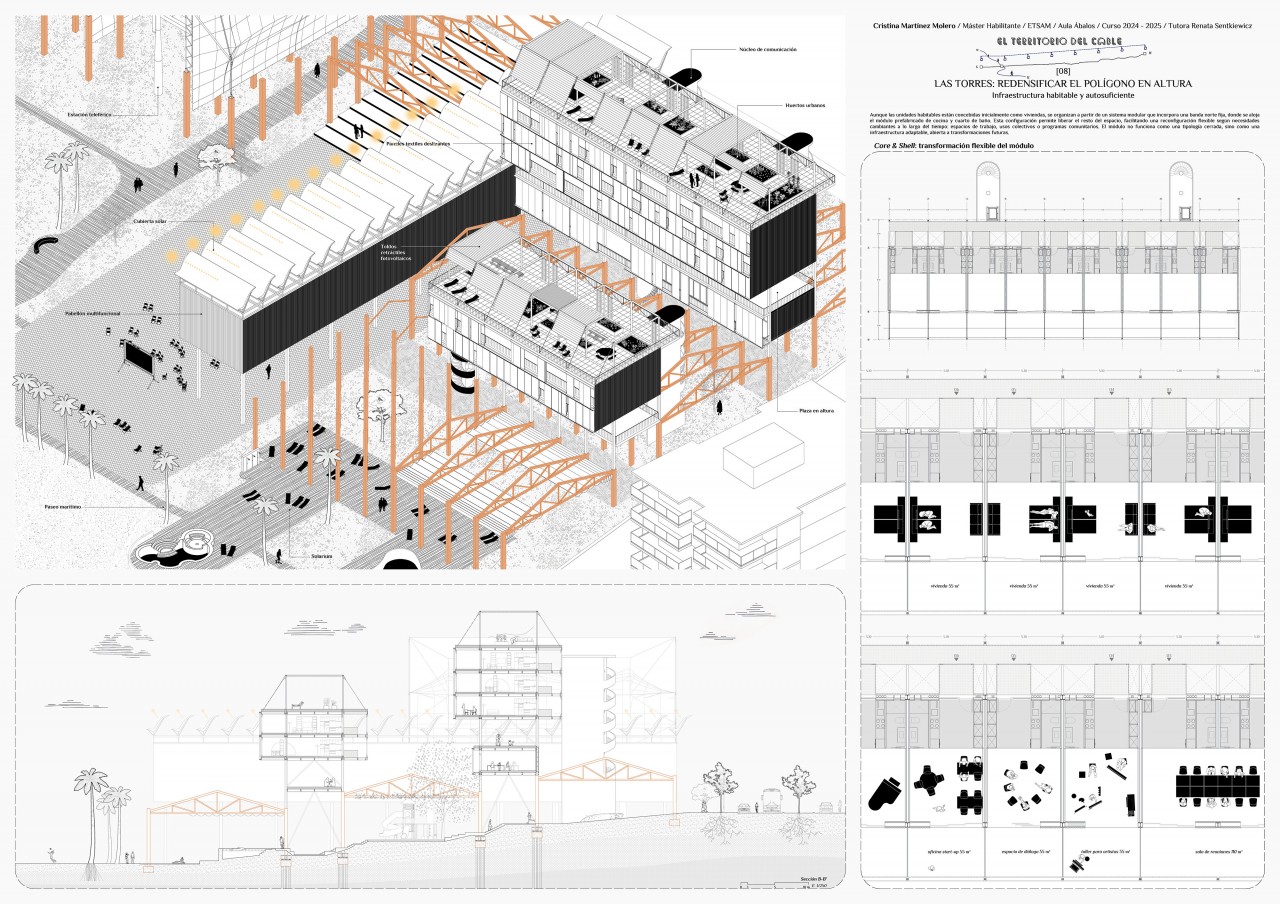
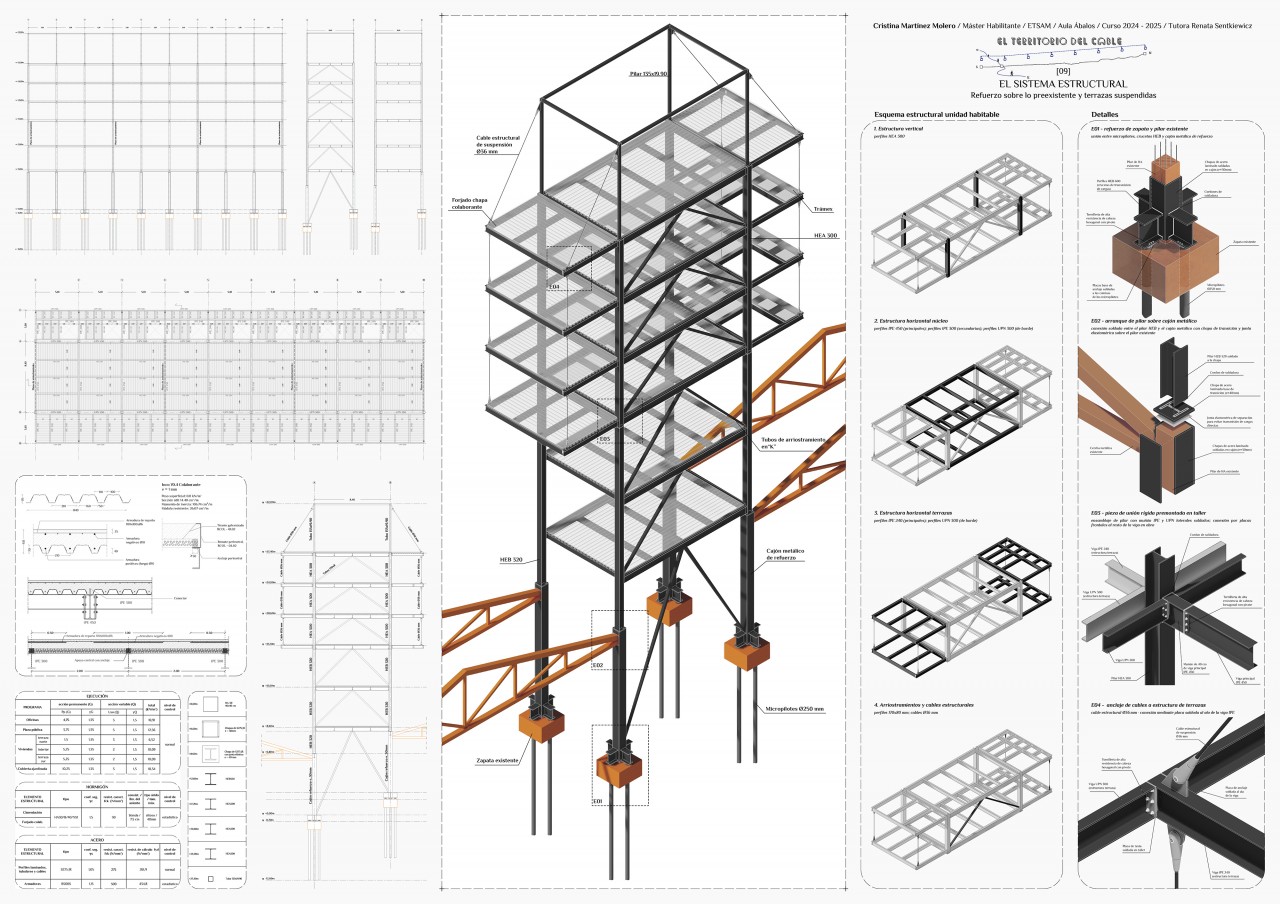
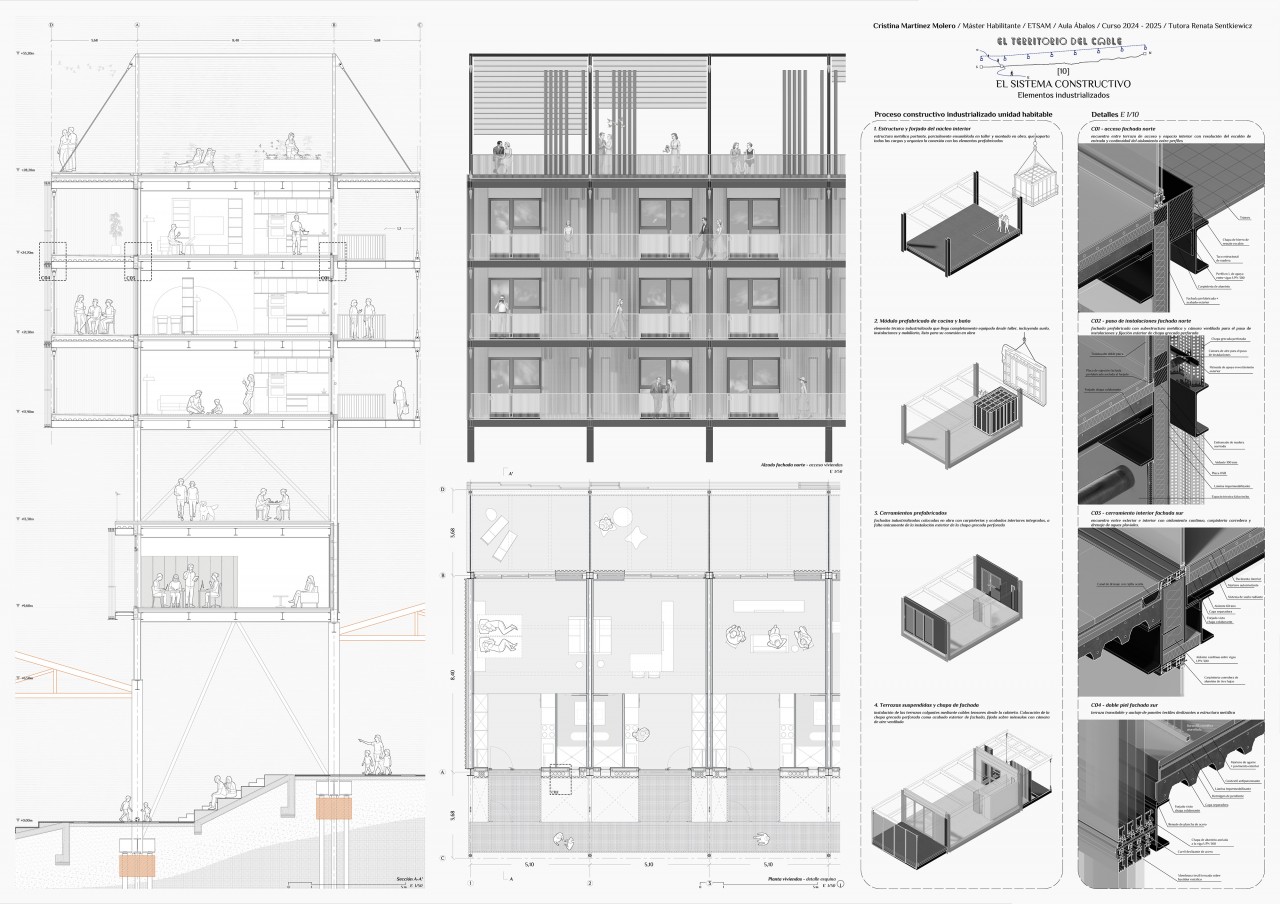
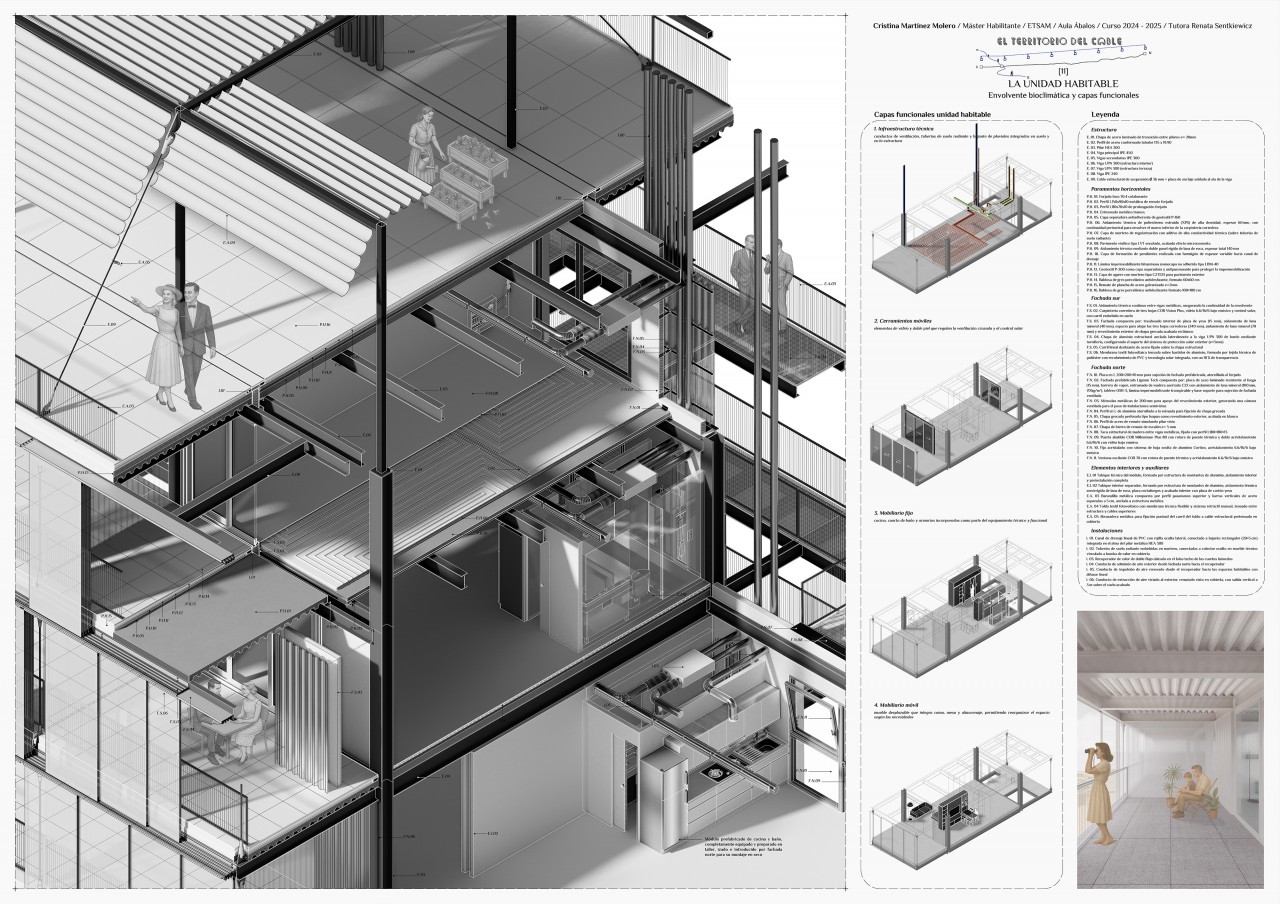
The strategy is based on a logic of urban mining, preserving and reusing the structural frameworks of existing workshops and car dealerships. These structures support new architectural elements—cable car stations, multifunctional pavilions with solar roofs, and mixed-use towers with flexible interiors, hanging terraces, and textile climatic skins.
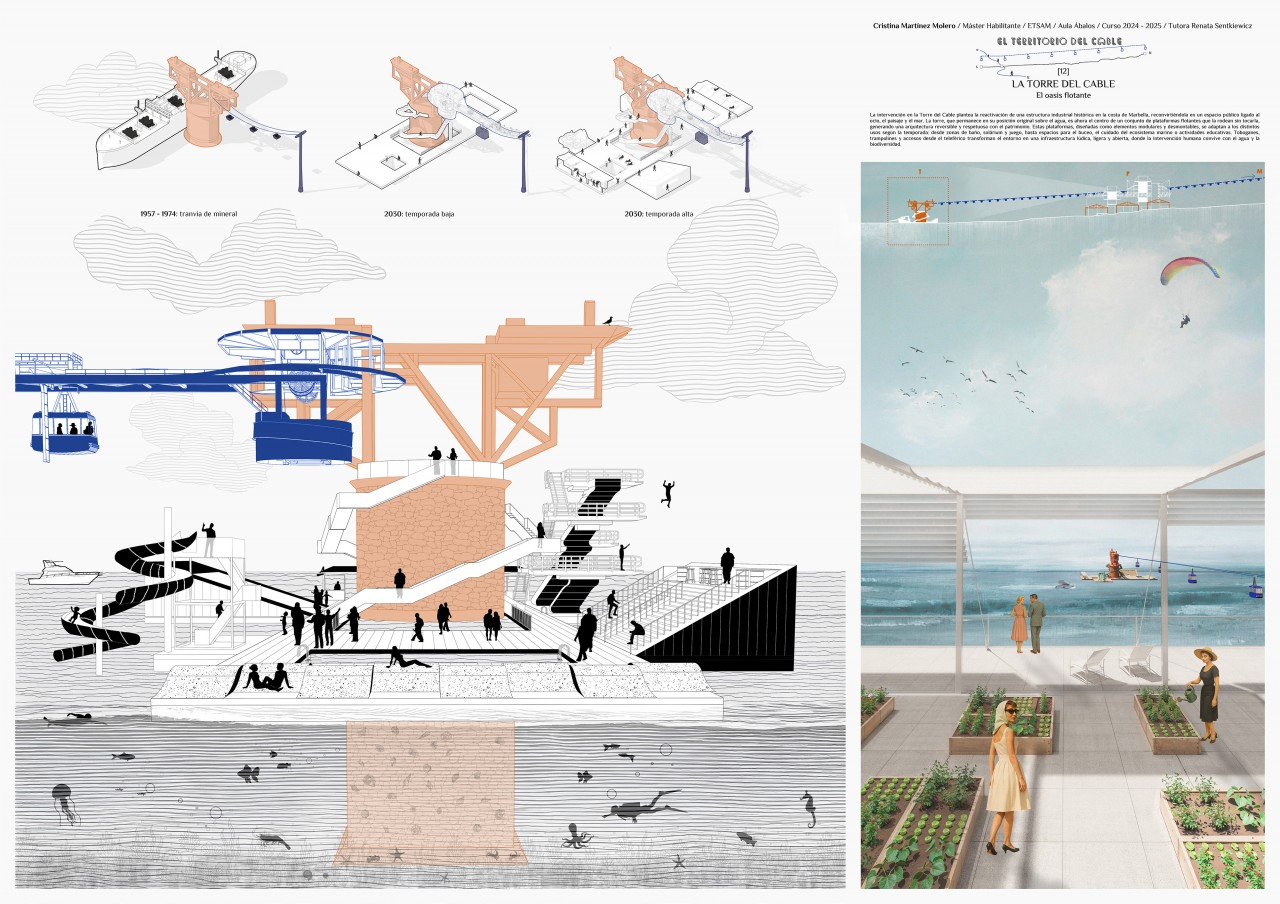
The route culminates at the Torre del Cable, reactivated through a set of floating platforms that adapt to seasonal uses, from summer leisure to spaces for rest, observation, and research.
"El Territorio del Cable" does not propose building more coastline, but rethinking it. By transforming inherited industrial infrastructure into a support for new forms of sustainable tourism, the project activates obsolete spaces as opportunities and proposes an alternative model for coastal occupation in one of the most touristic territories in southern Europe.
This project emerges from this question, using Marbella as a case study to critically examine the spatial consequences of the contemporary tourism model. Known primarily for its leisure-based economy, Marbella also contains a less visible industrial past that has left significant traces on the territory.
"El Territorio del Cable" focuses on one of the city’s main urban anomalies: an industrial estate located directly on the beachfront, disconnected from the seaside promenade, the city center, and the sea. Rather than replacing it, the project reinterprets this condition through the recovery of the former aerial mining cableway, inaugurated in 1958, which connected the "Mina del Peñoncillo" with the offshore "Torre del Cable".
This linear infrastructure becomes the backbone of the proposal, redefined as a new inhabited route linking mountain, city, and sea. The project is organized around three key nodes: the "Mina del Peñoncillo" as an entry from the natural landscape; the industrial estate, transformed into an active urban center; and the Torre del Cable, preserved and reactivated as a recreational space in the marine environment.
The intervention concentrates on the industrial estate, where two axes intersect: a north–south axis following the former mining route, now transformed into a cable car for people, and an east–west axis that restores the continuity of the seaside promenade between the urban waterfront and the natural dune corridor.
The strategy is based on a logic of urban mining, preserving and reusing the structural frameworks of existing workshops and car dealerships. These structures support new architectural elements—cable car stations, multifunctional pavilions with solar roofs, and mixed-use towers with flexible interiors, hanging terraces, and textile climatic skins.
The route culminates at the Torre del Cable, reactivated through a set of floating platforms that adapt to seasonal uses, from summer leisure to spaces for rest, observation, and research.
"El Territorio del Cable" does not propose building more coastline, but rethinking it. By transforming inherited industrial infrastructure into a support for new forms of sustainable tourism, the project activates obsolete spaces as opportunities and proposes an alternative model for coastal occupation in one of the most touristic territories in southern Europe.
- 00 - Description
- 01 - Reconversion indust.
- 02 - El teleférico
- 03 - Llenos y vacíos
- 04 - El espacio público
- 05 - Nuevo paisaje urbano
- 06 - La estación central
- 07 - Forma espacio clima
- 08 - Redensificar
- 09 - El sist estructural
- 10 - El sist constructivo
- 11 - El modulo habitable
- 12 - La torre del cable
- 13 - ...
- 14 - Video