
EVOLUTIVE FRAMEWORK
Time and digital revolution have brought a new way of understanding the world. The immediacy and the frenetic rhythm make our needs changeable and volatile. Voracious consumerism threatens our climate and with it our planet. The accumulation of objects has never been greater and yet the size of the house has only decreased. This pushes us to seek not a model, but a system for the home of the future, to re-understand it as a machine to inhabit from its own construction. This system should be built with sustainable materials, understand a home as the sum of its inhabitants and its assets and evolve, grow and decrease over time.
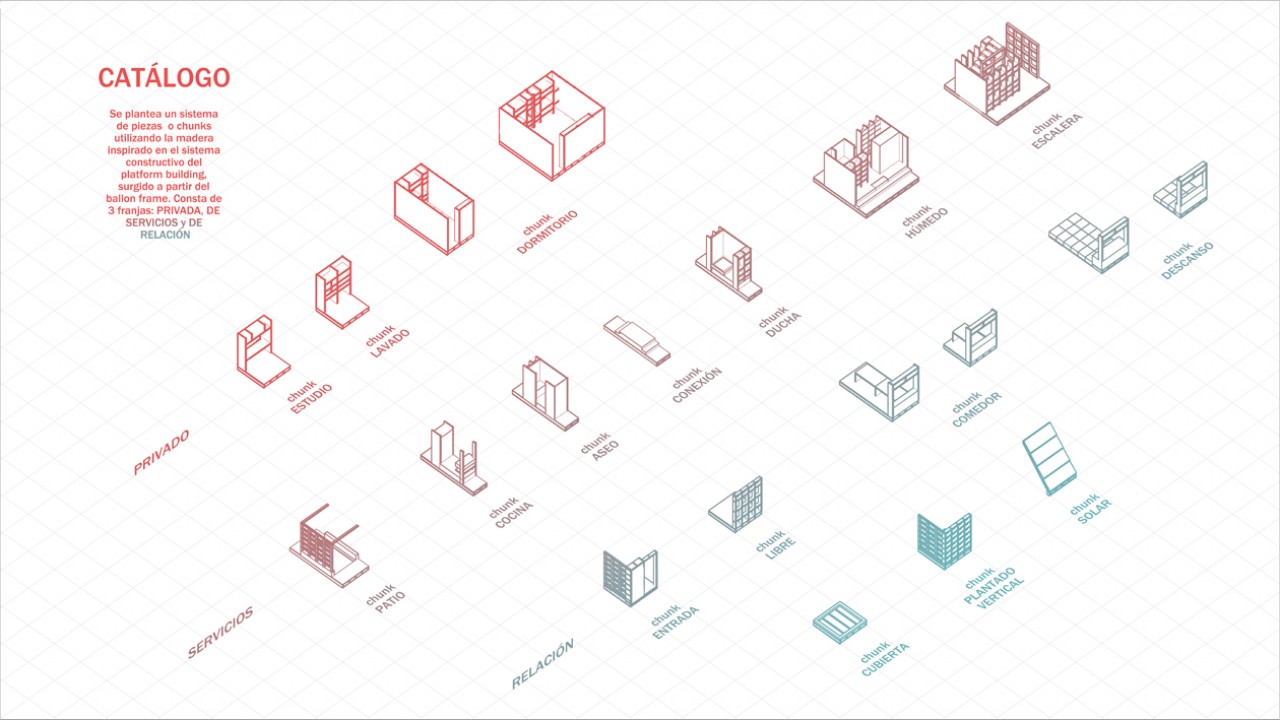
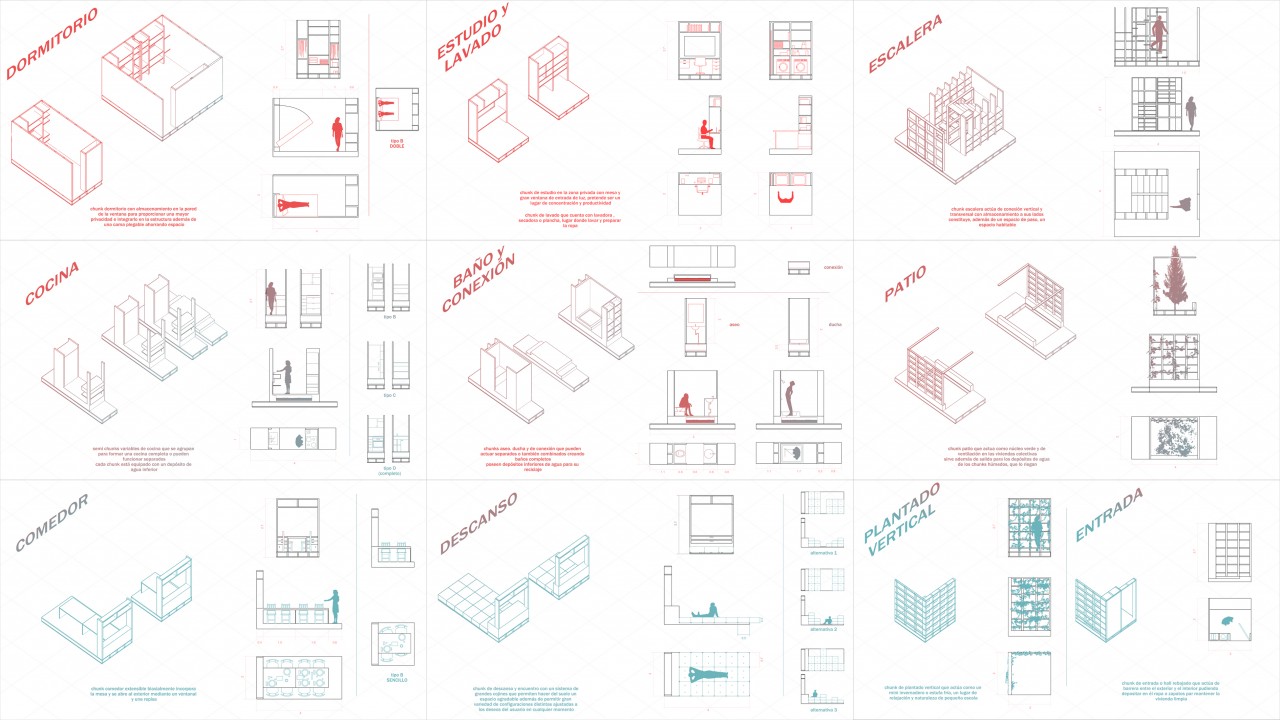
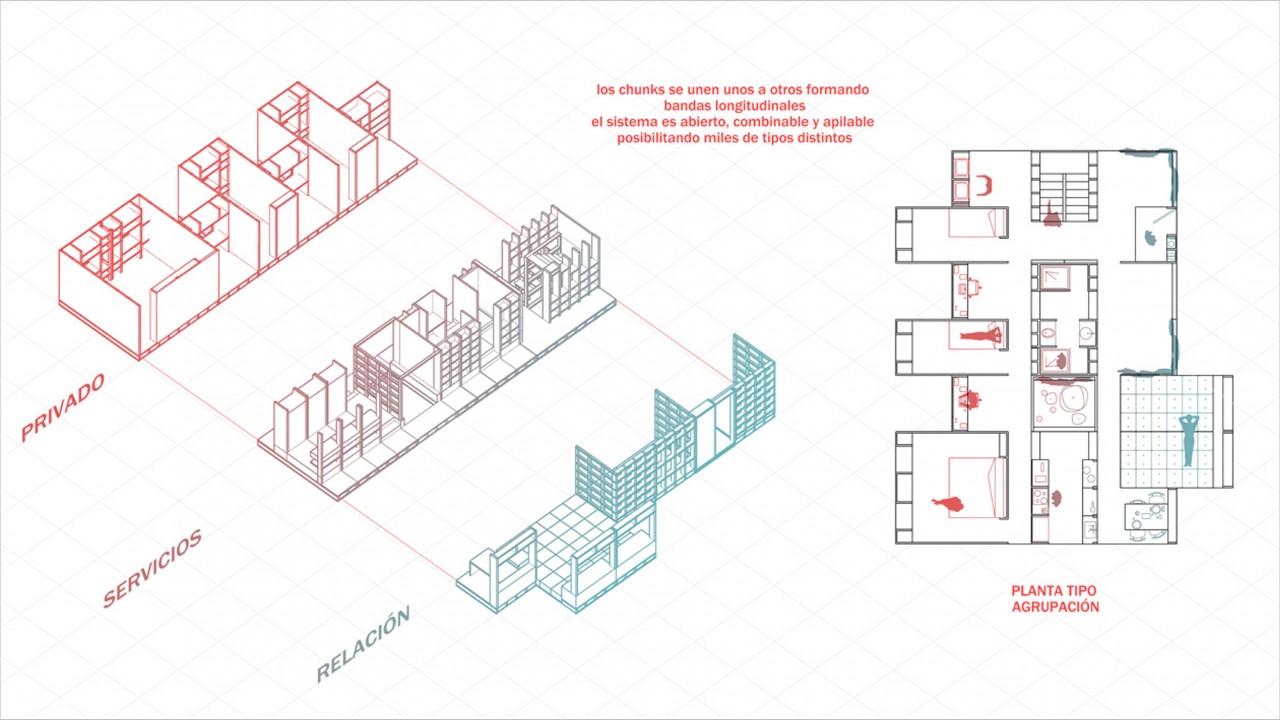
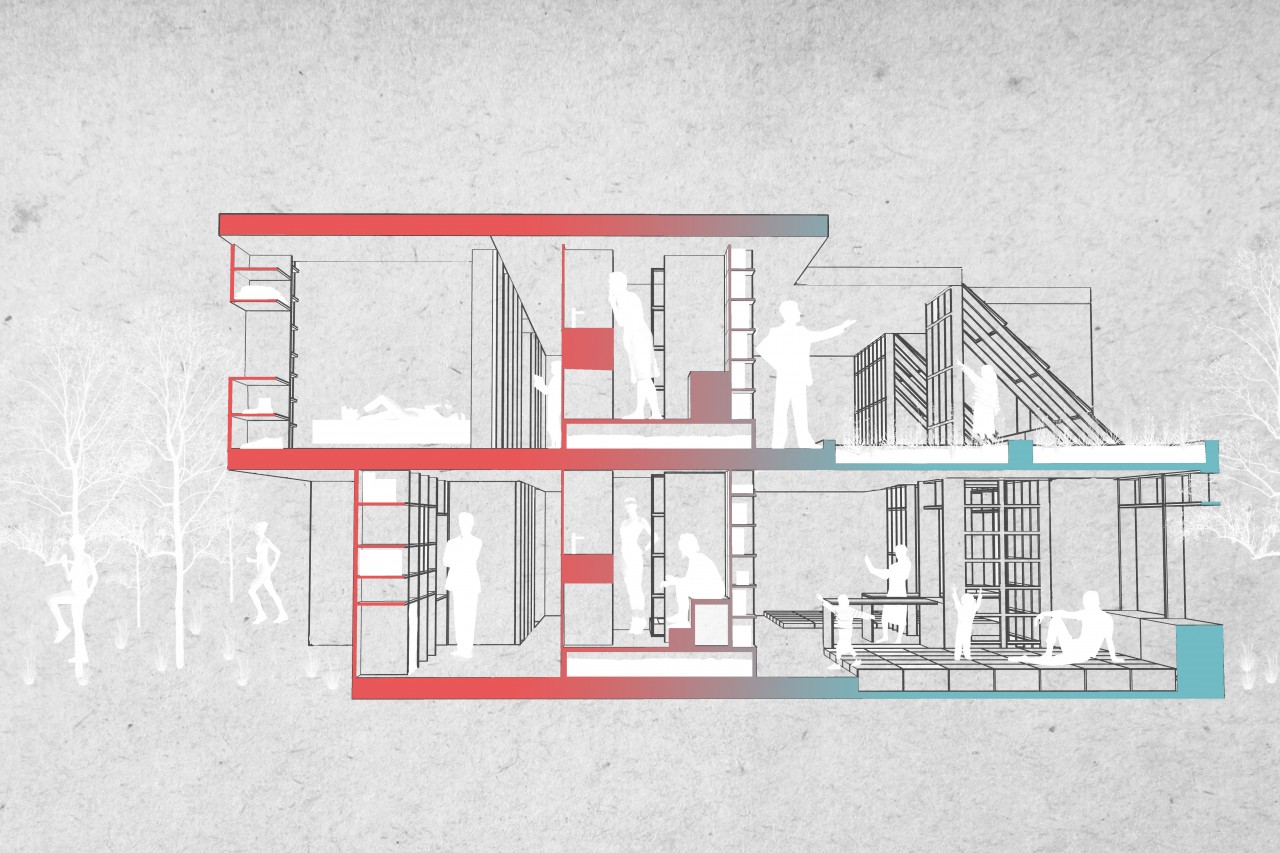
A catalog of chunks, moduled in 2x2 meters modules, is developed to create a set of evolutionary and customizable open source homes inspired by the balloon frame system. The system makes it cheaper, faster and easier to build. These pieces are grouped into three rows that grow longitudinally, one more private, one that concentrates services and another of collective spaces, which give rise to a lot of combinations.
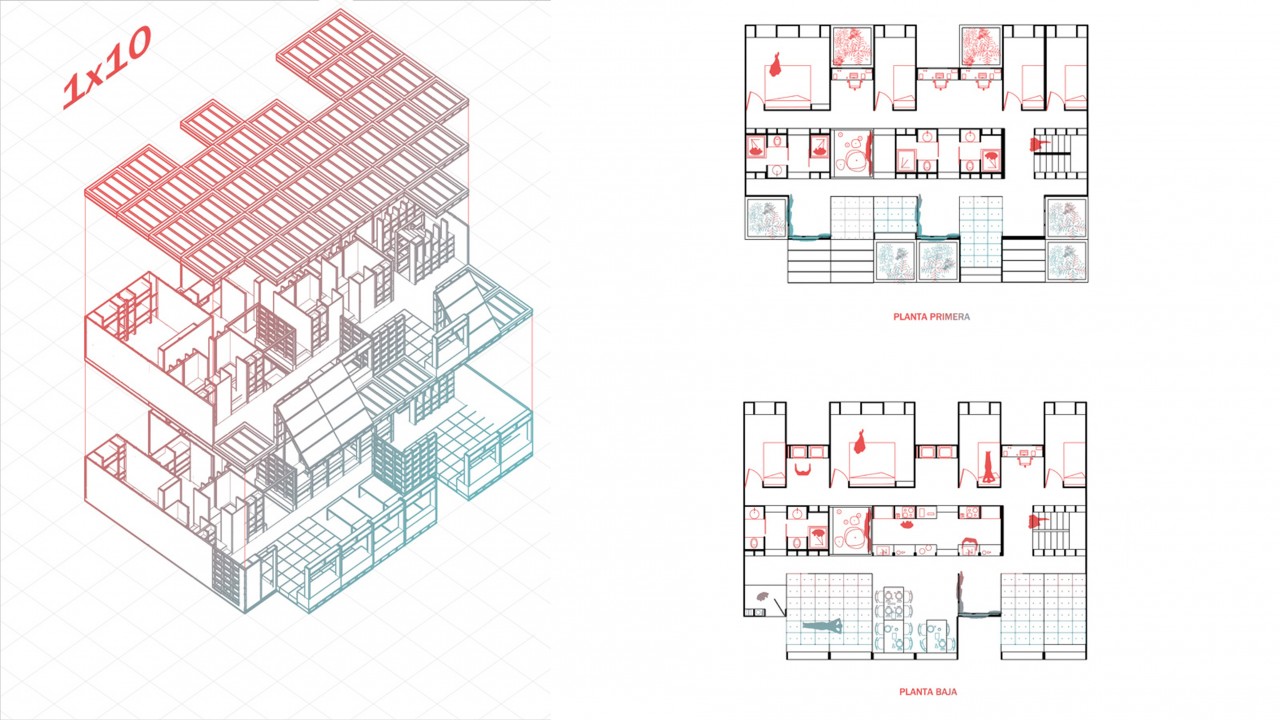
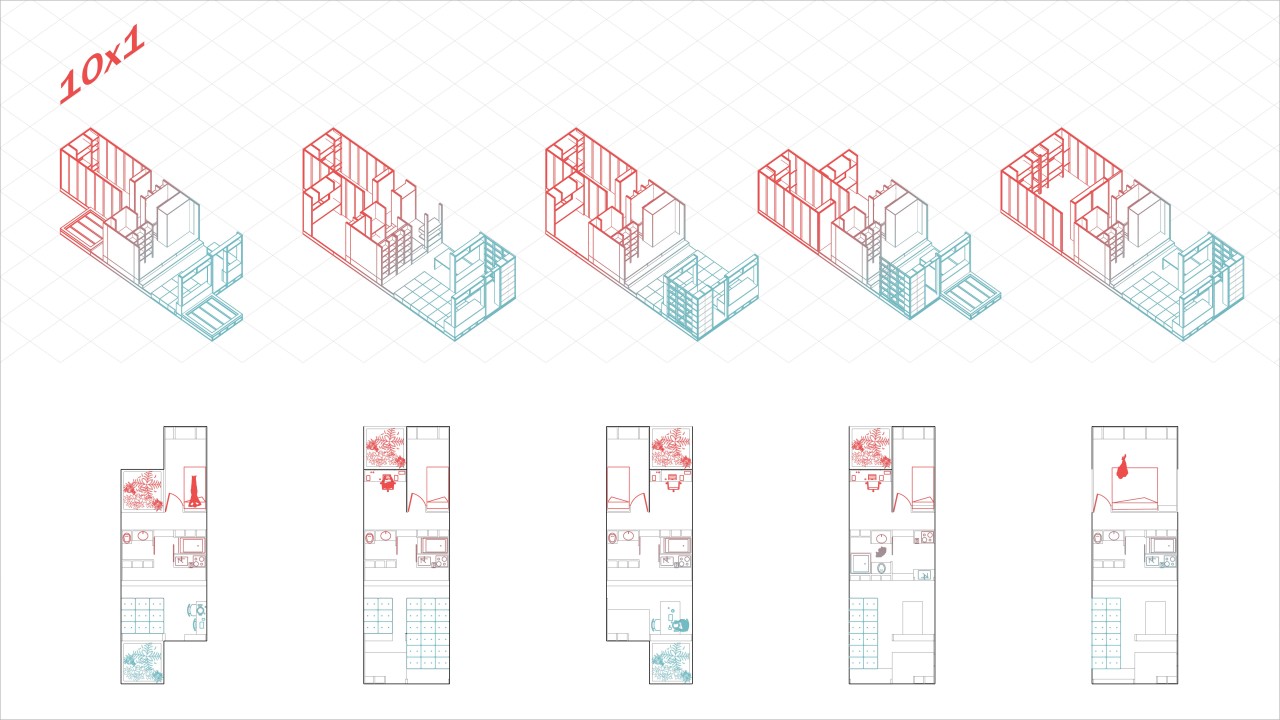
Two different types of houses are developed: 1x10, a house for ten people, a collective way o living; and 10x1, ten houses for one person each, an individual way of living. Both types are built with the same chunks, changing only his number and size. They are also expandable and combinable.
We study the case of PREVI, Lima, Peru, where 26 different evolutive housing systems where built in the 1960s.
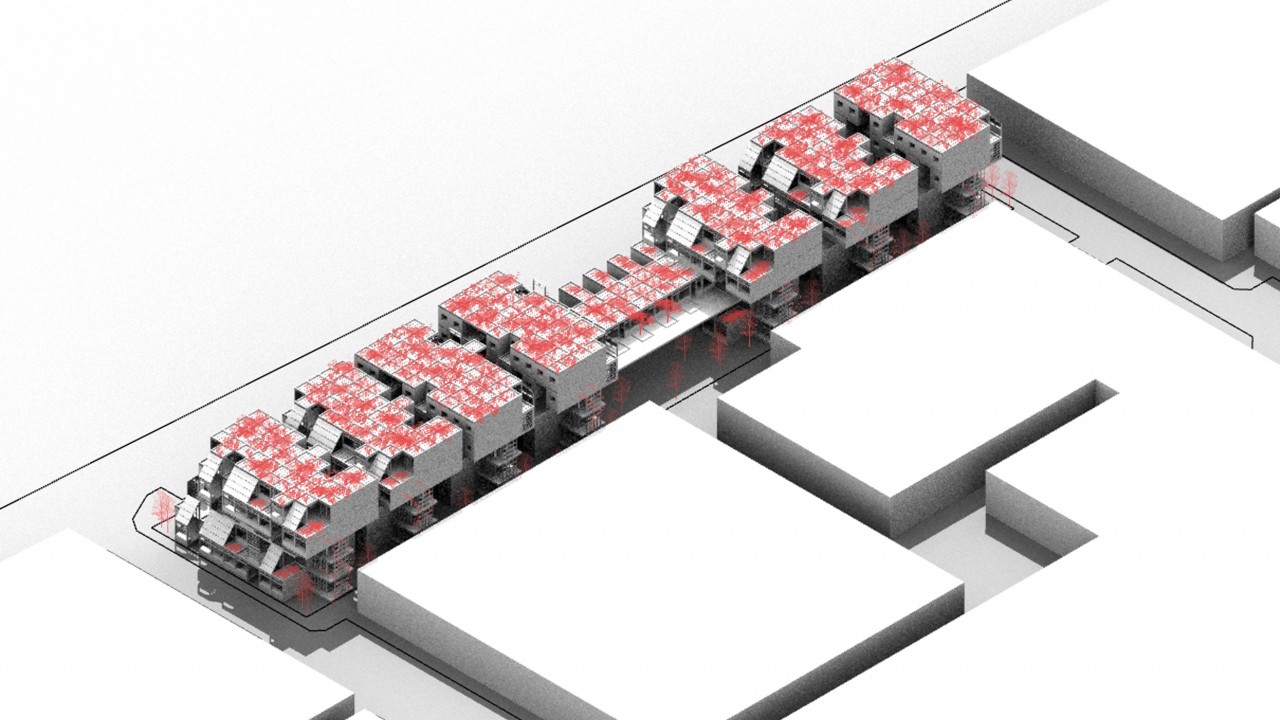
On one of its plots we place our system, combining both types of housing, doubling it's original occupation, and increasing the number of residents. The study of the environment made me think about creating a central public space and establishing transversal connections between a neighborhood scale PREVI and a city of a much larger scale.
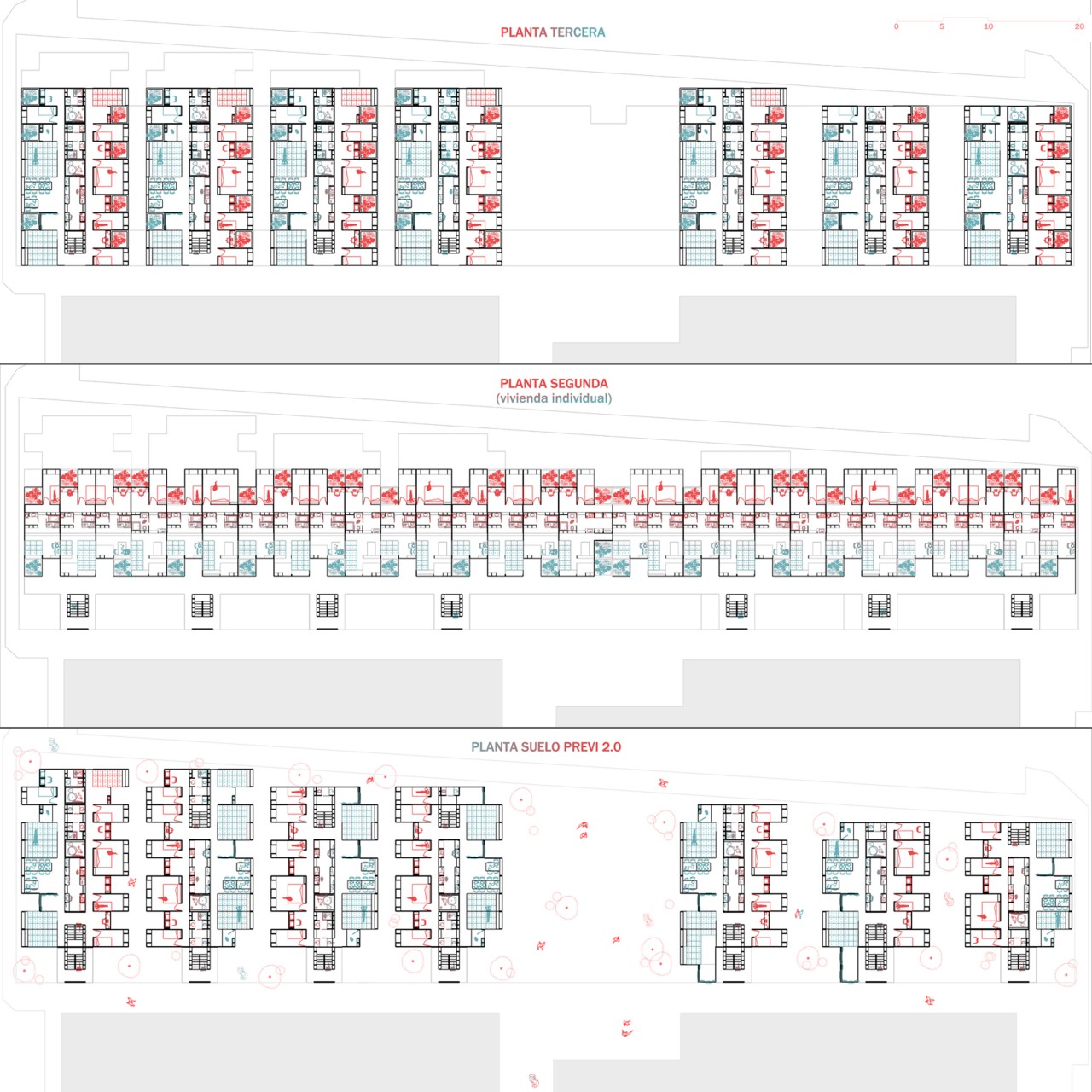
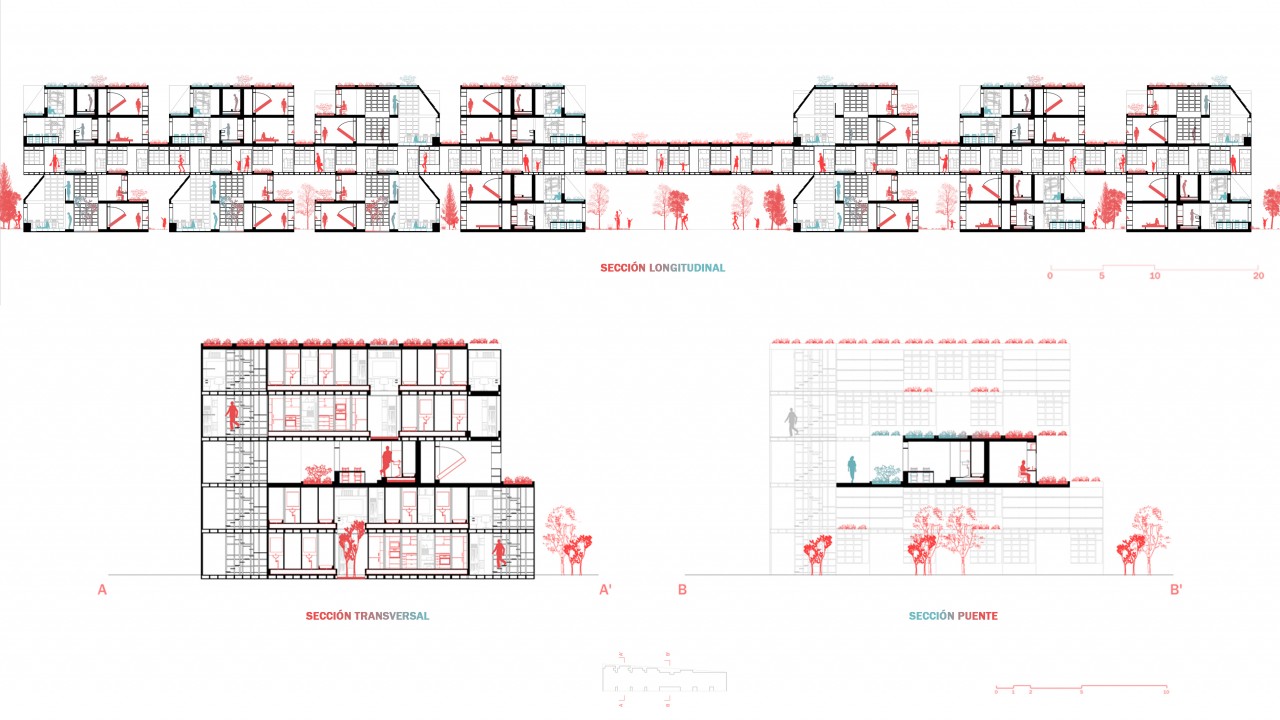
7 collective houses are placed, generating narrow streets between them. Over them is superimposed a continuous band of 29 individual houses with a common access platform. Finally, the blocks on the ground floor are duplicated, topping the complex, an evolutive framework that in its maximum extension can provide a home for up to 200 inhabitants.
Final complex: -14 collective houses (around 280 sq mt each)
-29 individual houses (32 to 48 sq mt each)
-Development potential of 2 m2 per square metre of land
A catalog of chunks, moduled in 2x2 meters modules, is developed to create a set of evolutionary and customizable open source homes inspired by the balloon frame system. The system makes it cheaper, faster and easier to build. These pieces are grouped into three rows that grow longitudinally, one more private, one that concentrates services and another of collective spaces, which give rise to a lot of combinations.
Two different types of houses are developed: 1x10, a house for ten people, a collective way o living; and 10x1, ten houses for one person each, an individual way of living. Both types are built with the same chunks, changing only his number and size. They are also expandable and combinable.
We study the case of PREVI, Lima, Peru, where 26 different evolutive housing systems where built in the 1960s.
On one of its plots we place our system, combining both types of housing, doubling it's original occupation, and increasing the number of residents. The study of the environment made me think about creating a central public space and establishing transversal connections between a neighborhood scale PREVI and a city of a much larger scale.
7 collective houses are placed, generating narrow streets between them. Over them is superimposed a continuous band of 29 individual houses with a common access platform. Finally, the blocks on the ground floor are duplicated, topping the complex, an evolutive framework that in its maximum extension can provide a home for up to 200 inhabitants.
Final complex: -14 collective houses (around 280 sq mt each)
-29 individual houses (32 to 48 sq mt each)
-Development potential of 2 m2 per square metre of land
- 00 - Description
- 01 - CATALOGUE
- 02 - CHUNKS
- 03 - RULES
- 04 - 1X10
- 05 - 1X10 SECTION
- 06 - 10X1
- 07 - FLOOR PLANS
- 08 - SECTIONS
- 09 - PREVI 2.0
- 10 - SPACEBOARDS
- 11 - Video