
Fulcrum
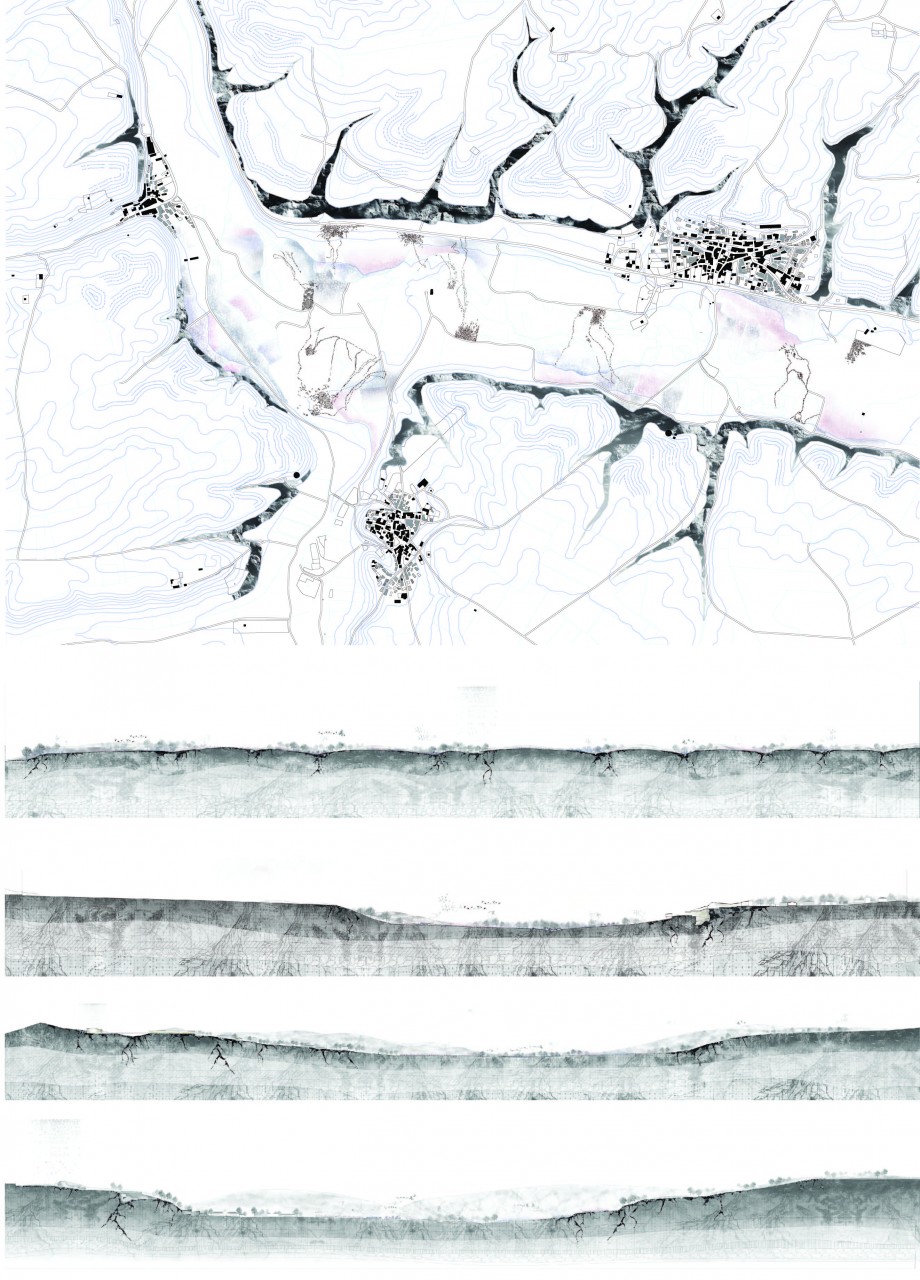
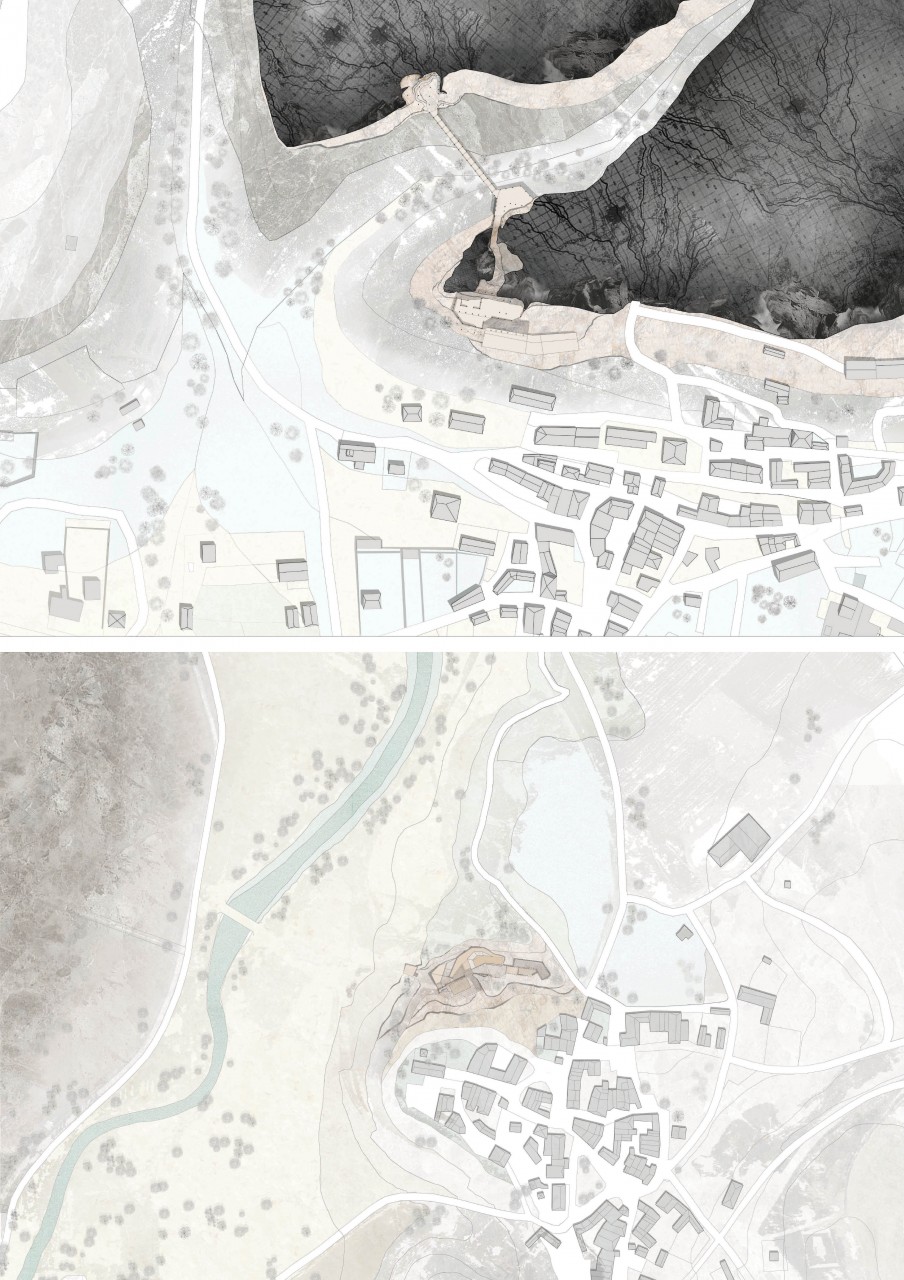
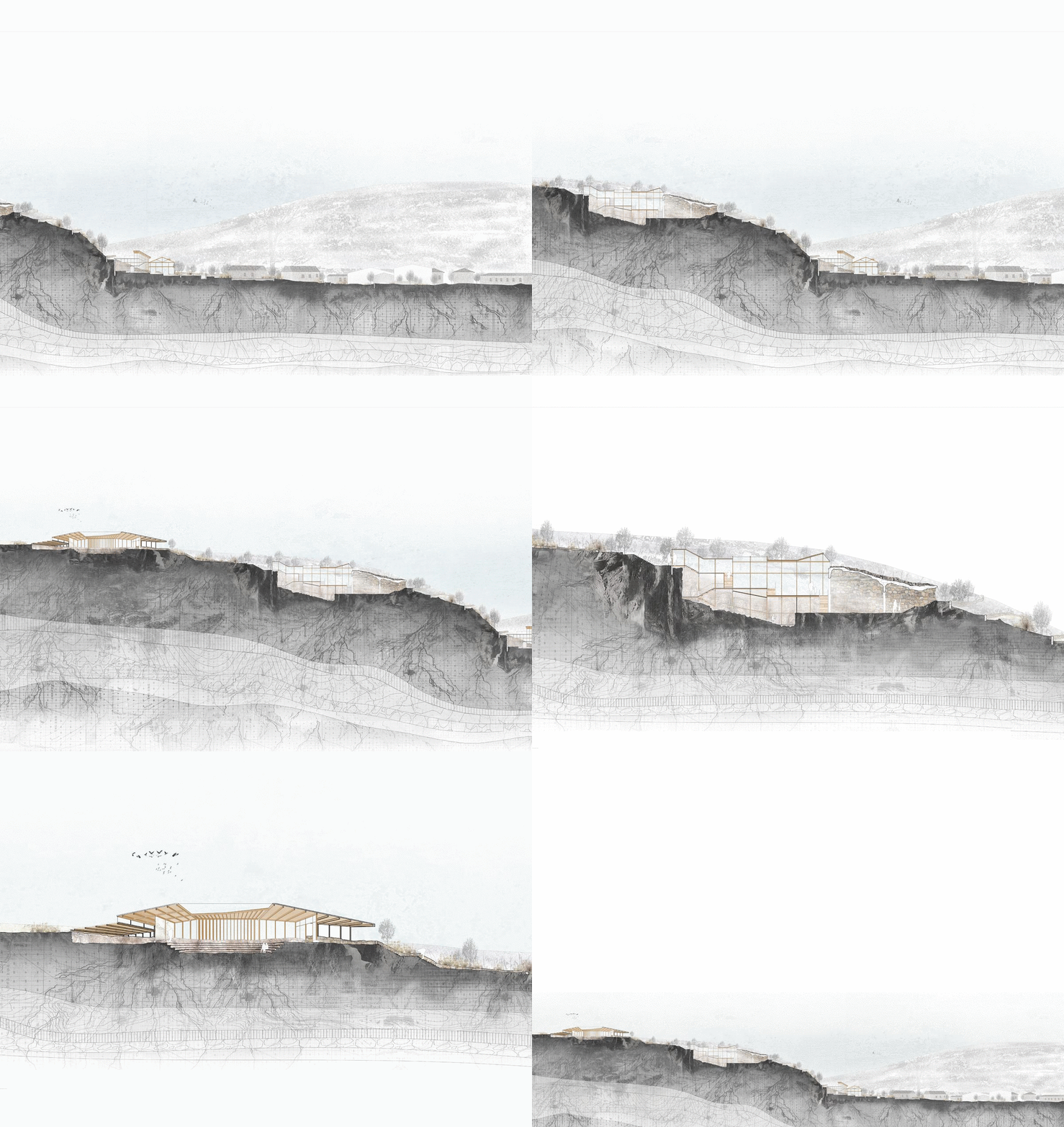
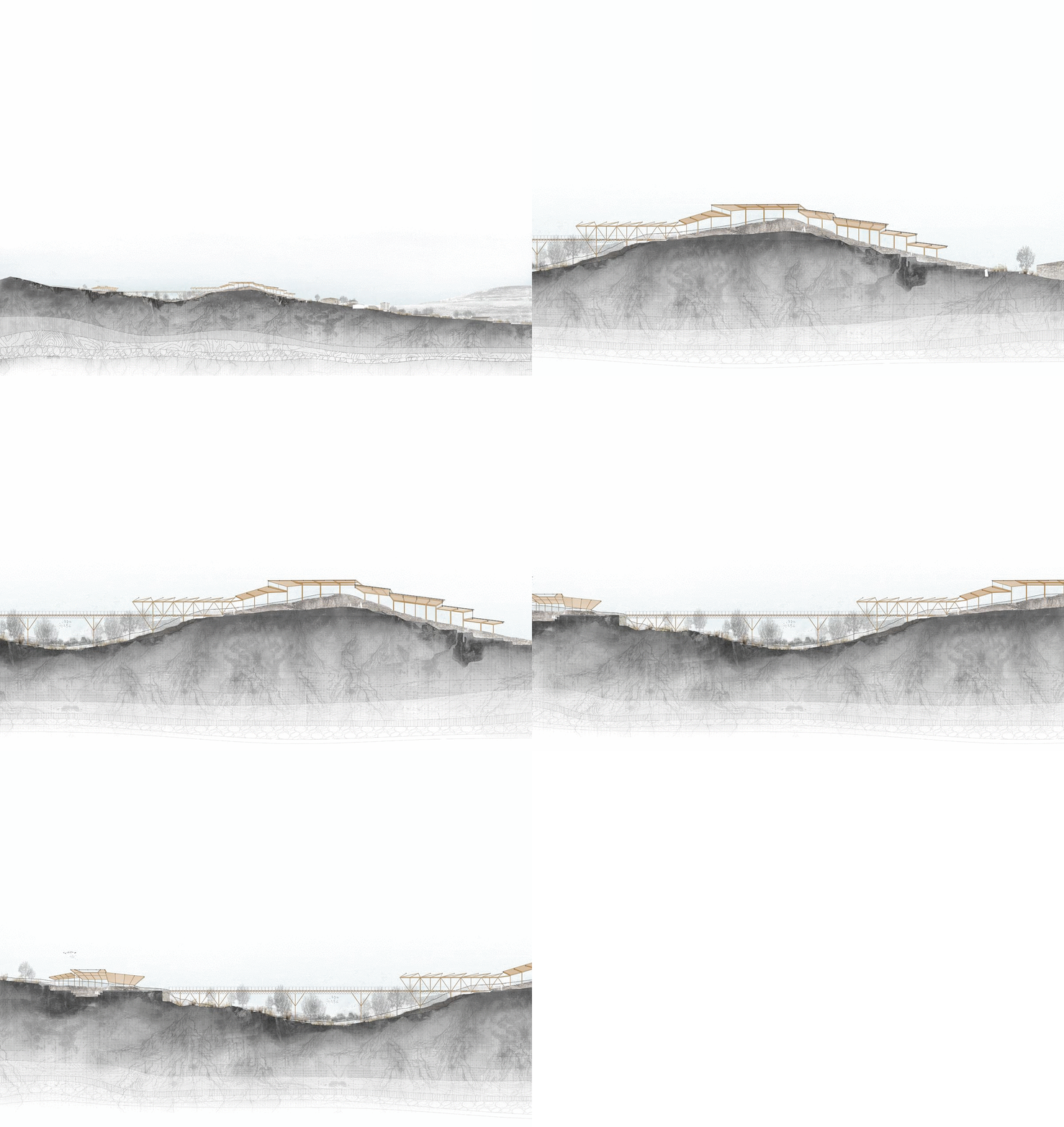
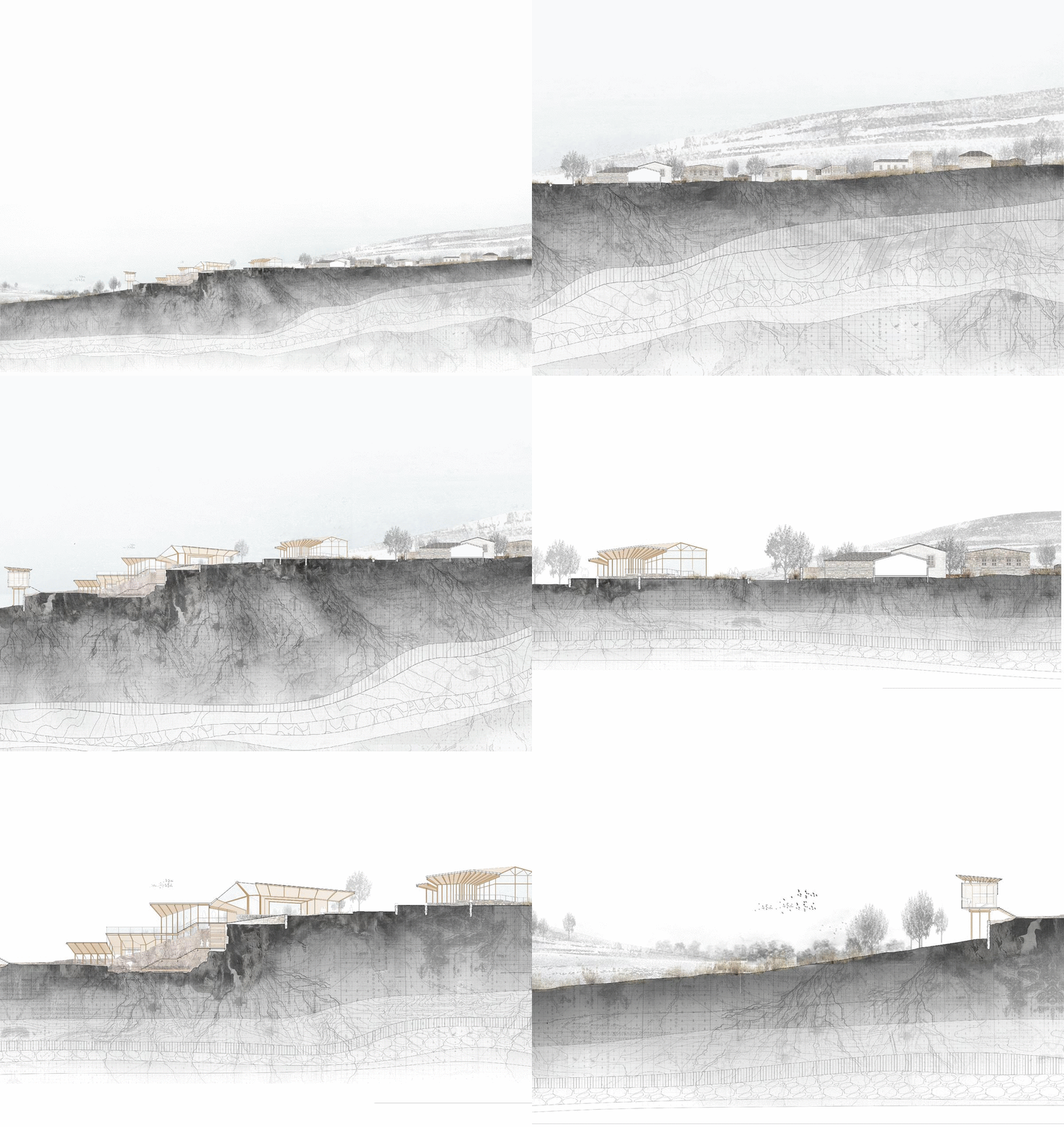
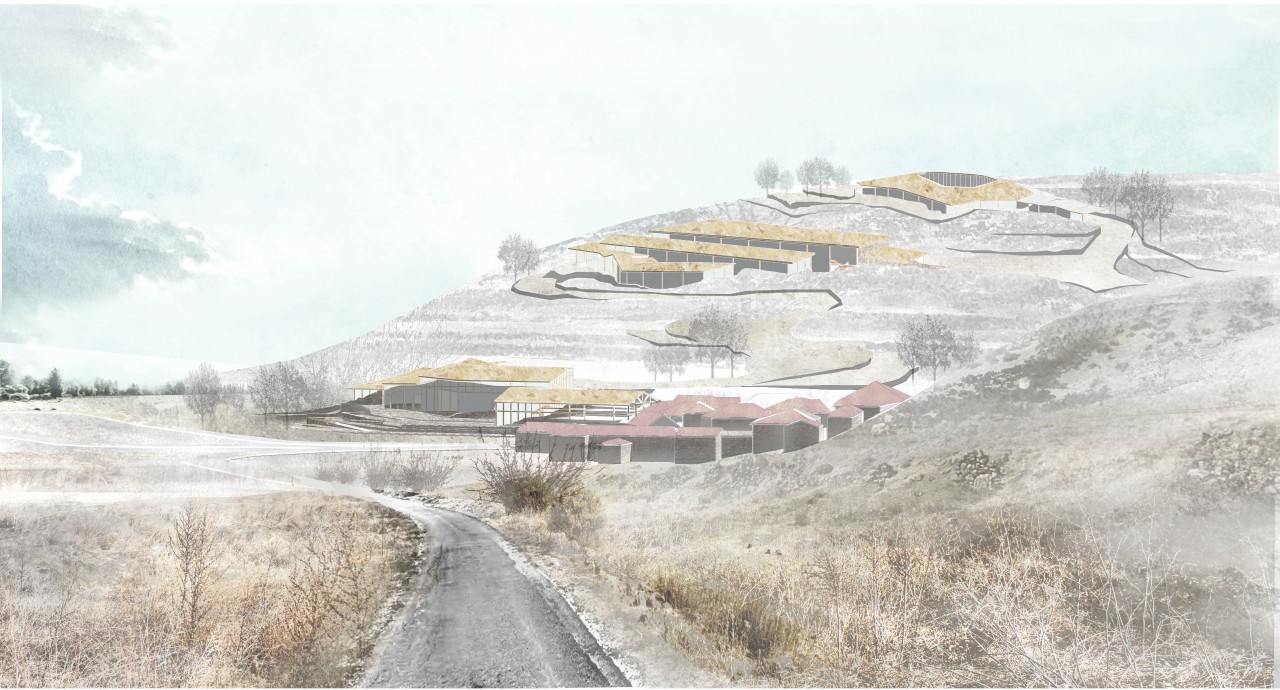
Rural Spain is becoming vacant. The project strives to harness the Architectural potential in nature and its spatial qualities for the revitalization of the surroundings, and to create a mutually positive and well-balanced relationship between the built and the natural environment, while addressing a foundational question about the dualism between the preservation of nature and the intervention in it. The project's interventions take place alongside three villages surrounding an intersection between Rio Riaza and Rio Riaguas, and are made of three sub-systems, which together emphasis the valley’s borders and function as a space. Each of the systems contains functions and spatial qualities according to its location and embodies a different part of the gradient between the built and the unscathed. The interventions in the most human-intensive parts create public and commercial spaces for the villages. Further away, the geological and the wildlife centers are there for those willing to learn, firsthand, about the natural surroundings, geology and history - be it locals or visitors, either before they set foot to roam it, or as they continue to dwell in it. The furthest extensions, the ones created in the most natural areas, may serve the locals as places for meeting and gathering, as places to unite with nature, while on set occasions serve as landmarks for tourists – built areas from which they can observe the stars and wildlife.
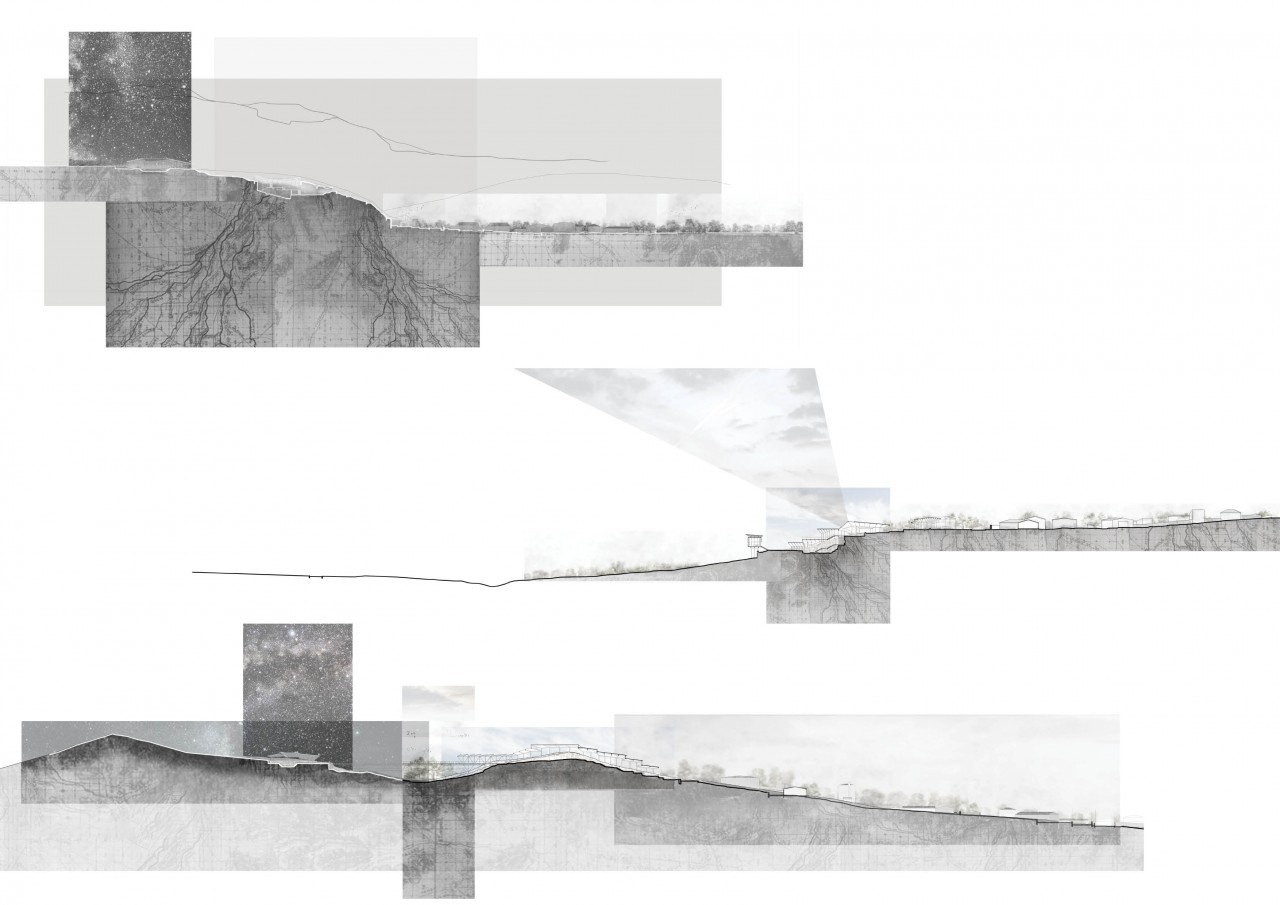
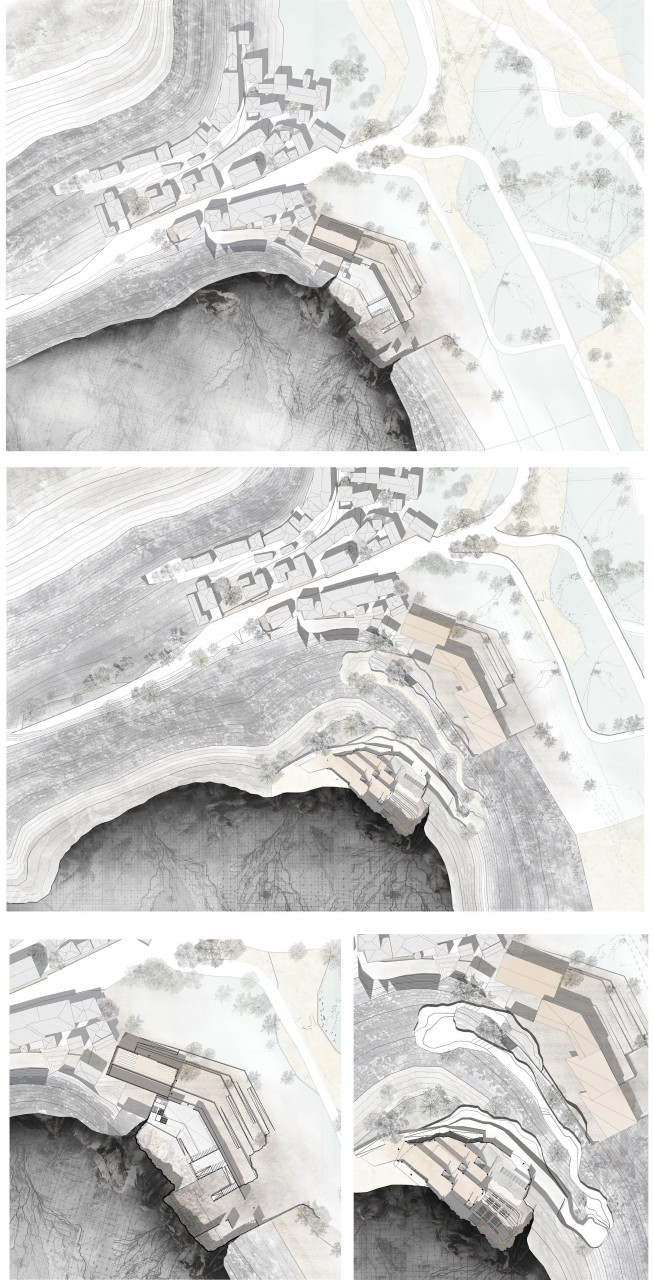
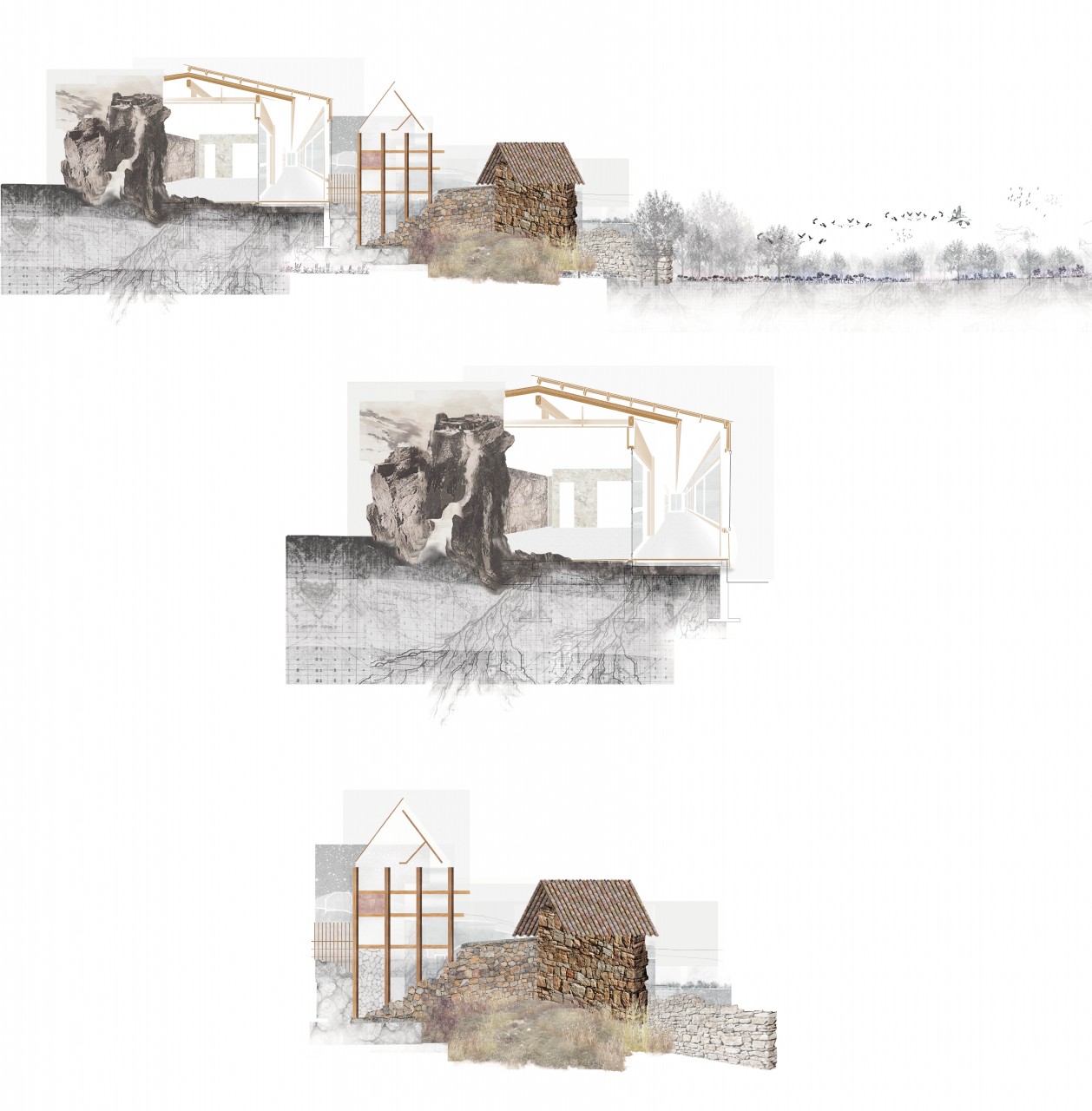
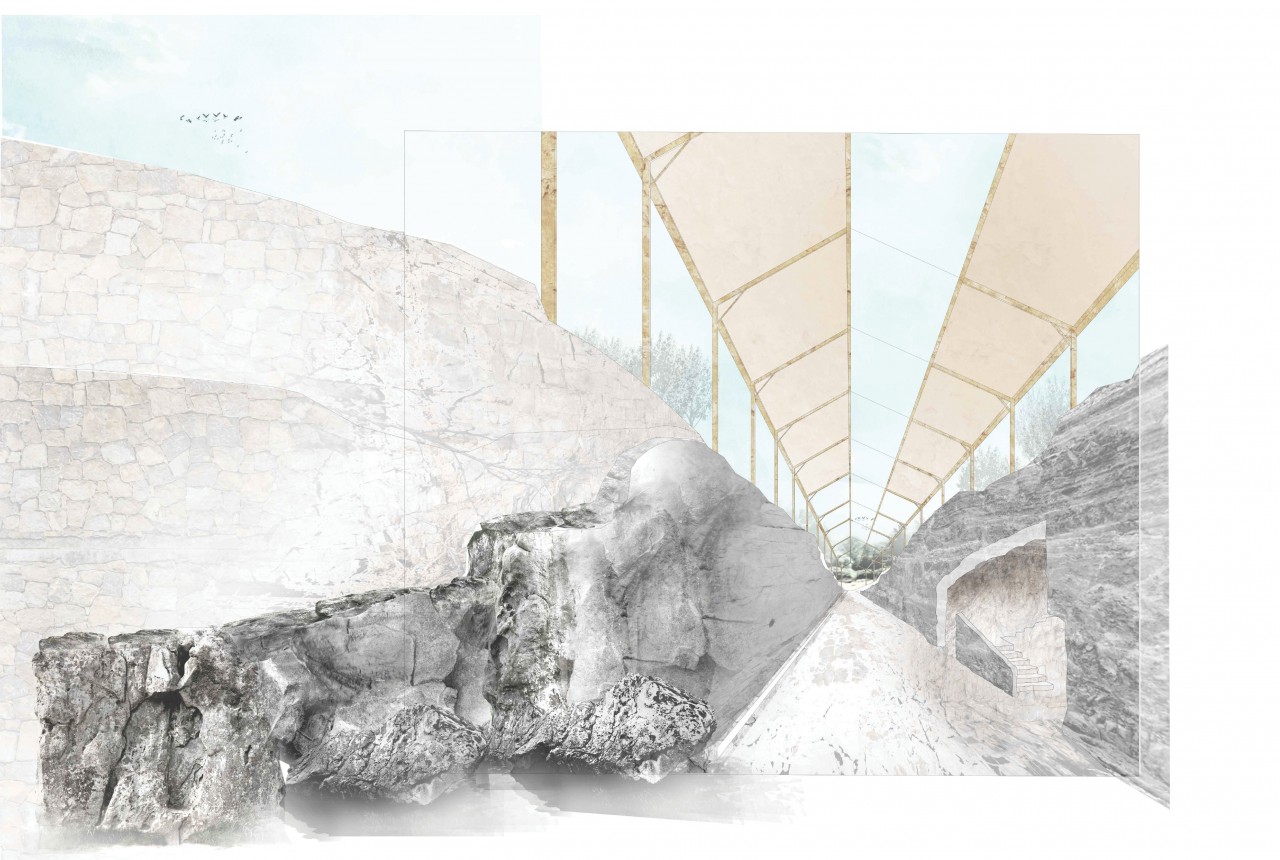
The valley, the flora and fauna, the topographical variety and the existing buildings’ characteristics function as the material palette from which the project is derived. The buildings in the project react to the natural silhouette of the hills and mountains, sometimes echoing it, other times mirroring or contrasting it. They are made of two languages – Heavy and light. The heavy language’s syllables are the local rocks and soil, exposed and become an integral part of the Architecture, to which the typical, local stone-walls connect. The light language’s forms derive out of the existing building typologies of Segovia. It is one of wooden beams and glass – local, low-cost and environmental-friendly materials. and allow light to wash the rocks and coves, emphasizing the eroded layers of the rocks by floating over them.
The project proposes a relationship in which an equilibrium may be achieved between the natural and the built, the higher and the lower, light and heavy, between the local population and the ones who'll visit, the permanent and the temporary.
The valley, the flora and fauna, the topographical variety and the existing buildings’ characteristics function as the material palette from which the project is derived. The buildings in the project react to the natural silhouette of the hills and mountains, sometimes echoing it, other times mirroring or contrasting it. They are made of two languages – Heavy and light. The heavy language’s syllables are the local rocks and soil, exposed and become an integral part of the Architecture, to which the typical, local stone-walls connect. The light language’s forms derive out of the existing building typologies of Segovia. It is one of wooden beams and glass – local, low-cost and environmental-friendly materials. and allow light to wash the rocks and coves, emphasizing the eroded layers of the rocks by floating over them.
The project proposes a relationship in which an equilibrium may be achieved between the natural and the built, the higher and the lower, light and heavy, between the local population and the ones who'll visit, the permanent and the temporary.
- 00 - Description
- 01 - 01_Site View
- 02 - 02_Situations
- 03 - 03_Plans Variant A
- 04 - 04_Plans Variant B&C
- 05 - 05_Material Palette
- 06 - 06_Section Variant A
- 07 - 07_Section Variant B
- 08 - 08_Section Variant C
- 09 - 09_Ambiance View
- 10 - 10_Perspective View
- 11 - Video