
Hábitat BMI´67
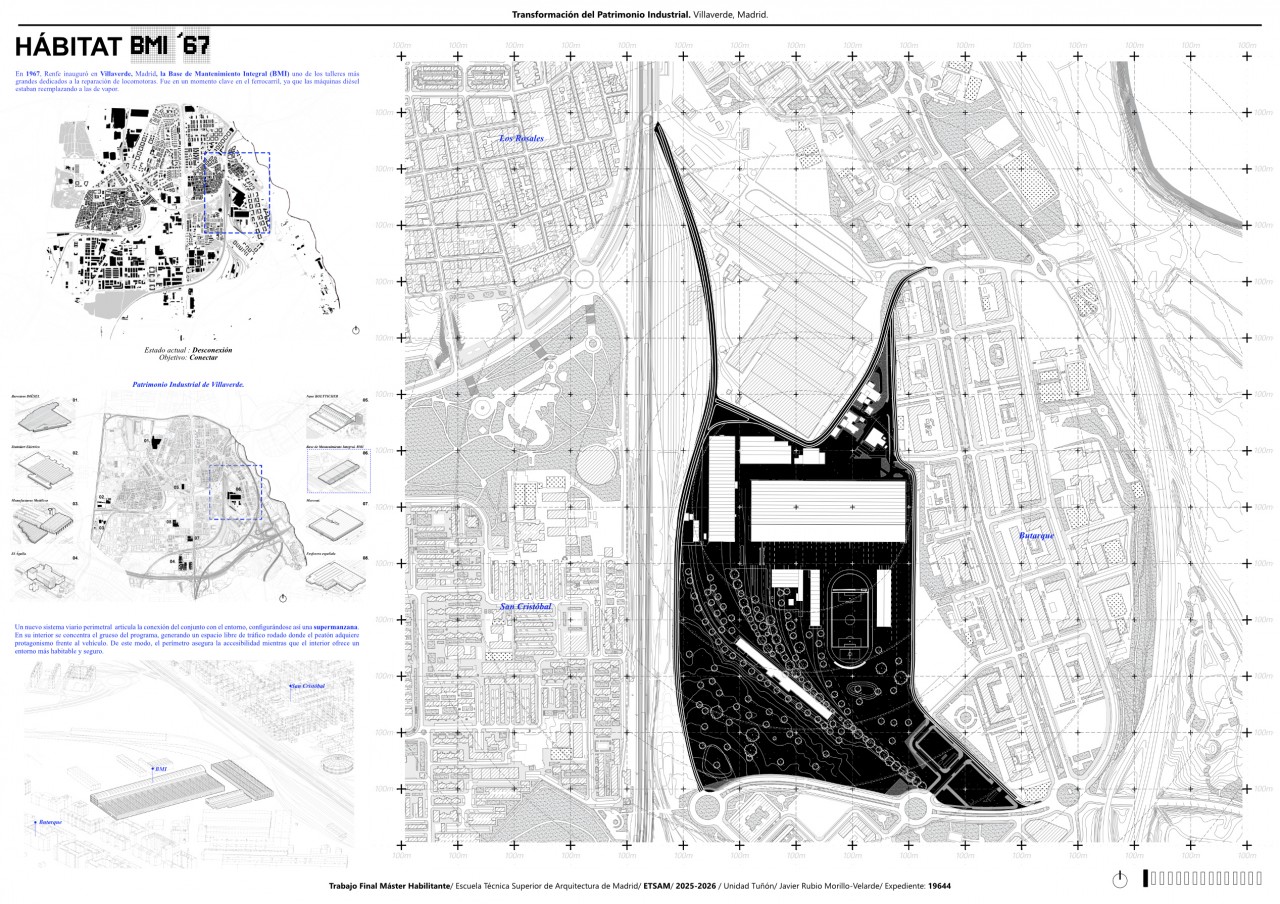
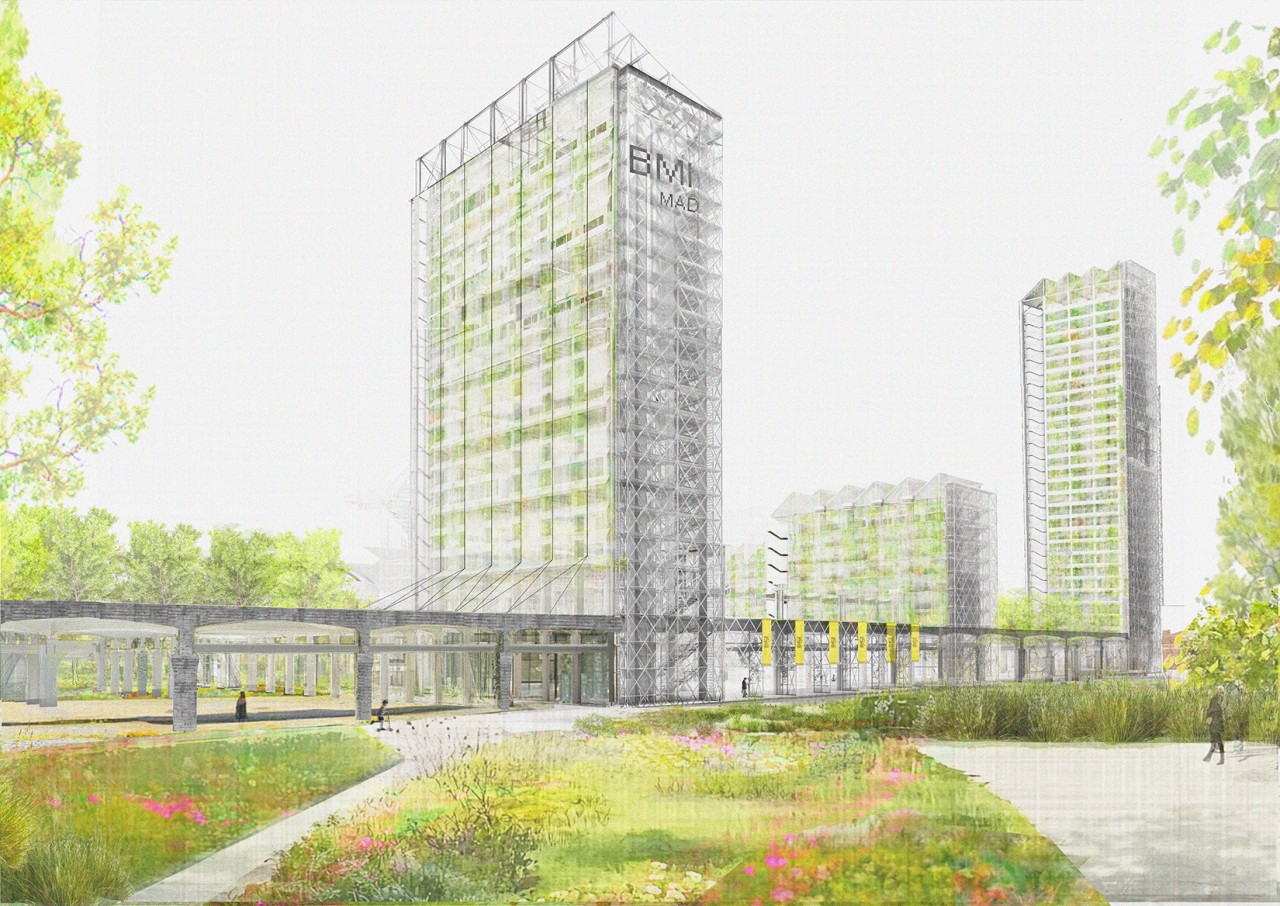
The project is located in Madrid's Villaverde district, on the site of the former Base de Mantenimiento Integral for railway repairs (BMI, 1967), a strategic enclave between the neighbourhoods of San Cristóbal and Butarque, next to the railway tracks. This area has historically been linked to the industrialisation of southern Madrid and railway activity, but is now in disuse.
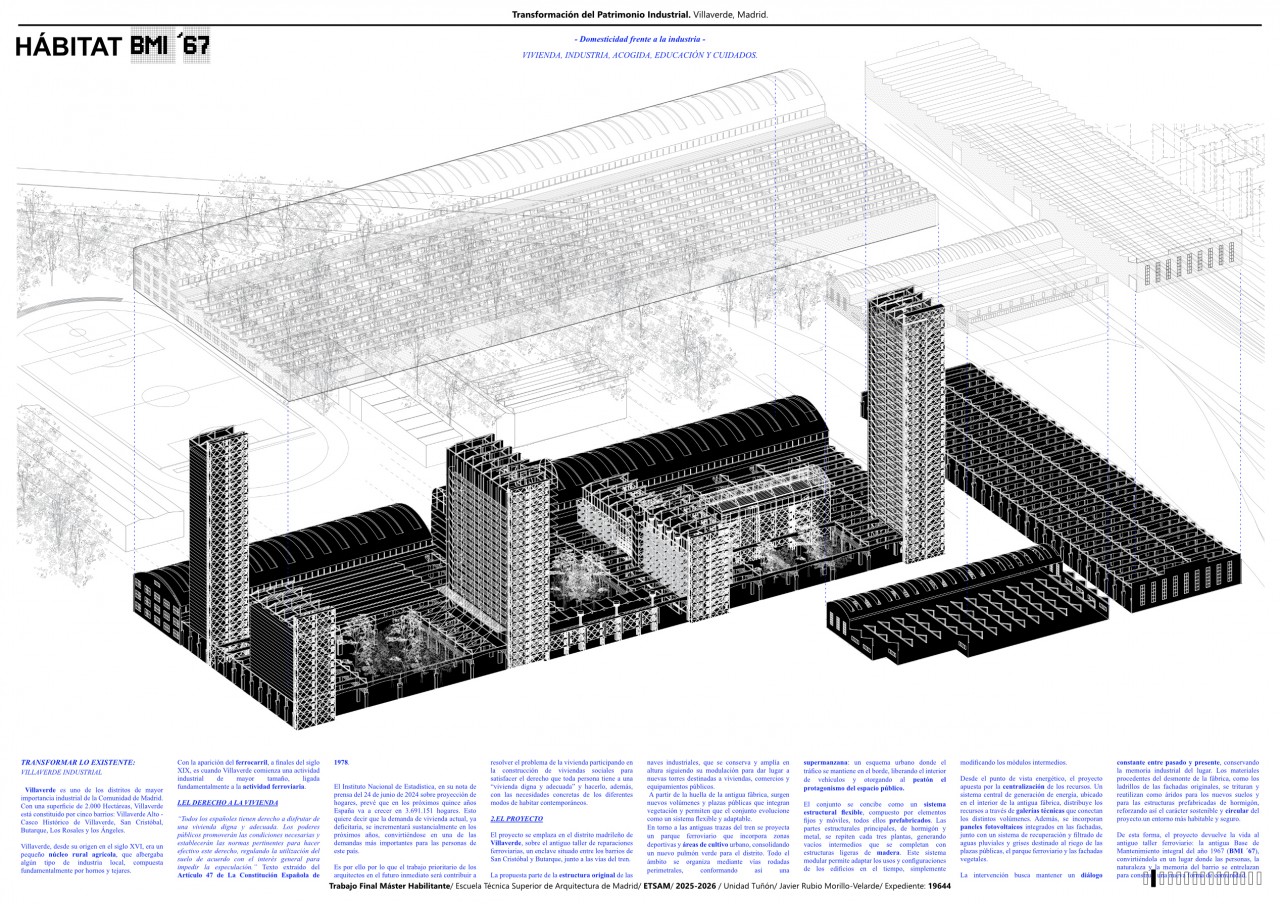
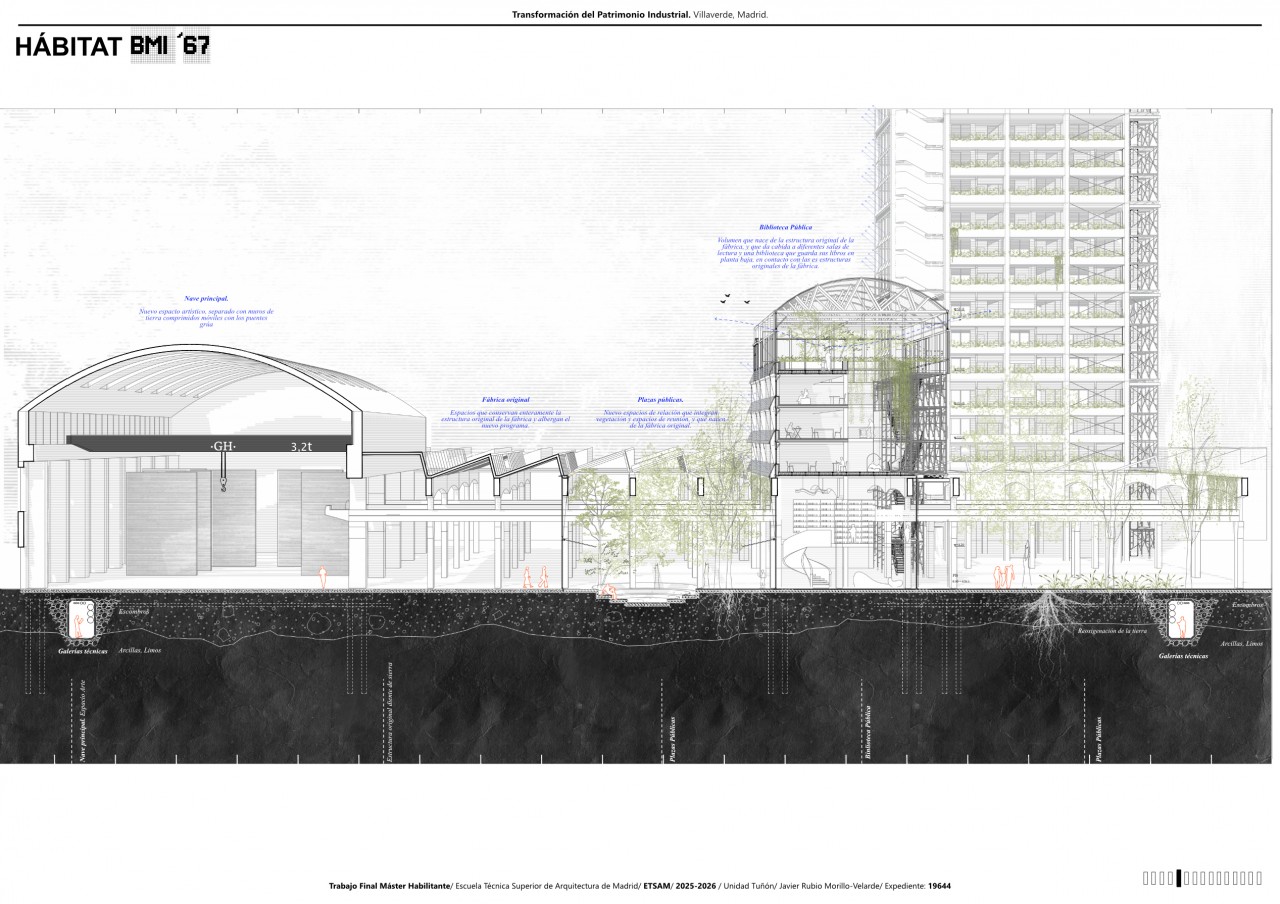
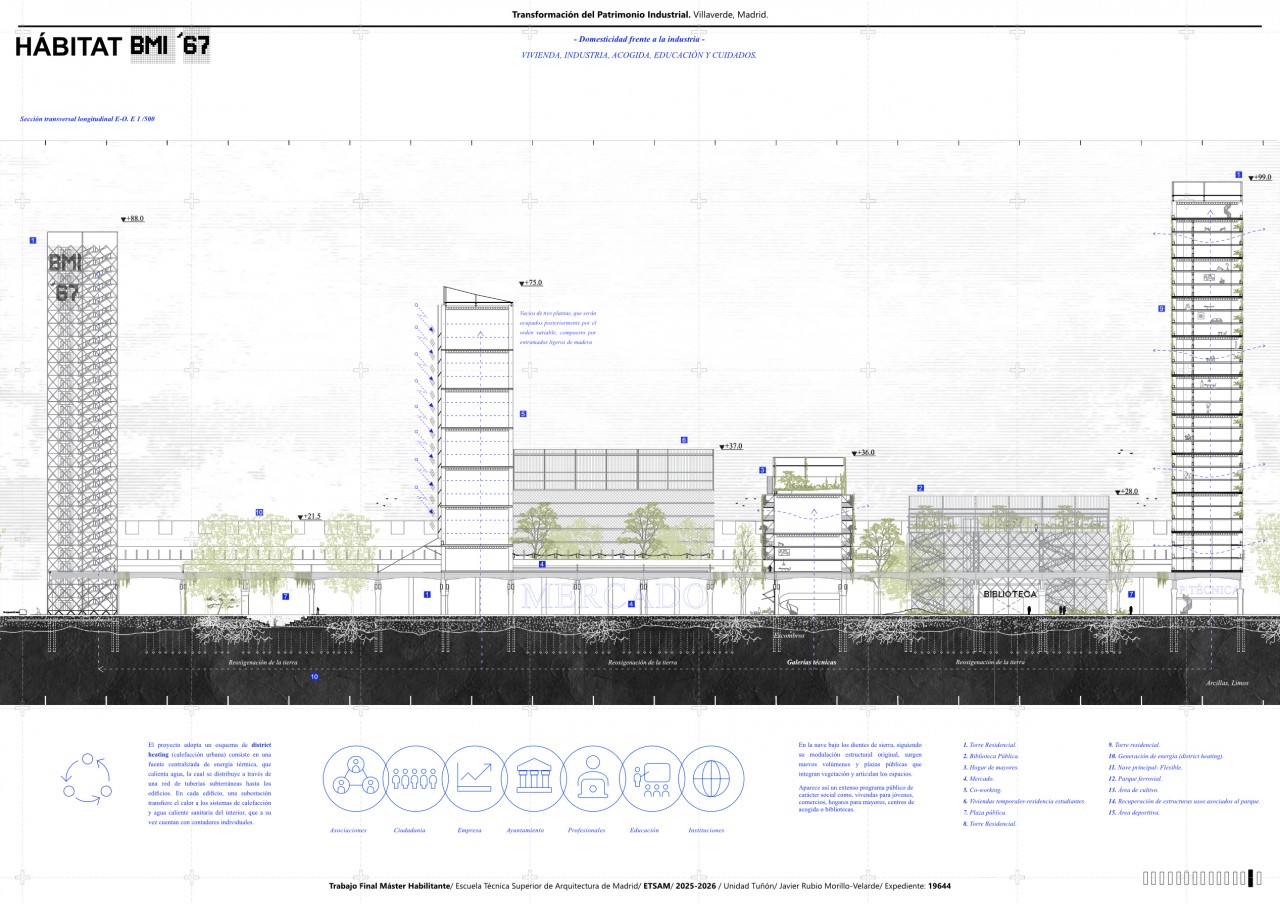
The intervention focuses on the industrial complex of the former BMI, consisting of large reinforced concrete warehouses and brick walls. Of particular note are the long vaulted main warehouse, used for comprehensive train repairs, and the sawtooth warehouse, a high-ceilinged hypostyle hall with powerful structural modulation.
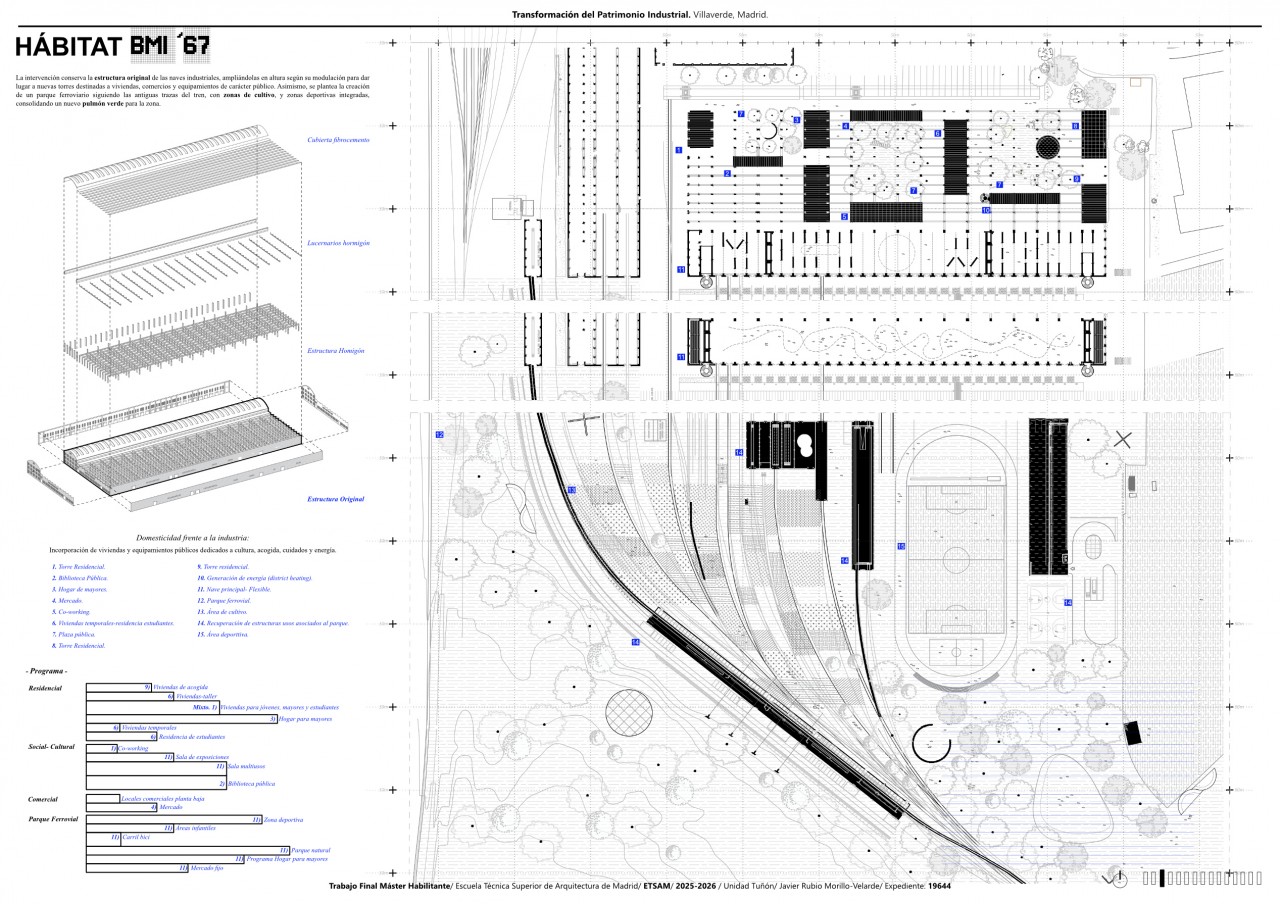
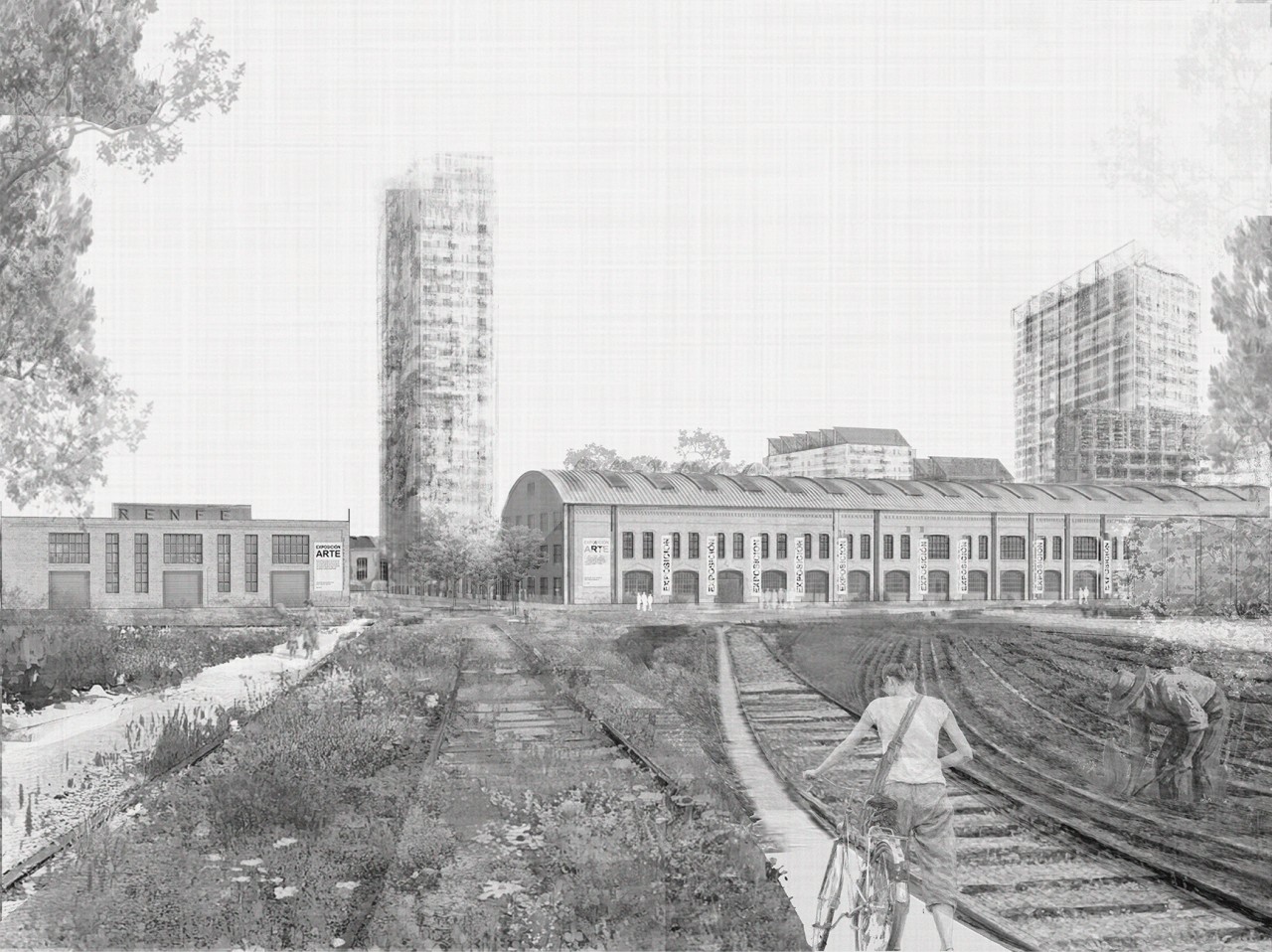
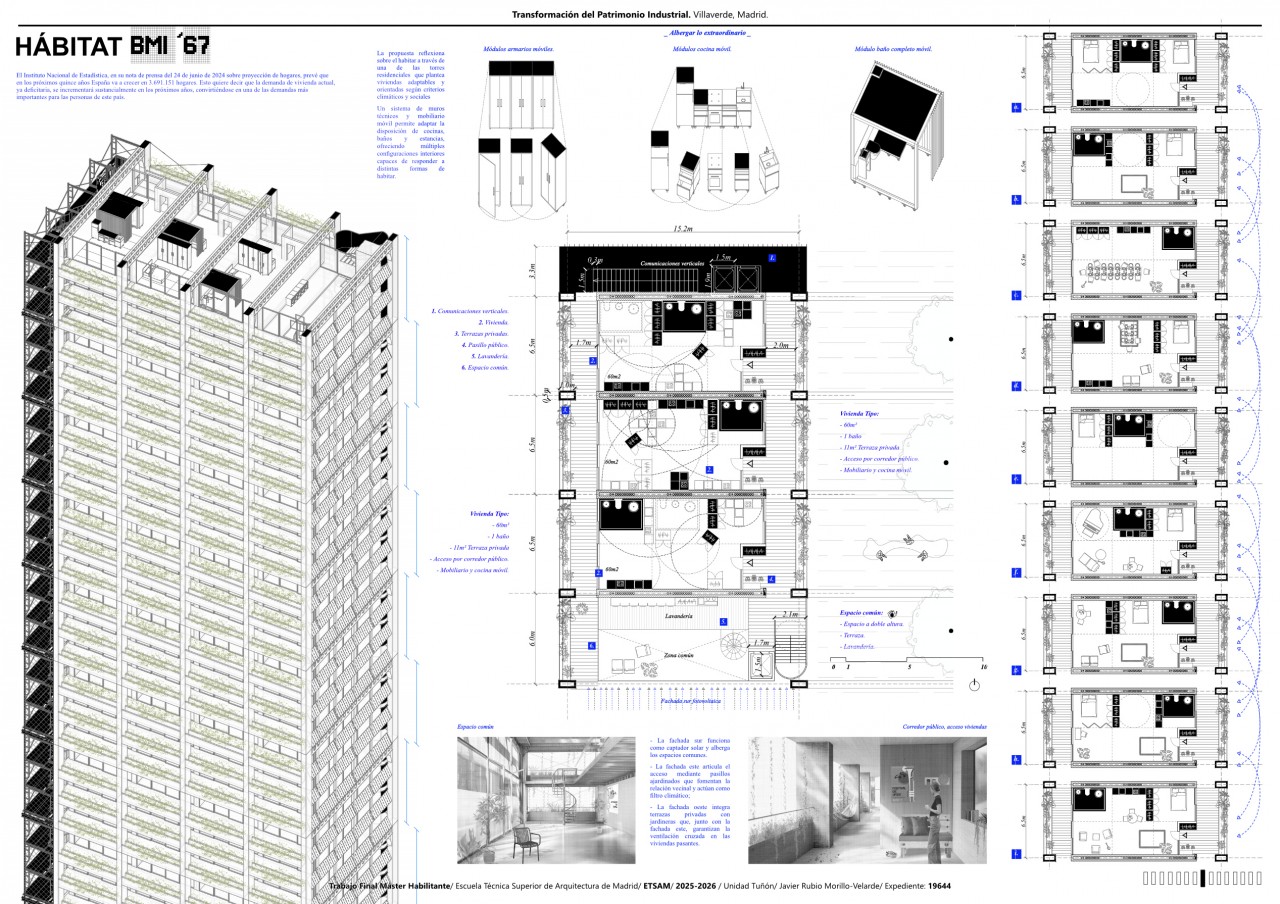
The project proposes a mixed public and social programme that responds to the current needs of the district: housing for young people, homes for the elderly, local shops, shelters, libraries and community spaces. This programme is complemented by a railway park that integrates green areas, sports areas and urban farming spaces, creating a new green lung for Villaverde.
Habitat BMI 67 stems from the desire to transform what already exists, recovering the industrial memory of the site to respond to contemporary challenges in housing, public space and sustainability. The complex is organised around a superblock urban layout, where traffic is concentrated on the perimeter, freeing the interior from vehicles and giving pedestrians prominence in the public space. New volumes and squares emerge from the footprint of the old factory, connecting architecture, nature and everyday life.
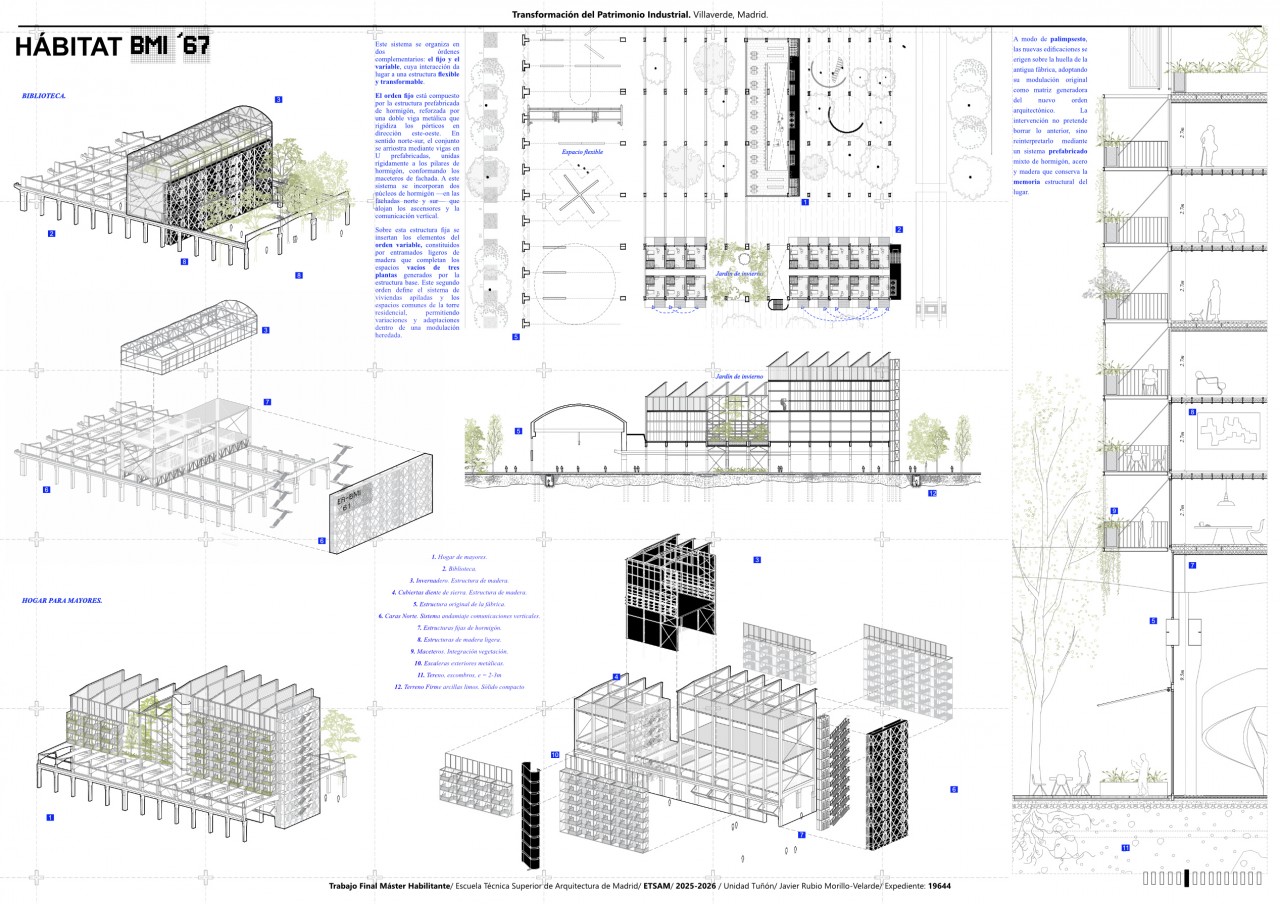
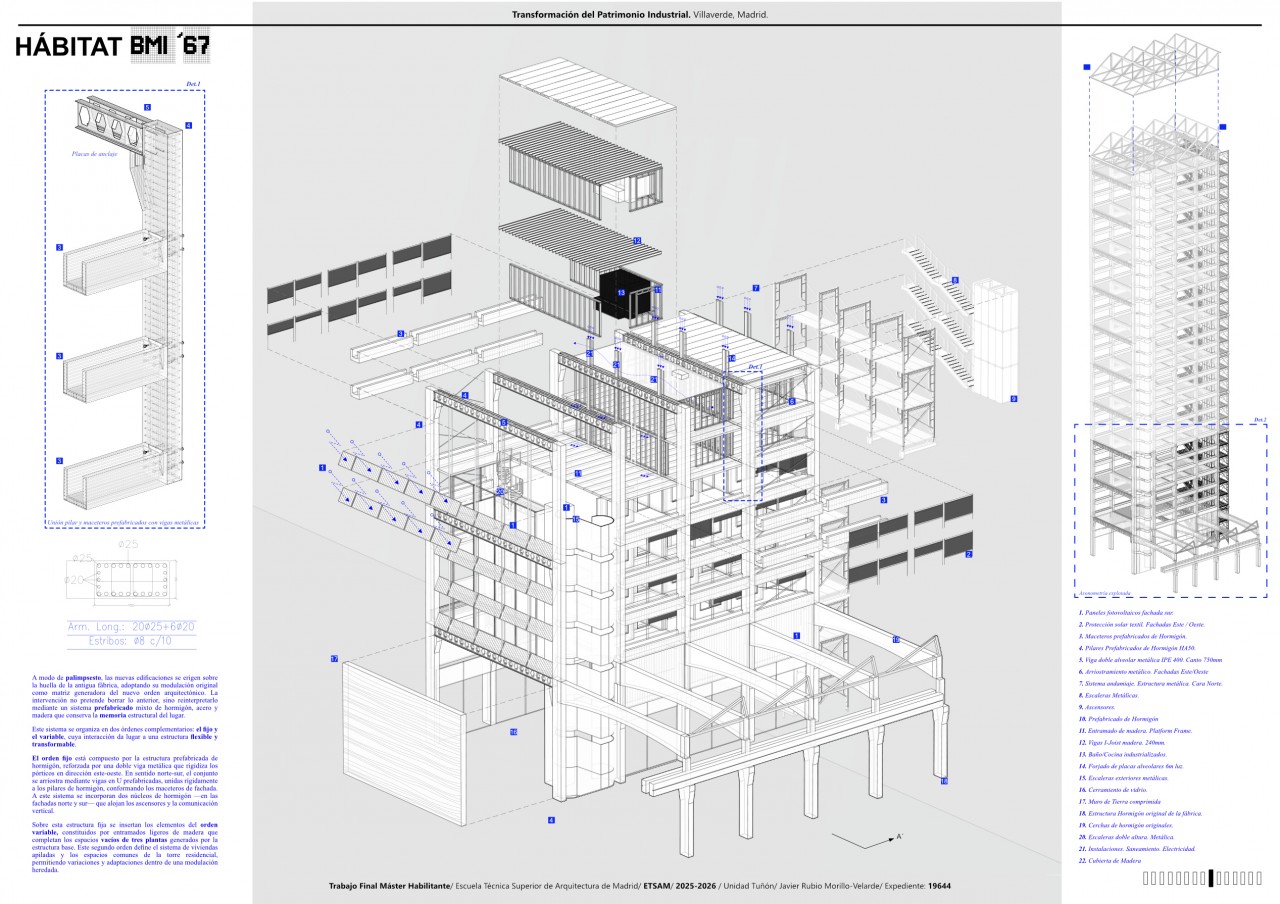
The proposal preserves the original reinforced concrete structure of the warehouses, which is reinforced and allows for vertical growth in line with its modulation. The brick from the envelope is reused as aggregate for new flooring and prefabricated concrete elements, reinforcing a sustainable and circular approach.
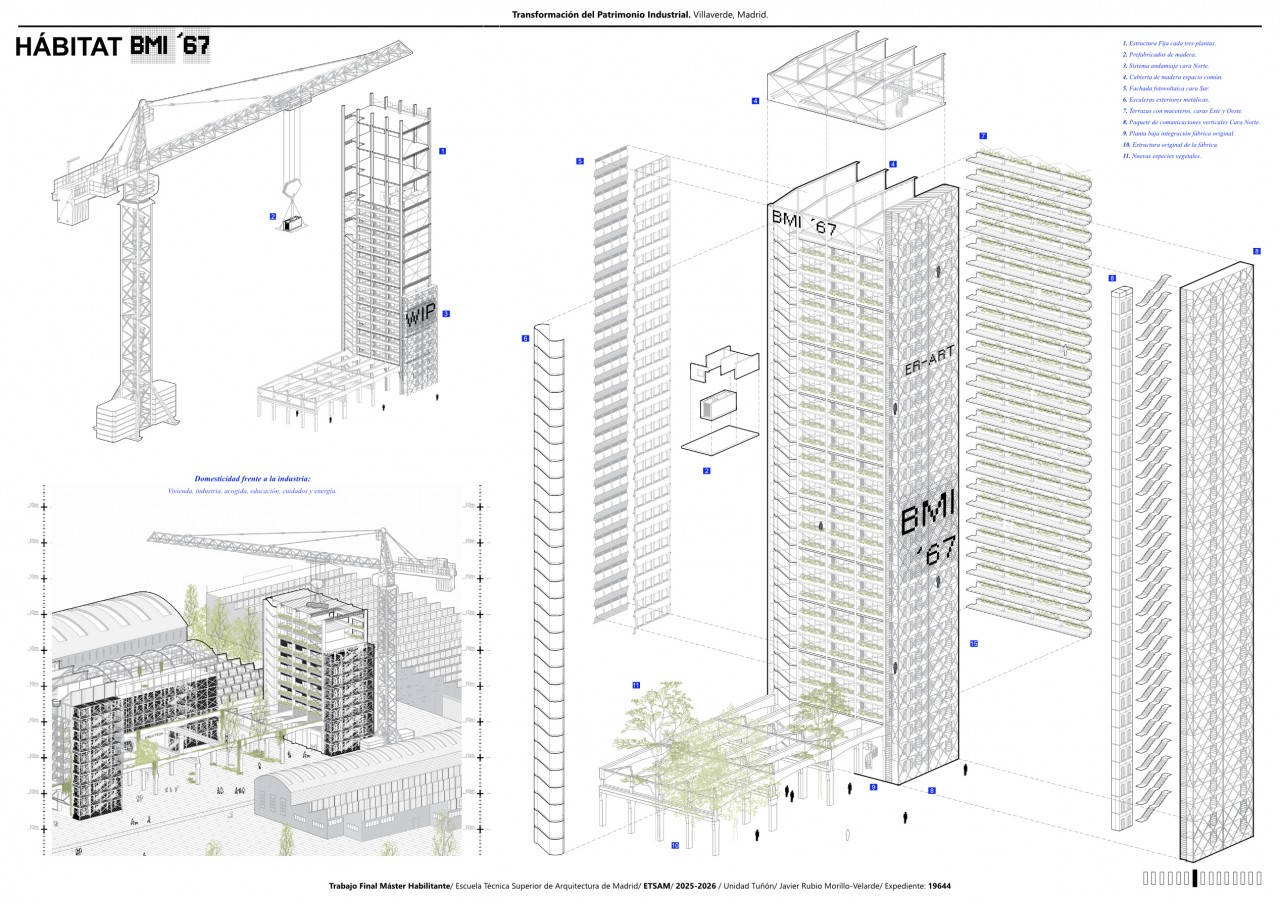
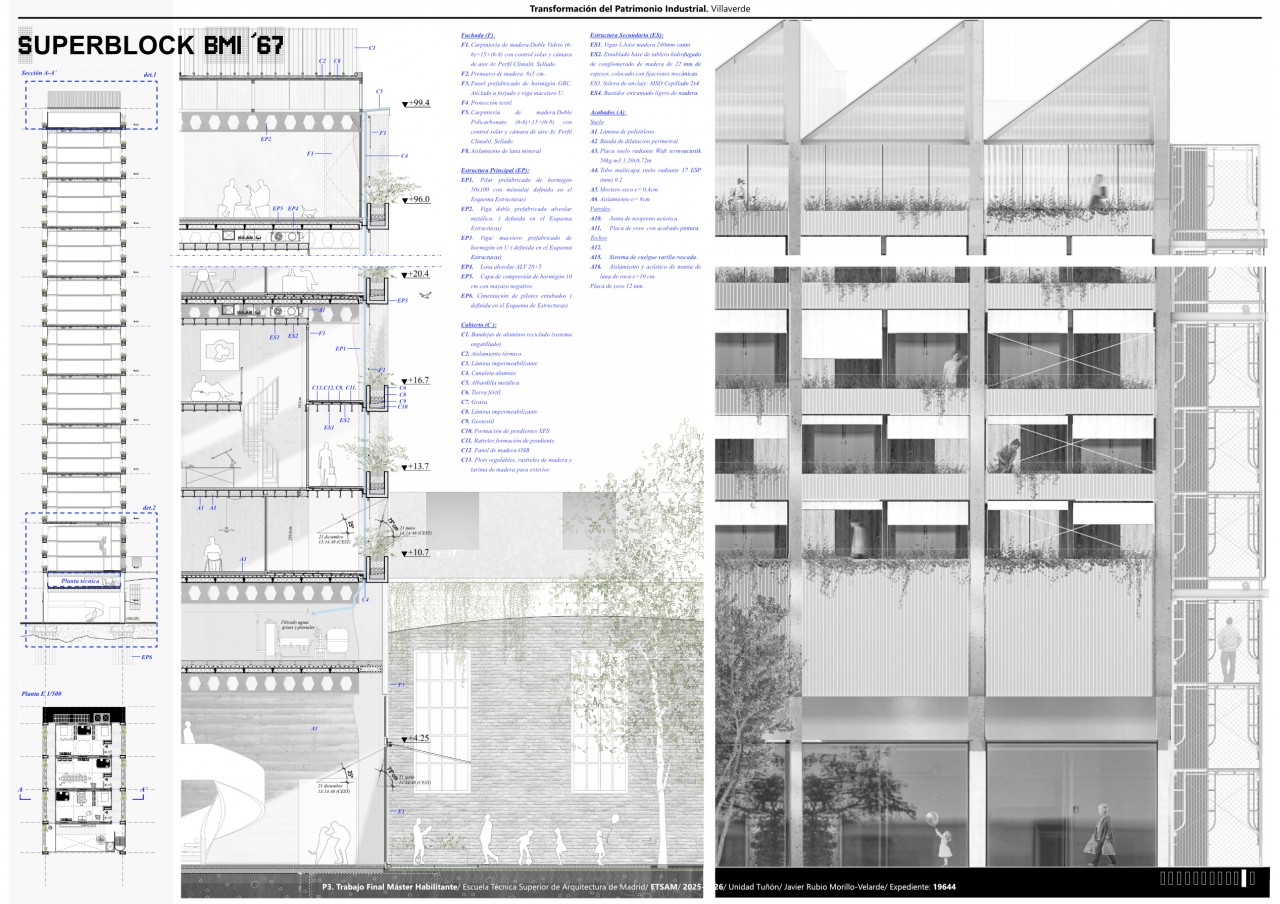
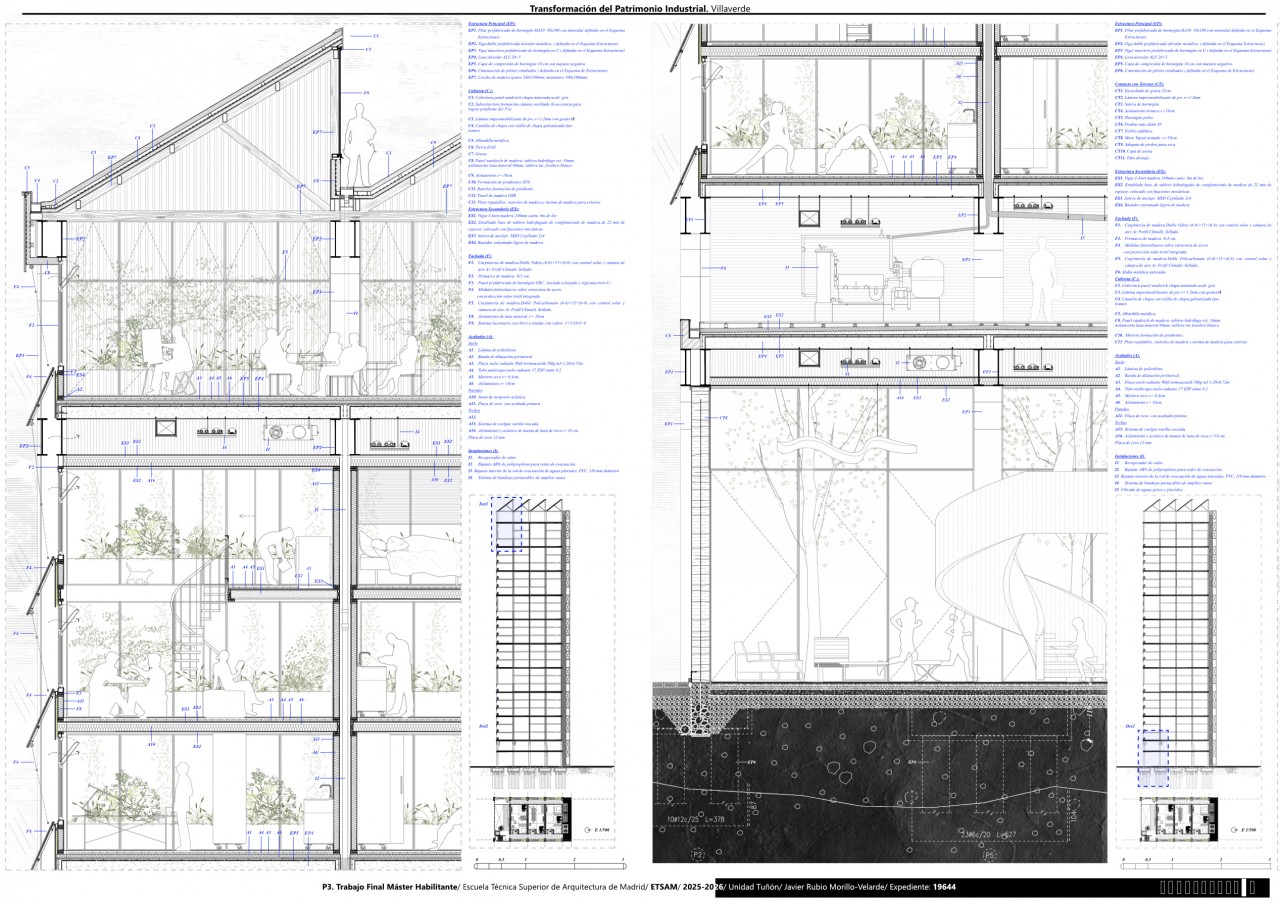
The complex is conceived as a flexible, prefabricated structural system based on fixed concrete and metal elements that are repeated every three floors, creating intermediate voids filled with lightweight wooden structures. This modular system allows for adaptation of uses over time. From an environmental point of view, the project incorporates photovoltaic façades, integrated vegetation and water management systems, consolidating a more liveable, efficient and resilient environment.
In this way, the former Base de Mantenimiento Integral is transformed into a new urban habitat where people, nature and industrial memory build a new form of community.
The intervention focuses on the industrial complex of the former BMI, consisting of large reinforced concrete warehouses and brick walls. Of particular note are the long vaulted main warehouse, used for comprehensive train repairs, and the sawtooth warehouse, a high-ceilinged hypostyle hall with powerful structural modulation.
The project proposes a mixed public and social programme that responds to the current needs of the district: housing for young people, homes for the elderly, local shops, shelters, libraries and community spaces. This programme is complemented by a railway park that integrates green areas, sports areas and urban farming spaces, creating a new green lung for Villaverde.
Habitat BMI 67 stems from the desire to transform what already exists, recovering the industrial memory of the site to respond to contemporary challenges in housing, public space and sustainability. The complex is organised around a superblock urban layout, where traffic is concentrated on the perimeter, freeing the interior from vehicles and giving pedestrians prominence in the public space. New volumes and squares emerge from the footprint of the old factory, connecting architecture, nature and everyday life.
The proposal preserves the original reinforced concrete structure of the warehouses, which is reinforced and allows for vertical growth in line with its modulation. The brick from the envelope is reused as aggregate for new flooring and prefabricated concrete elements, reinforcing a sustainable and circular approach.
The complex is conceived as a flexible, prefabricated structural system based on fixed concrete and metal elements that are repeated every three floors, creating intermediate voids filled with lightweight wooden structures. This modular system allows for adaptation of uses over time. From an environmental point of view, the project incorporates photovoltaic façades, integrated vegetation and water management systems, consolidating a more liveable, efficient and resilient environment.
In this way, the former Base de Mantenimiento Integral is transformed into a new urban habitat where people, nature and industrial memory build a new form of community.
- 00 - Description
- 01 - Emplazamiento
- 02 - Axonometría general
- 03 - Planta 1/500
- 04 - Parque ferroviario
- 05 - Sección fugada
- 06 - Volumetrías
- 07 - Sistema
- 08 - Viviendas
- 09 - Estructura
- 10 - Envolvente
- 11 - Sección constructiva
- 12 - Sección Longitudinal
- 13 - Conjunto
- 14 - Video