
HÁBITAT CHAMARTÍN
The Chamartín Tower is an office complex in the north of the capital, at the intersection of the M-30 and the A-1. Currently, the two buildings in the complex are joined by the 2.5 million square metres of unused offices, declared by the Community of Madrid. The limited pedestrian access and their distance from the centre are factors that discourage companies from taking advantage of them. However, detecting the potential of these buildings can be key when it comes to reusing them and giving them a new life.
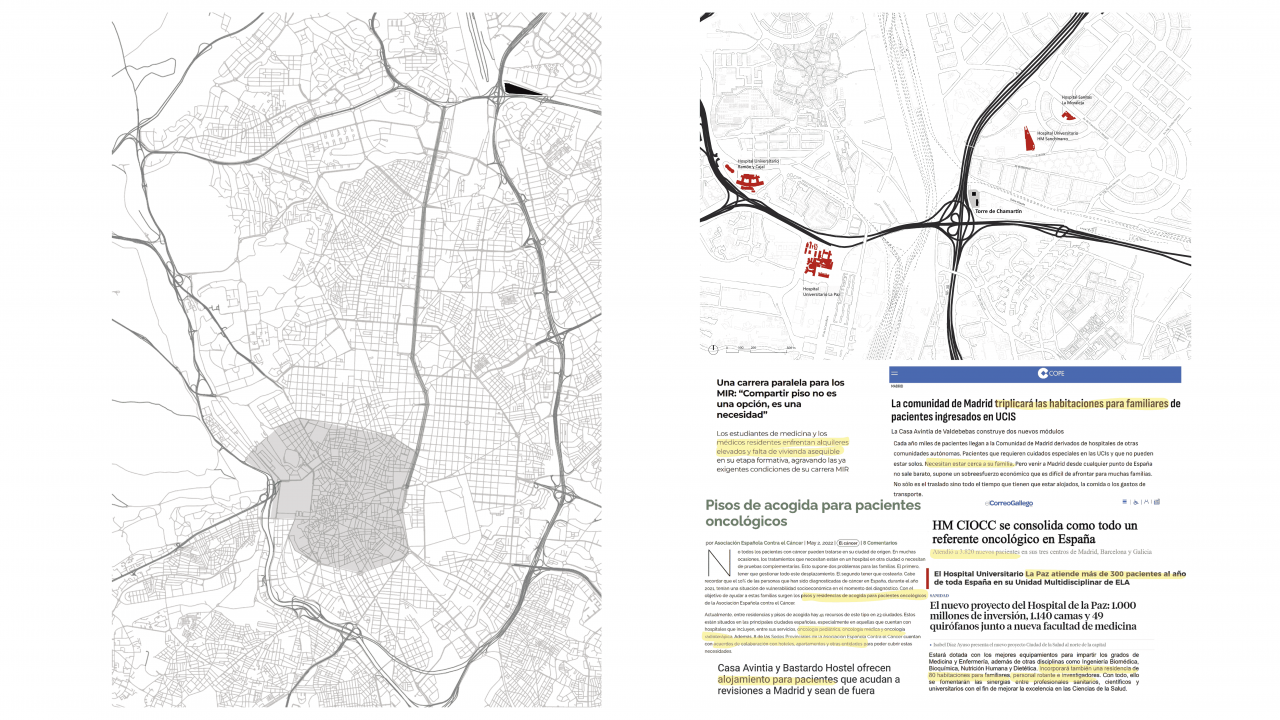
Specifically, the Chamartín Tower is less than 20 minutes by public transport from 4 hospital complexes, highlighting the Hospital la Paz. Although the hospitals accommodate patients from all over the country without any problem, in the news we see how their companions do not have accommodation nearby. Students and hospital staff are faced with the same problem. Could the Chamartín Tower accommodate all these people?
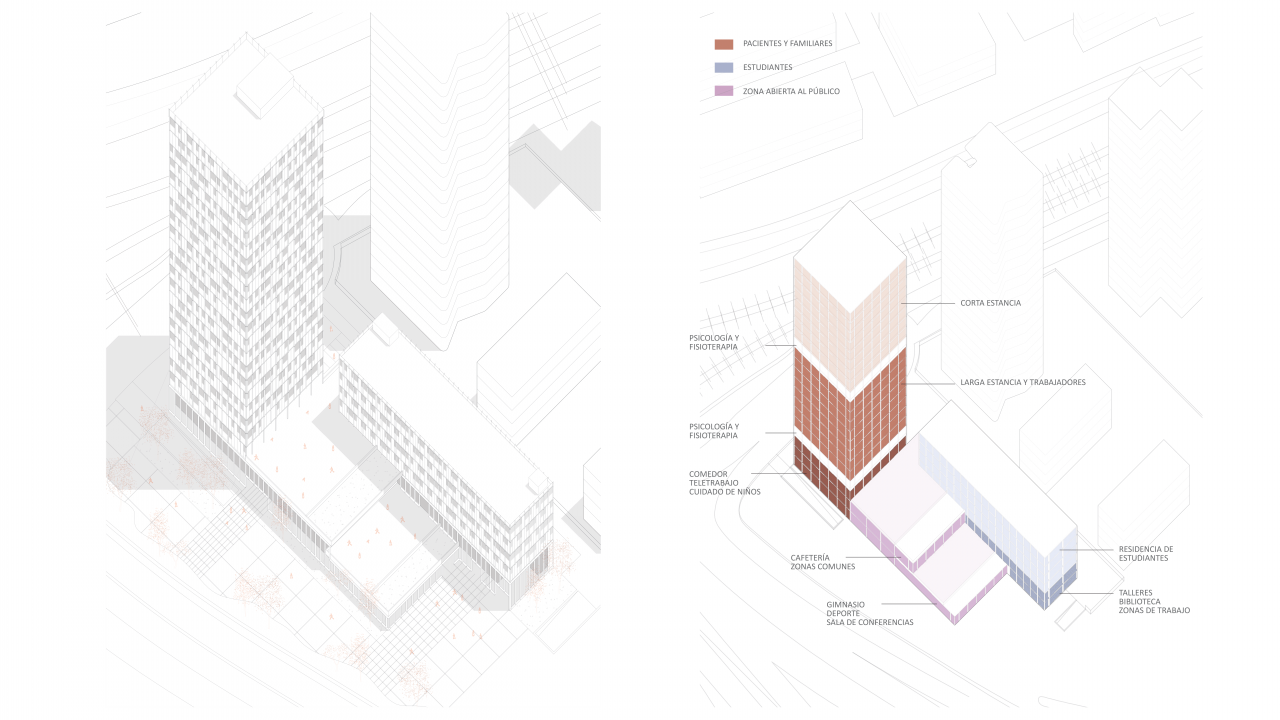
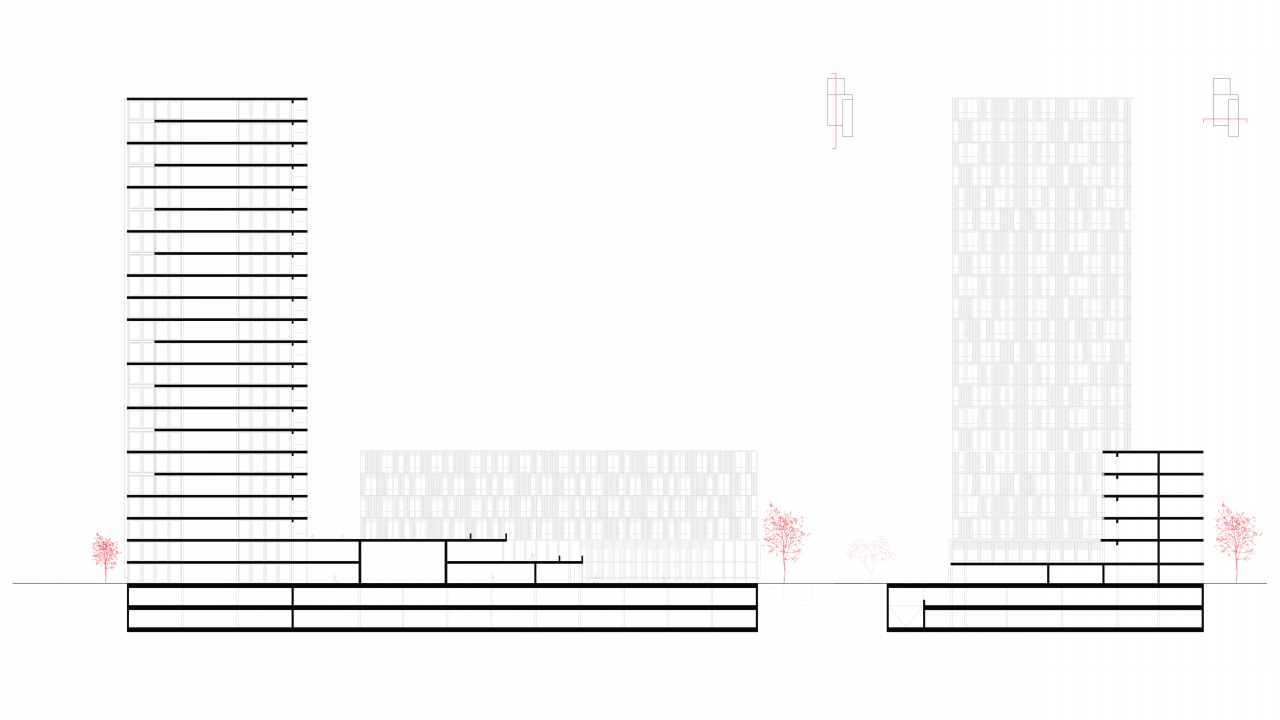
The project proposes to increase the original volume of the building by 50%, the most important being the connection of the original buildings on the ground floors by means of a large plinth.
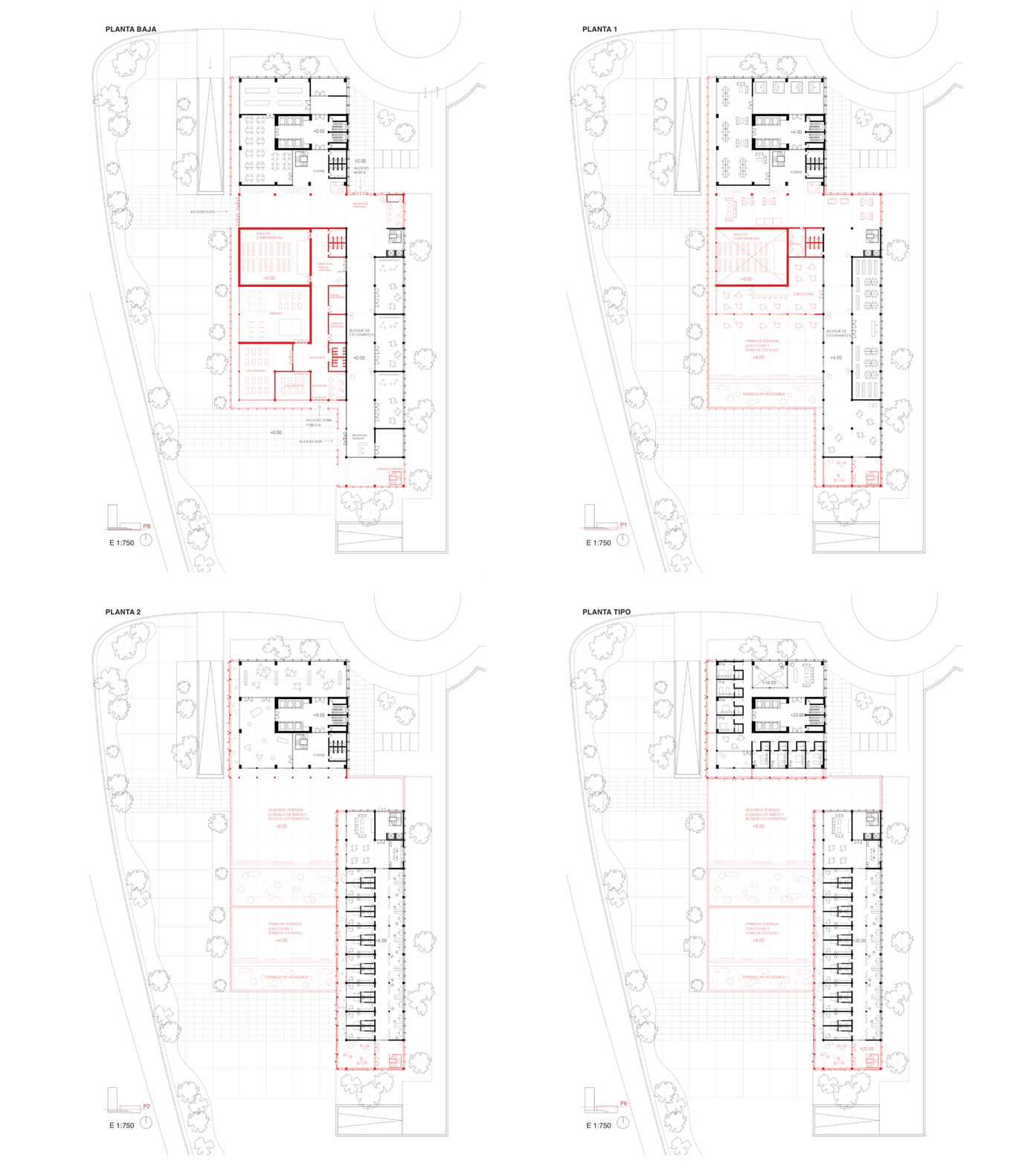
Inside, the public areas related to the health programme are housed, such as gyms, conference rooms or workshops. The surface added to the original building is represented in red. Two terraces are created on the roof of the plinth, which serve as common areas for both blocks of buildings. The public areas created also serve as an attraction for people outside the building, which guarantees a constant flow of people.
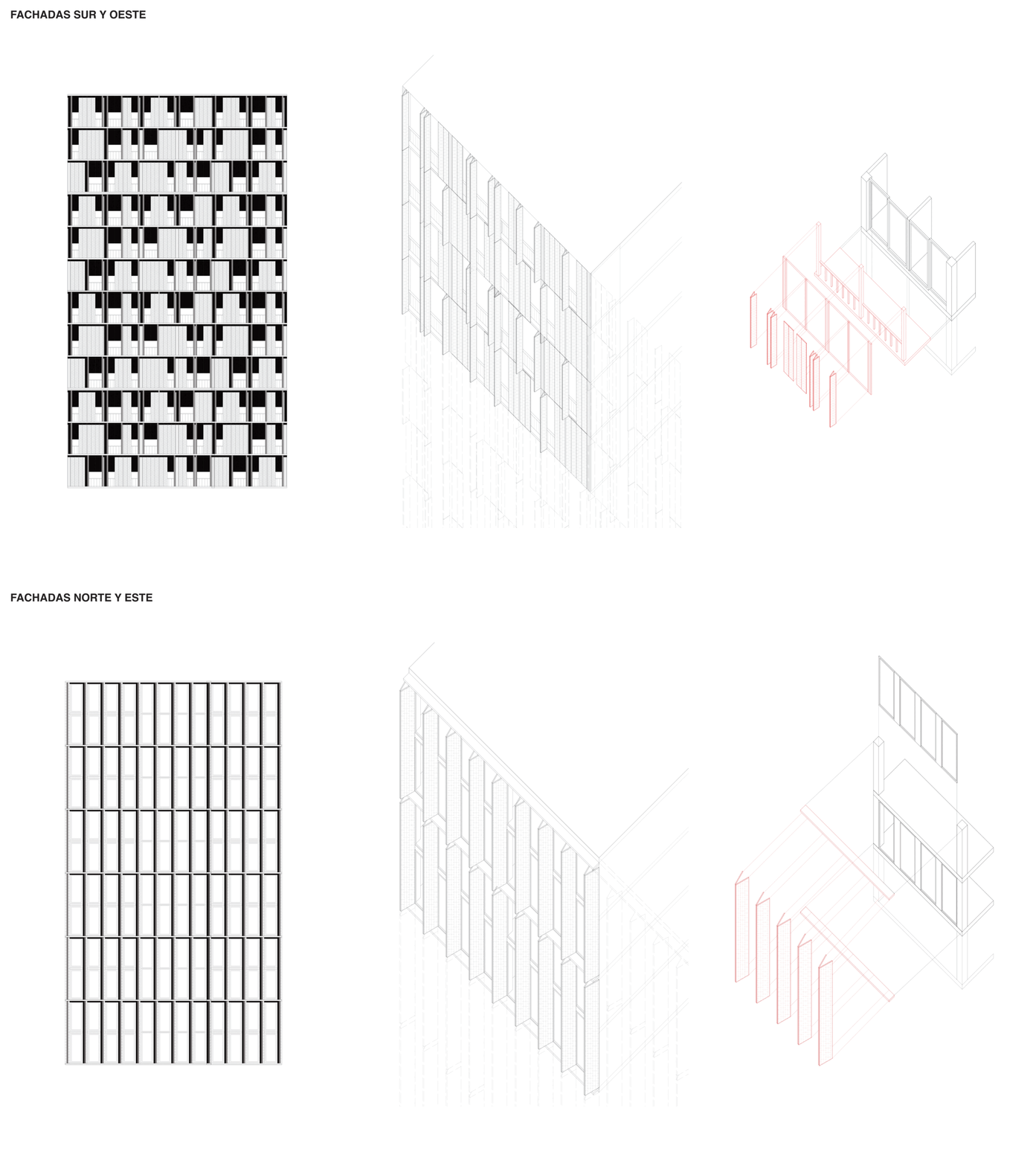
Once the ground floors are connected, it is necessary to prepare the two buildings so that they can be inhabited. The original façades did not have any type of sun protection, which makes it difficult to transform the building into residences. For this reason, two new types of façade are proposed, adapted to the orientation of the building.
The south and west façades grow outwards, forming galleries that help protect against the sun. All the dwellings face these façades, so a free external enclosure allows the galleries to be opened and closed. Since these sheets can be modified by people, a rhythm is created in the façade that changes throughout the day, adapting to the needs of its inhabitants.
On the other hand, to the North and East, a much more open and non-configurable façade is used, which also hangs down on the ground floors. The light that falls on these façades is much dimmer, so areas such as the library take advantage of it.
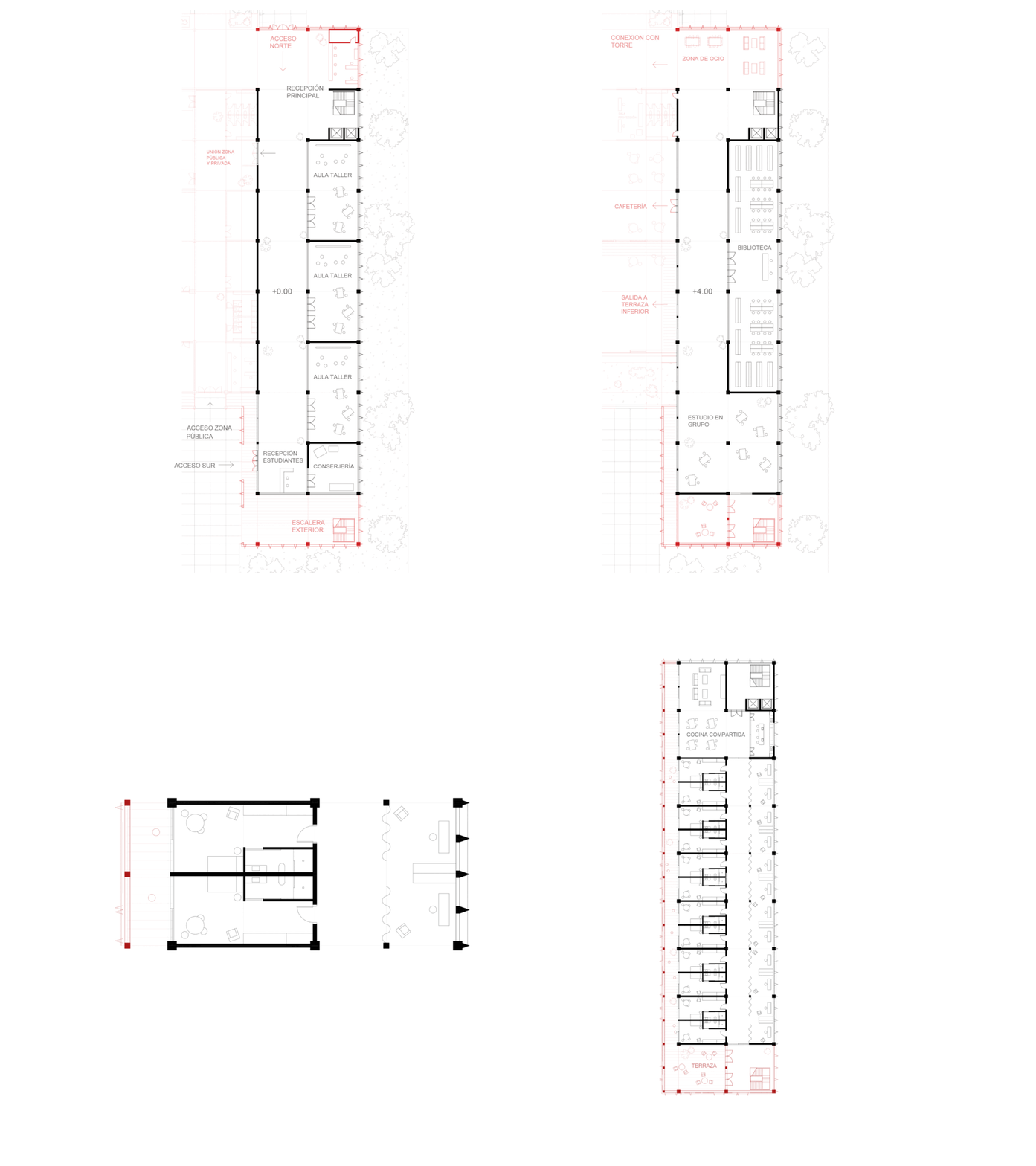
For the program, the longitudinal block will house MIR students.
The students have a library and classrooms on the ground floors and rooms on the upper floors along a large common gallery. They have their own bathroom and shared kitchen.
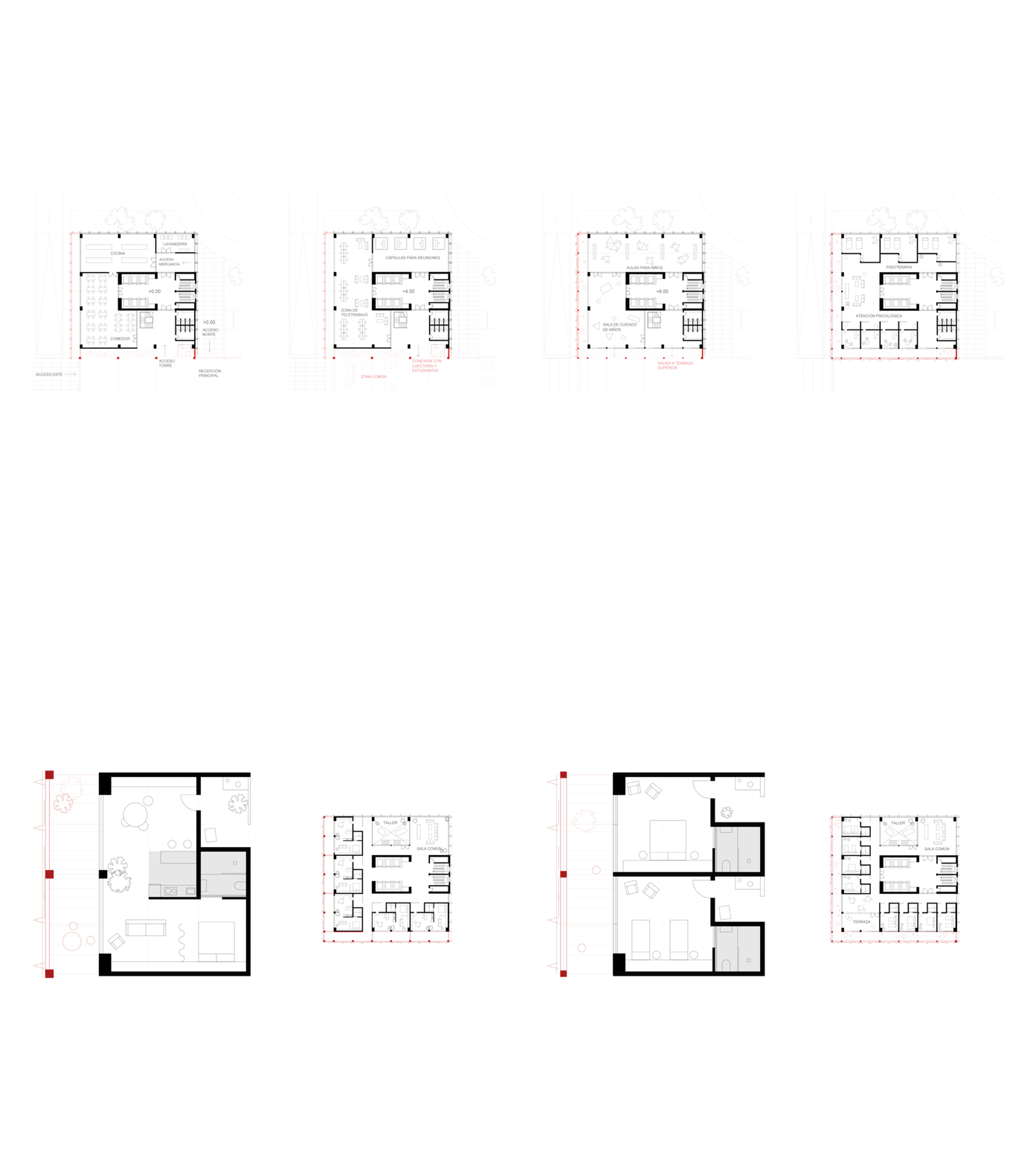
The tower, on the other hand, is intended for family members, patient companions and hospital staff. They have numerous common floors that house dining rooms, teleworking areas, childcare areas and floors specialized in psychological care. This allows them to continue with a normal life as far as possible.
There are two types of housing for them depending on the length of stay, which are modified to suit their needs, although both have external galleries and common areas on each floor.
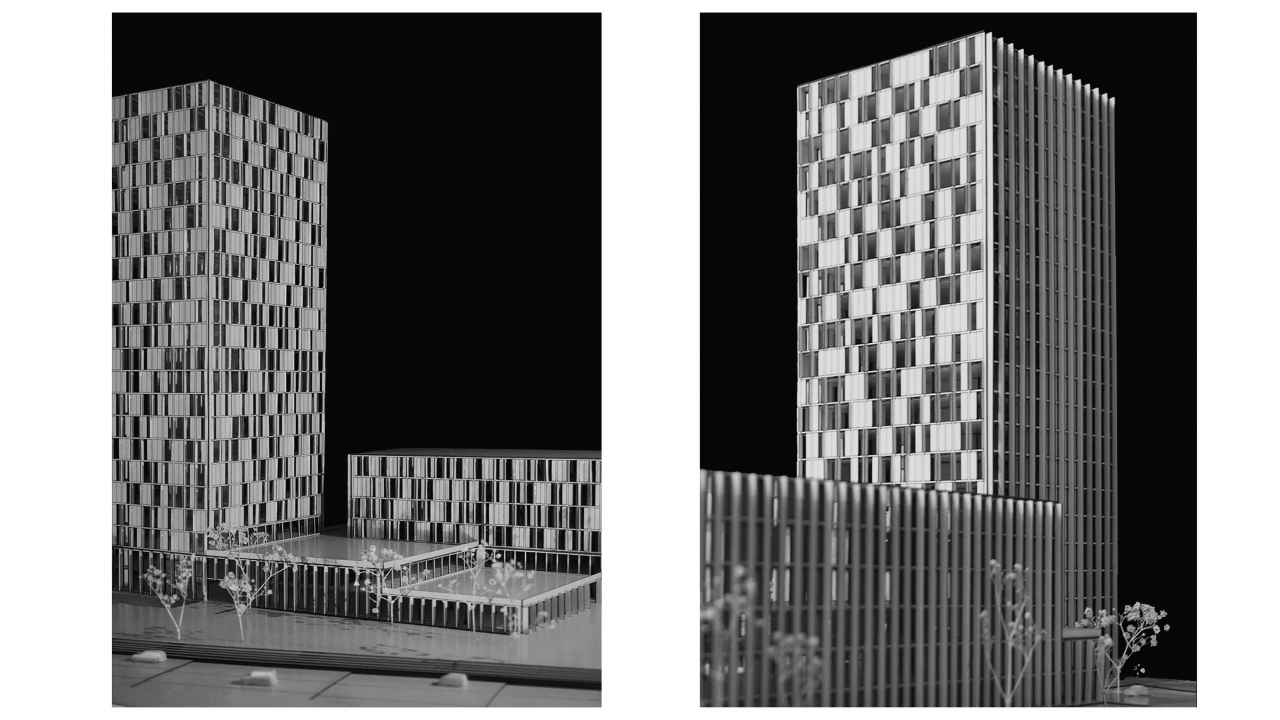
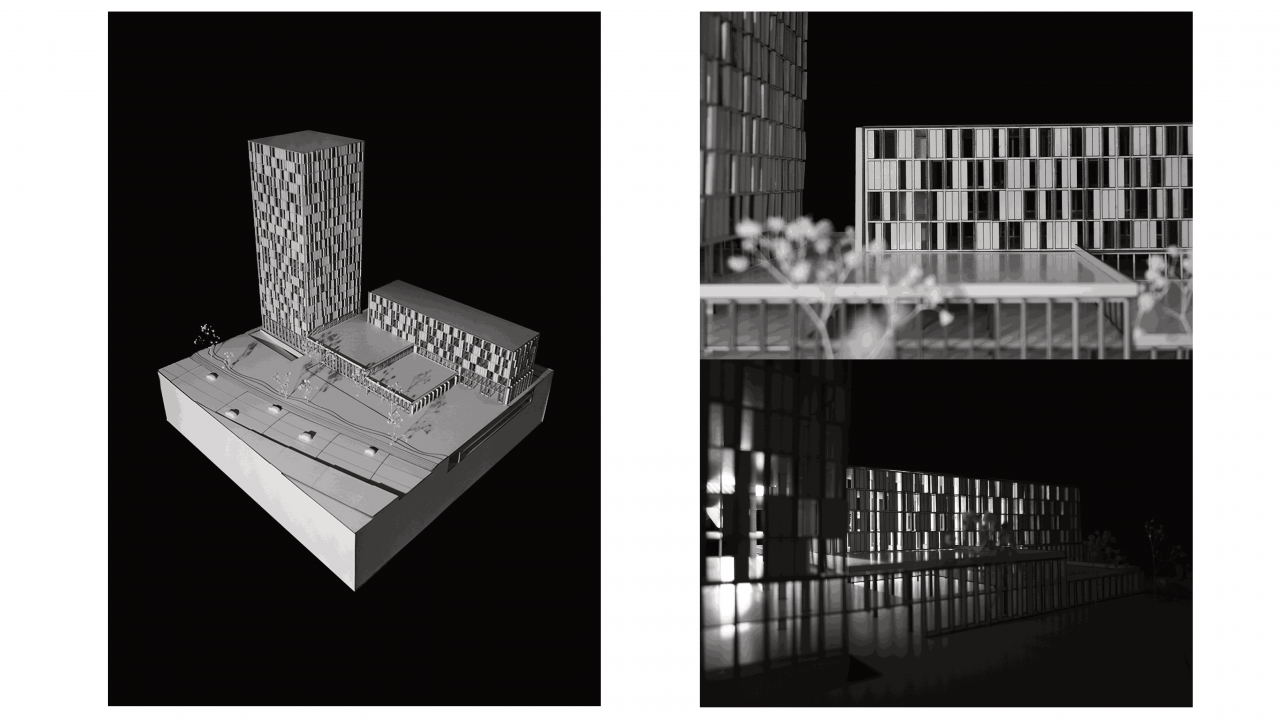
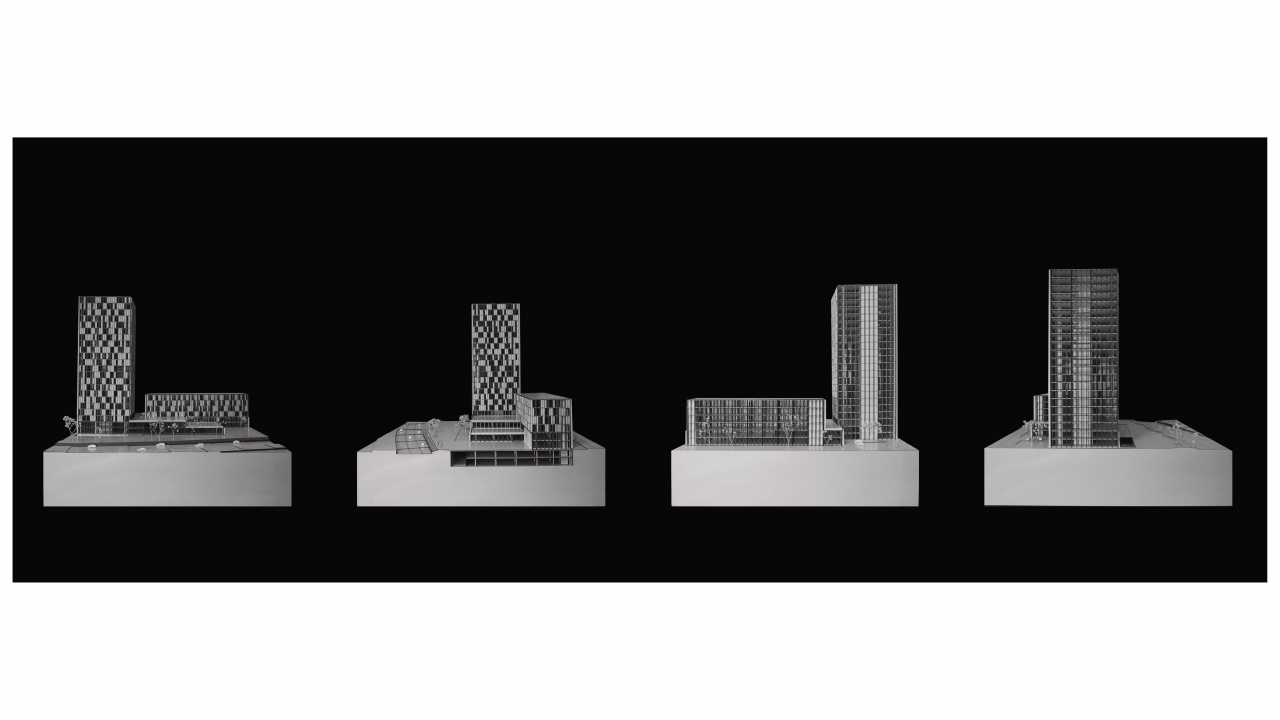
In the model, we can get an idea of the final appearance of the project. The aim of uniting all these profiles of people is to create a varied ecosystem, where all inhabitants benefit from the location of the building. The reuse of abandoned office buildings can be a nucleus of opportunities to solve many social problems.
Specifically, the Chamartín Tower is less than 20 minutes by public transport from 4 hospital complexes, highlighting the Hospital la Paz. Although the hospitals accommodate patients from all over the country without any problem, in the news we see how their companions do not have accommodation nearby. Students and hospital staff are faced with the same problem. Could the Chamartín Tower accommodate all these people?
The project proposes to increase the original volume of the building by 50%, the most important being the connection of the original buildings on the ground floors by means of a large plinth.
Inside, the public areas related to the health programme are housed, such as gyms, conference rooms or workshops. The surface added to the original building is represented in red. Two terraces are created on the roof of the plinth, which serve as common areas for both blocks of buildings. The public areas created also serve as an attraction for people outside the building, which guarantees a constant flow of people.
Once the ground floors are connected, it is necessary to prepare the two buildings so that they can be inhabited. The original façades did not have any type of sun protection, which makes it difficult to transform the building into residences. For this reason, two new types of façade are proposed, adapted to the orientation of the building.
The south and west façades grow outwards, forming galleries that help protect against the sun. All the dwellings face these façades, so a free external enclosure allows the galleries to be opened and closed. Since these sheets can be modified by people, a rhythm is created in the façade that changes throughout the day, adapting to the needs of its inhabitants.
On the other hand, to the North and East, a much more open and non-configurable façade is used, which also hangs down on the ground floors. The light that falls on these façades is much dimmer, so areas such as the library take advantage of it.
For the program, the longitudinal block will house MIR students.
The students have a library and classrooms on the ground floors and rooms on the upper floors along a large common gallery. They have their own bathroom and shared kitchen.
The tower, on the other hand, is intended for family members, patient companions and hospital staff. They have numerous common floors that house dining rooms, teleworking areas, childcare areas and floors specialized in psychological care. This allows them to continue with a normal life as far as possible.
There are two types of housing for them depending on the length of stay, which are modified to suit their needs, although both have external galleries and common areas on each floor.
In the model, we can get an idea of the final appearance of the project. The aim of uniting all these profiles of people is to create a varied ecosystem, where all inhabitants benefit from the location of the building. The reuse of abandoned office buildings can be a nucleus of opportunities to solve many social problems.
- 00 - Description
- 01 - Contexto social
- 02 - Ampliación
- 03 - Zonas comunes
- 04 - Secciones
- 05 - Fachadas
- 06 - Programa Bloque
- 07 - Programa Torre
- 08 - Maqueta_1
- 09 - Maqueta_2
- 10 - Maqueta_3
- 11 - Video