
Ita Ut
Empezar un proyecto sin un contexto, puede ser algo casi imposible; por eso, de una selección aleatoria de cuatro edificios notables se identifican hasta veinte estrategias de proyecto que servirán como guías para intervenir en el contexto de la ETSAM.
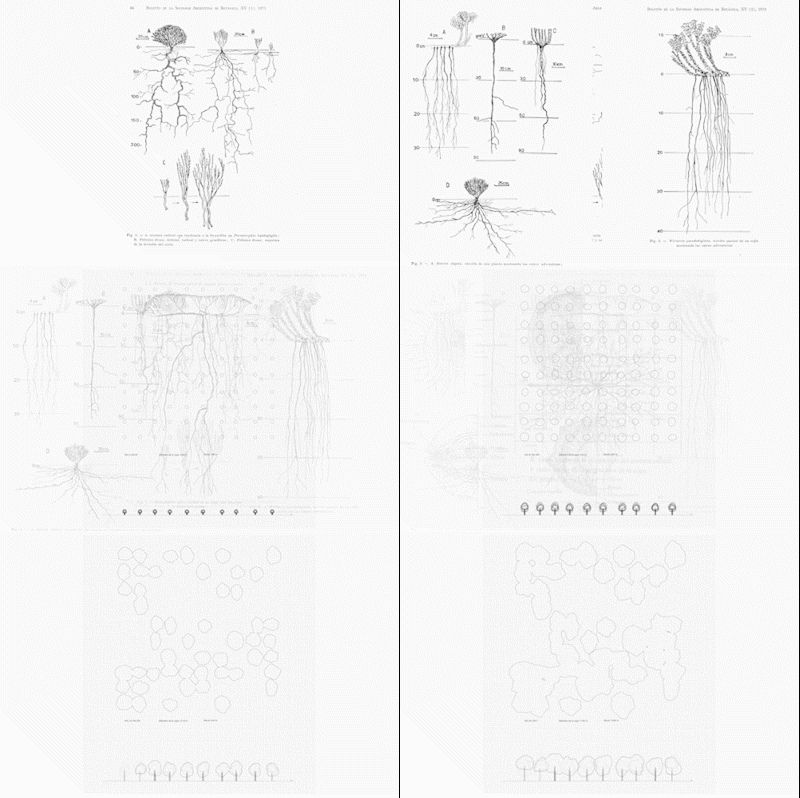
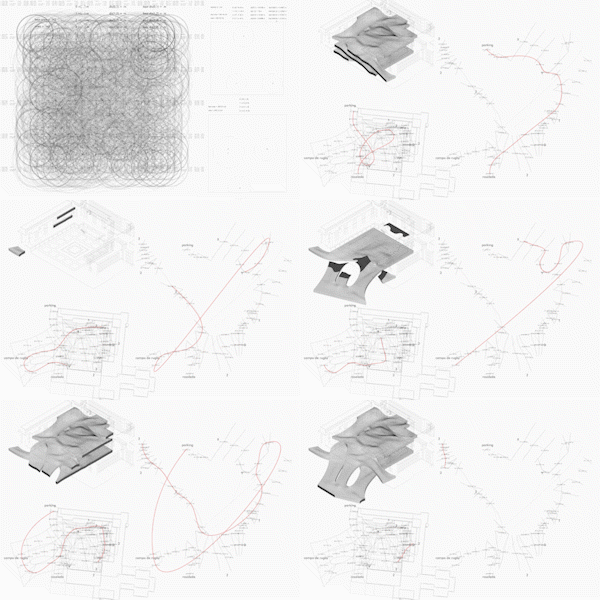
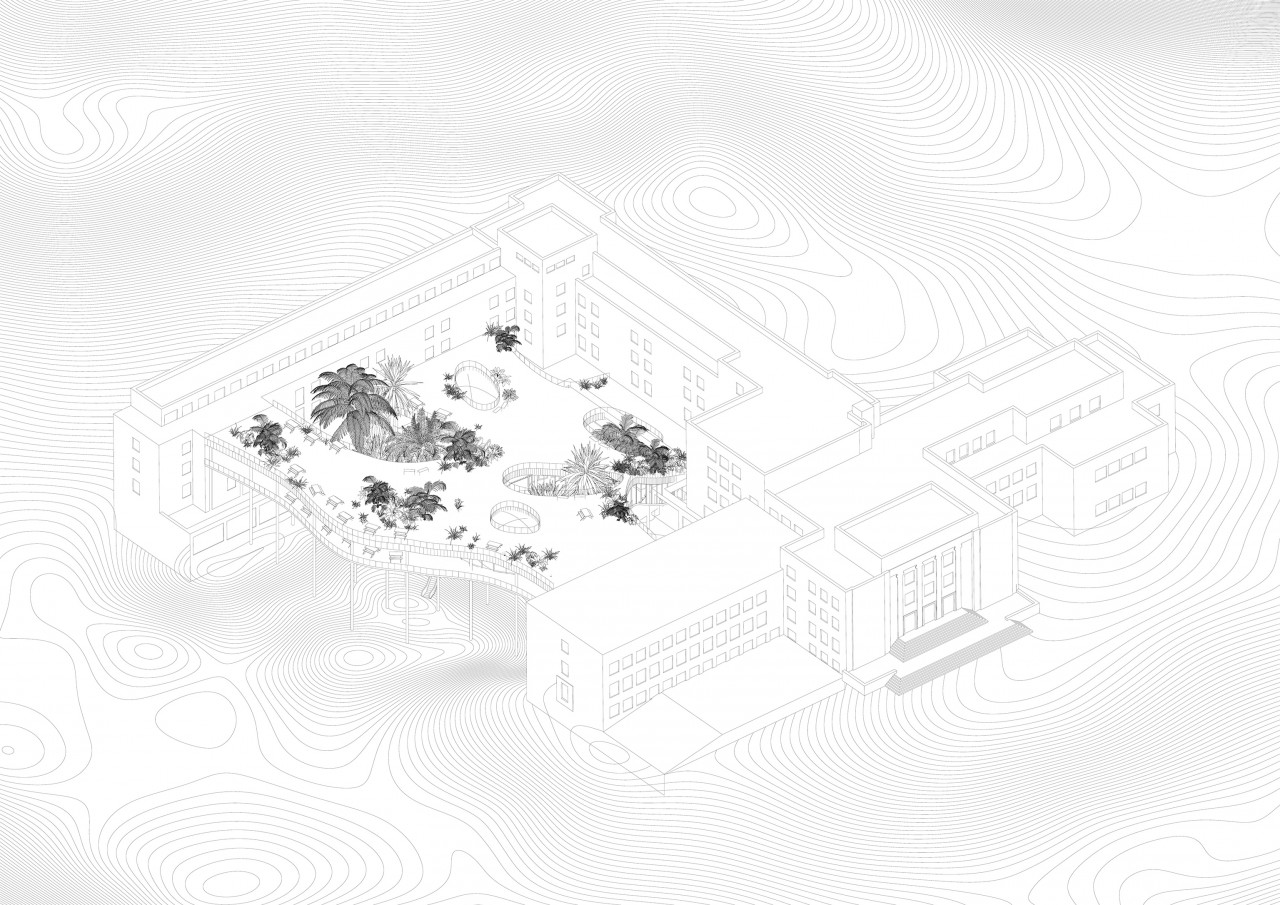
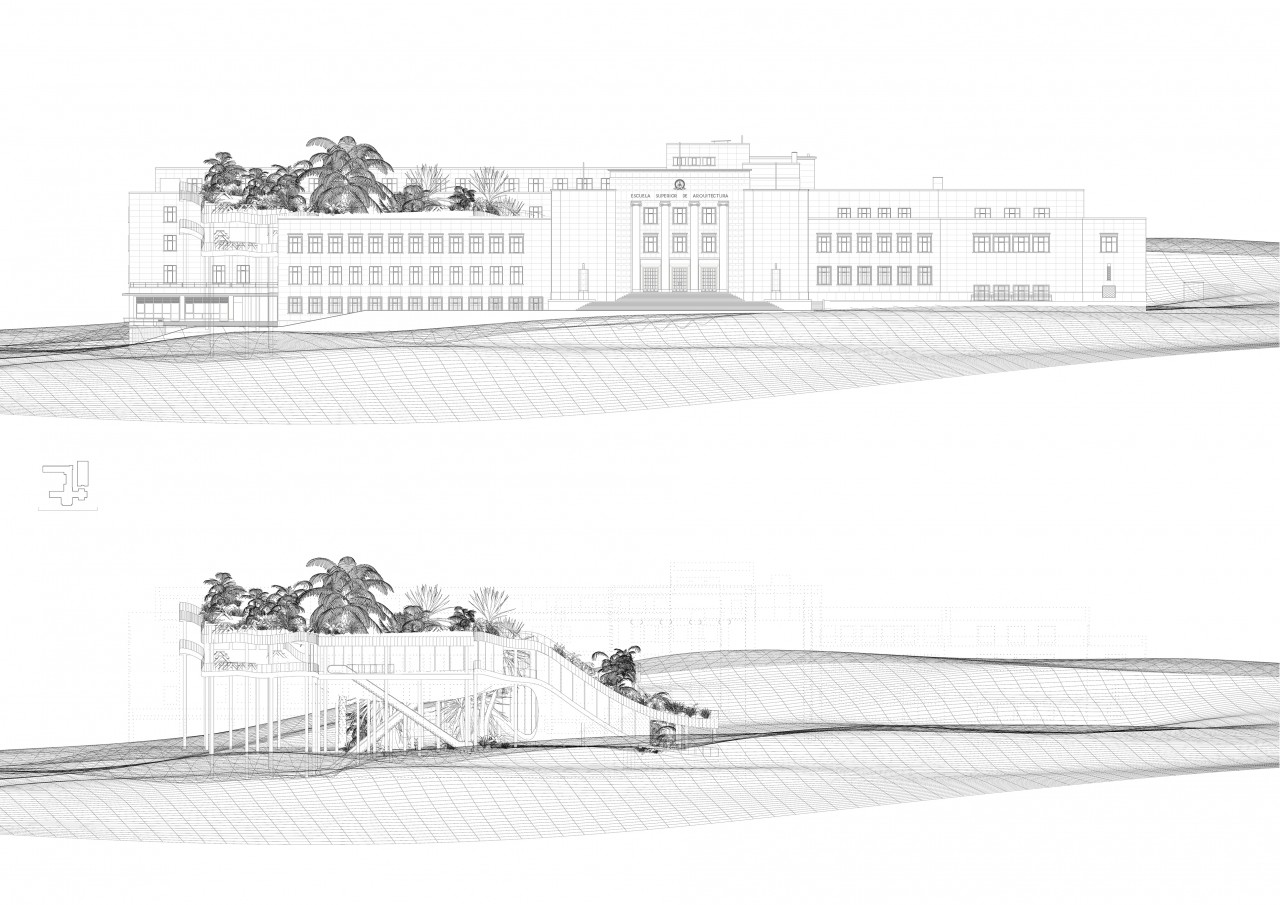
Con la intención de mejorar la rosaleda actual, el proyecto se ubica en el centro del edificio de la facultad existente, trasladando el jardín a la cubierta del edificio. La forma del nuevo edificio resulta de combinar diferentes parámetros que mejoran el edificio actual de la facultad de arquitectura, añadiendo a la topología, una variación que recrea en la cubierta accidentes geológicos como pasaría de forma natural en el terreno. Se hace un estudio de las condiciones necesarias para que distintos tipos de raíces puedan crecer de forma saludable en una profundidad de un metro; y entendiendo las raíces como empotramientos estructurales que contrarrestan los momentos de inercia de las diferentes especies, se le asigna la altura de dicha especie a una variable que calcula el diámetro al que se expanden las raíces, y optimiza la forma del edificio para ello. De forma paralela, se hace un análisis de los flujos de comunicación existentes, y se calcula una forma alternativa para el edificio que optimiza, en este caso, las conexiones entre las diferentes plantas de la facultad, la rosaleda y el parking.
Para establecer el programa del nuevo edificio se hace una simulación del uso de la facultad de arquitectura según la programación docente del curso 2019 2020 para identificar los espacios ocupados y vacíos a lo largo de la semana. No resultando ser lo más demandado clases convencionales, sino grandes espacios de trabajo comunes.
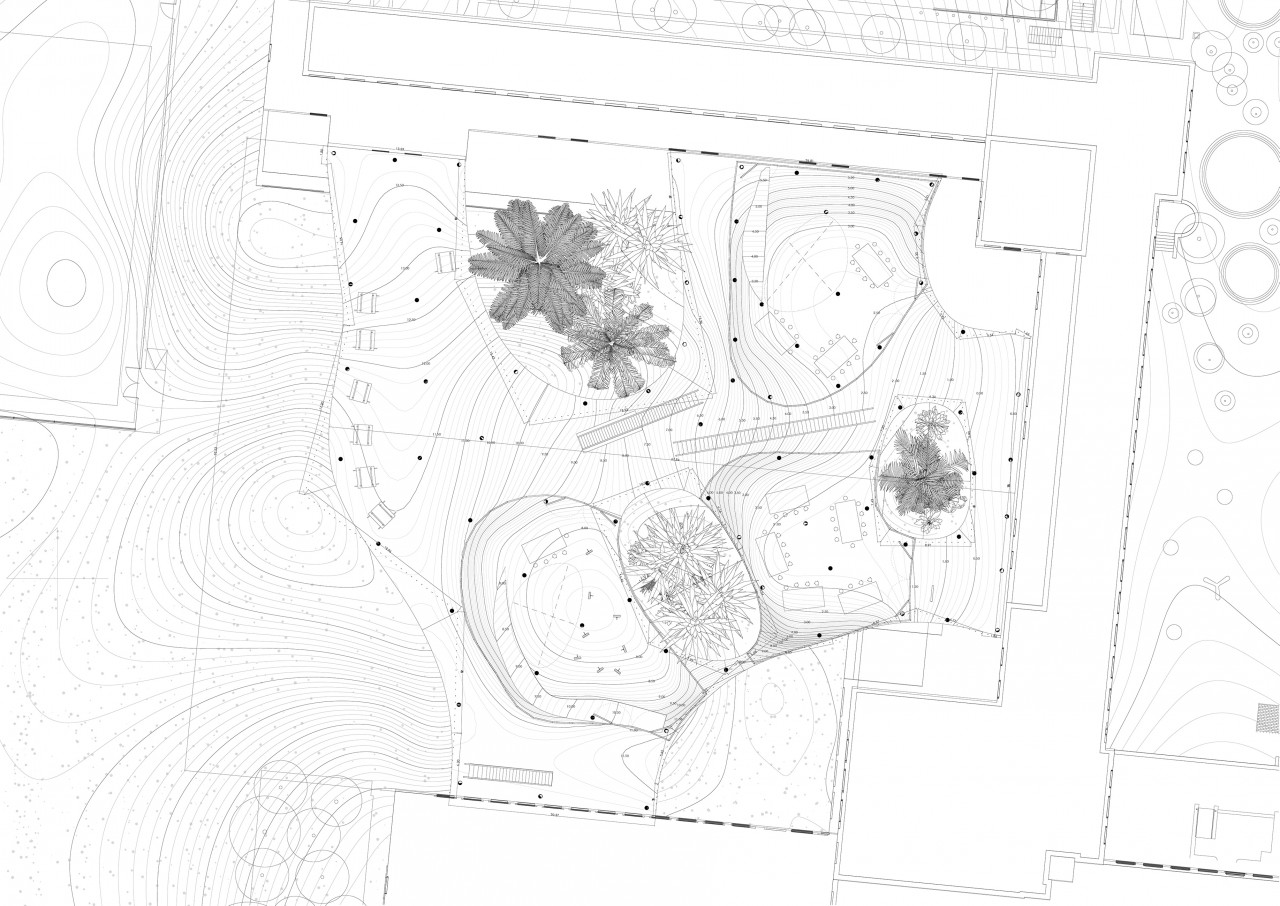
El edificio en sí, es un espacio abierto definido por una única superficie que diferencia tres aulas con sólo cambiando su curvatura. Siendo menos agresiva en las aulas y aumentando gradualmente en las paredes. La cubierta del edificio, en cambio, al estar proyectada como un paisaje, tiene una topografía más marcada con más variación que diferencia su relieve del interior. Para conectar el edificio con el suelo exterior y permitir la movilidad por los espacios que, debido a la curvatura, superan una inclinación máxima, se introducen escaleras mecánicas que resuelven el conjunto.
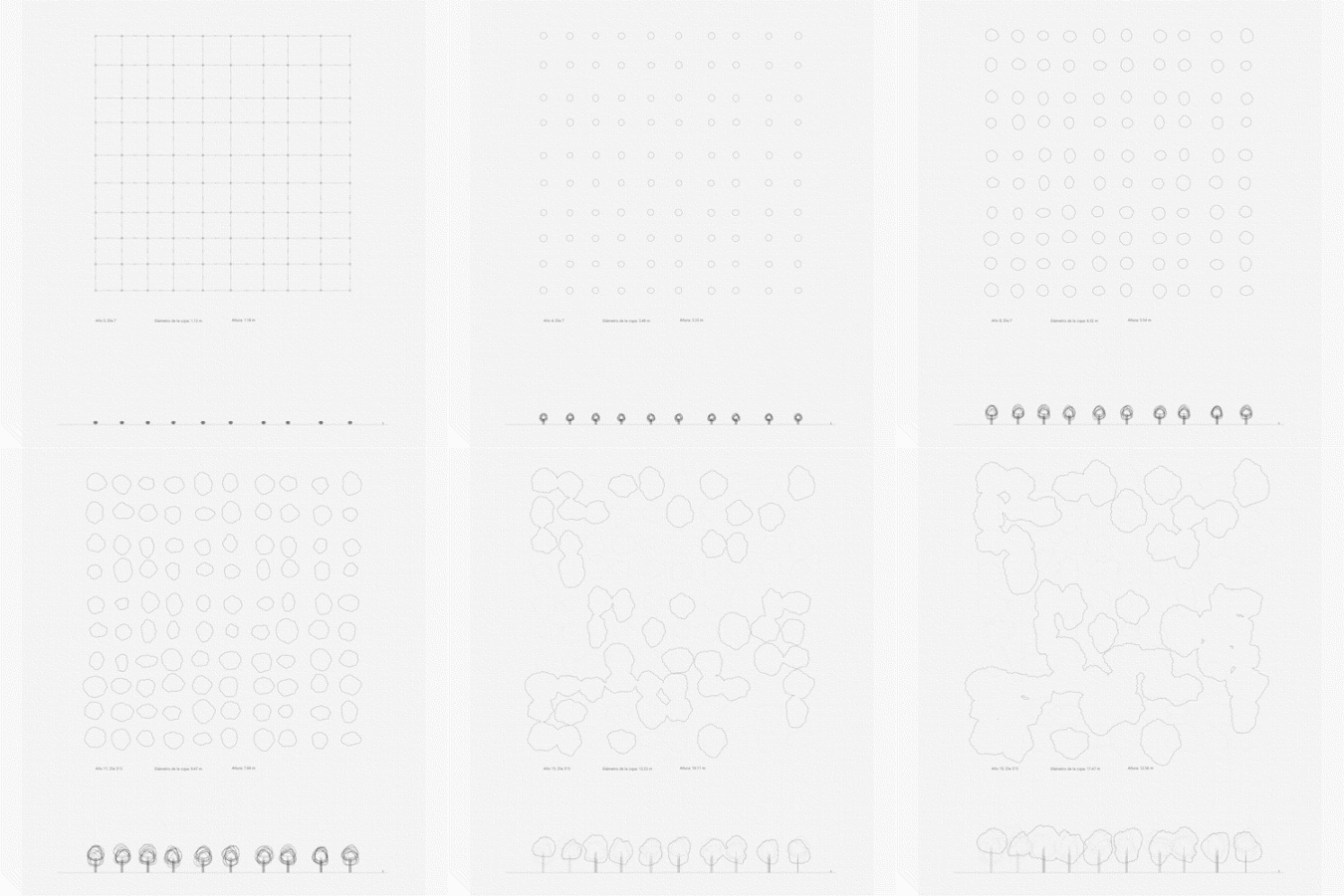
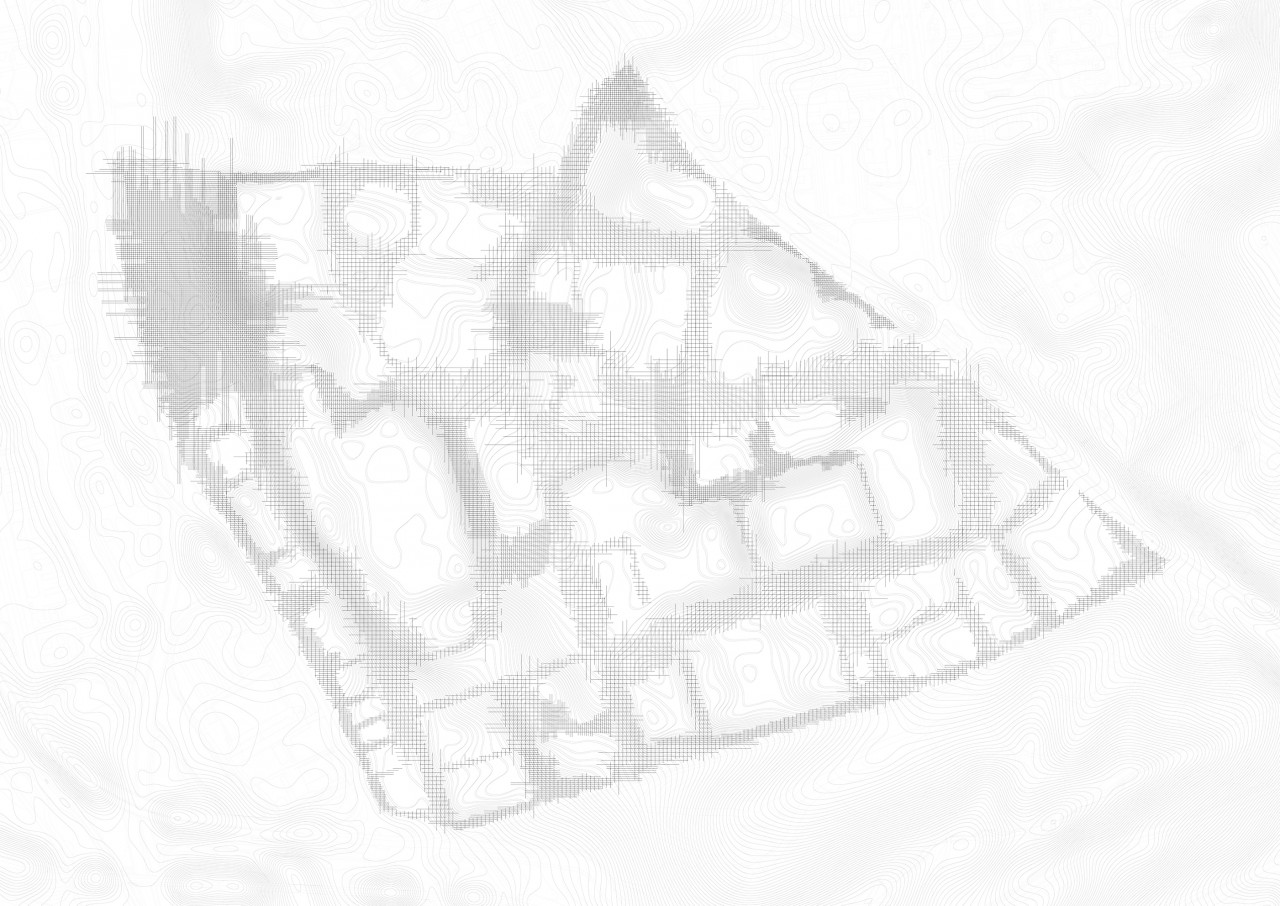
El gesto de la continuación del proyecto, a una escala urbana, intenta devolverle la identidad a un lugar que, por razones de eficiencia de la movilidad rodada, ha sido corrompido y se ha perdido con el tiempo y uso. Ciudad Universitaria es un caso en el que no hay tanto que añadir, sino que quitar elementos para conseguirlo. A base de borrar todos los elementos de la ciudad que surgen y dependen de que exista esta movilidad rodada, se consigue desocultar los elementos que hacen que sea universitaria. Tras cartografiar el arbolado existente y analizar las características de los parques más emblemáticos de Madrid, como la densidad arbórea o las especies utilizadas para el clima en el que se encuentran, se diseña una cuadrícula que define la posición de los árboles que hay que añadir, cuya densidad, varía según el uso de cada espacio.
El nuevo arbolado junto al ya existente, crea una unidad paisajística independiente del trazado de la ciudad que lo rodea, y consigue devolverle a Ciudad Universitaria su identidad, quedando a disposición del andar y no a la del motor.
//
Starting a project without a context can be nearly impossible; therefore, from a random selection of four notable buildings, up to twenty project strategies are identified to serve as guidelines for intervening in the context of the ETSAM.
With the intention of enhancing the existing rose garden, the project is located in the center of the existing faculty building, moving the garden to the roof of the building. The shape of the new building is the result of combining different parameters that improve the current building of the faculty of architecture, adding to the topology, a variation that recreates geological accidents on the roof as it would happen naturally on the ground. A study is made of the necessary conditions for different types of roots to grow healthily at a depth of one meter; and understanding the roots as structural embedments that counteract the moments of inertia of the different species, the height of that species is assigned to a variable that calculates the diameter at which the roots expand, and optimizes the shape of the building for it. In parallel, an analysis of the existing communication flows is made, and an alternative shape is calculated for the building that optimizes, in this case, the connections between the different floors of the faculty, the rose garden and the parking lot.
To establish the program of the new building, a simulation of the use of the faculty of architecture is made according to the teaching schedule for the academic year 2019 2020 to identify the occupied and empty spaces throughout the week. The most demanded spaces were not conventional classrooms, but large common work spaces.
The building itself is an open space defined by a single surface that differentiates three classrooms just by changing its curvature. Being less aggressive in the classrooms and gradually increasing in the walls. The roof of the building, on the other hand, being projected as a landscape, has a more marked topography with more variation that differentiates its relief from the interior. To connect the building with the outside ground and allow mobility through the spaces that, due to the curvature, exceed a maximum slope, escalators are introduced to resolve the whole.
The gesture of the continuation of the project, on an urban scale, attempts to restore the identity of a place that, for reasons of efficiency of road mobility, has been corrupted and lost with time and use. Ciudad Universitaria is a case in which there is not so much to add, but to remove elements to achieve it. By erasing all the elements of the city that arise and depend on the existence of this road mobility, the elements that make it a university city are uncovered. After mapping the existing trees and analyzing the characteristics of the most emblematic parks in Madrid, such as tree density or the species used for the climate in which they are located, a grid is designed to define the position of the trees to be added, whose density varies according to the use of each space.
The new trees, together with the existing ones, create a landscape unit independent of the layout of the city that surrounds it, and manages to give back to Ciudad Universitaria its identity, being at the disposal of walking and not at the disposal of the engine.
Con la intención de mejorar la rosaleda actual, el proyecto se ubica en el centro del edificio de la facultad existente, trasladando el jardín a la cubierta del edificio. La forma del nuevo edificio resulta de combinar diferentes parámetros que mejoran el edificio actual de la facultad de arquitectura, añadiendo a la topología, una variación que recrea en la cubierta accidentes geológicos como pasaría de forma natural en el terreno. Se hace un estudio de las condiciones necesarias para que distintos tipos de raíces puedan crecer de forma saludable en una profundidad de un metro; y entendiendo las raíces como empotramientos estructurales que contrarrestan los momentos de inercia de las diferentes especies, se le asigna la altura de dicha especie a una variable que calcula el diámetro al que se expanden las raíces, y optimiza la forma del edificio para ello. De forma paralela, se hace un análisis de los flujos de comunicación existentes, y se calcula una forma alternativa para el edificio que optimiza, en este caso, las conexiones entre las diferentes plantas de la facultad, la rosaleda y el parking.
Para establecer el programa del nuevo edificio se hace una simulación del uso de la facultad de arquitectura según la programación docente del curso 2019 2020 para identificar los espacios ocupados y vacíos a lo largo de la semana. No resultando ser lo más demandado clases convencionales, sino grandes espacios de trabajo comunes.
El edificio en sí, es un espacio abierto definido por una única superficie que diferencia tres aulas con sólo cambiando su curvatura. Siendo menos agresiva en las aulas y aumentando gradualmente en las paredes. La cubierta del edificio, en cambio, al estar proyectada como un paisaje, tiene una topografía más marcada con más variación que diferencia su relieve del interior. Para conectar el edificio con el suelo exterior y permitir la movilidad por los espacios que, debido a la curvatura, superan una inclinación máxima, se introducen escaleras mecánicas que resuelven el conjunto.
El gesto de la continuación del proyecto, a una escala urbana, intenta devolverle la identidad a un lugar que, por razones de eficiencia de la movilidad rodada, ha sido corrompido y se ha perdido con el tiempo y uso. Ciudad Universitaria es un caso en el que no hay tanto que añadir, sino que quitar elementos para conseguirlo. A base de borrar todos los elementos de la ciudad que surgen y dependen de que exista esta movilidad rodada, se consigue desocultar los elementos que hacen que sea universitaria. Tras cartografiar el arbolado existente y analizar las características de los parques más emblemáticos de Madrid, como la densidad arbórea o las especies utilizadas para el clima en el que se encuentran, se diseña una cuadrícula que define la posición de los árboles que hay que añadir, cuya densidad, varía según el uso de cada espacio.
El nuevo arbolado junto al ya existente, crea una unidad paisajística independiente del trazado de la ciudad que lo rodea, y consigue devolverle a Ciudad Universitaria su identidad, quedando a disposición del andar y no a la del motor.
//
Starting a project without a context can be nearly impossible; therefore, from a random selection of four notable buildings, up to twenty project strategies are identified to serve as guidelines for intervening in the context of the ETSAM.
With the intention of enhancing the existing rose garden, the project is located in the center of the existing faculty building, moving the garden to the roof of the building. The shape of the new building is the result of combining different parameters that improve the current building of the faculty of architecture, adding to the topology, a variation that recreates geological accidents on the roof as it would happen naturally on the ground. A study is made of the necessary conditions for different types of roots to grow healthily at a depth of one meter; and understanding the roots as structural embedments that counteract the moments of inertia of the different species, the height of that species is assigned to a variable that calculates the diameter at which the roots expand, and optimizes the shape of the building for it. In parallel, an analysis of the existing communication flows is made, and an alternative shape is calculated for the building that optimizes, in this case, the connections between the different floors of the faculty, the rose garden and the parking lot.
To establish the program of the new building, a simulation of the use of the faculty of architecture is made according to the teaching schedule for the academic year 2019 2020 to identify the occupied and empty spaces throughout the week. The most demanded spaces were not conventional classrooms, but large common work spaces.
The building itself is an open space defined by a single surface that differentiates three classrooms just by changing its curvature. Being less aggressive in the classrooms and gradually increasing in the walls. The roof of the building, on the other hand, being projected as a landscape, has a more marked topography with more variation that differentiates its relief from the interior. To connect the building with the outside ground and allow mobility through the spaces that, due to the curvature, exceed a maximum slope, escalators are introduced to resolve the whole.
The gesture of the continuation of the project, on an urban scale, attempts to restore the identity of a place that, for reasons of efficiency of road mobility, has been corrupted and lost with time and use. Ciudad Universitaria is a case in which there is not so much to add, but to remove elements to achieve it. By erasing all the elements of the city that arise and depend on the existence of this road mobility, the elements that make it a university city are uncovered. After mapping the existing trees and analyzing the characteristics of the most emblematic parks in Madrid, such as tree density or the species used for the climate in which they are located, a grid is designed to define the position of the trees to be added, whose density varies according to the use of each space.
The new trees, together with the existing ones, create a landscape unit independent of the layout of the city that surrounds it, and manages to give back to Ciudad Universitaria its identity, being at the disposal of walking and not at the disposal of the engine.



- 00 - Description
- 01 - Roots' research
- 02 - Growth study
- 03 - Flow analysis
- 04 - Usage of the school
- 05 - 3D Graphic
- 06 - Axonometry
- 07 - Floor plan
- 08 - Elevation
- 09 - Tree Study
- 10 - Tree grid
- 11 - Video