
Living Culinary Ecosystem
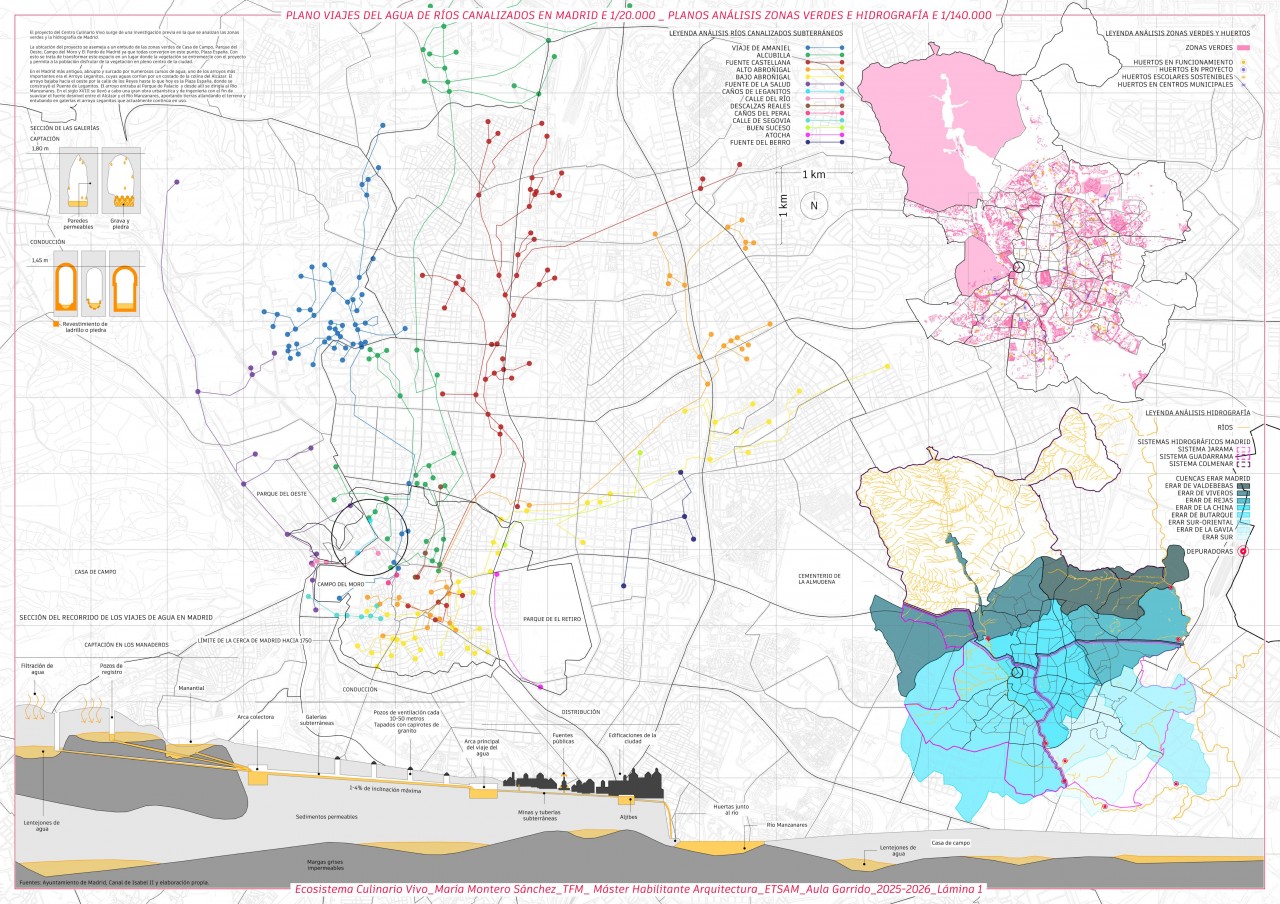
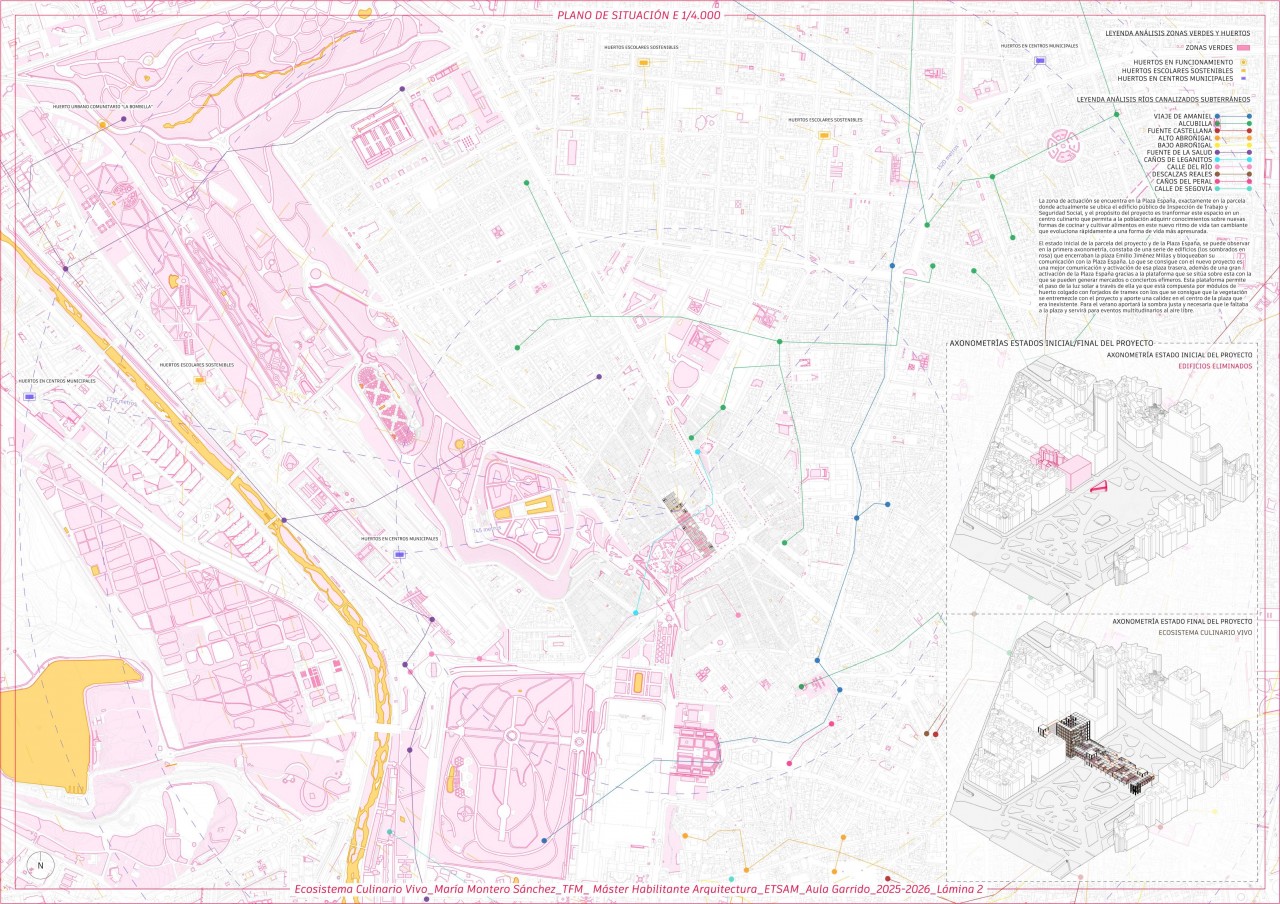
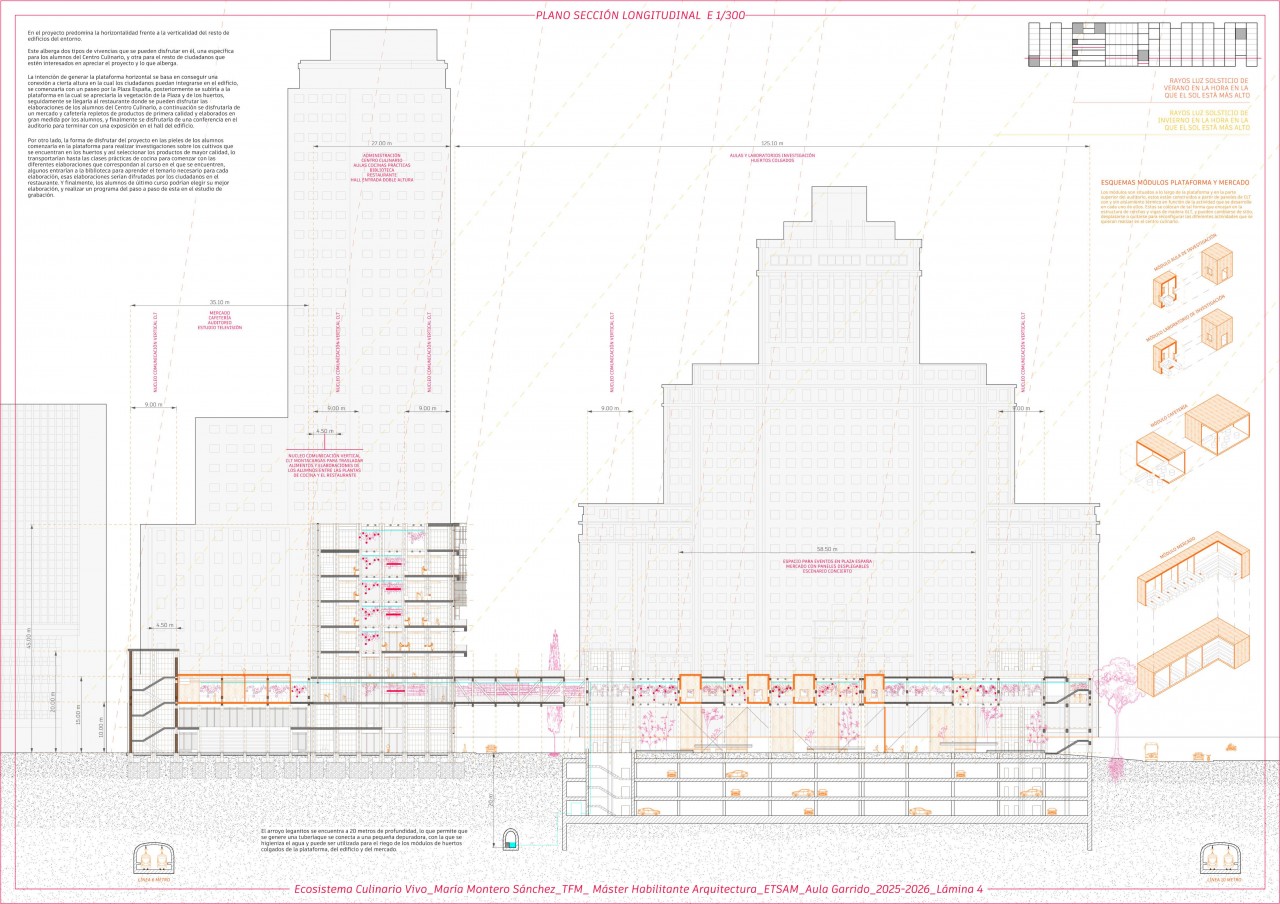
The Living Culinary Ecosystem is a regenerative architectural intervention located in Madrid’s Plaza España, a strategic "urban funnel" where the city’s major green lungs—Casa de Campo, Parque del Oeste, and El Pardo—converge. The project arises from an investigation into the city's hidden hydrology, specifically the Leganitos Stream. Historically buried and culverted 20 meters underground, the stream is reintegrated into the project through a purification system that supplies water for the building's extensive agricultural needs.
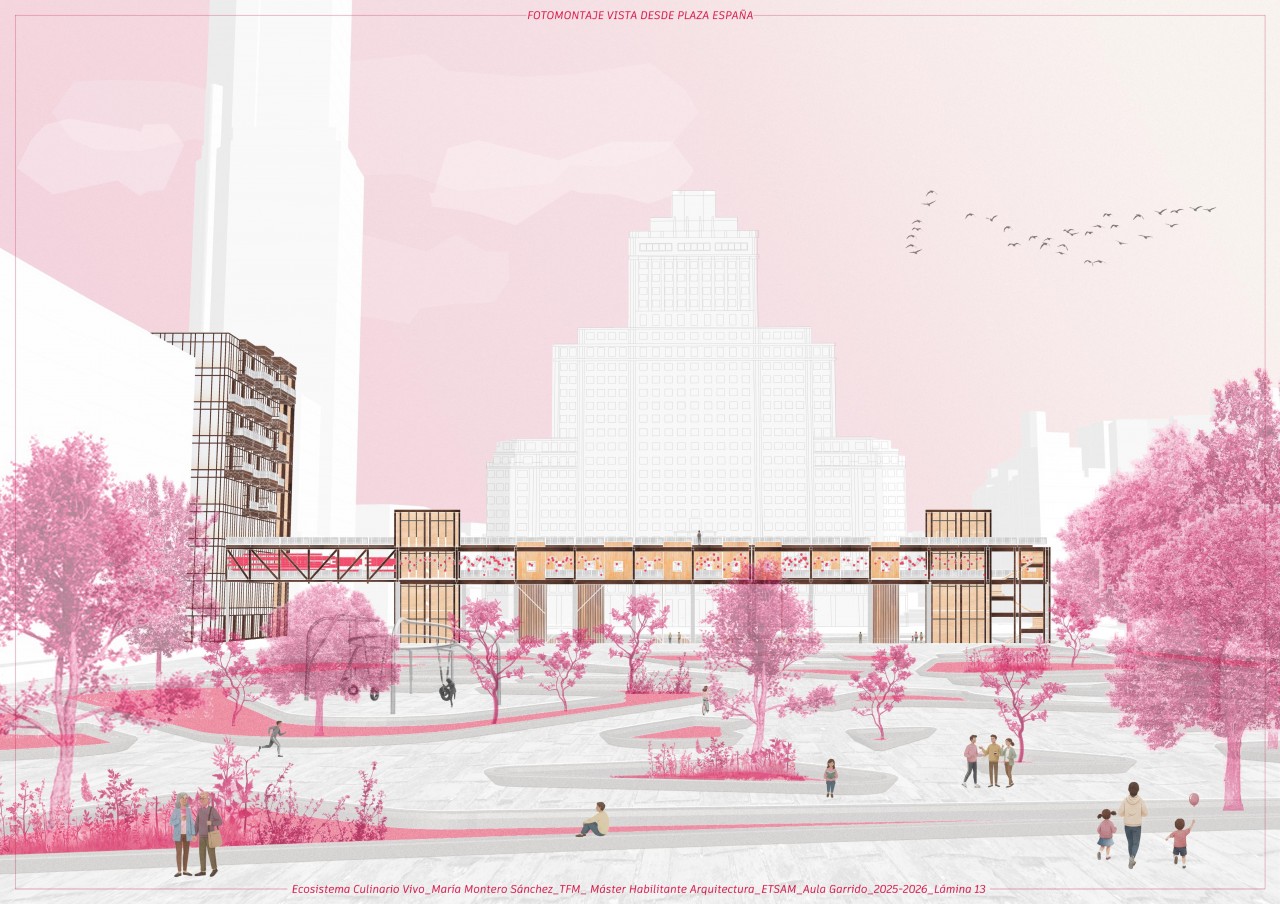
The architectural strategy focuses on horizontality, contrasting with the verticality of the surrounding skyline. The intervention is structured into three distinct yet integrated parts:
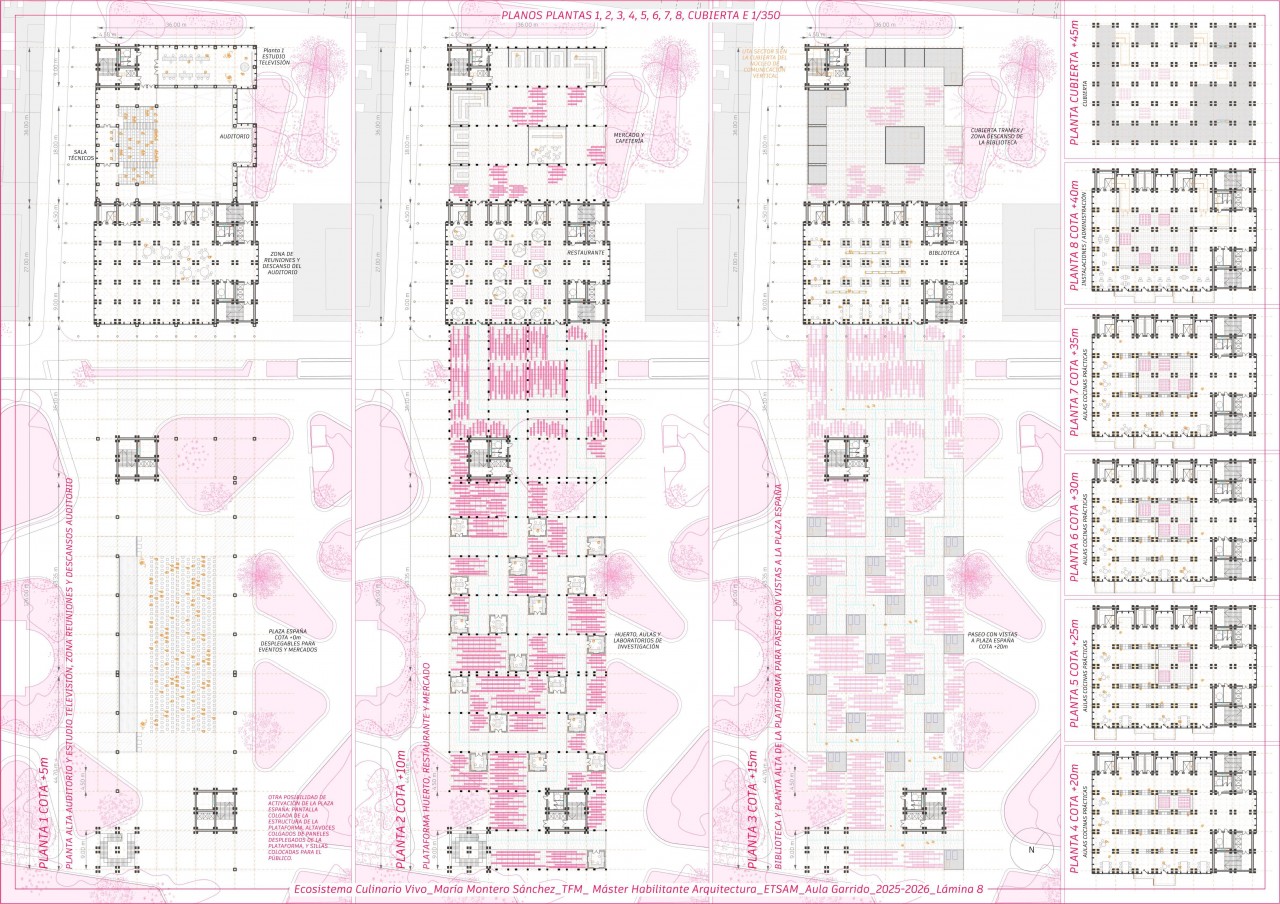
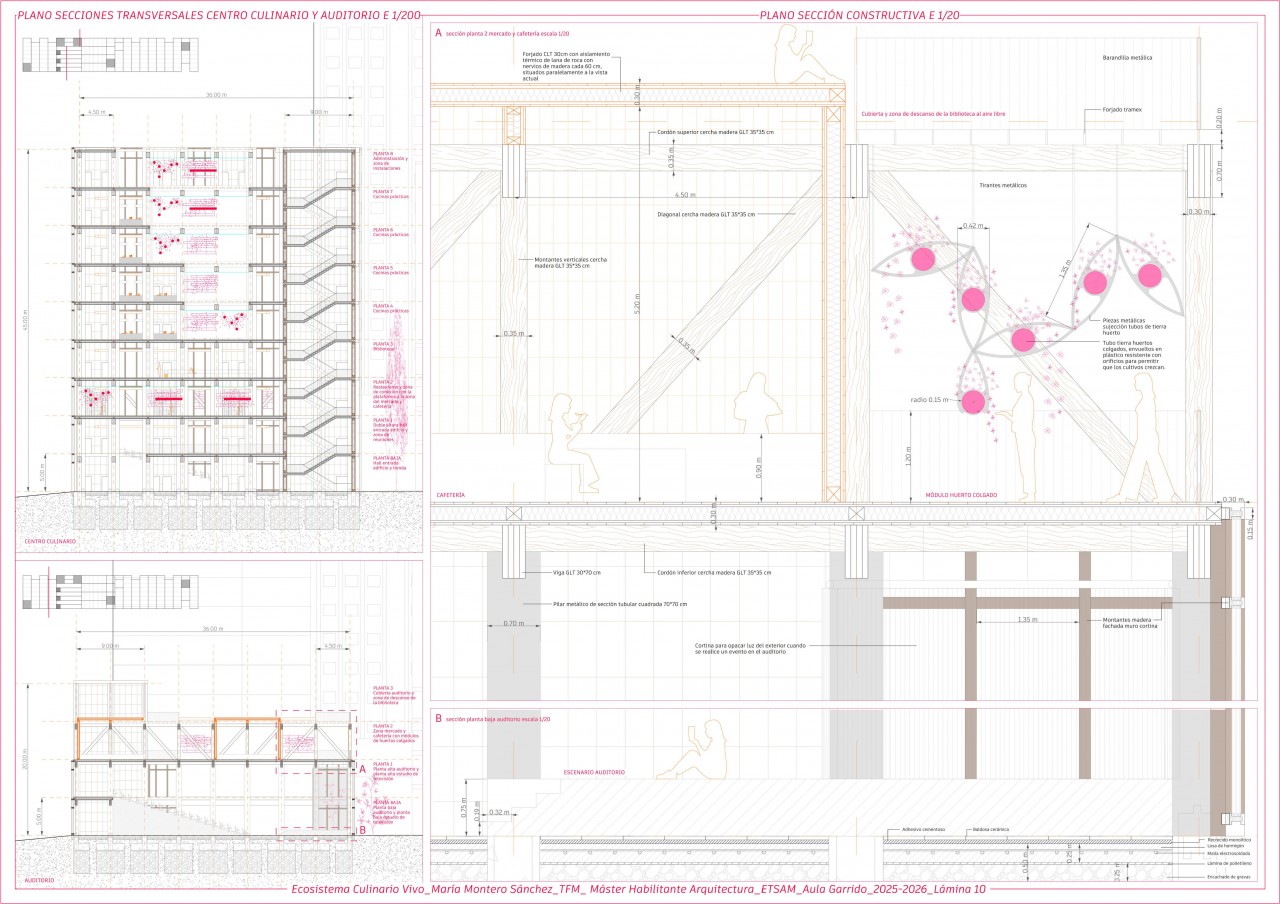
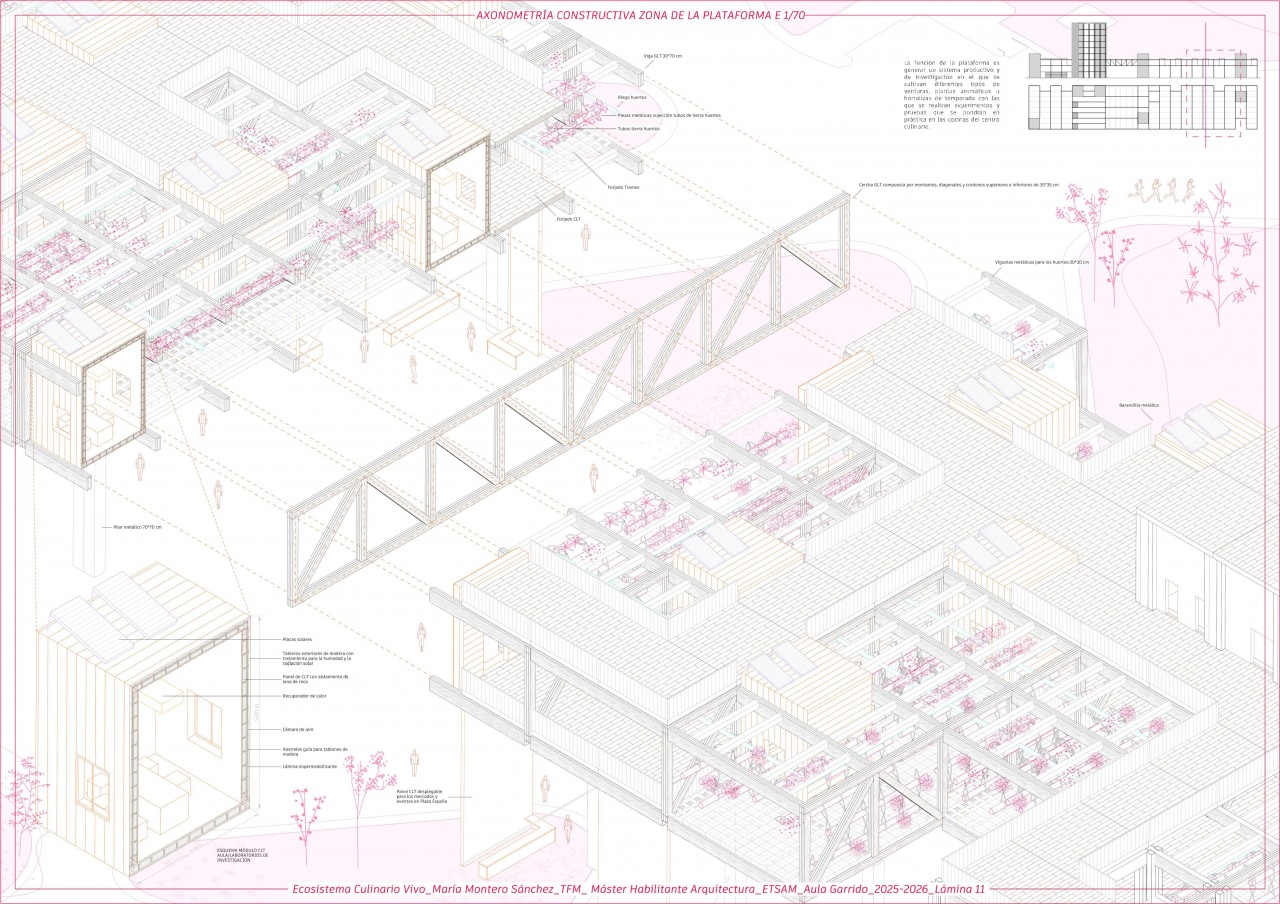
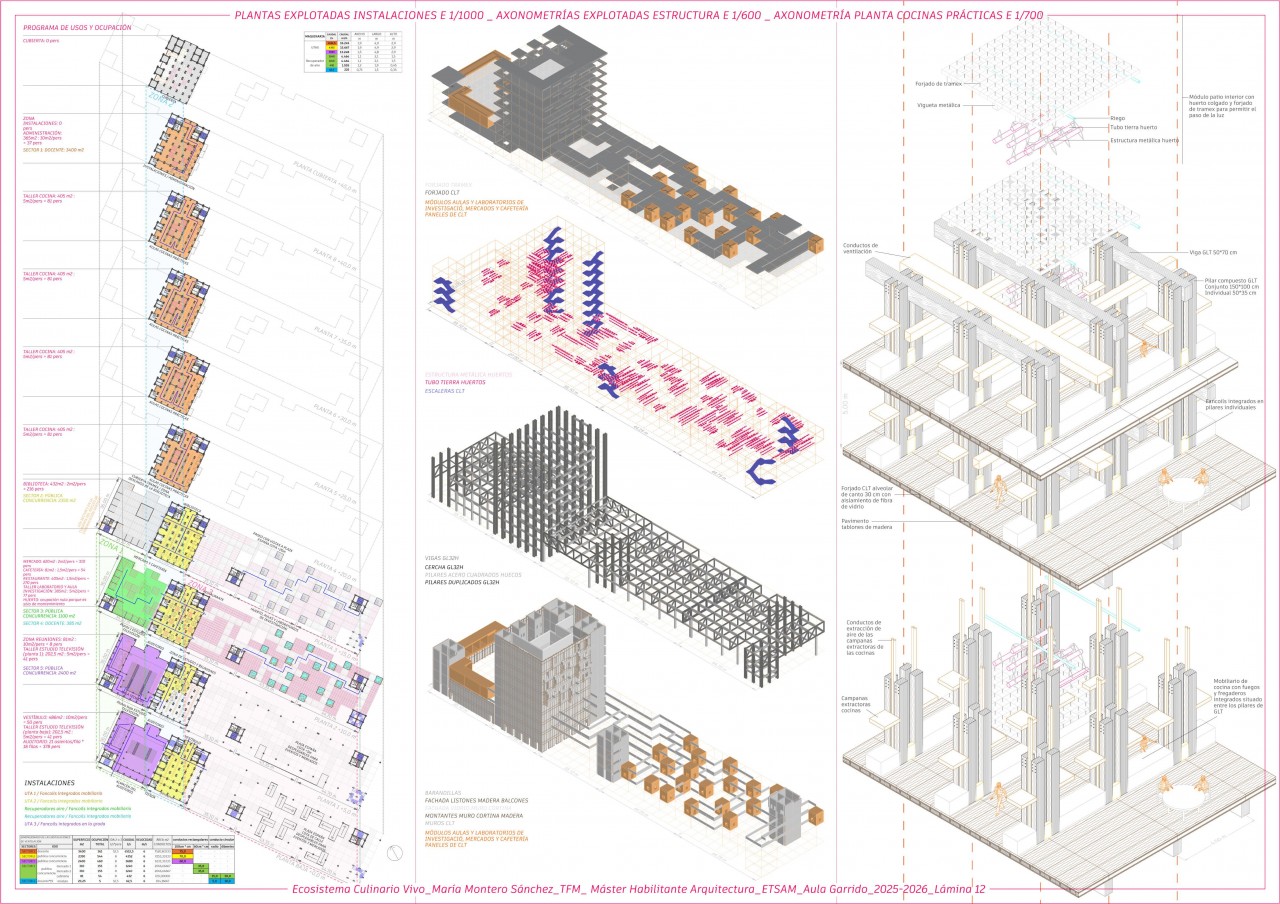
The Productive Platform: A high-level public plaza featuring suspended orchards and research modules. Built with a timber structure (GLT) and CLT modules, it provides shade and light through a tramex floor system, hosting ephemeral markets and cultural events.
The Culinary School: The main building dedicated to gastronomic education, where students move from cultivation and research to practice in high-tech kitchens.
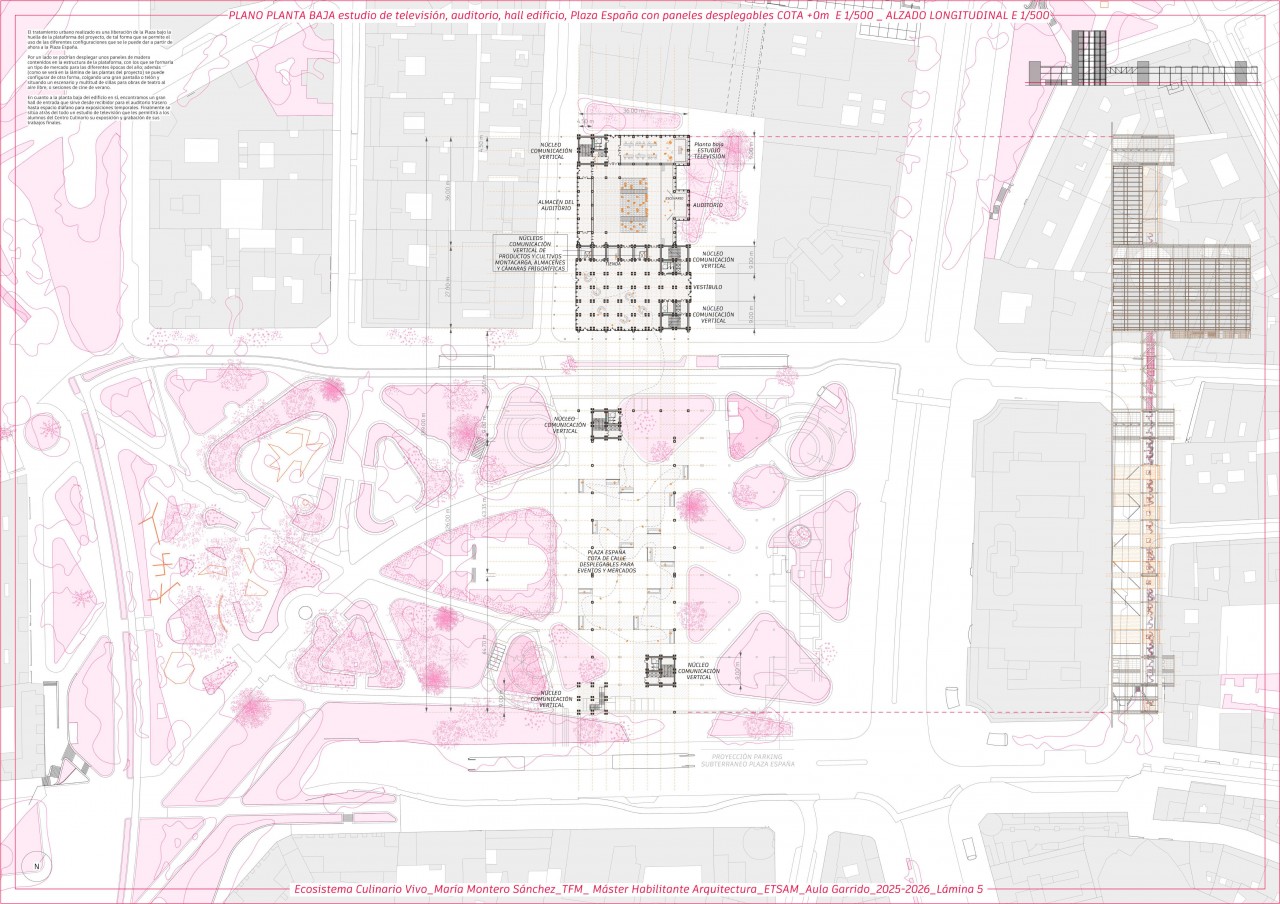
The Communication Hub: A rear volume containing an auditorium and a television studio for recording and broadcasting the students' final culinary works.
A key feature of the project is its dual user experience. Citizens are invited to climb the platform and integrate into the building’s life—visiting the restaurant, the high-quality market, and the exhibition hall. Meanwhile, students follow a productive cycle: researching crops in the orchards, processing them in the practical classrooms (bathed in natural light through intentional structural voids), and finally showcasing their skills in the recording studio.
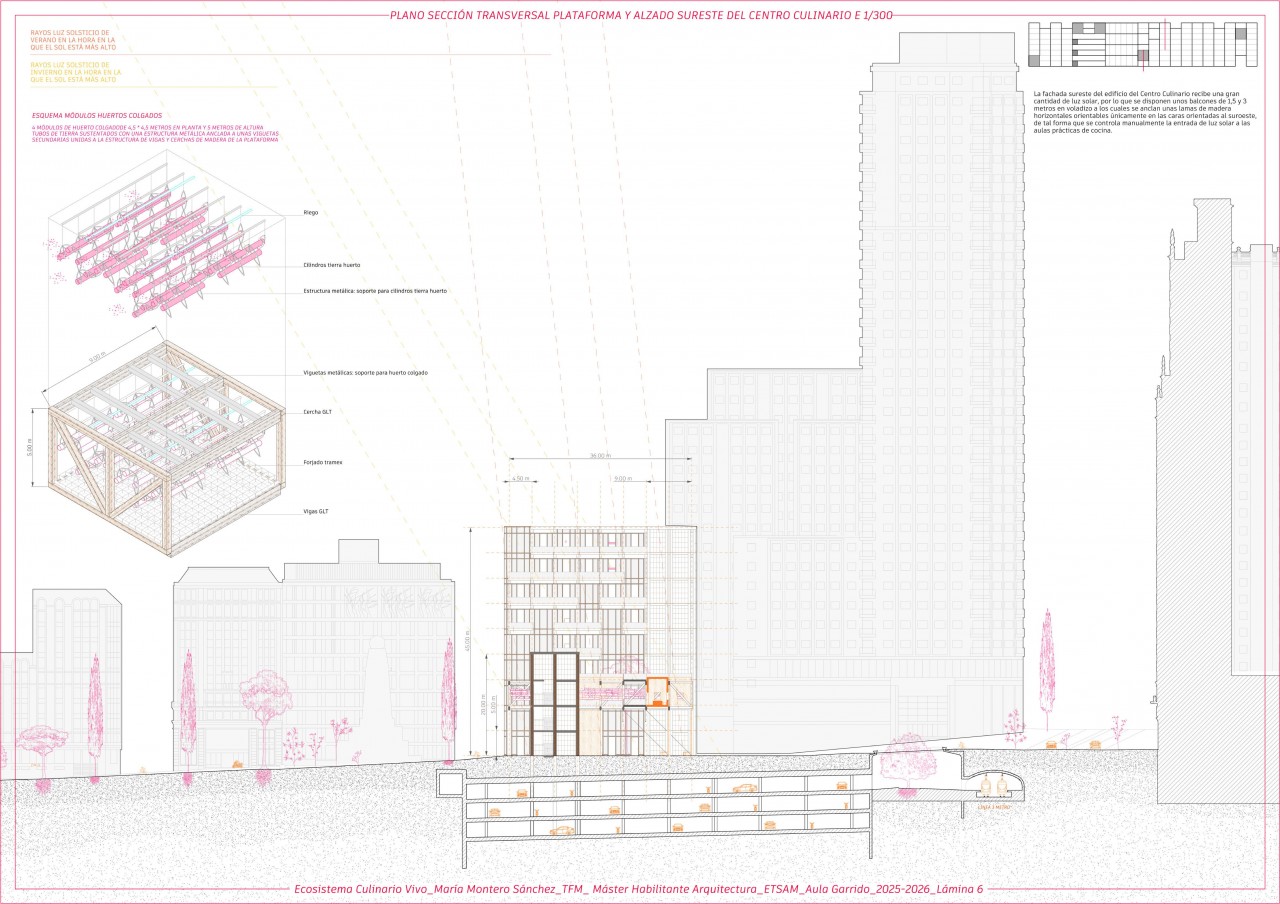
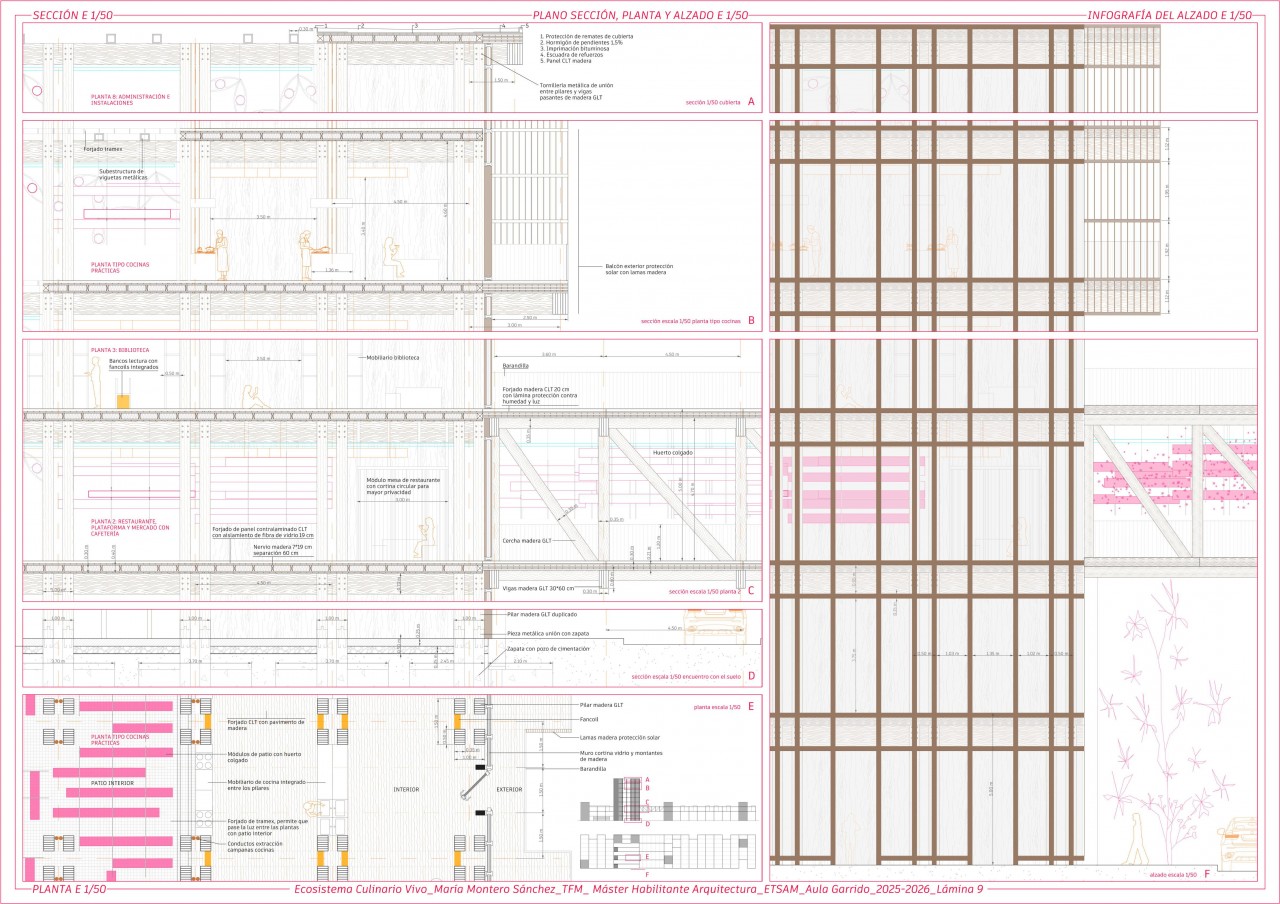
By utilizing sustainable materials like CLT, solar control through adjustable timber louvers, and the circular use of underground water, the Living Culinary Center transforms a formerly blocked urban plot into a vibrant, flexible, and productive ecosystem in the heart of Madrid.
The architectural strategy focuses on horizontality, contrasting with the verticality of the surrounding skyline. The intervention is structured into three distinct yet integrated parts:
The Productive Platform: A high-level public plaza featuring suspended orchards and research modules. Built with a timber structure (GLT) and CLT modules, it provides shade and light through a tramex floor system, hosting ephemeral markets and cultural events.
The Culinary School: The main building dedicated to gastronomic education, where students move from cultivation and research to practice in high-tech kitchens.
The Communication Hub: A rear volume containing an auditorium and a television studio for recording and broadcasting the students' final culinary works.
A key feature of the project is its dual user experience. Citizens are invited to climb the platform and integrate into the building’s life—visiting the restaurant, the high-quality market, and the exhibition hall. Meanwhile, students follow a productive cycle: researching crops in the orchards, processing them in the practical classrooms (bathed in natural light through intentional structural voids), and finally showcasing their skills in the recording studio.
By utilizing sustainable materials like CLT, solar control through adjustable timber louvers, and the circular use of underground water, the Living Culinary Center transforms a formerly blocked urban plot into a vibrant, flexible, and productive ecosystem in the heart of Madrid.
- 00 - Description
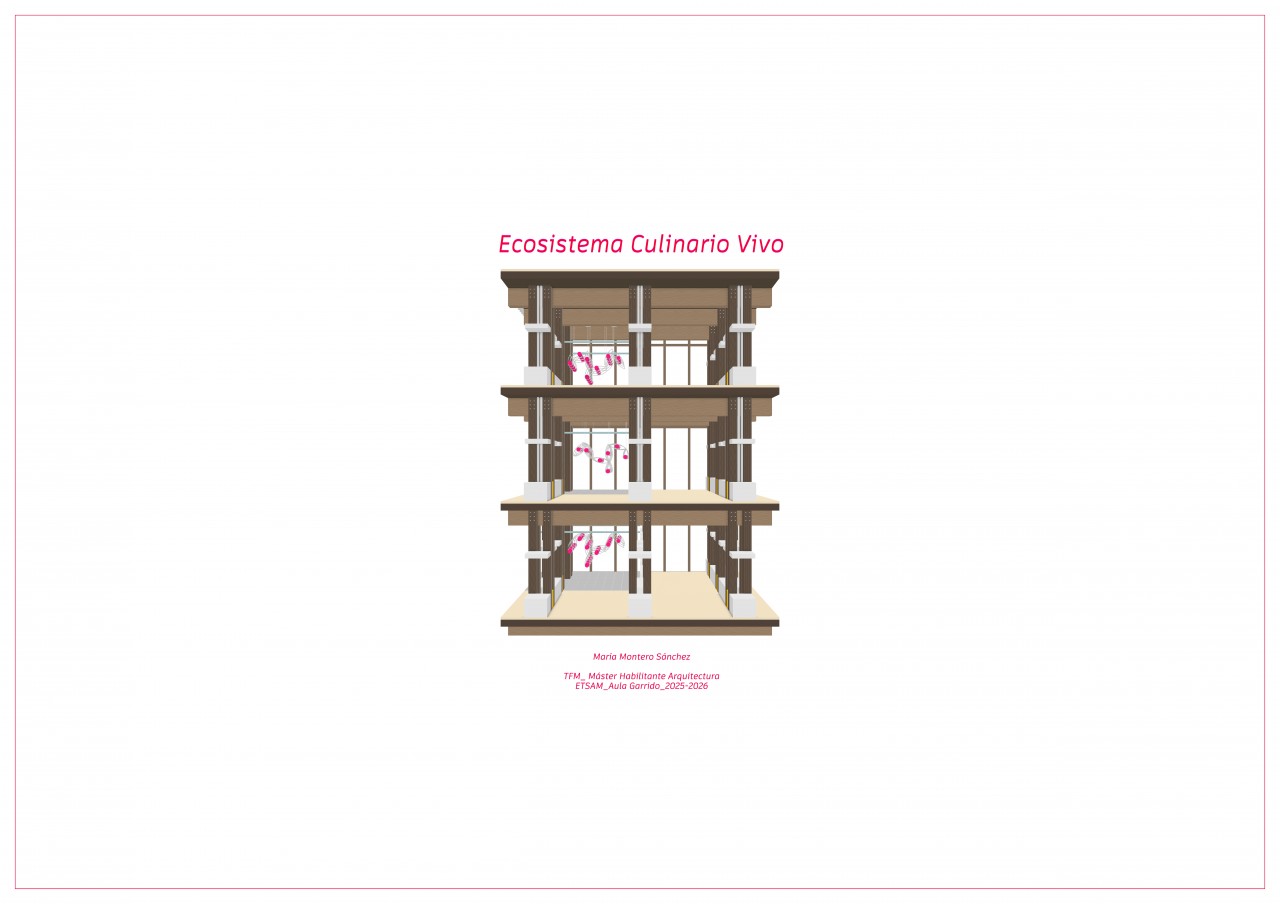
- 01 - Front Page
- 02 - Urban Analysis Sheet
- 03 - Location Plan
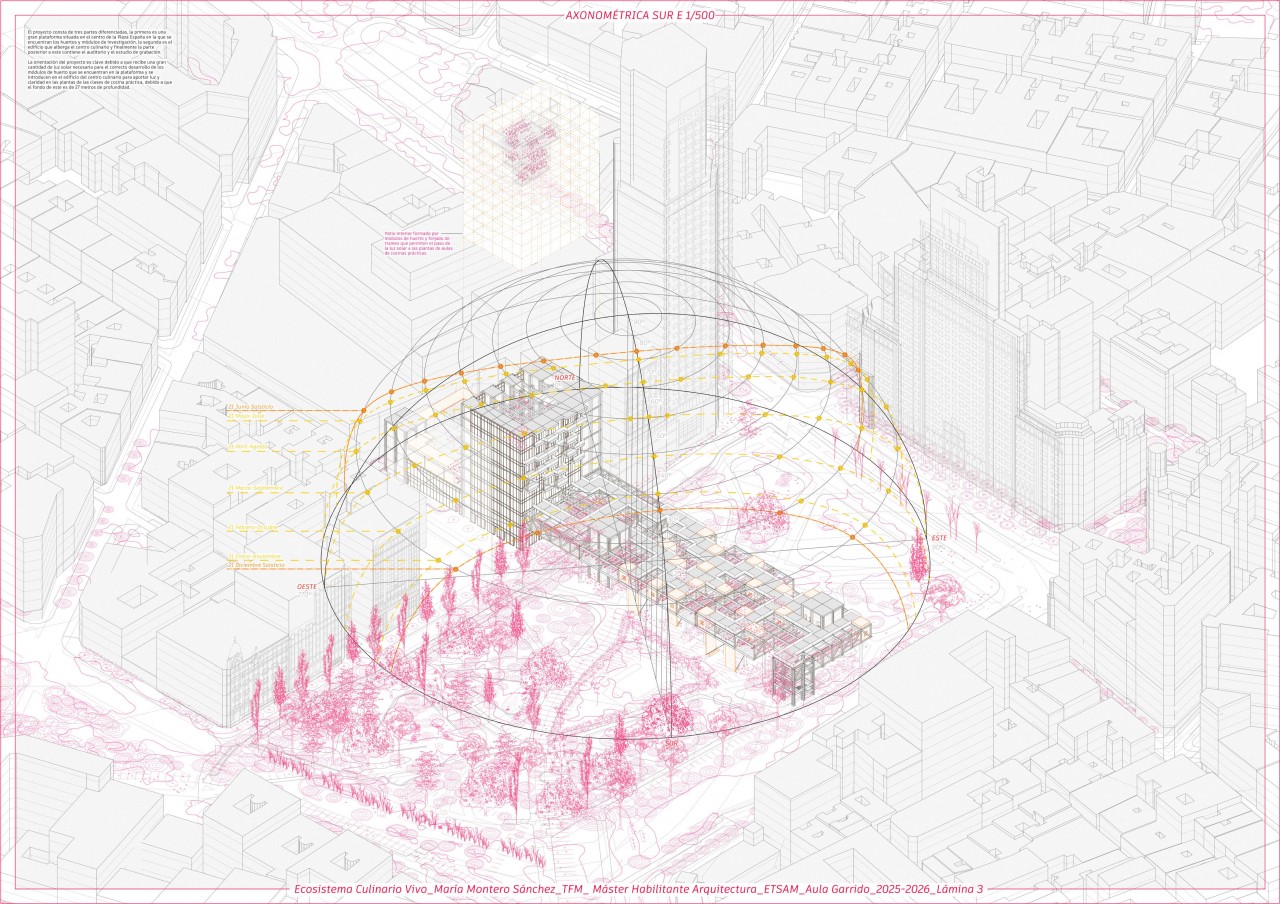
- 04 - Southern Axonometric
- 05 - Longitudinal Section
- 06 - Ground Floor
- 07 - Cross Section
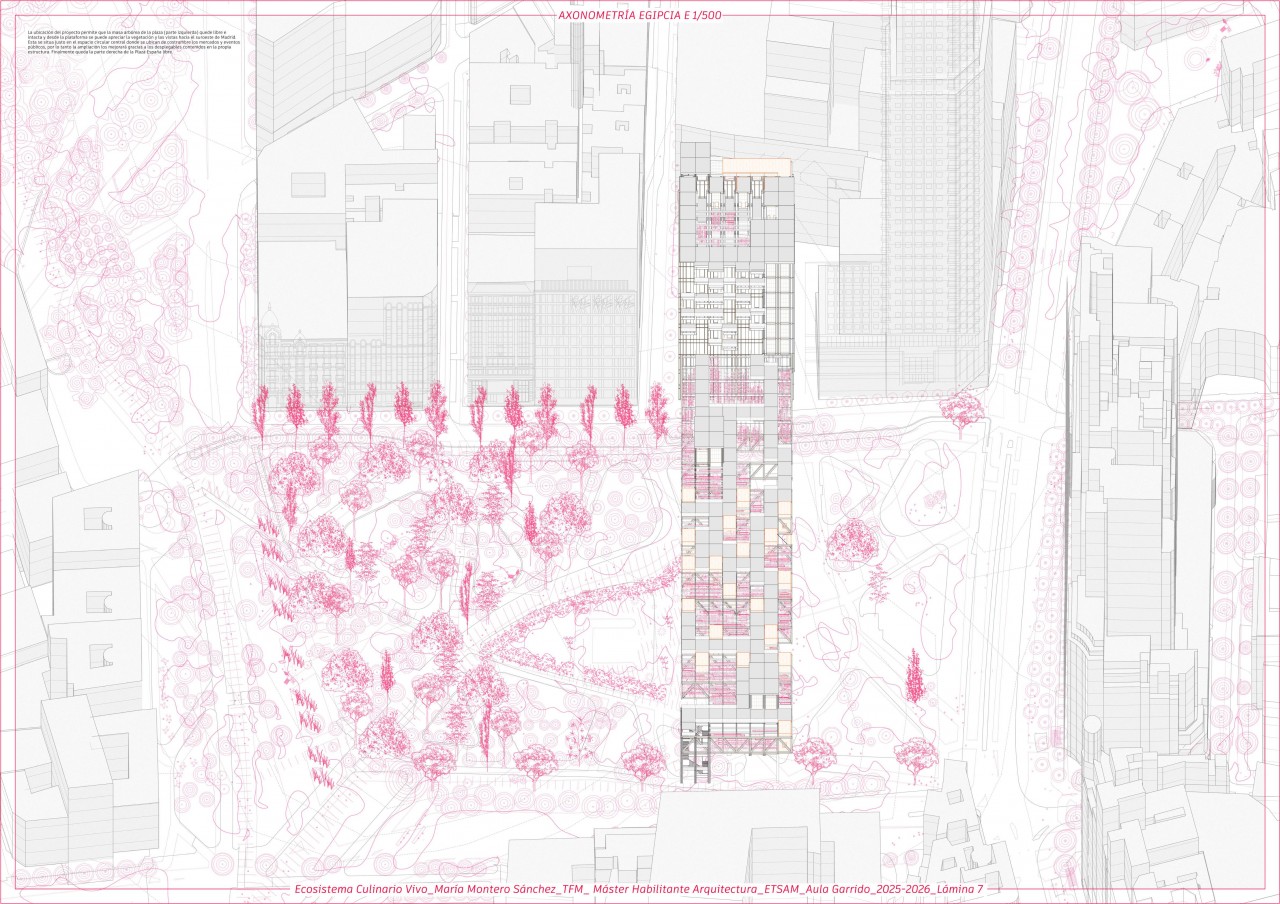
- 08 - Military Perspective
- 09 - Floor Plan Sheet
- 10 - Construction Drawing
- 11 - Cross Sections
- 12 - Exploded Axonometric
- 13 - MEP&Structural Sheet
- 14 - Collage
- 15 - Video