
metamorphosis
The nostalgia of the rural world invades us by evoking its memory, however the resources offered by the reality of this environment are incompatible with the demographic concentration that the current way of life requires.
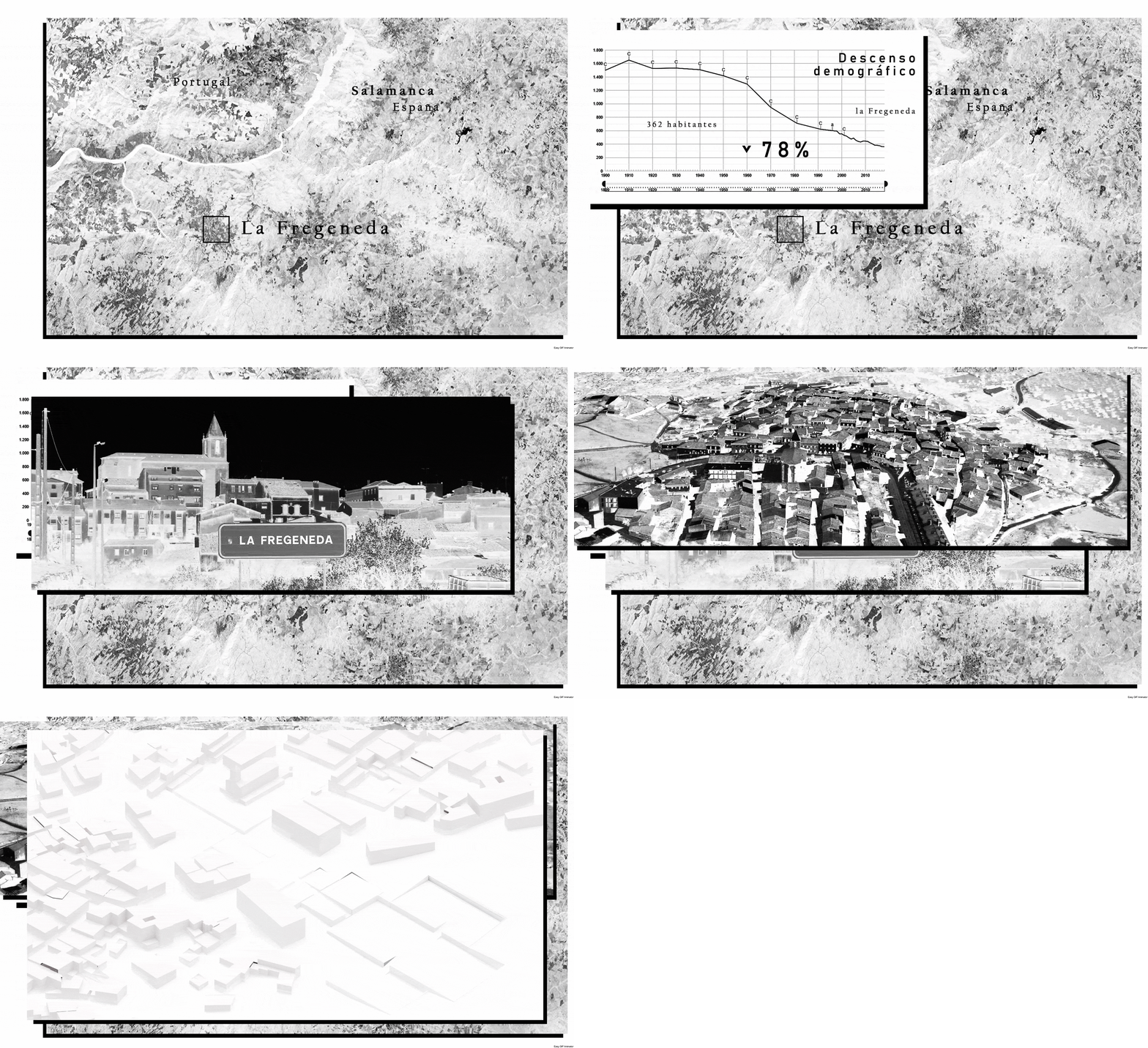
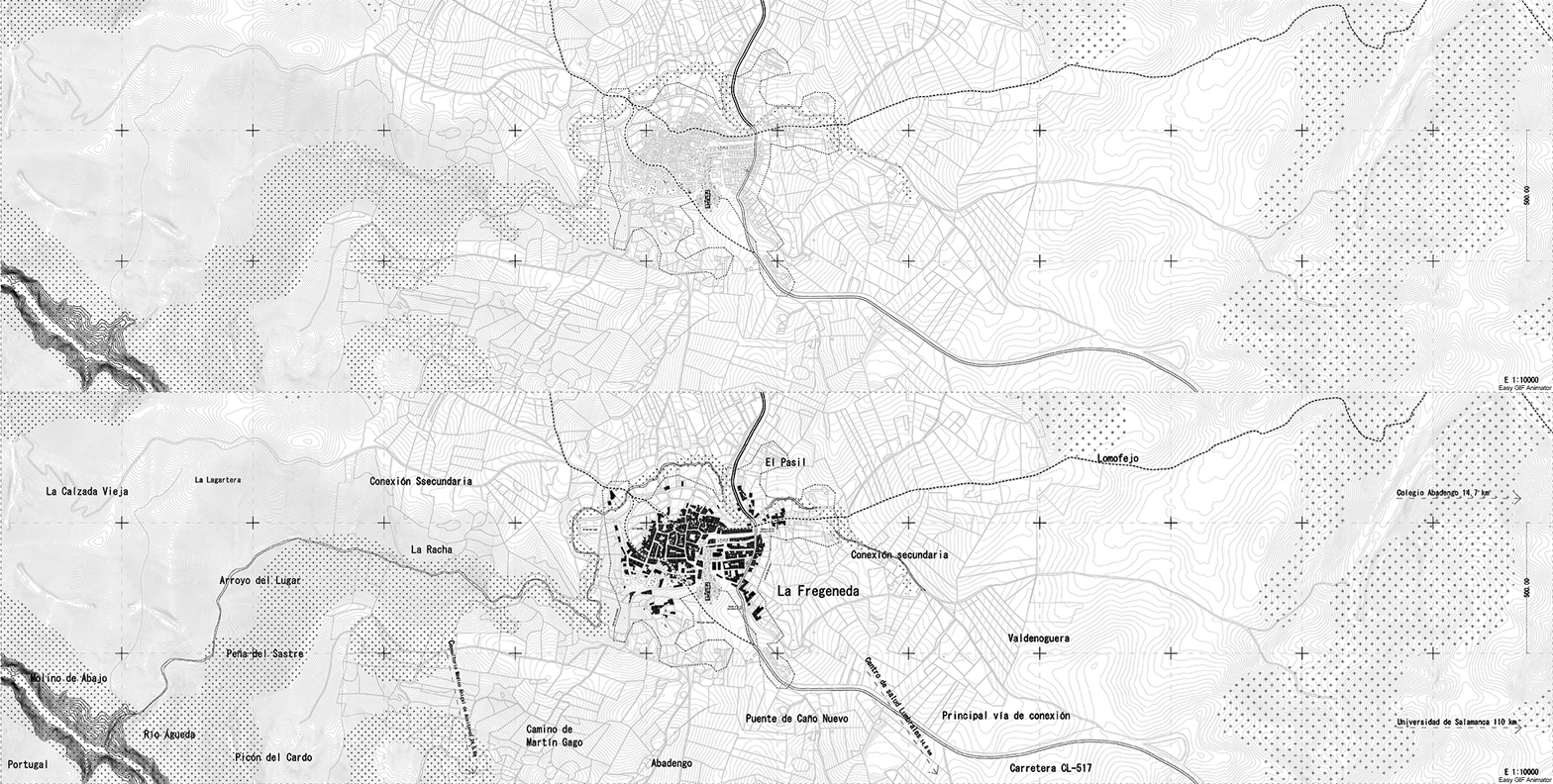
La Fregeneda, west of the province of Salamanca, is one of these forgotten territories, where the demographic decline has left just 300 inhabitants. The average age of the population amounts to 60 years, derived from the lack of means, among others, training and employment that allows the rural repopulation of new generations. Even for the inhabitants of the municipality itself, La Fregeneda falls short of a quality urban scene, with few neighborhood congregation spaces interrupted by the CL-517 highway.
‘Metamorphosis’ was born under the concept of educating the people and creating a cultural attraction with the purpose of reactivating the municipality. The teaching and work environment have shown that the possibilities provided by technology make face-to-face work a largely dispensable notion. This change of perspective in the training field turns the center's program into a catalog of didactic and productive spaces through telematic means.
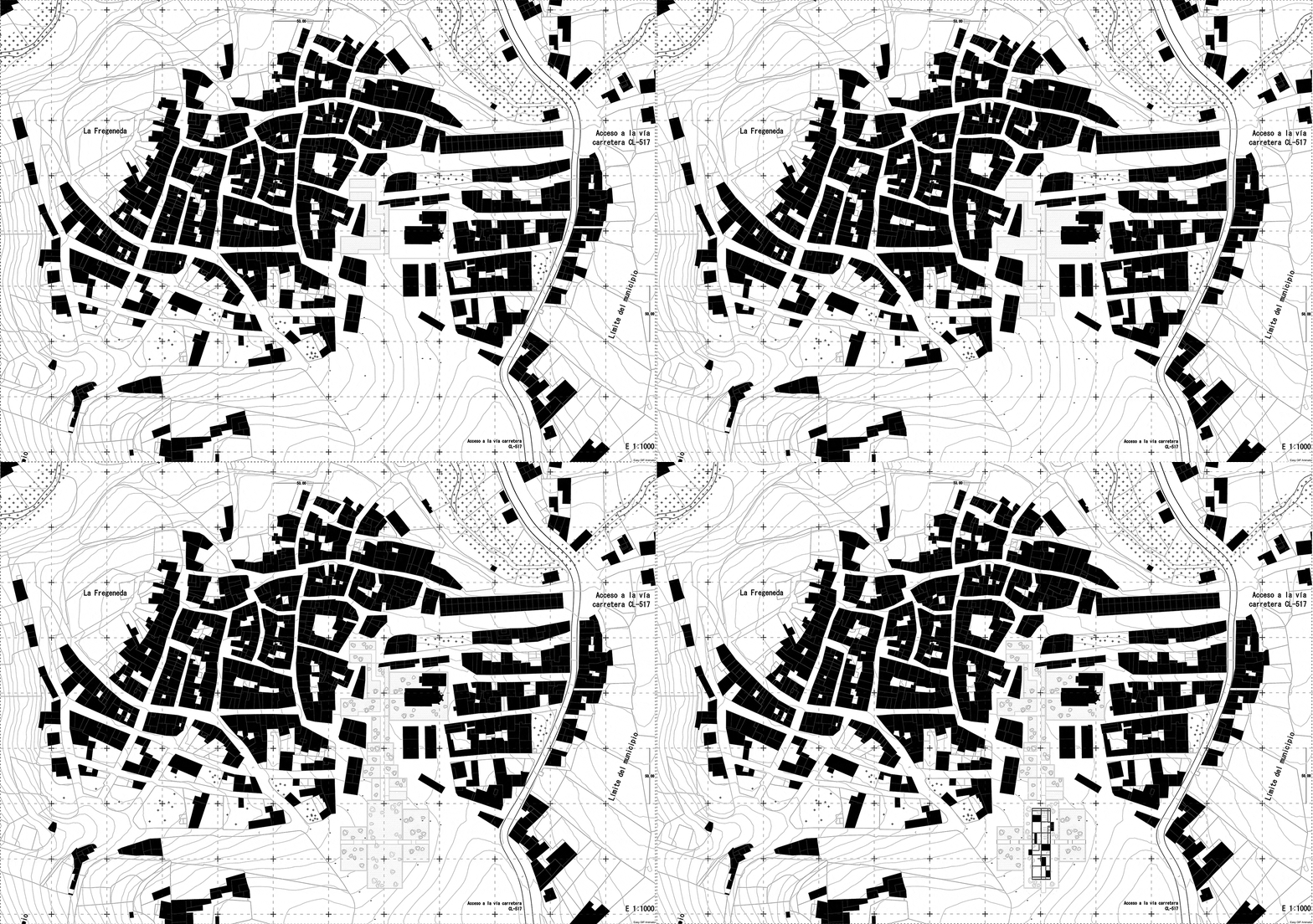
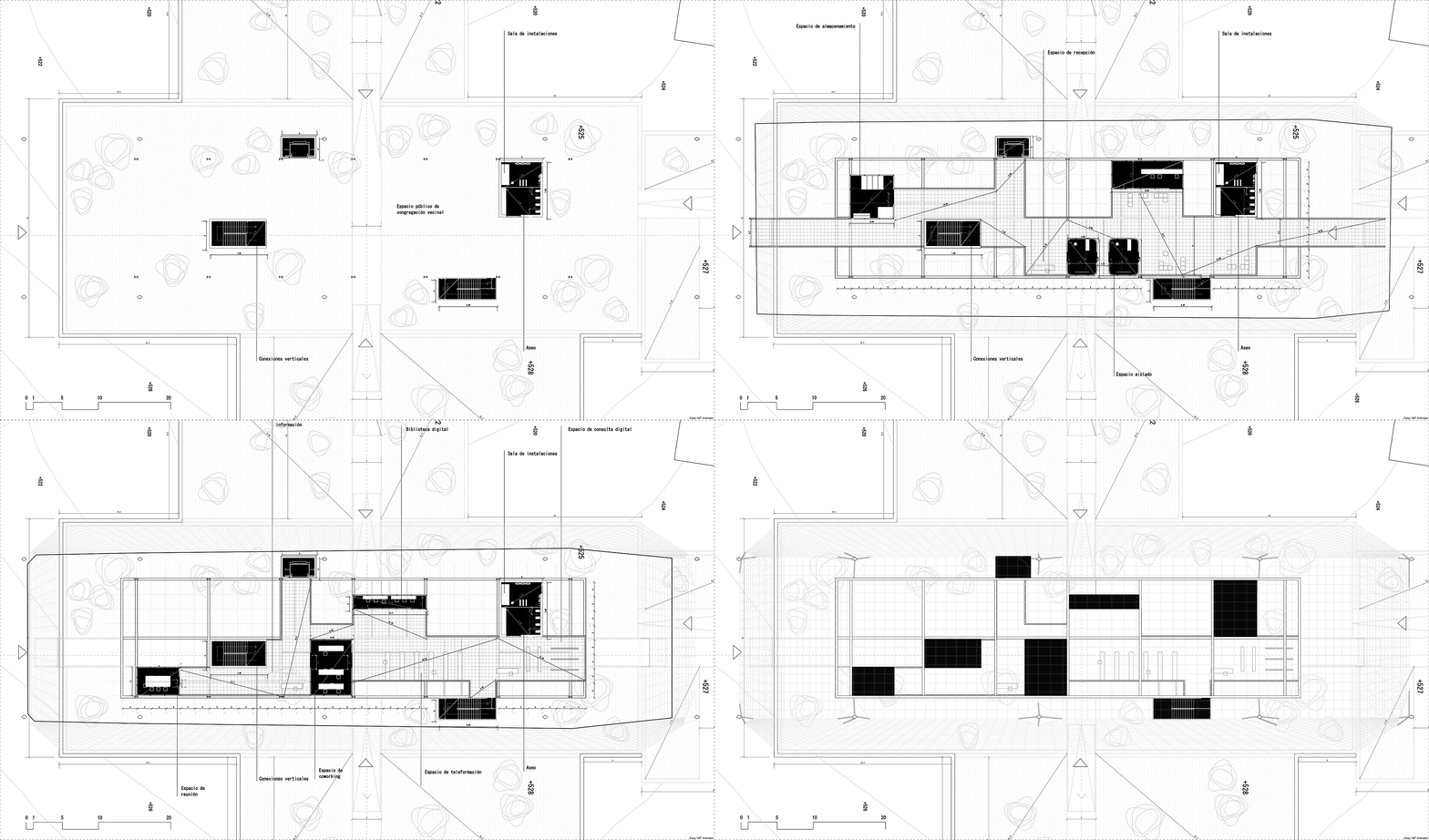
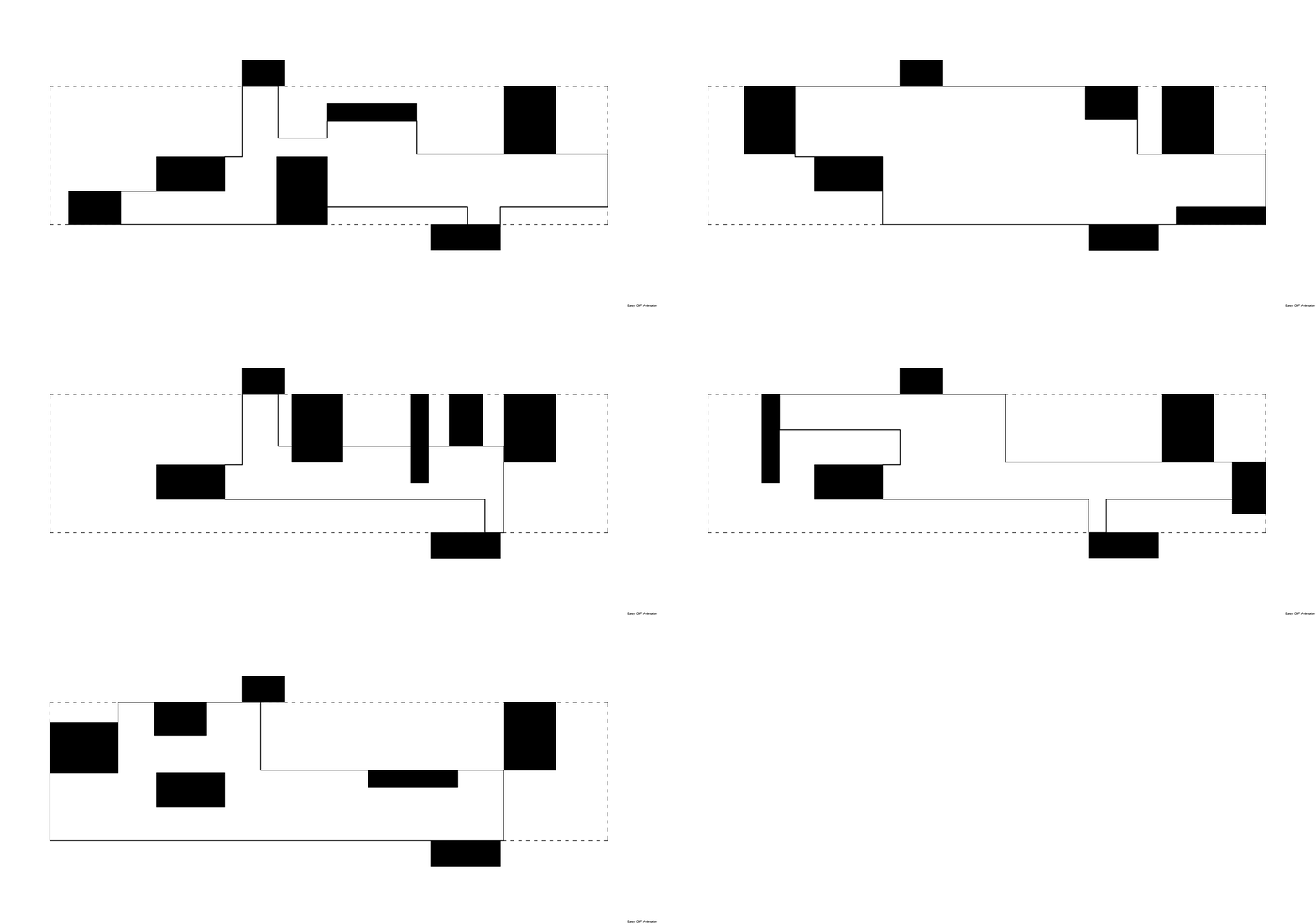
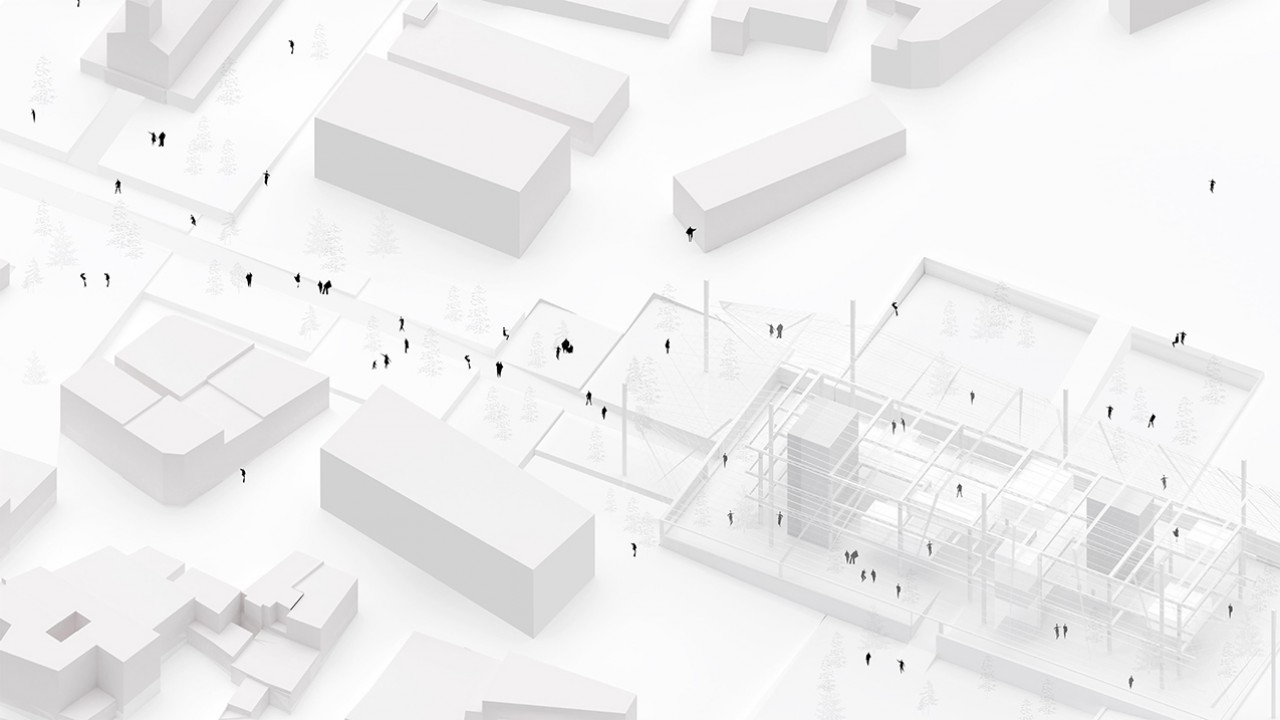
The architectural object is based on an accumulation of strata that respond to different variables. The insertion in the terrain begins with the transfer of the connection highway from the municipality to a peripheral road, thus freeing the central core. This fact allows the vegetation to perforate the main road and originate an operation of ground carving that sews up the urban voids, fading the existing terrain unevenness and creating a concatenation of green public spaces. The pedestrian route culminates in the project, which poses a light metal structure where a series of cellular polycarbonate capsules that harbor the program are attached, connected by tramex platforms, along with opaque elements intended for vertical connections and installations of the center. The system of capsules and mobile platforms originates a way of understanding space as a necessarily mutable concept, where needs are transformed according to the moment and the elements that make up the project adapt to this changing nature. The building skin expands outside the limits of the construction, allowing vegetation to colonize the interior and be part of the architectural space. The envelope is formed by a transparent efte membrane stretched by means of a metal mesh attached to a metal support structure. Pneumatic elements are adhered to this plastic material, which expand or contract in relation to the solar radiation of each area, thus continuing with the changing condition of the system used. A permeability is also achieved through accesses in the free ground floor and through light platforms that extend to the outside of the membrane.
The outcome is a living organism that questions the perpetual character of architecture, but reactivates the permanent condition for which the town was created, transforming rural memory into a viable reality.
La Fregeneda, west of the province of Salamanca, is one of these forgotten territories, where the demographic decline has left just 300 inhabitants. The average age of the population amounts to 60 years, derived from the lack of means, among others, training and employment that allows the rural repopulation of new generations. Even for the inhabitants of the municipality itself, La Fregeneda falls short of a quality urban scene, with few neighborhood congregation spaces interrupted by the CL-517 highway.
‘Metamorphosis’ was born under the concept of educating the people and creating a cultural attraction with the purpose of reactivating the municipality. The teaching and work environment have shown that the possibilities provided by technology make face-to-face work a largely dispensable notion. This change of perspective in the training field turns the center's program into a catalog of didactic and productive spaces through telematic means.
The architectural object is based on an accumulation of strata that respond to different variables. The insertion in the terrain begins with the transfer of the connection highway from the municipality to a peripheral road, thus freeing the central core. This fact allows the vegetation to perforate the main road and originate an operation of ground carving that sews up the urban voids, fading the existing terrain unevenness and creating a concatenation of green public spaces. The pedestrian route culminates in the project, which poses a light metal structure where a series of cellular polycarbonate capsules that harbor the program are attached, connected by tramex platforms, along with opaque elements intended for vertical connections and installations of the center. The system of capsules and mobile platforms originates a way of understanding space as a necessarily mutable concept, where needs are transformed according to the moment and the elements that make up the project adapt to this changing nature. The building skin expands outside the limits of the construction, allowing vegetation to colonize the interior and be part of the architectural space. The envelope is formed by a transparent efte membrane stretched by means of a metal mesh attached to a metal support structure. Pneumatic elements are adhered to this plastic material, which expand or contract in relation to the solar radiation of each area, thus continuing with the changing condition of the system used. A permeability is also achieved through accesses in the free ground floor and through light platforms that extend to the outside of the membrane.
The outcome is a living organism that questions the perpetual character of architecture, but reactivates the permanent condition for which the town was created, transforming rural memory into a viable reality.




- 00 - Description
- 01 - La Fregeneda
- 02 - Location
- 03 - Urban Reorganization
- 04 - Plans
- 05 - Section
- 06 - Structure
- 07 - System
- 08 - Axonometry
- 09 - Town view
- 10 - Indoor Scene
- 11 - Video