
Natural harmony
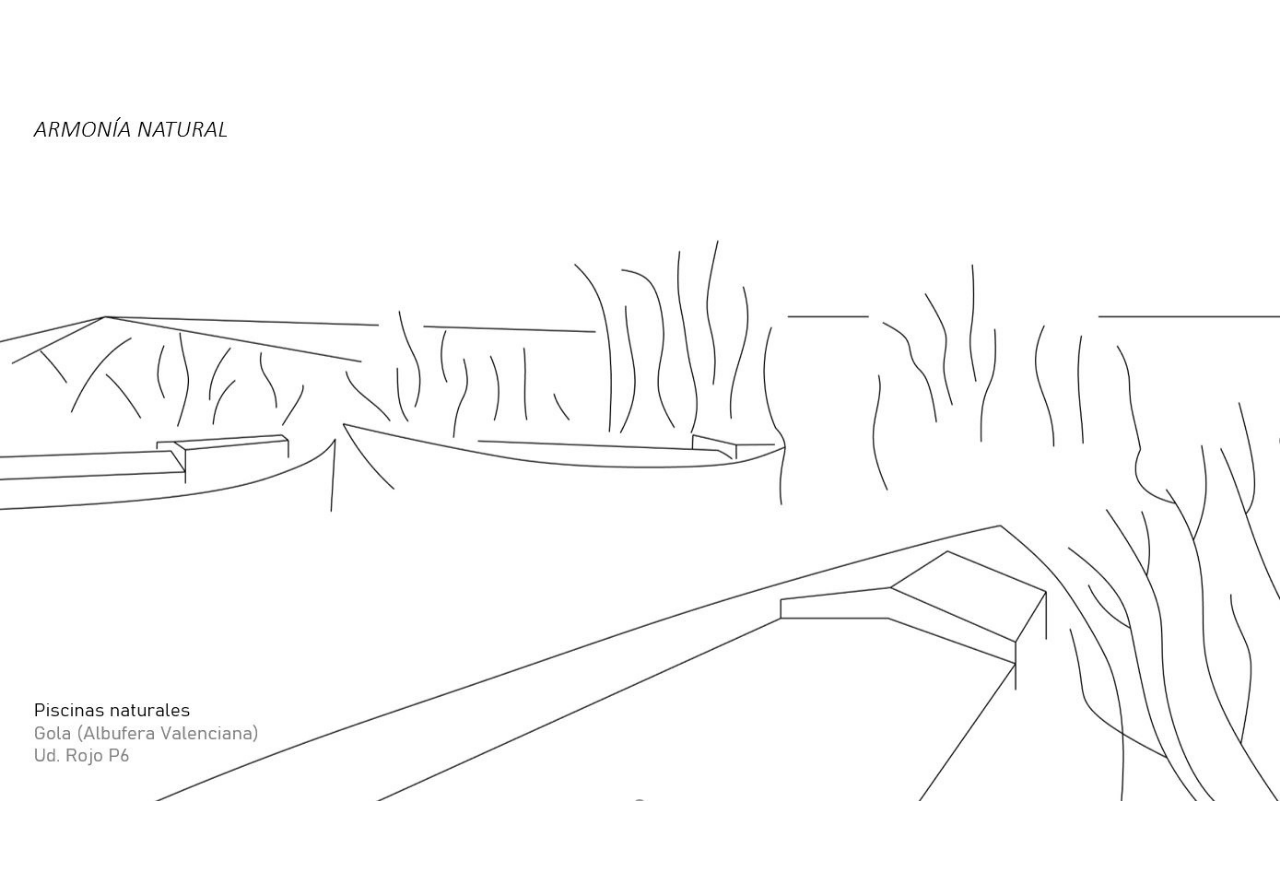
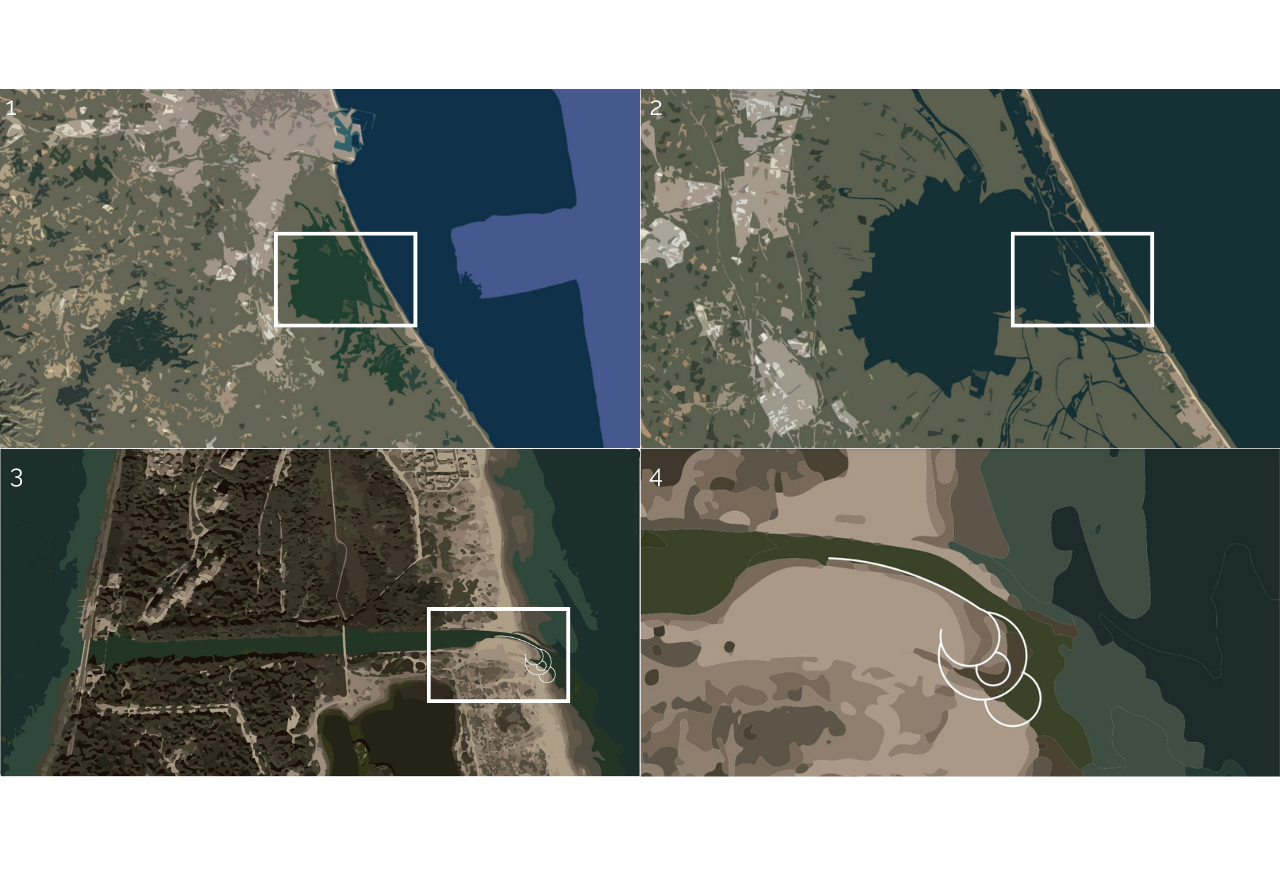
In 1990, the environs of the Valencian Albufera were designated a Natural Park, comprising 21,000 hectares, inclusive of the Albufera itself—a man-made lake with an average depth of 1 meter, formerly employed for agricultural and fishing purposes. Confronting the contentious issues surrounding construction within such an environment for the preservation of landscape and ecosystem, the proposal is posited for the establishment of natural pools as a considerate means of leisure in harmony with the locale.
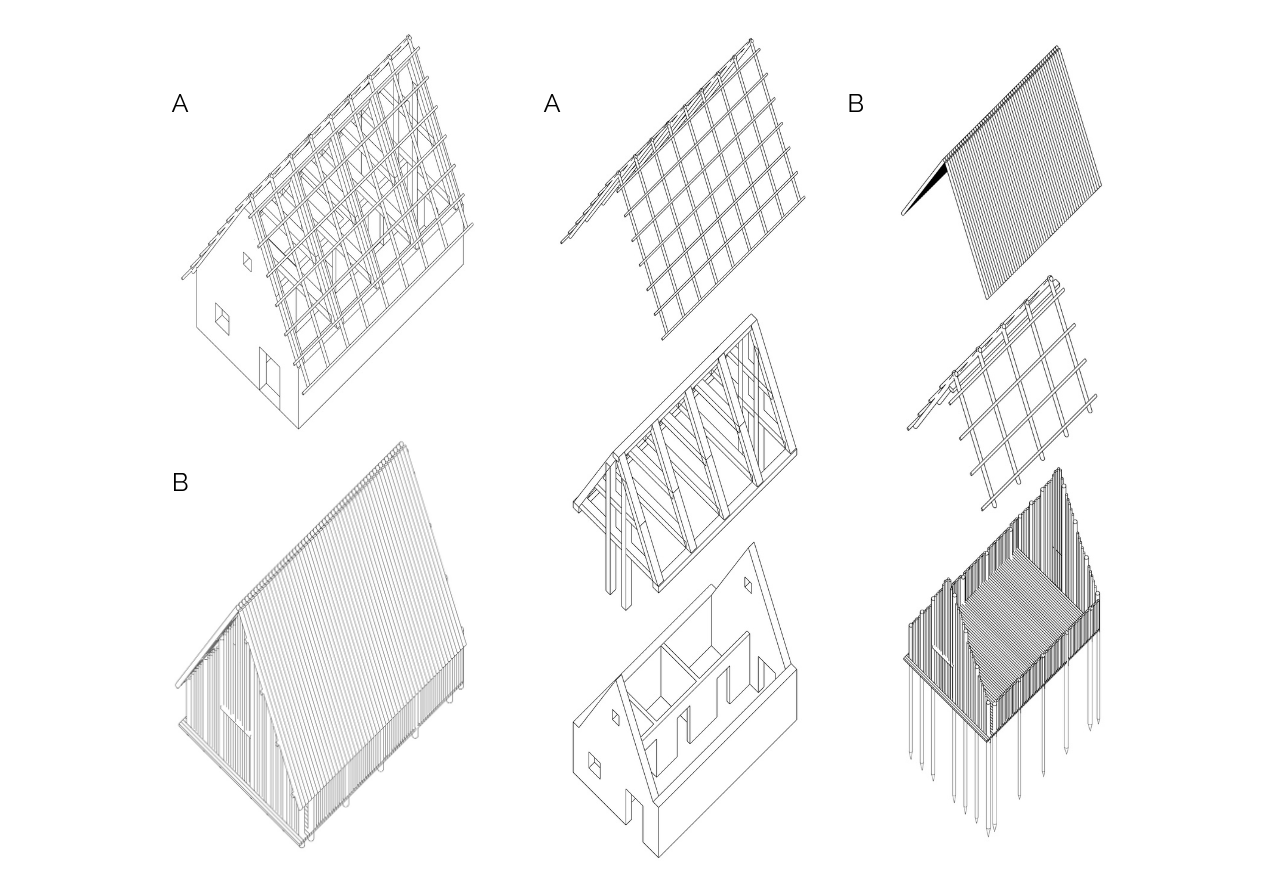
In response to this debate, a comprehensive investigation and modernization of the vernacular architecture of the region have been undertaken, accentuating construction methodologies and materials that are considerate of the ecosystem and the constraints imposed by the natural park. Particular emphasis is afforded to the traditional fishing Valencian Barraca, elucidating the utility of materials such as wood and reeds as construction elements in the form of enclosures, slats, or foundation pilings over the water.
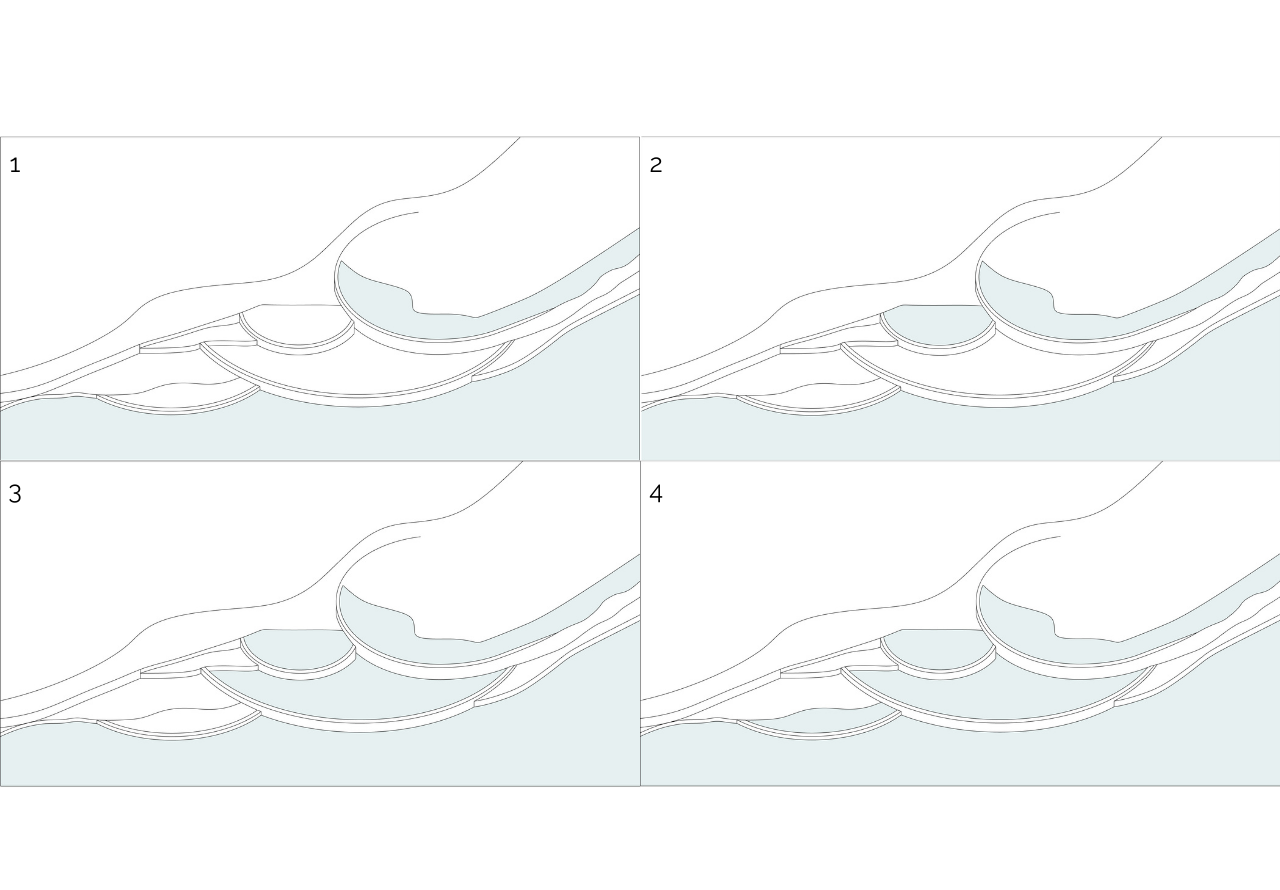
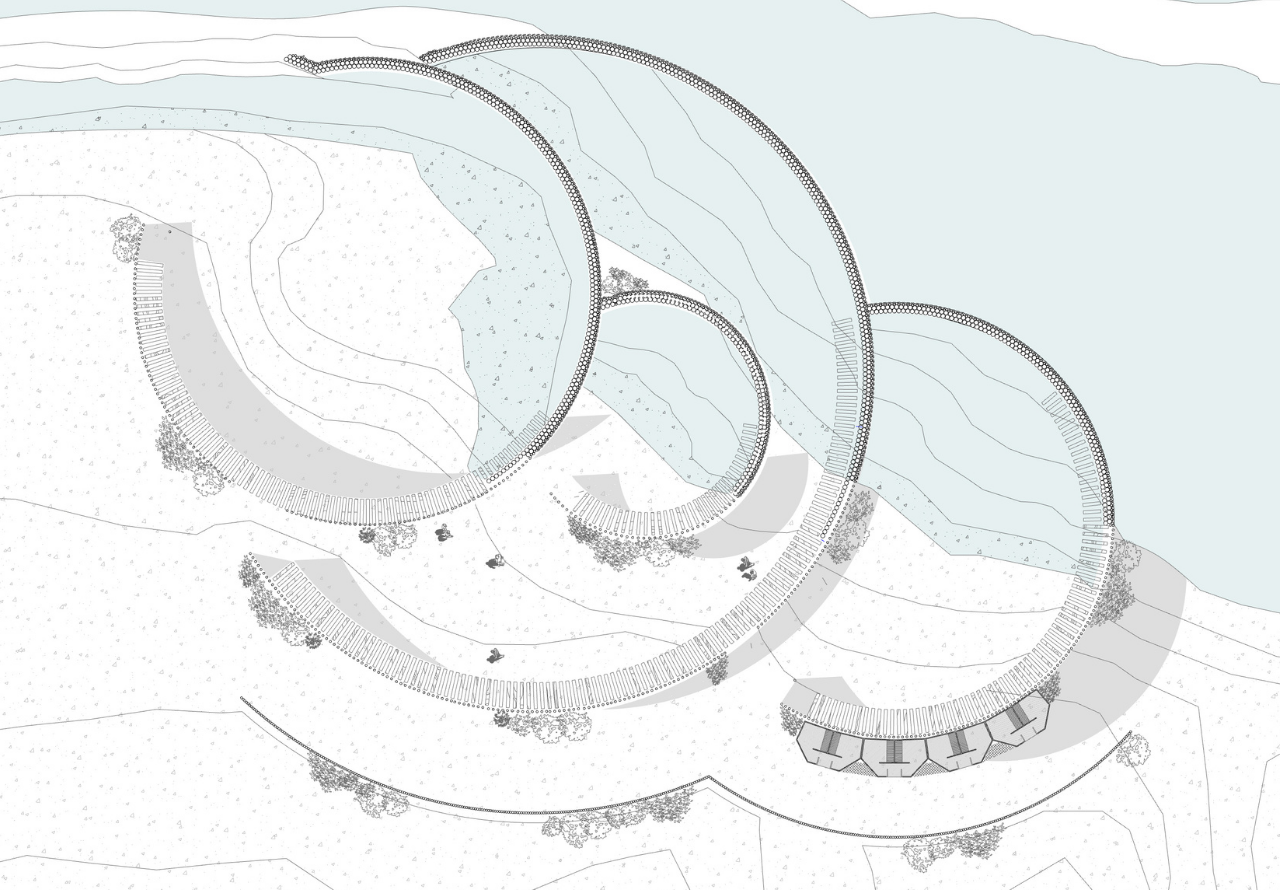
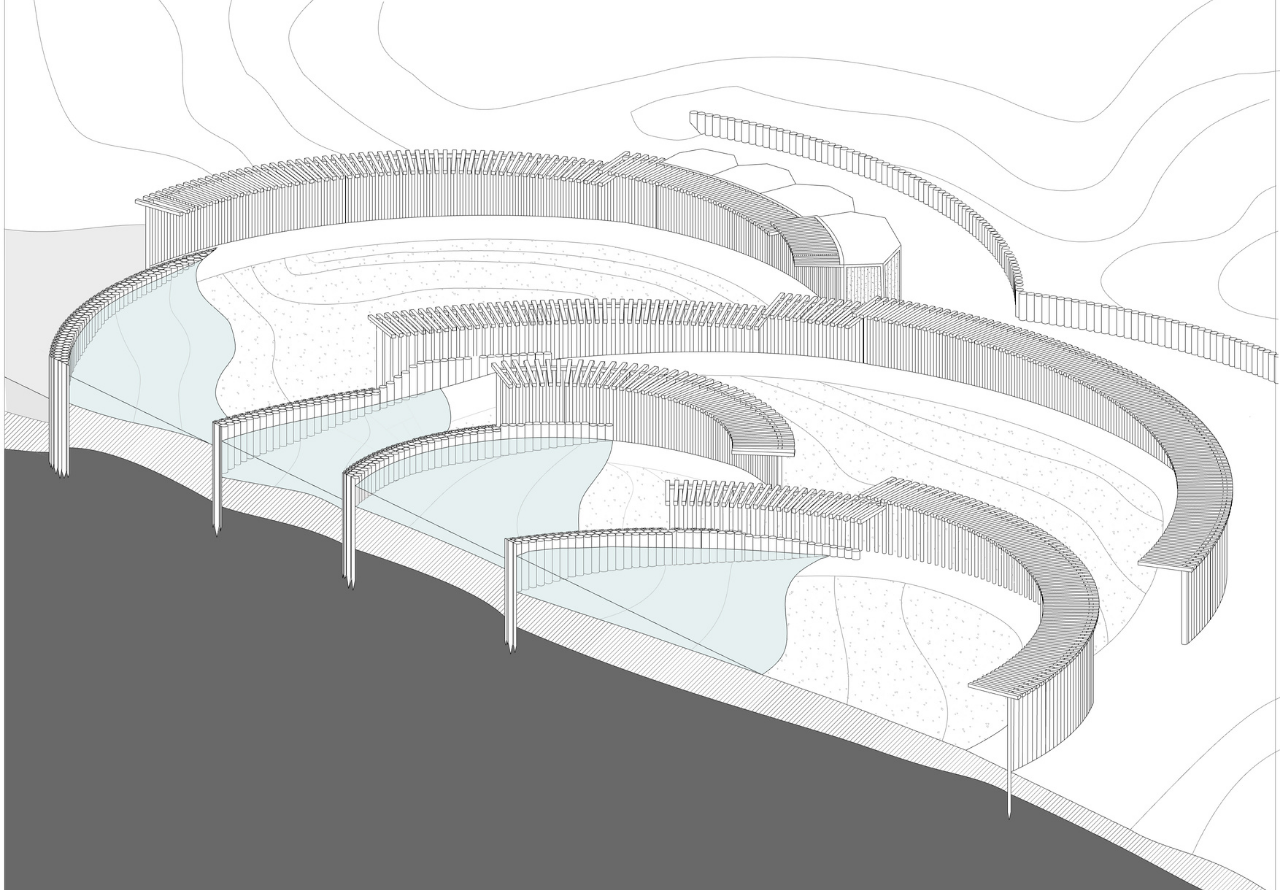
Situated in La Gola, a channel facilitating the connection between the Albufera and the Mediterranean, and through which it finds drainage, we find ourselves specifically on a diminutive sedimentary peninsula formed by fluctuations in flow and elevation in its concluding meters. Capitalizing on these aspects, the four bodies of water are methodically arranged, supplied by the canal itself, with due regard for its circulation. The filling or depletion of these pools shall hinge upon the water flow, potentially resulting in their entirety being unoccupied, selectively filled, or completely occupied.
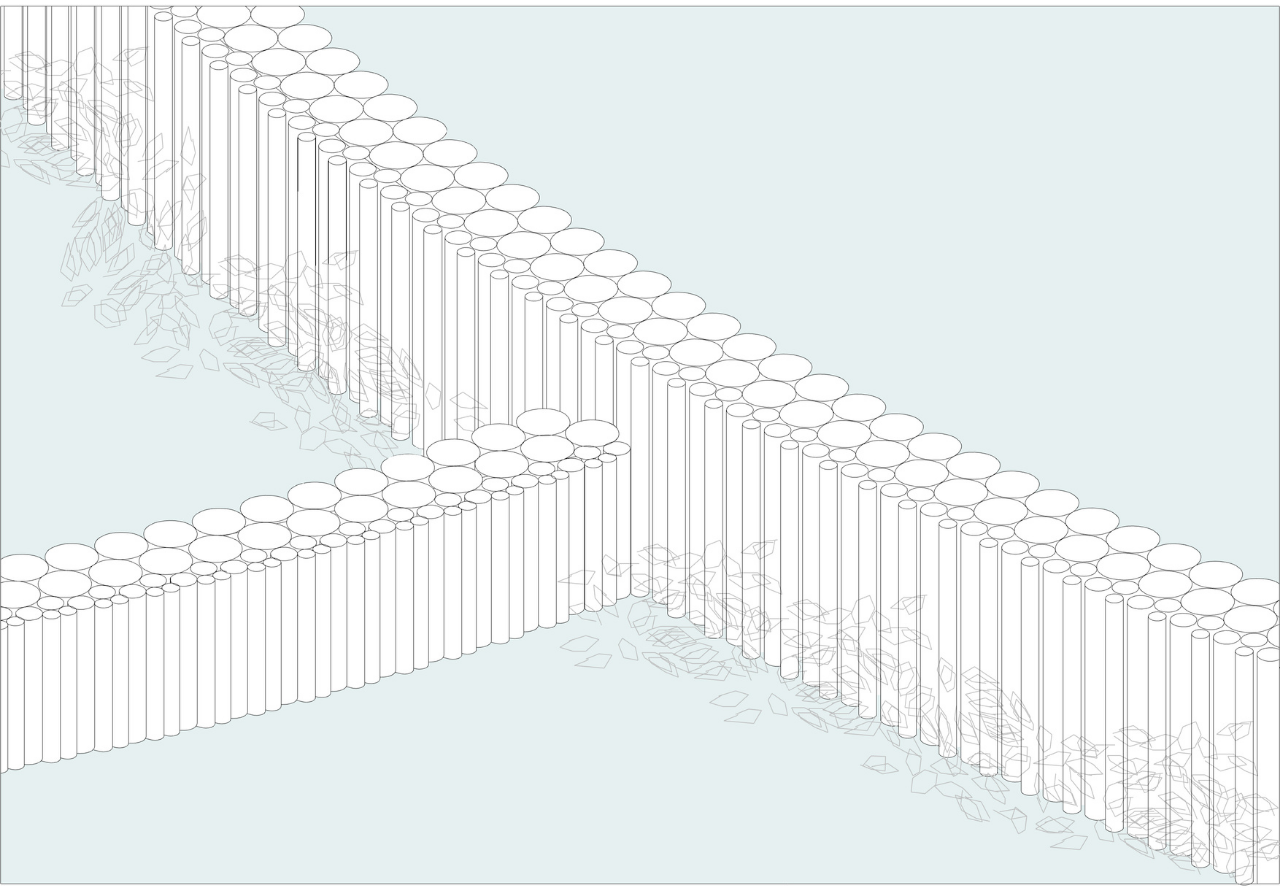
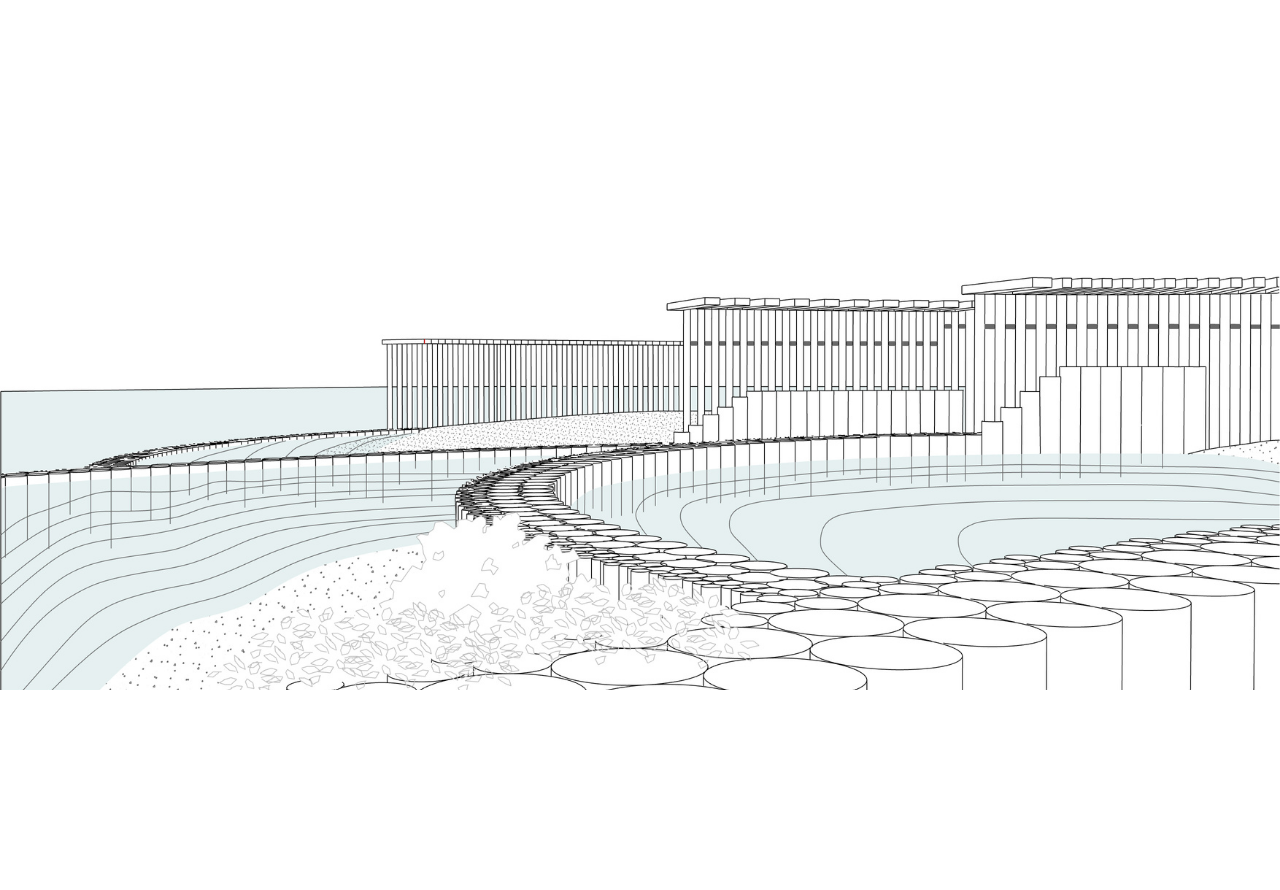
To address the systematic arrangement and water containment, the proposition is made for the piling of logs with varying diameters, thereby implementing a construction modality aligned with the traditional techniques employed by the aforementioned fishing barraca. These logs are assembled in layers, forming a semi-permeable retaining barrier. In tandem with the introduction of vegetation and sediment accumulation, this configuration serves as a natural filtration system from one pool to the next.
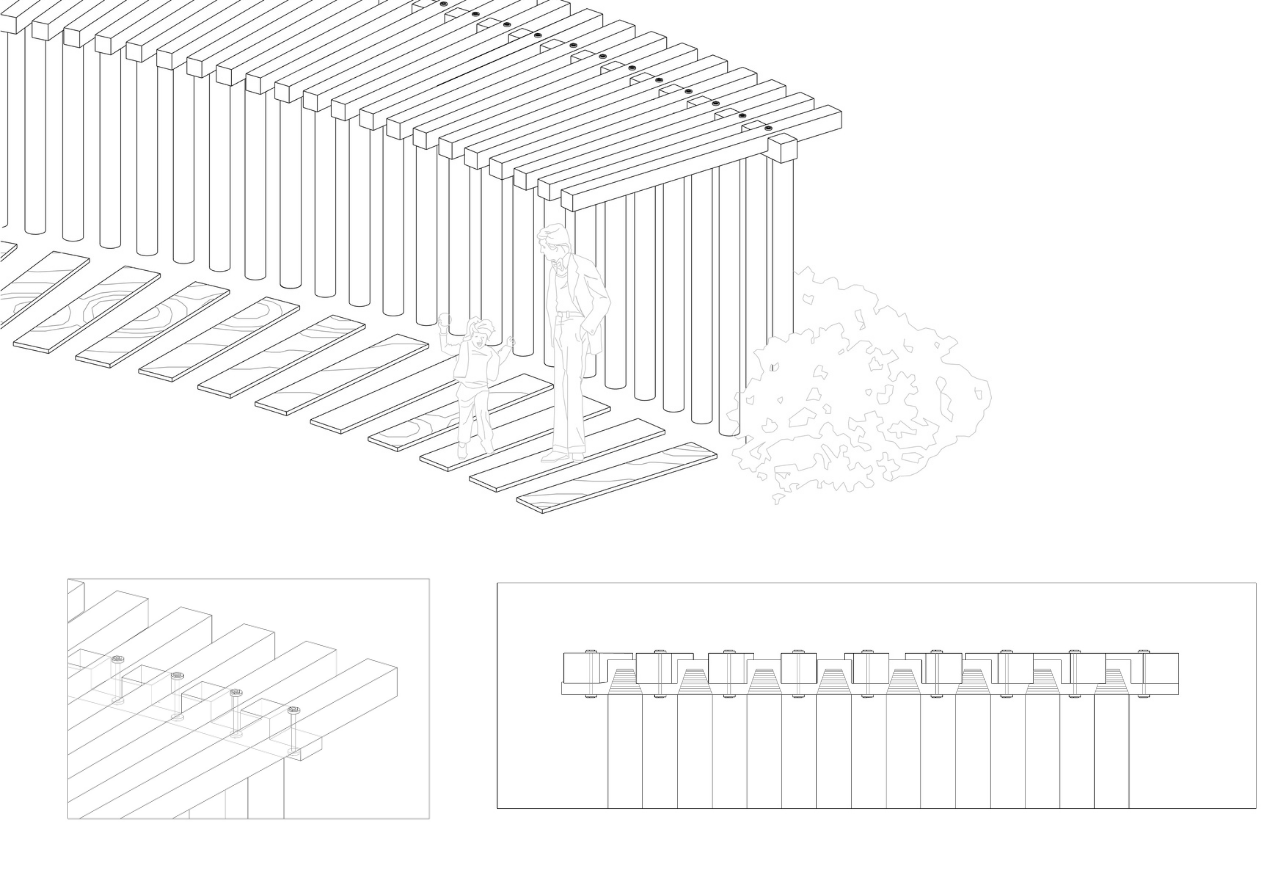
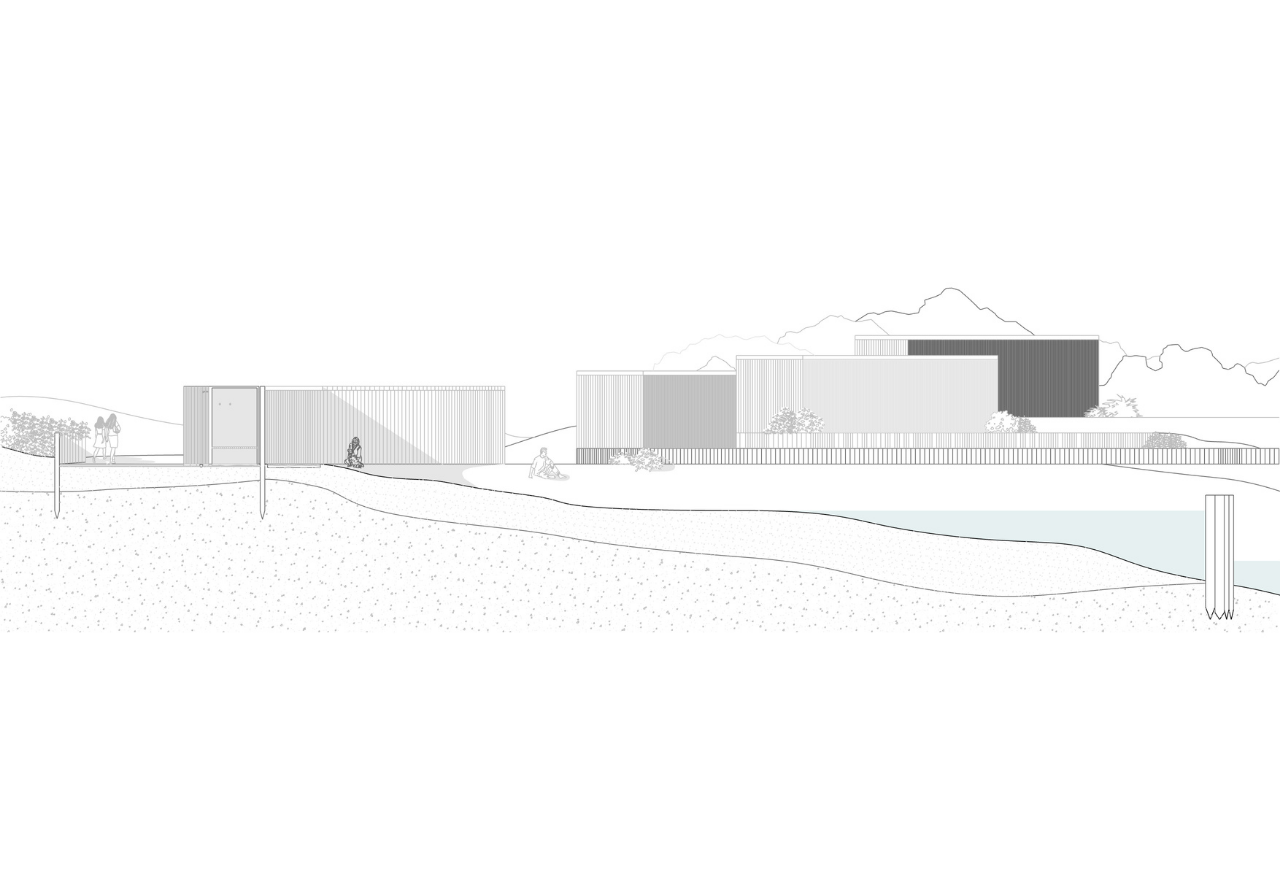
The circular configuration of the pools seeks to foster a natural ambiance wherein water ripples command attention, generating circular currents. Additionally, this design promotes the equitable distribution of forces against the pilings. This principle extends to the terrestrial plots, enclosed by slightly spaced pilings of diminished diameters, affording privacy without obscuring the landscape. These pilings support a succession of wooden slats, creating a peripheral space conducive to recreation and shelter, a necessity given the prevailing climate of the region.
Exterior access pathways are shielded by a third barrier, safeguarding them against sand movements. Within this zone, dressing cabins are situated, crafted from wooden slats and reeds, contributing functionality to the overall complex.
The emulation of nature within the architectural framework is manifest within an environment to which we acclimate with a genial disposition, extolling the intrinsic value of the natural ecosystem and adhering to the stipulations of the natural park.
In response to this debate, a comprehensive investigation and modernization of the vernacular architecture of the region have been undertaken, accentuating construction methodologies and materials that are considerate of the ecosystem and the constraints imposed by the natural park. Particular emphasis is afforded to the traditional fishing Valencian Barraca, elucidating the utility of materials such as wood and reeds as construction elements in the form of enclosures, slats, or foundation pilings over the water.
Situated in La Gola, a channel facilitating the connection between the Albufera and the Mediterranean, and through which it finds drainage, we find ourselves specifically on a diminutive sedimentary peninsula formed by fluctuations in flow and elevation in its concluding meters. Capitalizing on these aspects, the four bodies of water are methodically arranged, supplied by the canal itself, with due regard for its circulation. The filling or depletion of these pools shall hinge upon the water flow, potentially resulting in their entirety being unoccupied, selectively filled, or completely occupied.
To address the systematic arrangement and water containment, the proposition is made for the piling of logs with varying diameters, thereby implementing a construction modality aligned with the traditional techniques employed by the aforementioned fishing barraca. These logs are assembled in layers, forming a semi-permeable retaining barrier. In tandem with the introduction of vegetation and sediment accumulation, this configuration serves as a natural filtration system from one pool to the next.
The circular configuration of the pools seeks to foster a natural ambiance wherein water ripples command attention, generating circular currents. Additionally, this design promotes the equitable distribution of forces against the pilings. This principle extends to the terrestrial plots, enclosed by slightly spaced pilings of diminished diameters, affording privacy without obscuring the landscape. These pilings support a succession of wooden slats, creating a peripheral space conducive to recreation and shelter, a necessity given the prevailing climate of the region.
Exterior access pathways are shielded by a third barrier, safeguarding them against sand movements. Within this zone, dressing cabins are situated, crafted from wooden slats and reeds, contributing functionality to the overall complex.
The emulation of nature within the architectural framework is manifest within an environment to which we acclimate with a genial disposition, extolling the intrinsic value of the natural ecosystem and adhering to the stipulations of the natural park.
- 00 - Description
- 01 - Natural environment
- 02 - References
- 03 - Location
- 04 - Water movement
- 05 - Foundation detail
- 06 - Floor plan
- 07 - Section 1
- 08 - Structure detail
- 09 - Section 2
- 10 - Atmospheric image
- 11 - Video