
NEBULA PATH
The project is an urban planning intervention in Castellon de la Plana, Spain, developed through the creation of three functionally distinct projects that formally play with the transparency, light and reflections of the environment and seek to reactivate local commerce and circulation in the area.
Firstly, a bridge connecting the ends of the Vinamargo irrigation channel, in front of which a horticultural and gardening fair will be located, and finally a logistic and cultural center in the already existing archaeological site of the Roman Villa.
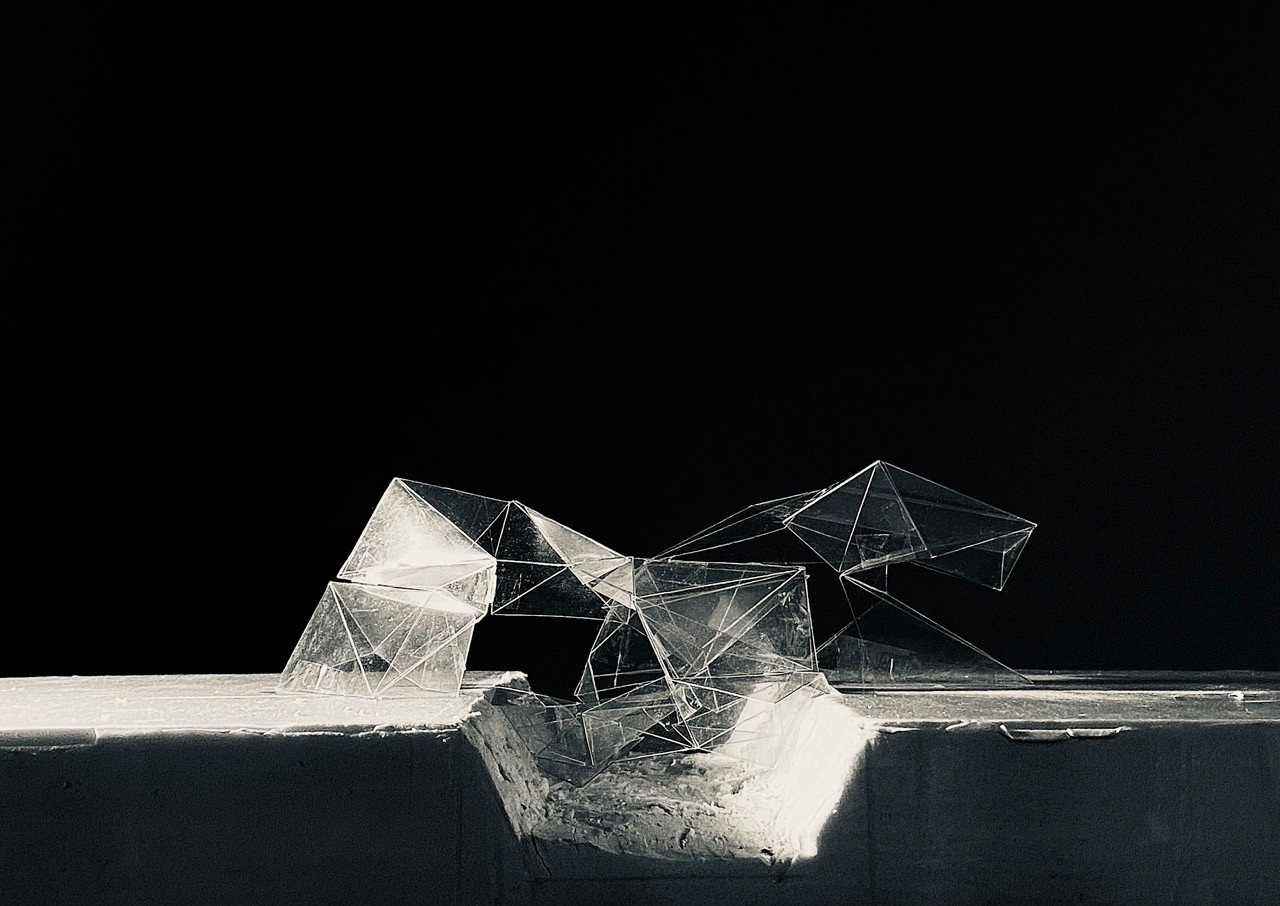
The proposals play with complex triangulated geometries that produce transparent and mirrored volumes intentionally to play with the panoramic view of the place, mainly devised from the experimentation of models created by folds of flat surfaces.
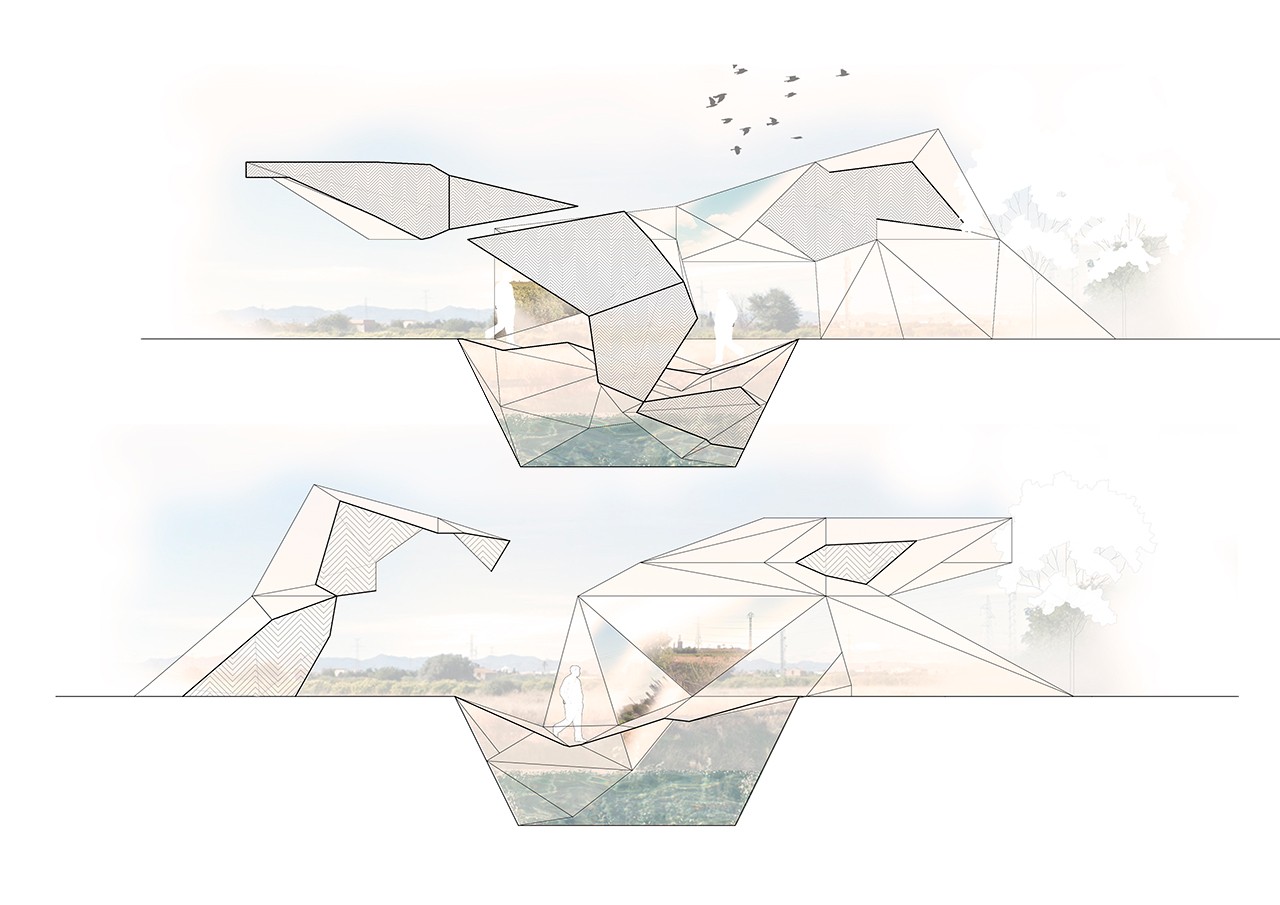
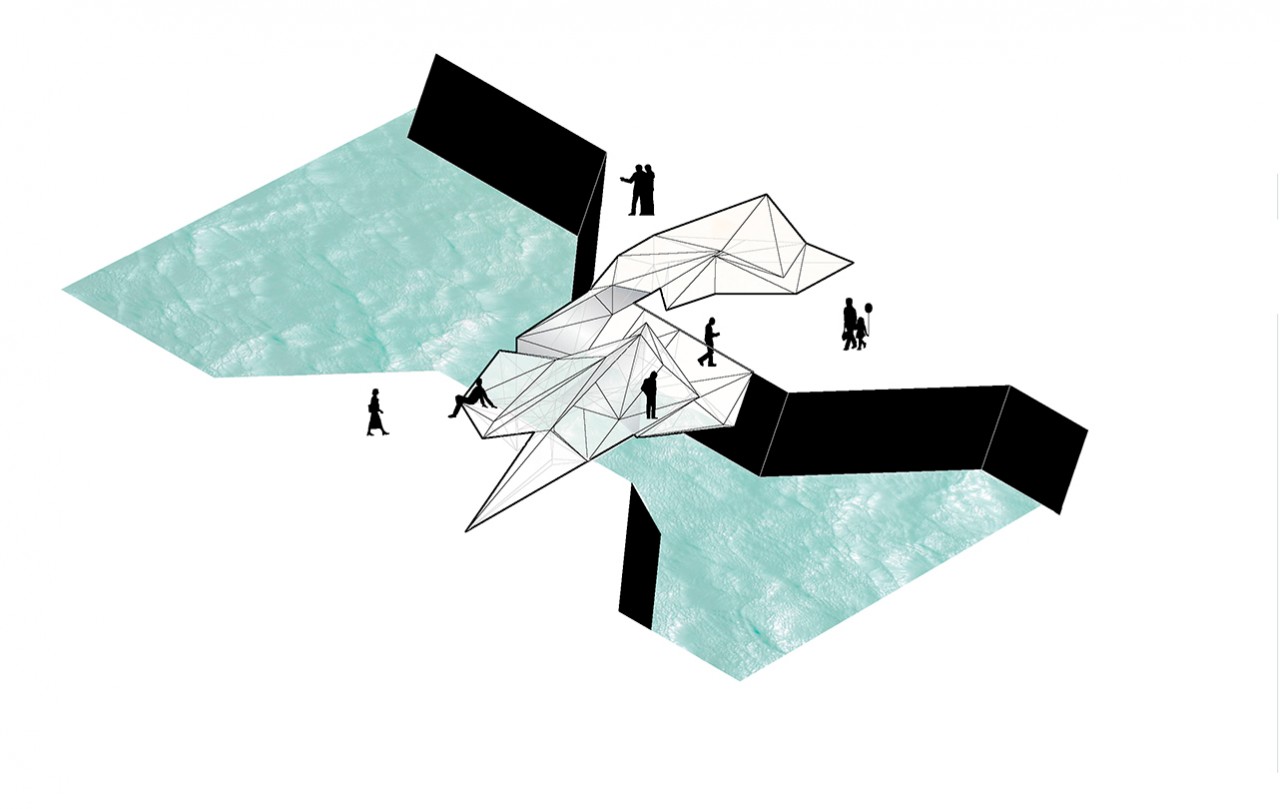
The bridge proposal, which in turn functions as a viewpoint, is based on an initial experimentation in search of a formal result capable of breaking with the organicity of the landscape. Based on the folding of triangulated flat surfaces, a kind of geometric cloud is generated, which is inserted into the ditch and manages to go unnoticed due to its transparency. The sensation of lightness contrasts with certain mirrored surfaces that allow cross reflections of the panoramic background of Castellón, and distort the perception of the individual crossing the bridge allowing new experiences.
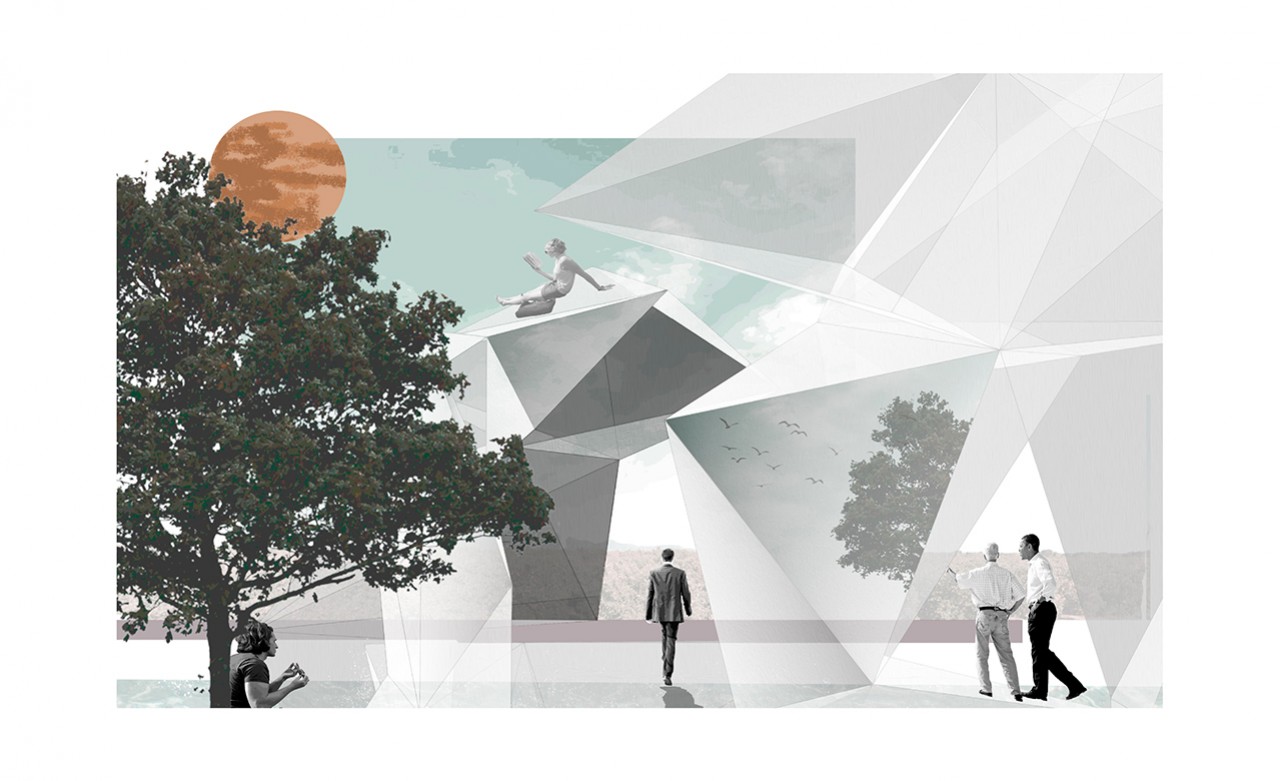
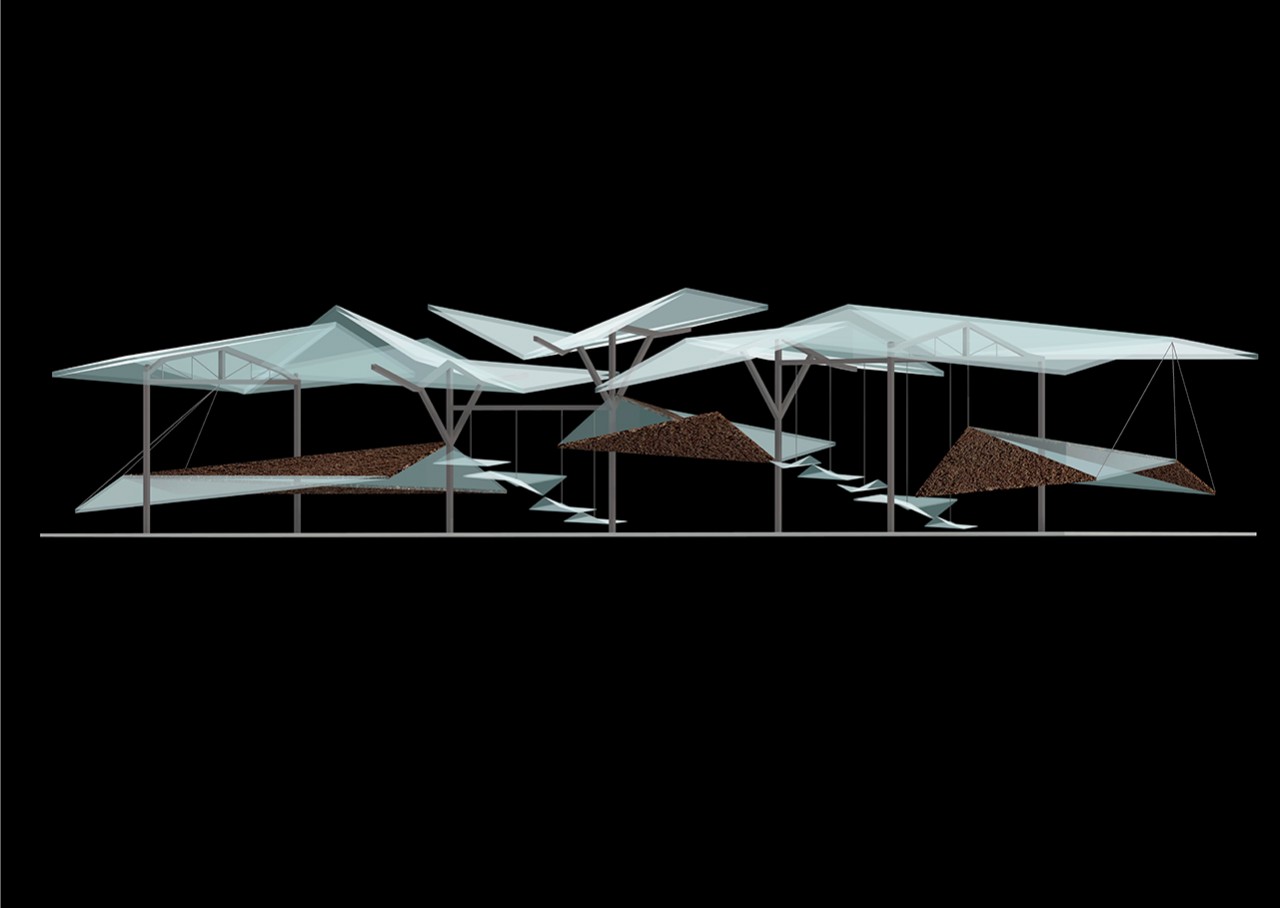
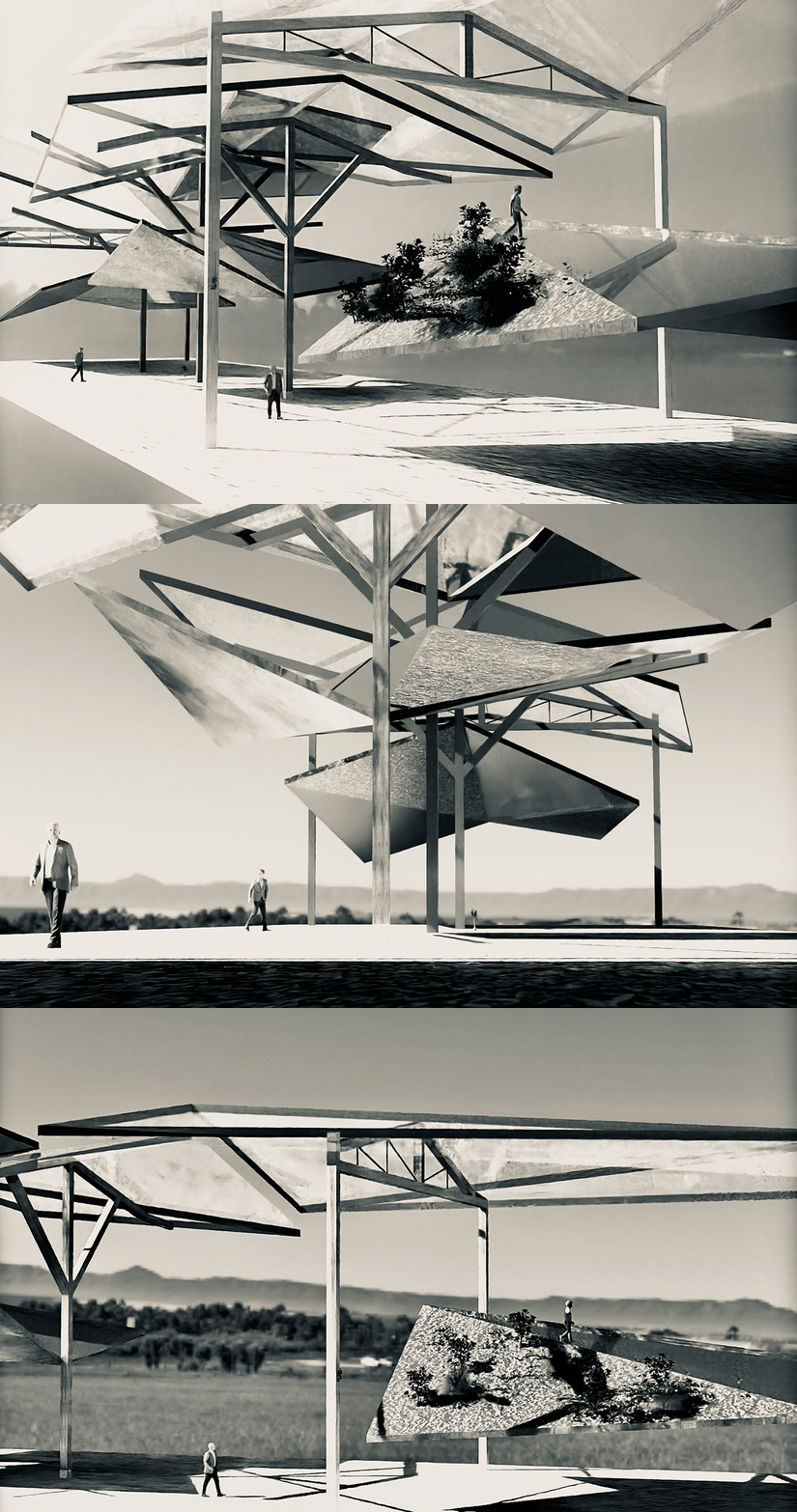
The objective to define the idea of a horticulture and garden fair in the same area of the bridge was aimed at solving a large roof for an enclosure that would house different stalls and a leisure and meeting space for the social reactivation of the area, in addition to promoting local commerce. It is a double-layer roof, the lower one being walkable and accessible through hanging platforms on a smaller scale. With the premise of transparency and the play of planes, folded modules are created that draw very different silhouettes depending on the perspective of observation, and give rise to a living and functional environment inside.
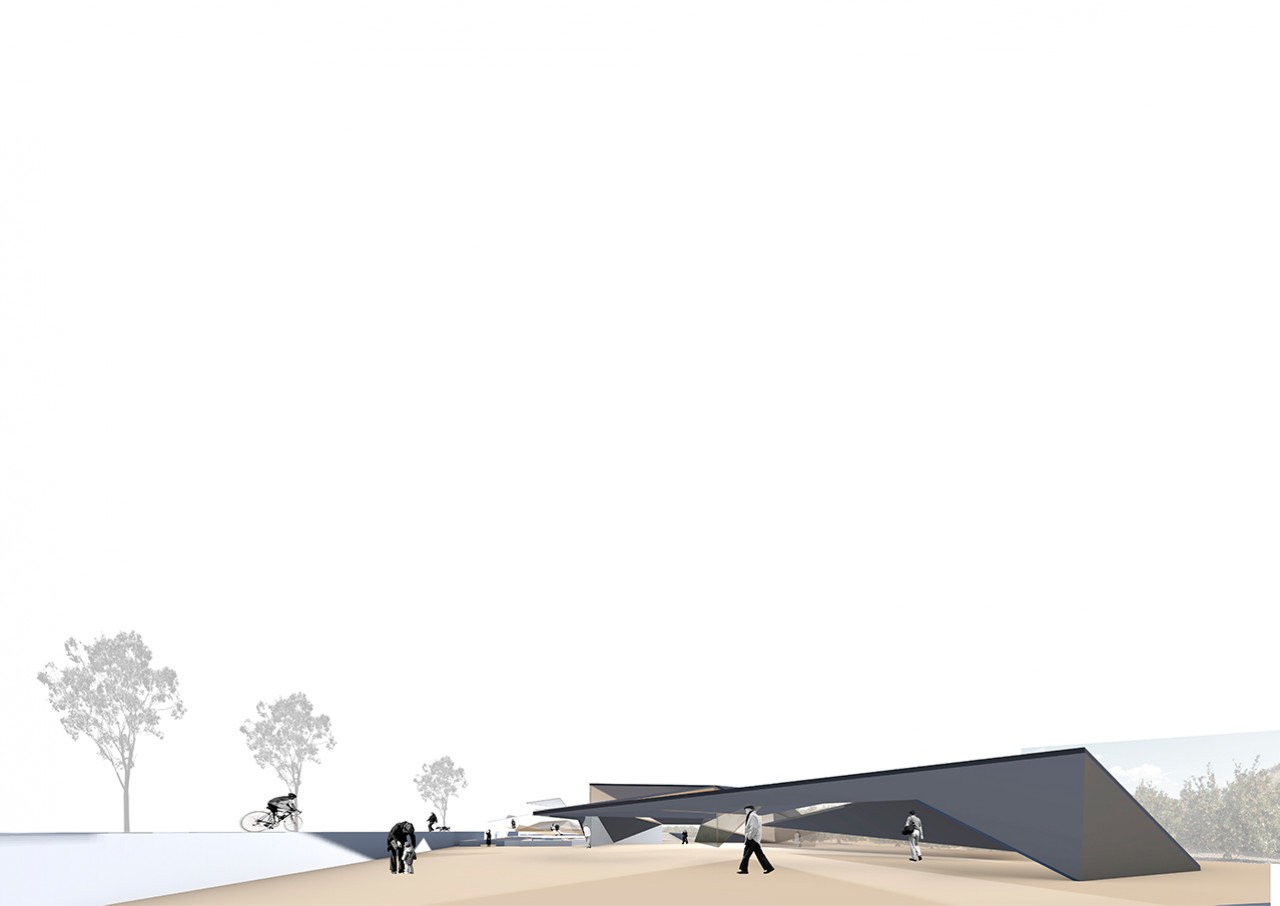
A logistic and cultural center is also proposed to solve the transport and storage of the archaeological site of the Roman Villa, also including social activity open to the public and a new way of touring the discovery. The intervention consists of three modules. The main module, attached to the villa, brings together both private uses and the main entrance hall to the site, whose skylights allow the passage of a filtered and redirected light into the interior. The two remaining modules are platforms formed by planes of different materials and are inserted on the ruin as enclaves on which you can see objects found both in the villa itself and in other sites in the area of Castellon, which are arranged under these modules.
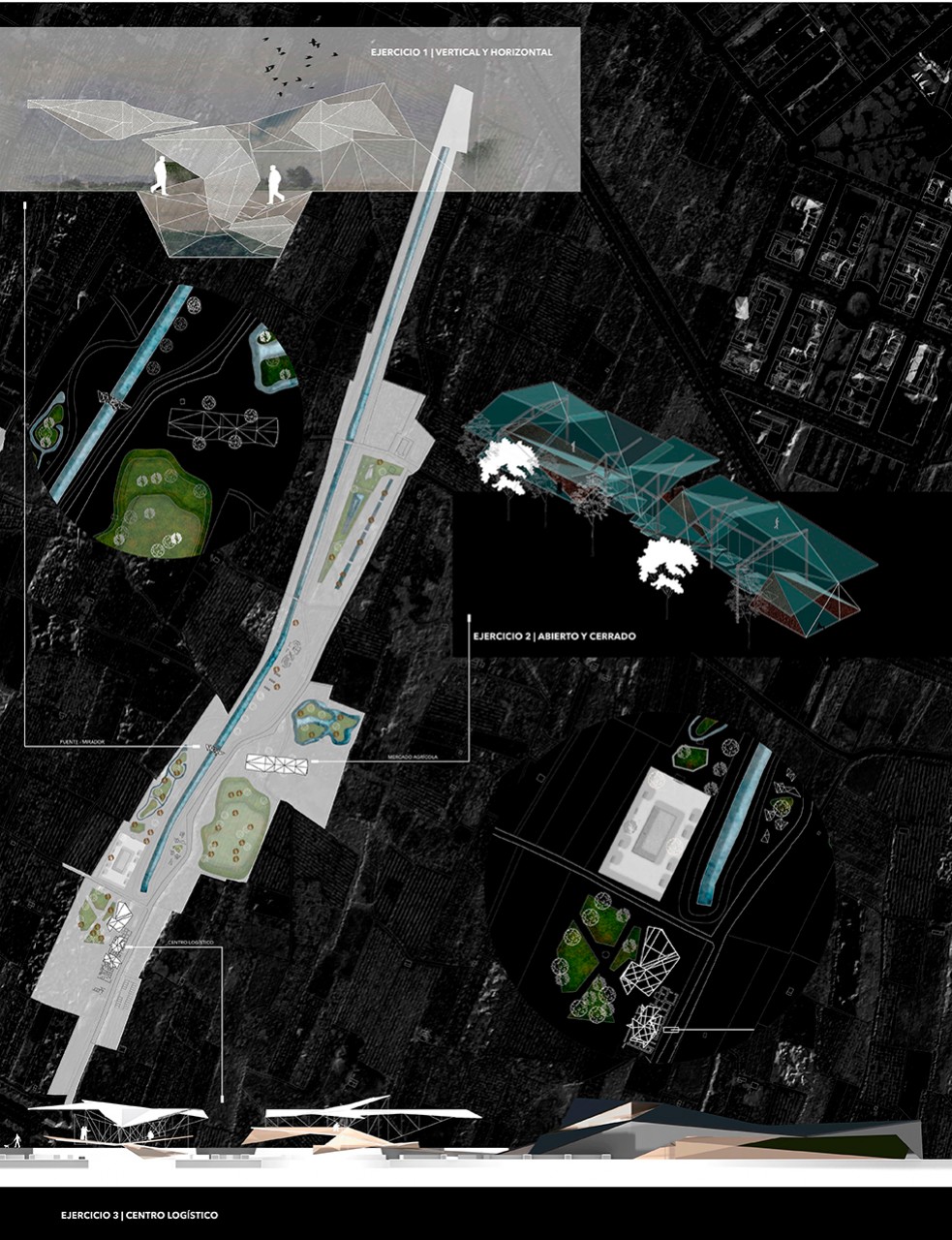
The creation of a more developed urban layout organized around the axis marked by the irrigation ditch will bring together the three proposals between public spaces and recreational green areas with the intention of enhancing what was previously perceived as a passage area. The continuous play of reflections, changes of plane, lights and shadows punctuate and highlight this place isolated from the urban fabric of Castellon, with the aim of creating unique experiences through a sensory journey, the main object of the urban planning intervention.
Firstly, a bridge connecting the ends of the Vinamargo irrigation channel, in front of which a horticultural and gardening fair will be located, and finally a logistic and cultural center in the already existing archaeological site of the Roman Villa.
The proposals play with complex triangulated geometries that produce transparent and mirrored volumes intentionally to play with the panoramic view of the place, mainly devised from the experimentation of models created by folds of flat surfaces.
The bridge proposal, which in turn functions as a viewpoint, is based on an initial experimentation in search of a formal result capable of breaking with the organicity of the landscape. Based on the folding of triangulated flat surfaces, a kind of geometric cloud is generated, which is inserted into the ditch and manages to go unnoticed due to its transparency. The sensation of lightness contrasts with certain mirrored surfaces that allow cross reflections of the panoramic background of Castellón, and distort the perception of the individual crossing the bridge allowing new experiences.
The objective to define the idea of a horticulture and garden fair in the same area of the bridge was aimed at solving a large roof for an enclosure that would house different stalls and a leisure and meeting space for the social reactivation of the area, in addition to promoting local commerce. It is a double-layer roof, the lower one being walkable and accessible through hanging platforms on a smaller scale. With the premise of transparency and the play of planes, folded modules are created that draw very different silhouettes depending on the perspective of observation, and give rise to a living and functional environment inside.
A logistic and cultural center is also proposed to solve the transport and storage of the archaeological site of the Roman Villa, also including social activity open to the public and a new way of touring the discovery. The intervention consists of three modules. The main module, attached to the villa, brings together both private uses and the main entrance hall to the site, whose skylights allow the passage of a filtered and redirected light into the interior. The two remaining modules are platforms formed by planes of different materials and are inserted on the ruin as enclaves on which you can see objects found both in the villa itself and in other sites in the area of Castellon, which are arranged under these modules.
The creation of a more developed urban layout organized around the axis marked by the irrigation ditch will bring together the three proposals between public spaces and recreational green areas with the intention of enhancing what was previously perceived as a passage area. The continuous play of reflections, changes of plane, lights and shadows punctuate and highlight this place isolated from the urban fabric of Castellon, with the aim of creating unique experiences through a sensory journey, the main object of the urban planning intervention.


- 00 - Description
- 01 - SECTION 1
- 02 - PHOTOMONTAGE 1
- 03 - AXONOMETRIC VIEW 1
- 04 - WORKING MODEL
- 05 - AXONOMETRIC VIEW 2
- 06 - FRONTAL PERSPECTIVE
- 07 - RENDERS
- 08 - SECTION 2
- 09 - PHOTOMONTAGE 2
- 10 - URBAN PLAN
- 11 - Video