
ParkTEA
The city is more than just an accumulation of buildings and streets: it is a fabric of relationships, experiences, and meanings that are woven through encounters. However, for many people, that fabric remains inaccessible. Individuals on the Autism Spectrum (ASD) often experience the urban environment as overstimulating, fast-paced, and exclusionary — a space where their needs are not only unmet, but frequently unrecognized. In Madrid, the vast majority of adults with ASD are excluded from the labor market and rely entirely on their families. This exclusion is not accidental; it is the consequence of an urban model that has long ignored cognitive diversity as a criterion for design.
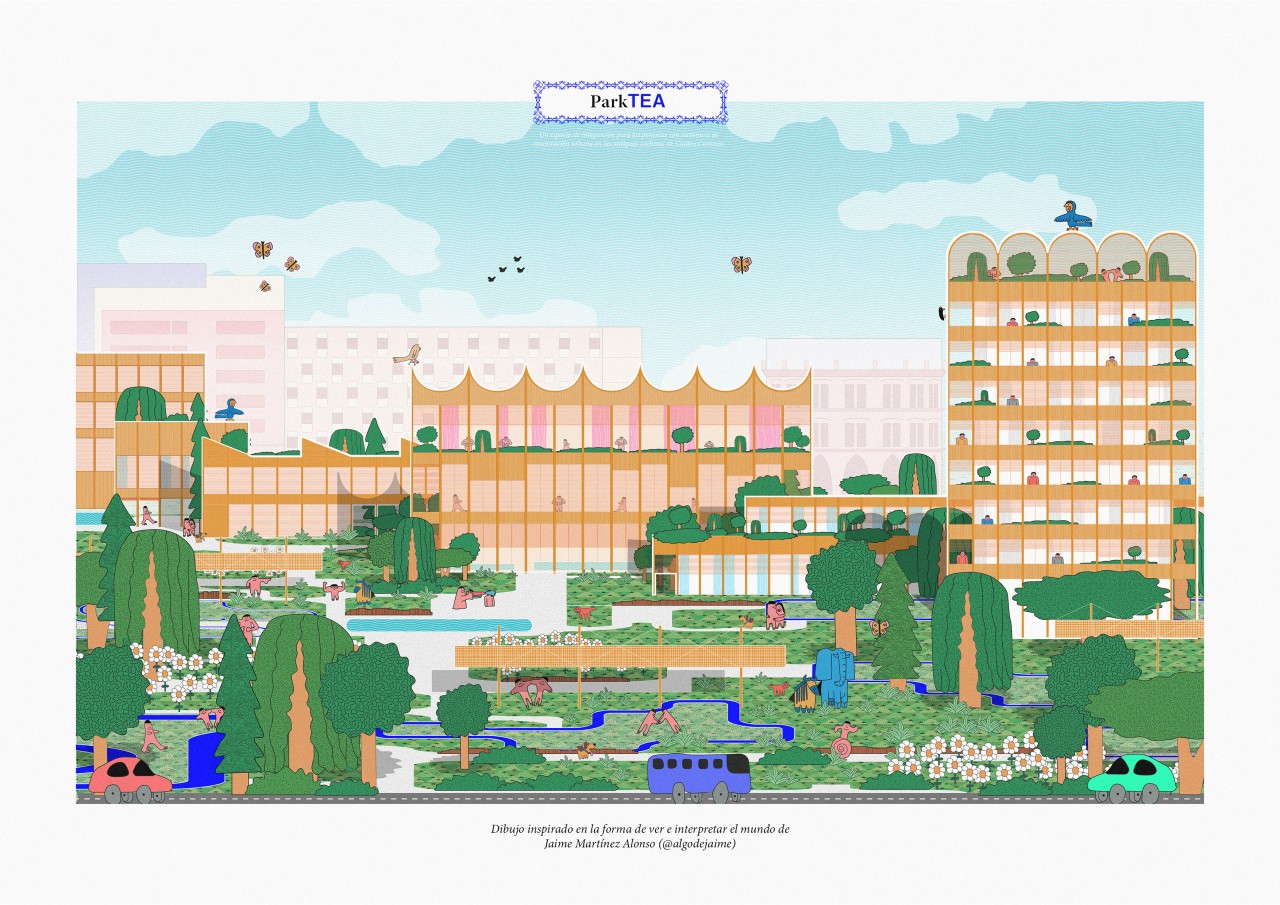
ParkTEA emerges as a response to this reality. The project does not aim to create a marginal or protective space, but rather an integrated urban infrastructure capable of redefining the meaning of inclusion. Its location in the former Cuatro Caminos tram depot — a site of deep symbolic value for the neighborhood and with strong ties to the city's daily life — enables the proposal not just to be inserted into the city, but to enrich it. Where once there was transit and production, now care, coexistence, and community are proposed.
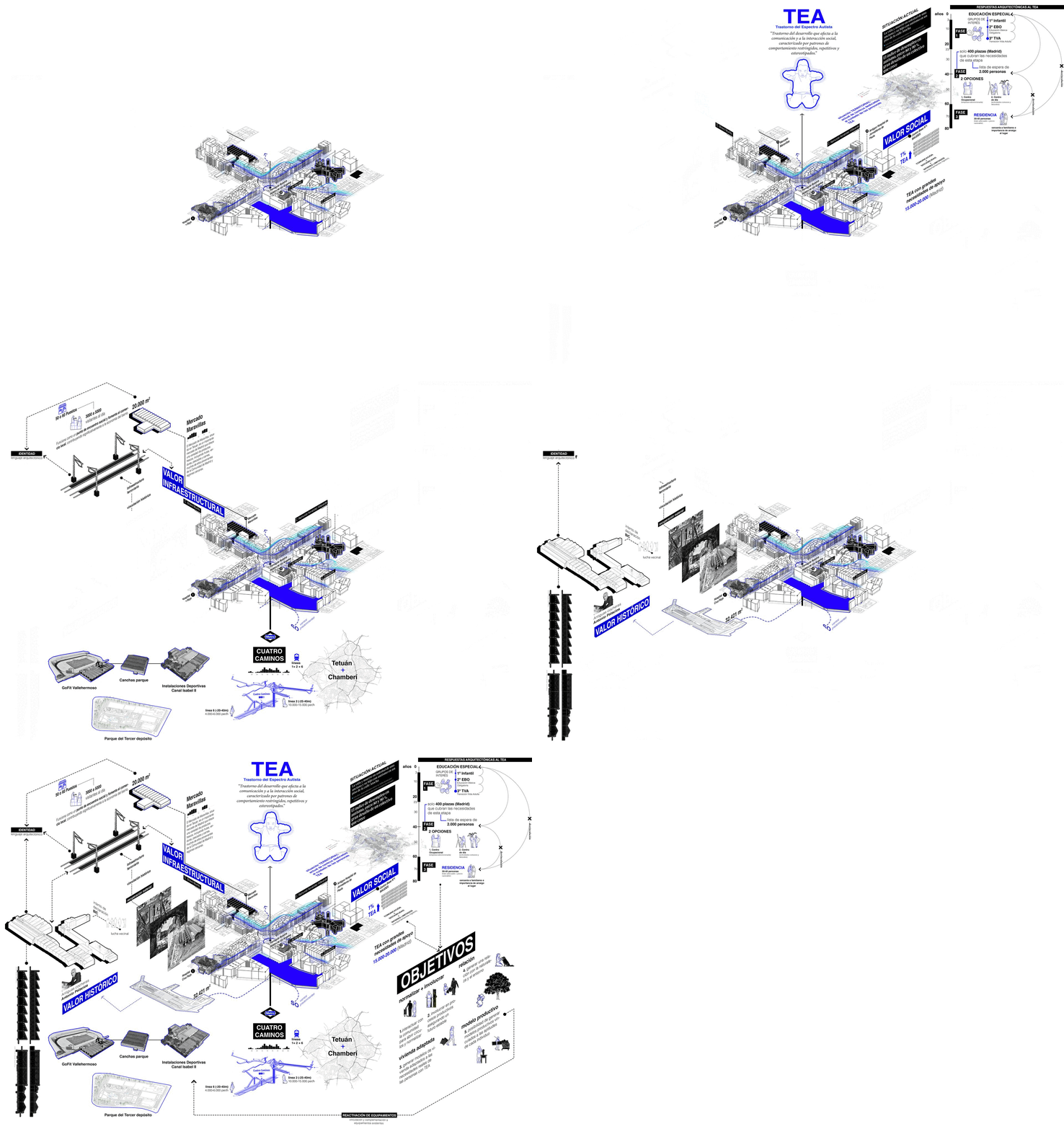
The project is structured around three main pillars: the social value of including people with autism in urban life; the infrastructural value of the context as a generator of relationships; and the heritage value of the site as a driver of collective identity. From these foundations, a network of spaces is developed, addressing different life stages — childhood, adulthood, and old age — while combining dedicated uses with community-accessible spaces.
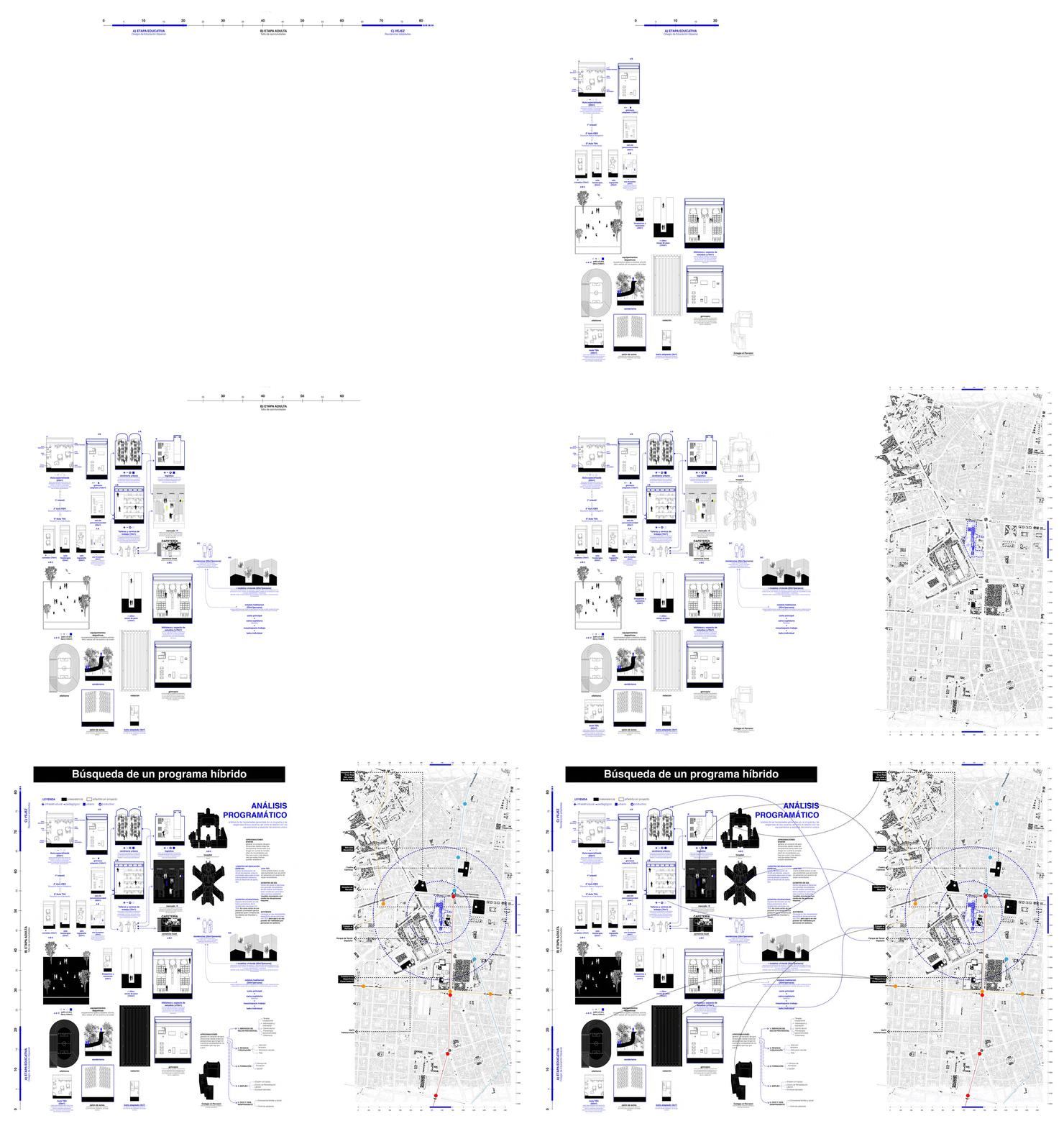
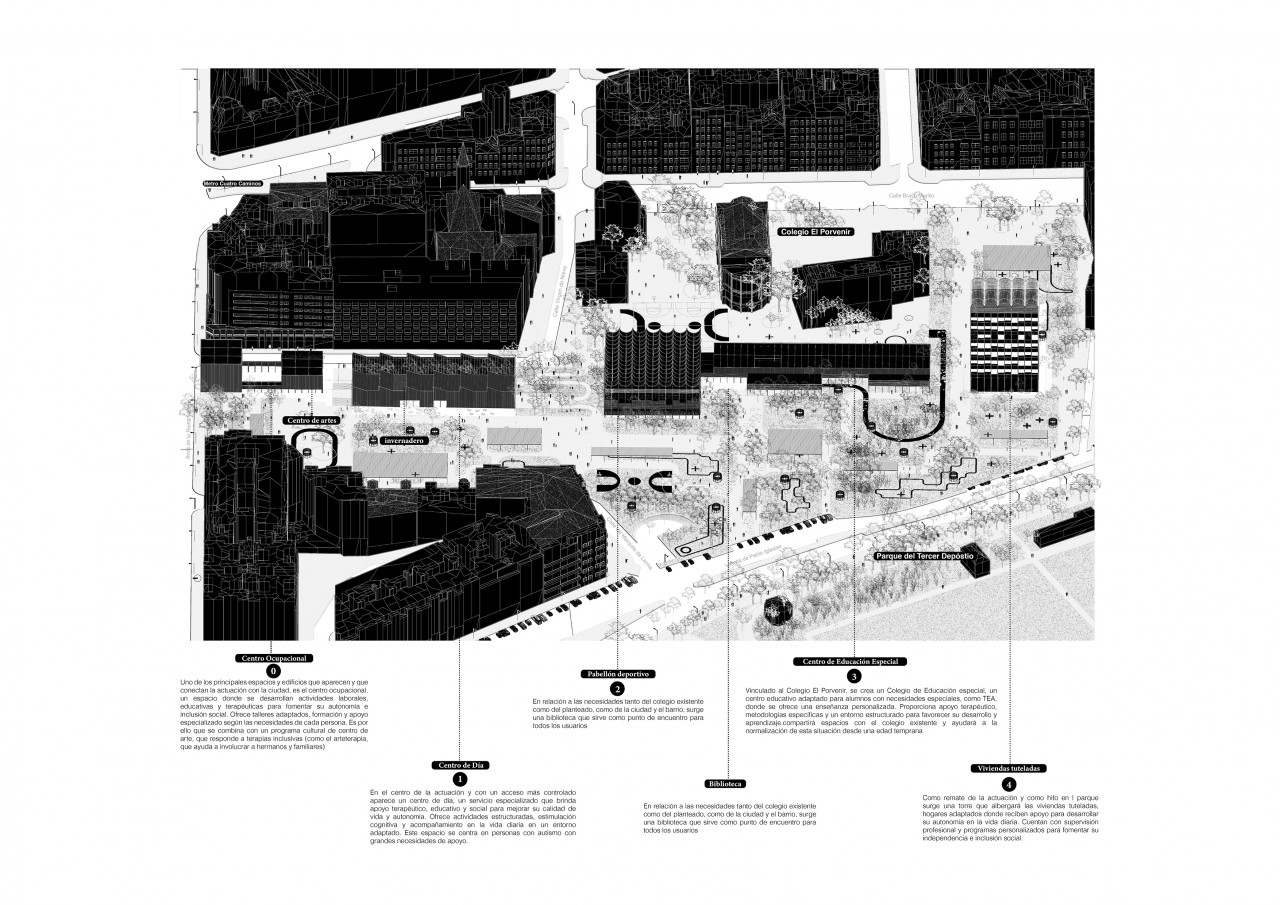
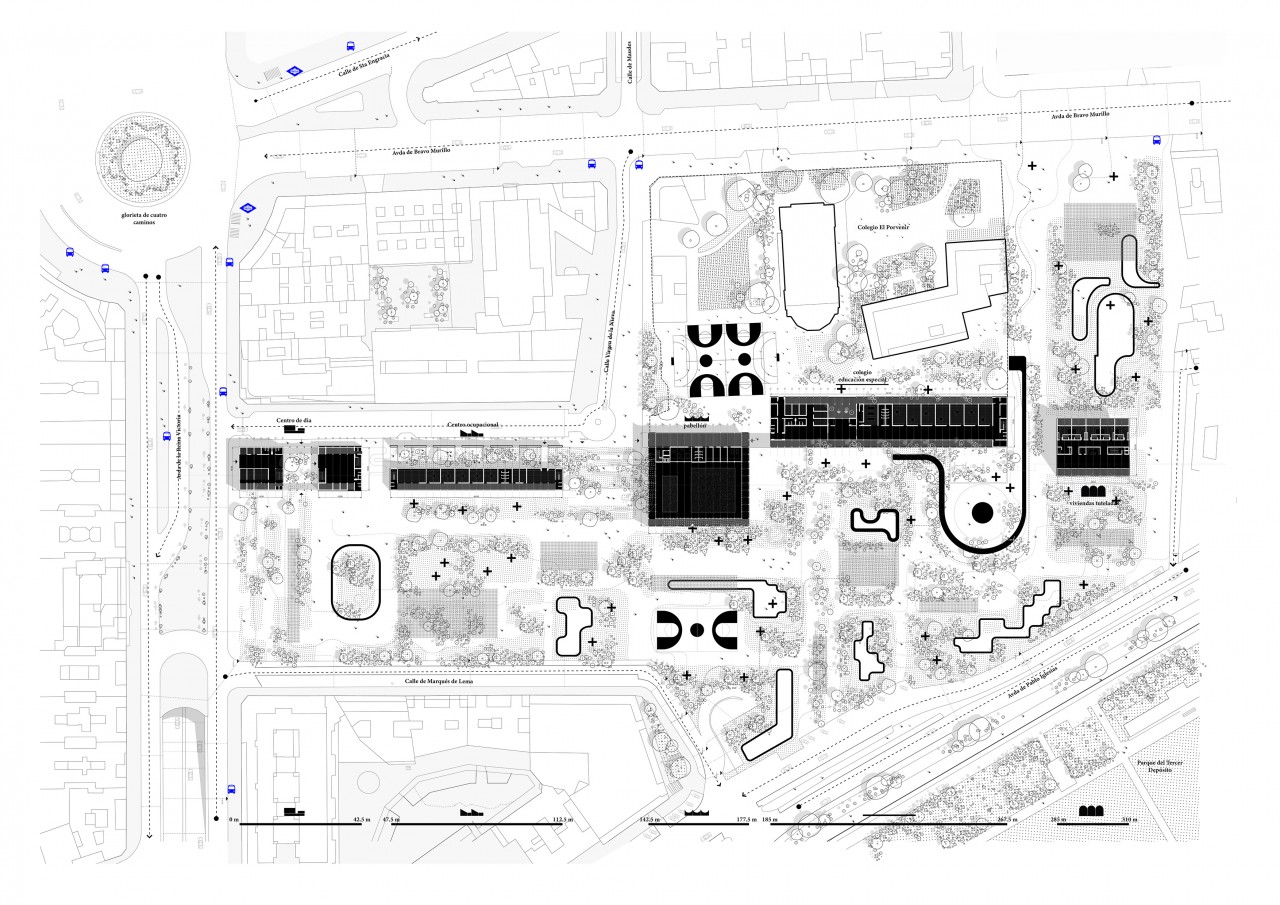
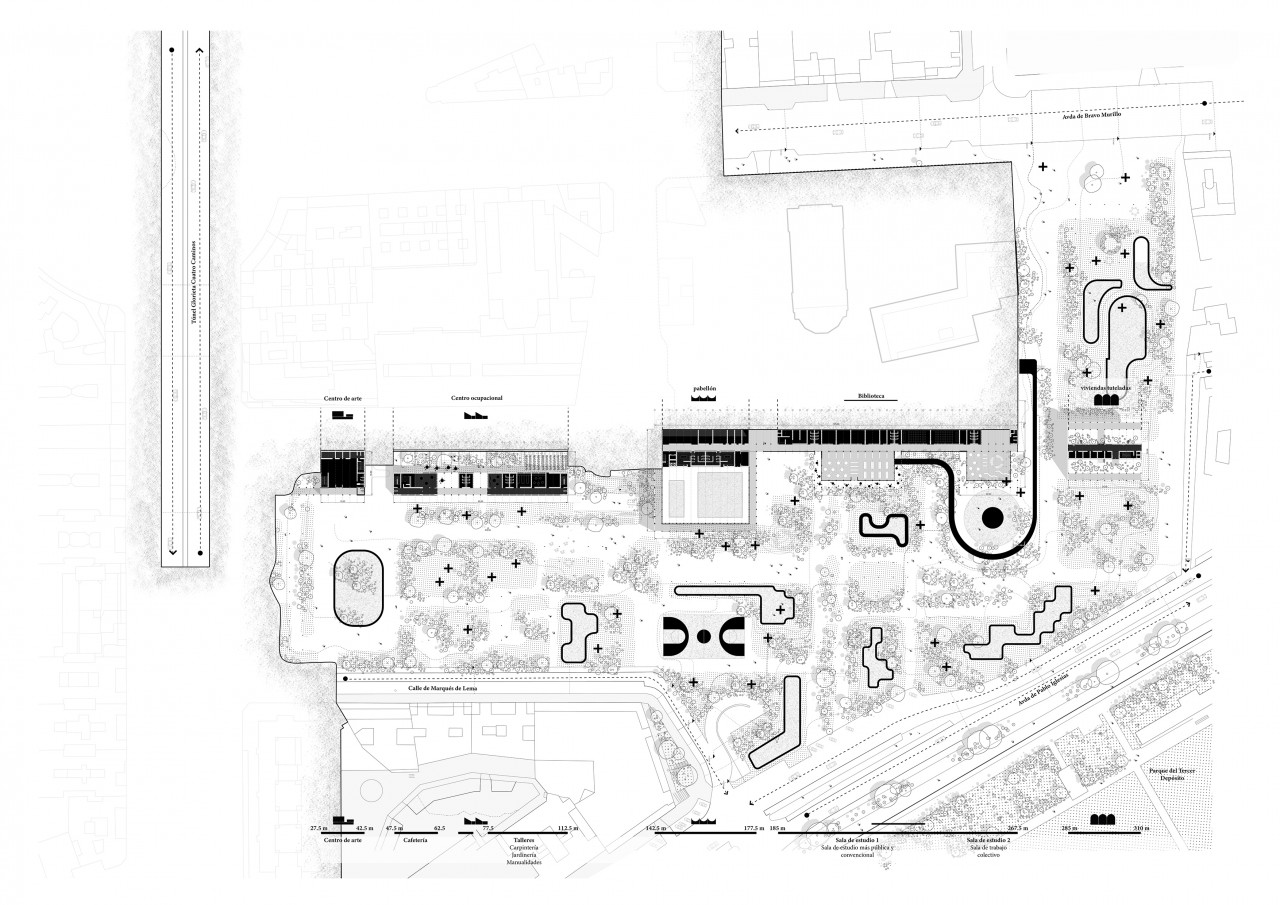
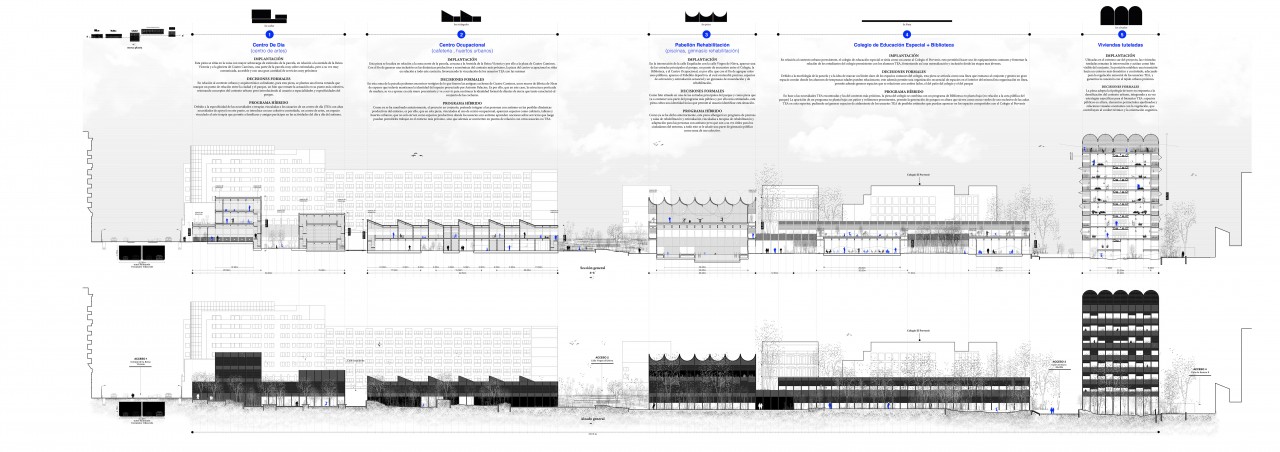
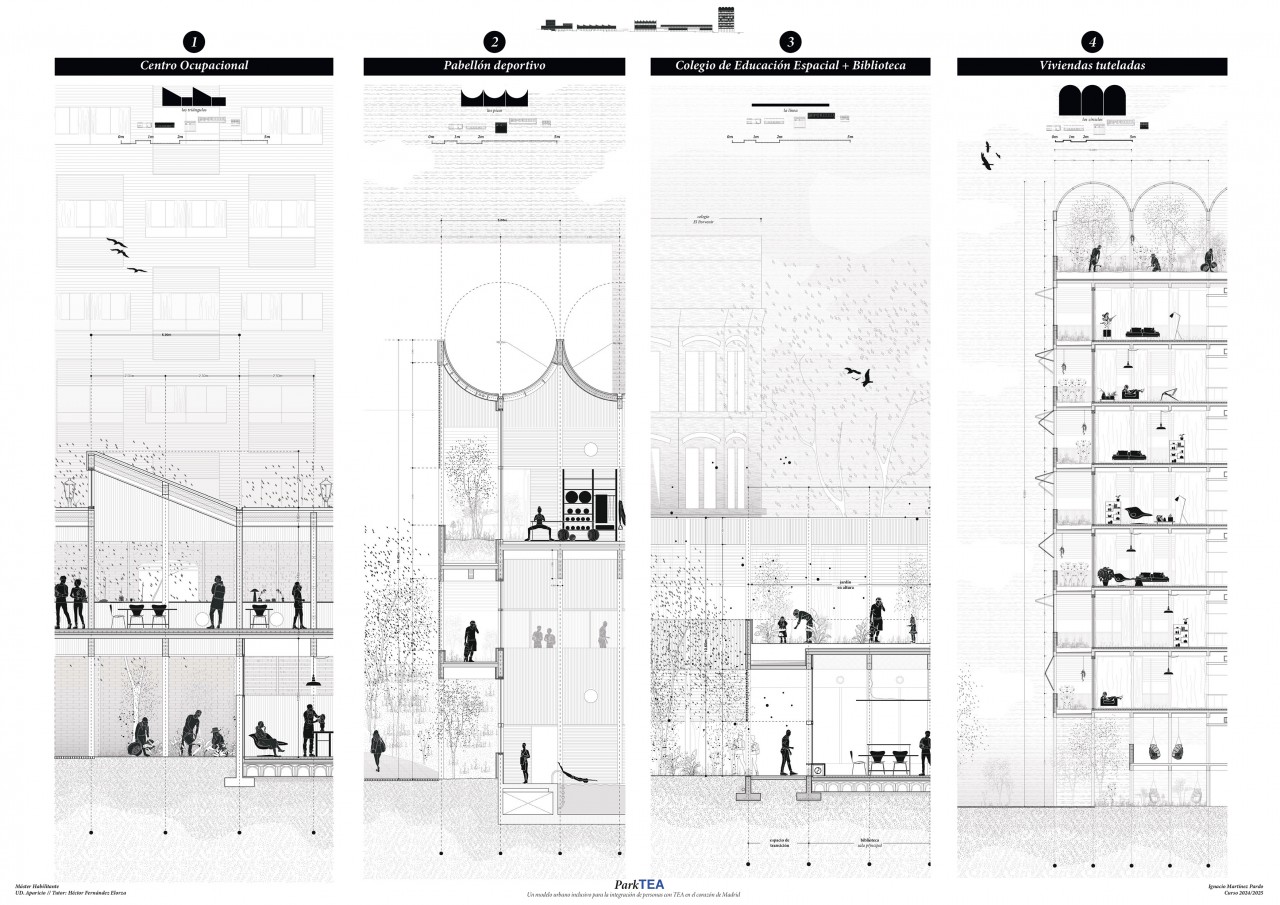
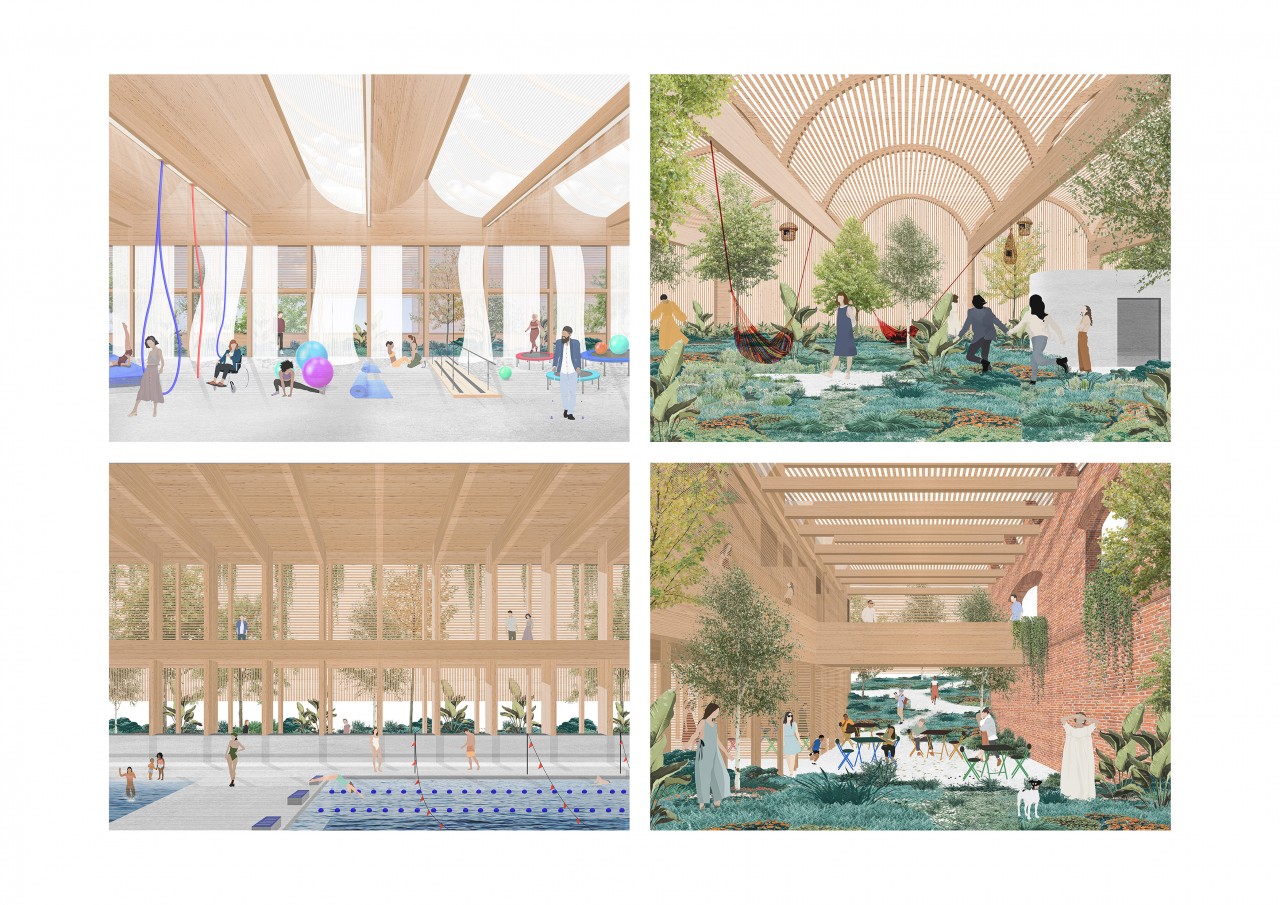
The program brings together five core elements: a special education school, a day center, a vocational center, supported housing, and a multifunctional pavilion. These are complemented by community-oriented uses such as workshops, a library, a café, a gym, and art spaces. The aim is not merely to group functions, but to allow the interactions between them to foster genuine relationships. In this way, architecture becomes a mediator between the individual and the collective, between the everyday and the exceptional.
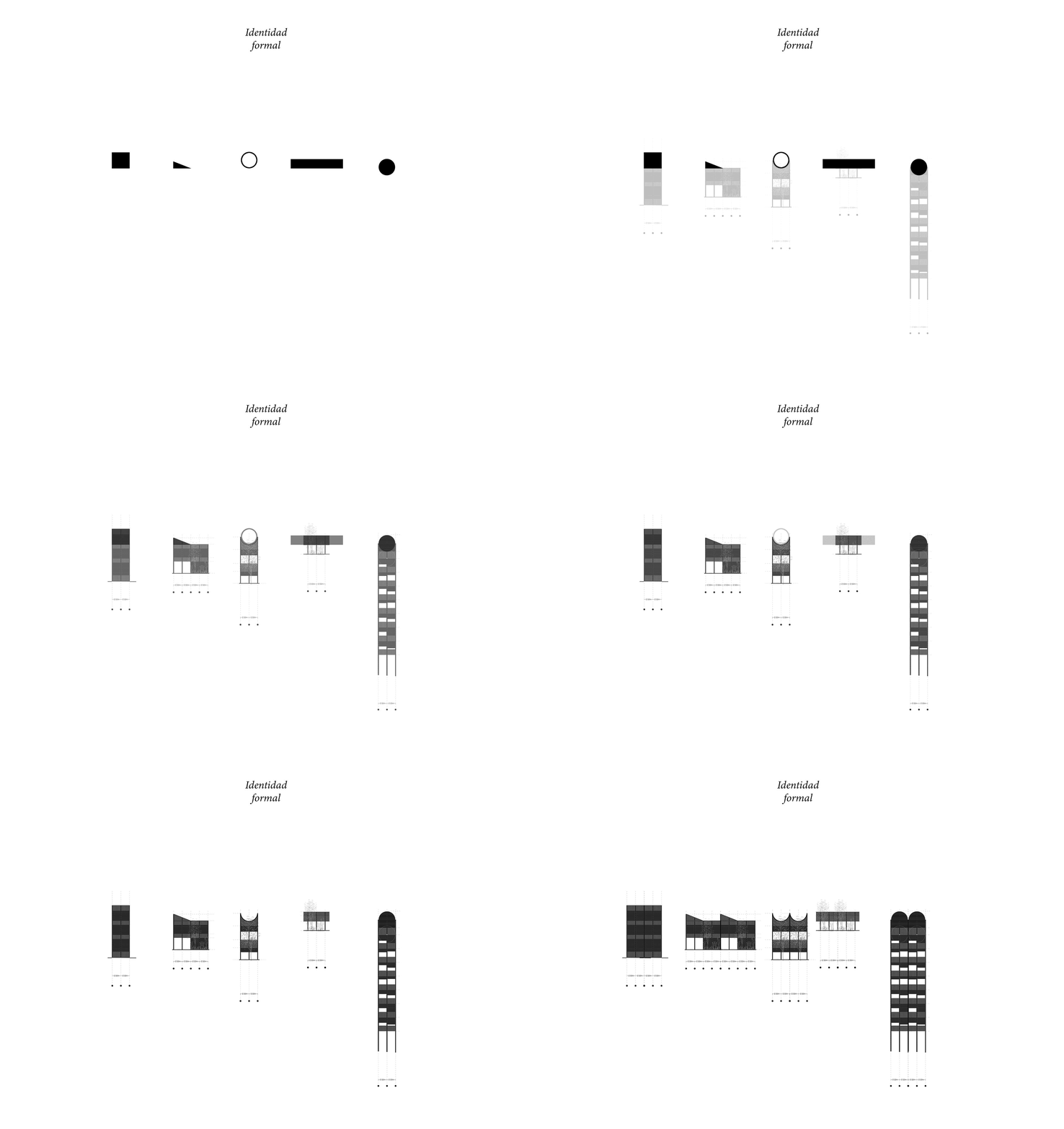
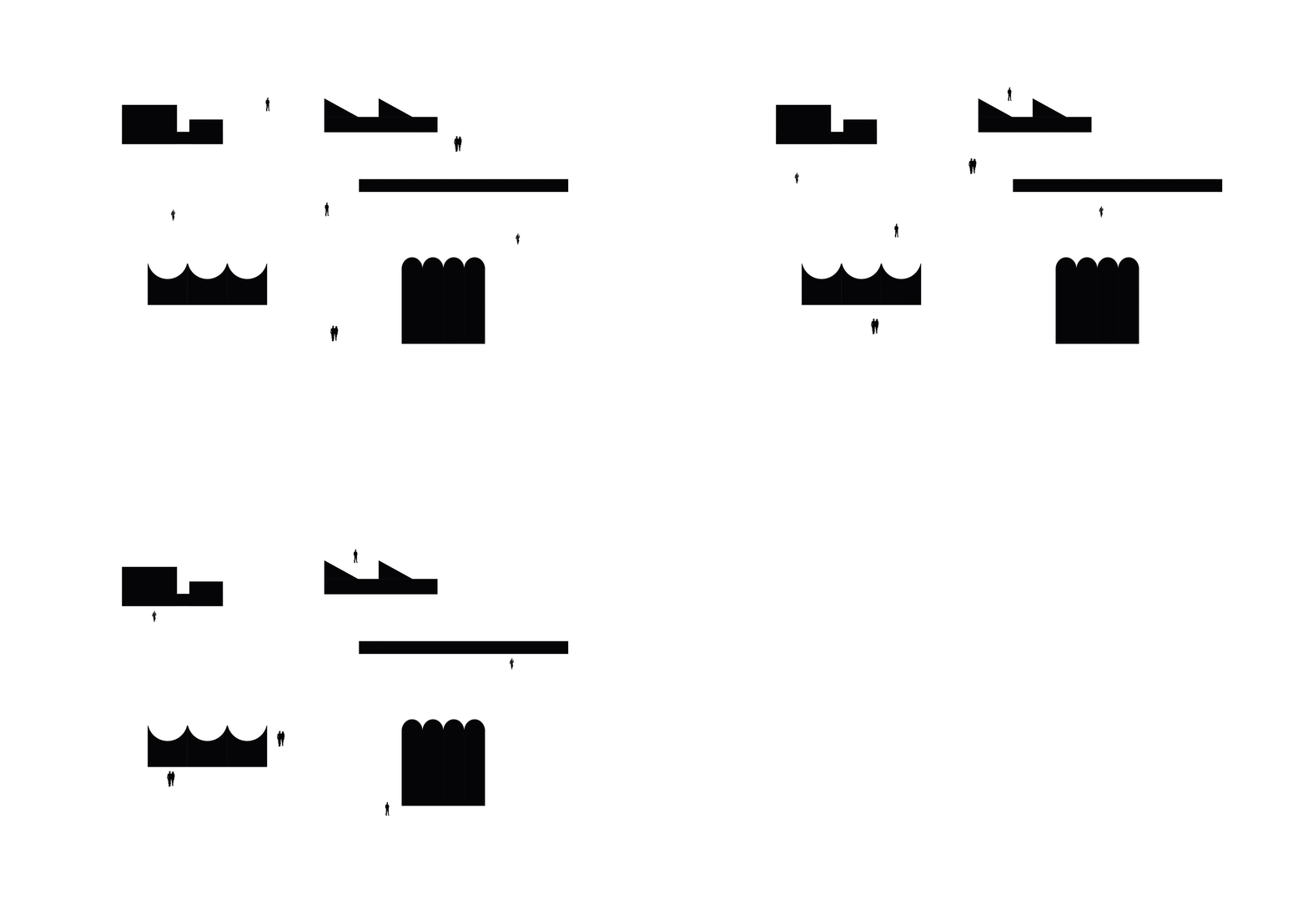
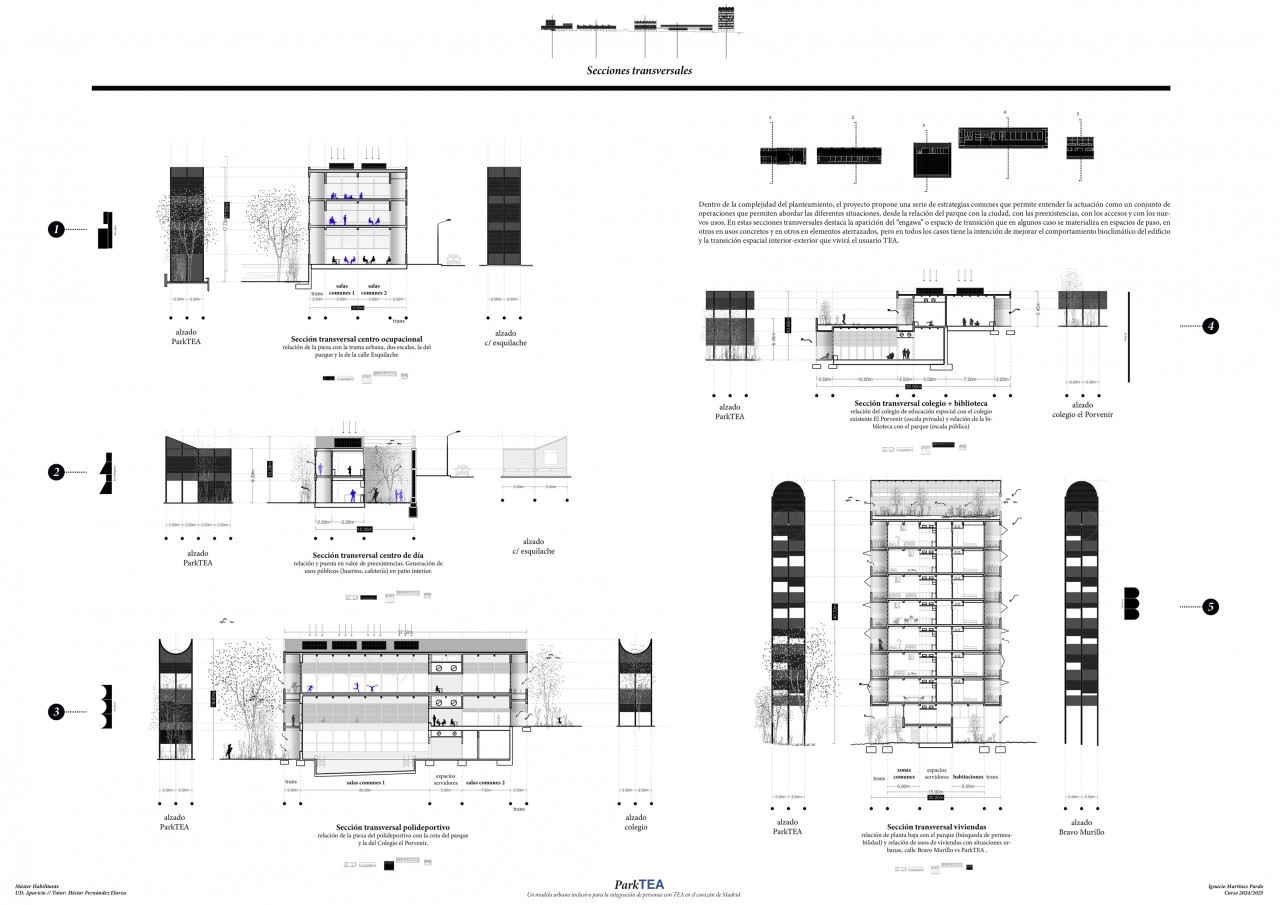
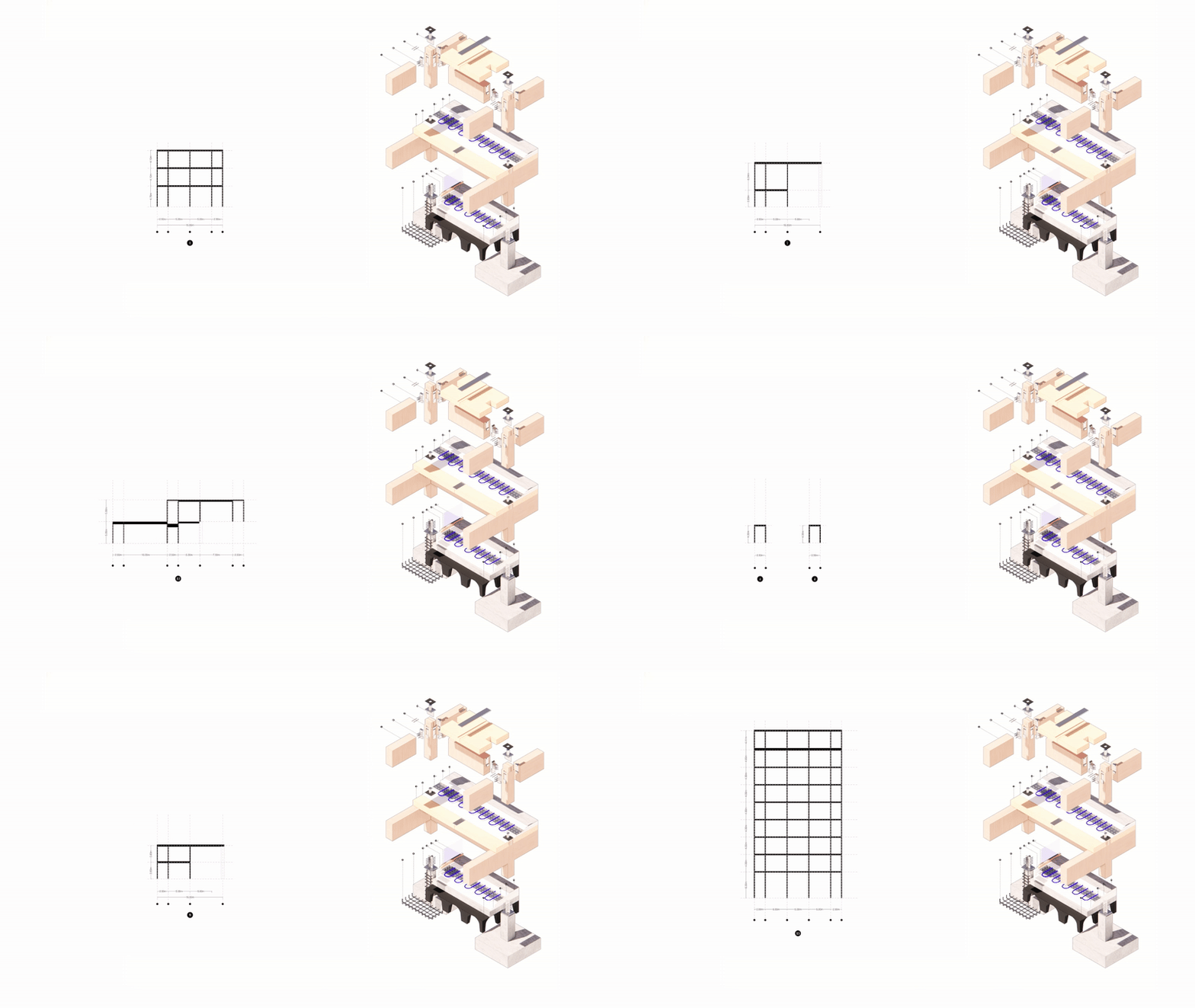
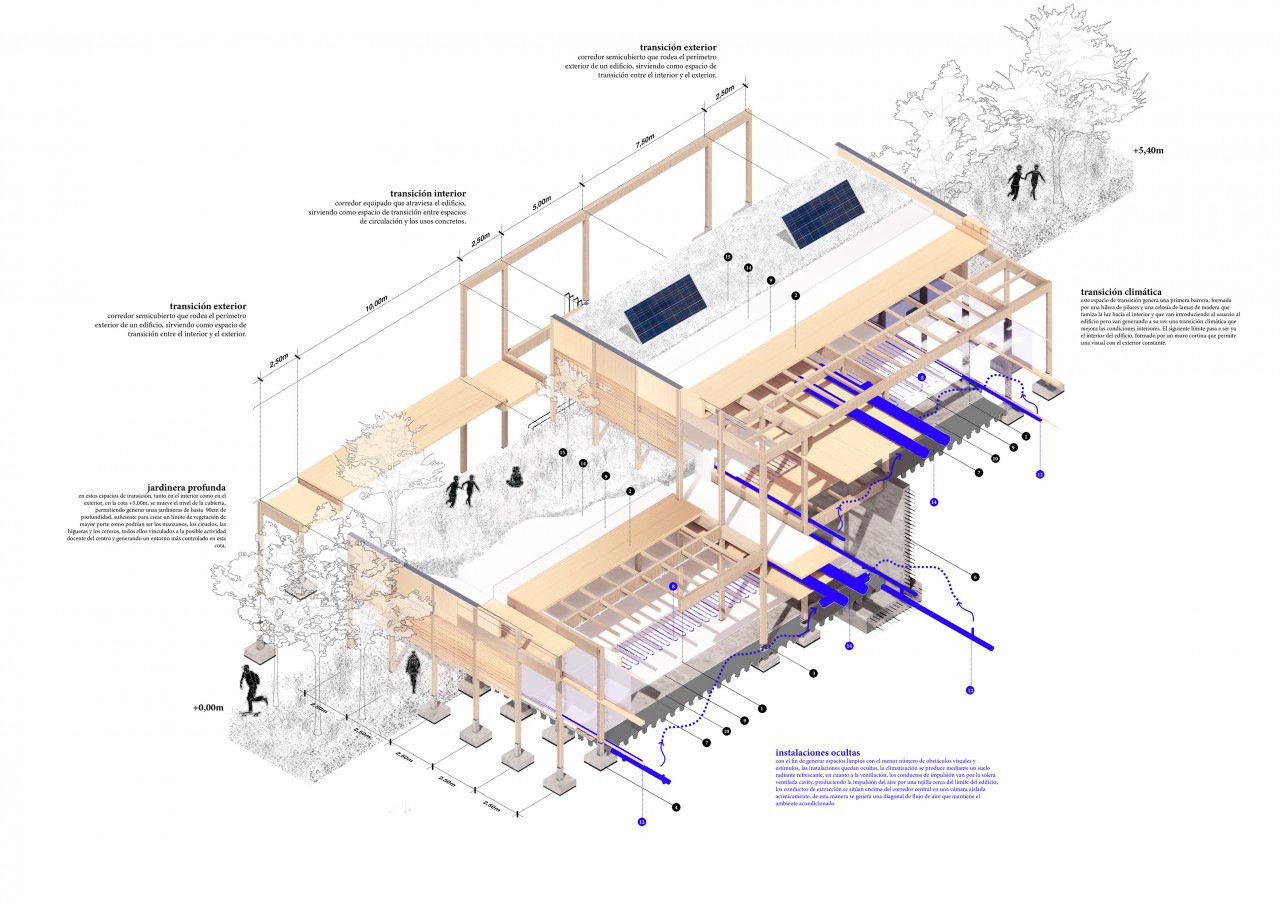
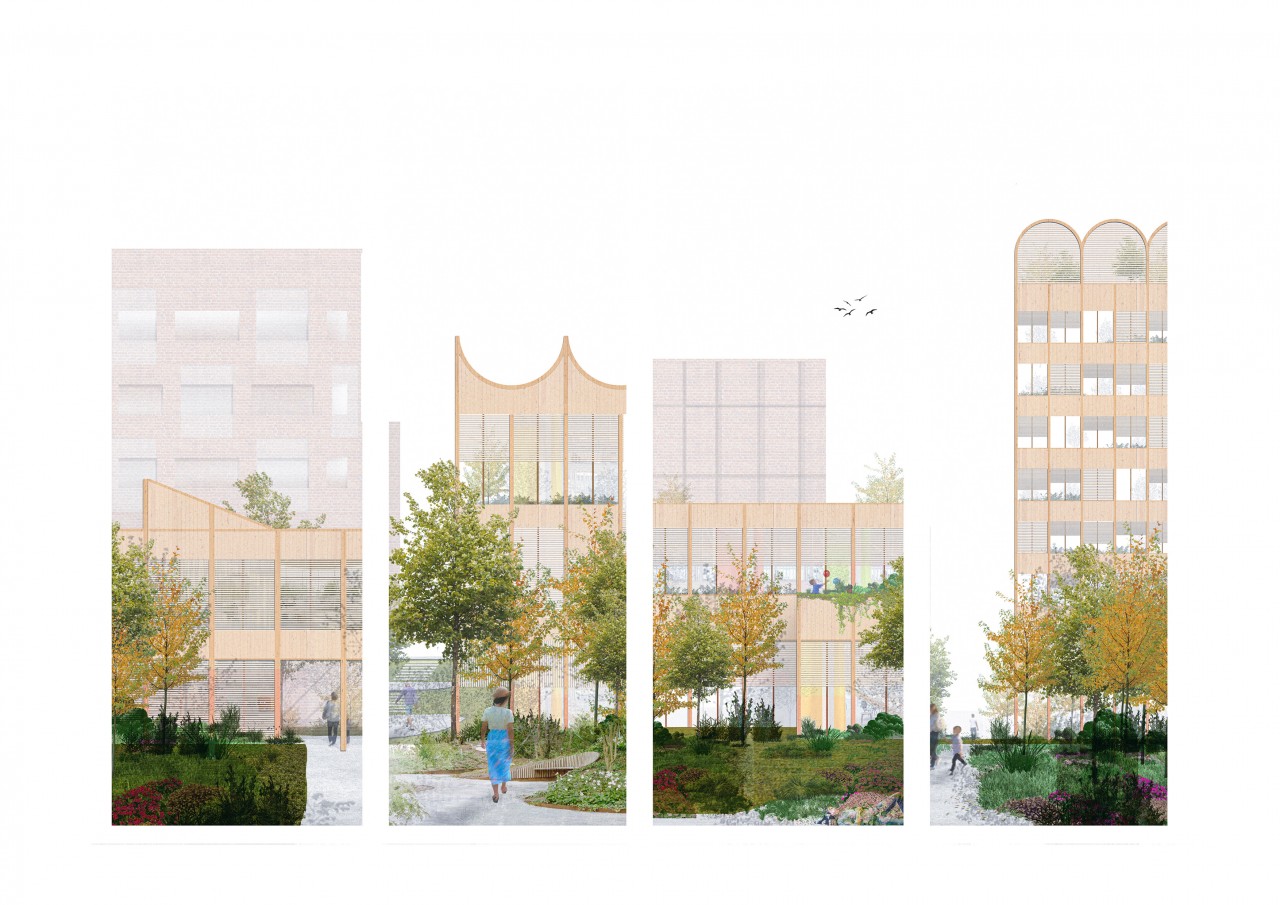
Each building is placed according to its relationship with the urban context and the sensory needs it serves: the most active programs are positioned along the avenue, while the quieter ones are sheltered within the site. Architecturally, each piece has a distinct and recognizable identity, designed to enhance orientation, autonomy, and spatial understanding. A modular wooden portico structure provides coherence, warmth, and adaptability. Internally, spaces are organized in functional bands that regulate stimuli and offer a safe, controlled spatial experience.
ParkTEA demonstrates how architecture, construction, and urbanism can transform exclusion into connection, and difference into identity. It becomes a new heart for Cuatro Caminos — one that beats to the rhythm of everyone.
ParkTEA emerges as a response to this reality. The project does not aim to create a marginal or protective space, but rather an integrated urban infrastructure capable of redefining the meaning of inclusion. Its location in the former Cuatro Caminos tram depot — a site of deep symbolic value for the neighborhood and with strong ties to the city's daily life — enables the proposal not just to be inserted into the city, but to enrich it. Where once there was transit and production, now care, coexistence, and community are proposed.
The project is structured around three main pillars: the social value of including people with autism in urban life; the infrastructural value of the context as a generator of relationships; and the heritage value of the site as a driver of collective identity. From these foundations, a network of spaces is developed, addressing different life stages — childhood, adulthood, and old age — while combining dedicated uses with community-accessible spaces.
The program brings together five core elements: a special education school, a day center, a vocational center, supported housing, and a multifunctional pavilion. These are complemented by community-oriented uses such as workshops, a library, a café, a gym, and art spaces. The aim is not merely to group functions, but to allow the interactions between them to foster genuine relationships. In this way, architecture becomes a mediator between the individual and the collective, between the everyday and the exceptional.
Each building is placed according to its relationship with the urban context and the sensory needs it serves: the most active programs are positioned along the avenue, while the quieter ones are sheltered within the site. Architecturally, each piece has a distinct and recognizable identity, designed to enhance orientation, autonomy, and spatial understanding. A modular wooden portico structure provides coherence, warmth, and adaptability. Internally, spaces are organized in functional bands that regulate stimuli and offer a safe, controlled spatial experience.
ParkTEA demonstrates how architecture, construction, and urbanism can transform exclusion into connection, and difference into identity. It becomes a new heart for Cuatro Caminos — one that beats to the rhythm of everyone.
- 00 - Description
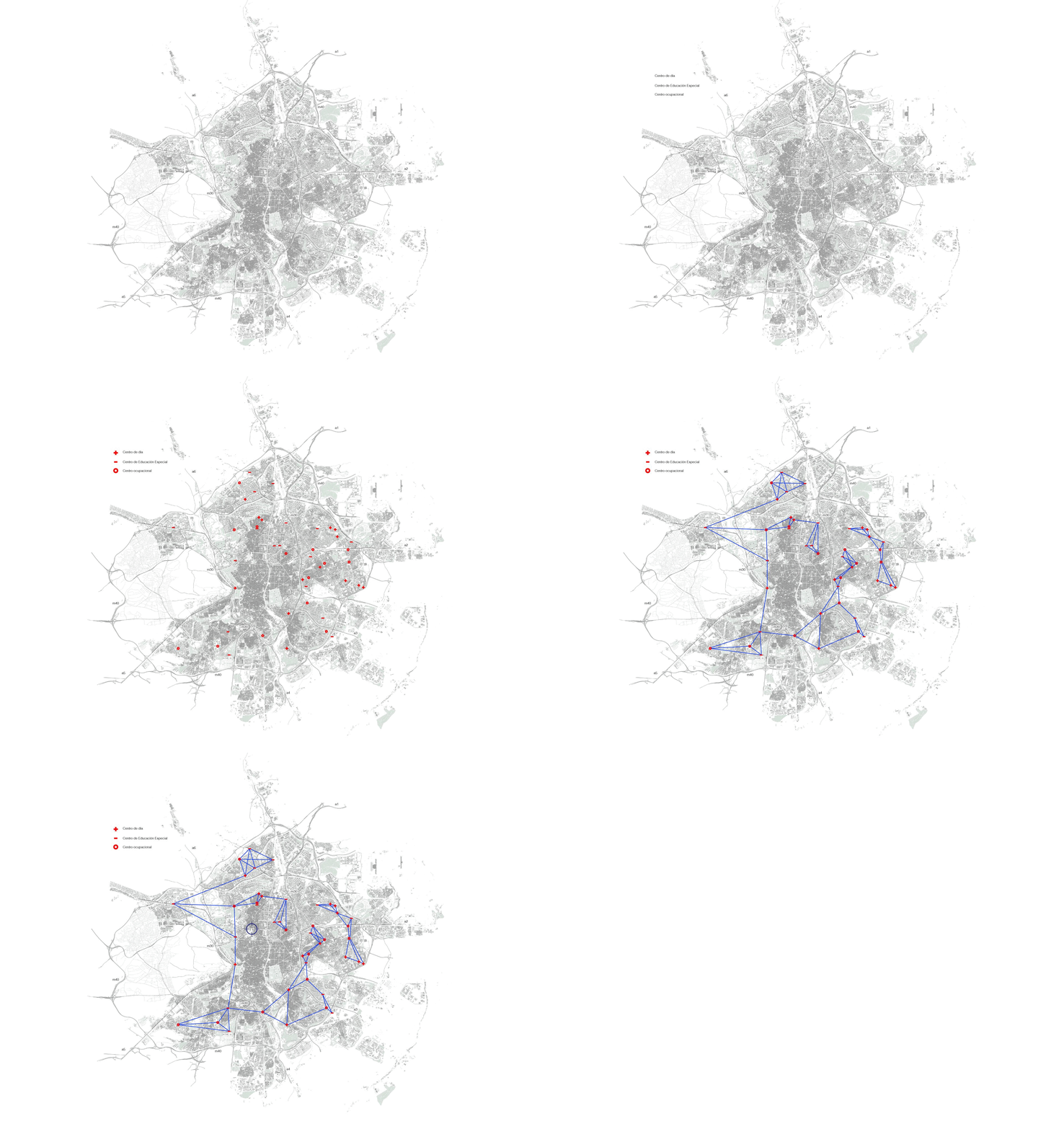
- 01 - Territory
- 02 - Ecosystem
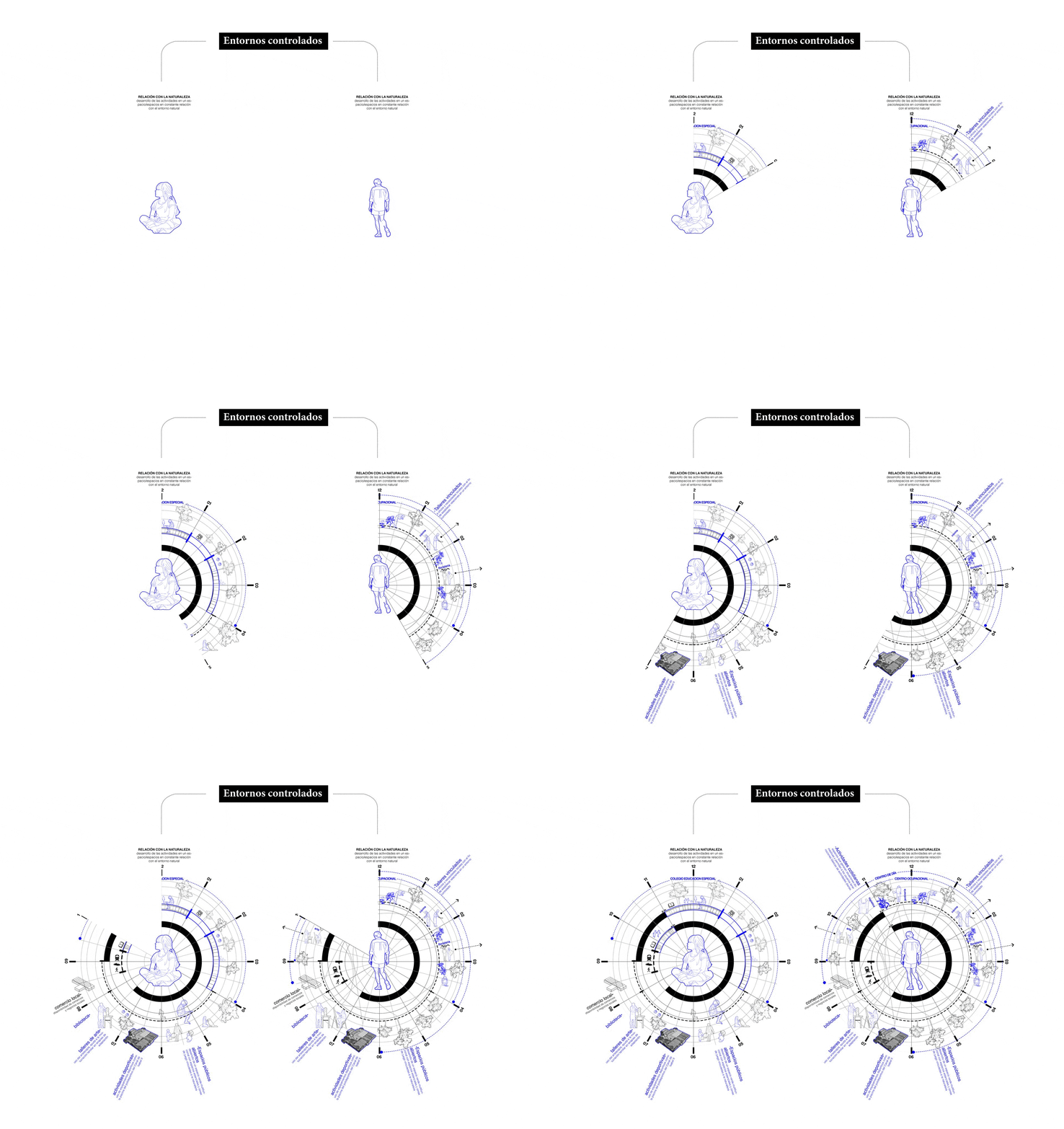
- 03 - Controlled
- 04 - Hybrid
- 05 - Aereal
- 06 - Floorplan 1
- 07 - Floorplan 2
- 08 - Formal ID
- 09 - Autonomous navig
- 10 - Sections
- 11 - front view
- 12 - prototype
- 13 - model 1
- 14 - adapt
- 15 - adap formal ID
- 16 - imaginary
- 17 - postal
- 18 - Video