
Protocolo hacia el 3er Paisaje
The Third Lanscape is constituted by the set of residual spaces from human activity. In this margins is where biological diversity is reunited. This is usually not understood as wealth, even when functioning as a bridge and refuge for diversity and being the territory of worldly medley.
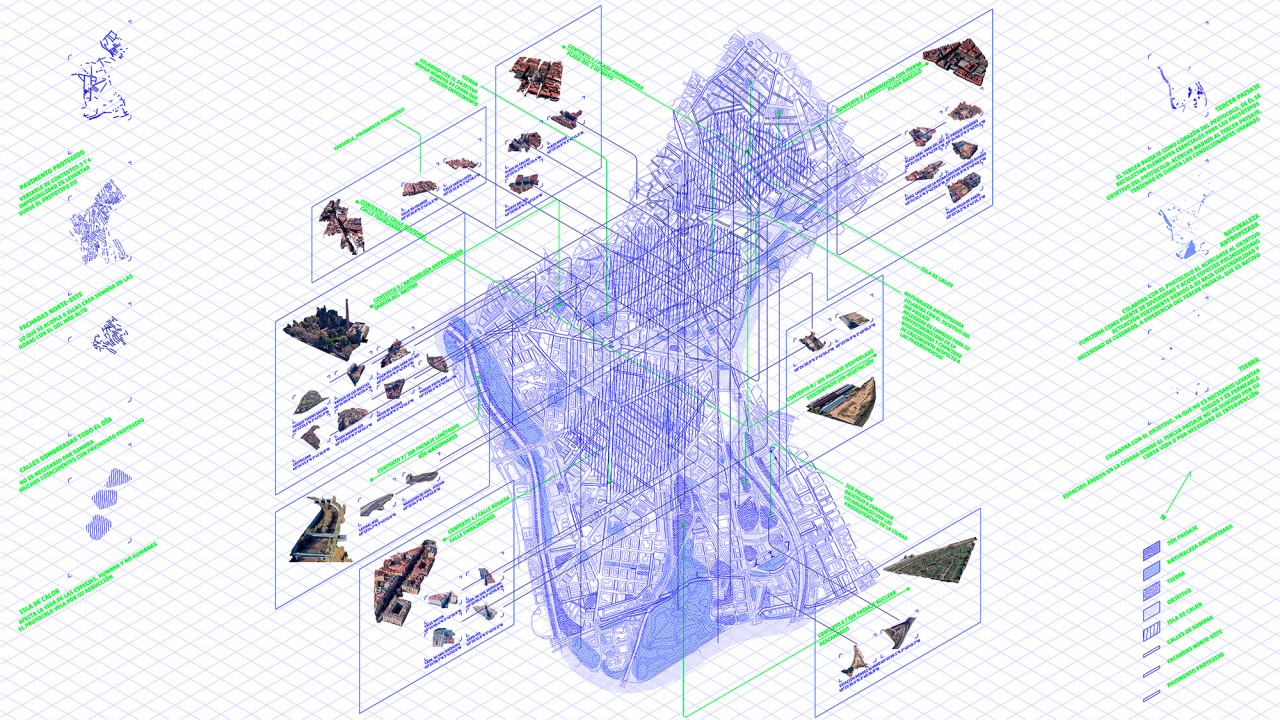
The project began investigating urban pollination and the human agents that collaborate with it. The citizen movements of restoring native species in barren fields in the city was the motive to scale this phenomenon to a urban scale. To upgrade this phenomenon, it is necessary to study the possibilities of reaching the Third Landscape within the case study, the city of Madrid. Different situations were found. Some of them already reach the goal, this is the case of the spaces where the Third Landscape has already invaded the area. On the other hand, the situations of humanized nature, even though they act as a pollination bridge, are in need of action since they are not sustainable and request human maintenance. The ground areas help to reach the goal, since they are permeable, but they are arid grounds in desperate need of nurturing.
This process helped finding different typologies and context in the city. From this context actions are found needed. The different actions bring to the upbring of tree prototypes, which answer this necessities and work as a circular ecology among them.
PROTOTYPE I
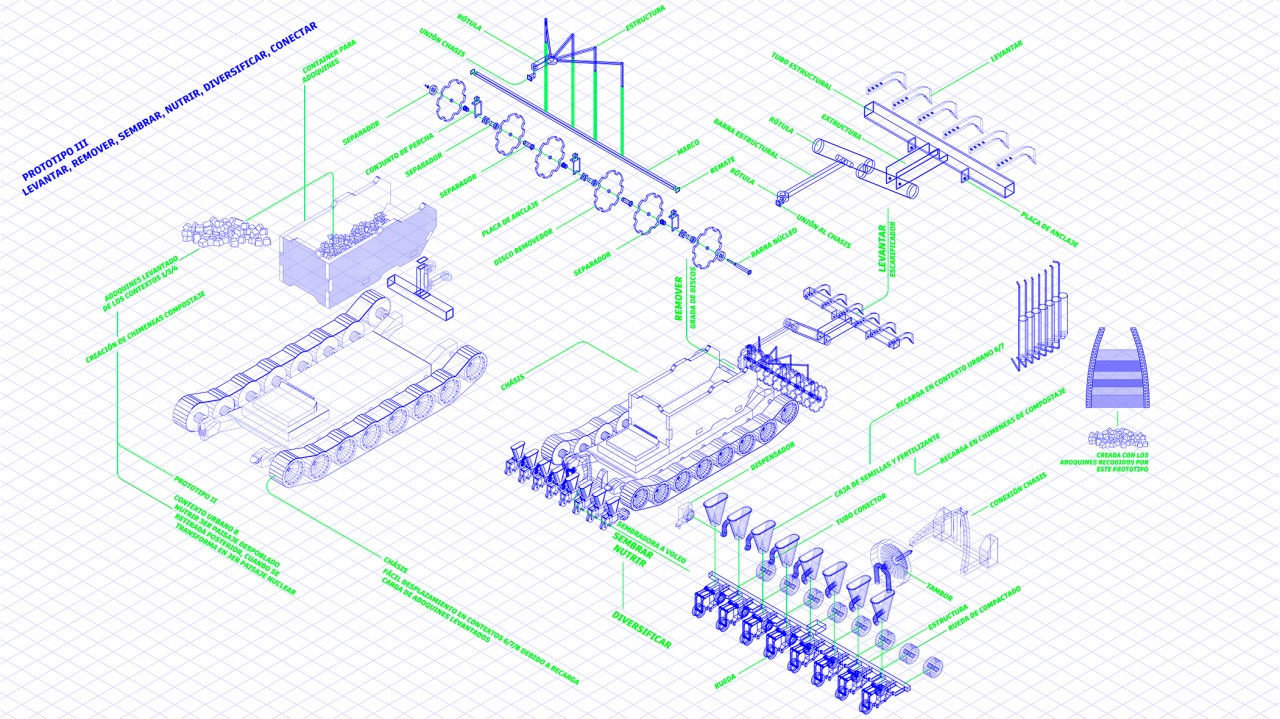
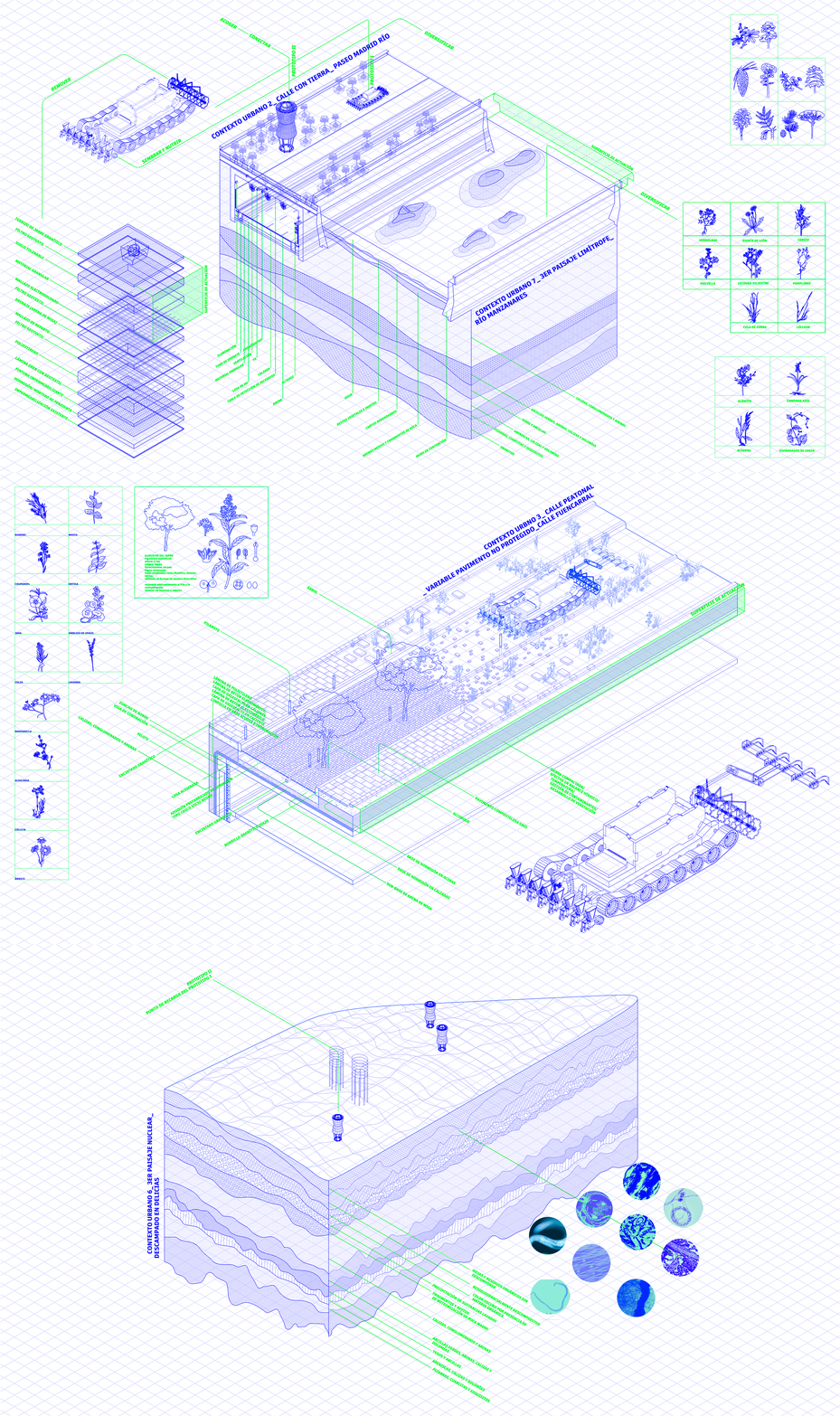
A conjunction of agricultural systems that, with its advance though the city, removes the pavements and nurtures the ground, planting seeds on its path. Different parts can be removed depending on the necessities of the urban context.
PROTOTYPE II
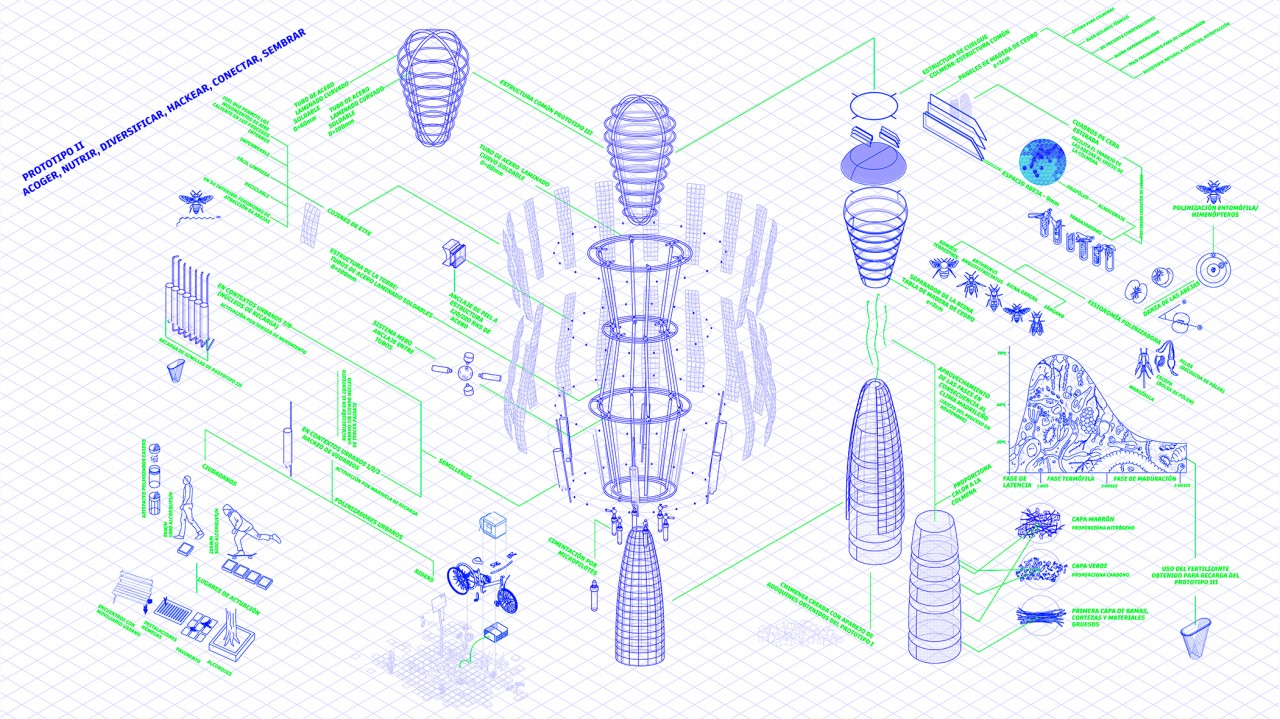
A safe shelter for pollinating bees. Its system, working with compost chimneys which elevate the cold winter temperatures. The façade and shape help convection air movement to amplify this phenomenon. This chimneys are built from the cobblestone collected from the previous prototype.
This prototype has two variables. The urban placed are able to hack citizens, and the ones placed in areas of Third Landscape serve as a collecting point for the first prototype, where it gets native seeds and manure from the compost. In this way, the Third Landscape is the heart of the protocol.
In the areas where nurturing the ground is needed, the compost chimneys bring microbial life to them.
PROTOTYPE III
Studying the different situations in the city, we come to acknowledge there are occasions where it is no possible to follow the first part of the protocol. This is mainly because of protected, historical streets or the places that work as a main point of connection in Madrid. Questioning this and using this as an opportunity the third prototype comes to place. This prototype hacks the water systems of the buildings and offers shade to the street, which reduces the heat absorption of the pavement that cannot be removed. Inside, it contains Azolla, a specie known to absorb high levels of contamination and serves as a pollination shelter to the pollinators.
The shared pieces in their structures enable their upcycling. When time passes and this prototypes have delivered their goal, they are placed in other cities, other places, to continue with their role.
The project began investigating urban pollination and the human agents that collaborate with it. The citizen movements of restoring native species in barren fields in the city was the motive to scale this phenomenon to a urban scale. To upgrade this phenomenon, it is necessary to study the possibilities of reaching the Third Landscape within the case study, the city of Madrid. Different situations were found. Some of them already reach the goal, this is the case of the spaces where the Third Landscape has already invaded the area. On the other hand, the situations of humanized nature, even though they act as a pollination bridge, are in need of action since they are not sustainable and request human maintenance. The ground areas help to reach the goal, since they are permeable, but they are arid grounds in desperate need of nurturing.
This process helped finding different typologies and context in the city. From this context actions are found needed. The different actions bring to the upbring of tree prototypes, which answer this necessities and work as a circular ecology among them.
PROTOTYPE I
A conjunction of agricultural systems that, with its advance though the city, removes the pavements and nurtures the ground, planting seeds on its path. Different parts can be removed depending on the necessities of the urban context.
PROTOTYPE II
A safe shelter for pollinating bees. Its system, working with compost chimneys which elevate the cold winter temperatures. The façade and shape help convection air movement to amplify this phenomenon. This chimneys are built from the cobblestone collected from the previous prototype.
This prototype has two variables. The urban placed are able to hack citizens, and the ones placed in areas of Third Landscape serve as a collecting point for the first prototype, where it gets native seeds and manure from the compost. In this way, the Third Landscape is the heart of the protocol.
In the areas where nurturing the ground is needed, the compost chimneys bring microbial life to them.
PROTOTYPE III
Studying the different situations in the city, we come to acknowledge there are occasions where it is no possible to follow the first part of the protocol. This is mainly because of protected, historical streets or the places that work as a main point of connection in Madrid. Questioning this and using this as an opportunity the third prototype comes to place. This prototype hacks the water systems of the buildings and offers shade to the street, which reduces the heat absorption of the pavement that cannot be removed. Inside, it contains Azolla, a specie known to absorb high levels of contamination and serves as a pollination shelter to the pollinators.
The shared pieces in their structures enable their upcycling. When time passes and this prototypes have delivered their goal, they are placed in other cities, other places, to continue with their role.



- 00 - Description
- 01 - urban contexts
- 02 - needed actions
- 03 - prototype I
- 04 - prototype II
- 05 - context studies
- 06 - implementation
- 07 - implementation
- 08 - prototype III
- 09 - implementation
- 10 - inventory
- 11 - Video