
Rehabilitar la ETSAM
Our university has become obsolete over time. Its structure of unidirectional slabs and brick covered by a stone cladding speaks of past architecture. The Institute of Architecture proposes a university's rehabilitation, giving it back to the students, activating it culturally and socially and providing it with energy systems representative of the new environmental needs.
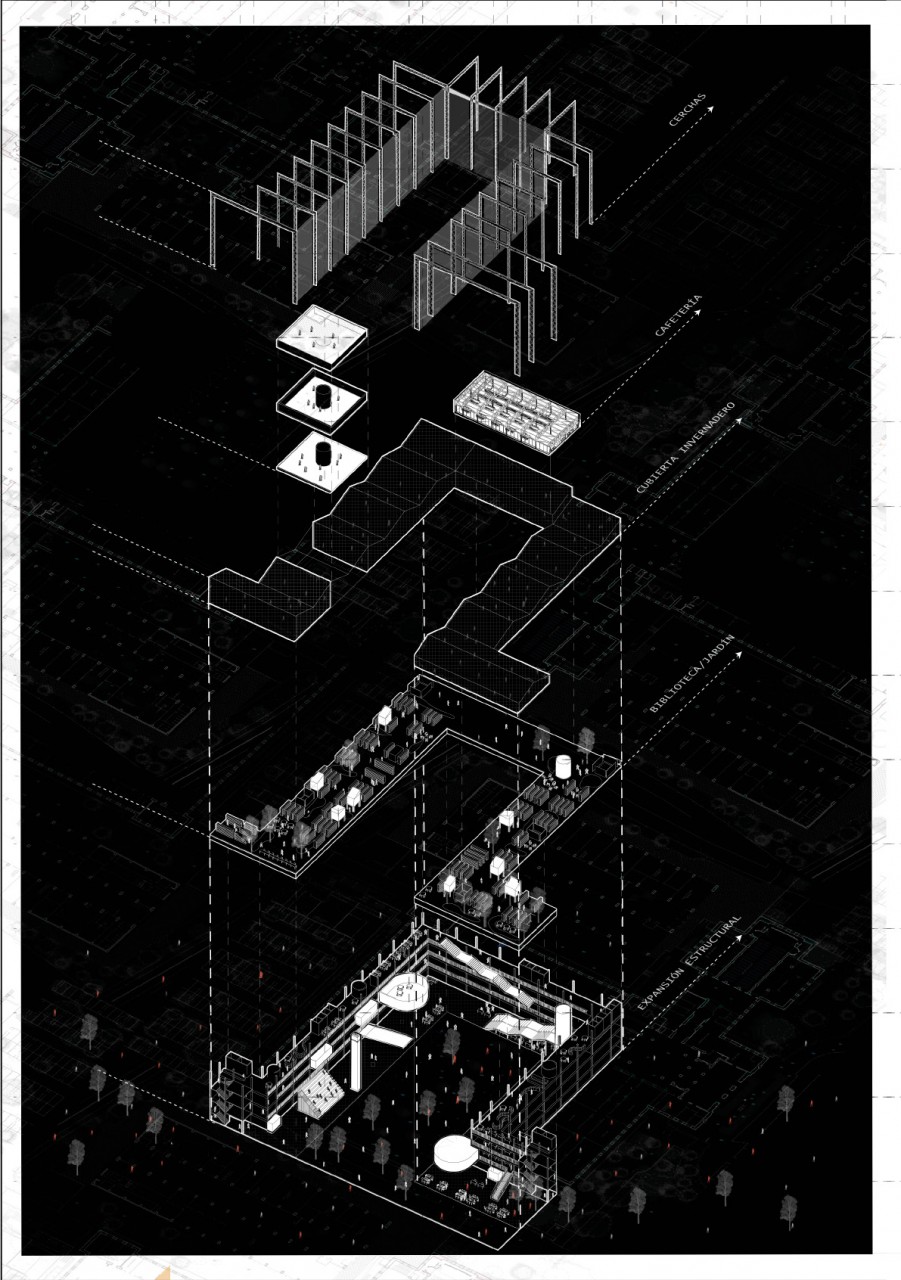
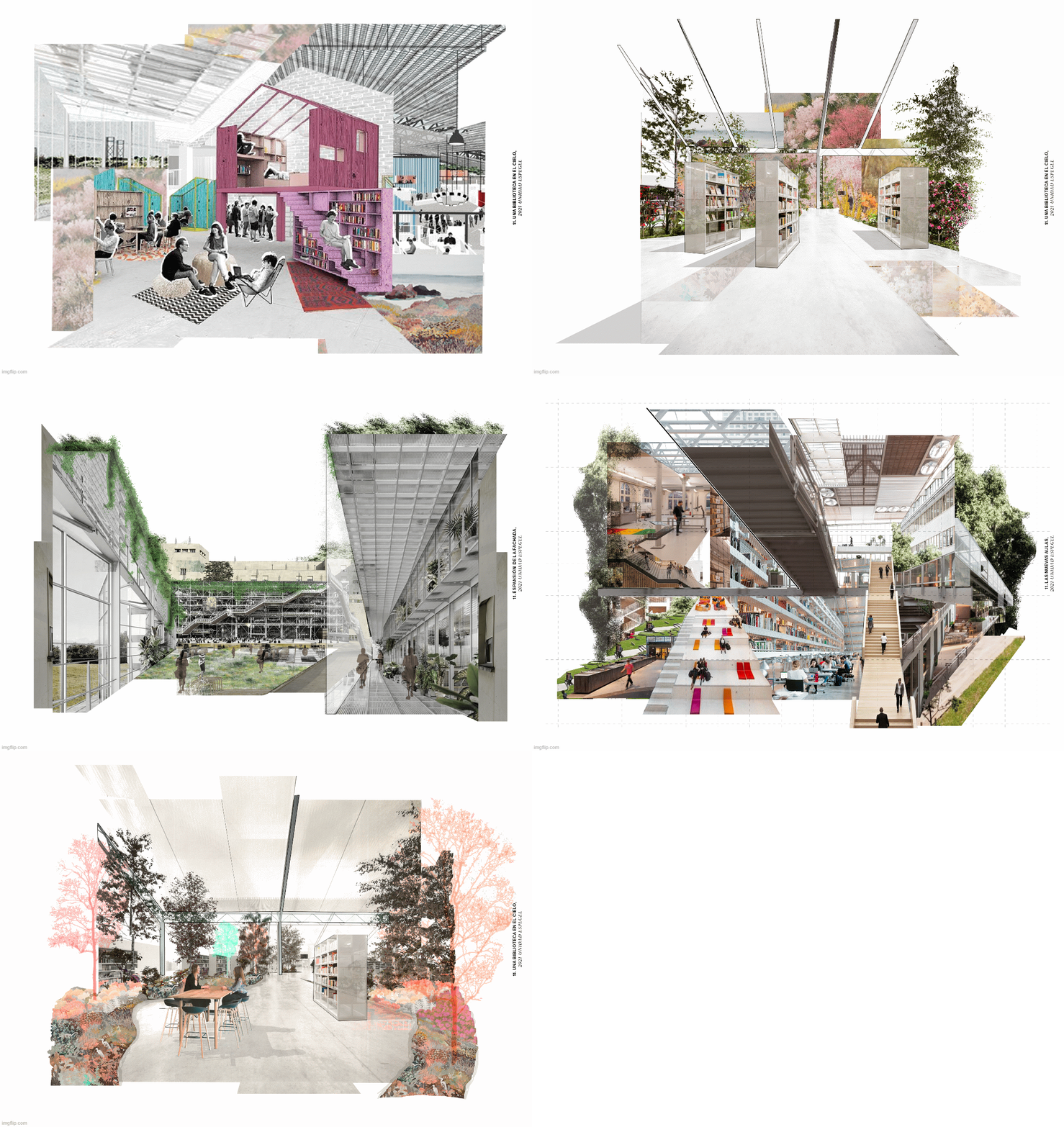
The Institute of Architecture is an intertwined stratification of public spaces of different nature, typology, degrees of openness and climatic conditions. This rehabilitation is a microcosm open to the outside that offers a wide range of facilities for culture and leisure. The building is full of books, people, art, connections, and trees. Its envelope guarantees transparency and harmony with the environment with a high-performance membrane: in winter, it protects from the cold and during summer, it opens, allowing ventilation. The ample lobby space opens directly onto La Rosaleda garden, which acts as a large plaza in the building.
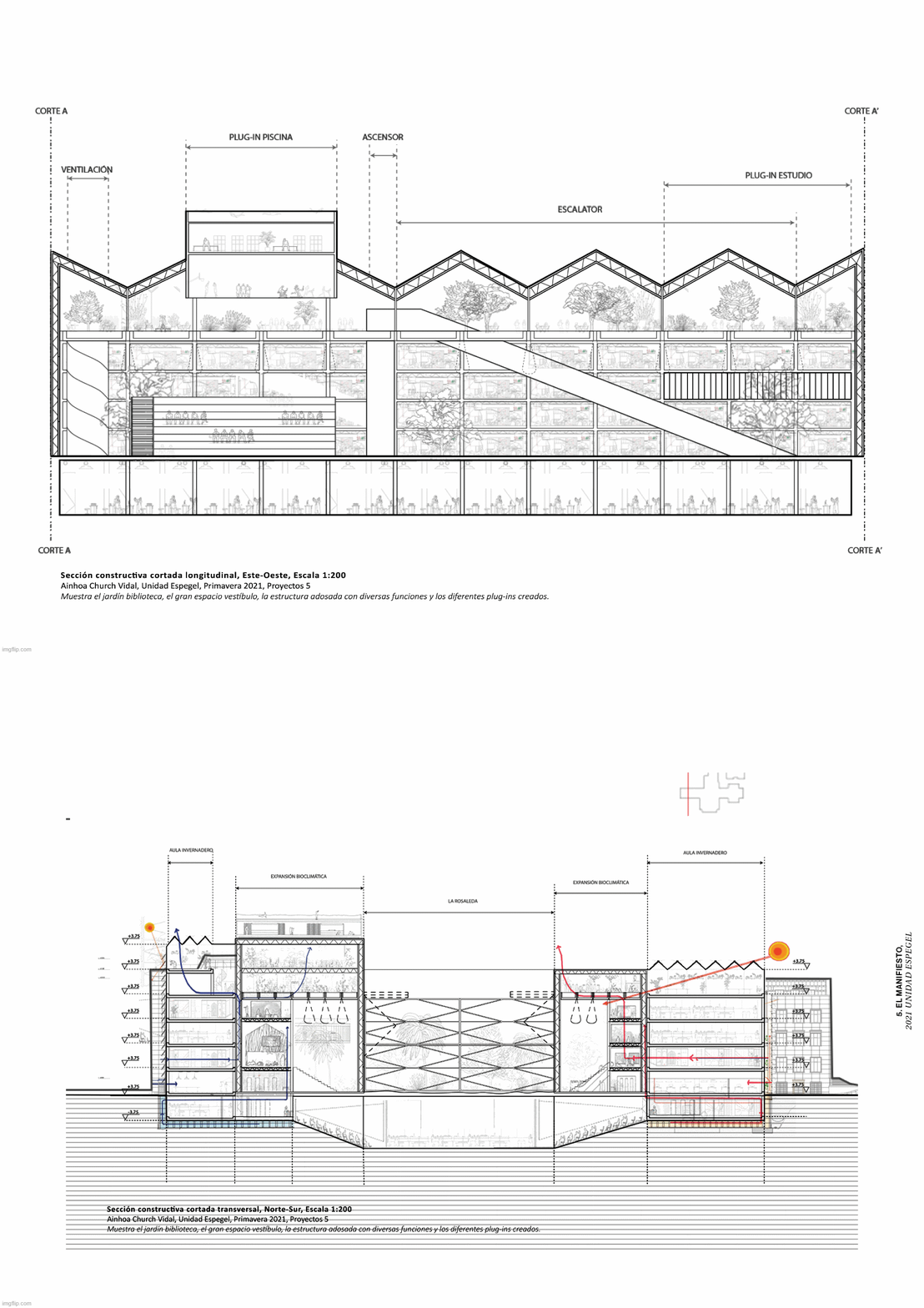
Attached to the pre-existing university building, we have a longitudinal strip of four and five floors. This strip acts as a connecting link between the pre-existing structure and the new one. Its primary function is to expand the original classrooms, giving them greater flexibility when using them. This longitudinal band is related to the lower public square, completing and reinforcing all the students' academic activities.
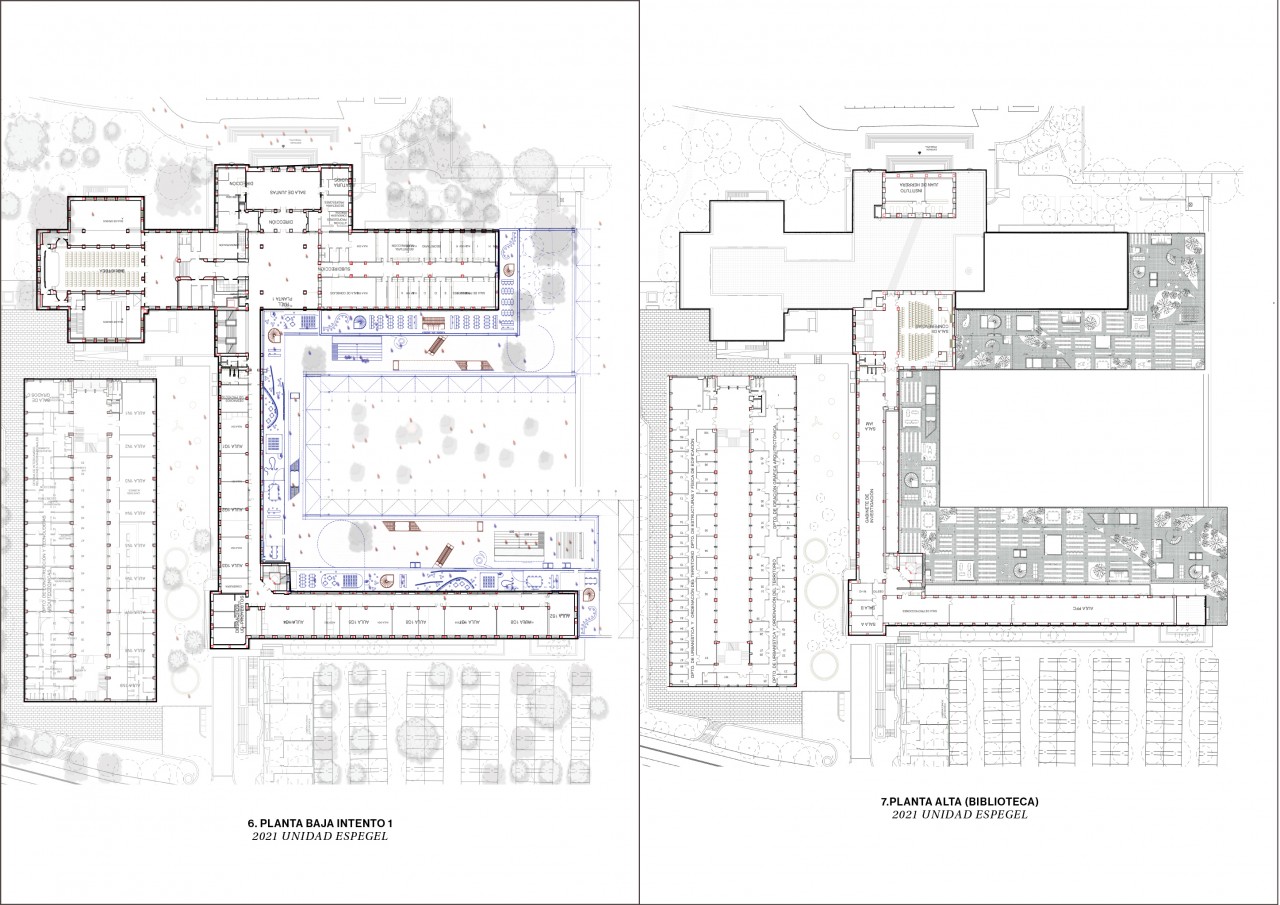
On the top floor, under a greenhouse-type roof, the library and workshop are found. Like a panoramic garden overlooking La Casa de Campo, the platform covers the entire footprint of the building and is filled with natural light, perfect for study and manual work.
``A forest full of books in the middle of the city.''
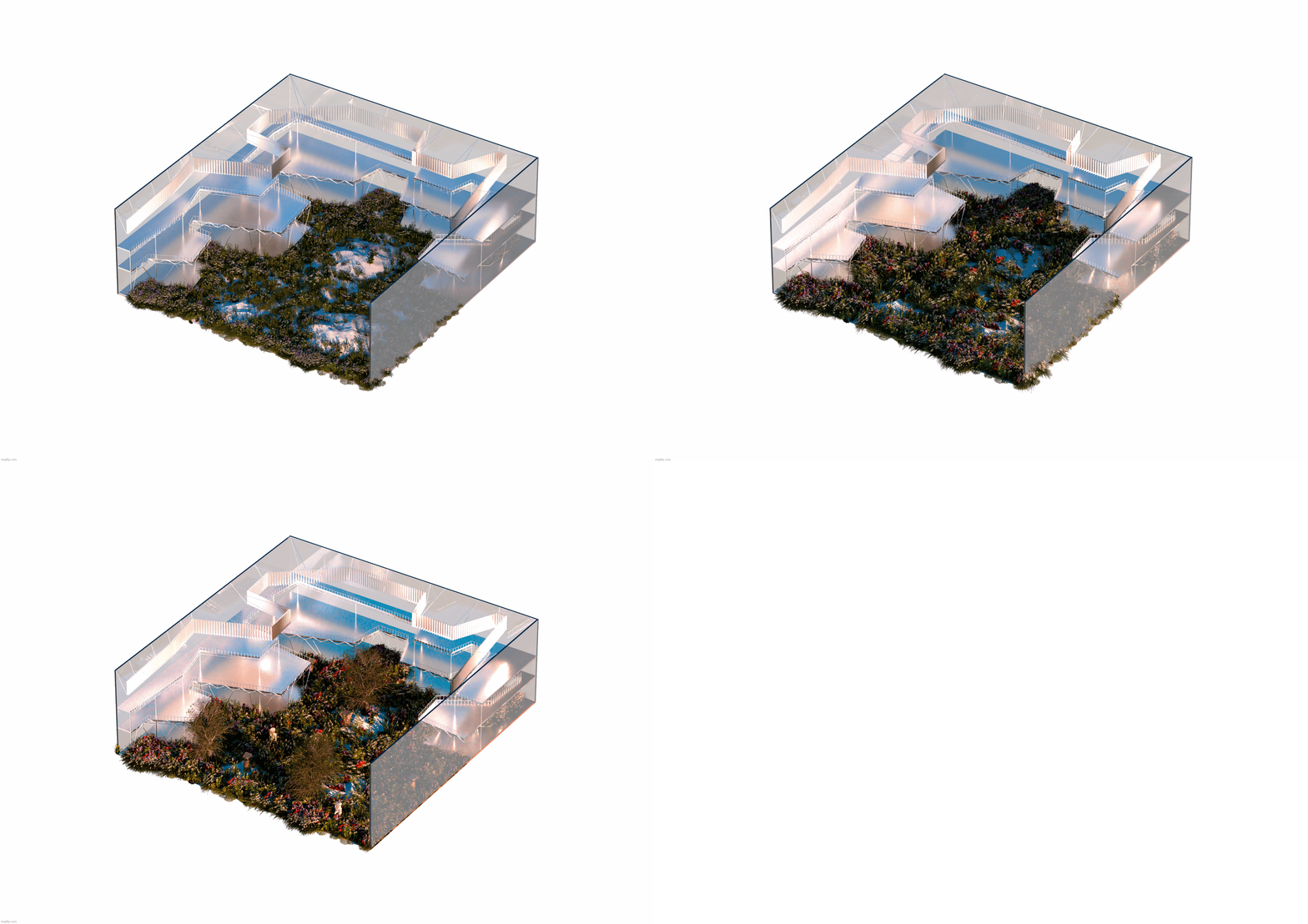
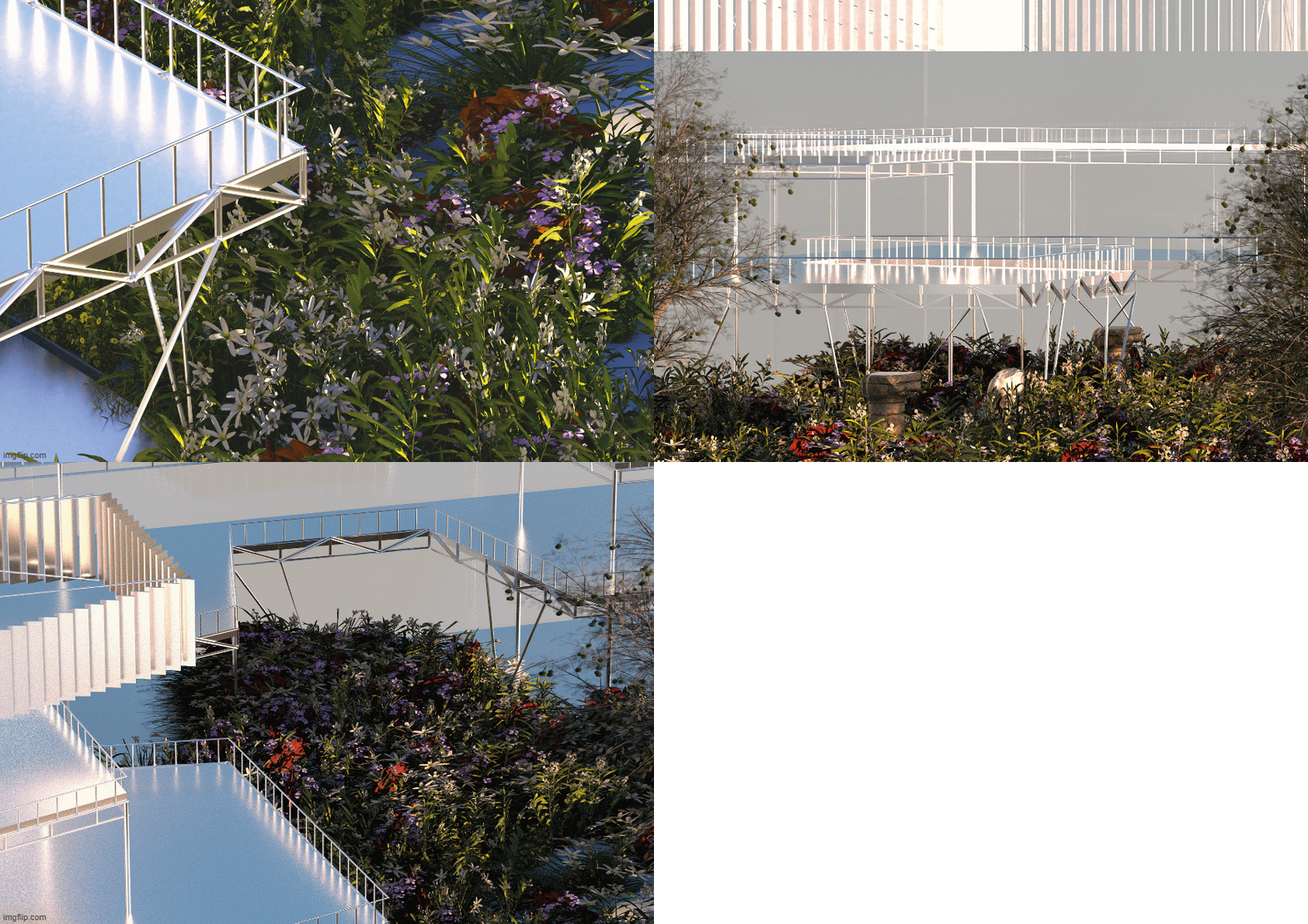
To sum up, what used to be a traditional and rationalist picture garden, now becomes a dense and wild garden. In addition, this new garden botanically recovers the previous one, filling it with autochthonous species chosen after studying flora and fauna of the area and the sunshine of the plot.
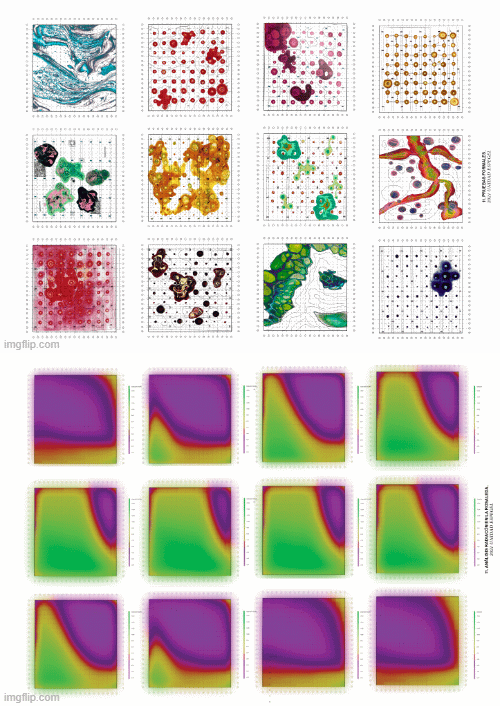
The result is an organic garden, simple and free of rationalist and orthogonal geometries. A complex ecosystem where multiple species coexist. Moreover, time is also present in this project since much of the interest lies in its evolution over time. It is a dynamic image since the plant species in this new garden have different colours with the passing of the seasons.
The Institute of Architecture is an intertwined stratification of public spaces of different nature, typology, degrees of openness and climatic conditions. This rehabilitation is a microcosm open to the outside that offers a wide range of facilities for culture and leisure. The building is full of books, people, art, connections, and trees. Its envelope guarantees transparency and harmony with the environment with a high-performance membrane: in winter, it protects from the cold and during summer, it opens, allowing ventilation. The ample lobby space opens directly onto La Rosaleda garden, which acts as a large plaza in the building.
Attached to the pre-existing university building, we have a longitudinal strip of four and five floors. This strip acts as a connecting link between the pre-existing structure and the new one. Its primary function is to expand the original classrooms, giving them greater flexibility when using them. This longitudinal band is related to the lower public square, completing and reinforcing all the students' academic activities.
On the top floor, under a greenhouse-type roof, the library and workshop are found. Like a panoramic garden overlooking La Casa de Campo, the platform covers the entire footprint of the building and is filled with natural light, perfect for study and manual work.
``A forest full of books in the middle of the city.''
To sum up, what used to be a traditional and rationalist picture garden, now becomes a dense and wild garden. In addition, this new garden botanically recovers the previous one, filling it with autochthonous species chosen after studying flora and fauna of the area and the sunshine of the plot.
The result is an organic garden, simple and free of rationalist and orthogonal geometries. A complex ecosystem where multiple species coexist. Moreover, time is also present in this project since much of the interest lies in its evolution over time. It is a dynamic image since the plant species in this new garden have different colours with the passing of the seasons.
- 00 - Description
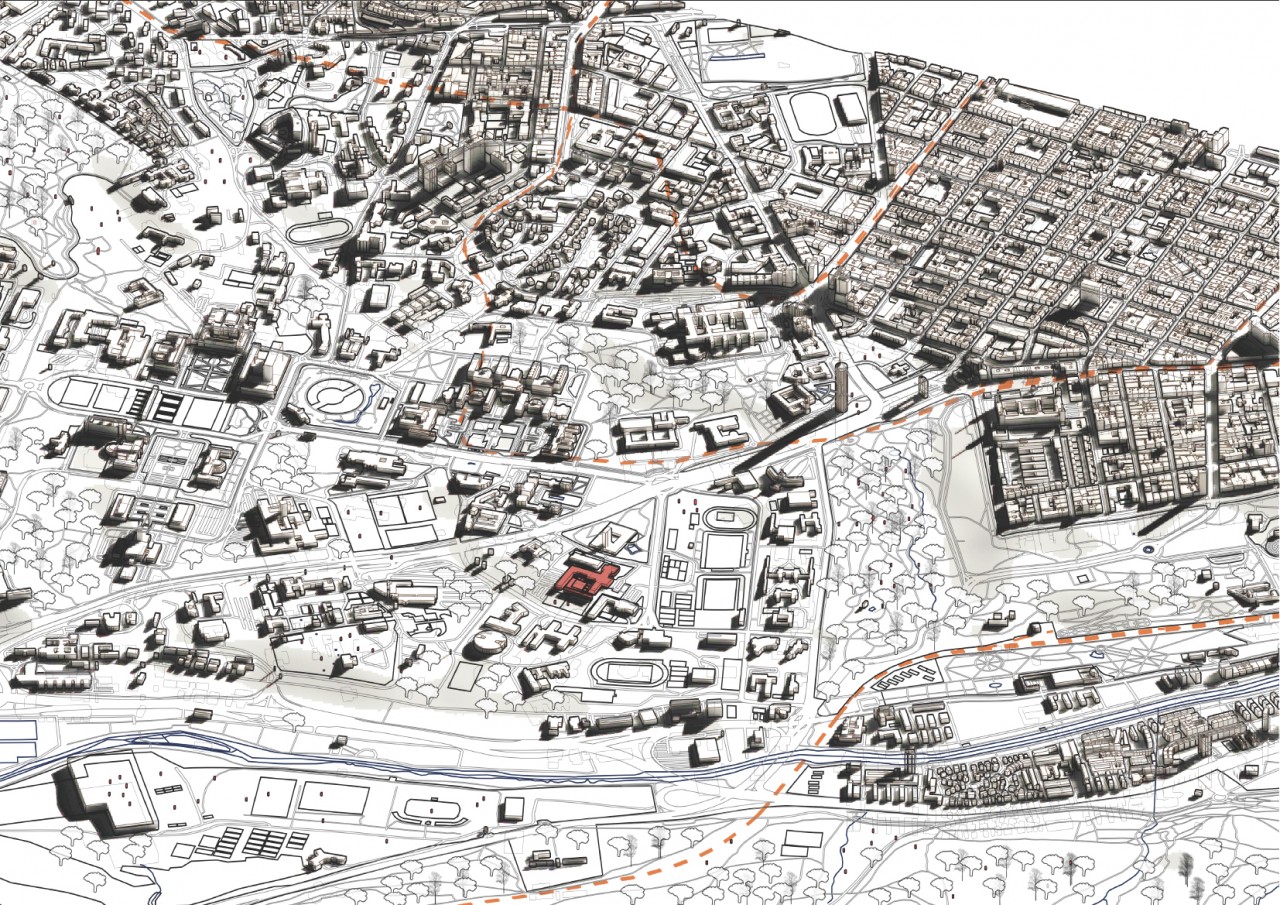
- 01 - Context_Diagram
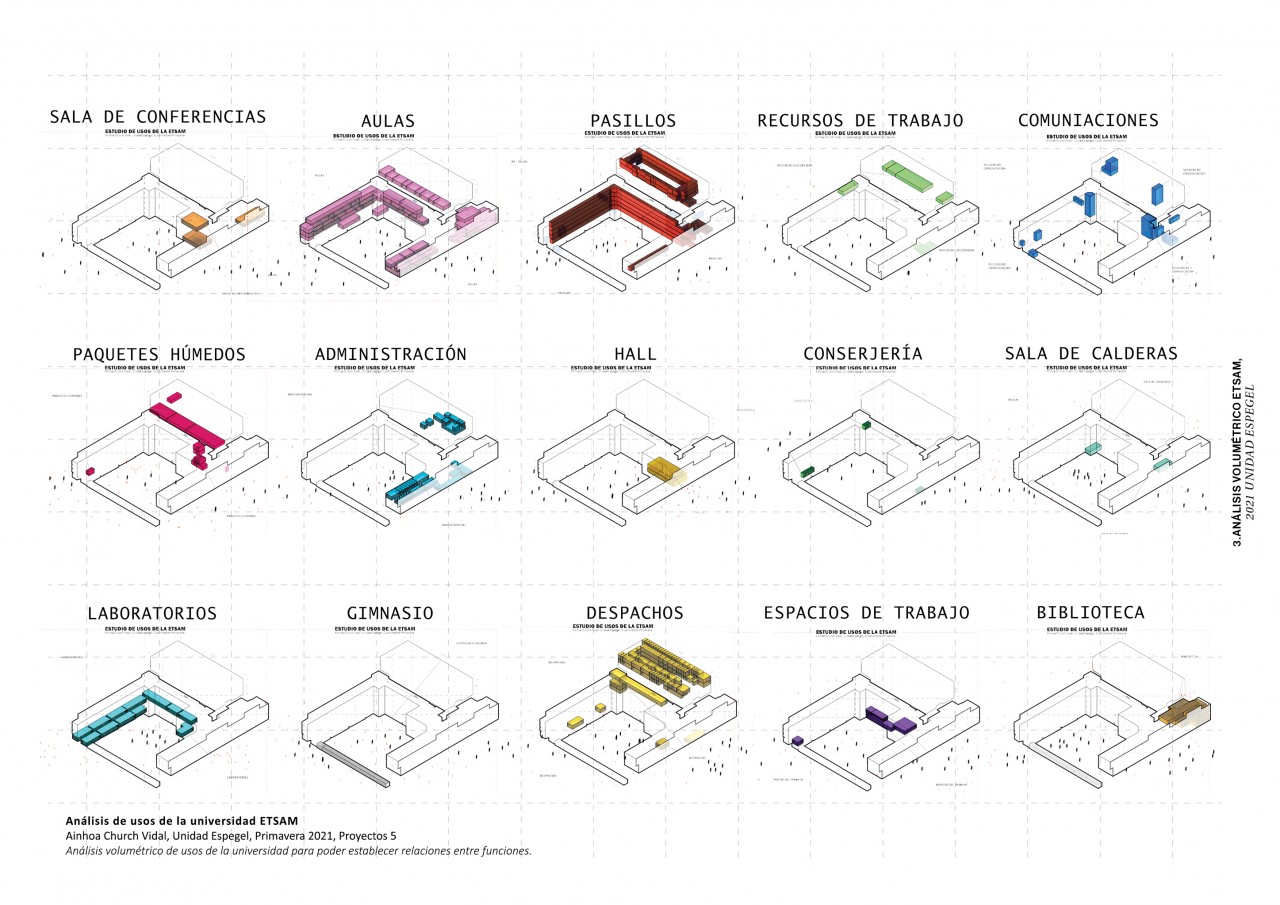
- 02 - Volumetric_Diagram
- 03 - Section_LongTrans
- 04 - Plans_GroundTop
- 05 - Exploded_Axon
- 06 - Spaceboards
- 07 - Garden_Radiation
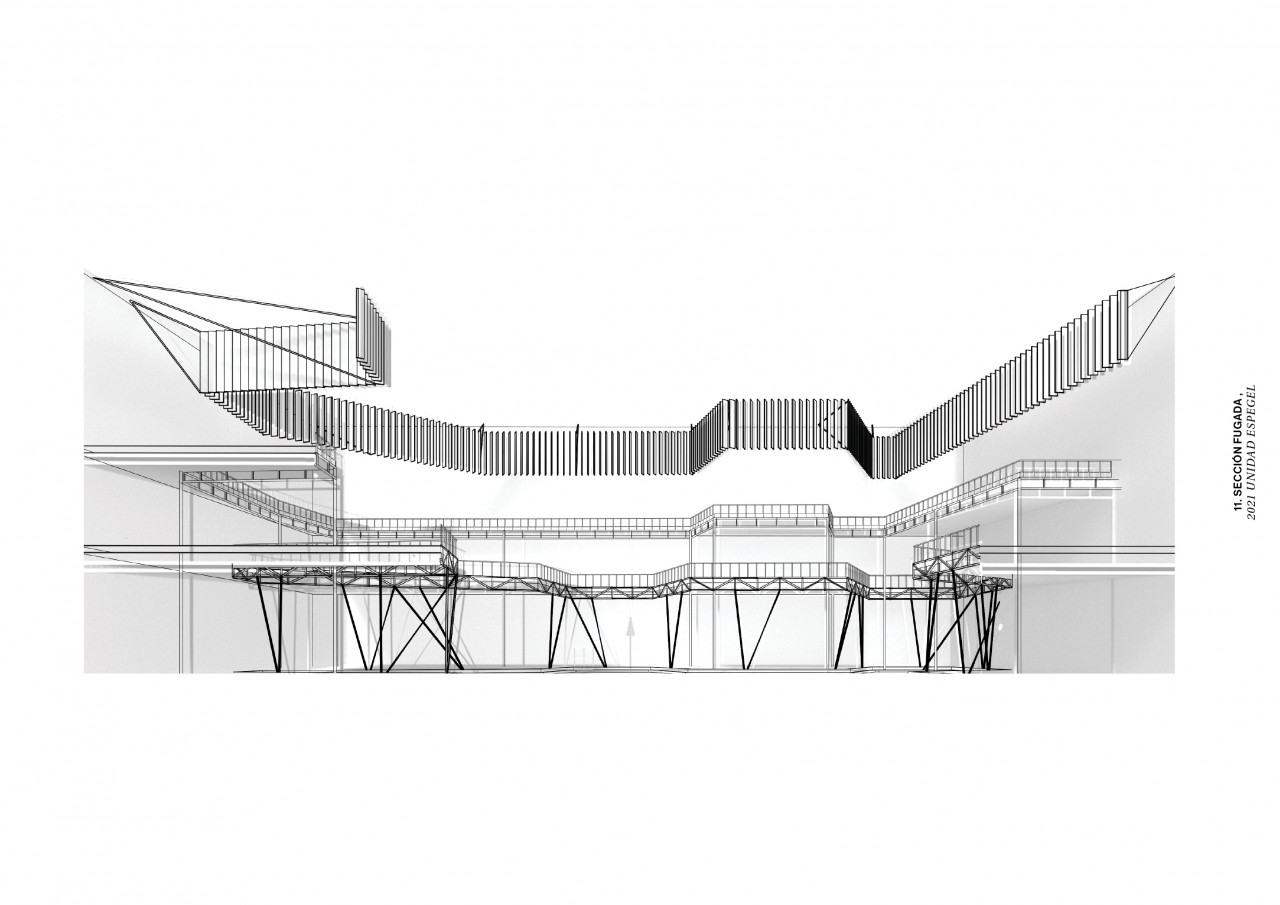
- 08 - Section_Structure
- 09 - Garden_Dioram
- 10 - Garden_Views
- 11 - Video