
(RE)Habitar Sancti Petri
The old town of Sancti Petri, is presented as a dispersed and uninhabited fabric within the Bay of Cádiz. Addressing the state of ruin, colonization is proposed, working on all its scales, from urban organization to the construction and sizing of new pieces. The proposal focuses on reactivating and densifying through the reuse of old ships, containers for public equipment and the implementation of residential modules.
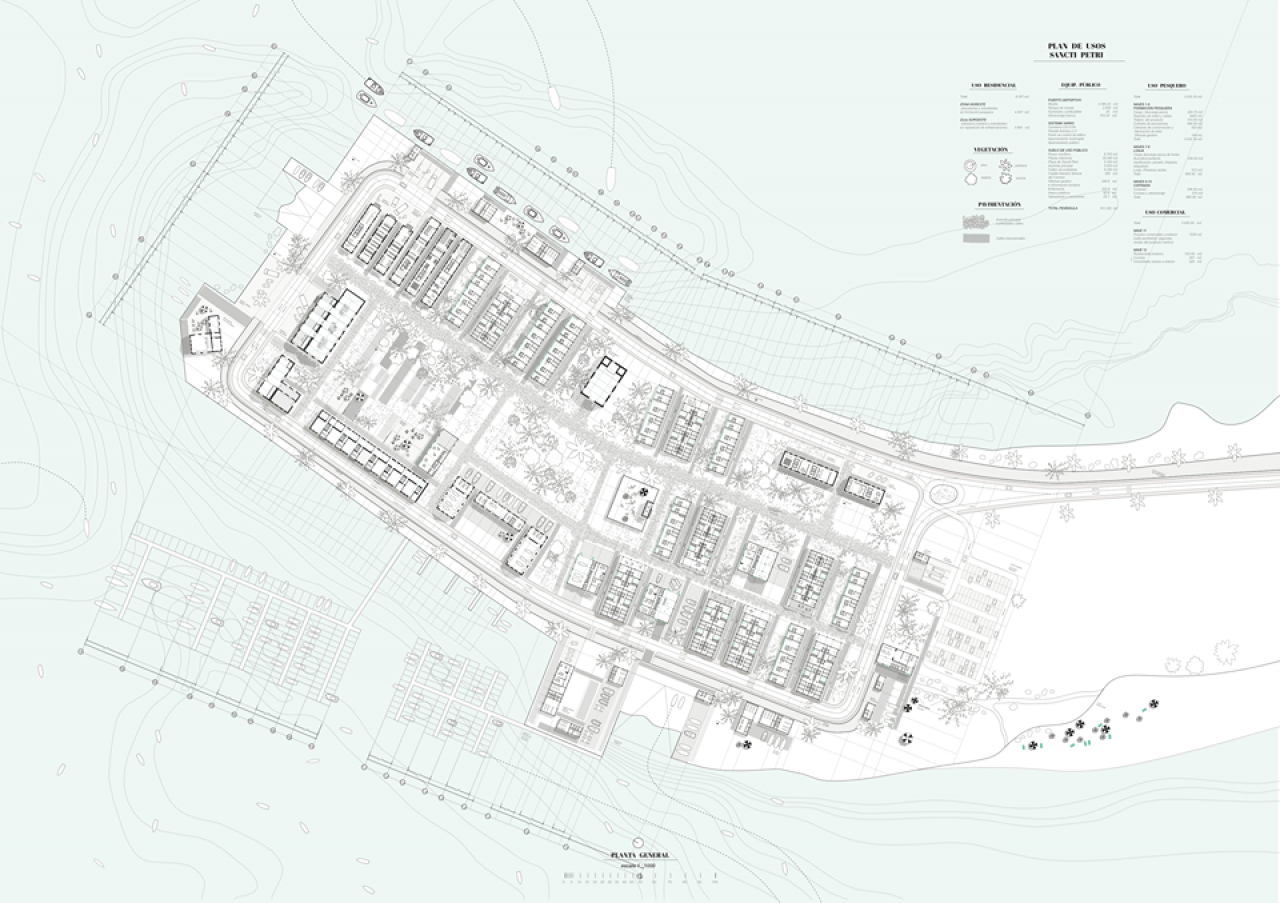
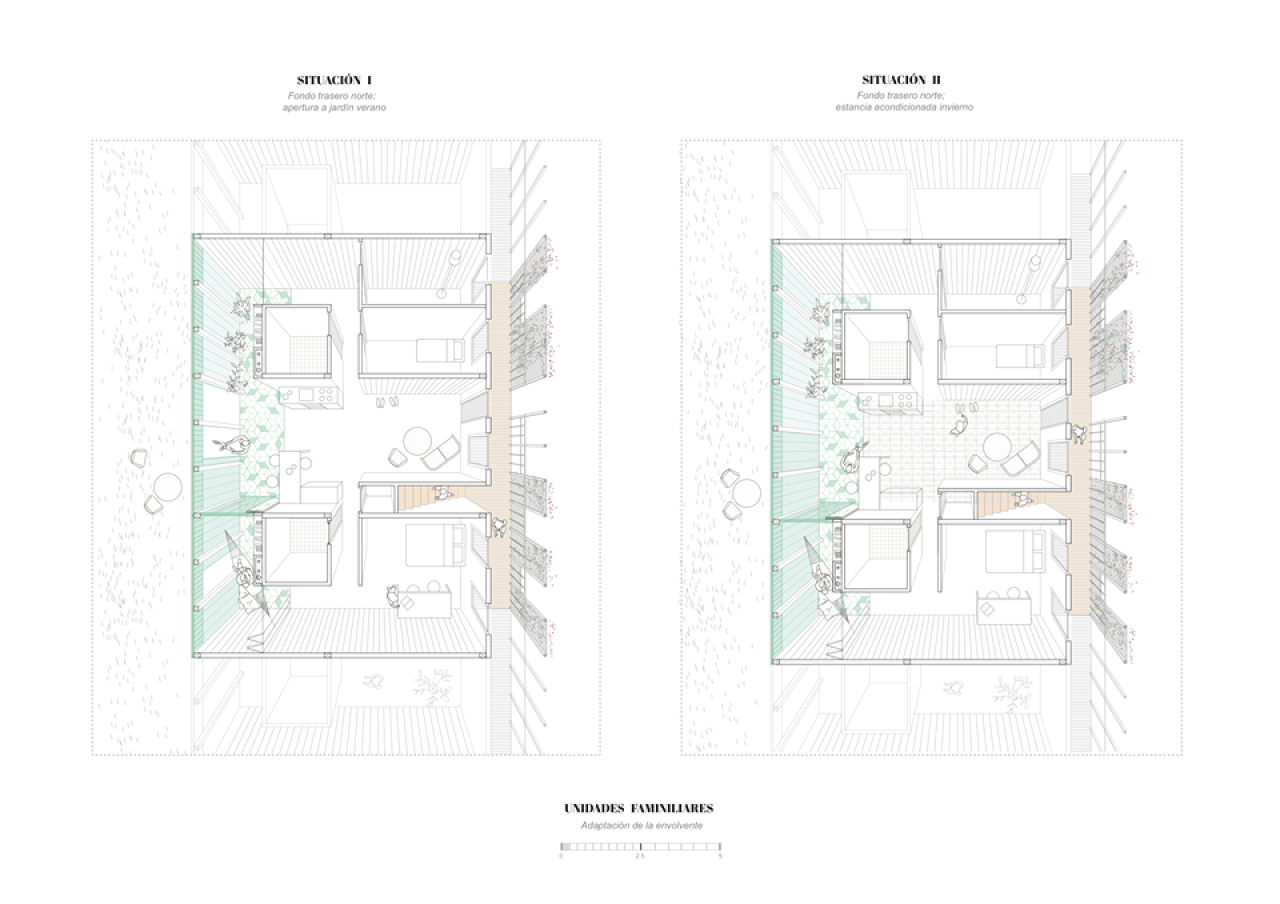
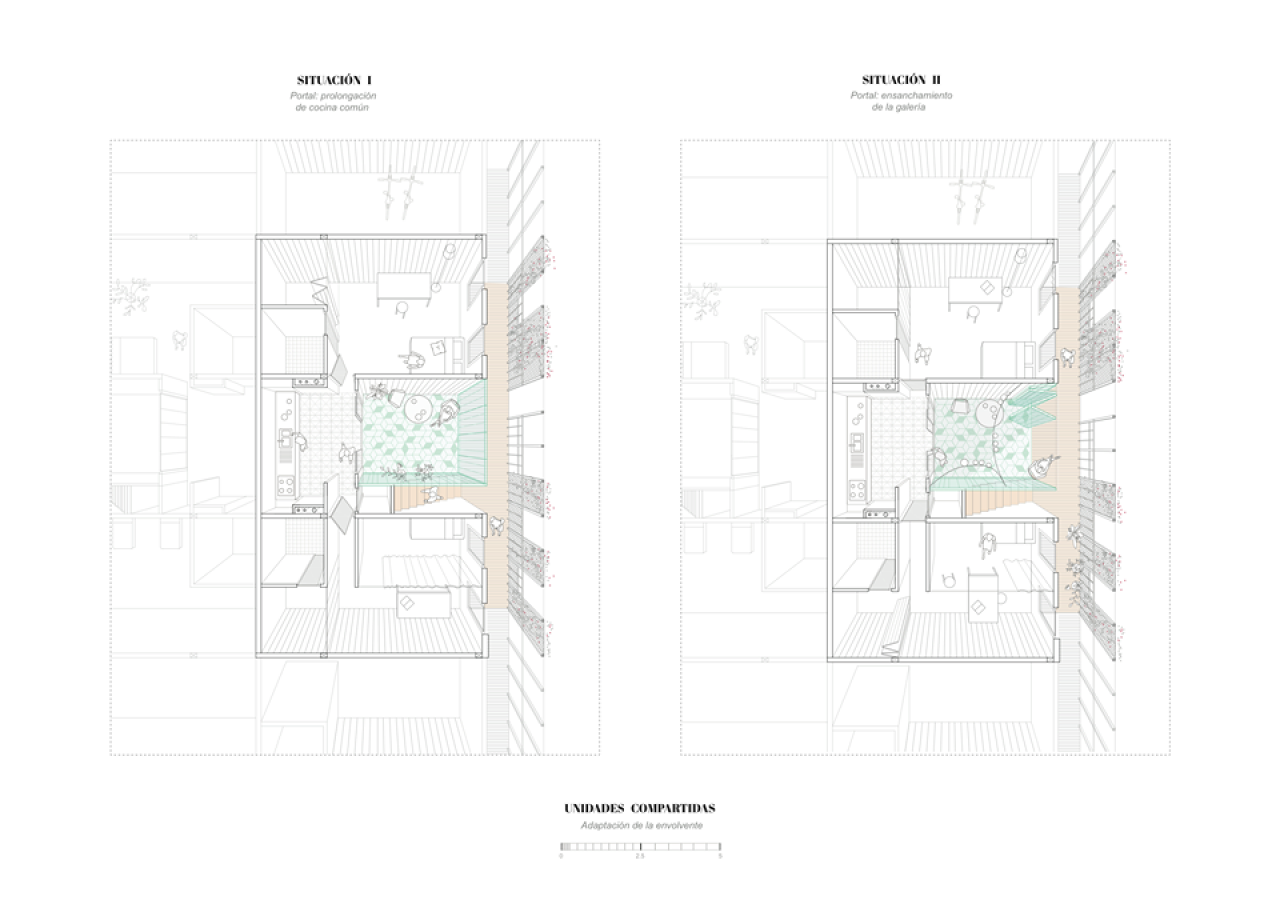
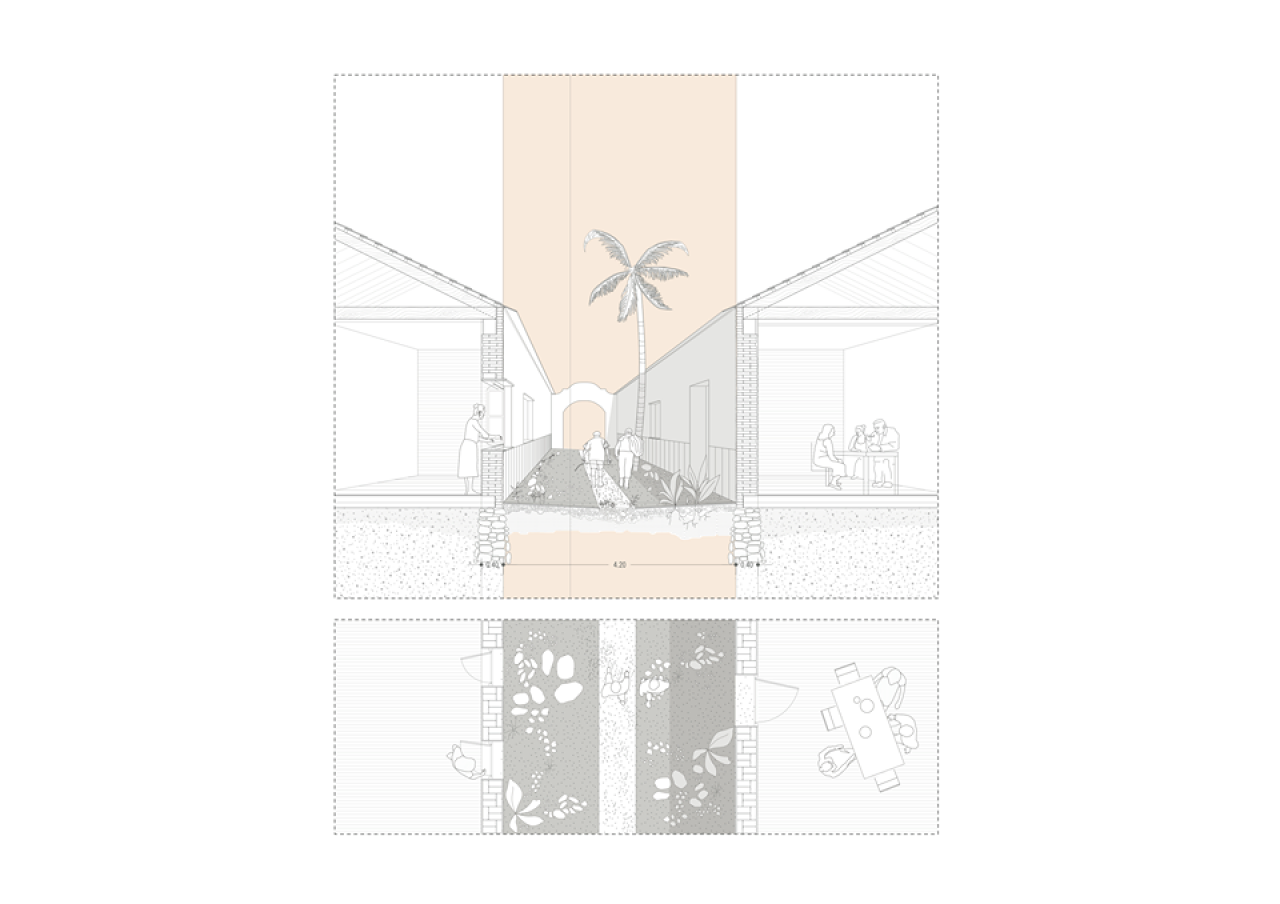
A grid is proposed according to the layout of the old streets. These will constitute the plot that will dimension the new modules, favoring transversality in the east-west axis. This reinterpretation is defined due to the importance of outdoor spaces in Mediterranean climates and their relationship with the interior.
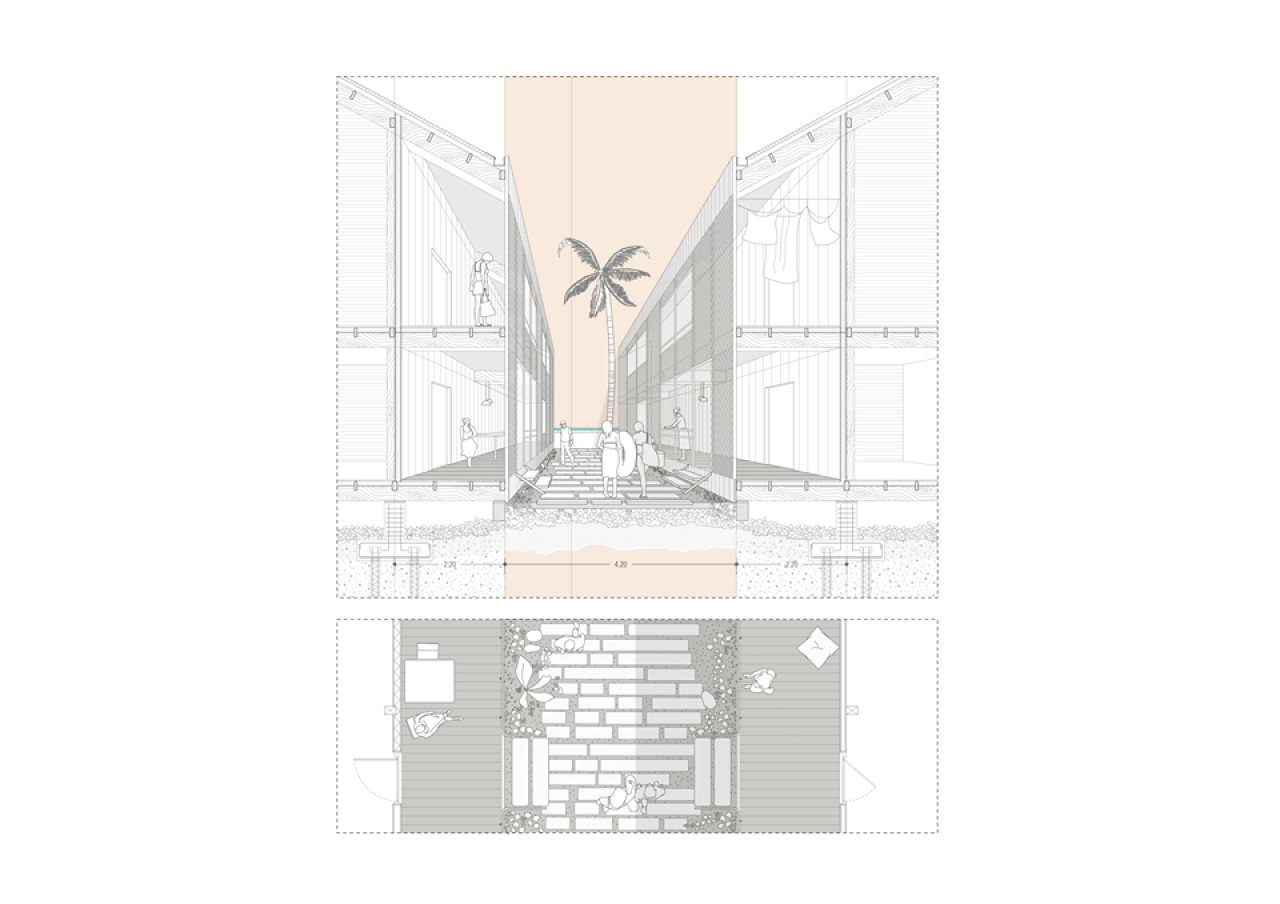
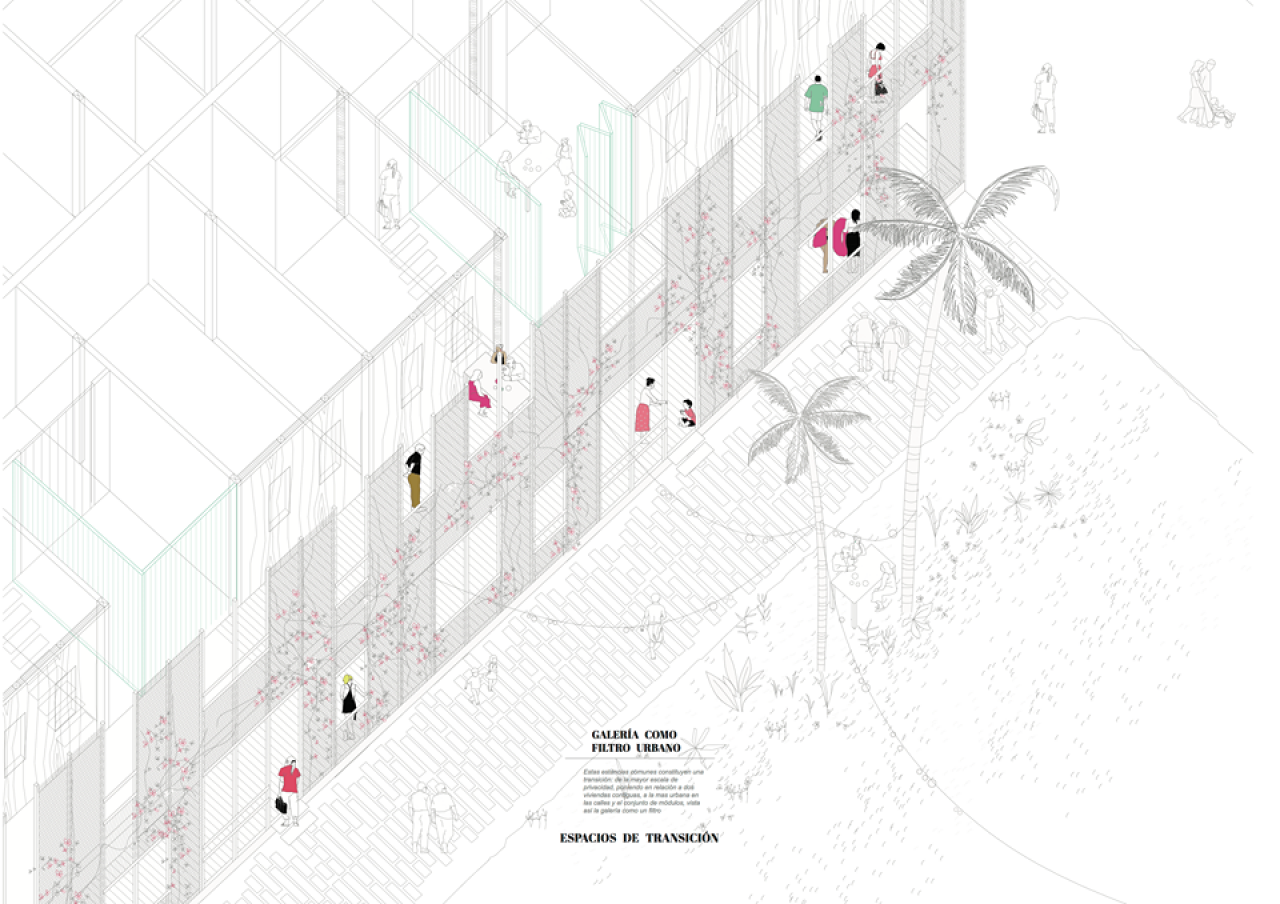
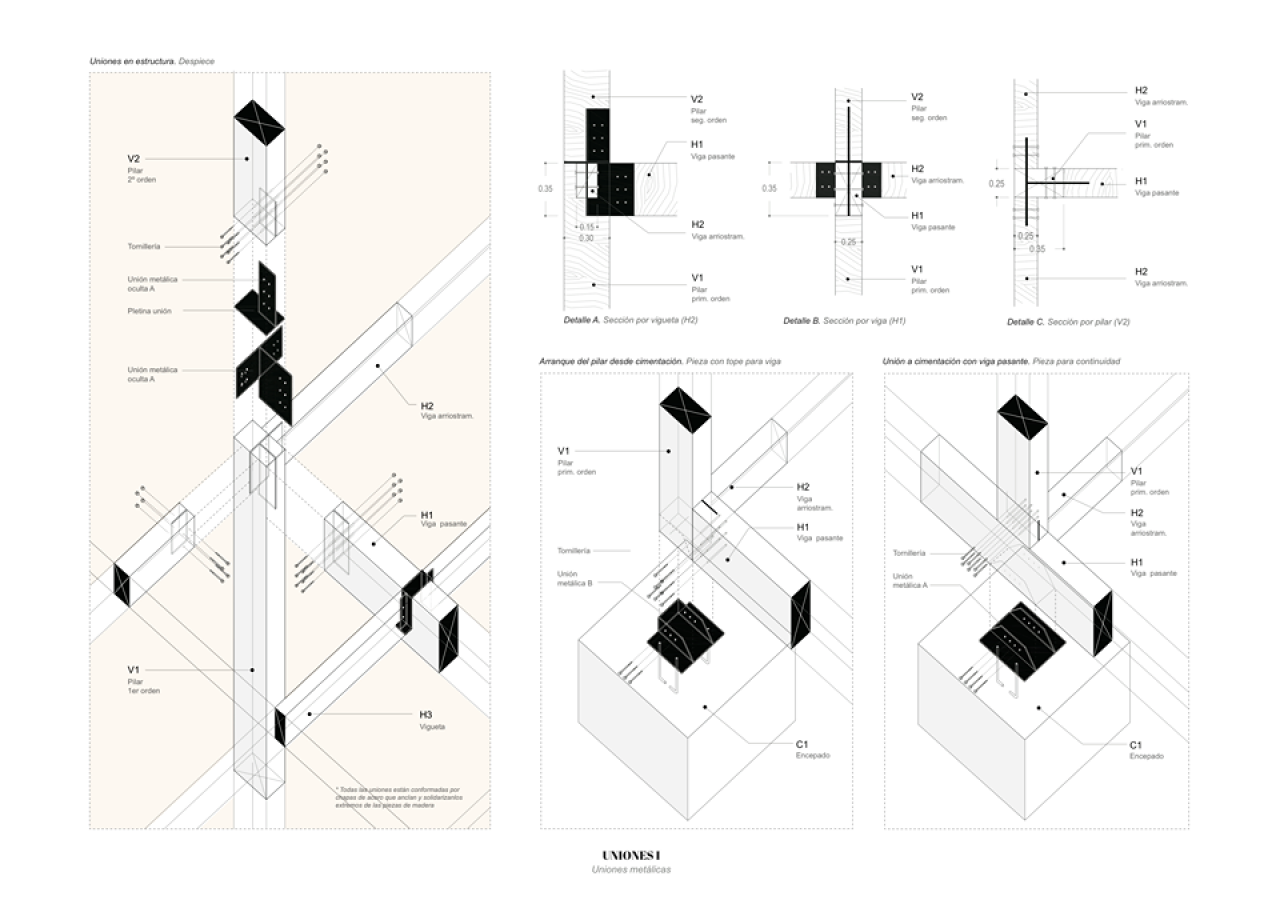
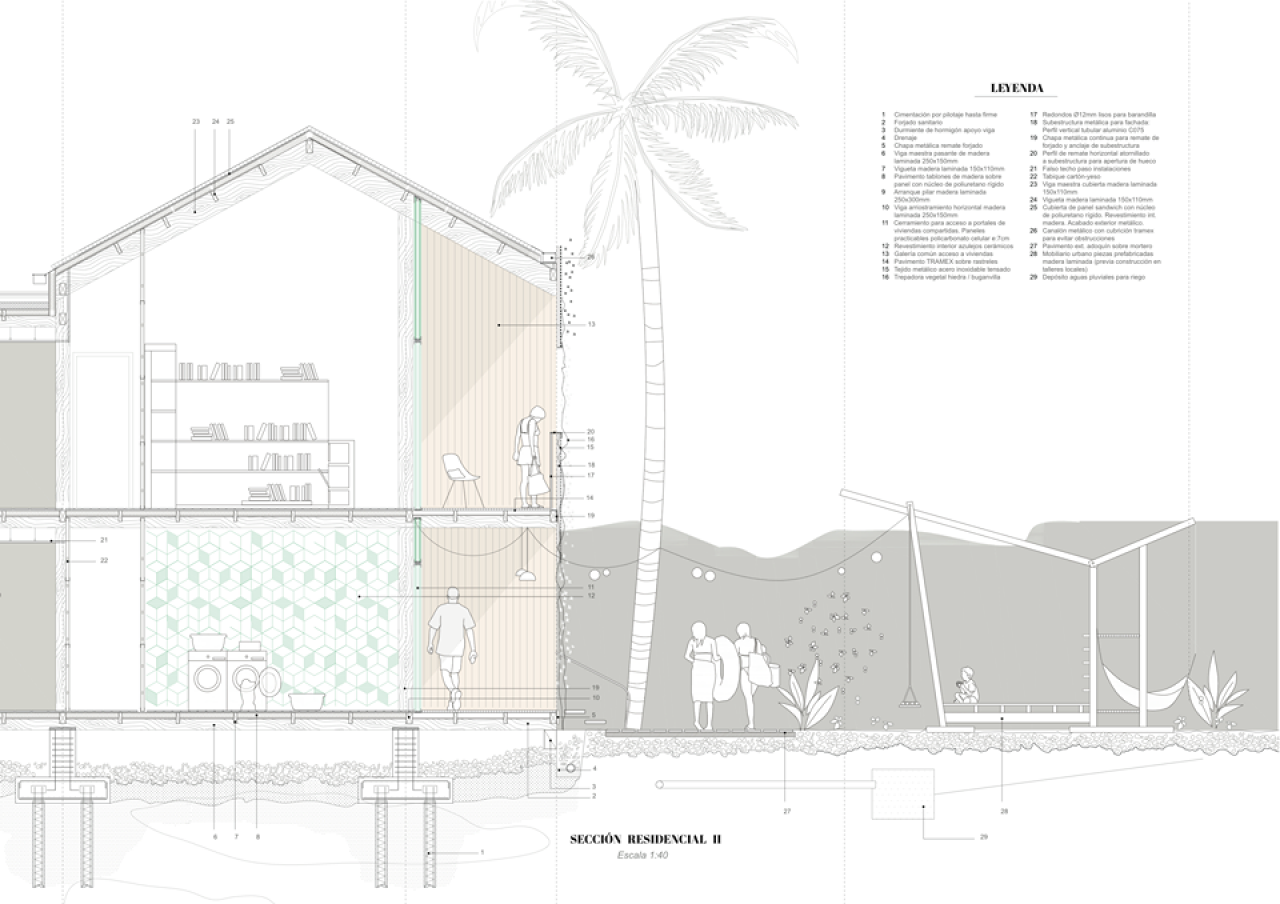
In turn, the climatic parameters of the place will determine the constructive choices. Among them stands out the structure of laminated wood, treated in the same boat repair workshops; or the layout of a metallic fabric on the façade that will constitute the coverage of the access galleries to the houses. In this way, the place is given common rooms of different character and scale of privacy, urban filters that link the various users, whether local or external.
This closes a cycle of reuse and rehabilitation of the site, which ranges from obtaining and treating the raw material, to its more technical, social or urban elements; starting from the memory of what one day was, and proposing a possible scenario for the future Santi Petri
A grid is proposed according to the layout of the old streets. These will constitute the plot that will dimension the new modules, favoring transversality in the east-west axis. This reinterpretation is defined due to the importance of outdoor spaces in Mediterranean climates and their relationship with the interior.
In turn, the climatic parameters of the place will determine the constructive choices. Among them stands out the structure of laminated wood, treated in the same boat repair workshops; or the layout of a metallic fabric on the façade that will constitute the coverage of the access galleries to the houses. In this way, the place is given common rooms of different character and scale of privacy, urban filters that link the various users, whether local or external.
This closes a cycle of reuse and rehabilitation of the site, which ranges from obtaining and treating the raw material, to its more technical, social or urban elements; starting from the memory of what one day was, and proposing a possible scenario for the future Santi Petri
- 00 - Description
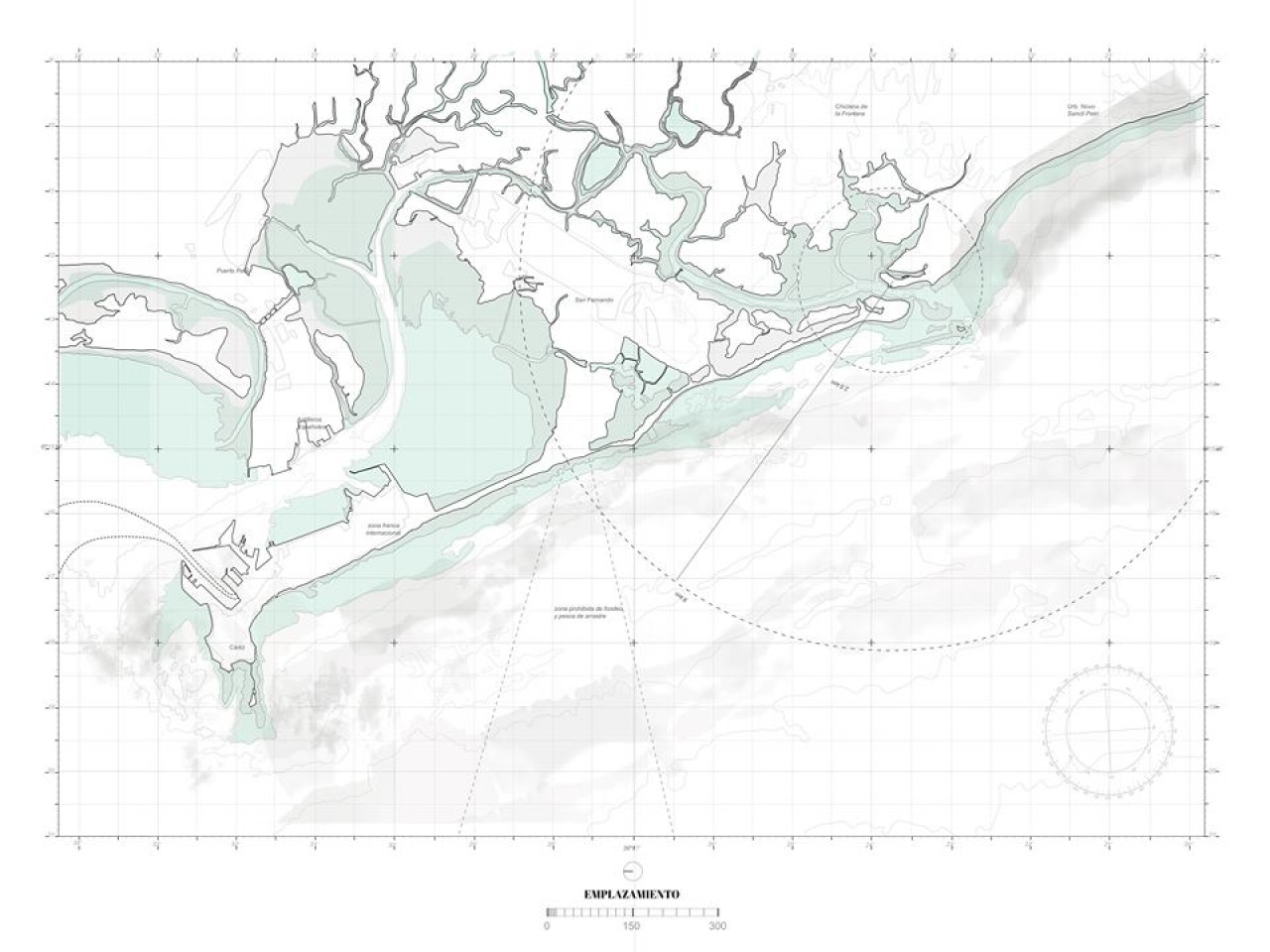
- 01 - site plan
- 02 - plan
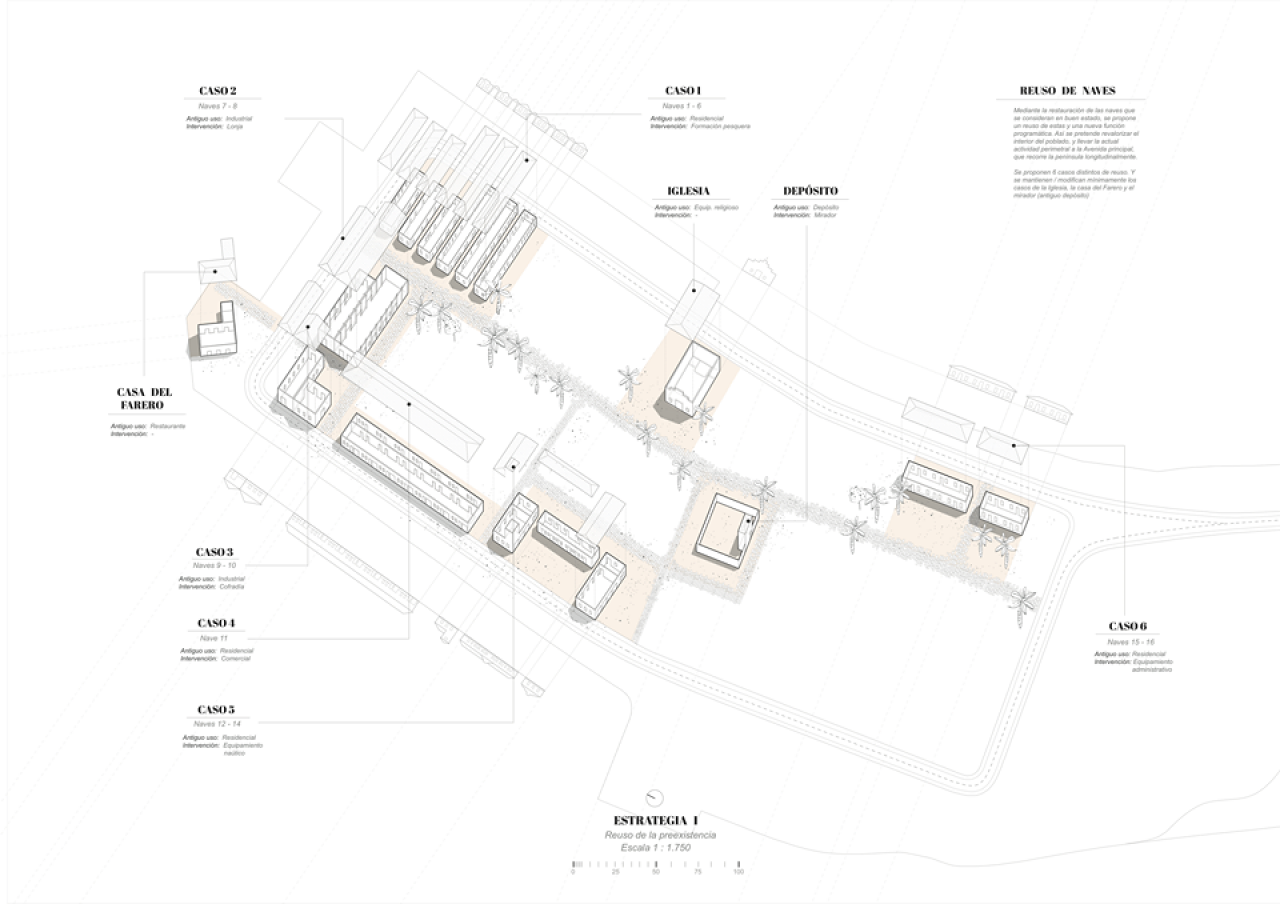
- 03 - rehabilitation
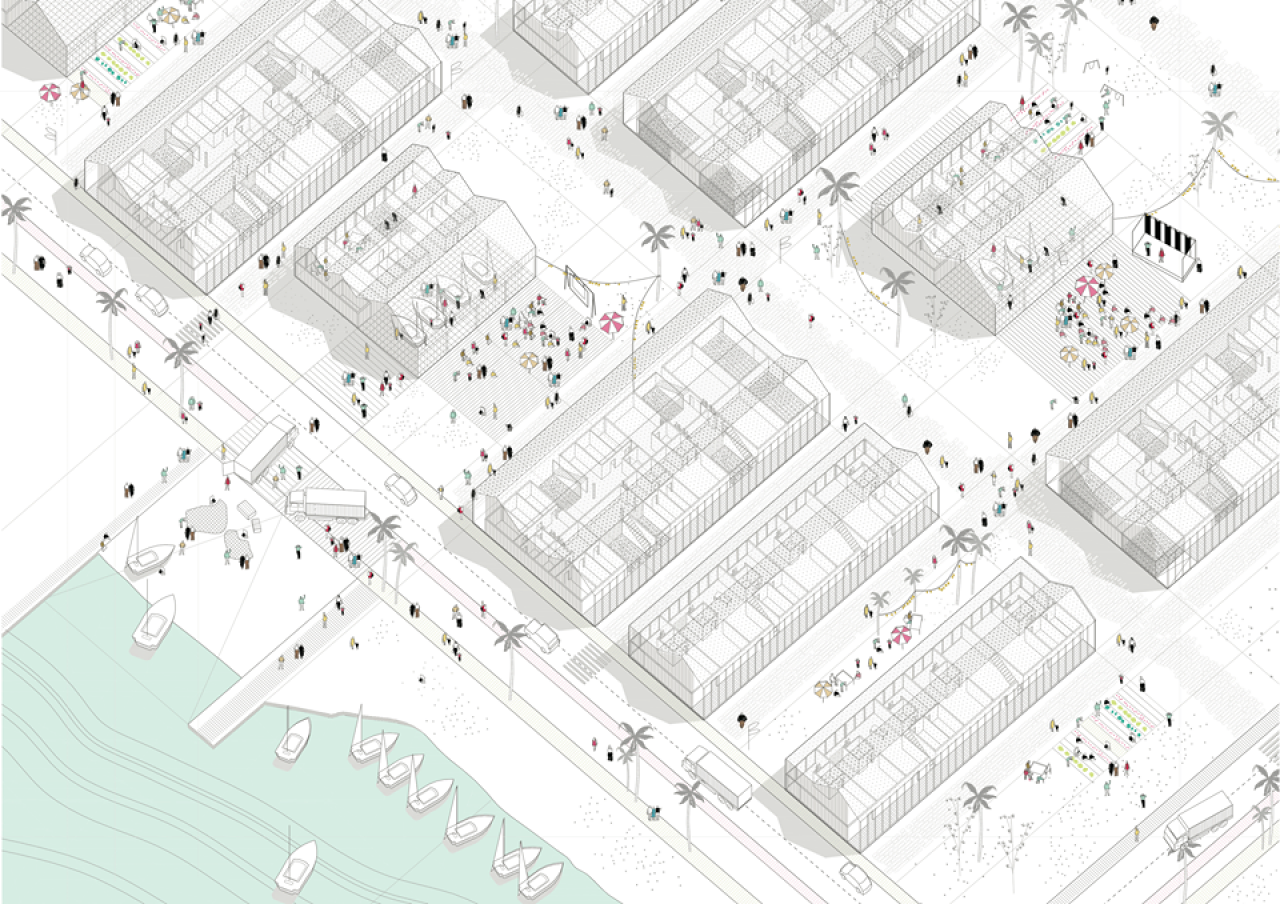
- 04 - urban axonometry
- 05 - residential typology
- 06 - residential typology
- 07 - street 1
- 08 - street 2
- 09 - urban axonometry
- 10 - wood construction
- 11 - constructive section