
Reinhabit Aleppo
The motivation of this project, carried out during the Spring term in Tuñón Unit, is to look into Aleppo’s destruction state after the Syrian Civil War. After studying diverse types of urban proposals for the reconstruction of post-war cities, along with typical patio-houses examples, the aim is to develop speculative proposals that give solutions to the re-urbanization and re-inhabitation of the ancient city.
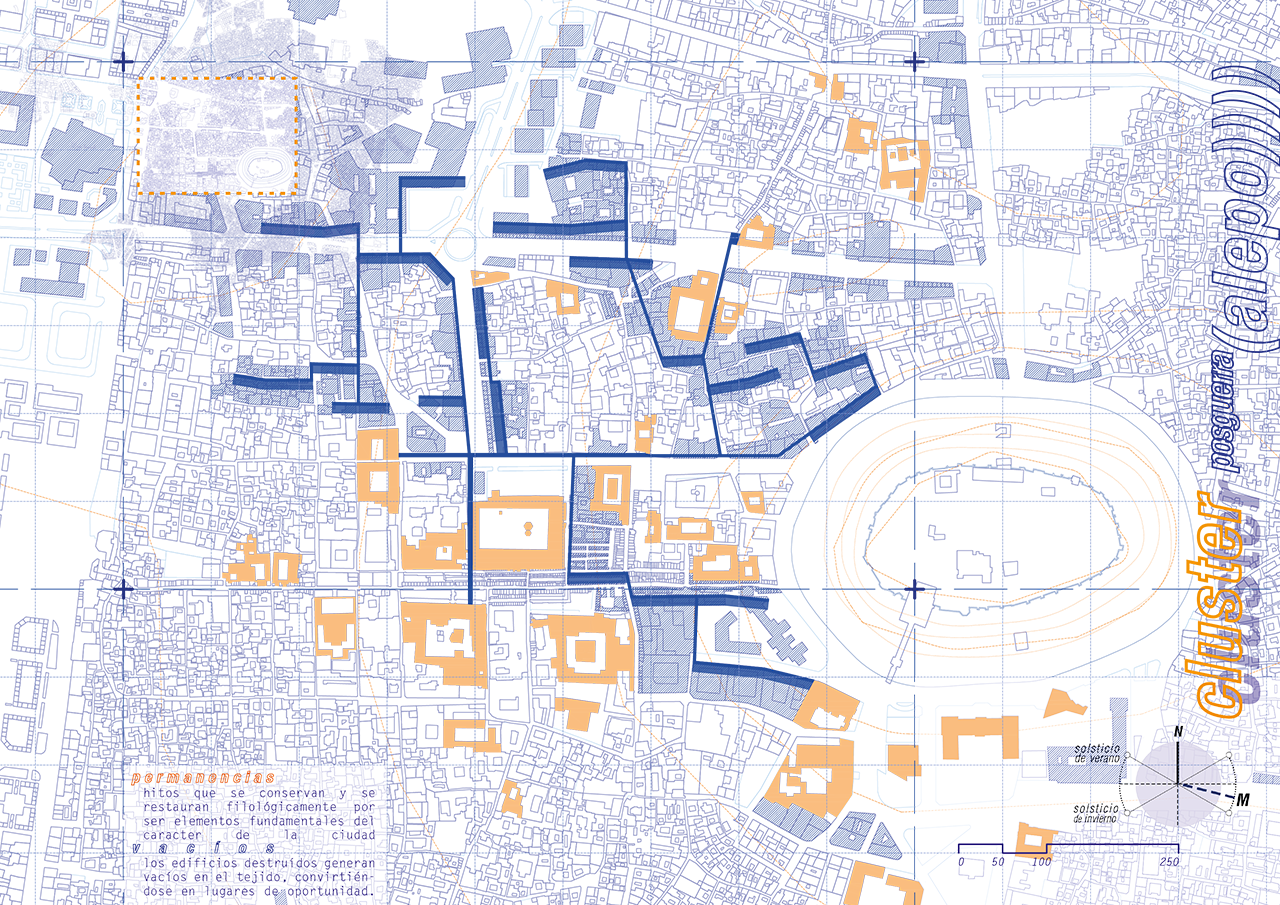
Based on Alison and Peter Smithson’s idea of “cluster”, this project specifically intends to integrate all the fragments of the city, old and new, into a coherent overall global structure. The purpose is to redifine the edges of the old city along the major roads and main streets, in addition to generate a growth model for future urban development.
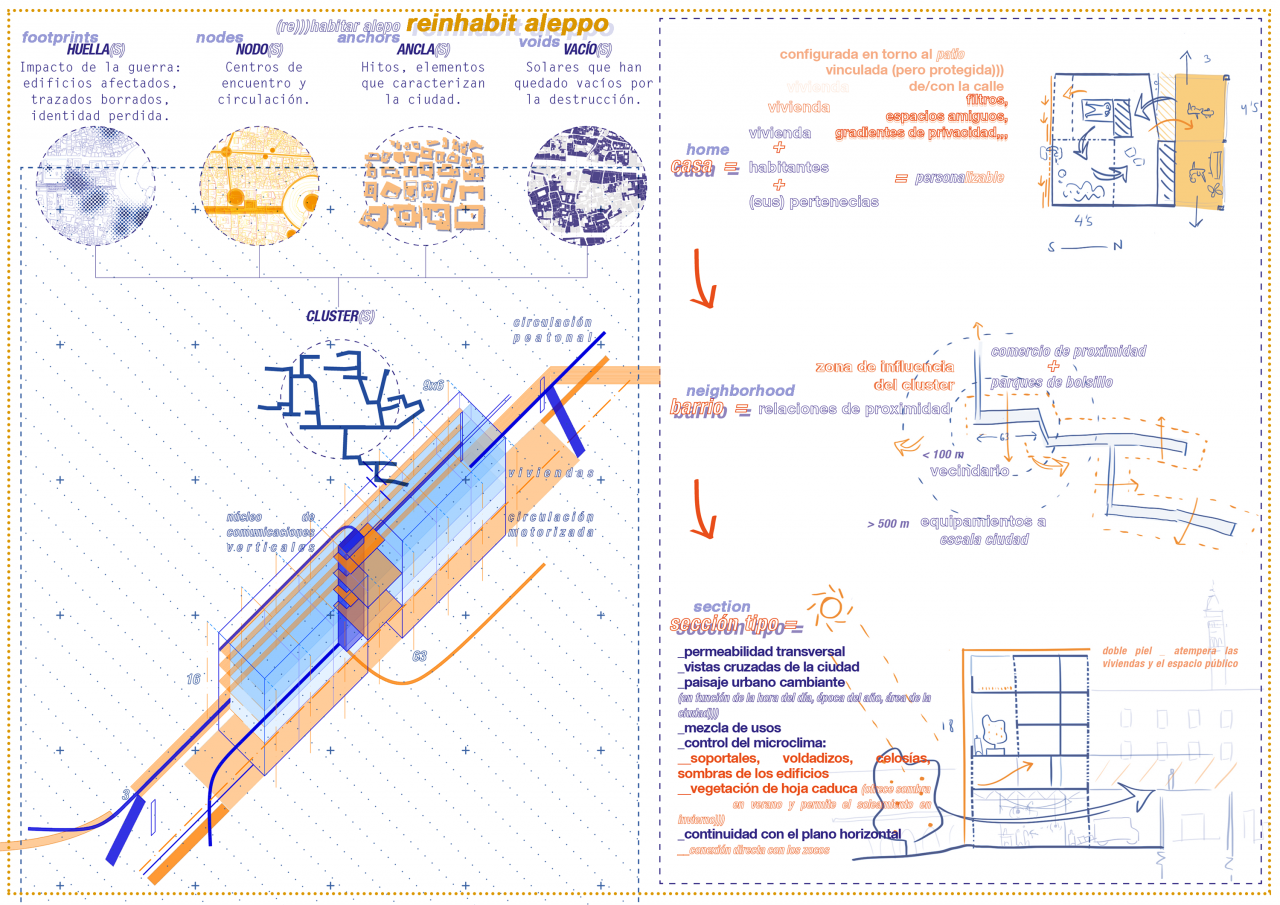
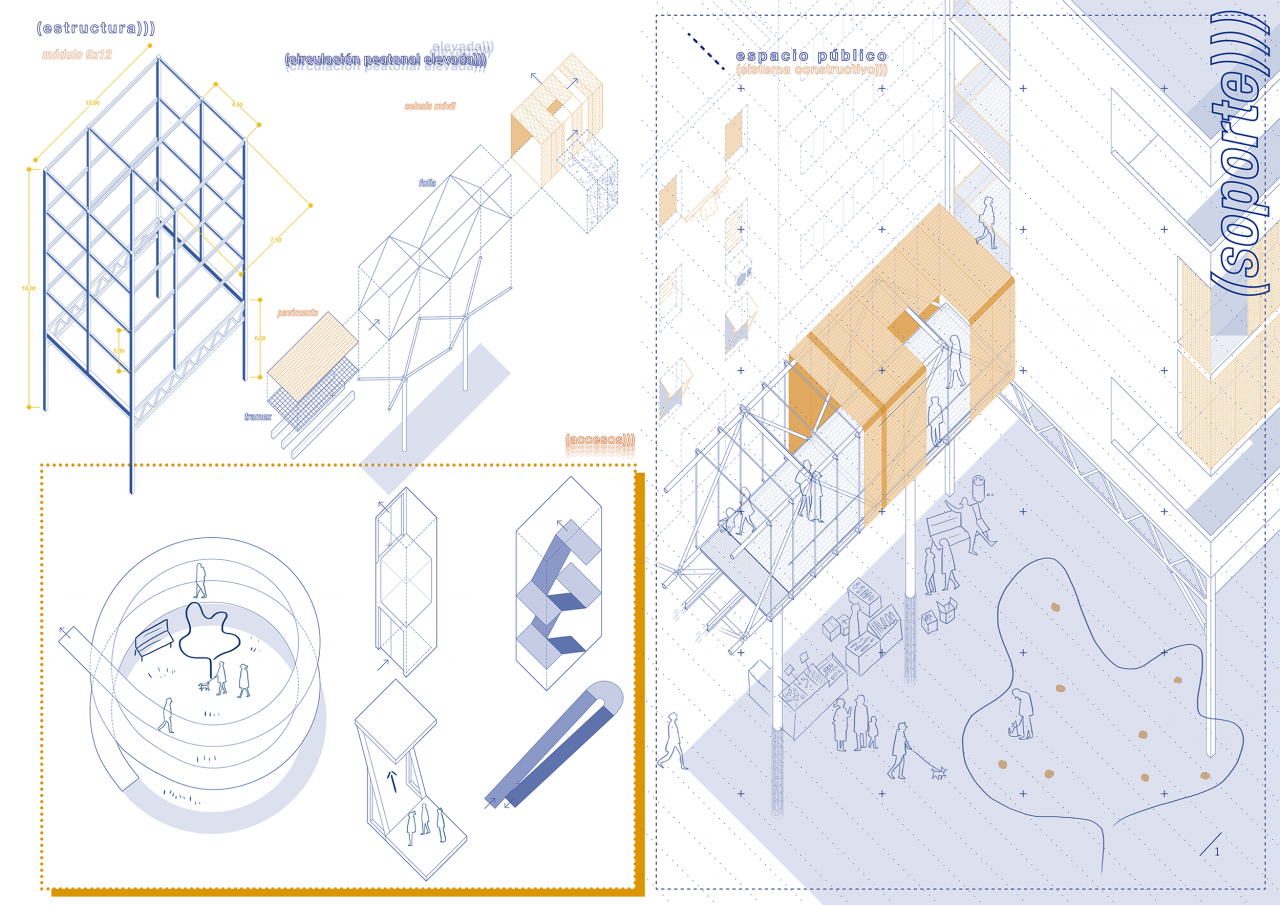
Firstly, in order to achieve this, the structure should be flexible enough to adapt to as many contexts as possible. Moreover, it would be strong enough to create a new urban fabric that coexists as another layer of urbanism upon the city, but with an identity of its own. This idea is materialized by continuous three-meter-wide streets risen six meters from the ground. These streets conform a cluster which is made by adapting to the territory, the demaged areas and the main landmarks of the city. In other words, an unique urban layout, tailor-made for Aleppo.
Secondly, the layout interweaves the elements of the disrupted city, complementing and interlacing them with new structures. On one hand, these show affinity with the historic city in terms of scale, and on the other, with the patio-house typology. At the same time that the aerial streets redraw the public space and offer new green areas for the city, they concentrate pedestrian circulation and give access to the dwellings.
The project aims to emphasize the importance of the street as the structuring element of the city, like the skeleton of a living being. Re-inhabiting Aleppo implies bringing back to life the spaces where everyday actions take place.
Based on Alison and Peter Smithson’s idea of “cluster”, this project specifically intends to integrate all the fragments of the city, old and new, into a coherent overall global structure. The purpose is to redifine the edges of the old city along the major roads and main streets, in addition to generate a growth model for future urban development.
Firstly, in order to achieve this, the structure should be flexible enough to adapt to as many contexts as possible. Moreover, it would be strong enough to create a new urban fabric that coexists as another layer of urbanism upon the city, but with an identity of its own. This idea is materialized by continuous three-meter-wide streets risen six meters from the ground. These streets conform a cluster which is made by adapting to the territory, the demaged areas and the main landmarks of the city. In other words, an unique urban layout, tailor-made for Aleppo.
Secondly, the layout interweaves the elements of the disrupted city, complementing and interlacing them with new structures. On one hand, these show affinity with the historic city in terms of scale, and on the other, with the patio-house typology. At the same time that the aerial streets redraw the public space and offer new green areas for the city, they concentrate pedestrian circulation and give access to the dwellings.
The project aims to emphasize the importance of the street as the structuring element of the city, like the skeleton of a living being. Re-inhabiting Aleppo implies bringing back to life the spaces where everyday actions take place.
- 00 - Description
- 01 - Aleppo Clusters
- 02 - Analysis
- 03 - Concept
- 04 - Structure
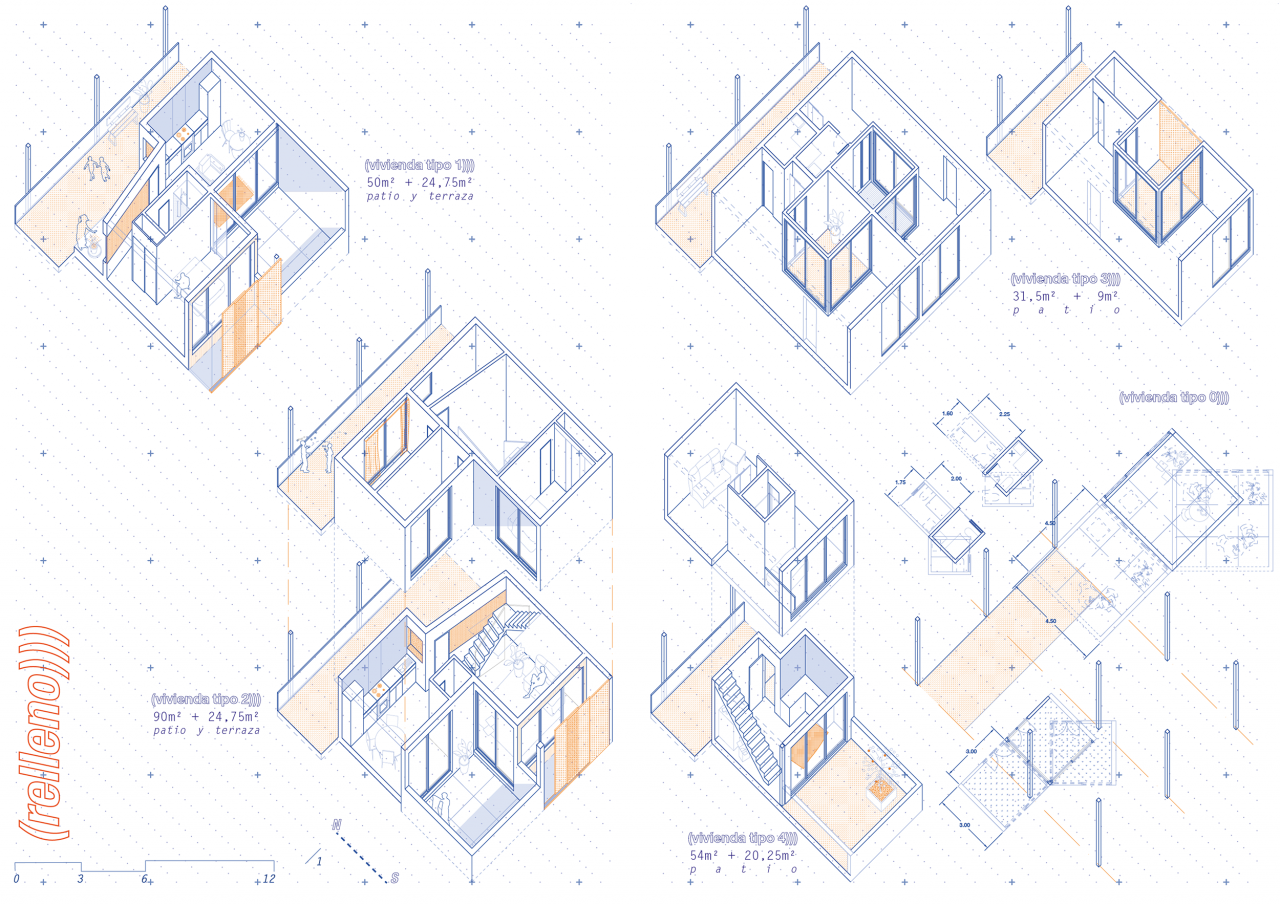
- 05 - Infill
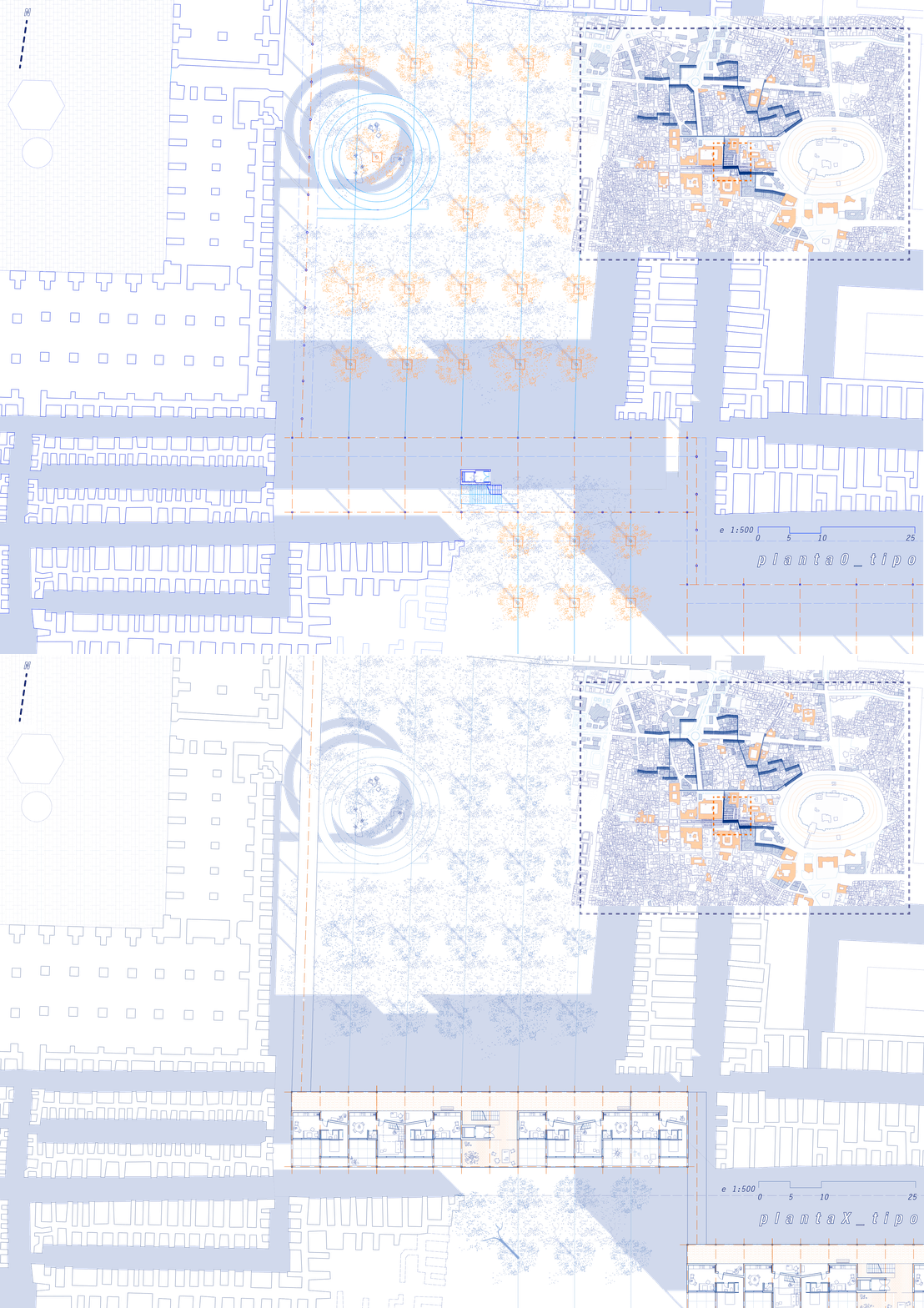
- 06 - Ground&upper floors
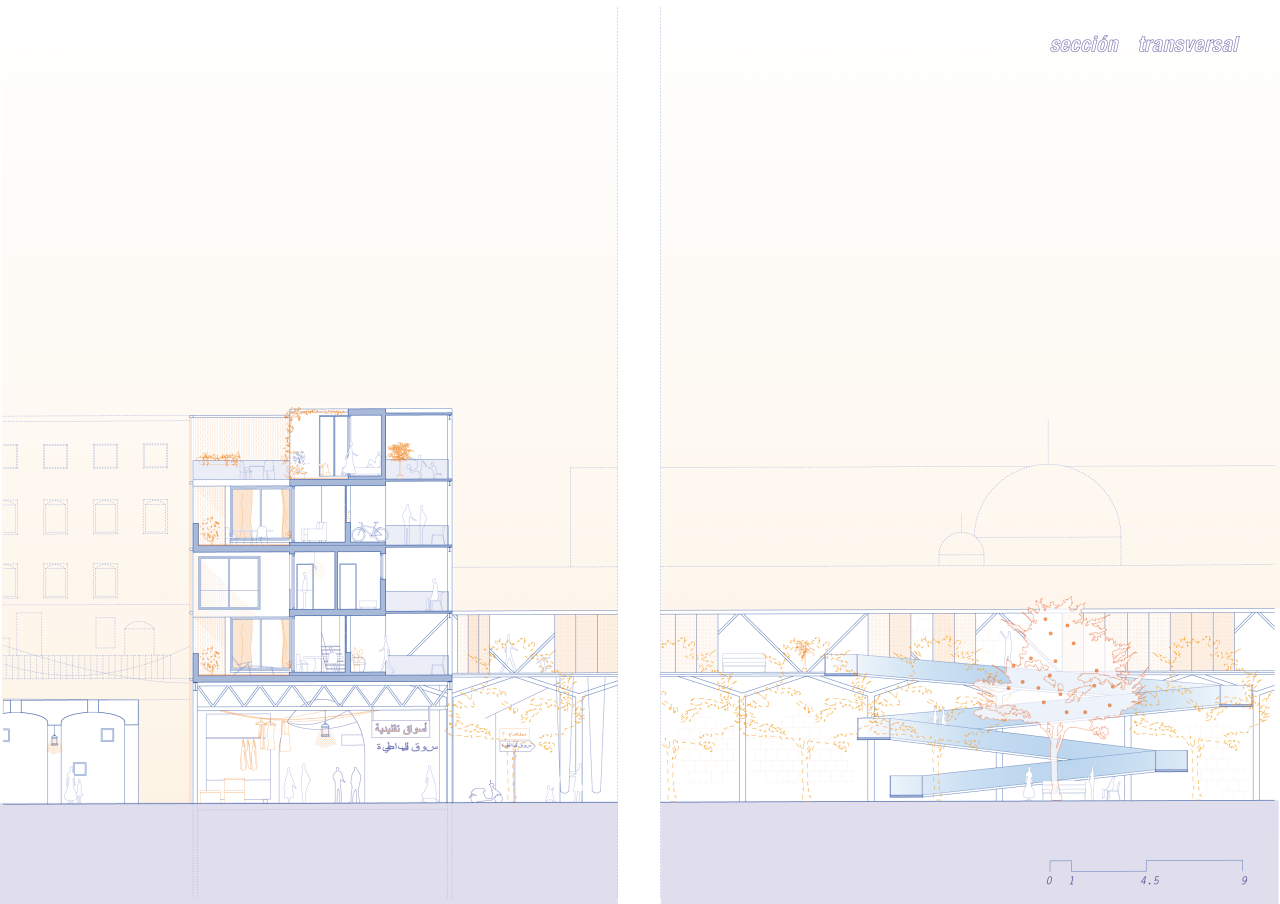
- 07 - Section #1
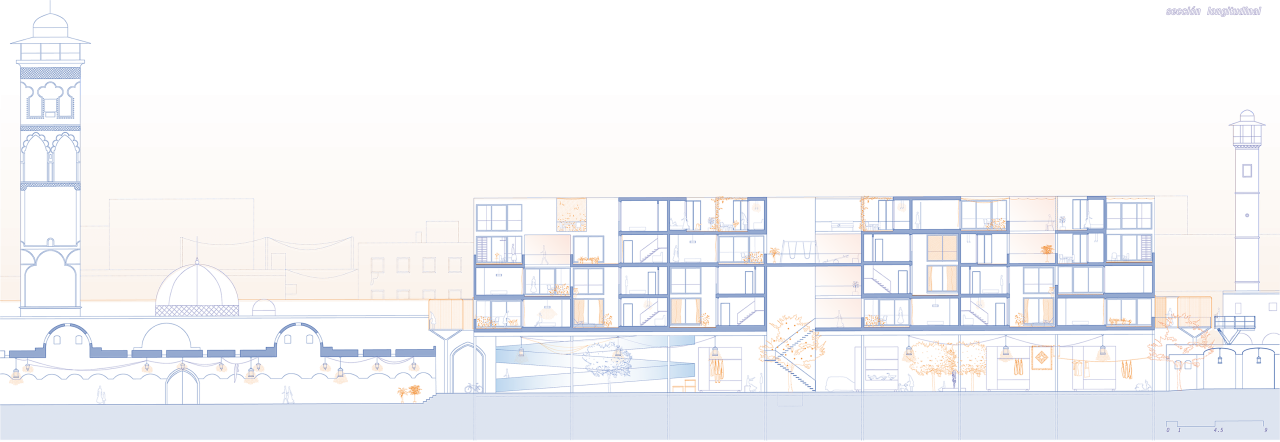
- 08 - Section #2
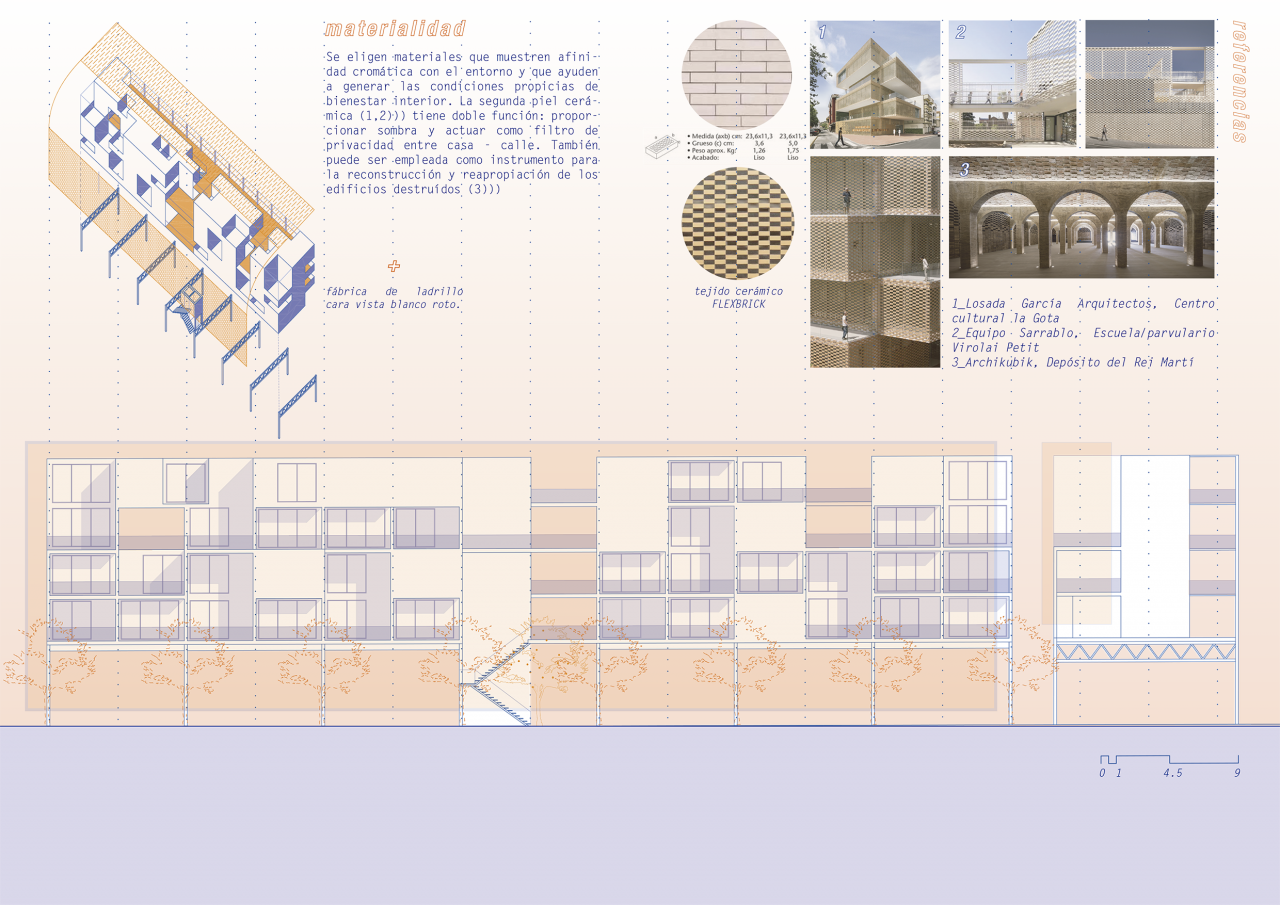
- 09 - Materiality
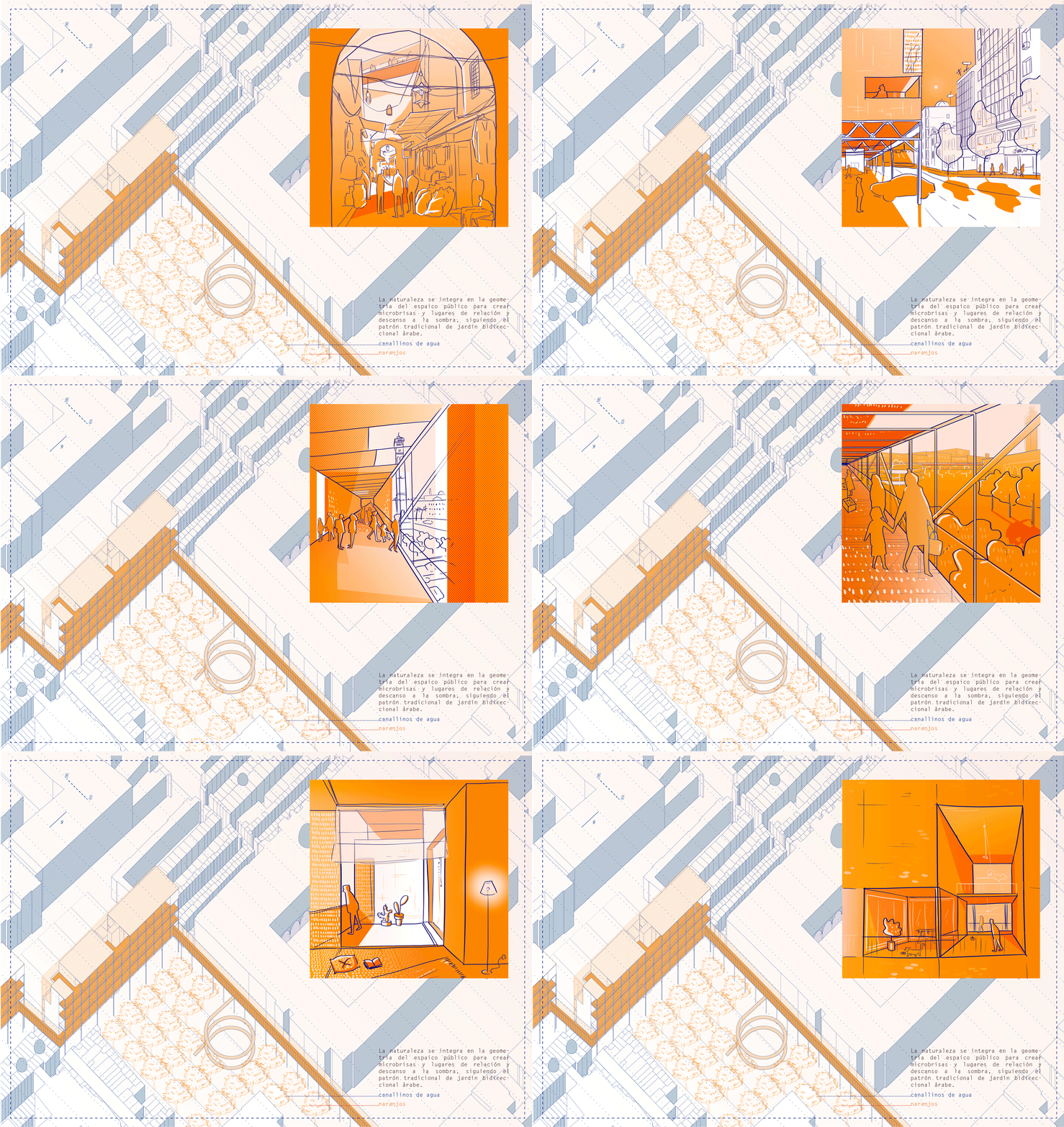
- 10 - Puplic Space + Axo.