
RELACIONES
Greece, the birthplace of Western civilization and origin of our culture. Through its architecture, we have been discovering the relationships that the ancient Greeks established between the landscape, the buildings and the spiritual. Relationships that last and continue to this day.
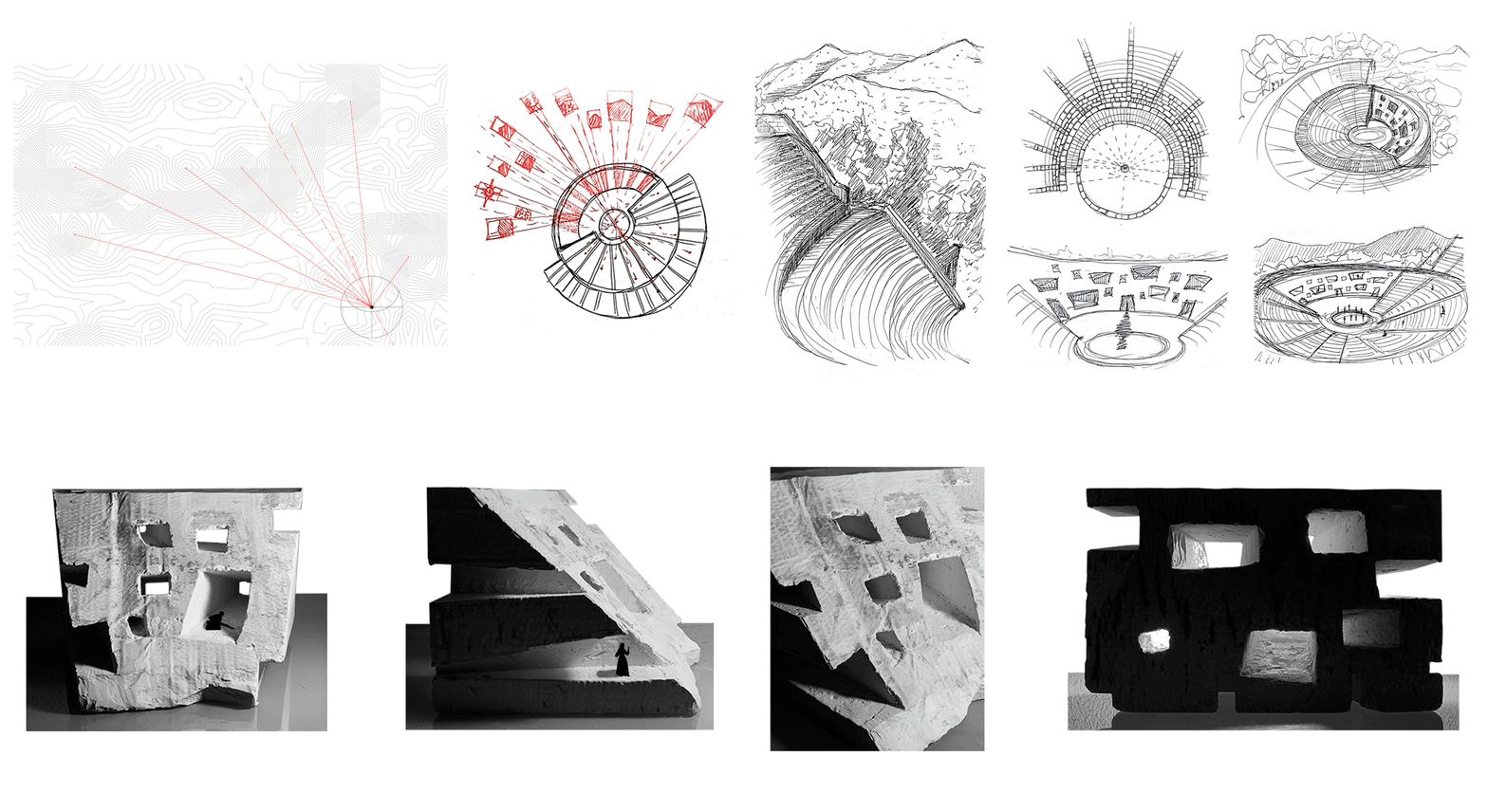
We begin in the theater of Epidaurus, where a scenography is proposed for the play Electra, by Sophocles. The proposal consists of closing the theater with a volume that extends the circular shape of the stands and contains a series of openings that break through it, framing specific views of the landscape. The actors would stand in these cavities during the development of the play, moving from one to another depending on the interactions between the characters and the action in the plot. This establishes a direct relationship between the viewer, the play and the landscape, which would remain as a grand background.
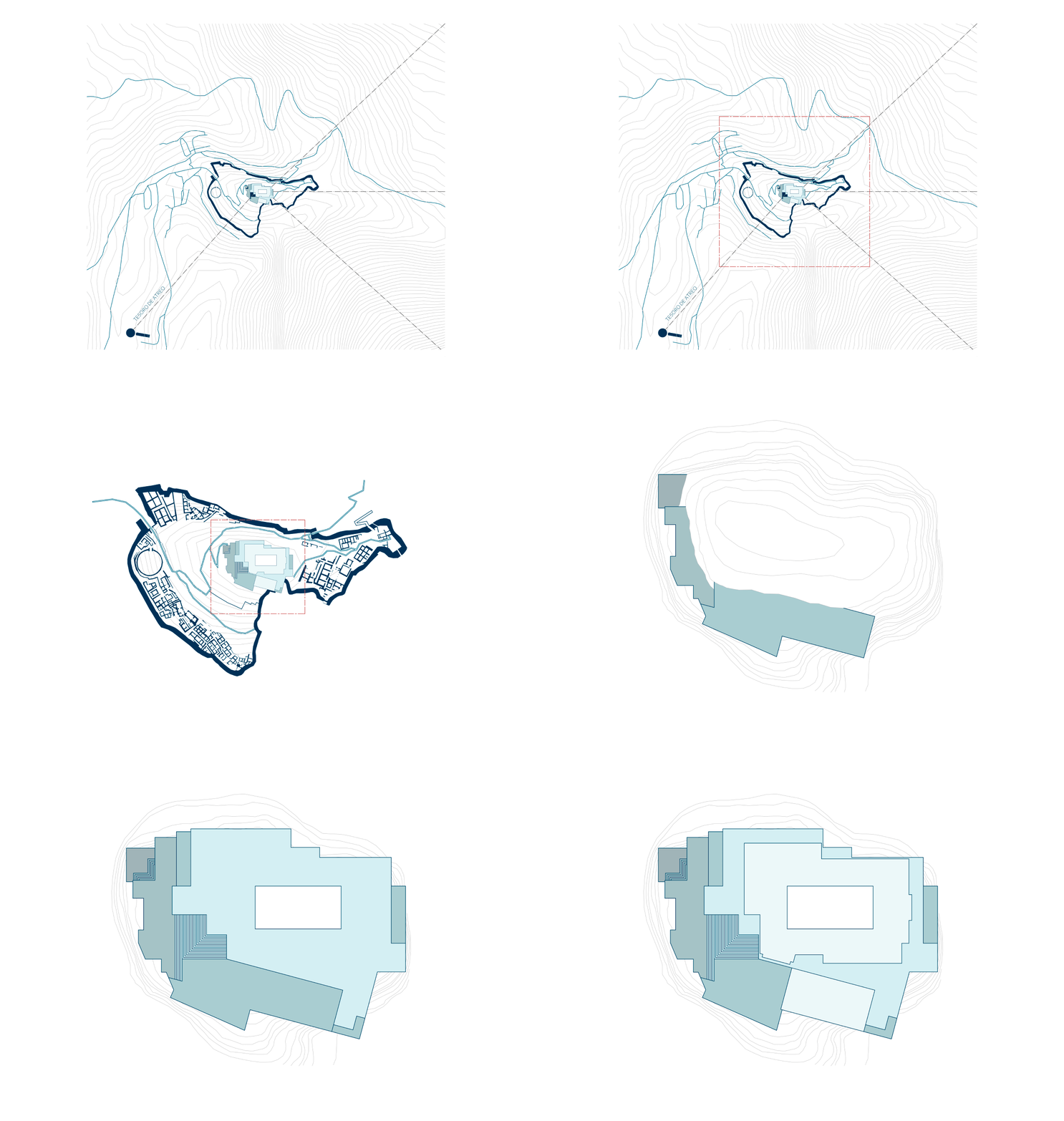
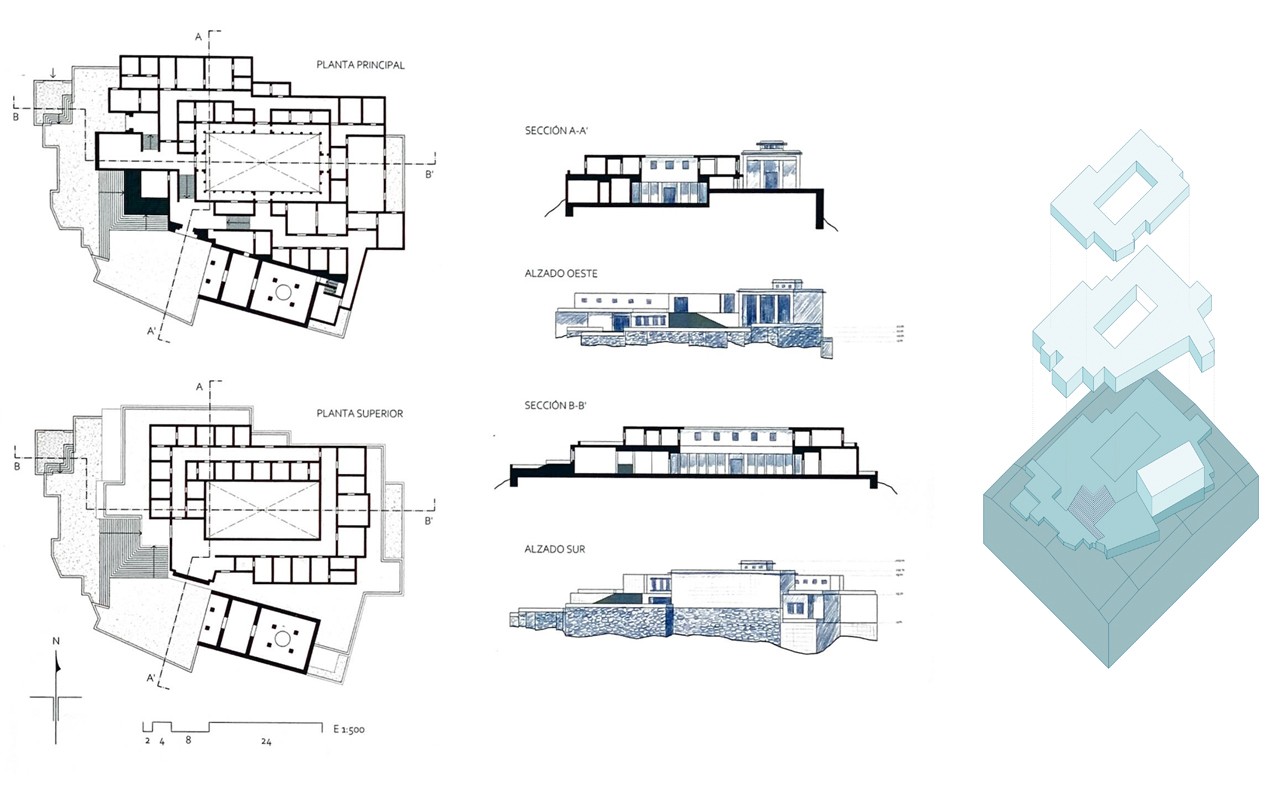
The second exercise takes us to Mycenae, where we will design a palace for King Agamemnon, taking as a reference the work of Frank Lloyd Wright. We begin by studying the ruins of the original palace, of which only platforms remain that rise above the slope. The proposal is based on platform-architecture that continues that ascent up the mountain, giving rise to a set of terraces between the existing platforms and the new ones. These are generated following the contours of the terrain, establishing a symbiotic relationship between the location and the architecture, between the landscape and the patio, which organizes the interior space.
For the last exercise, we move to the most emblematic place in Ancient Greece, the Acropolis of Athens. The project: the new temple of Zeus, as a space of universal spirituality. The proposal consists of an enclosure in front of the Parthenon, which guides the view towards landmarks in the landscape through walls and stands that organize the space. The origin of the project is to narrow down the concept of a Greek temple to its fundamental elements: an enclosure and a platform oriented to a specific point in the landscape. From this base, the proposed space culminates the journey across the Acropolis, through walls that guide us to the main façade of the Parthenon. From this point a plaza begins, delimited by the stylobate and its reflection, followed by a stand. The rest of the enclosure is organized by a series of walls that guide the view towards the Parneses and Hymetus mountains, where there used to be other altars dedicated to Zeus, thus establishing a spiritual relationship with the site, the Acropolis and its history.
We begin in the theater of Epidaurus, where a scenography is proposed for the play Electra, by Sophocles. The proposal consists of closing the theater with a volume that extends the circular shape of the stands and contains a series of openings that break through it, framing specific views of the landscape. The actors would stand in these cavities during the development of the play, moving from one to another depending on the interactions between the characters and the action in the plot. This establishes a direct relationship between the viewer, the play and the landscape, which would remain as a grand background.
The second exercise takes us to Mycenae, where we will design a palace for King Agamemnon, taking as a reference the work of Frank Lloyd Wright. We begin by studying the ruins of the original palace, of which only platforms remain that rise above the slope. The proposal is based on platform-architecture that continues that ascent up the mountain, giving rise to a set of terraces between the existing platforms and the new ones. These are generated following the contours of the terrain, establishing a symbiotic relationship between the location and the architecture, between the landscape and the patio, which organizes the interior space.
For the last exercise, we move to the most emblematic place in Ancient Greece, the Acropolis of Athens. The project: the new temple of Zeus, as a space of universal spirituality. The proposal consists of an enclosure in front of the Parthenon, which guides the view towards landmarks in the landscape through walls and stands that organize the space. The origin of the project is to narrow down the concept of a Greek temple to its fundamental elements: an enclosure and a platform oriented to a specific point in the landscape. From this base, the proposed space culminates the journey across the Acropolis, through walls that guide us to the main façade of the Parthenon. From this point a plaza begins, delimited by the stylobate and its reflection, followed by a stand. The rest of the enclosure is organized by a series of walls that guide the view towards the Parneses and Hymetus mountains, where there used to be other altars dedicated to Zeus, thus establishing a spiritual relationship with the site, the Acropolis and its history.




- 00 - Description
- 01 - E1_Epidaurus
- 02 - E1_Sketches/Model
- 03 - E1_Plans
- 04 - E2_Mycenae
- 05 - E2_Plans
- 06 - E2_Views
- 07 - E3_Athens
- 08 - E3_Model
- 09 - E3_Plans
- 10 - E3_Views
- 11 - Video