
Residual spaces
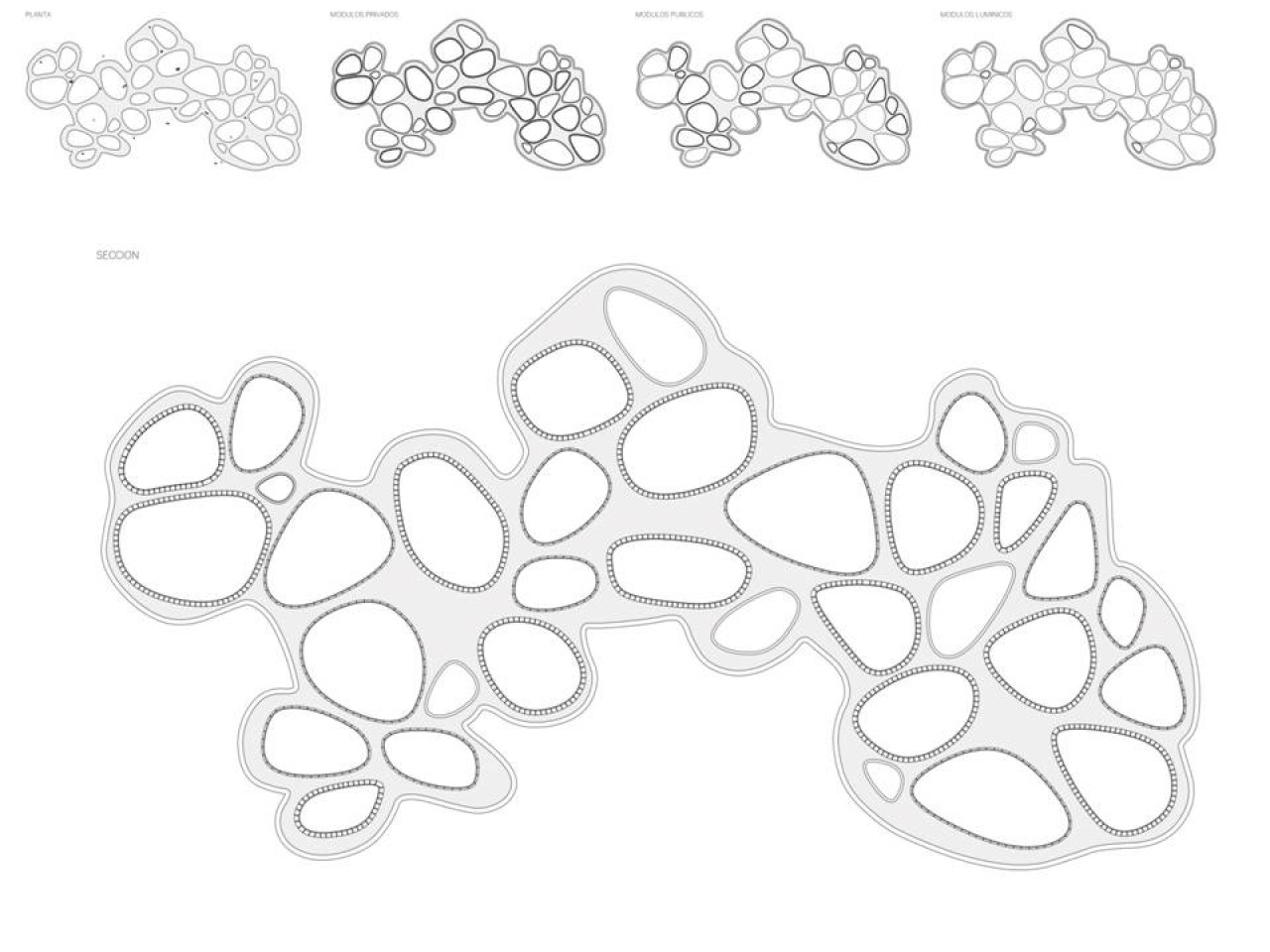
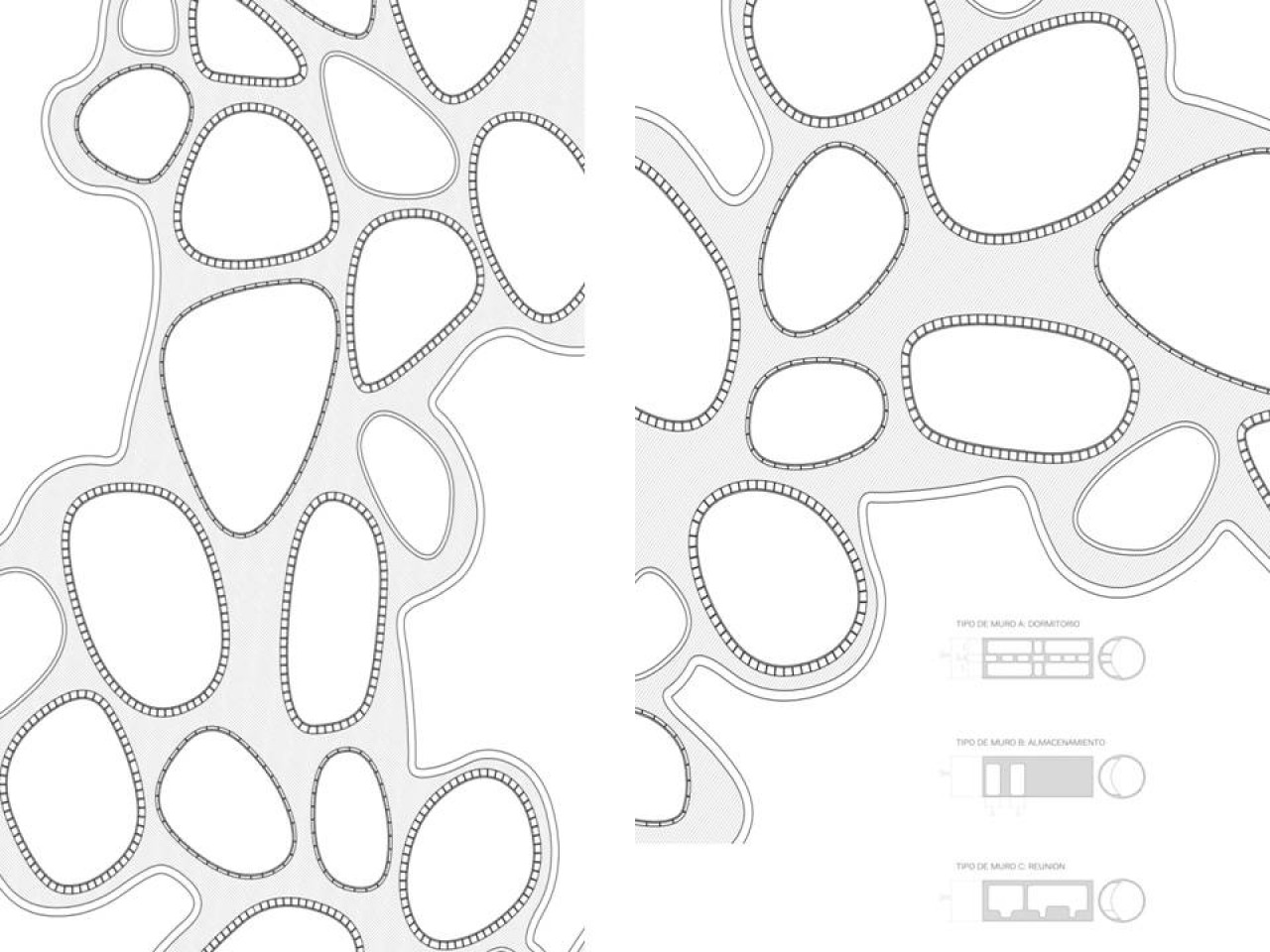
Residual spaces are a consequence of any project: spaces created from the surplus of a main object. This project considers the habitable capacity of these spaces, in a critical approach that tries to distinguish the basis of the habitability of the accessory. Taking as a starting point the experimentation of the textile formwork and the capacity to generate conglomerates with solidification properties from the desert sand, the understanding of the project is proposed as a single object able to solve in the unit of the constructive method the different dimensions of a space in which private and public life coexist.
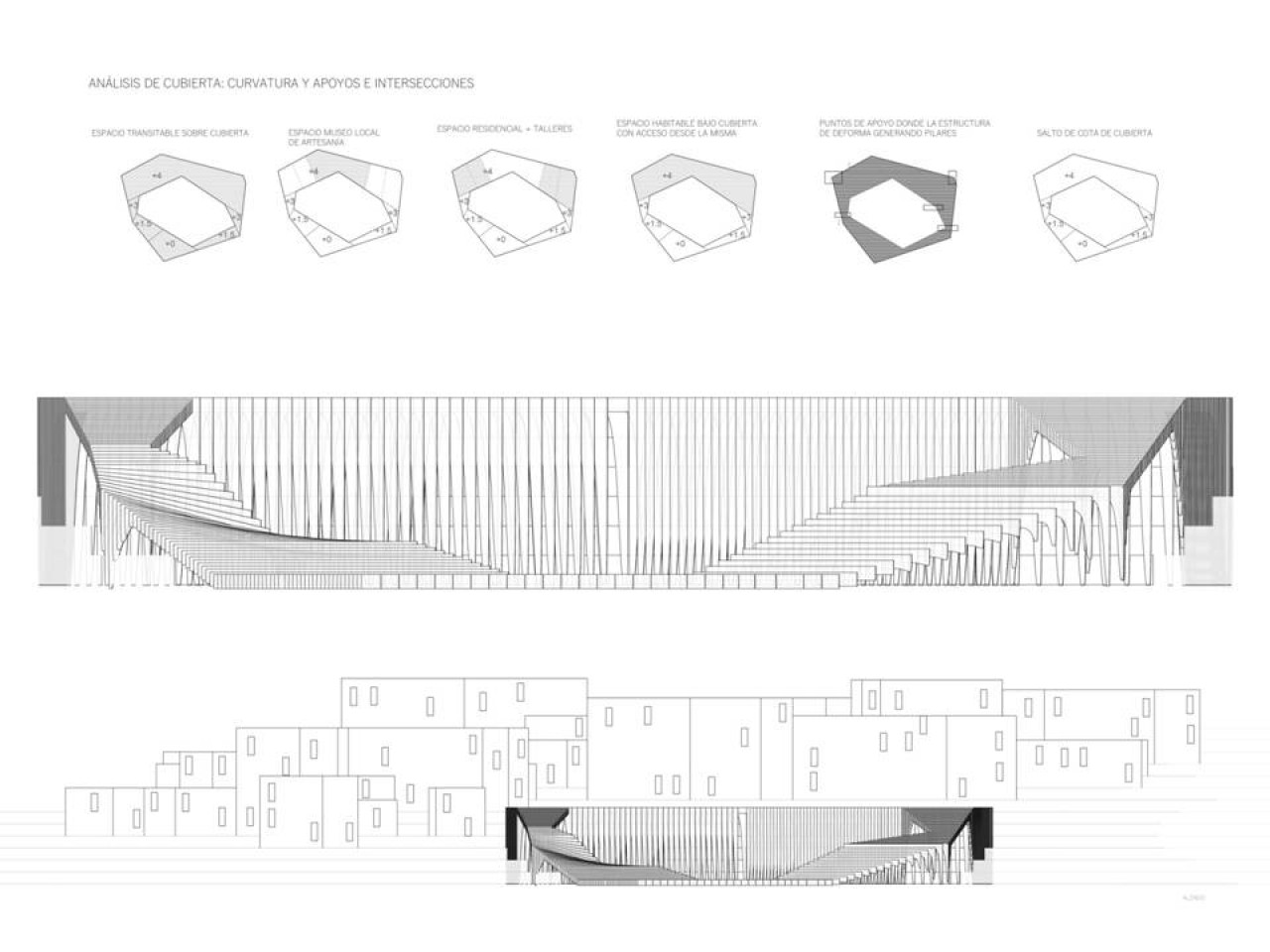
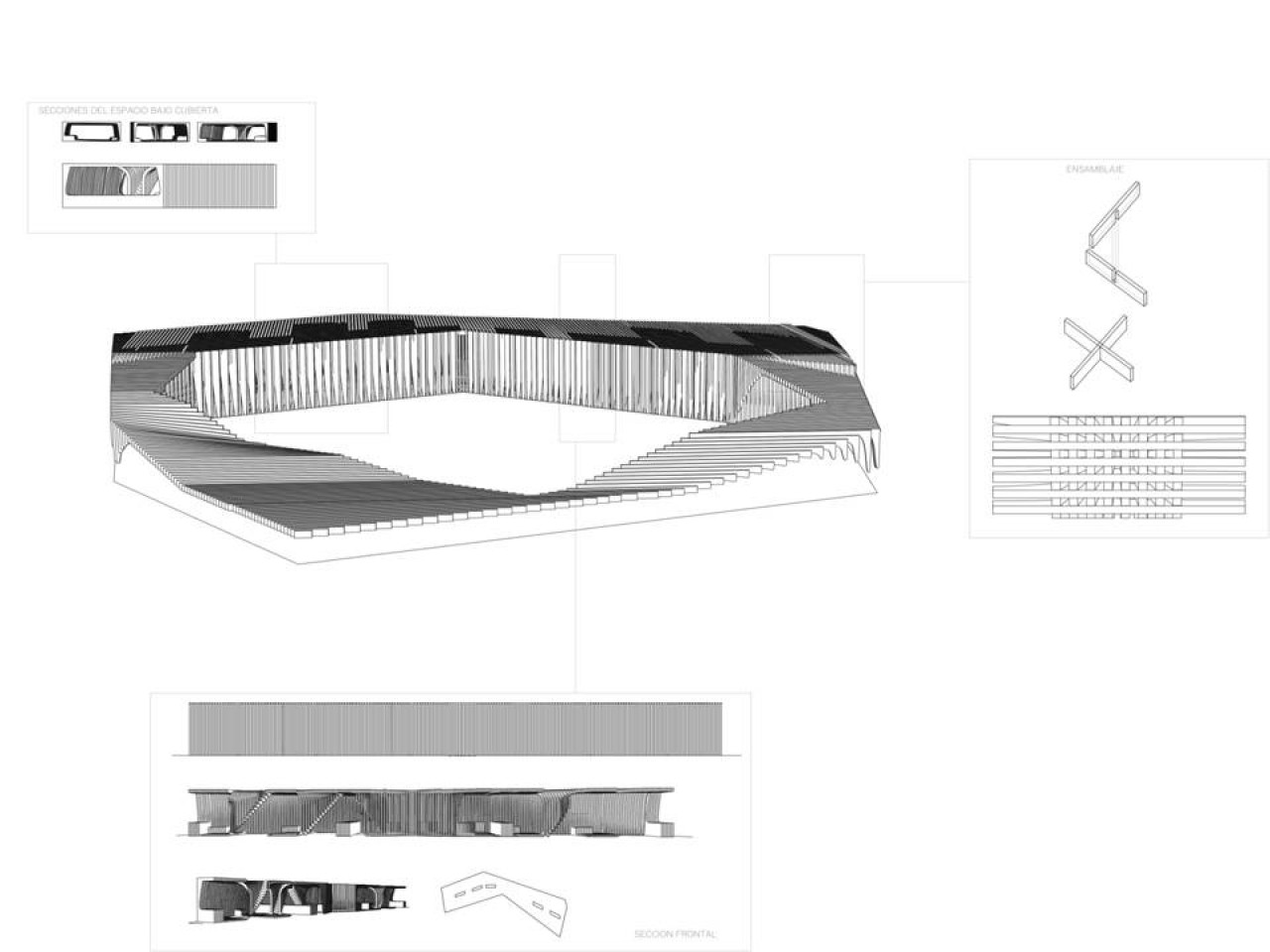
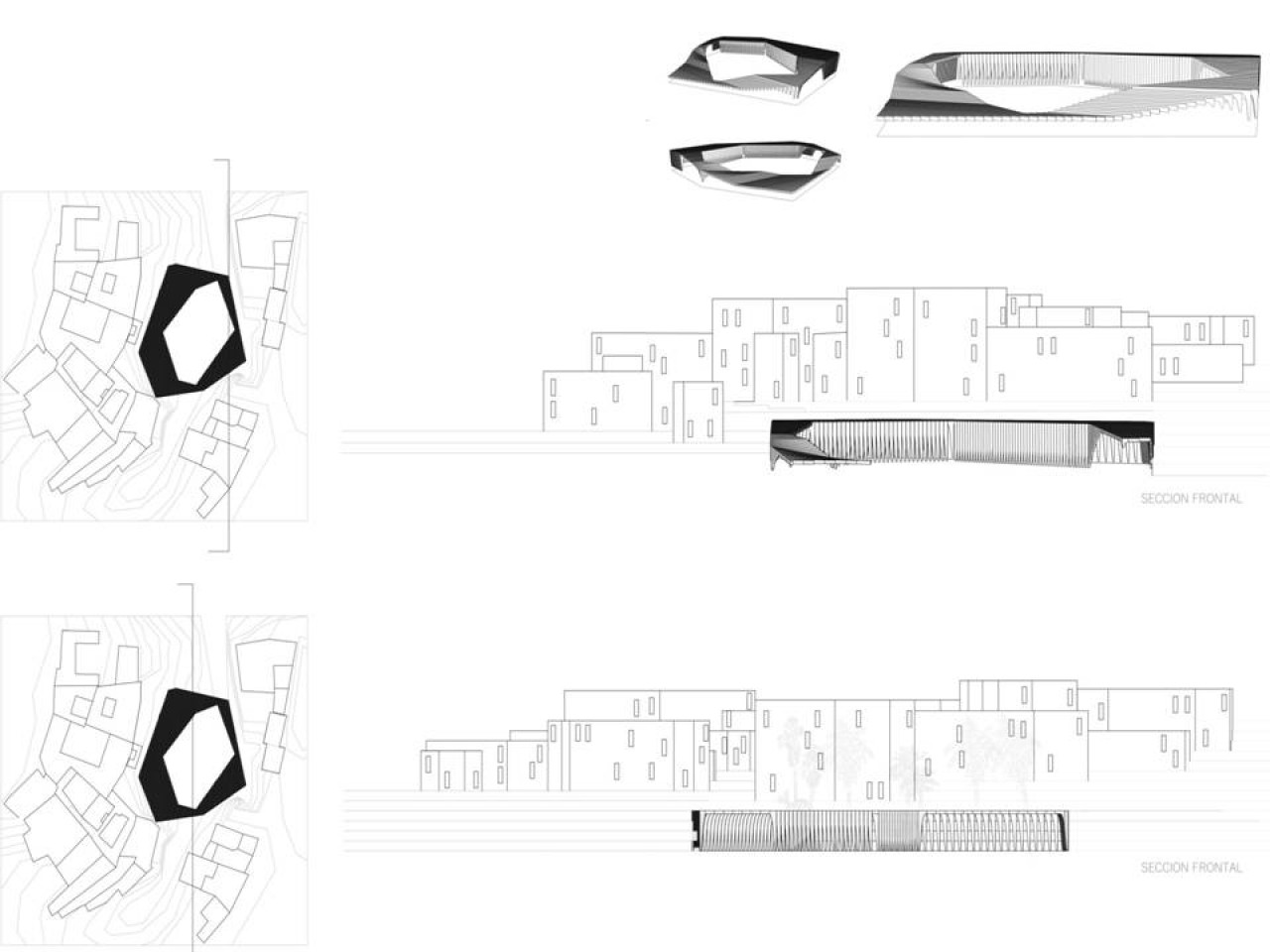
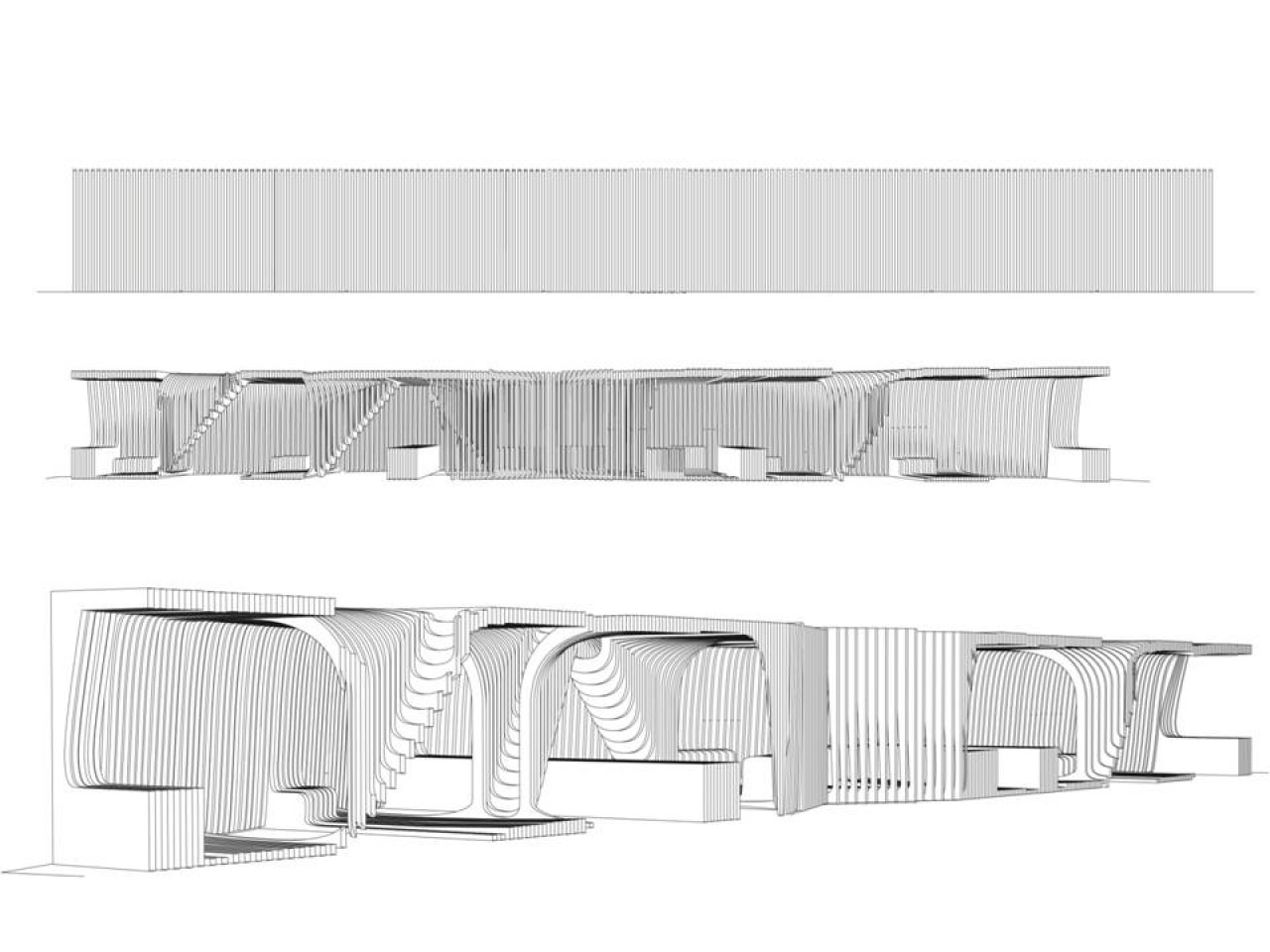
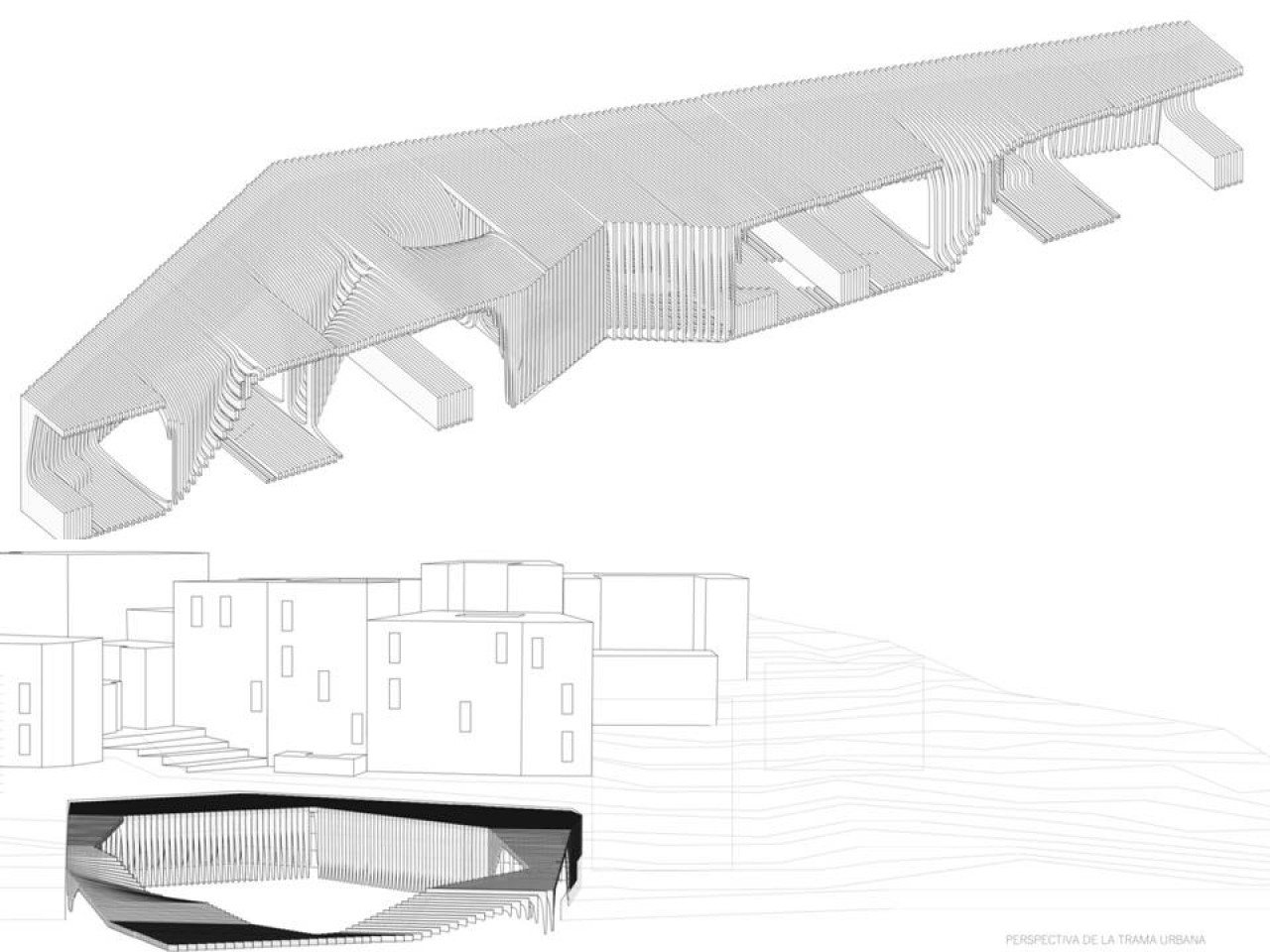
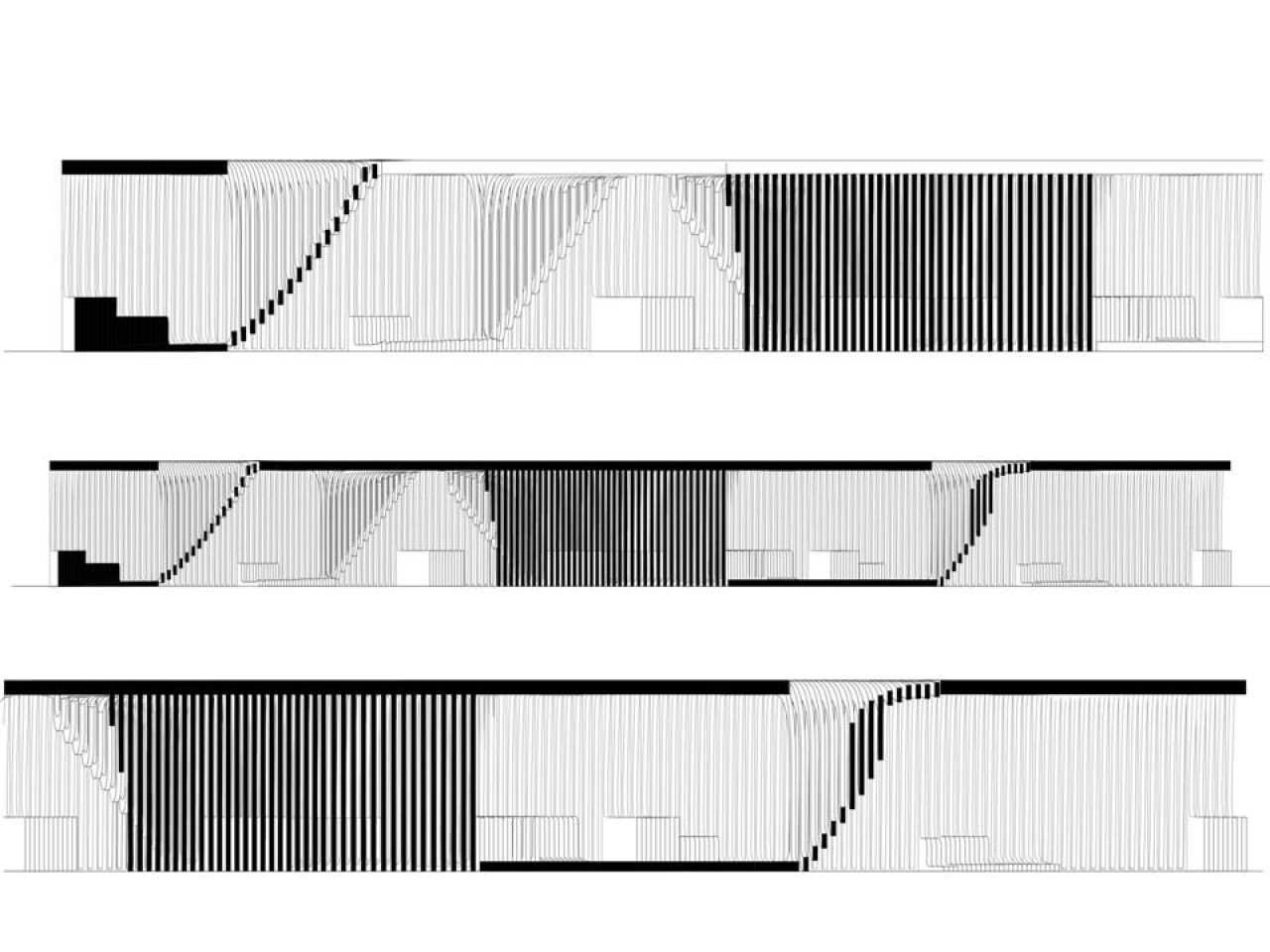
The second project corresponds to the spaces created from 2 dimensions. Following the previous thread, the proposal focuses on a unique method capable of solve the whole project in its unit. In this case, the method used is the lamination, the stacking of 2D sheets that allow through a sequential union the creation of a third dimension, transforming the plane into space. The project is located in the crowded and chaotic Medina of Fez. The objective: To create an oasis in the middle of it, a cool, shady and landscaped space in which to rest from the frenetic pace of life in Fez. A contrasted area, a crisis of the density in the urban fabric. To this end, a series of urban reforms will be carried out to allow the reactivation and connection with the river, as a continuous dynamic axis between different public spaces covered by it. The project aims to be a global intervention, not punctual, in which the excavation of the square at river level and the flooding of it as a starting point take special importance.
The second project corresponds to the spaces created from 2 dimensions. Following the previous thread, the proposal focuses on a unique method capable of solve the whole project in its unit. In this case, the method used is the lamination, the stacking of 2D sheets that allow through a sequential union the creation of a third dimension, transforming the plane into space. The project is located in the crowded and chaotic Medina of Fez. The objective: To create an oasis in the middle of it, a cool, shady and landscaped space in which to rest from the frenetic pace of life in Fez. A contrasted area, a crisis of the density in the urban fabric. To this end, a series of urban reforms will be carried out to allow the reactivation and connection with the river, as a continuous dynamic axis between different public spaces covered by it. The project aims to be a global intervention, not punctual, in which the excavation of the square at river level and the flooding of it as a starting point take special importance.


- 00 - Description
- 01 - SHAPE CONTROL
- 02 - FLOOR PLAN
- 03 - COEXISTANCE
- 04 - OASIS FLOOR PLAN
- 05 - ANALYSIS - ANCHORAGE
- 06 - SECTIONS
- 07 - CURVATURE AND TWIST
- 08 - SHEETS
- 09 - SEQUENTIAL UNION
- 10 - LAMINATION