
RHYTHM 1.2
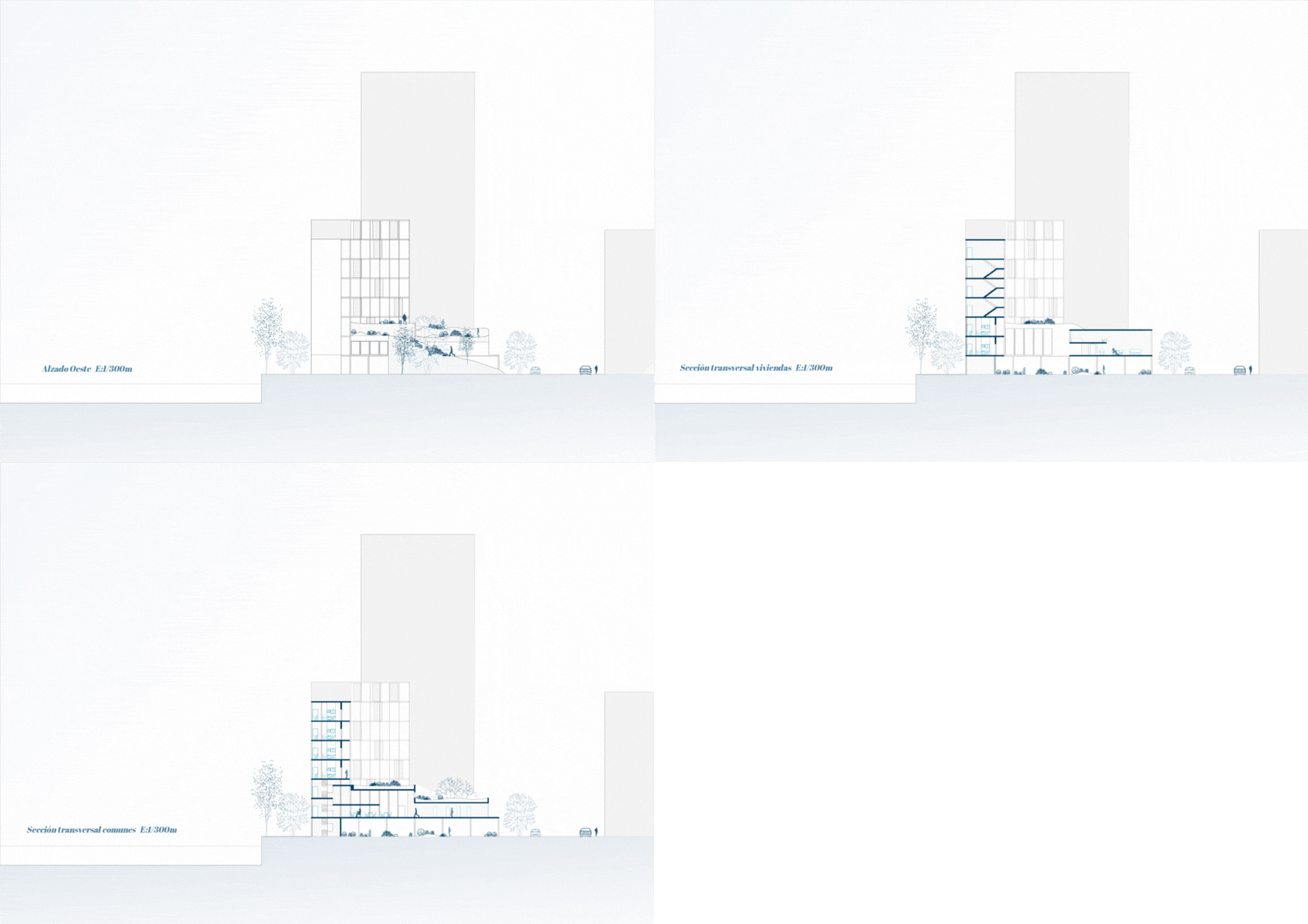
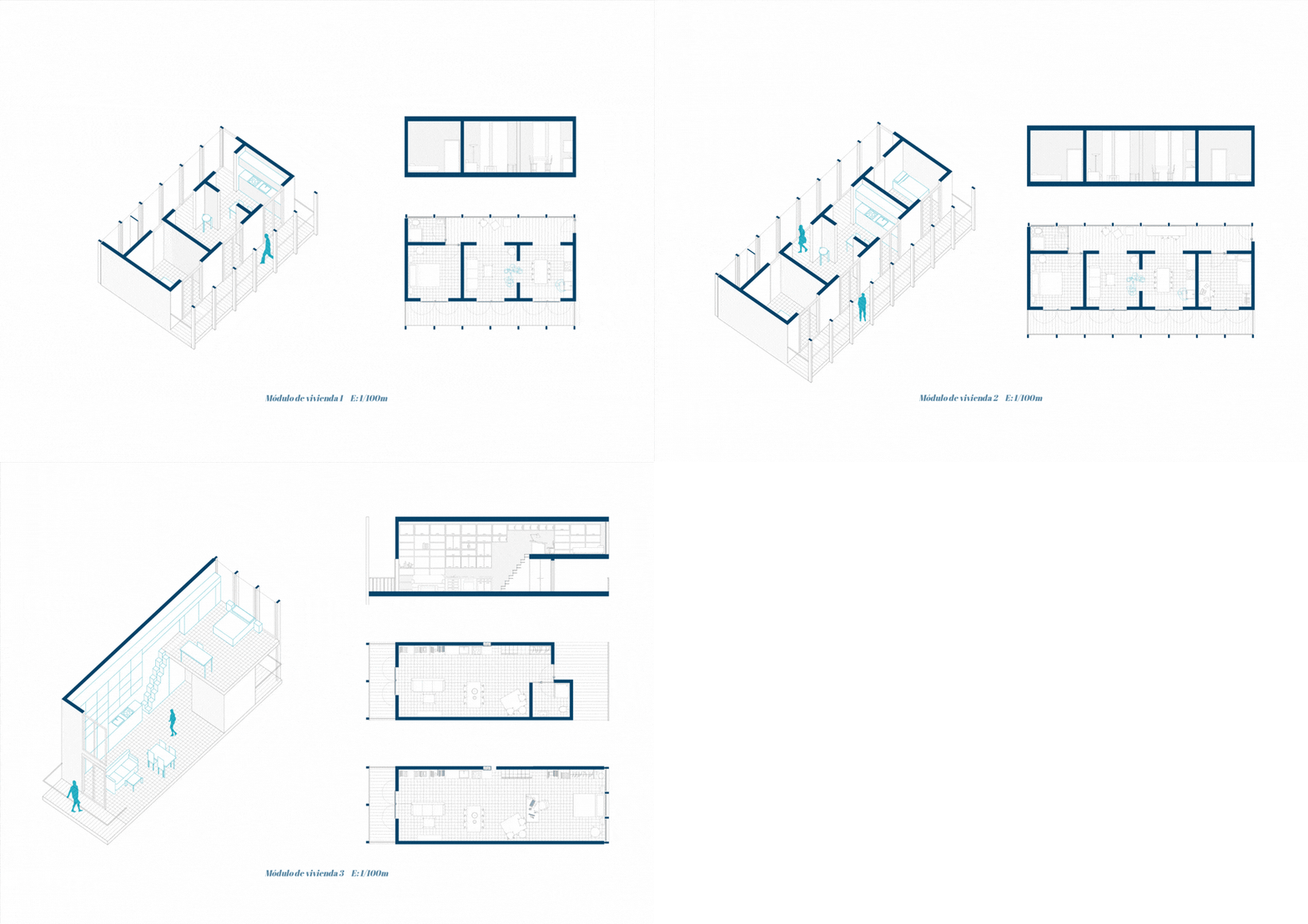
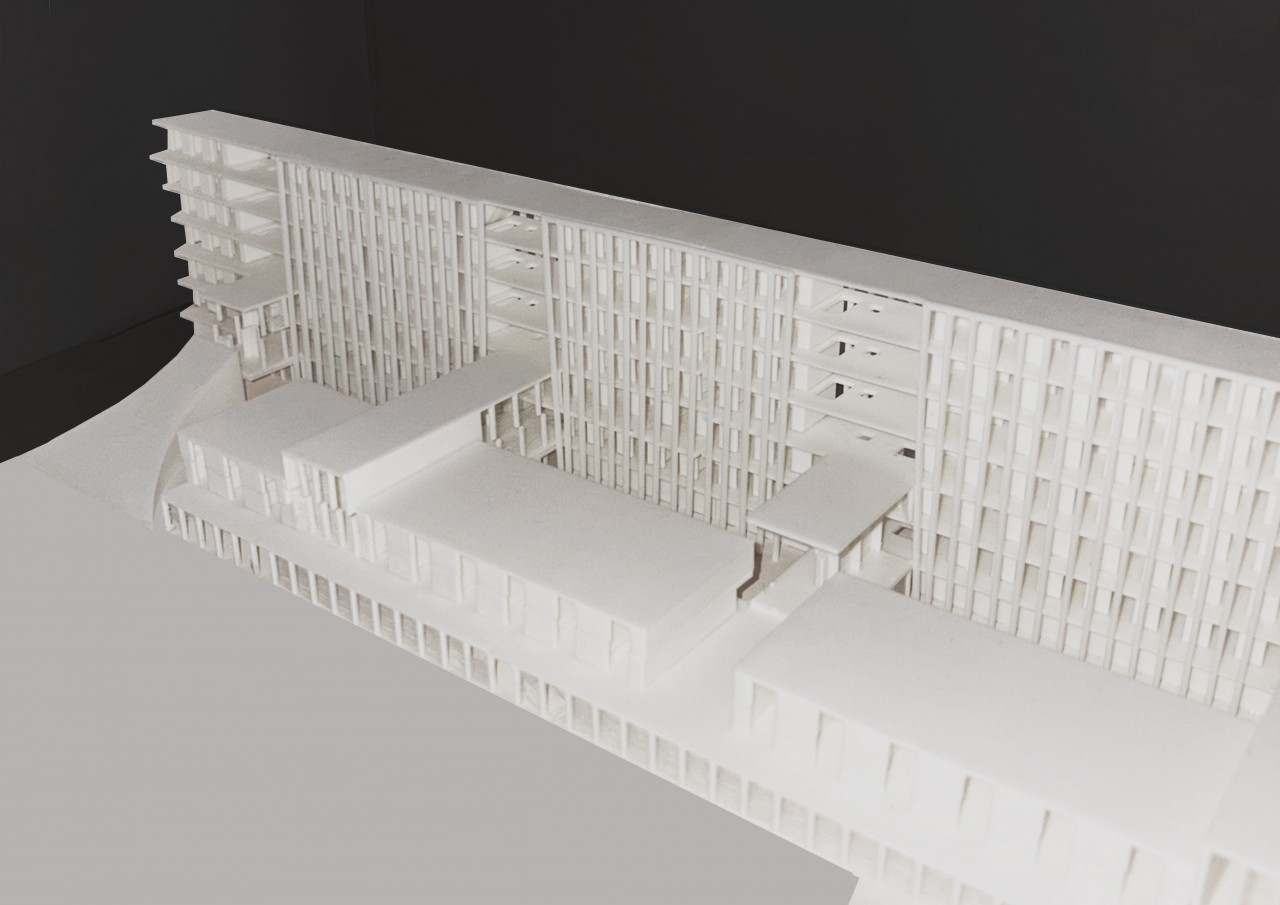
Located in the Rietlanden district, this semi-collective housing block is integrated into Amsterdam, that is historically defined by the metrics of water and the rhythmic repetition of its urban fabric, creating an infrastructure heavily regulated by a liquid grid. The project searches this order, introducing a modular system of 1.2, 2.4, and 3.6 meters to articulate a complex interplay of heights. This system gives access to a series of topographical roofs, allowing inhabitants to occupy the roof of the shared spaces as an independent outdoor experience. Simultaneously, the building is elevated above the ground plane to foster a fluid connection between the interior patio and the city. This porosity is reinforced as some of the upper topography of the common areas begins at street level and scalates gradually toward the rooftops, creating a unique experience for both residents and visitors.
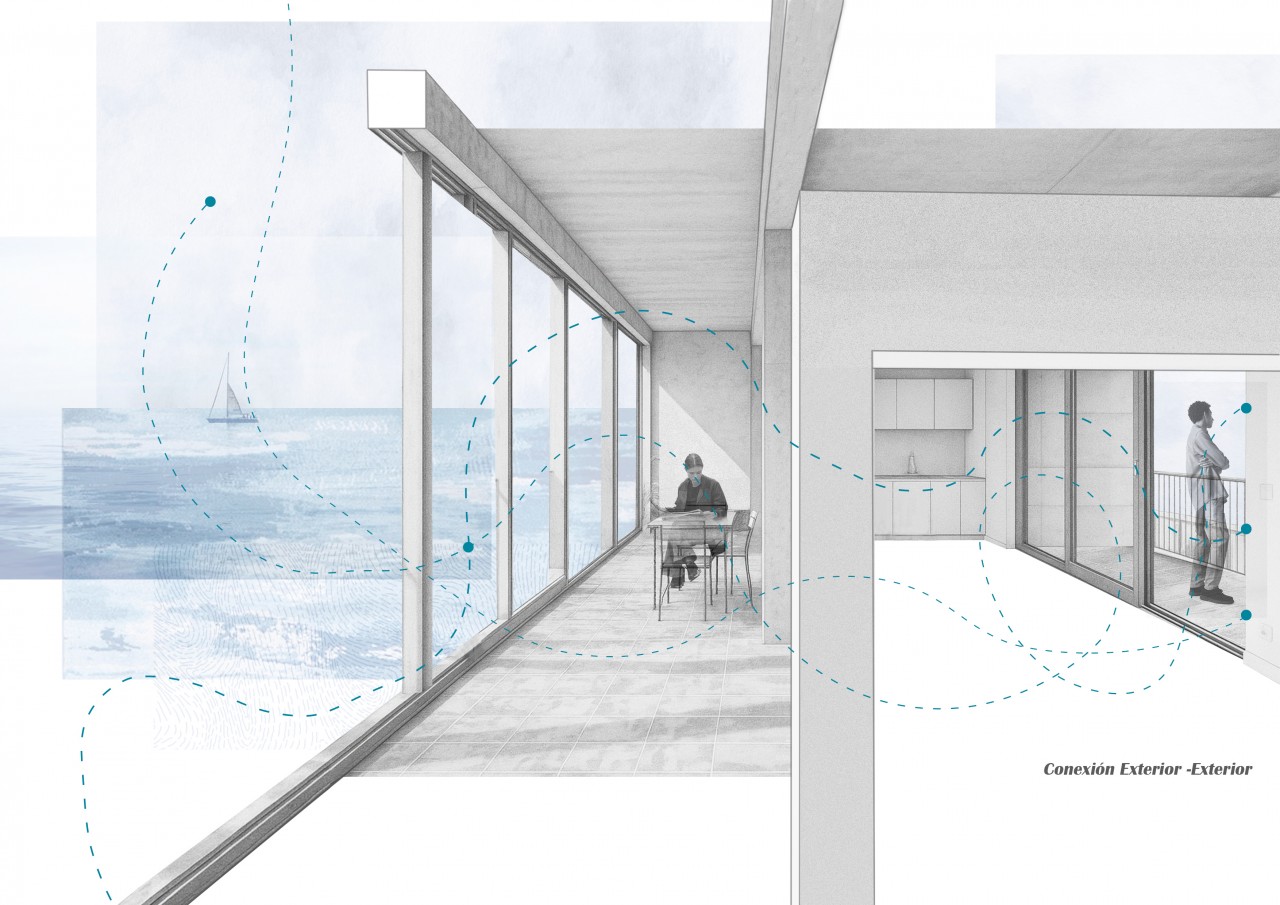
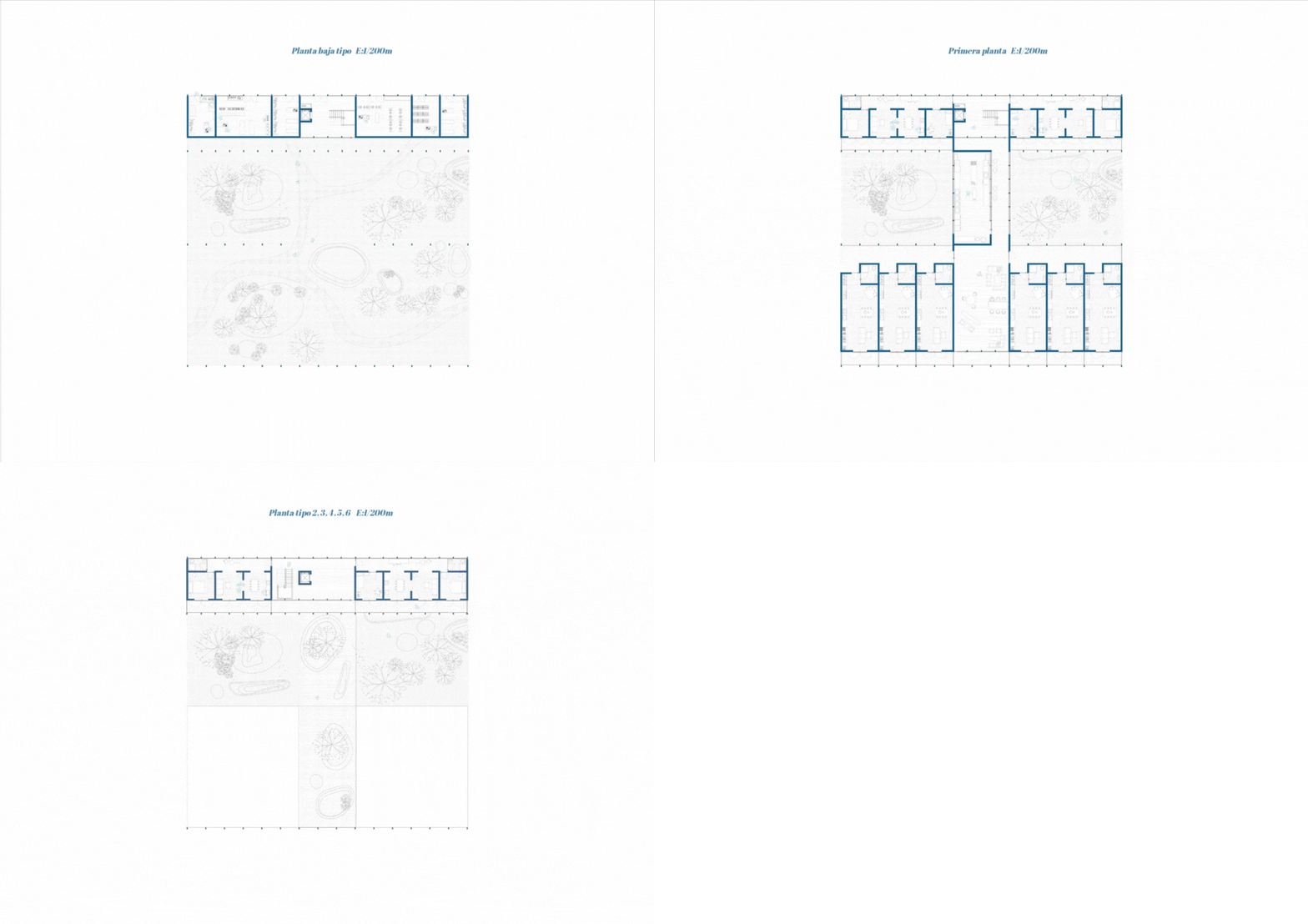
Considering this context of paths, the proposal is configured as a 200-meter-long volume that functions as a diaphragm between the city and the canal, inviting the user to rediscover a new relationship between the horizon and the water. The residential lot prioritizes social connectivity through two blocks formed with diverse typologies, strategically oriented toward the south. These units open themselves into individual terraces that serve as transition between the domestic and public spaces. Lastly, both volumes are connected by a perpendicular element that houses the communal programs, creating a shared space that unifies the buildings and encourages human interaction among inhabitants.
Considering this context of paths, the proposal is configured as a 200-meter-long volume that functions as a diaphragm between the city and the canal, inviting the user to rediscover a new relationship between the horizon and the water. The residential lot prioritizes social connectivity through two blocks formed with diverse typologies, strategically oriented toward the south. These units open themselves into individual terraces that serve as transition between the domestic and public spaces. Lastly, both volumes are connected by a perpendicular element that houses the communal programs, creating a shared space that unifies the buildings and encourages human interaction among inhabitants.

- 00 - Description
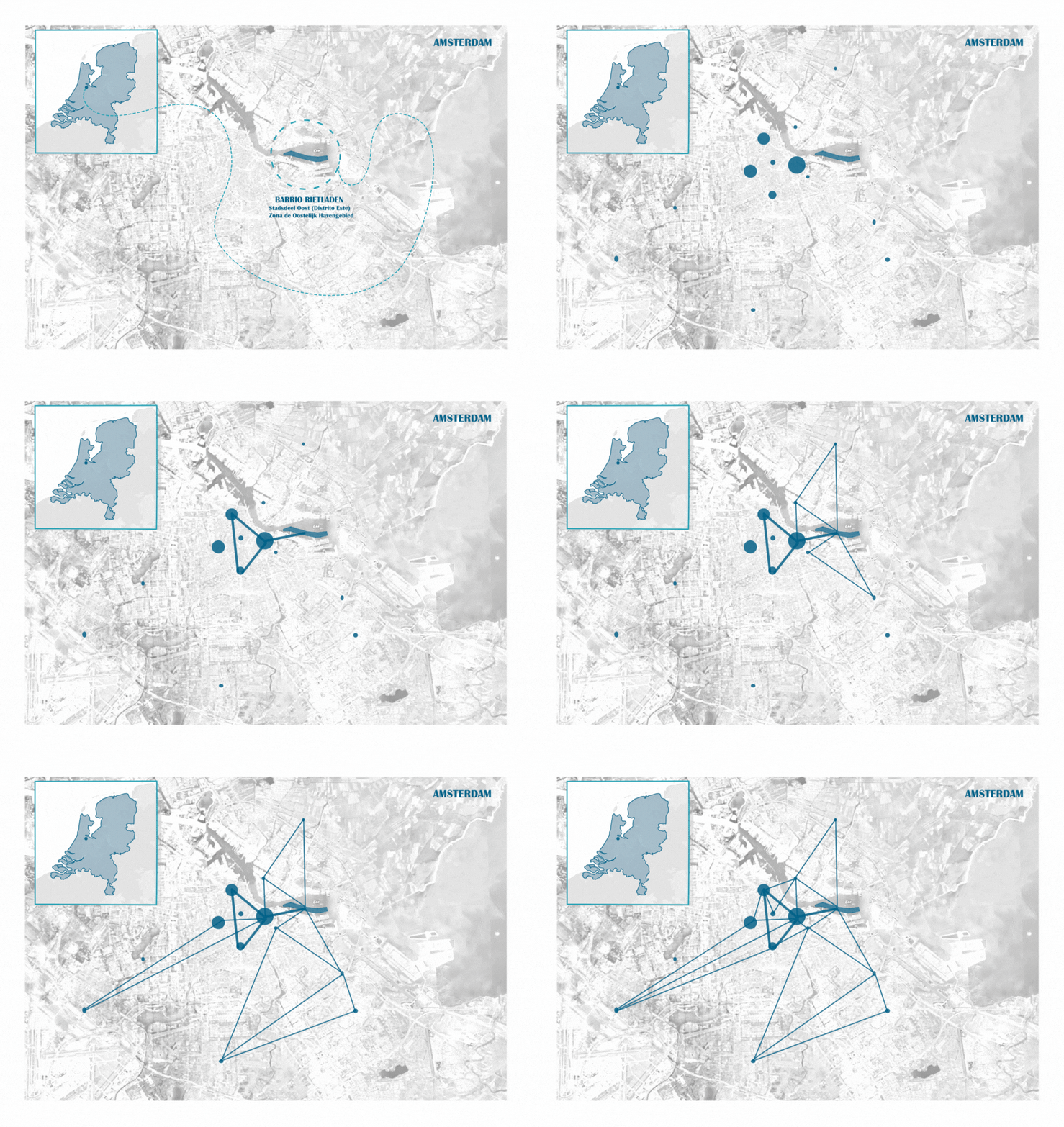
- 01 - 0.1 Location
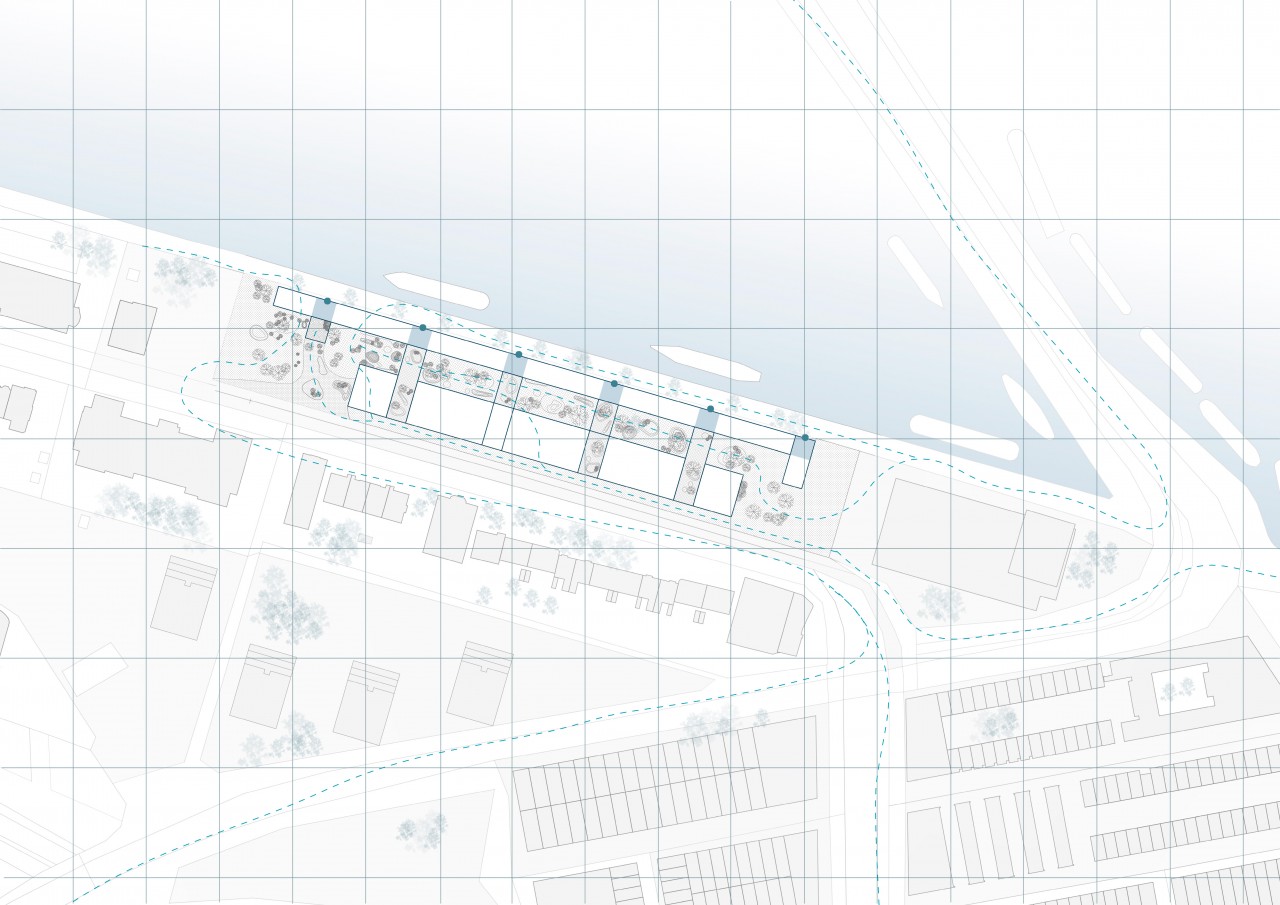
- 02 - 0.2 Site Plan
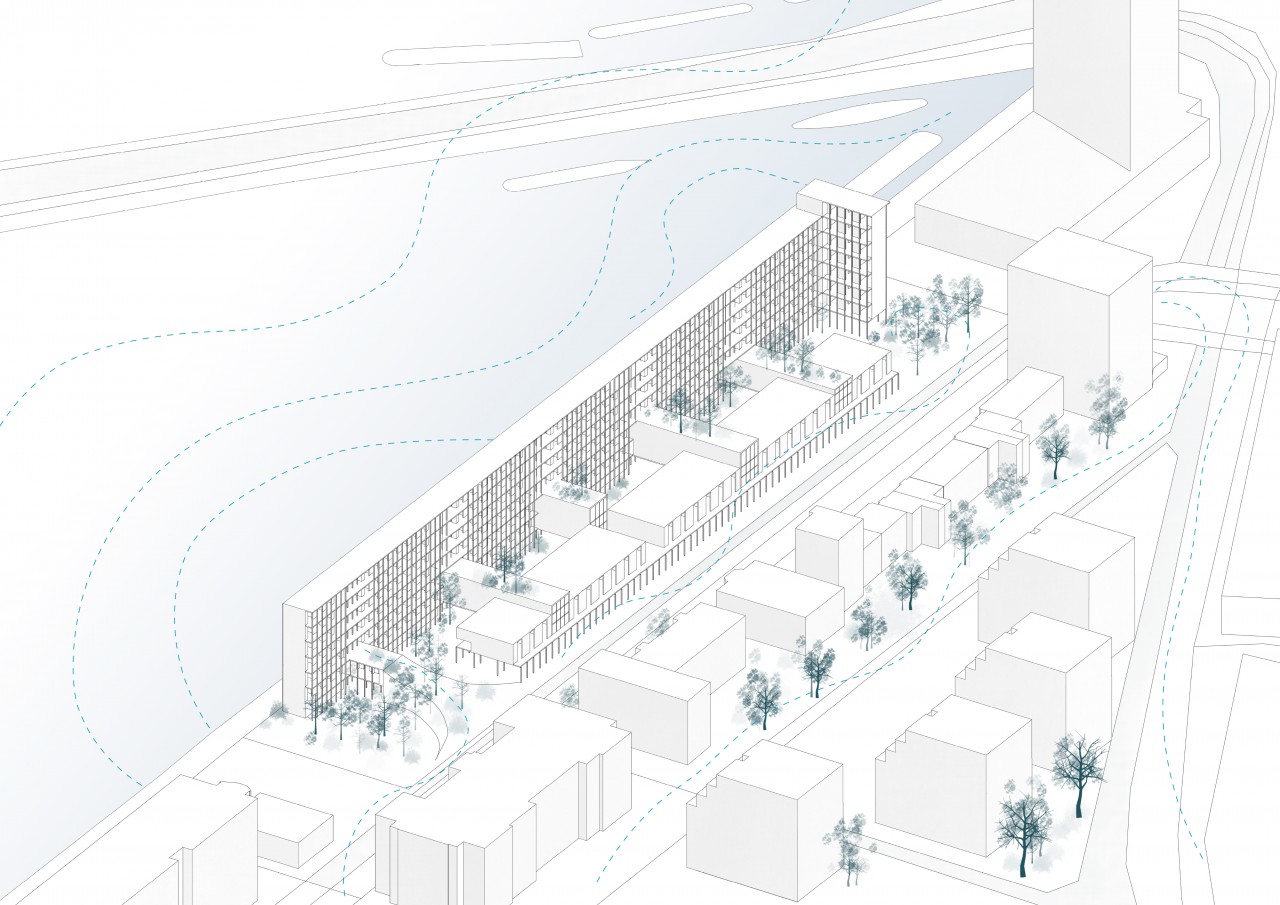
- 03 - 0.3 Ext Axonometry
- 04 - 0.4 Plan/Elevations
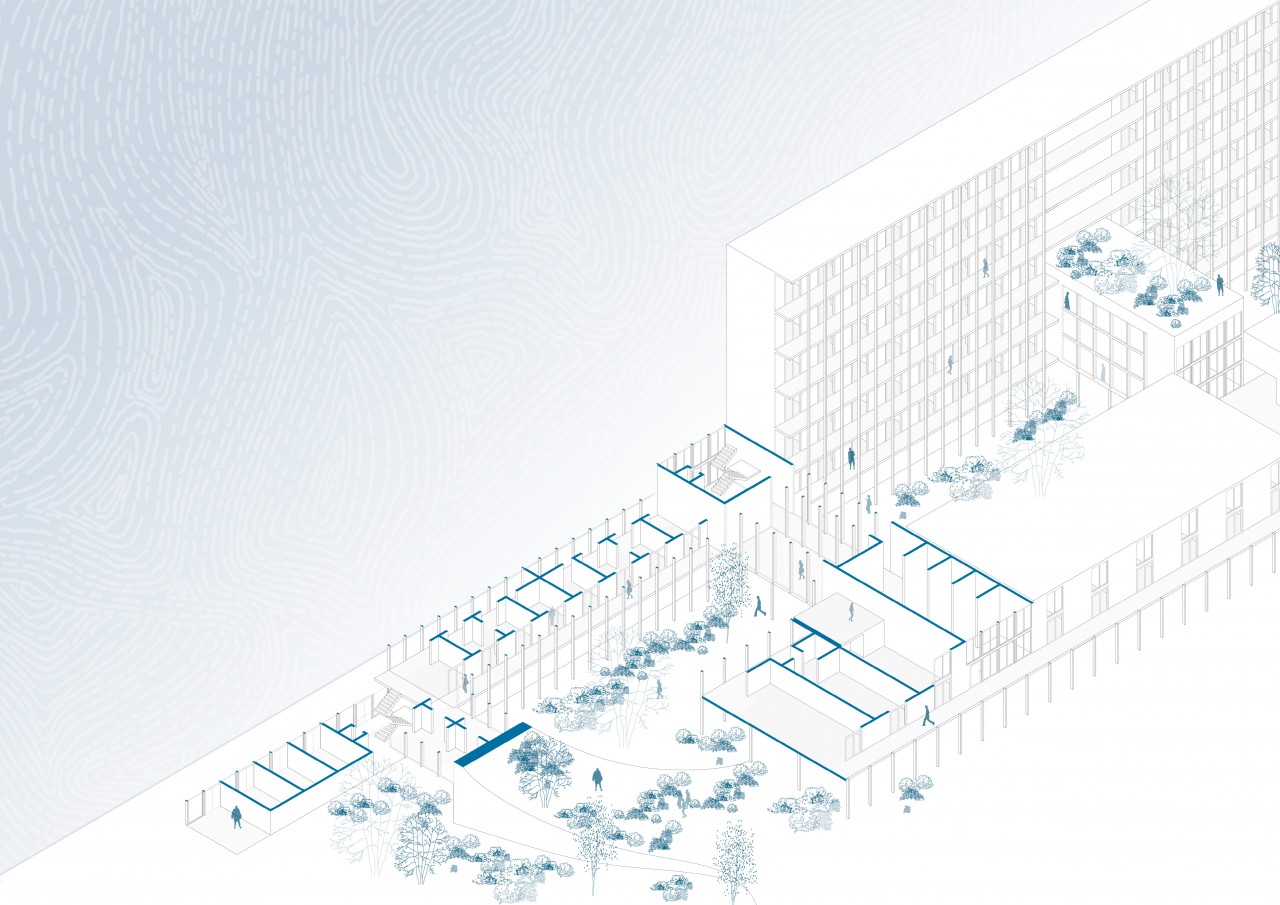
- 05 - 0.5 Int Axonometry
- 06 - 0.6 Sections
- 07 - 0.7 Collage
- 08 - 0.8 Floor Plans
- 09 - 0.9 Module
- 10 - 10. Model
- 11 - Video