
Rural Ecosystems
Livestock, grazing, and traditional activities such as mining and quarry formation, have contributed throughout history to modelling the landscape, pushing back indigenous forests, appearing disconnected landscapes that have shaped the valleys.
What kind of future awaits for these great territorial units, which are superior to the villages themselves?
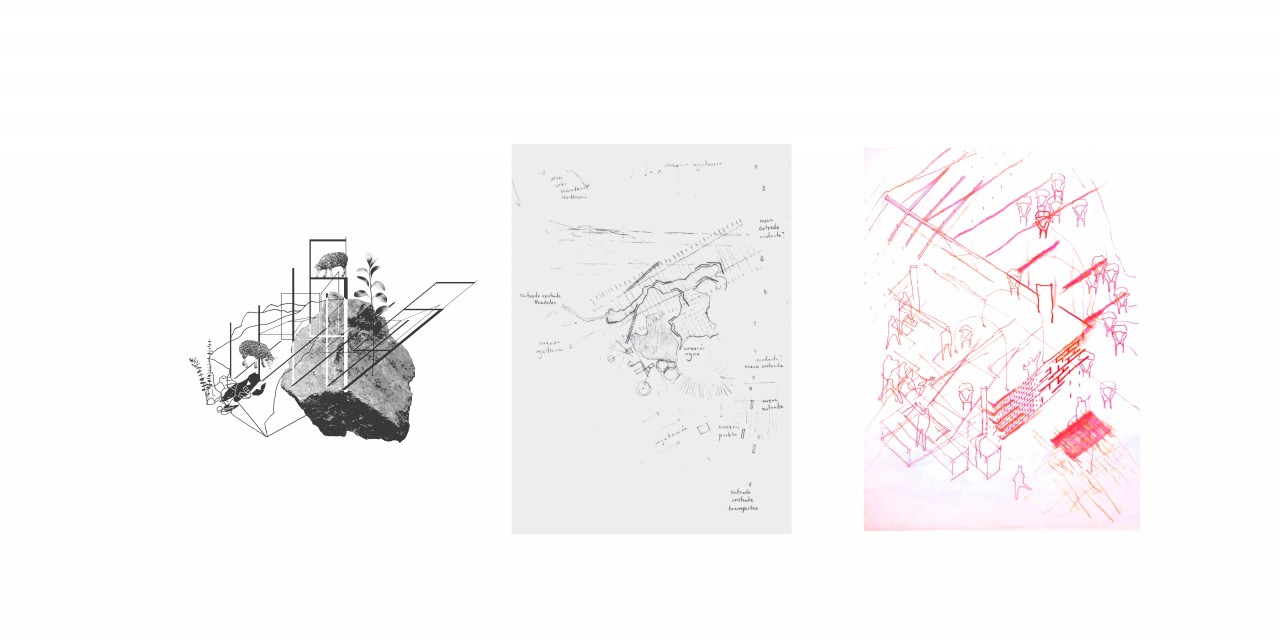
The fact of working with the existing elements, observing their origin and evolution over time, made the relations between them become evident. Carabias, is place-name of "stony place", a landscape of contrasts resulting from a rural life subject to the exploitation of their lands.
A series of interventions over time, covering different scales, in which we benefit from the materials previously extracted for later phases. We adapt to the existing topography and create a floodplain in its lower part. All added layers are filtered on the site, reusing the larger stones to create the future walls linked to the new structure, while the smaller ones will be reused as the foundations of the roads.
Vegetation is reintroduced through the boundaries, diluting. A nature that creates new and sensitive spaces by itself: topographic levels that serve as support for the structures, succession of groves at different scales, flood.
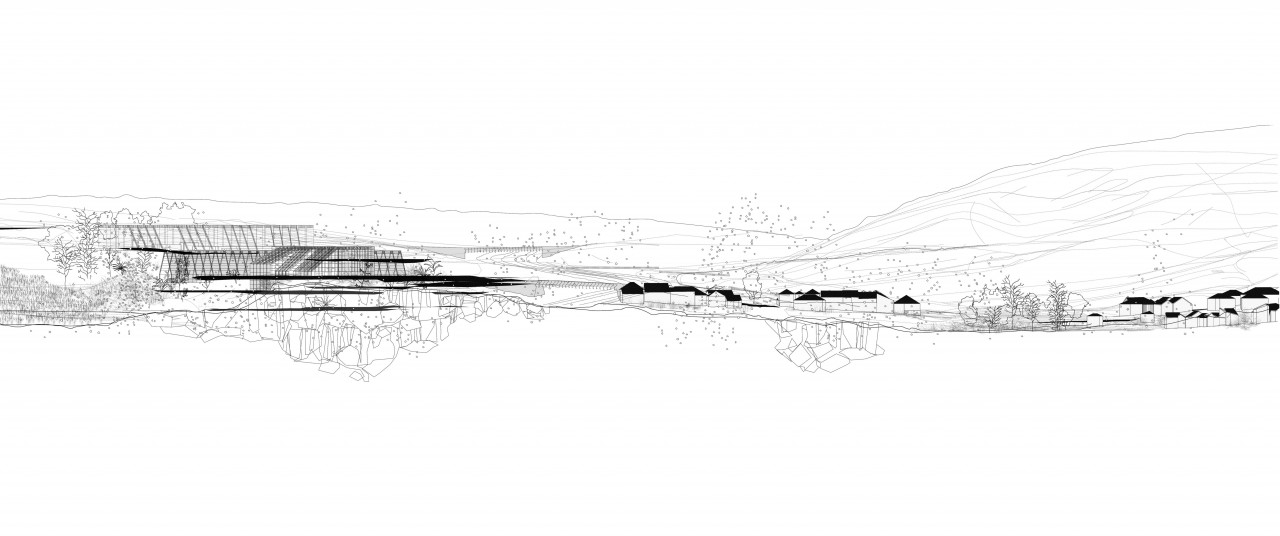
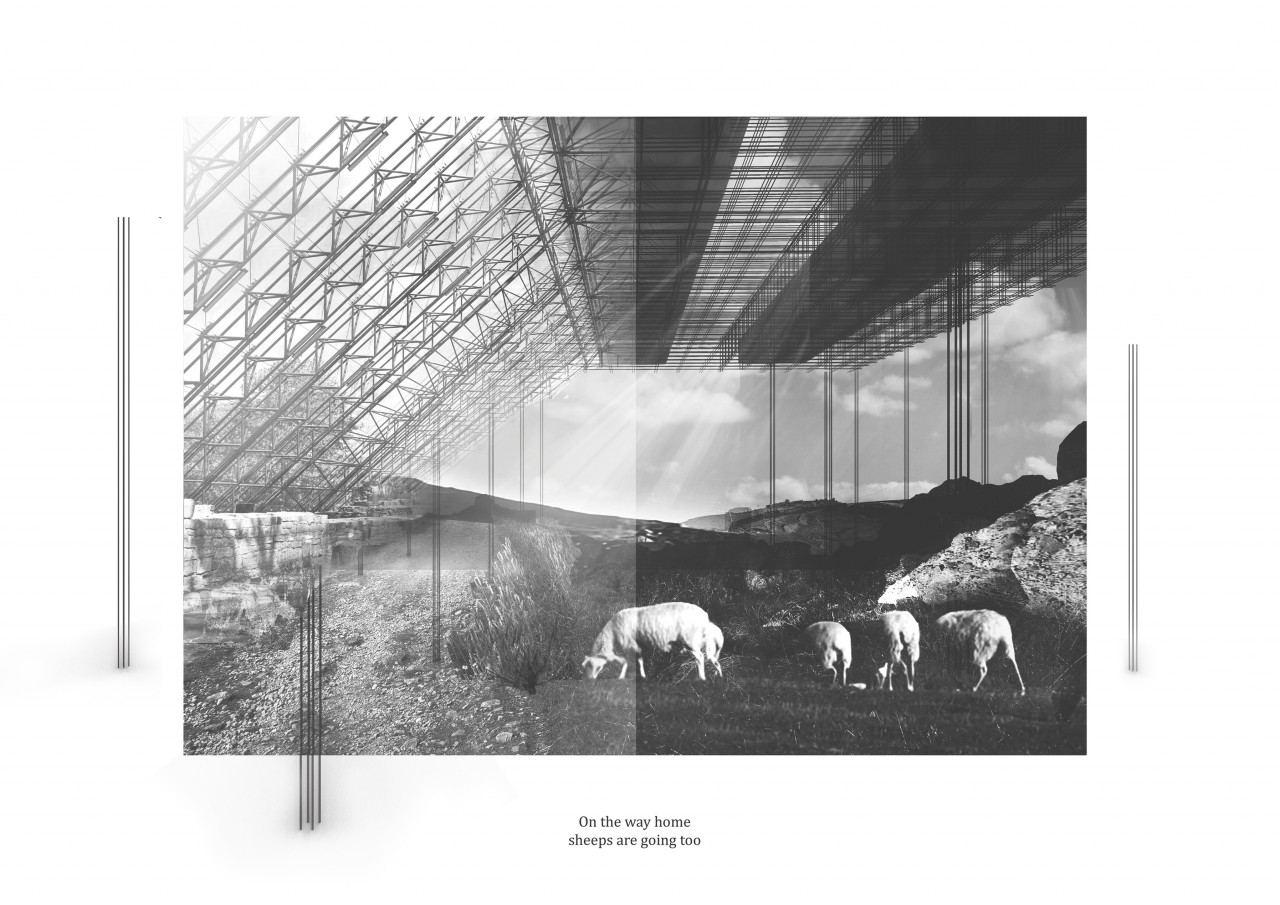
All of this generates new routes and roads connected with the village that start to acquire the condition of construction and get materialize in four pieces. Four pieces emerged as additional constructions, lightweight structures, designed with the logic of engineering but producing the poetics of architecture, as opposed to what they have below.
What kind of future awaits for these great territorial units, which are superior to the villages themselves?
The fact of working with the existing elements, observing their origin and evolution over time, made the relations between them become evident. Carabias, is place-name of "stony place", a landscape of contrasts resulting from a rural life subject to the exploitation of their lands.
A series of interventions over time, covering different scales, in which we benefit from the materials previously extracted for later phases. We adapt to the existing topography and create a floodplain in its lower part. All added layers are filtered on the site, reusing the larger stones to create the future walls linked to the new structure, while the smaller ones will be reused as the foundations of the roads.
Vegetation is reintroduced through the boundaries, diluting. A nature that creates new and sensitive spaces by itself: topographic levels that serve as support for the structures, succession of groves at different scales, flood.
All of this generates new routes and roads connected with the village that start to acquire the condition of construction and get materialize in four pieces. Four pieces emerged as additional constructions, lightweight structures, designed with the logic of engineering but producing the poetics of architecture, as opposed to what they have below.







- 00 - Description
- 01 - Evolution
- 02 - Cartography
- 03 - Drawings
- 04 - Project Phases
- 05 - General Plan
- 06 - Relation w/ village
- 07 - Axonometry
- 08 - Views
- 09 - Materiality
- 10 - From the paths