
Sacred Forest
Throughout history, the forest has been a place of refuge for society. Buddha retreated to the Indian forests to meditate on suffering; Saint Francis of Assisi withdrew to the forests to find God, and Henry Thoreau wandered through the American woods to reflect on the individual.
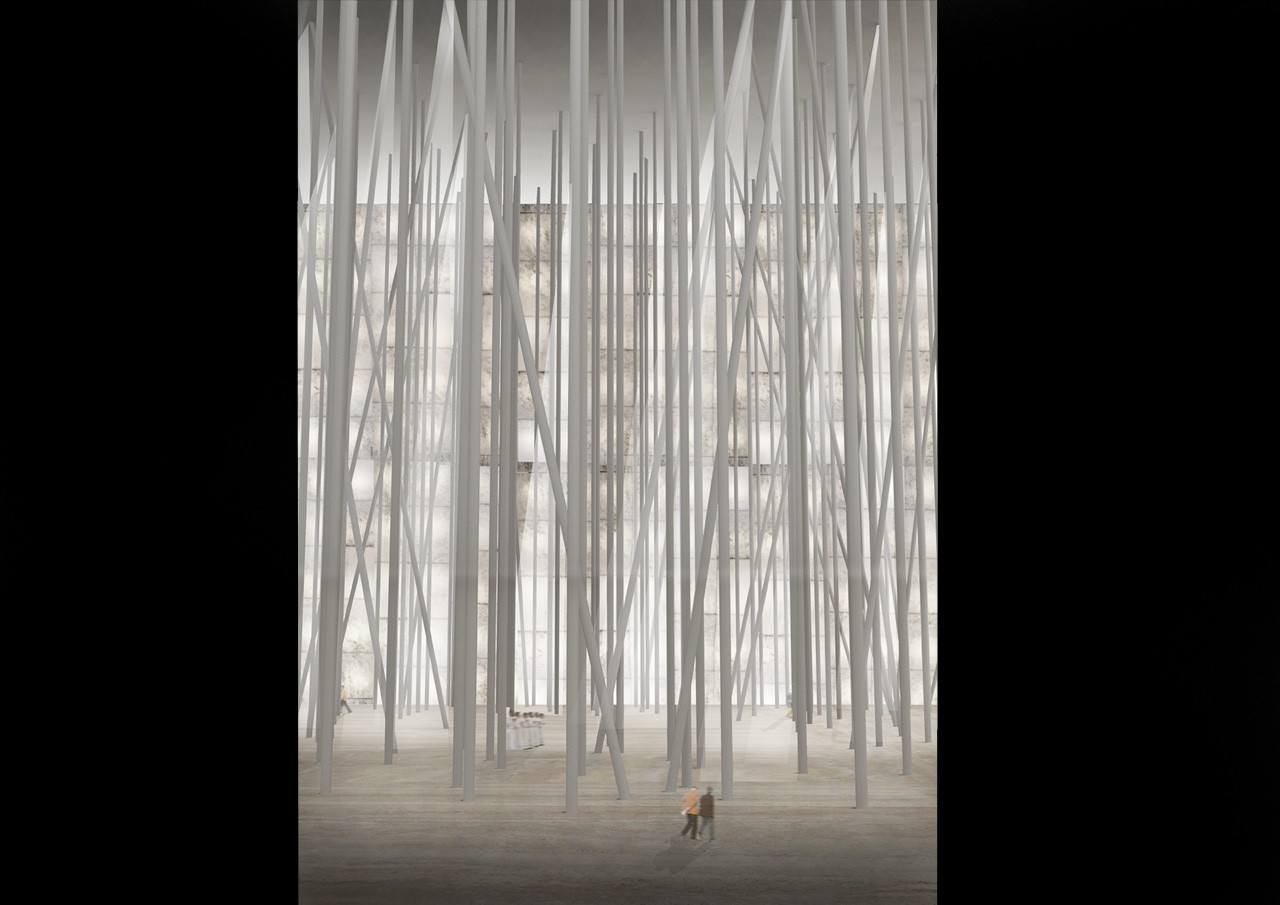
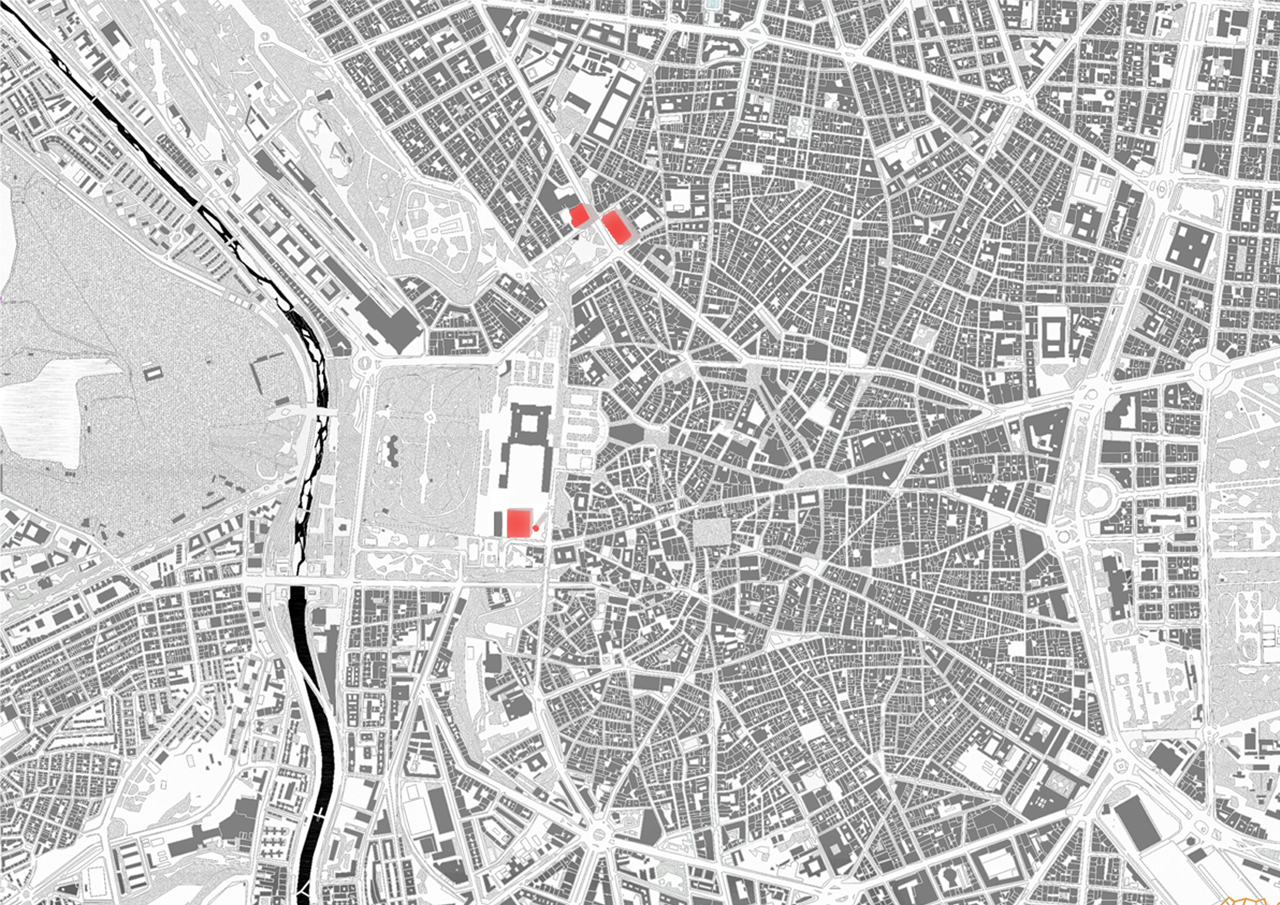
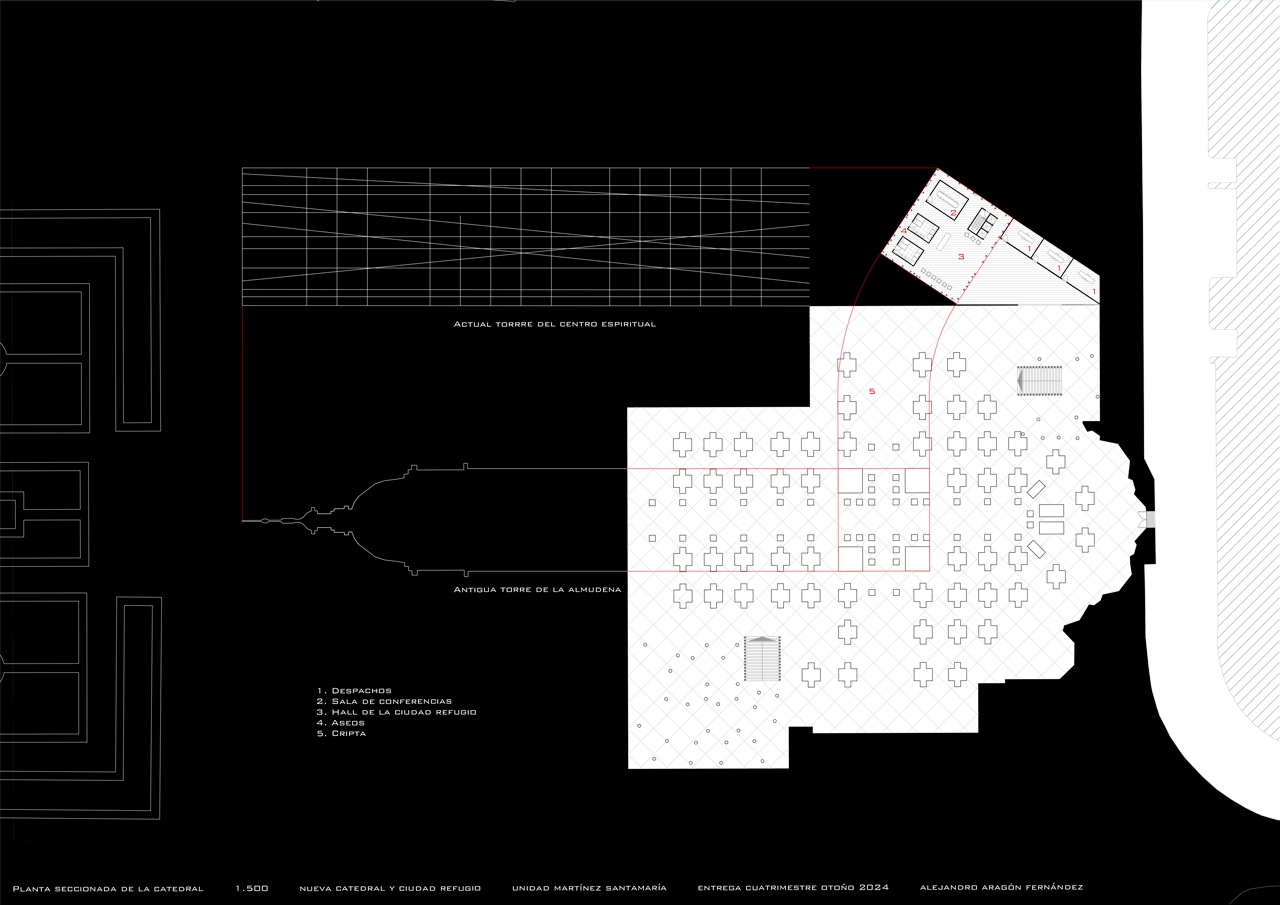
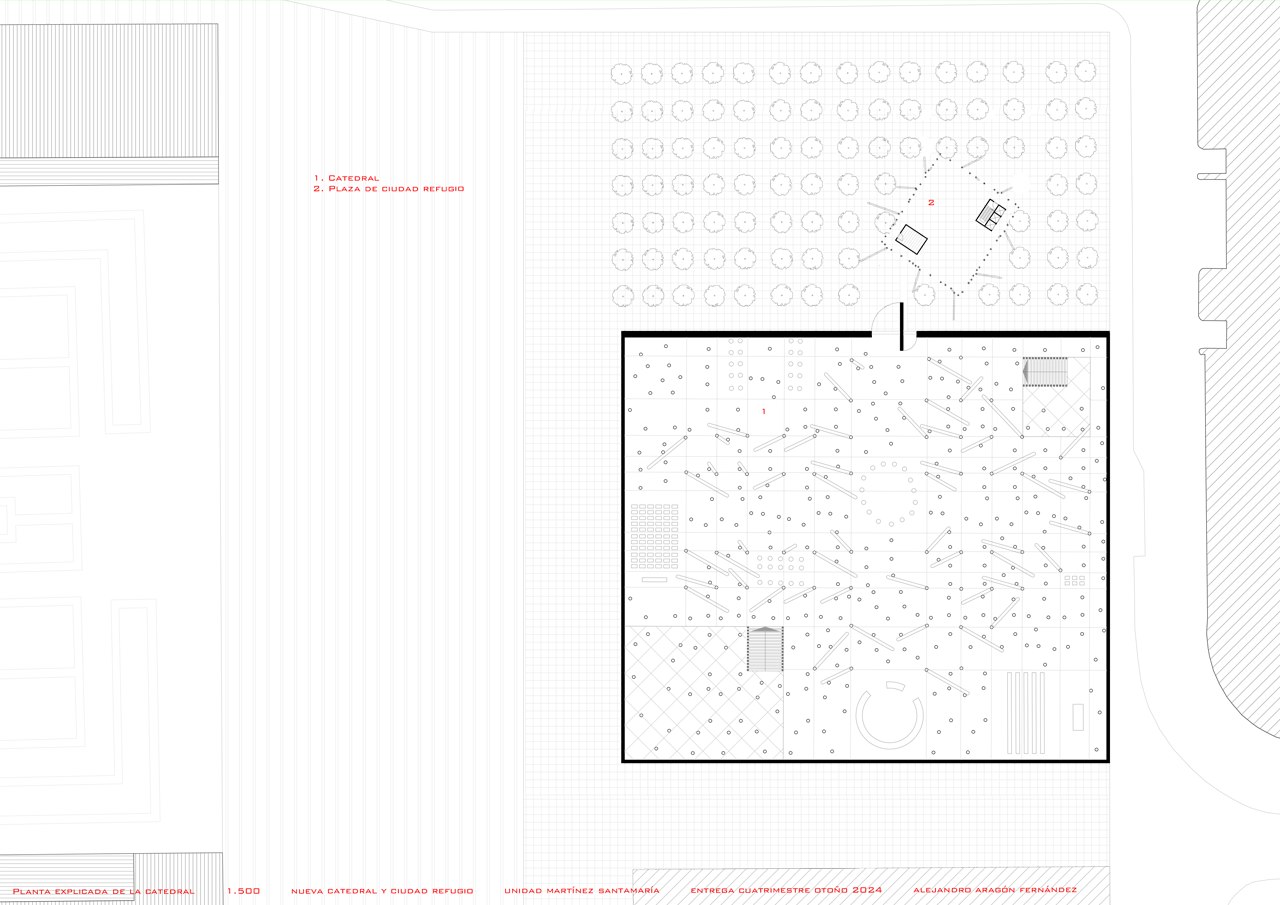
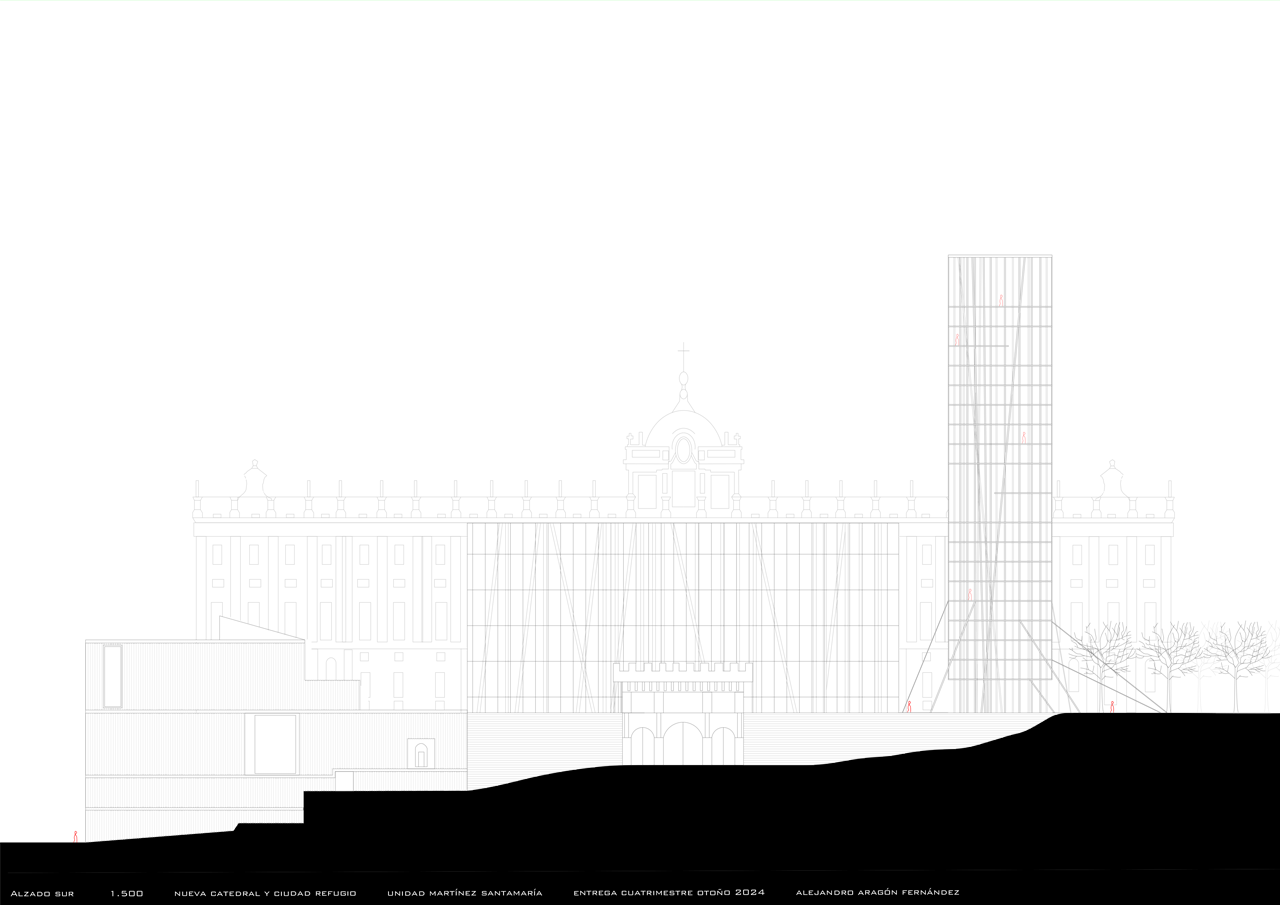
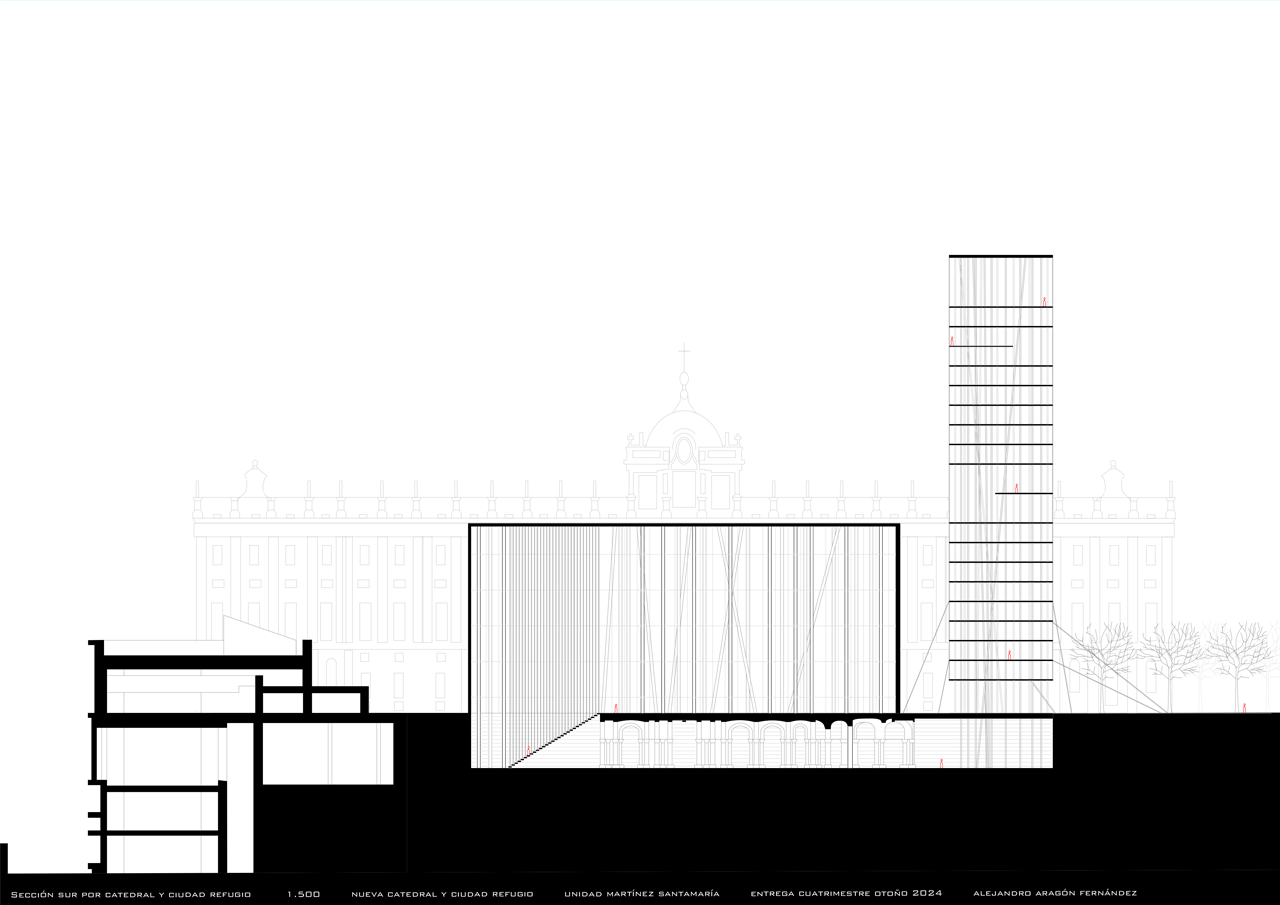
This project proposes the need to create a spiritual center that restores meaning to the current Almudena and the need to build alongside it a shelter for homeless people, housed within a tower. The spiritual center is envisioned as a space that evokes the refuge of the forest through a dense structural network of metal pillars, which rise in search of light, much like trees do. Most of the pillars rise vertically due to structural requirements, but some tilt slightly to resist wind loads impacting the concrete roof slab. This phenomenon is also seen in forests, where certain trees bend as they seek the fastest path to light. The tilted pillars correspond to those that align with the columns in the crypt of Almudena, recreating a traditional basilical plan, while the others are organized vertically based on a spatial study. The subtraction of pillars in certain areas allows for the creation of chapels or meditation rooms.
The proposed structural density mirrors the density observed in the ancient crypt, aiming to establish a relationship between it and the spiritual center. The spaces are connected through two perimeter double-height areas, linking the old forest with the new one. In spaces with high structural density, such as the Mosque of Córdoba, the crypt itself, or the Temple of Luxor, the enclosures become secondary. Hence, in this project, the walls are designed to be nothing more than light, materialized through alabaster cladding. This alabaster maintains the dignity of the site on the exterior, while its patterning, aligned with the transparent vertical pillars, dialogues with the vertical rhythm of the Royal Palace.
Simultaneously, the shelter tower draws from the composition of traditional temples, which often include a vertical element, such as the bell tower of the Cathedral of Seville or the minarets of the Blue Mosque. This vertical element serves as a means to connect with the divine and as a recognizable landmark within the city.
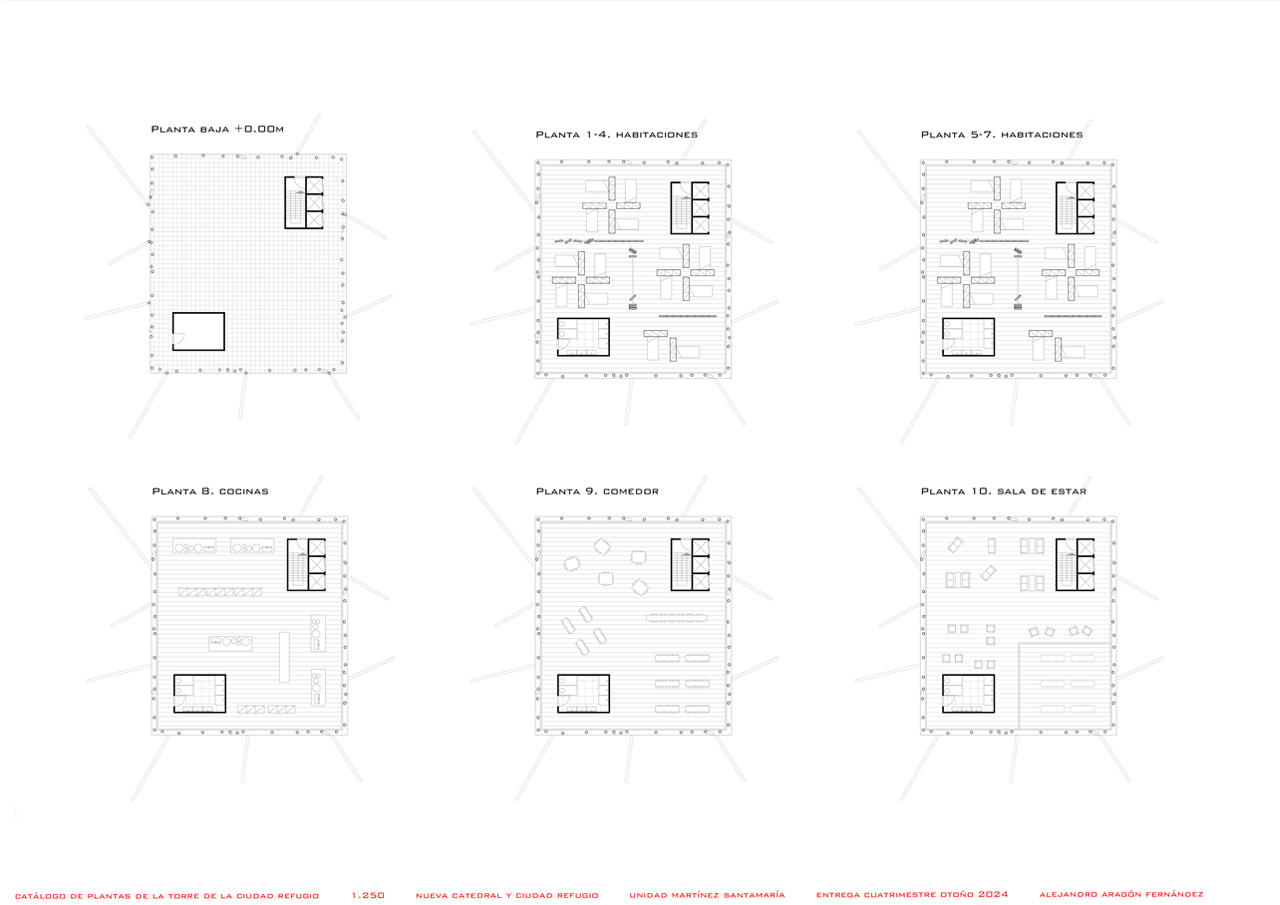
The structure of the tower consists of reinforced concrete cores from which post-tensioned slabs are suspended, spanning large distances until they connect to an edge beam resting on all the perimeter columns. This structure allows the exterior to reveal a façade filled with columns that harmonize with the transparent alabaster, while the interior remains a completely open plan.
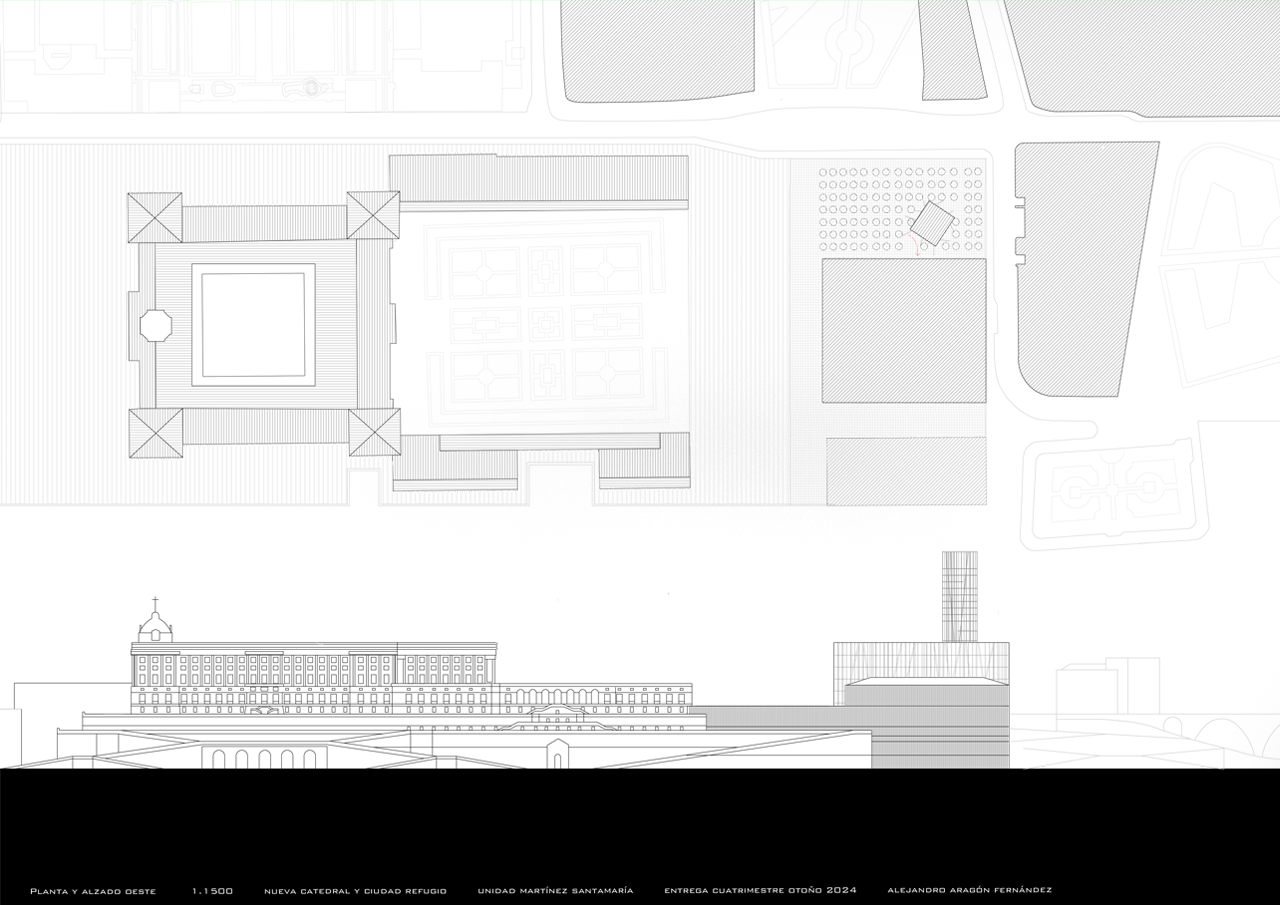
In terms of layout, both the spiritual center and the tower remain faithful to the square geometry of the Royal Palace. The surrounding space between the two becomes an olive grove, extending the concept of the interior forest to the exterior. The olive trees are aligned with the axes of the crypt's columns and serve as a prelude to the space visitors are about to enter. The entrance is marked by the rotation of the tower relative to the horizontal plane, inviting visitors to pass through the olive grove into the spiritual center.
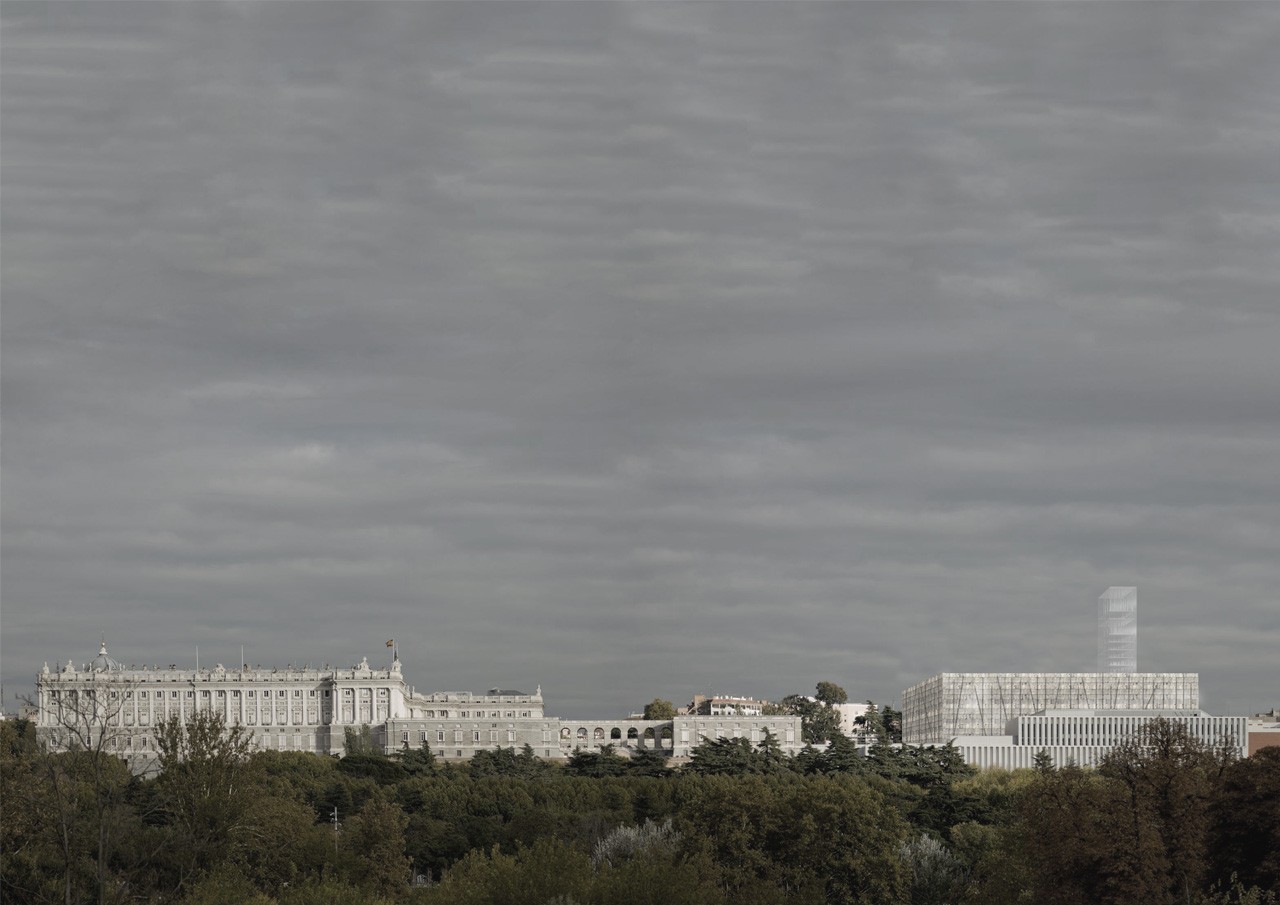
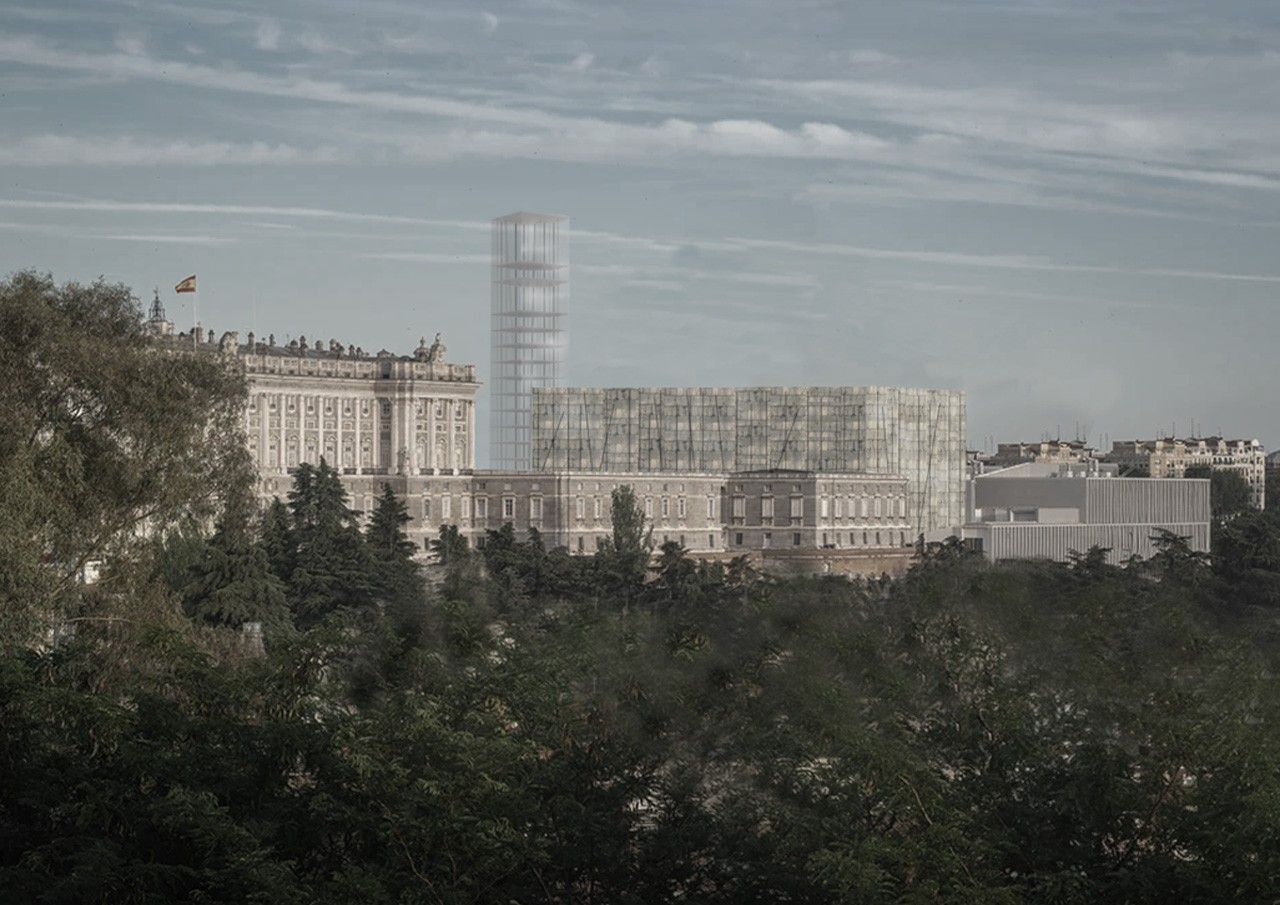
From a western perspective, the spiritual center aligns its height with that of the Royal Palace, while the height and floor dimensions of the tower correspond to those of the transept of Almudena.
"Sacred Forest" seeks light, simplicity, and purity, providing a space for modern society to rediscover itself in what is universal, essential, and true.
This project proposes the need to create a spiritual center that restores meaning to the current Almudena and the need to build alongside it a shelter for homeless people, housed within a tower. The spiritual center is envisioned as a space that evokes the refuge of the forest through a dense structural network of metal pillars, which rise in search of light, much like trees do. Most of the pillars rise vertically due to structural requirements, but some tilt slightly to resist wind loads impacting the concrete roof slab. This phenomenon is also seen in forests, where certain trees bend as they seek the fastest path to light. The tilted pillars correspond to those that align with the columns in the crypt of Almudena, recreating a traditional basilical plan, while the others are organized vertically based on a spatial study. The subtraction of pillars in certain areas allows for the creation of chapels or meditation rooms.
The proposed structural density mirrors the density observed in the ancient crypt, aiming to establish a relationship between it and the spiritual center. The spaces are connected through two perimeter double-height areas, linking the old forest with the new one. In spaces with high structural density, such as the Mosque of Córdoba, the crypt itself, or the Temple of Luxor, the enclosures become secondary. Hence, in this project, the walls are designed to be nothing more than light, materialized through alabaster cladding. This alabaster maintains the dignity of the site on the exterior, while its patterning, aligned with the transparent vertical pillars, dialogues with the vertical rhythm of the Royal Palace.
Simultaneously, the shelter tower draws from the composition of traditional temples, which often include a vertical element, such as the bell tower of the Cathedral of Seville or the minarets of the Blue Mosque. This vertical element serves as a means to connect with the divine and as a recognizable landmark within the city.
The structure of the tower consists of reinforced concrete cores from which post-tensioned slabs are suspended, spanning large distances until they connect to an edge beam resting on all the perimeter columns. This structure allows the exterior to reveal a façade filled with columns that harmonize with the transparent alabaster, while the interior remains a completely open plan.
In terms of layout, both the spiritual center and the tower remain faithful to the square geometry of the Royal Palace. The surrounding space between the two becomes an olive grove, extending the concept of the interior forest to the exterior. The olive trees are aligned with the axes of the crypt's columns and serve as a prelude to the space visitors are about to enter. The entrance is marked by the rotation of the tower relative to the horizontal plane, inviting visitors to pass through the olive grove into the spiritual center.
From a western perspective, the spiritual center aligns its height with that of the Royal Palace, while the height and floor dimensions of the tower correspond to those of the transept of Almudena.
"Sacred Forest" seeks light, simplicity, and purity, providing a space for modern society to rediscover itself in what is universal, essential, and true.
- 00 - Description
- 01 - Interior view
- 02 - Location Plan
- 03 - View from the West
- 04 - Floor and elevation
- 05 - Exterior view
- 06 - Crypt plan
- 07 - Cathedral Plan
- 08 - Tower Plans
- 09 - South elevation
- 10 - South section
- 11 - Video