
Sanctum Vitae
Compost, crops, algae, fungi, mycelium, seeds, growth, proliferation, nourishment, decomposition. These elements form the project and ensure an eternal cycle of transformation and regeneration.
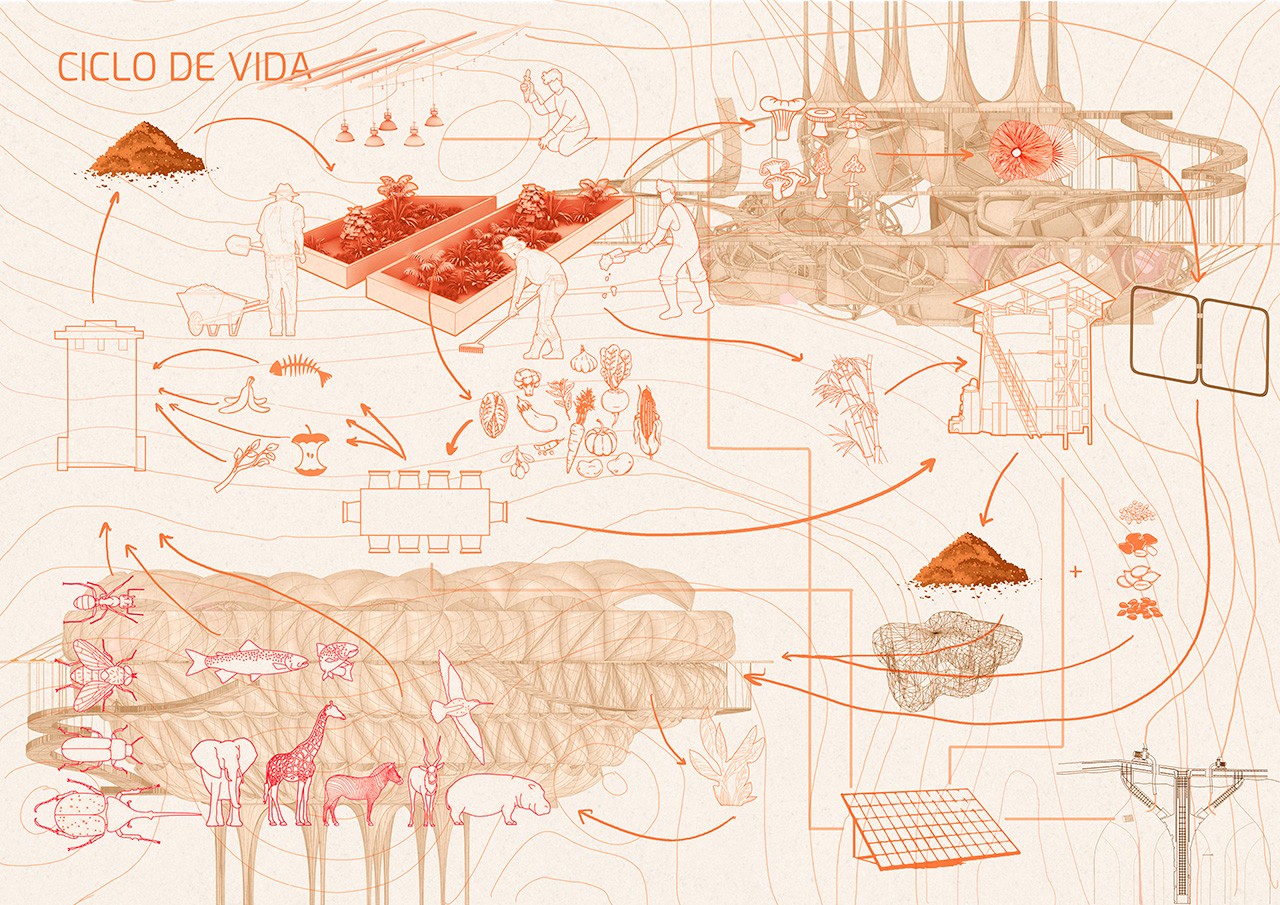
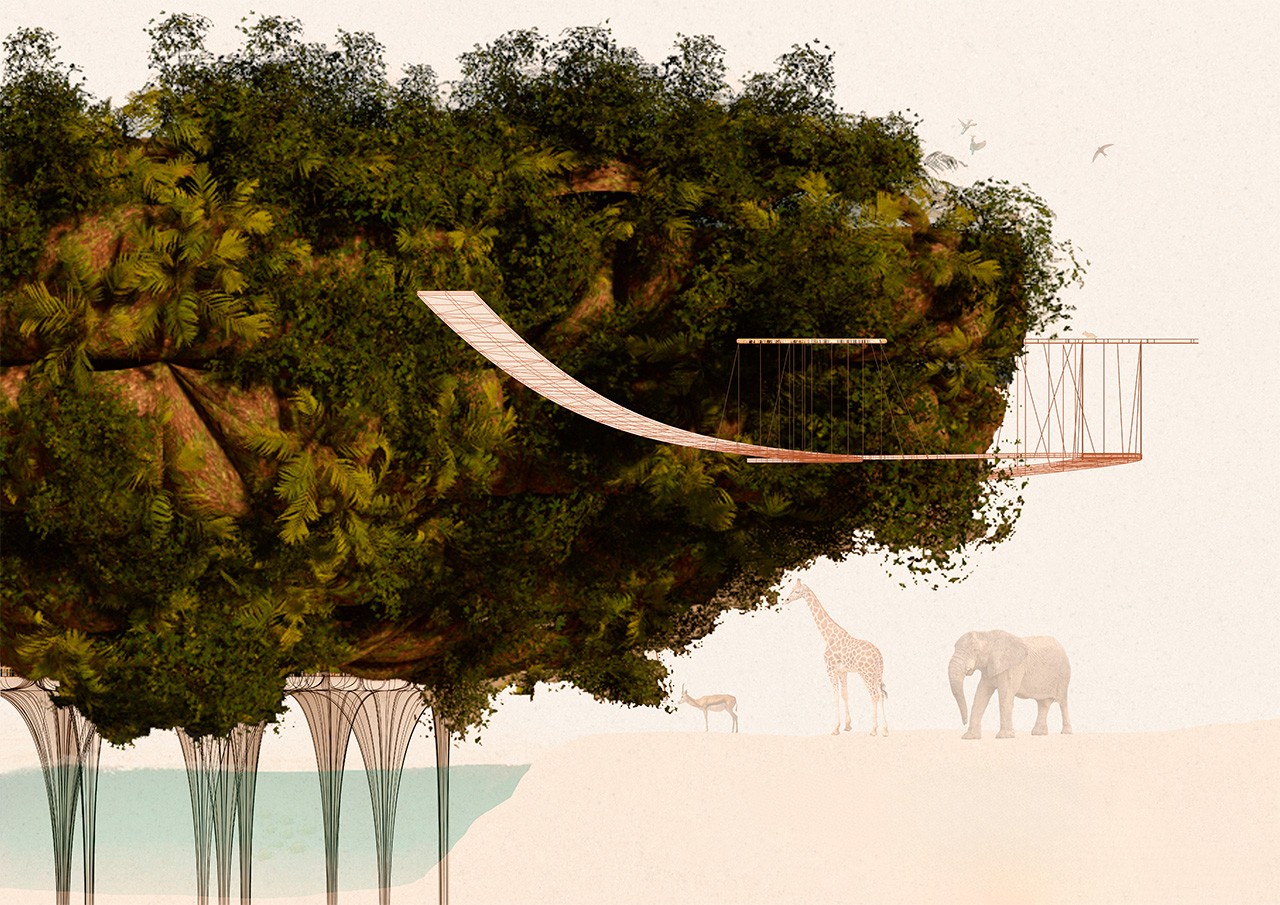
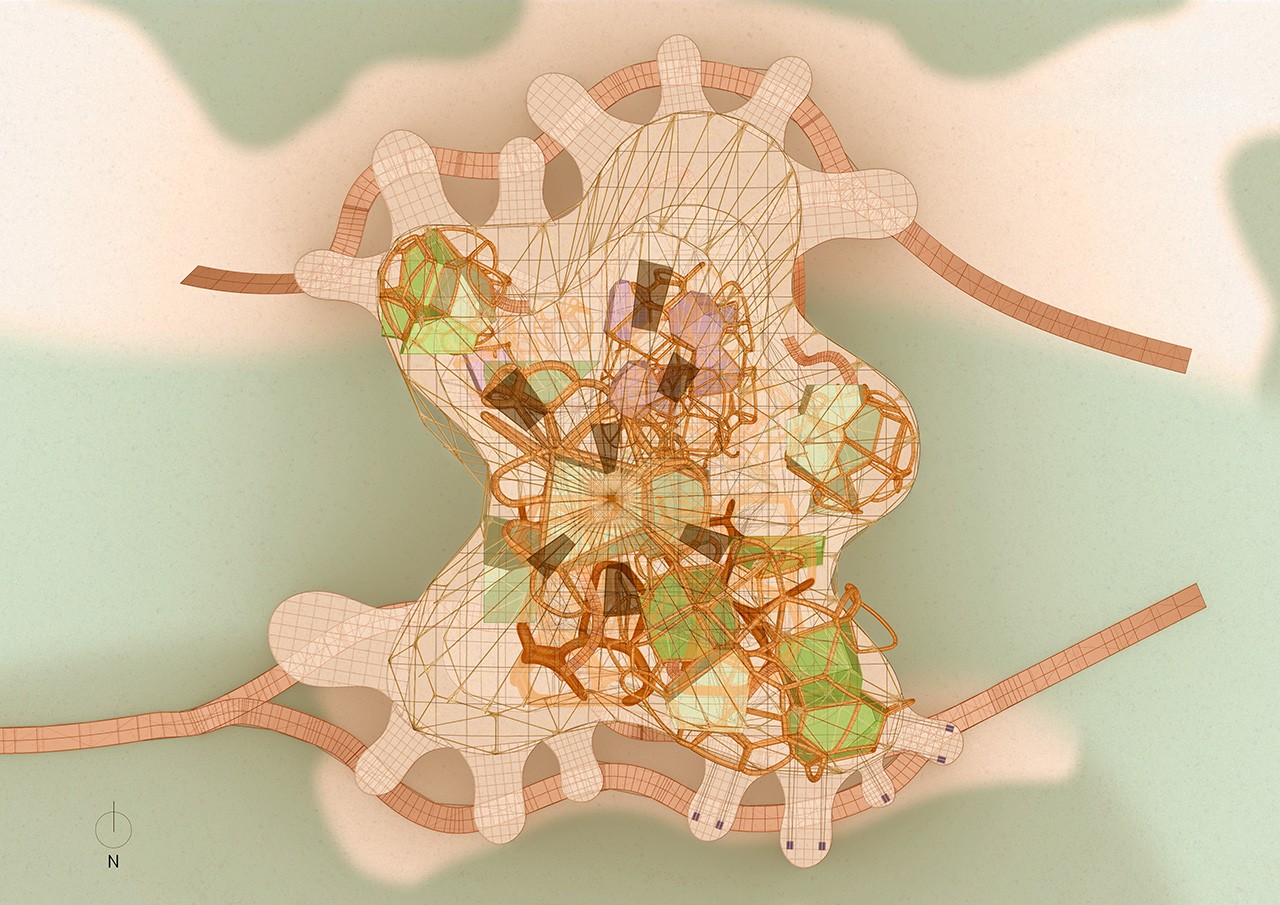
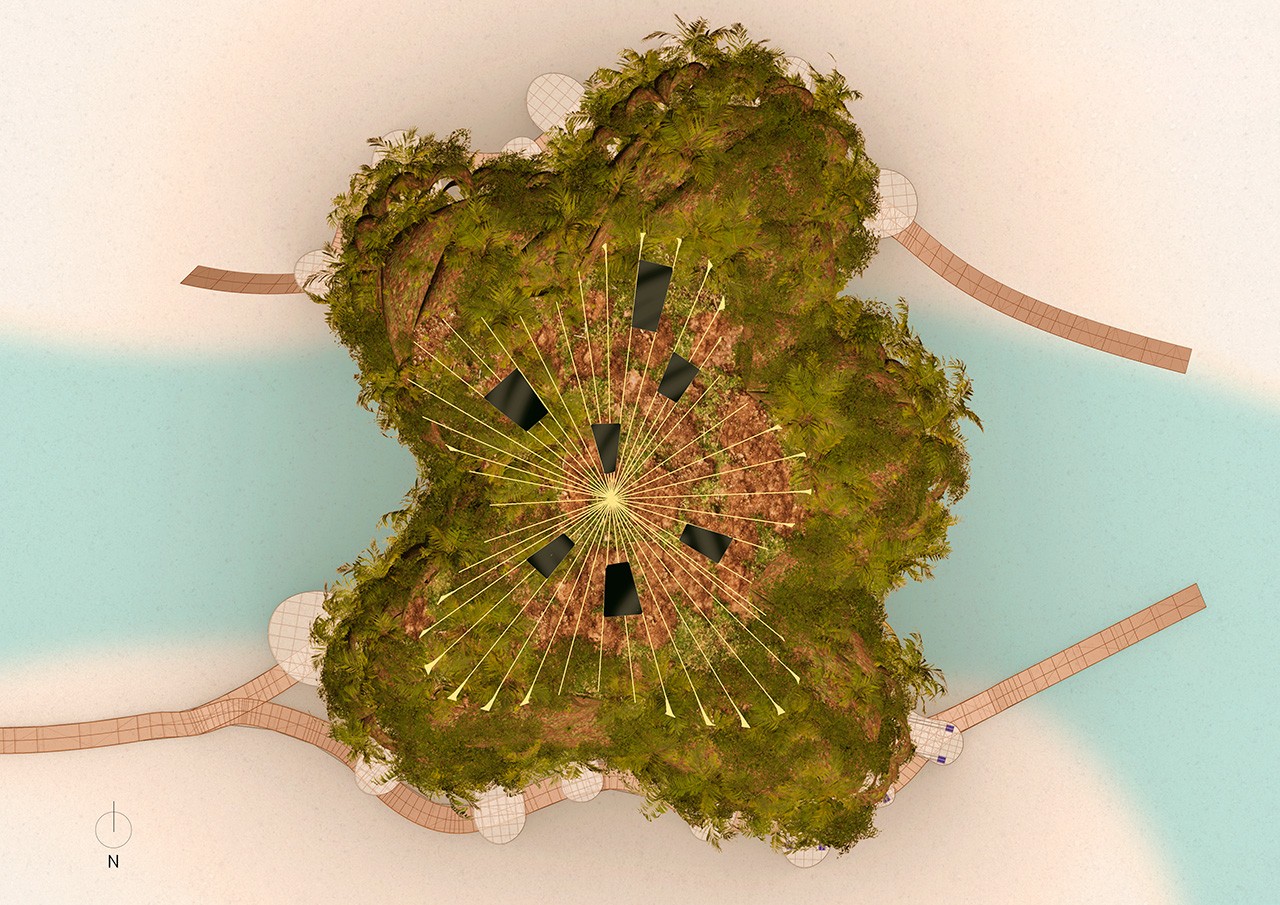
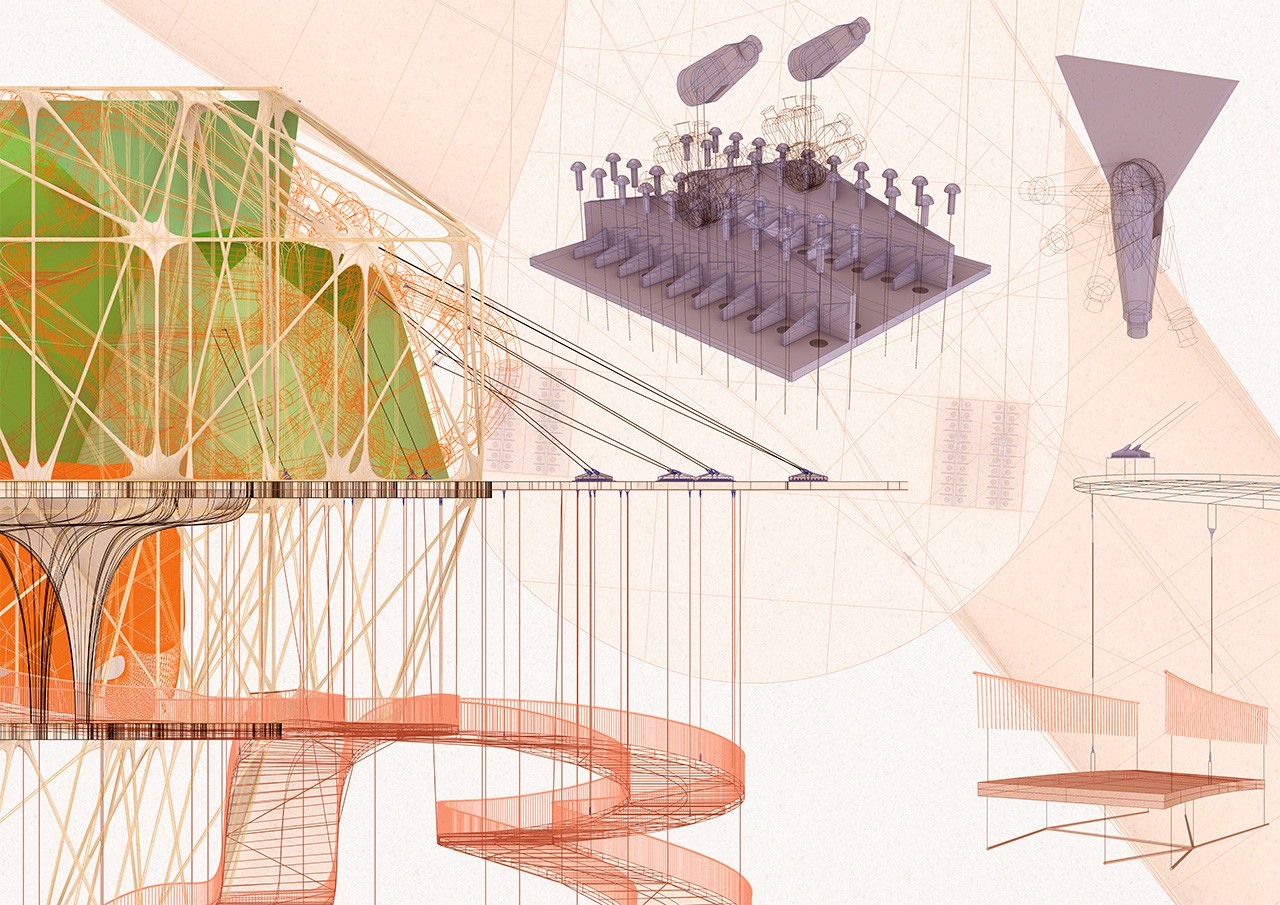
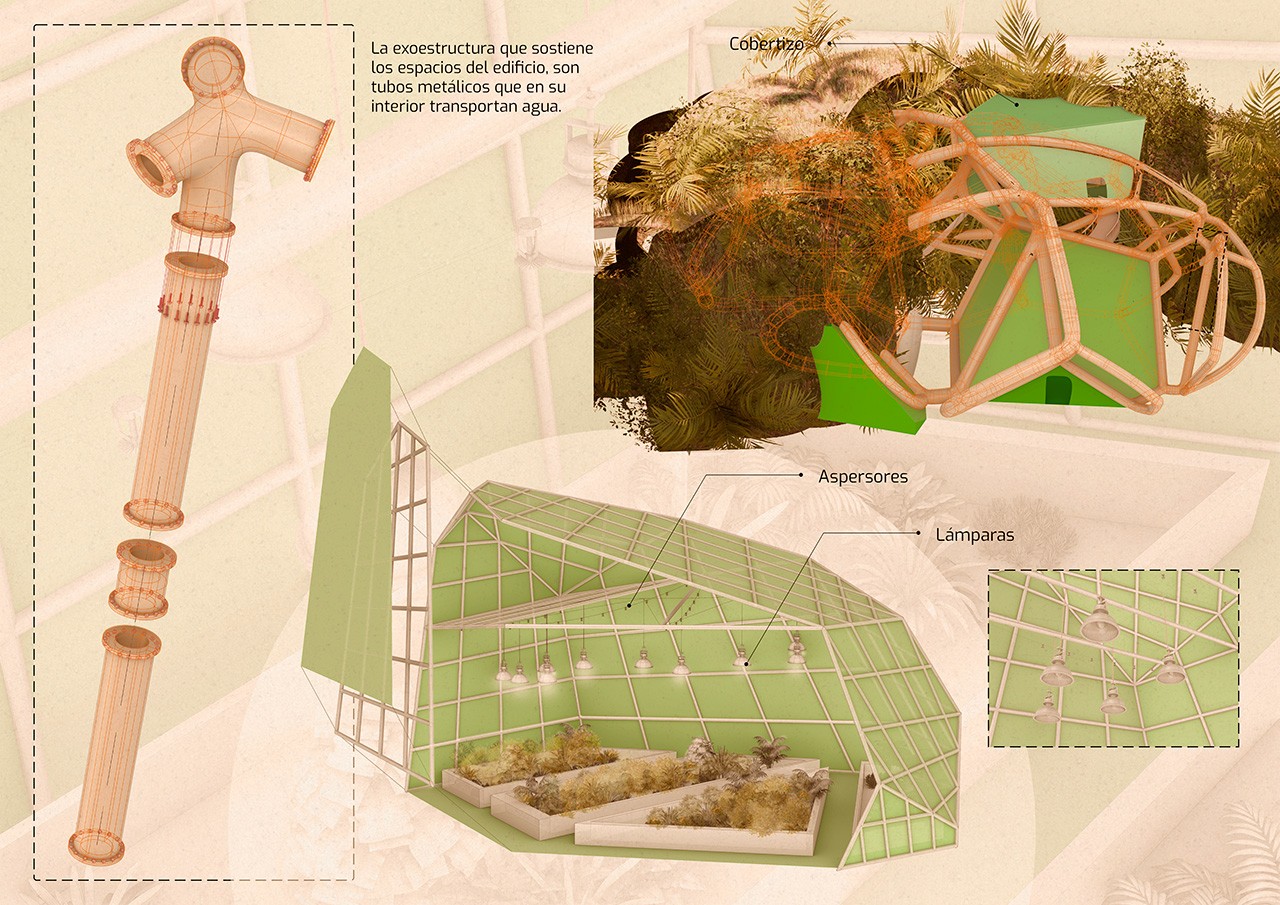
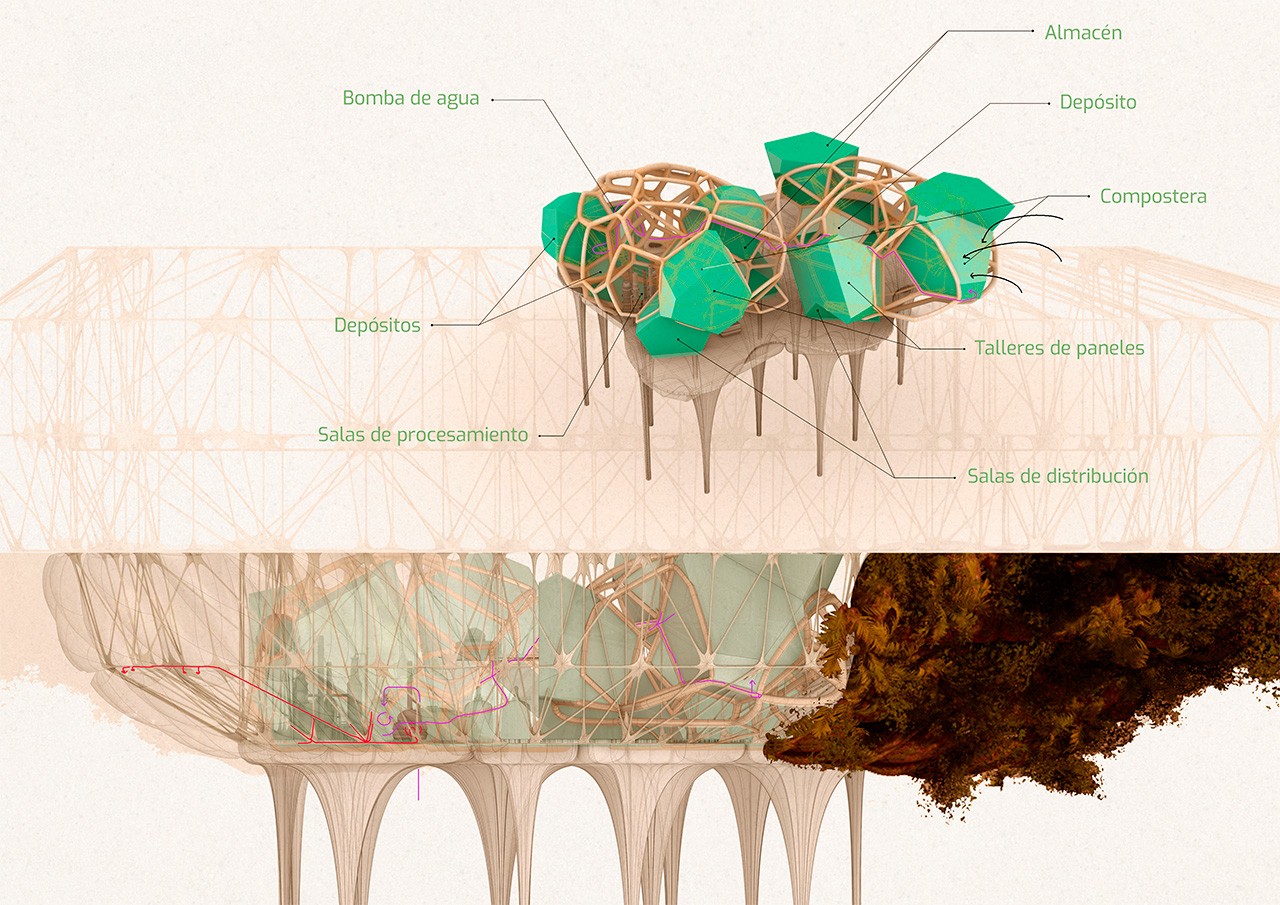
This therapy center is located in the Okavango Delta and it functions like a living organism. Its roof is a canvas that captures solar energy; its pillars, deep roots that draw water; its envelope, an organic skin that grows and shrinks in response to the environment following the "circle of life". It is made out of seeds and biomaterials that the center's residents cultivate, transport, process, store, and channel through the building's network of tubes until it emerges outside, where it solidifies in the substructure. Then, it begins to germinate and grows with the arrival of the wet season.
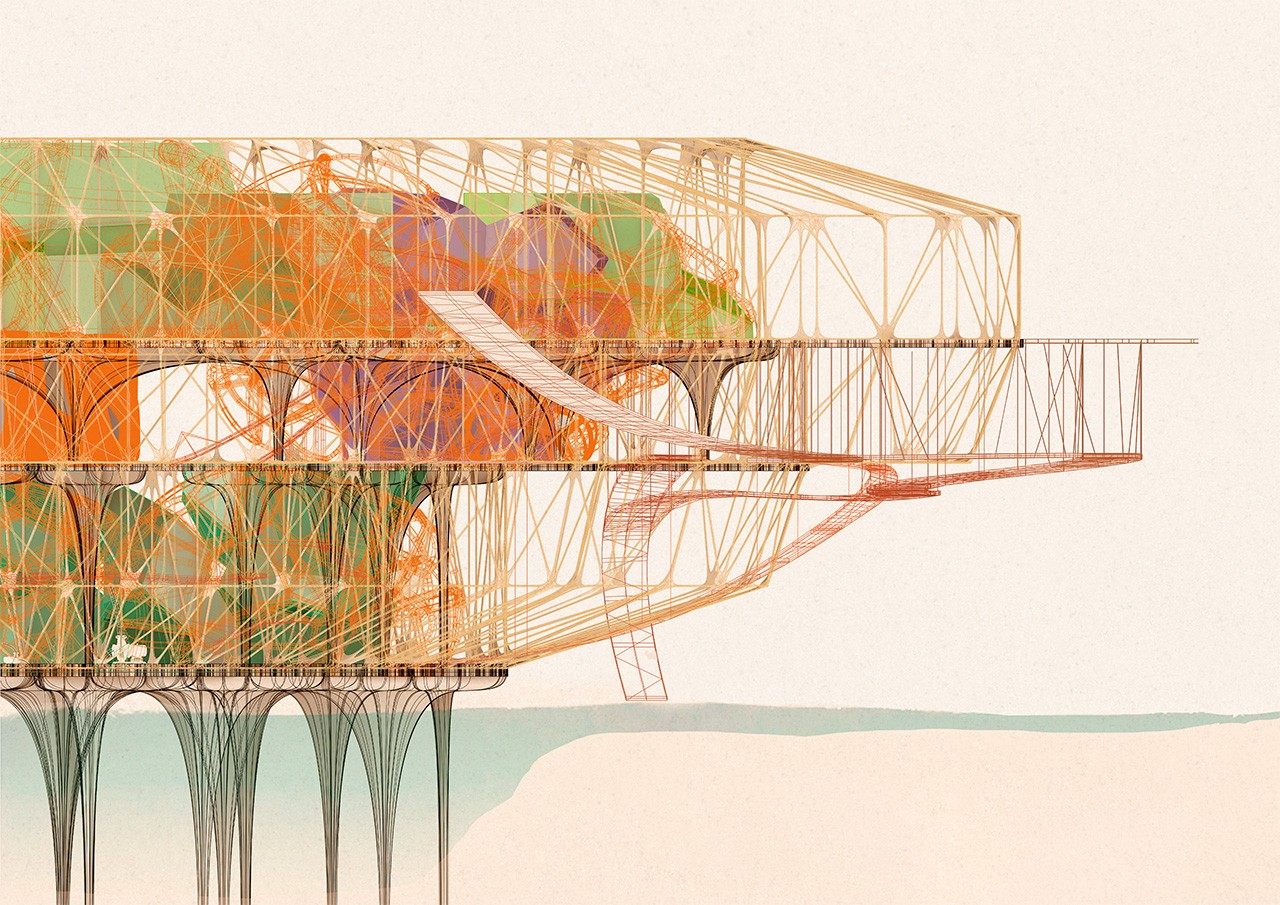
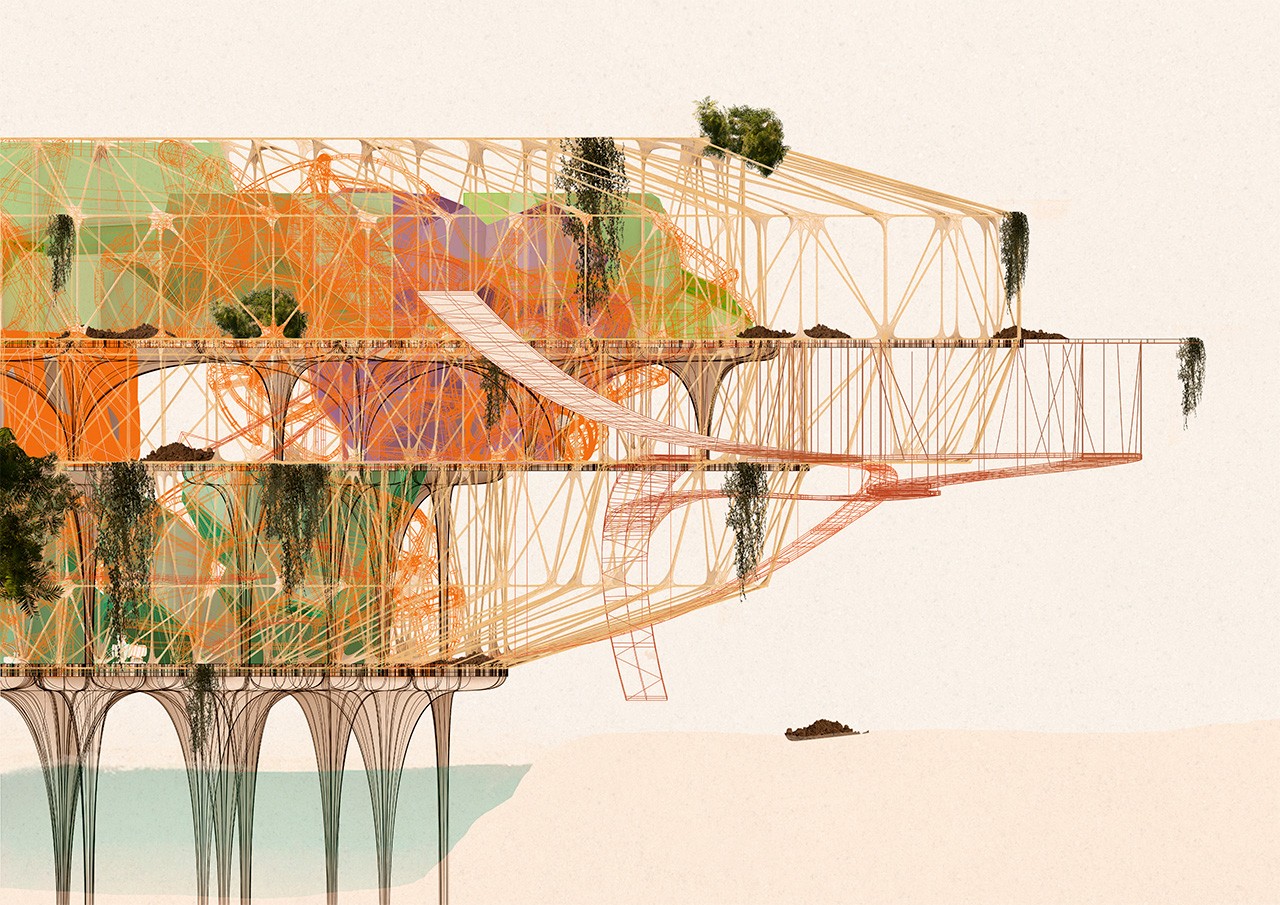
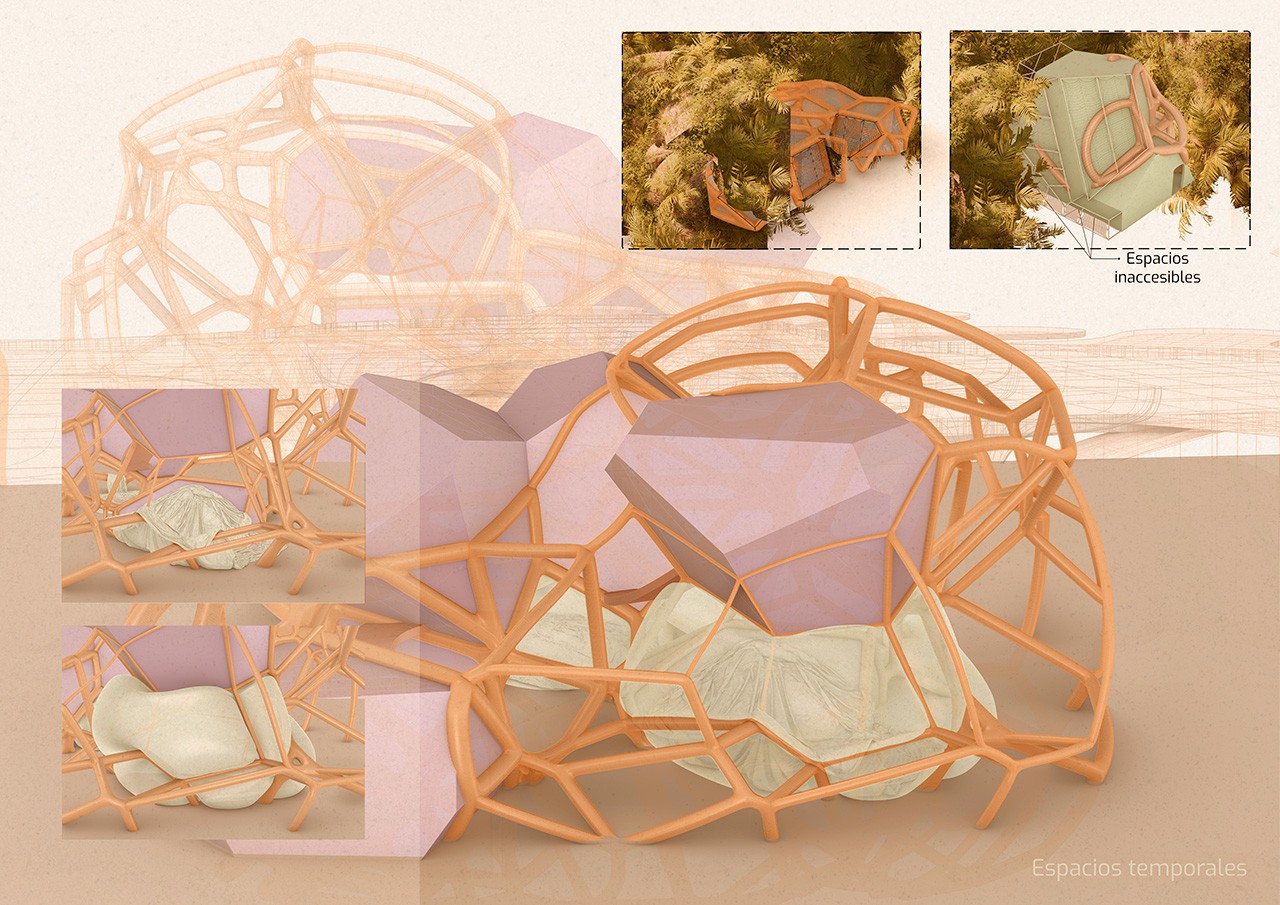
It not only grows outwards but also inwards, forcing the reorganization of interior space in such a way that some areas become unusable while others change their function. Additionally, the use of pneumatic spaces that inflate within the structural voids helps increase usable space. The envelope serves as nourishment for the living organisms inhabiting the area, and by the time the dry season arrives, air can flow freely through the exposed structure of the building once again. The waste resulting from the interaction between animals and the envelope will be used as compost to cultivate the resources needed for the next cycle.
This therapy center is located in the Okavango Delta and it functions like a living organism. Its roof is a canvas that captures solar energy; its pillars, deep roots that draw water; its envelope, an organic skin that grows and shrinks in response to the environment following the "circle of life". It is made out of seeds and biomaterials that the center's residents cultivate, transport, process, store, and channel through the building's network of tubes until it emerges outside, where it solidifies in the substructure. Then, it begins to germinate and grows with the arrival of the wet season.
It not only grows outwards but also inwards, forcing the reorganization of interior space in such a way that some areas become unusable while others change their function. Additionally, the use of pneumatic spaces that inflate within the structural voids helps increase usable space. The envelope serves as nourishment for the living organisms inhabiting the area, and by the time the dry season arrives, air can flow freely through the exposed structure of the building once again. The waste resulting from the interaction between animals and the envelope will be used as compost to cultivate the resources needed for the next cycle.
- 00 - Description
- 01 - Circle of life
- 02 - Dry season
- 03 - Intermediate season
- 04 - Wet season
- 05 - Floor plan dry seaso
- 06 - Floor plan wet seaso
- 07 - Anchors
- 08 - Greenhouse
- 09 - Machinery
- 10 - Pneumatic space
- 11 - Video