
SINE DIE
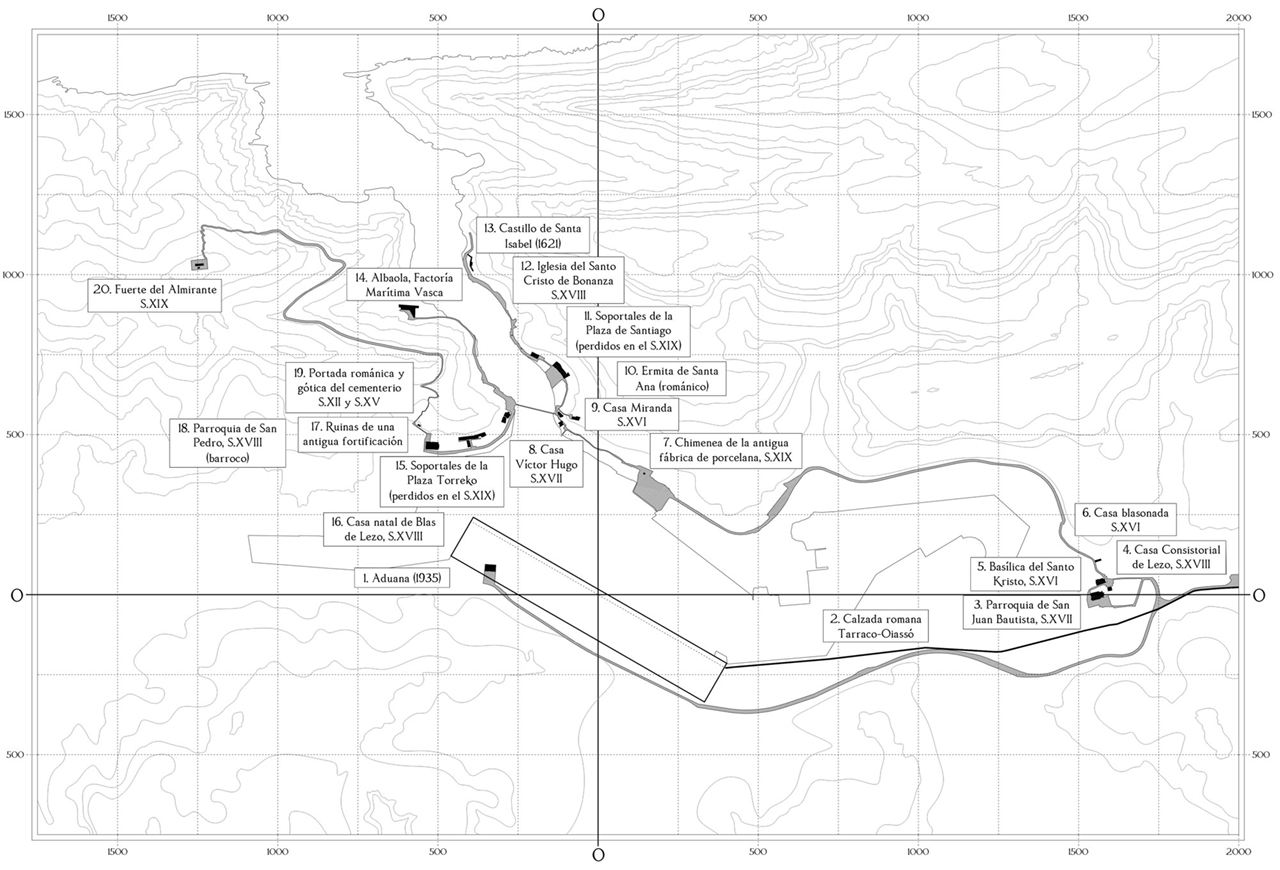
Ever since humans have populated the bay of Pasaia, it has been characterised by two concepts: brevity and boundary. The main reason for it to be populated was, in fact, it's character as a border, it's condition as a natural inlet allowed for a better defense agaisnt invaders. It's a fascinating place, full of stories: pirates, whalers in the new world, crewmen who participated in Magellan's first circumnavigation of the Earth...
Furthermore, Pasaia Port is an industrial model, although it has been weakened since the 80's due to competition from other ports such as Bilbao or Gijón. Each of these events has formed Pasaia into a unique character- emphasising the industry's importance on an ever-changing landscape. This unfortunately brings along a dynamism that has made the people from the bay no longer feel identified with it anymore.
As a response to this phenomenom the proposal, which takes the name of SINE DIE due to these circumstances, roots itself in the concepts of timelessness and boundary-breakdown as a spark for a new reality to emerge. For its configuration 'essences' have been studied,
permanent elements that -on the contrary to the passage of time and changing cultures- keep themselves constant, immutable.
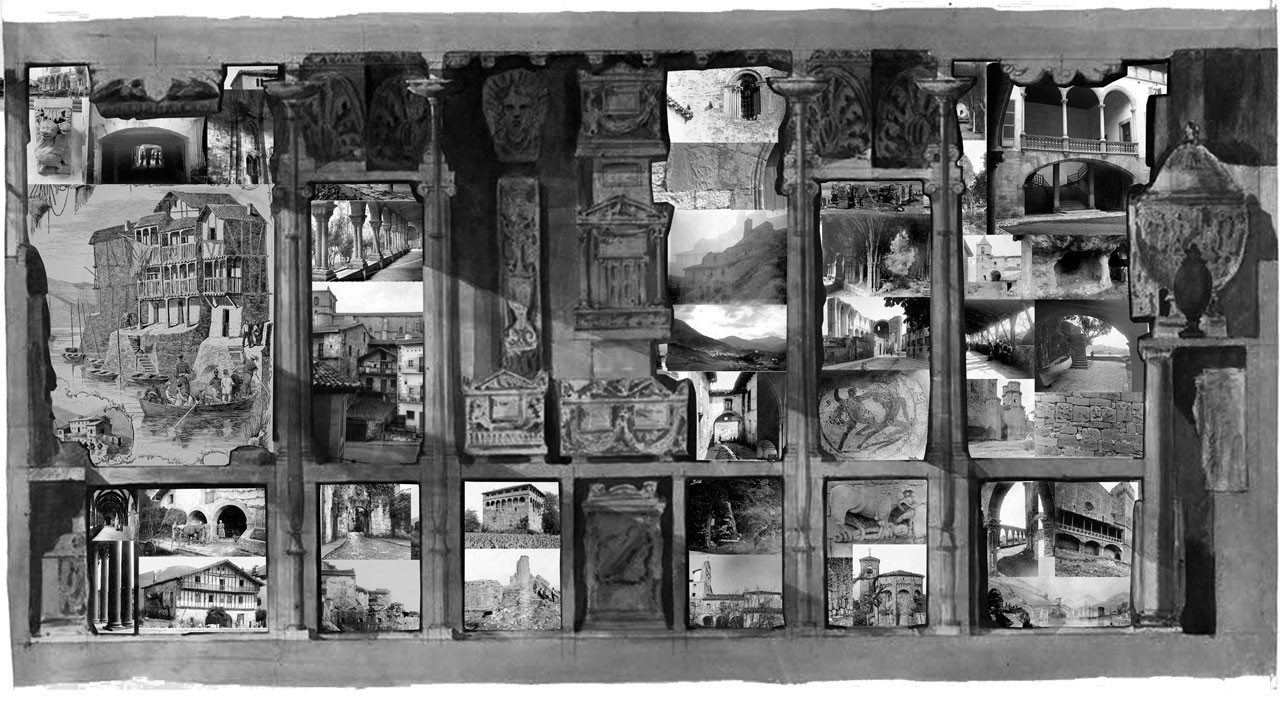
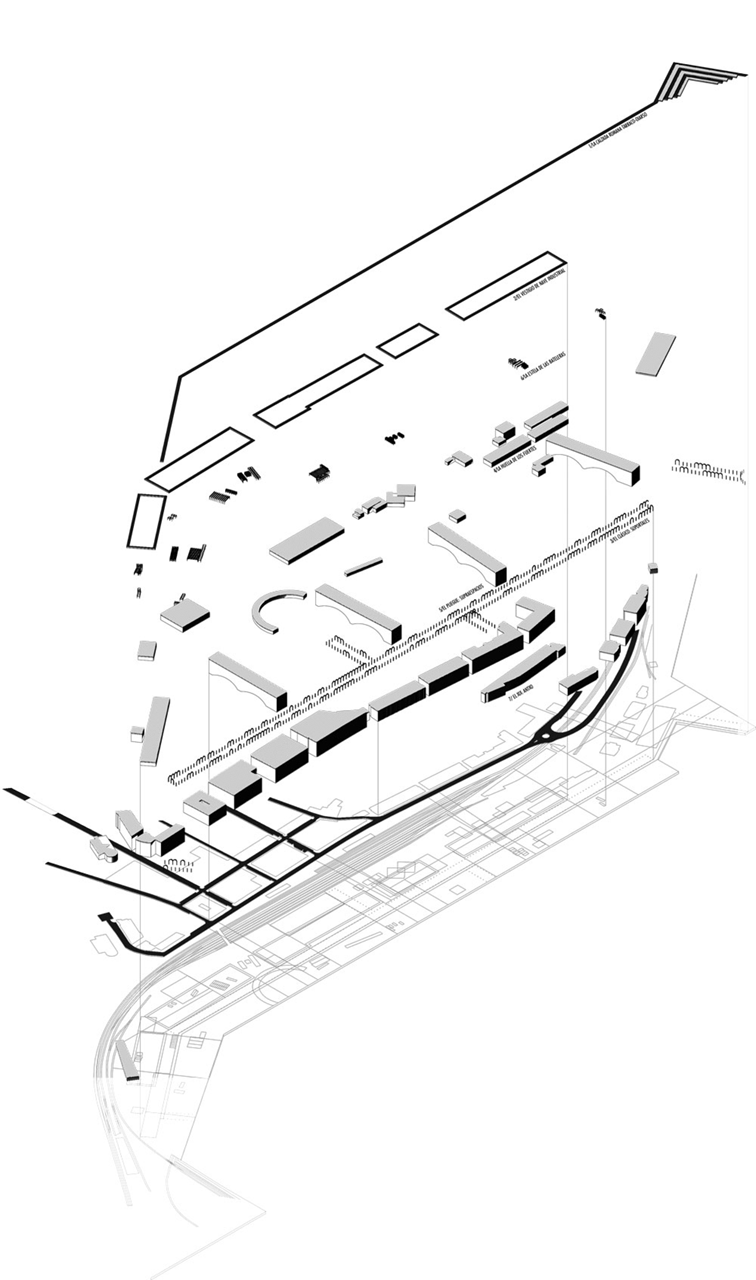
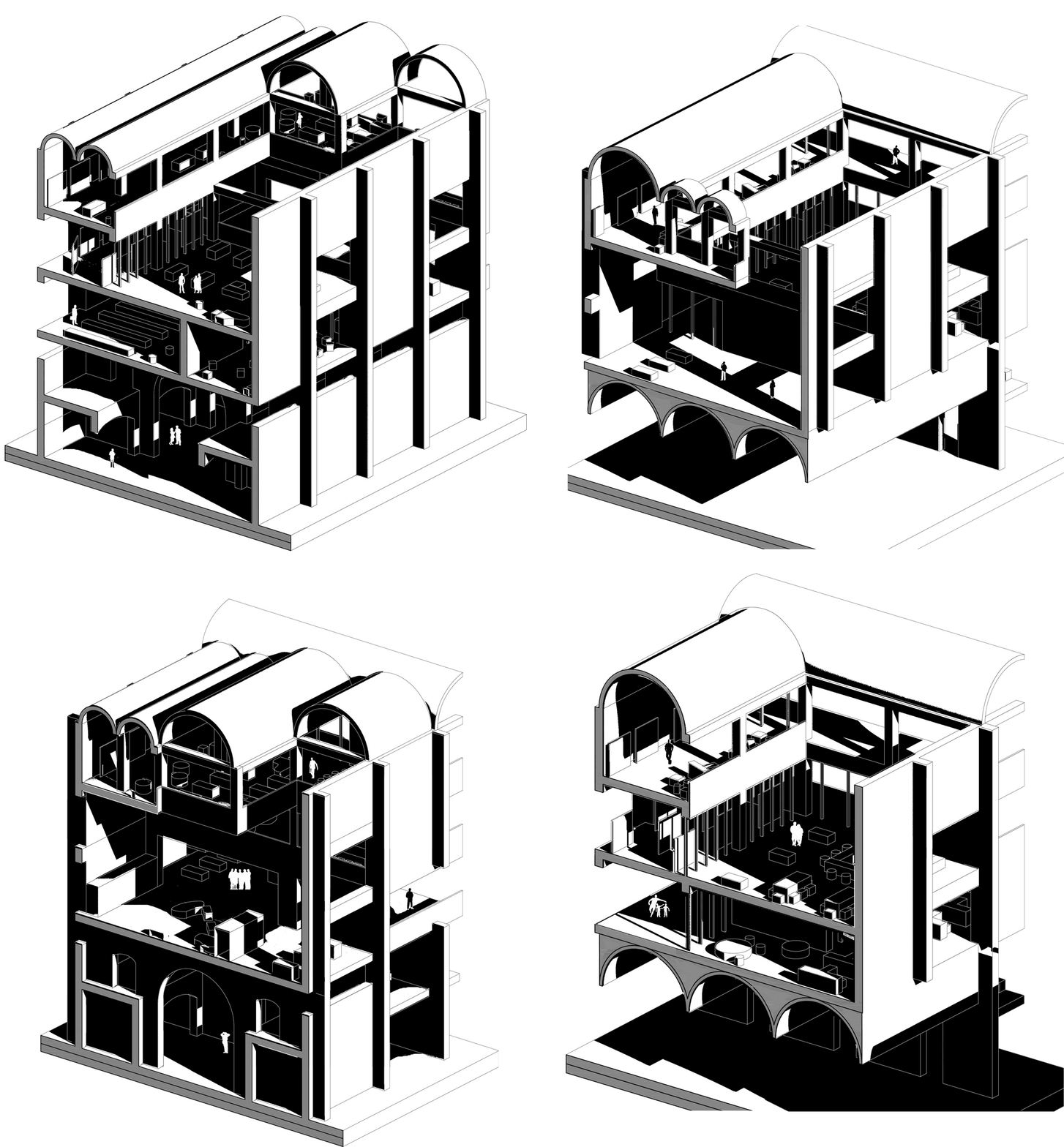
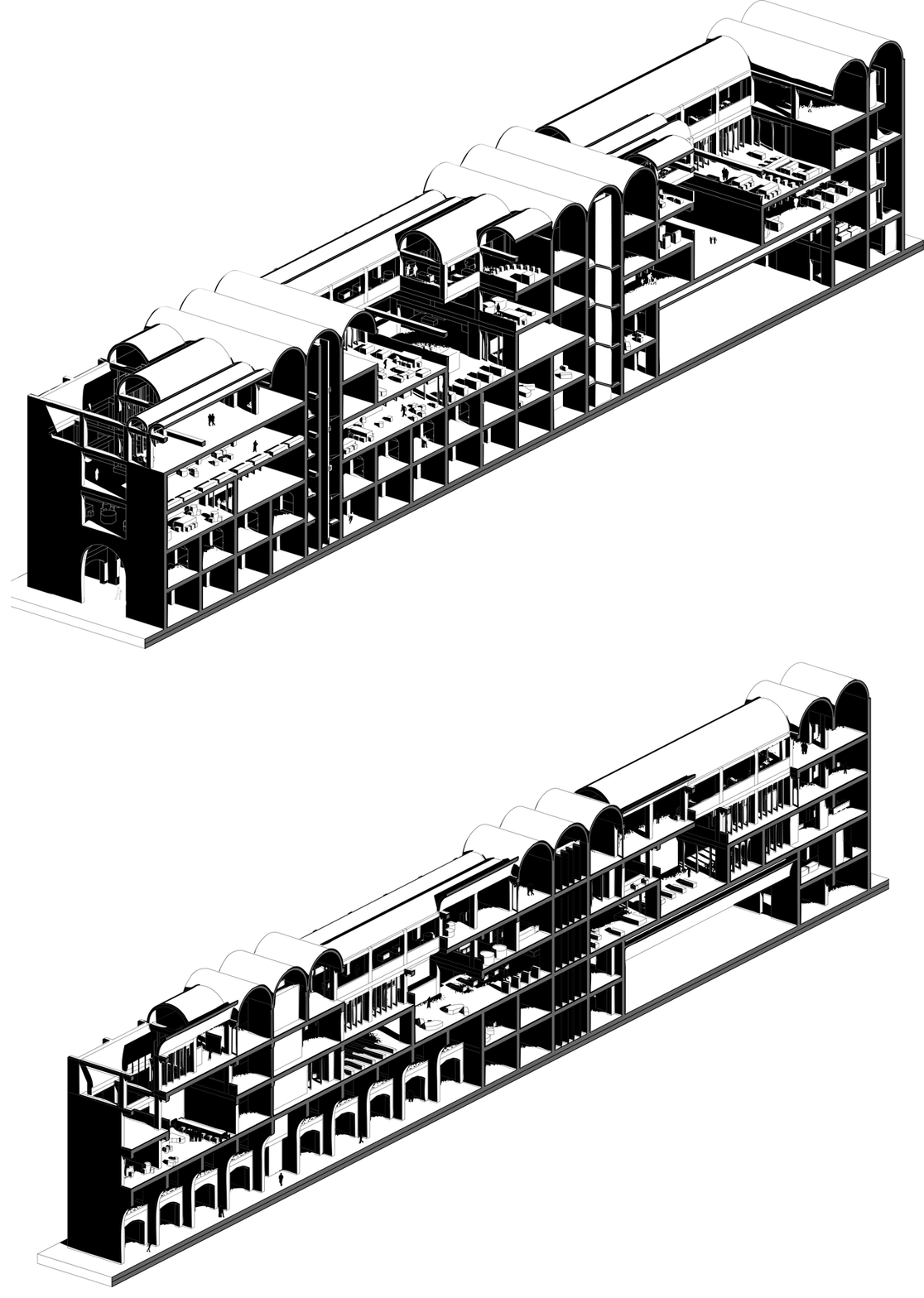
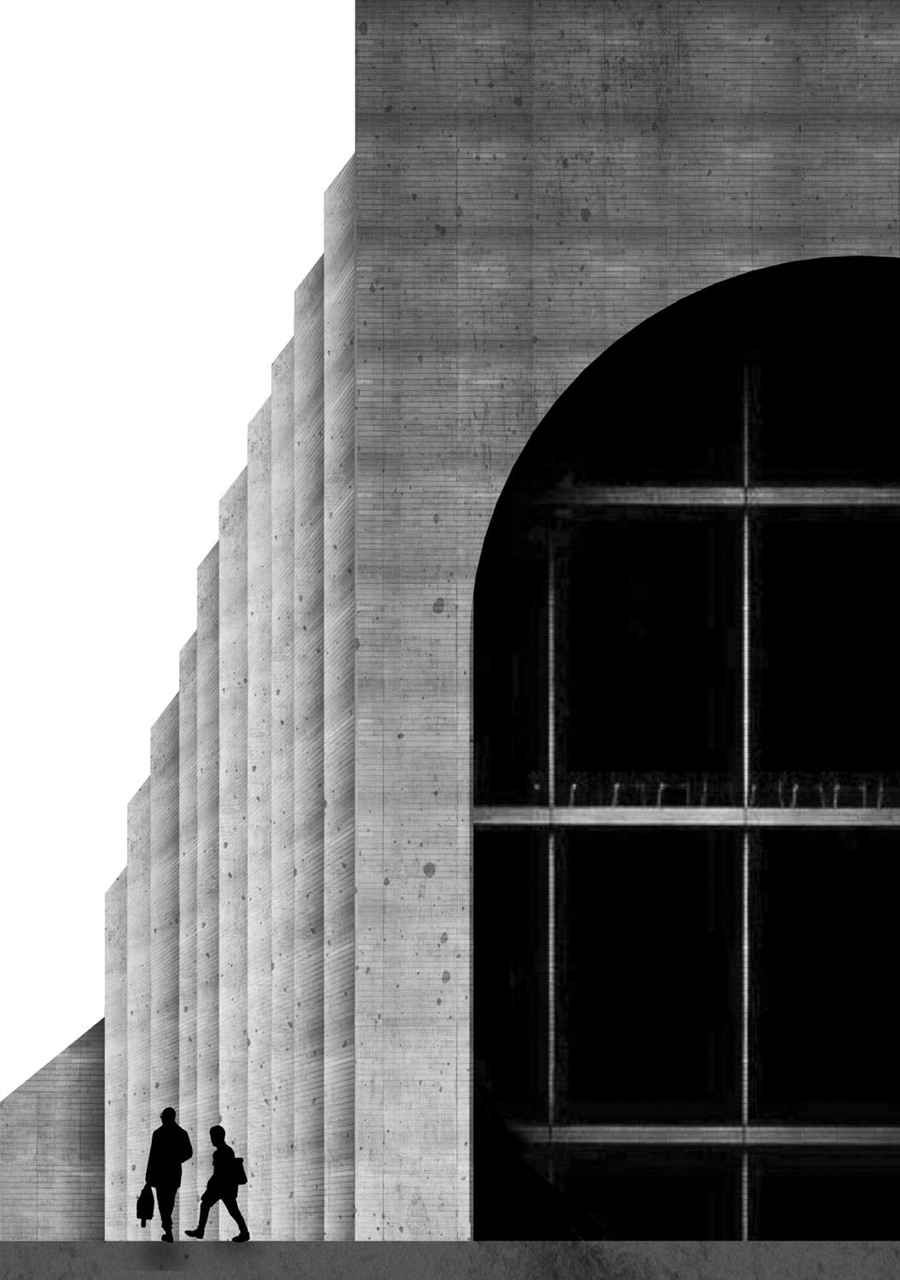
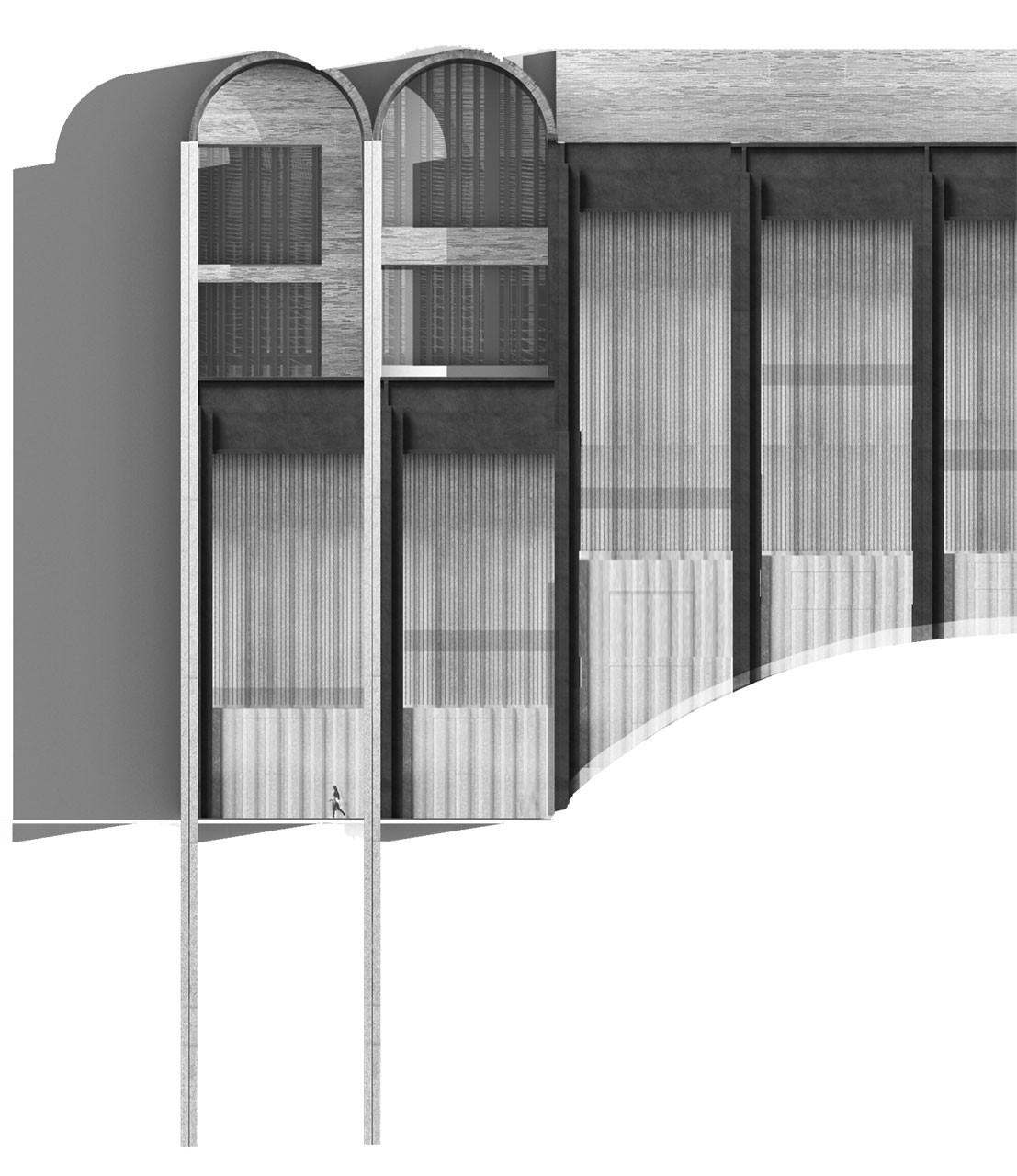
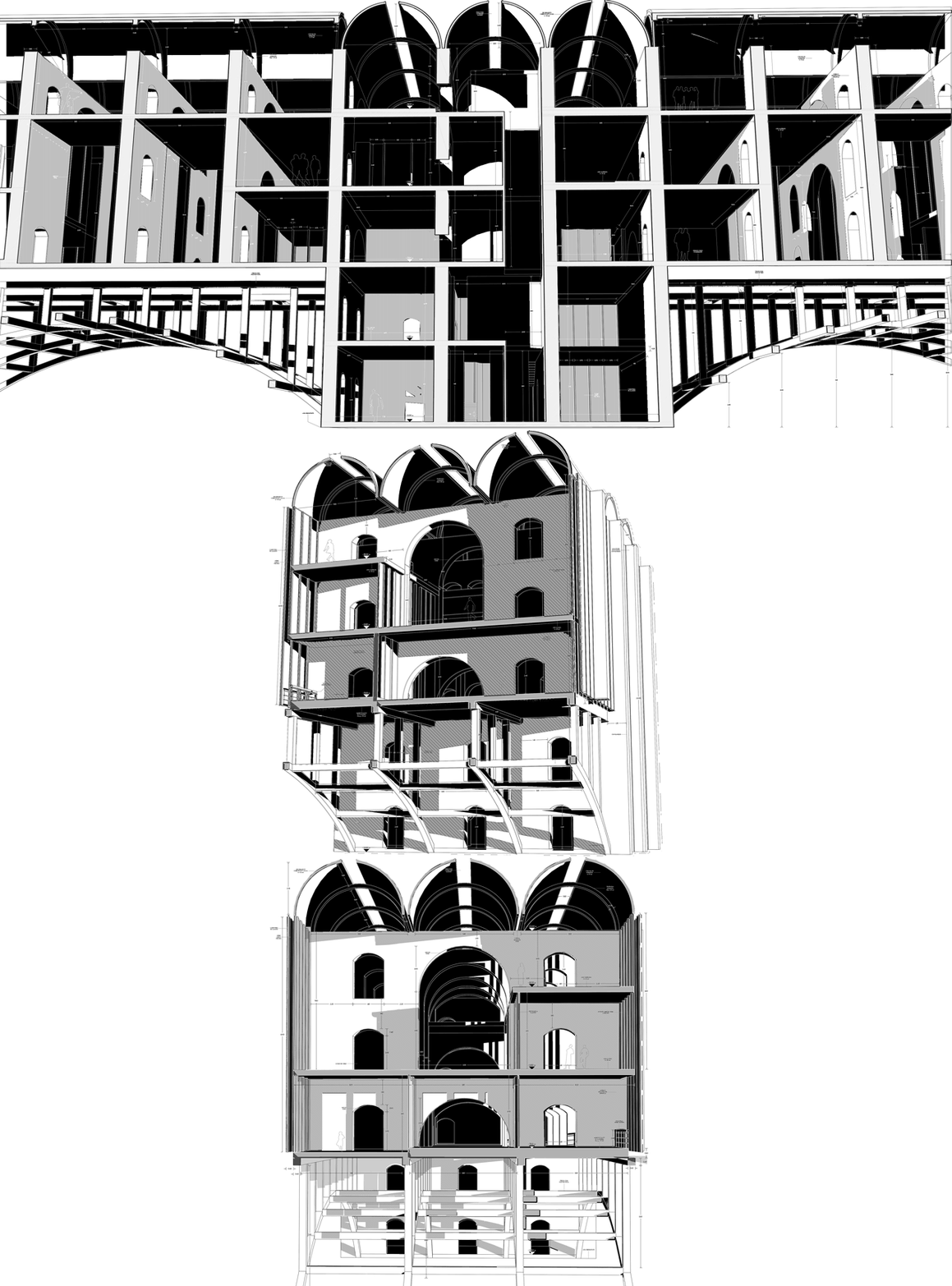
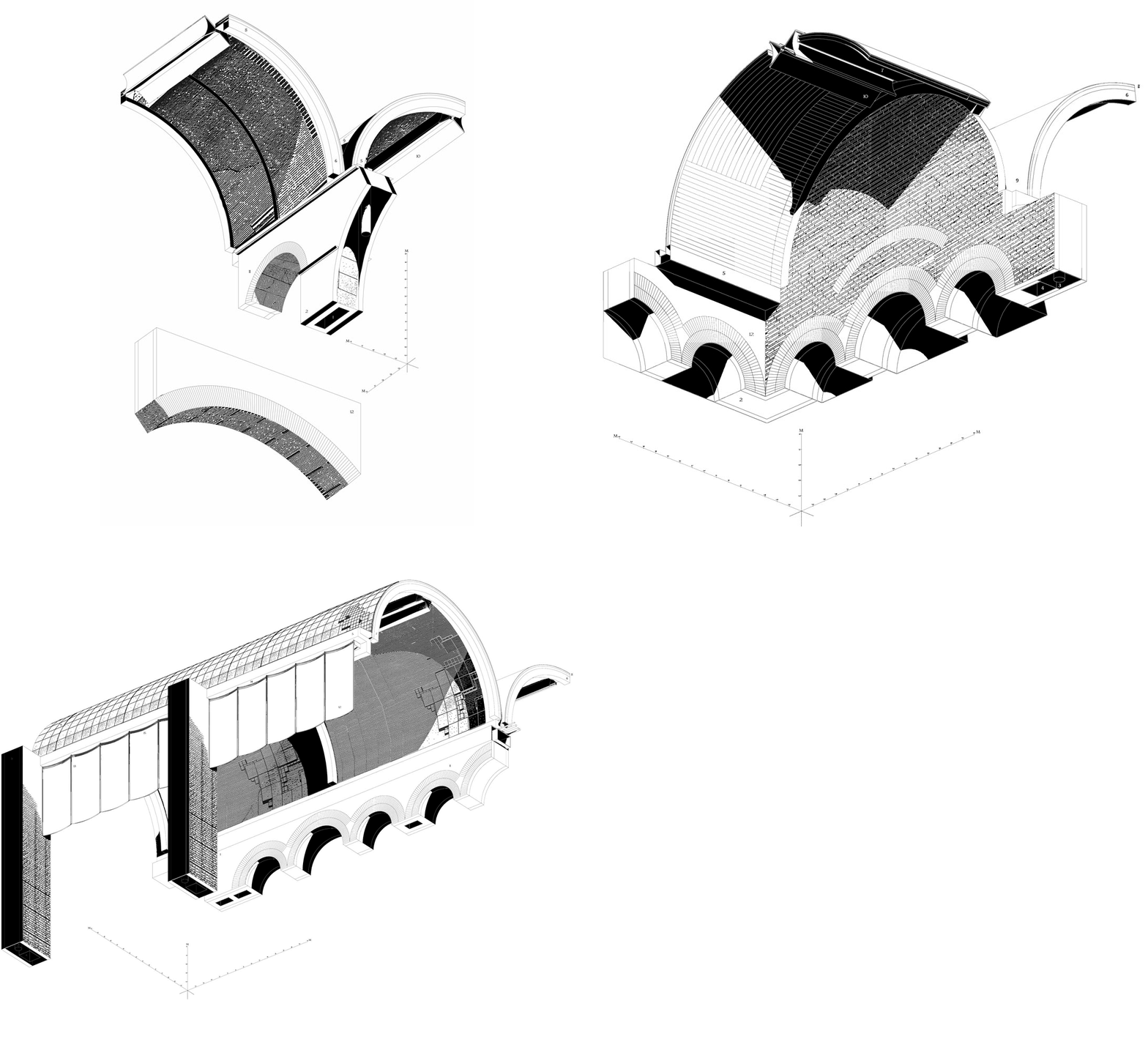
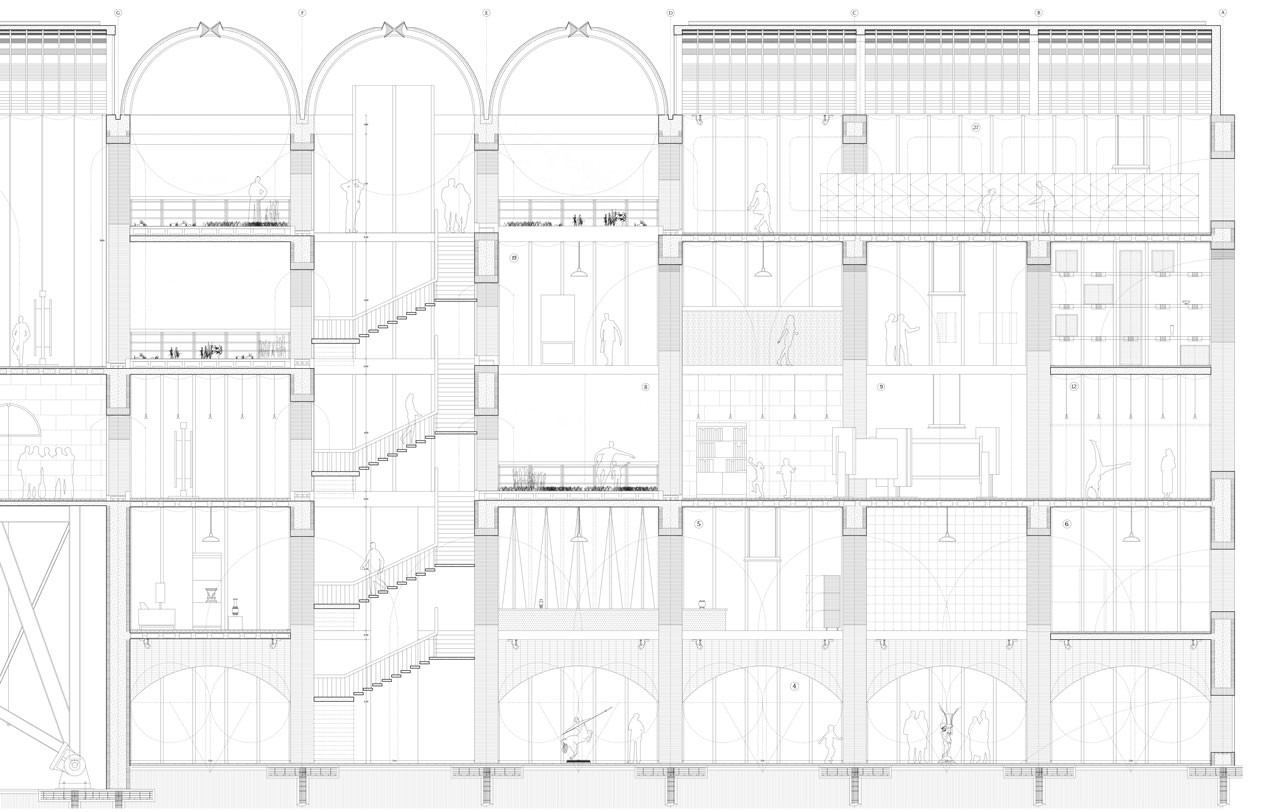
Some of these enduring concepts which have been applied are heavy walls -so fixed to basque architecture-, porticos and arches, materials such as concrete and brick and volumes composition around a lineal space (Mediterranean street).
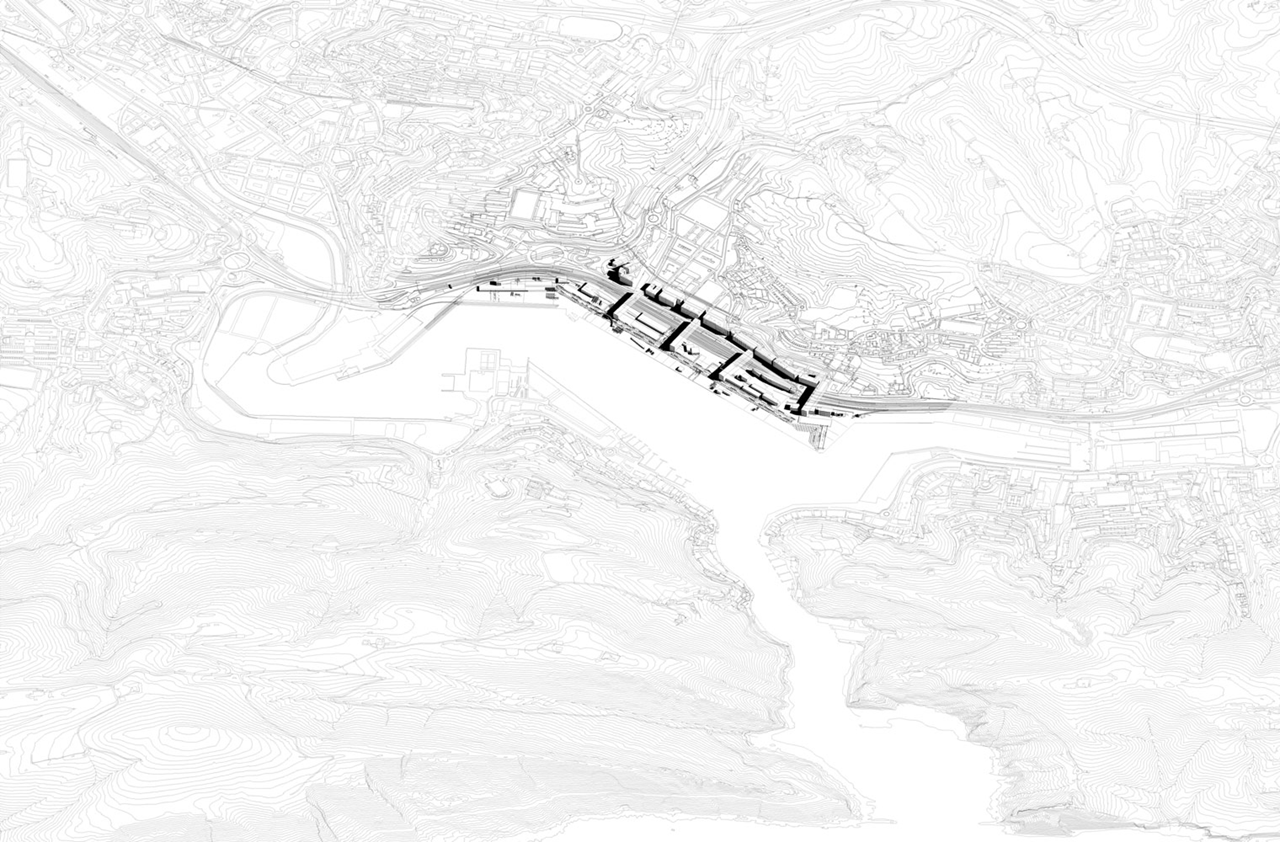
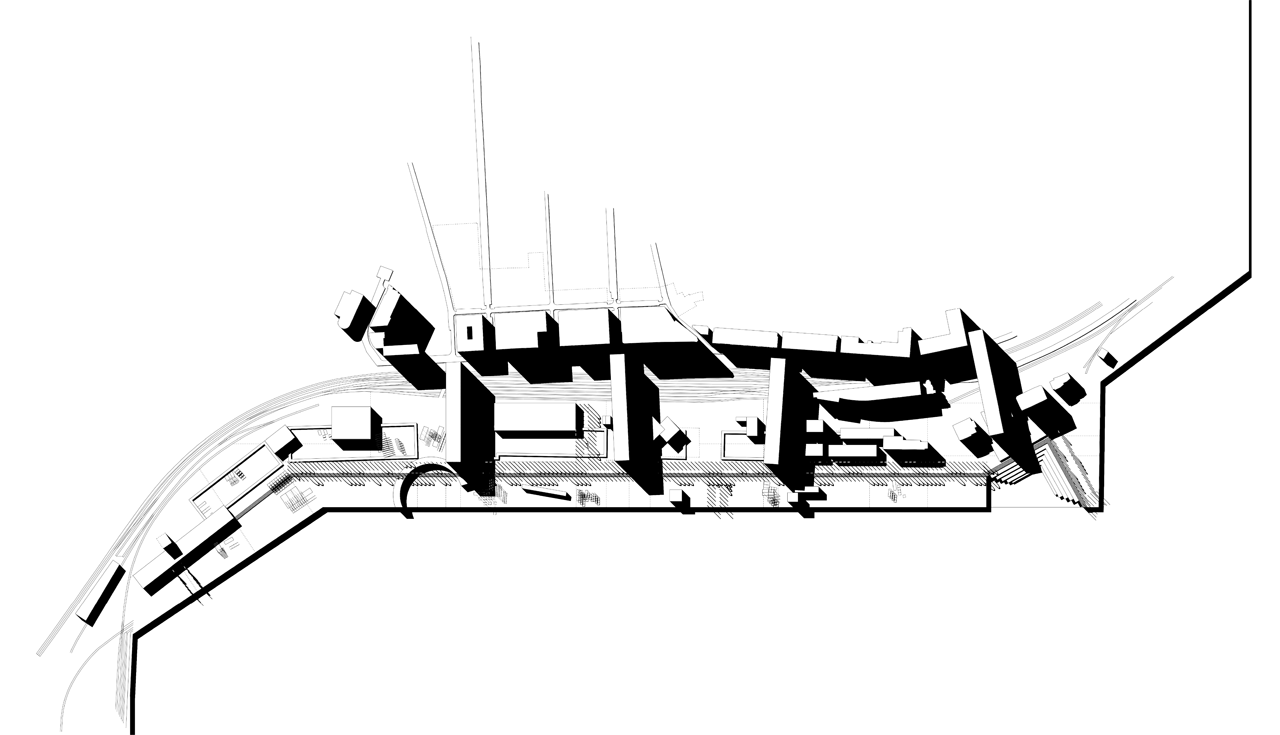
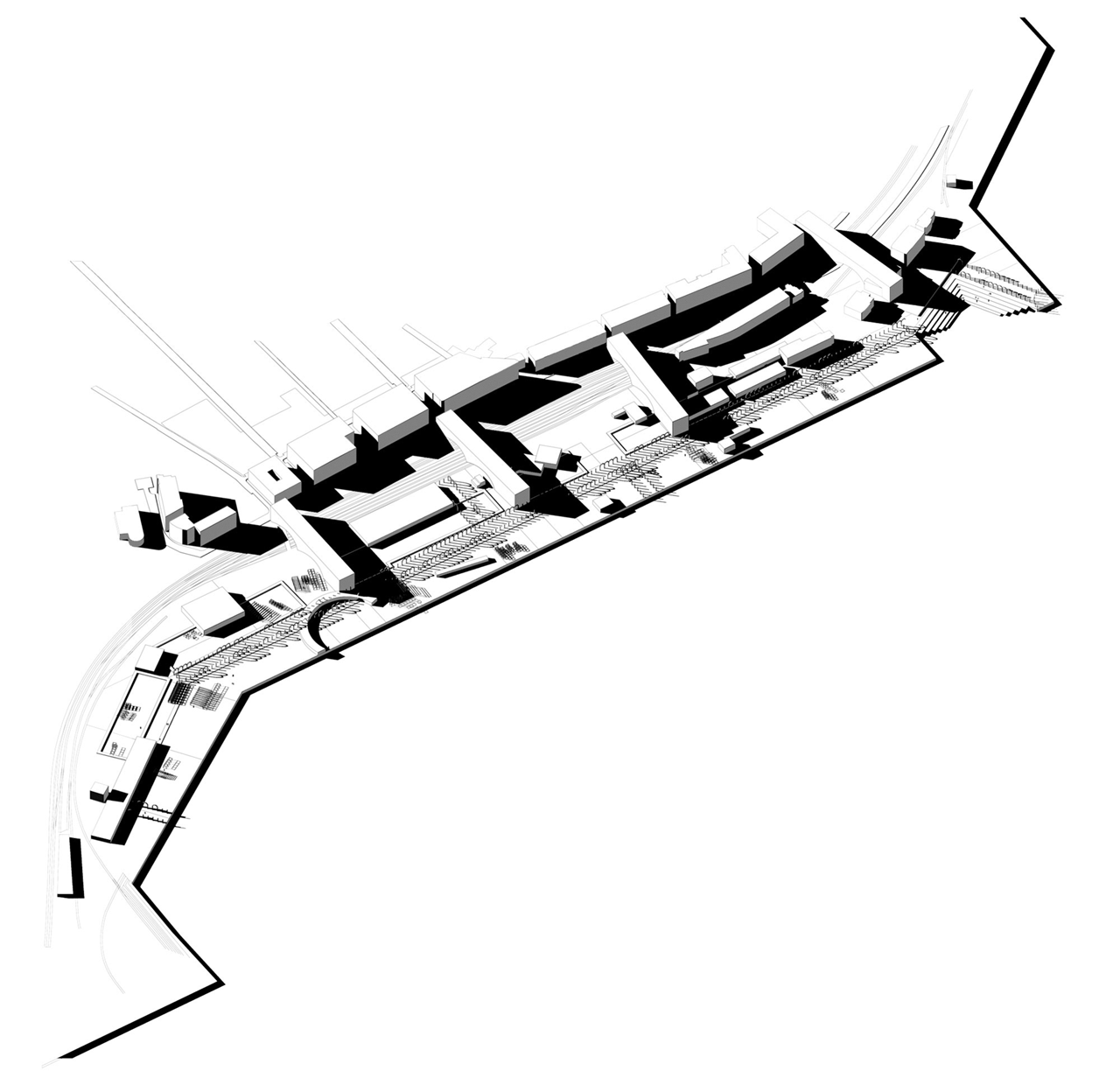
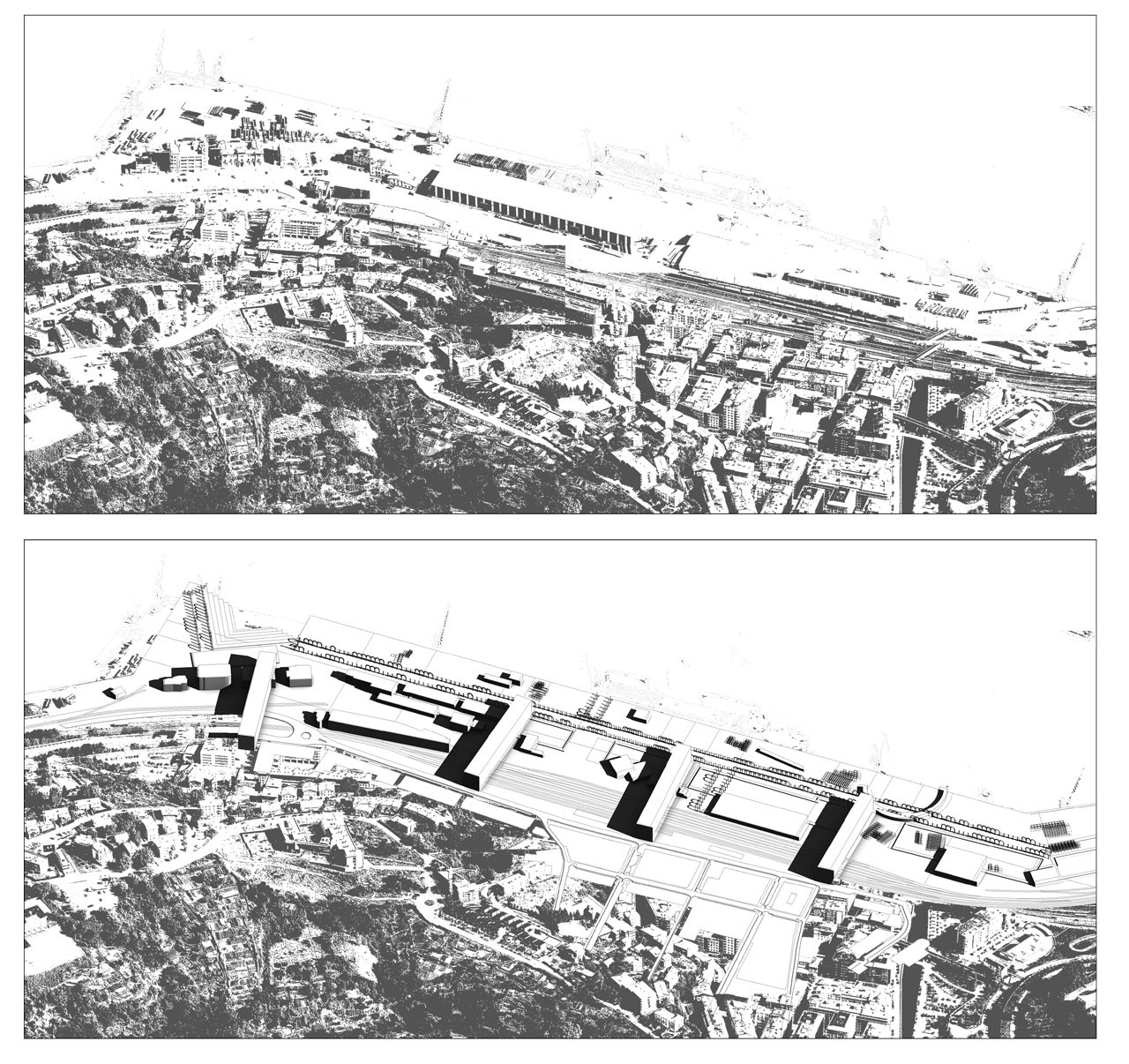
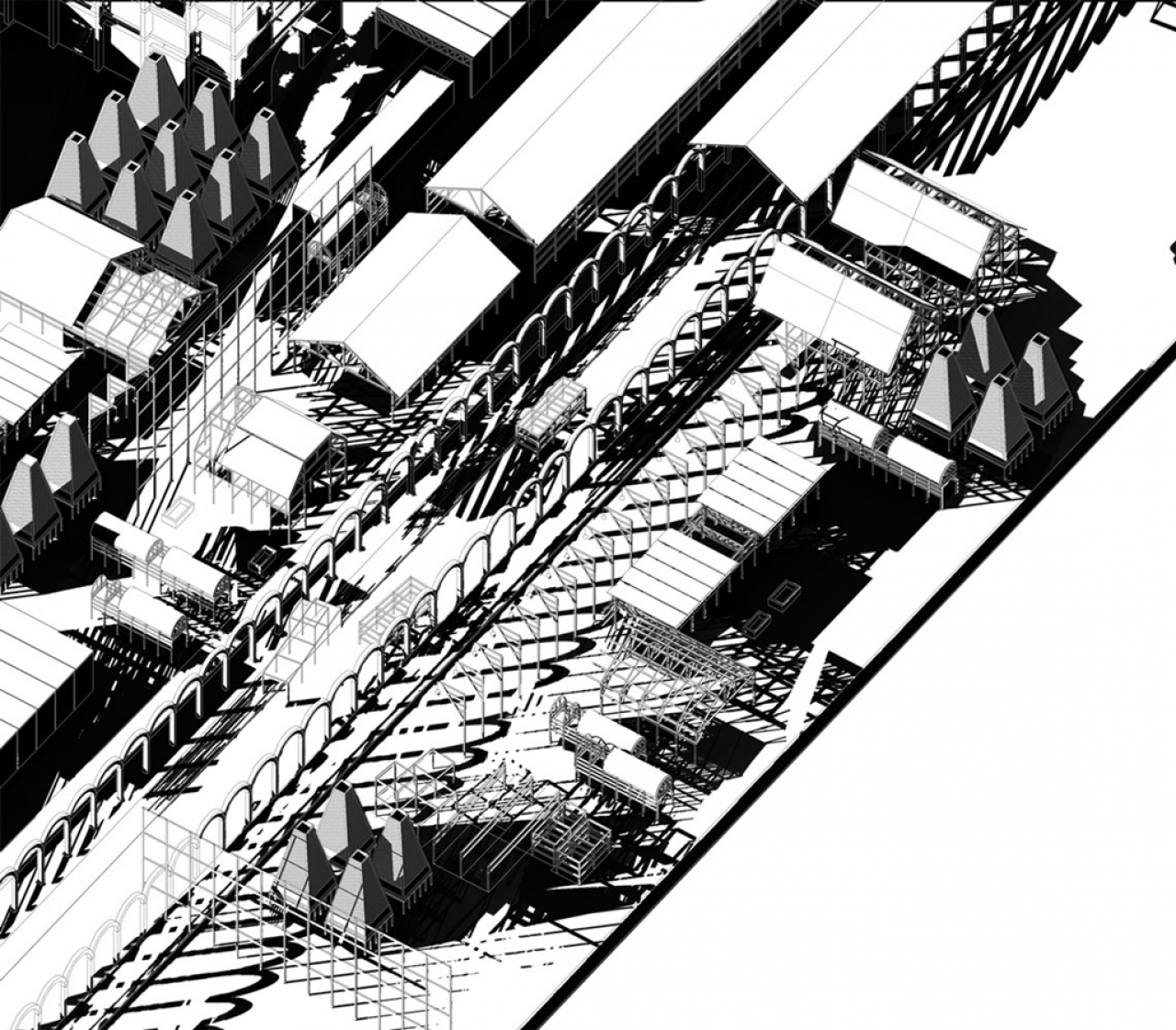
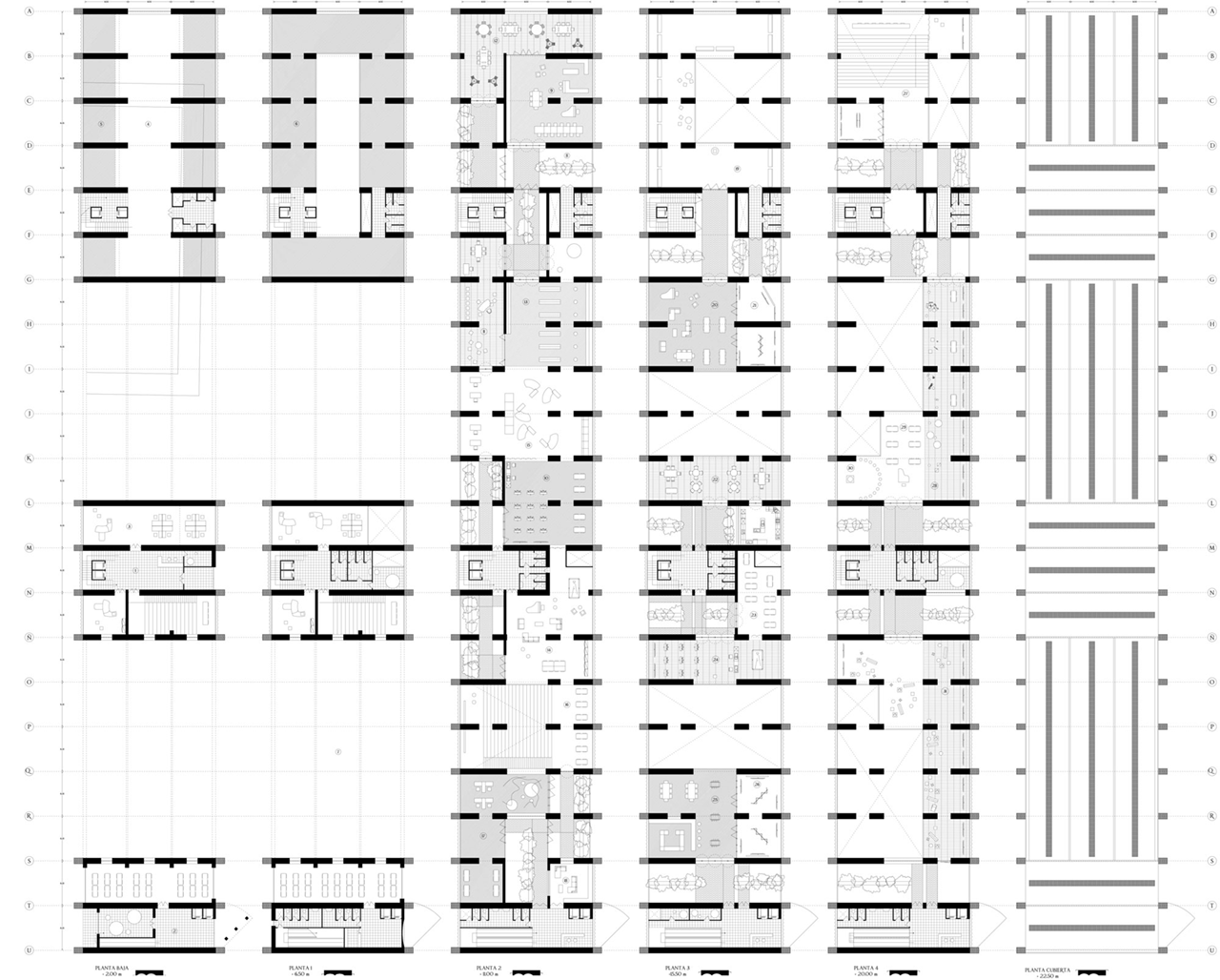
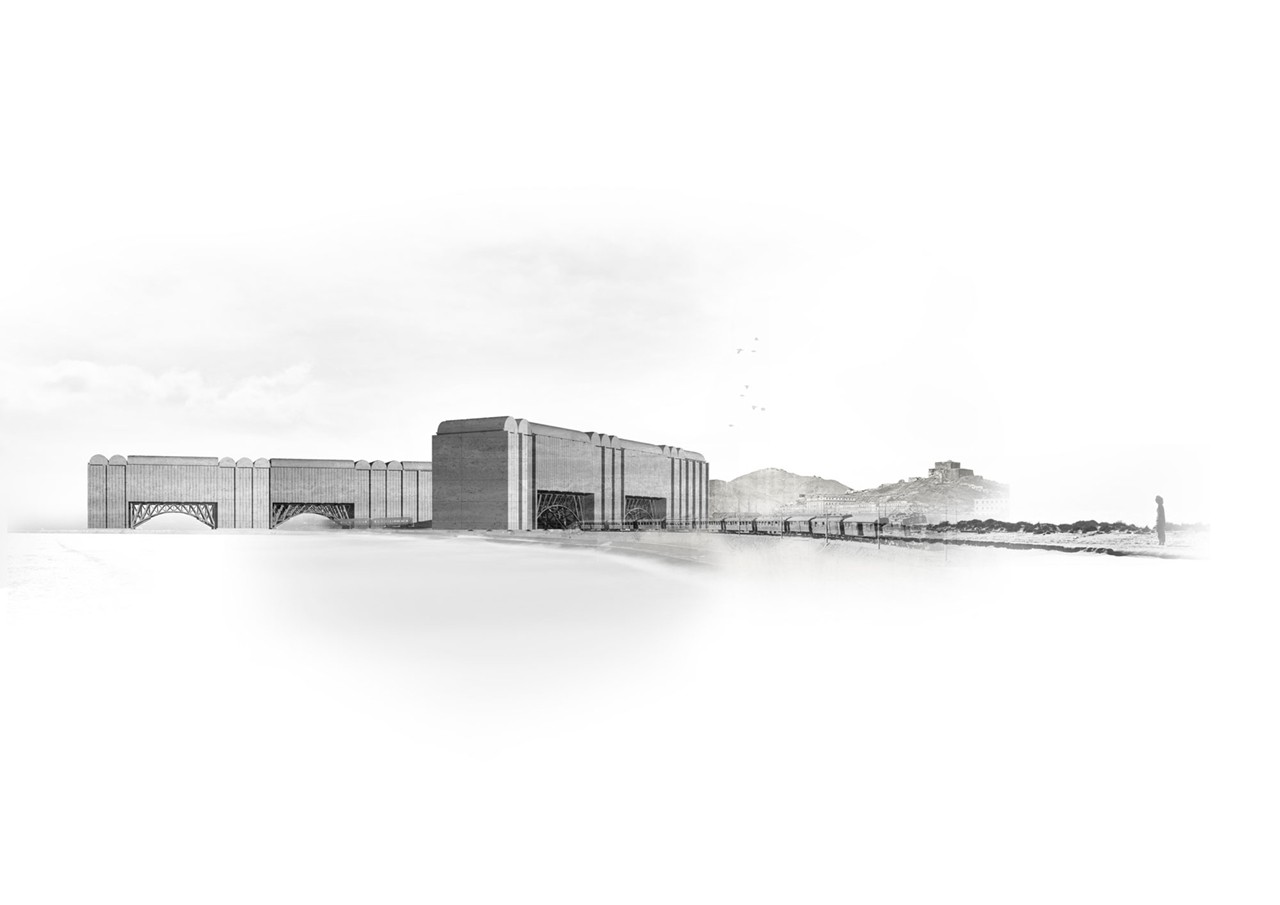
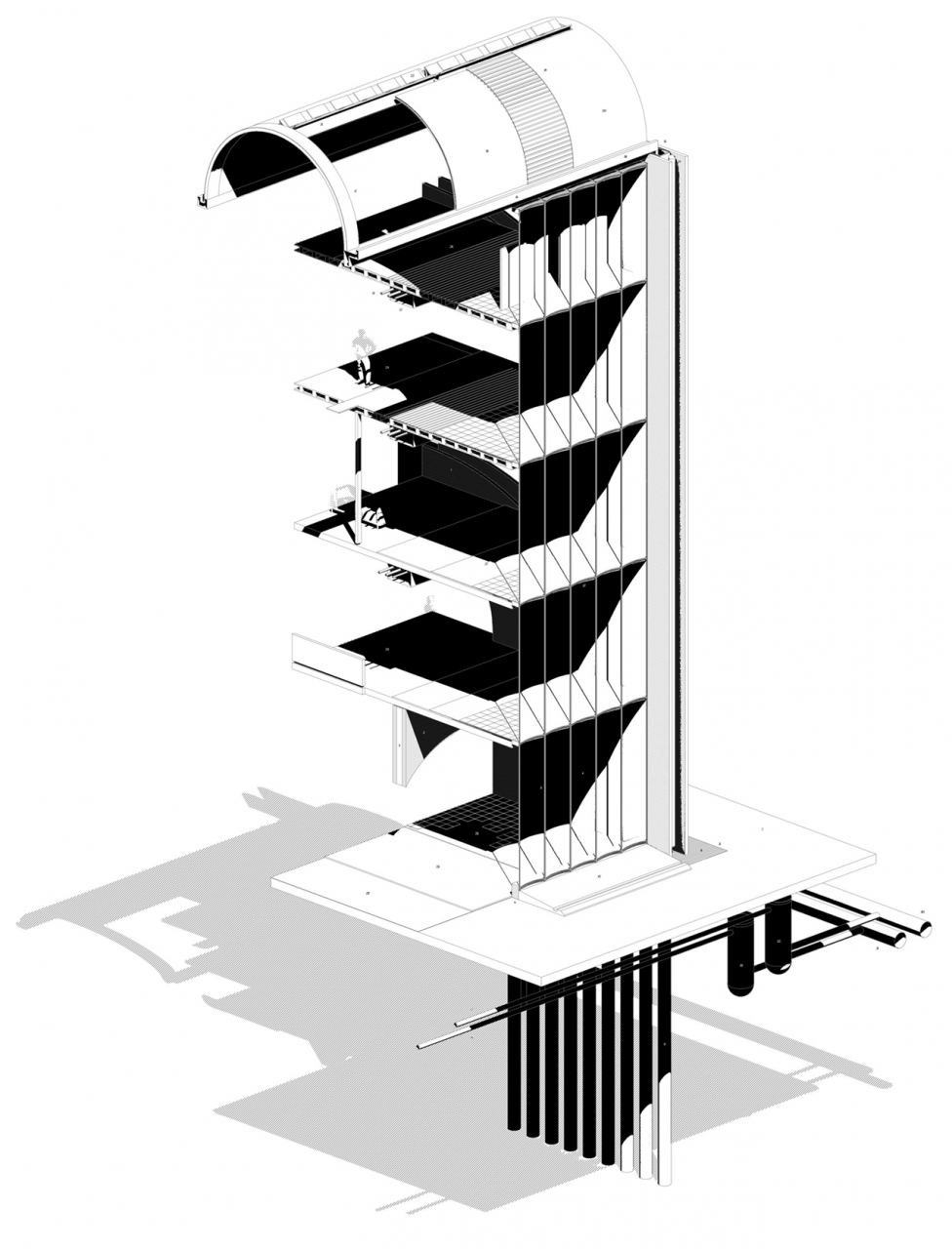
The proposal not only produces a breakdown with brevity and fugacity, but with boundaries. Beside the natural boundary that the bay represents, since the creation of the port and it's related administration, any access or or entry has been denied to it's inhabitants. Among others, the tangible case is Pasajes Antxo, located in the Southern sidearea, where the Cantabrian-French train provides the port with industrial material, but cuts off, like a scar in the landscape, any visual or physical contact with the sea. The building ends this division, not by destroying the train, but by flying above it, therefore acting as a bridge between artefact and nature, humans and sea.
Lastly, the project reacts against the industry's brevity by creating a permanent purpose, a permanent mission that has been incessant in all civilizations during history: culture.
Furthermore, Pasaia Port is an industrial model, although it has been weakened since the 80's due to competition from other ports such as Bilbao or Gijón. Each of these events has formed Pasaia into a unique character- emphasising the industry's importance on an ever-changing landscape. This unfortunately brings along a dynamism that has made the people from the bay no longer feel identified with it anymore.
As a response to this phenomenom the proposal, which takes the name of SINE DIE due to these circumstances, roots itself in the concepts of timelessness and boundary-breakdown as a spark for a new reality to emerge. For its configuration 'essences' have been studied,
permanent elements that -on the contrary to the passage of time and changing cultures- keep themselves constant, immutable.
Some of these enduring concepts which have been applied are heavy walls -so fixed to basque architecture-, porticos and arches, materials such as concrete and brick and volumes composition around a lineal space (Mediterranean street).
The proposal not only produces a breakdown with brevity and fugacity, but with boundaries. Beside the natural boundary that the bay represents, since the creation of the port and it's related administration, any access or or entry has been denied to it's inhabitants. Among others, the tangible case is Pasajes Antxo, located in the Southern sidearea, where the Cantabrian-French train provides the port with industrial material, but cuts off, like a scar in the landscape, any visual or physical contact with the sea. The building ends this division, not by destroying the train, but by flying above it, therefore acting as a bridge between artefact and nature, humans and sea.
Lastly, the project reacts against the industry's brevity by creating a permanent purpose, a permanent mission that has been incessant in all civilizations during history: culture.
- 00 - Description
- 01 - Concept
- 02 - Goonies' Map
- 03 - Analysis
- 04 - Site Plan
- 05 - Proposal Plan
- 06 - Exploded Axonometric
- 07 - Proposal Axonometric
- 08 - Urban Integration
- 09 - Urban Image
- 10 - Building Floor Plans
- 11 - Exterior Image
- 12 - Cross Axonometrics
- 13 - Longitudinal Axon.
- 14 - North Façade
- 15 - East Façade
- 16 - Conic Perspectives
- 17 - 3D Construc. Details
- 18 - 3D Corner Construct.
- 19 - Section
- 20 - Video