
Stratigraphic Life
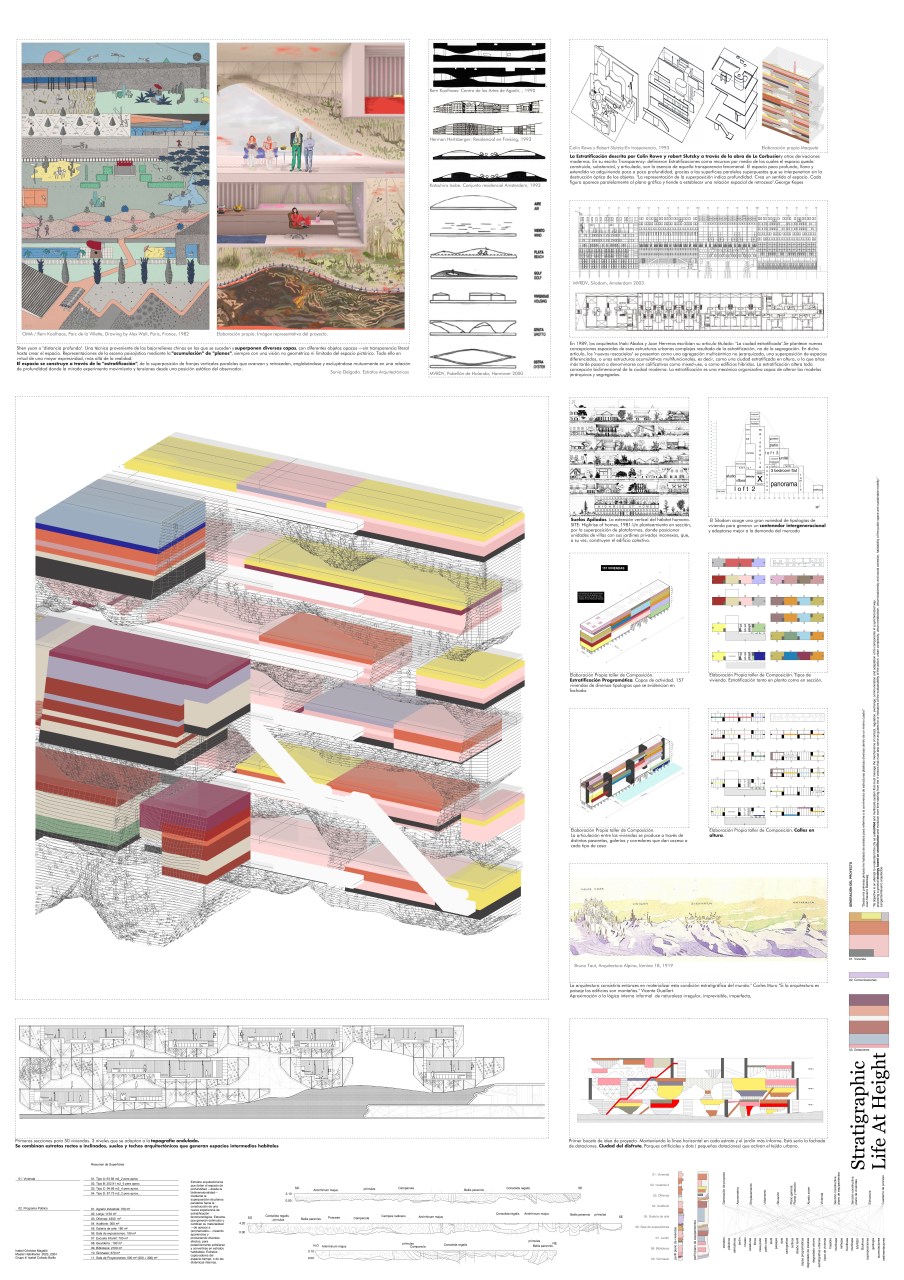
The stratification strategy from the urban scale to the wall section.
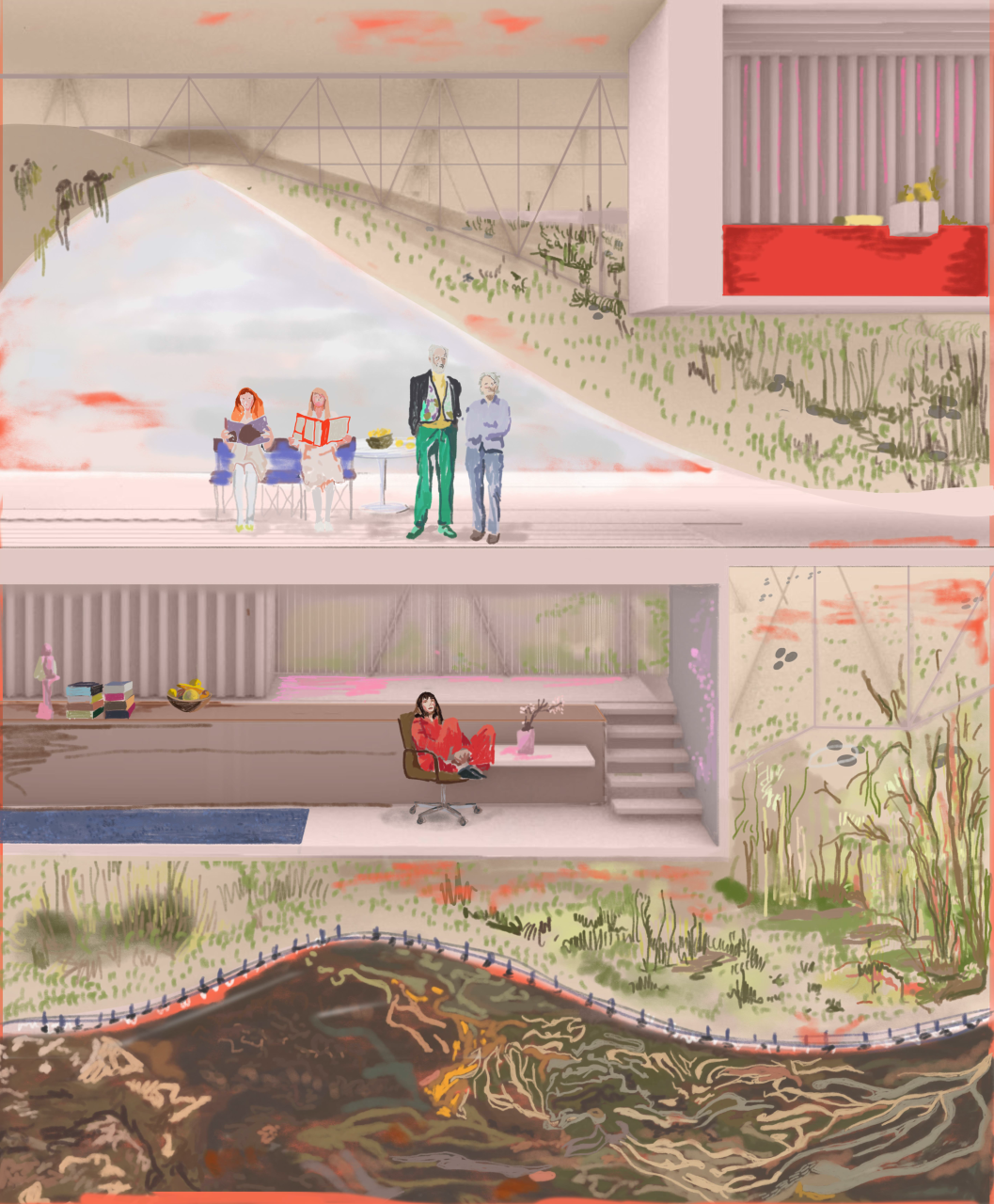
This is an investigation of the stratum through a large residential building mixed with other uses.
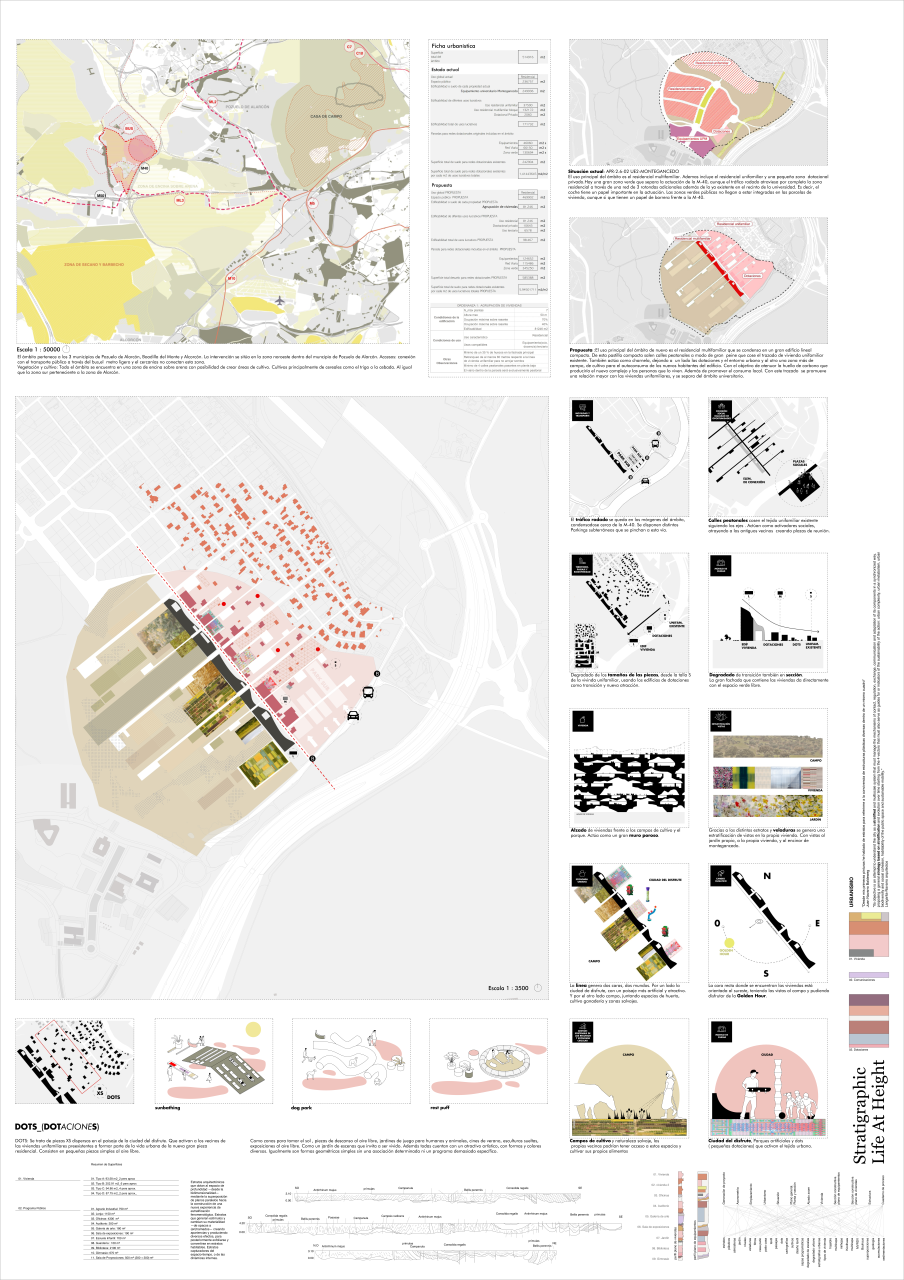
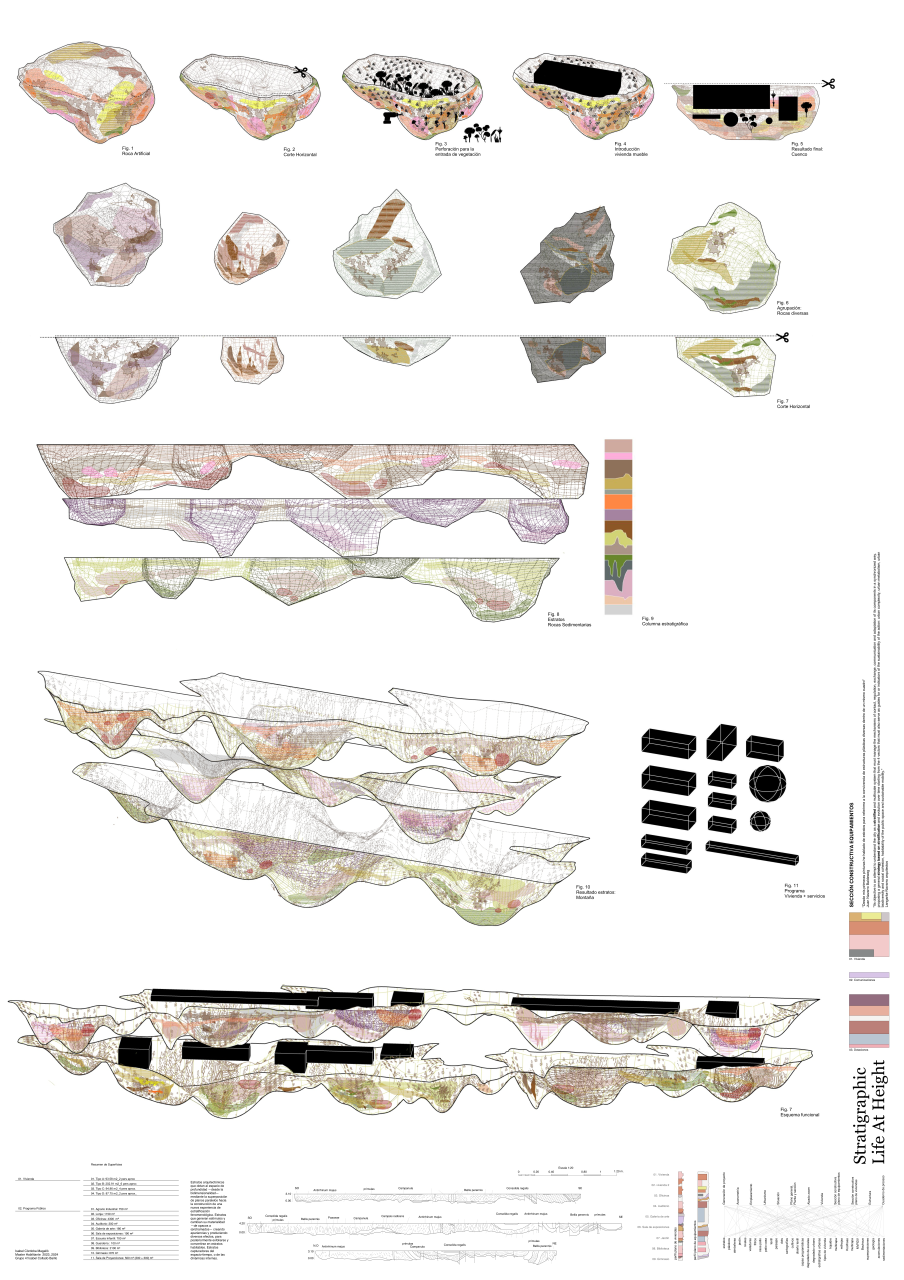
The beginning of the project is the housing unit, an artificial rock that is perforated to allow the vegetation to enter and in which a new orthogonal order is introduced, which is the house. The classic "casa patio" typology is inverted to propose the "PATIO-CASA". These housing units are grouped in strata which are superimposed to form the large building. A building 300m long by 40m high, with a differentiation in both façades. On the one hand, the façade that houses most of the dwellings, more compact and repetitive; and the façade of the facilities which is more porous and open.
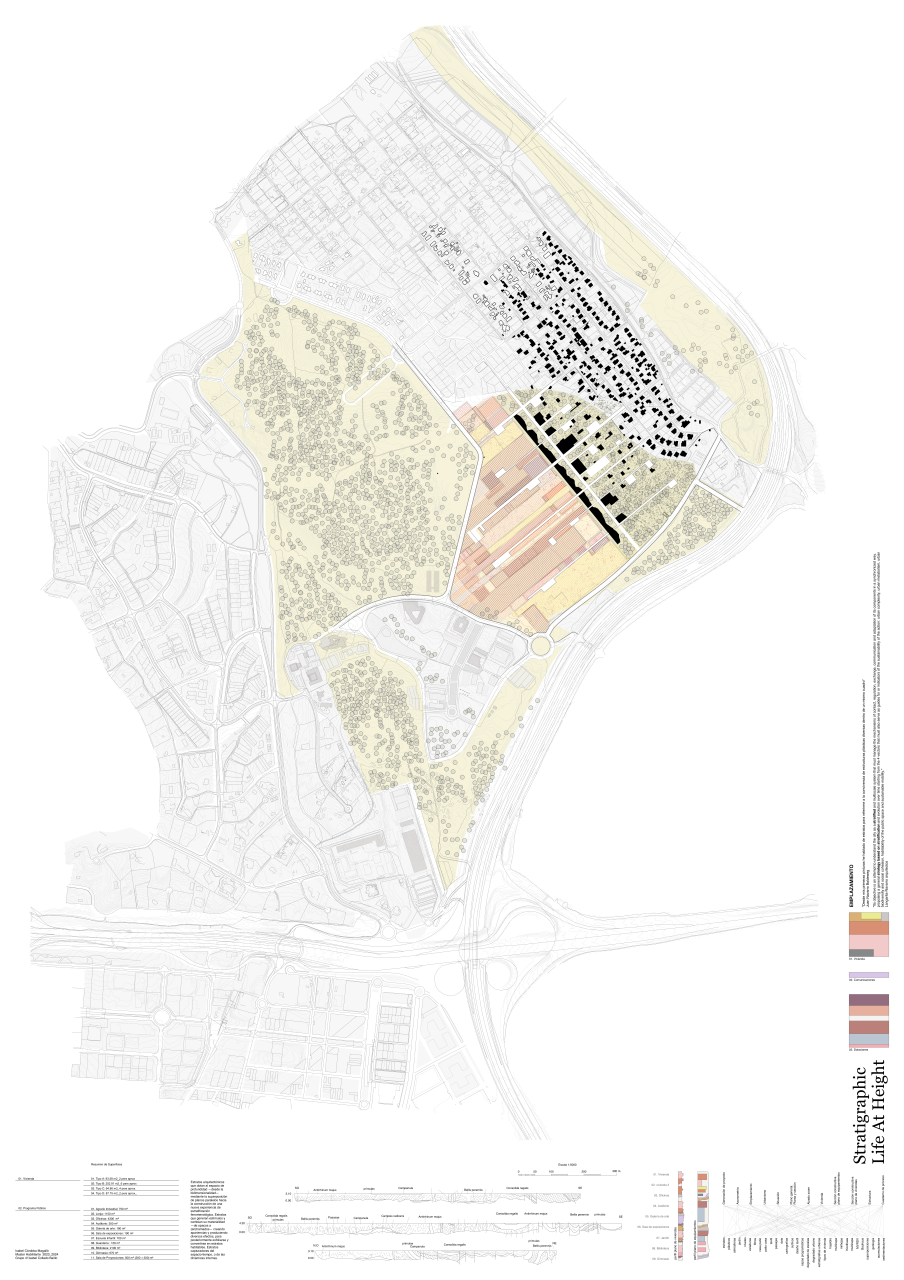
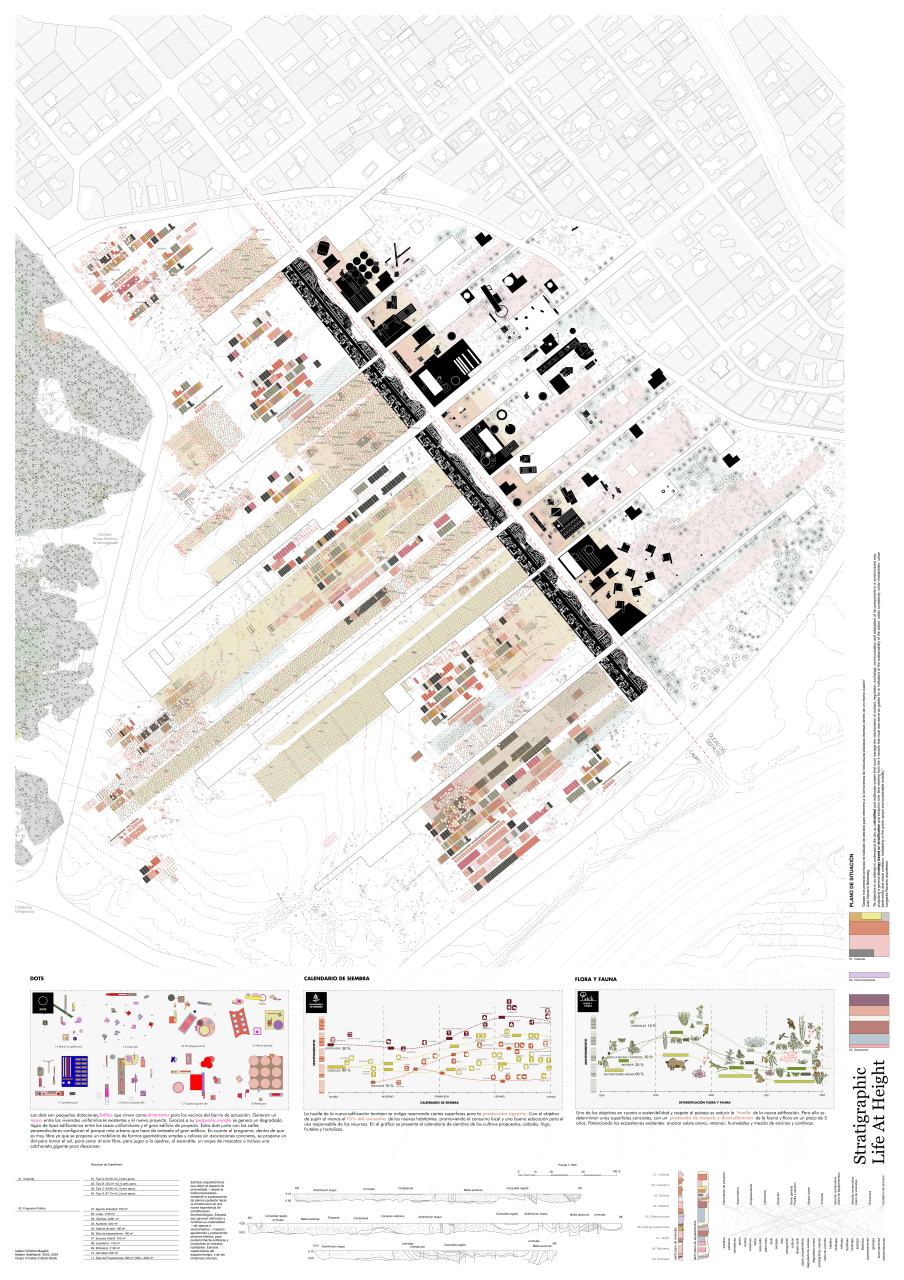
It is connected to the existing fabric through a series of parallel pedestrian streets. On one side of the building is projected "the city of enjoyment" an artificial park connected to the existing single-family houses, in which a series of pieces called DOTS are scattered to act as follies to attract neighbours. On the other side the holm oak grove and large fields of crops that satisfy part of the consumption of the new inhabitants, thus reducing the ecological footprint of the building. There is a strategy of stratification of the territory from the city of enjoyment to the countryside.
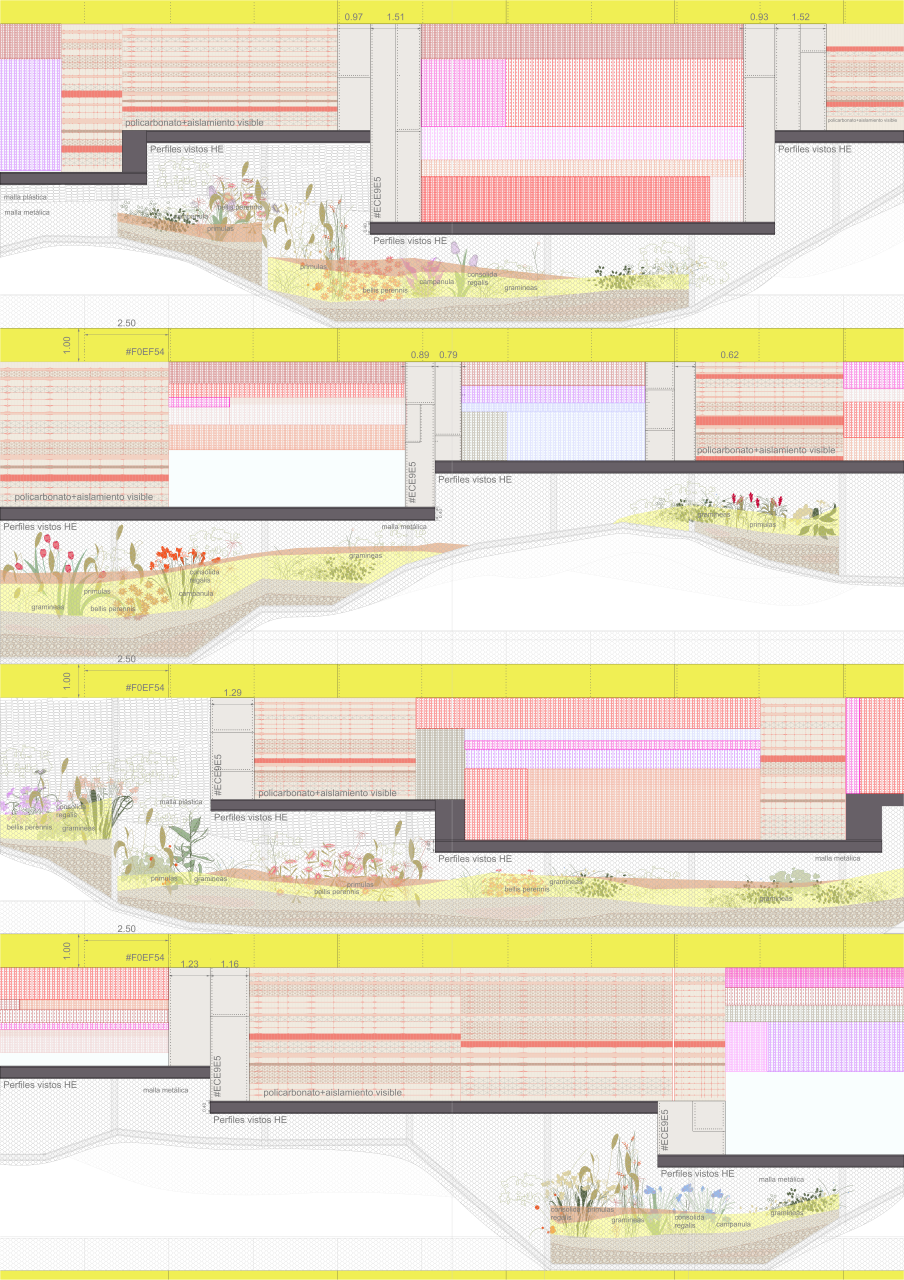
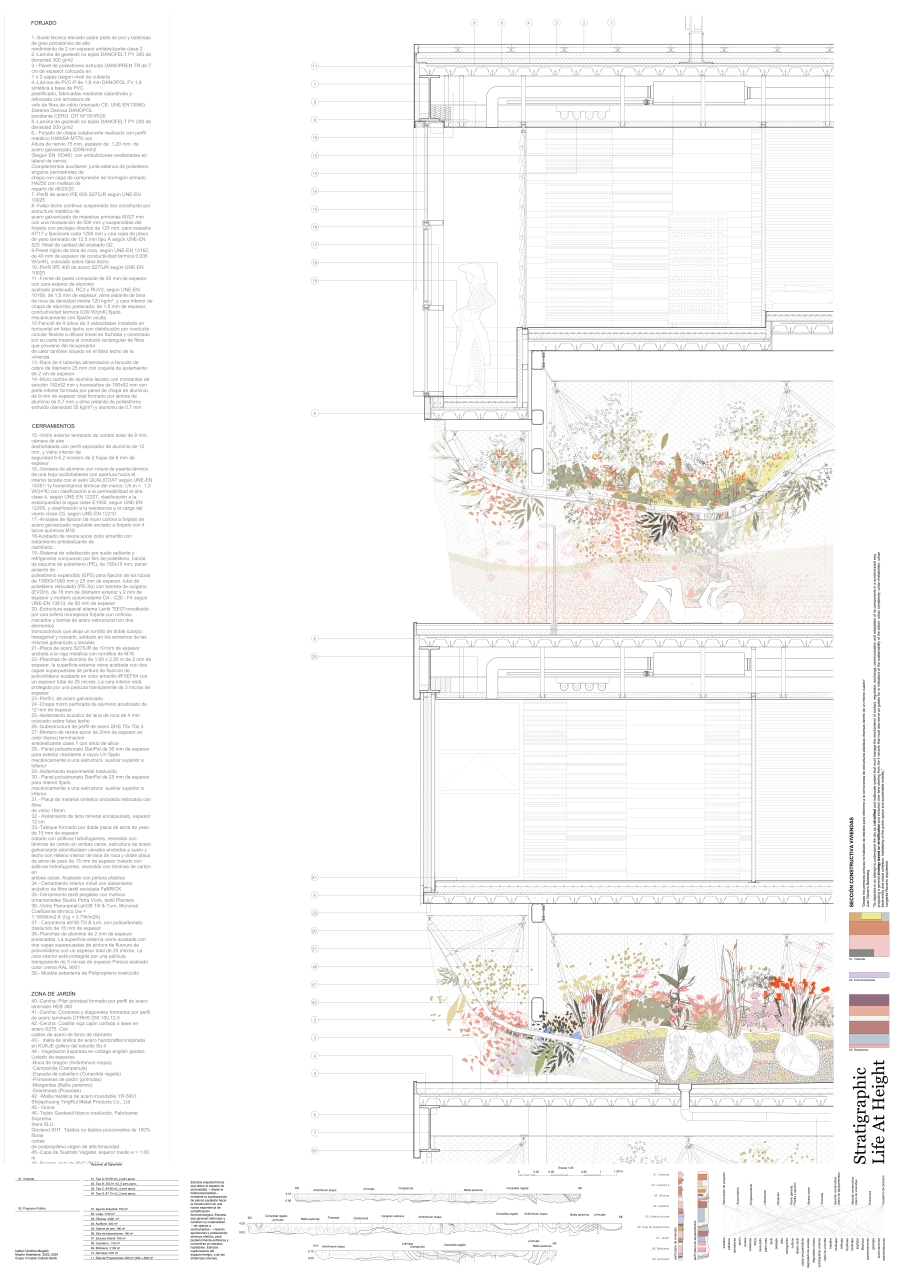
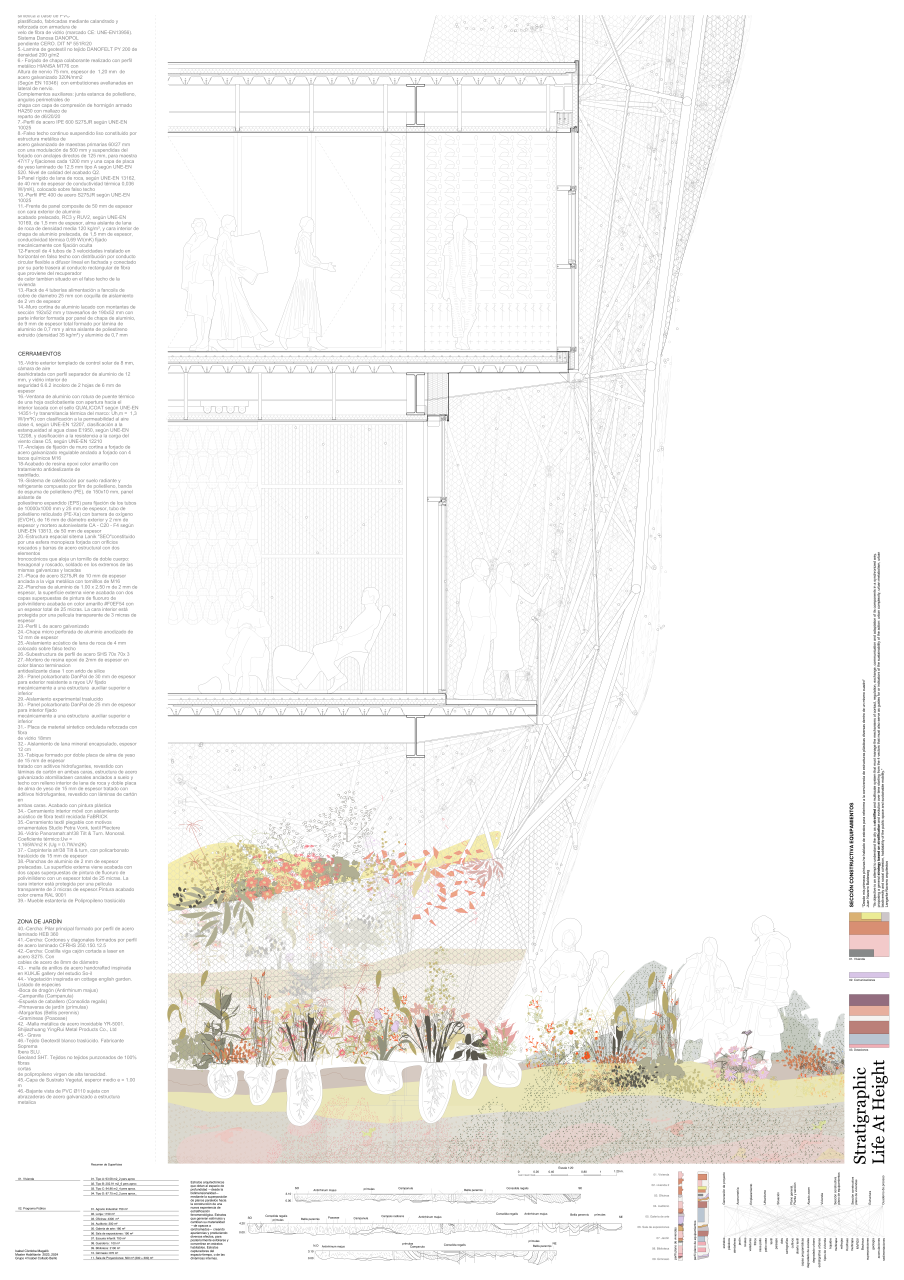
In short, it is a new proposal for unconventional collective habitation, revisiting classic architectural concepts such as the garden. With gardens in height that are ground and that are roof. Or the concept of the stratum taken to all project decisions, from the territory, the programme, the views, the structure or the layers of the wall.
This is an investigation of the stratum through a large residential building mixed with other uses.
The beginning of the project is the housing unit, an artificial rock that is perforated to allow the vegetation to enter and in which a new orthogonal order is introduced, which is the house. The classic "casa patio" typology is inverted to propose the "PATIO-CASA". These housing units are grouped in strata which are superimposed to form the large building. A building 300m long by 40m high, with a differentiation in both façades. On the one hand, the façade that houses most of the dwellings, more compact and repetitive; and the façade of the facilities which is more porous and open.
It is connected to the existing fabric through a series of parallel pedestrian streets. On one side of the building is projected "the city of enjoyment" an artificial park connected to the existing single-family houses, in which a series of pieces called DOTS are scattered to act as follies to attract neighbours. On the other side the holm oak grove and large fields of crops that satisfy part of the consumption of the new inhabitants, thus reducing the ecological footprint of the building. There is a strategy of stratification of the territory from the city of enjoyment to the countryside.
In short, it is a new proposal for unconventional collective habitation, revisiting classic architectural concepts such as the garden. With gardens in height that are ground and that are roof. Or the concept of the stratum taken to all project decisions, from the territory, the programme, the views, the structure or the layers of the wall.



- 00 - Description
- 01 - Strata
- 02 - Urbanism
- 03 - Site
- 04 - Urban fabric
- 05 - Housing
- 06 - Public spaces
- 07 - PATIO CASA
- 08 - facade detail
- 09 - Construction facade
- 10 - Housing section
- 11 - Public space section
- 12 - Geological process
- 13 - Stratigraphic Life
- 14 - Video