
Synanthropocene
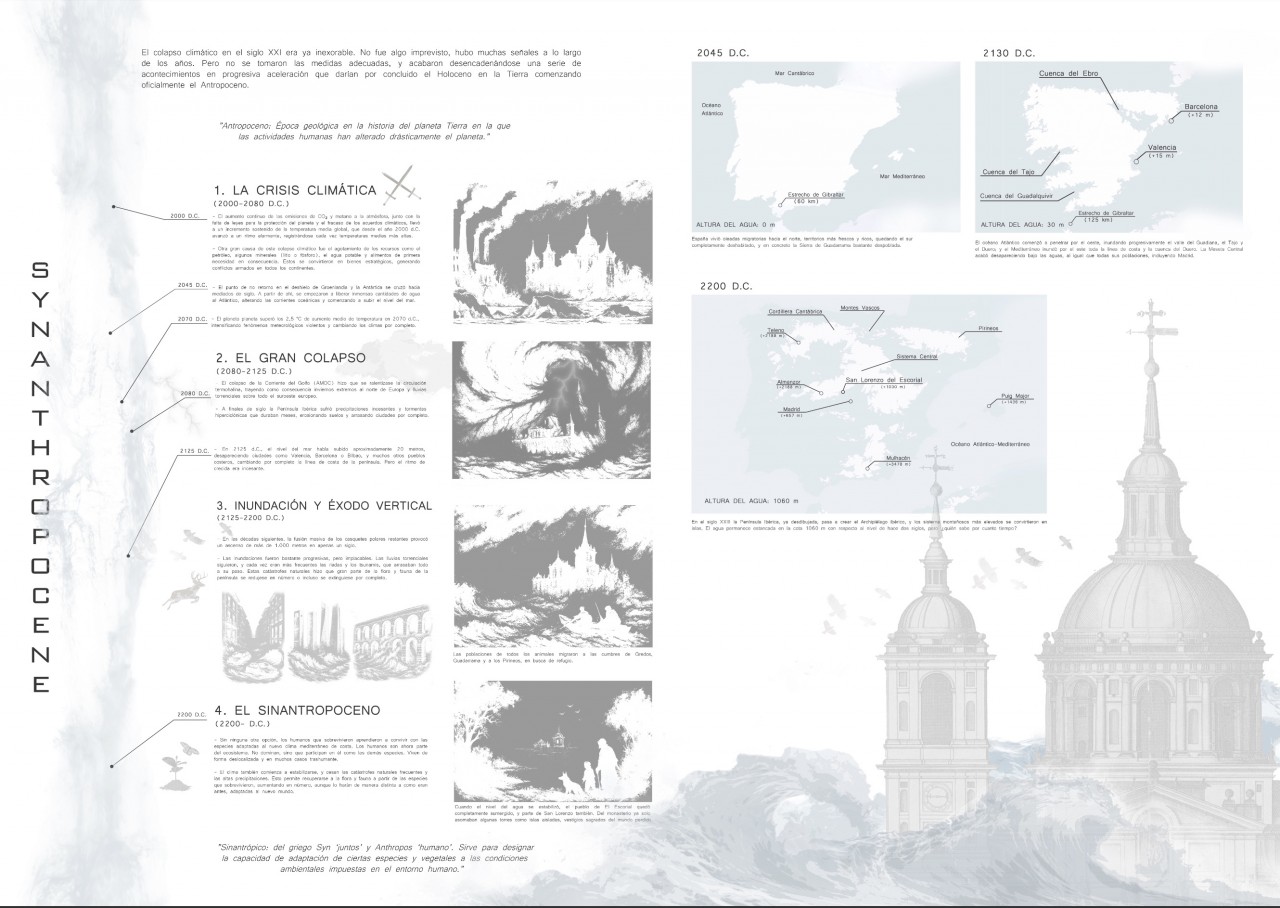
“synanthropy: from Greek syn ("together") and anthropos ("human"). It refers to the ability of certain animals and plant species to adapt to environmental conditions shaped by human presence."
“anthropocene: A geological era in Earth's history during which human activities have drastically altered the planet."
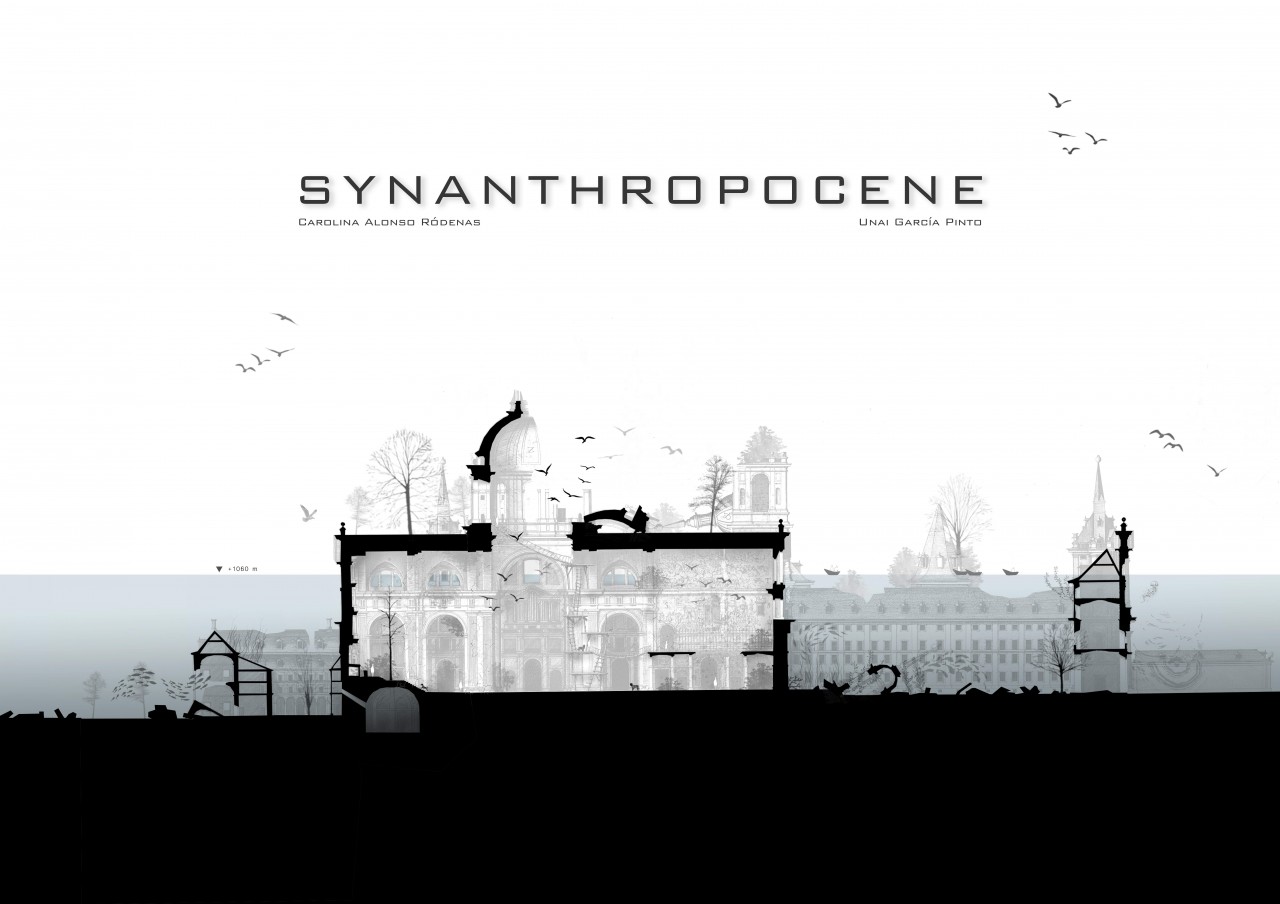
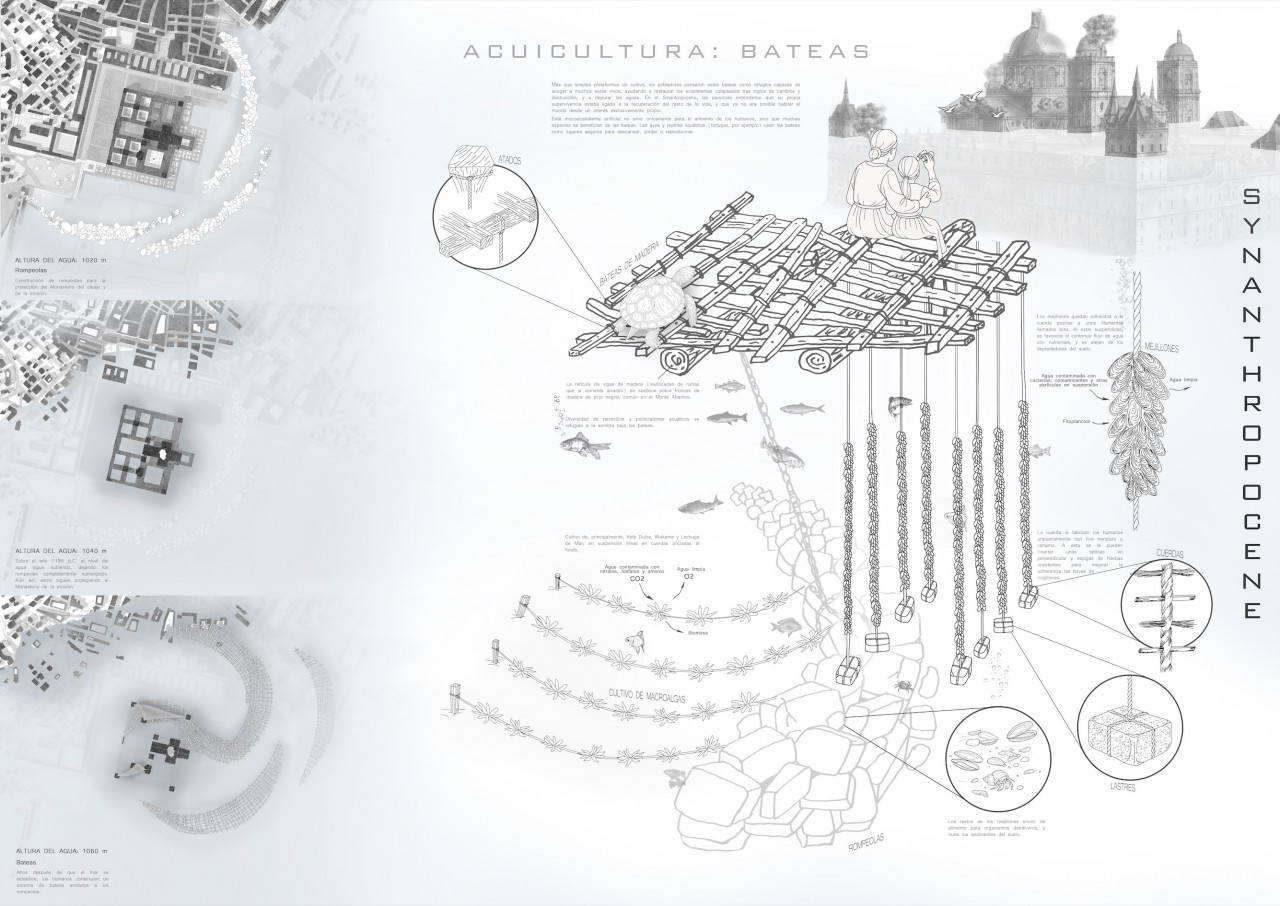
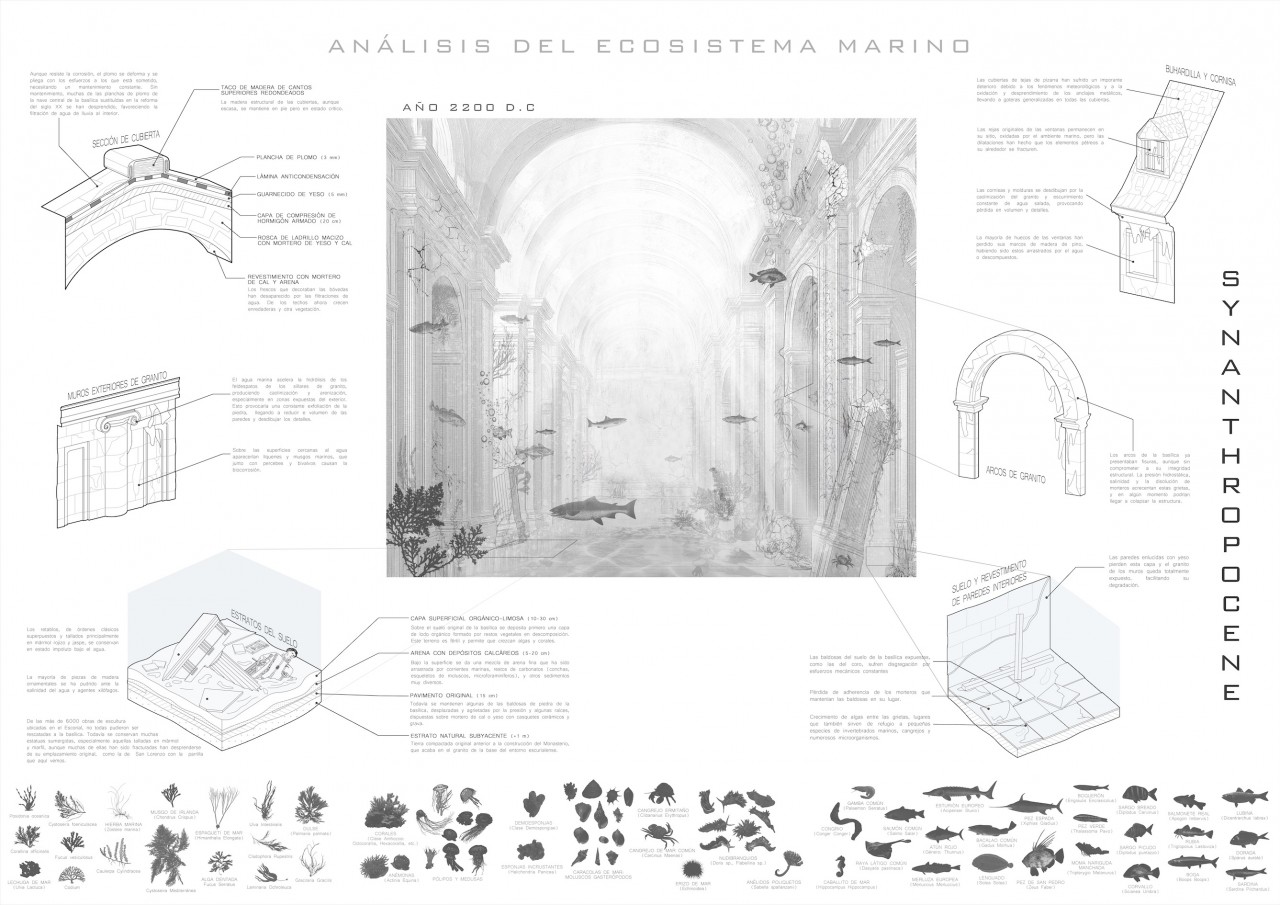
Synanthropocene imagines a post-collapse world two hundred years in the future, where the sea level has risen to cover much of the Iberian Peninsula, reaching 1,060 meters above current sea level. In this dystopian future, the towers of the Monastery of El Escorial, in Madrid, emerge from the sea partially submerged.
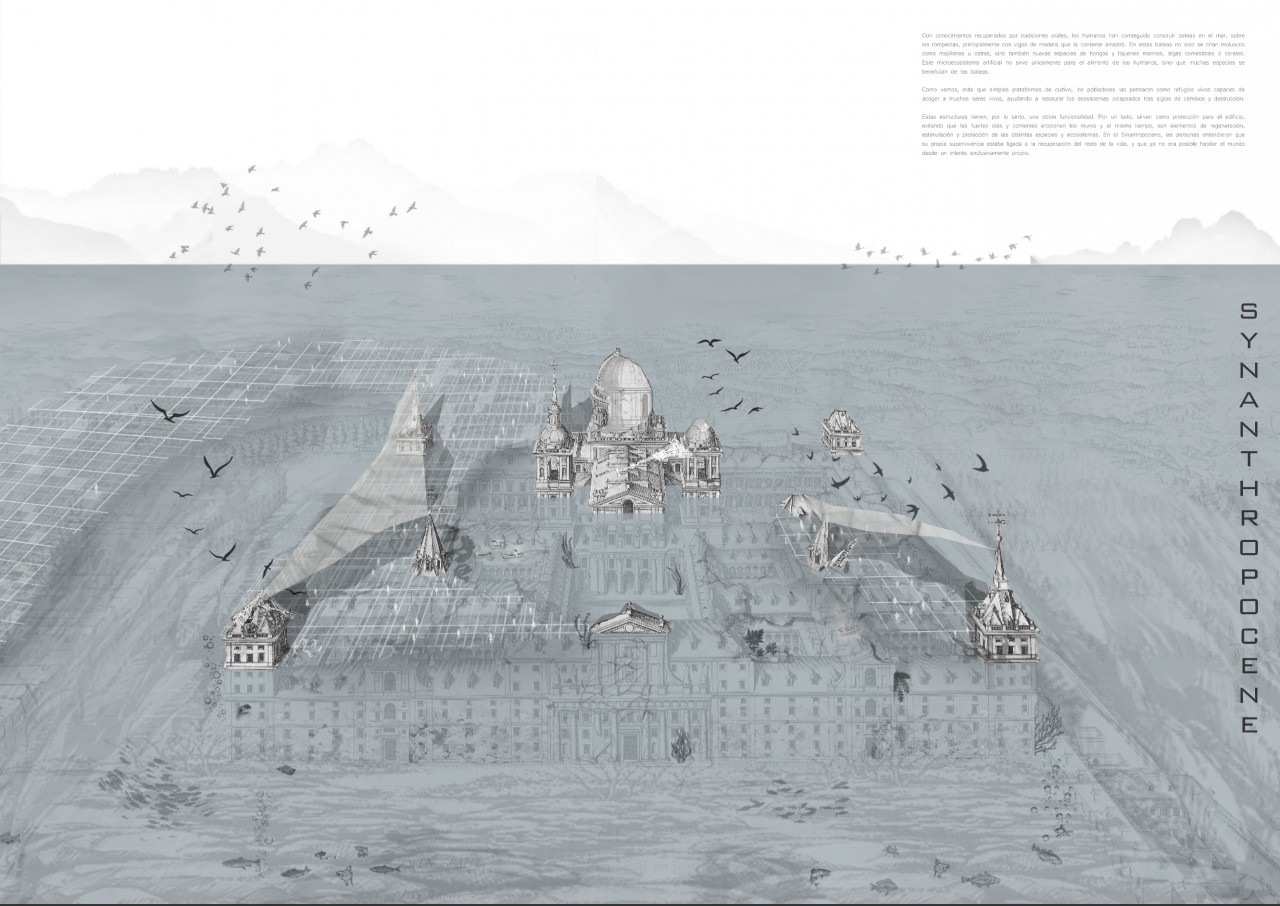
In this new world, rather than rebuild civilization as it was, humanity chooses to adapt. They have learned that they can no longer selfishly exploit the earth’s resources to their need. Floating wooden platforms, or bateas, are built all around the monastery. These are not just food-producing infrastructures, but also entire ecosystems meant for healing and coexistence. Mussels and seaweed filter and clean the water, absorbing CO2 and releasing oxygen. Above the water, many species find refuge on them, from turtles nesting to tired seagulls, and humans can walk through to reach the Monastery.
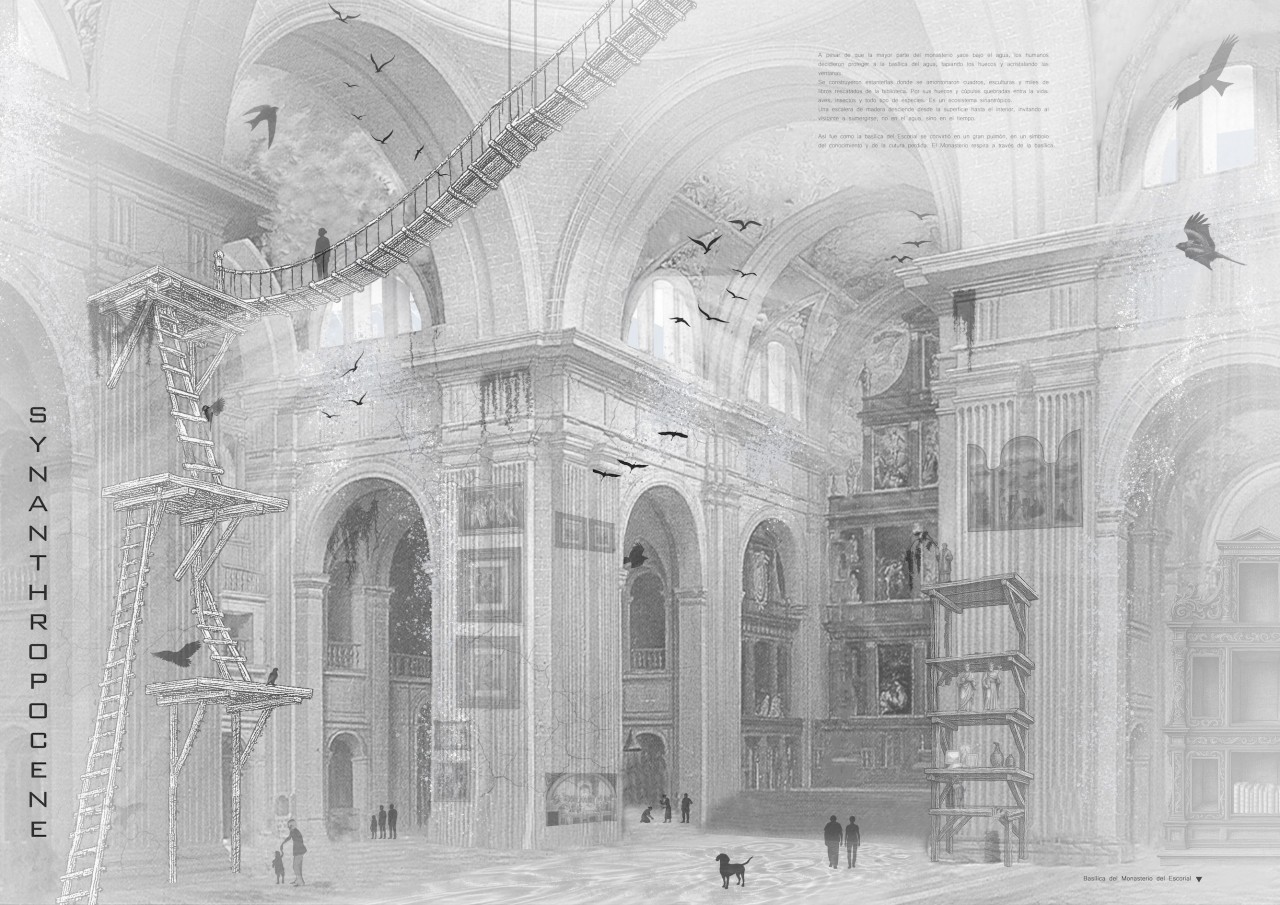
The church, preserved from the water like a lung, becomes an ark of lost knowledge, storing books and artifacts from the pre-flood world, especially art pieces from the Monastery. At the same time, it serves as a place where both humans and birds can coexist as equals.
Synanthropocene is not a story of loss, but of transformation: a speculative ecology of synanthropy, where ruin becomes habitat and echoes of history give rise to a new way of living together.
“anthropocene: A geological era in Earth's history during which human activities have drastically altered the planet."
Synanthropocene imagines a post-collapse world two hundred years in the future, where the sea level has risen to cover much of the Iberian Peninsula, reaching 1,060 meters above current sea level. In this dystopian future, the towers of the Monastery of El Escorial, in Madrid, emerge from the sea partially submerged.
In this new world, rather than rebuild civilization as it was, humanity chooses to adapt. They have learned that they can no longer selfishly exploit the earth’s resources to their need. Floating wooden platforms, or bateas, are built all around the monastery. These are not just food-producing infrastructures, but also entire ecosystems meant for healing and coexistence. Mussels and seaweed filter and clean the water, absorbing CO2 and releasing oxygen. Above the water, many species find refuge on them, from turtles nesting to tired seagulls, and humans can walk through to reach the Monastery.
The church, preserved from the water like a lung, becomes an ark of lost knowledge, storing books and artifacts from the pre-flood world, especially art pieces from the Monastery. At the same time, it serves as a place where both humans and birds can coexist as equals.
Synanthropocene is not a story of loss, but of transformation: a speculative ecology of synanthropy, where ruin becomes habitat and echoes of history give rise to a new way of living together.
- 00 - Description
- 01 - 00 - Synanthropocene
- 02 - 01 - Introduction
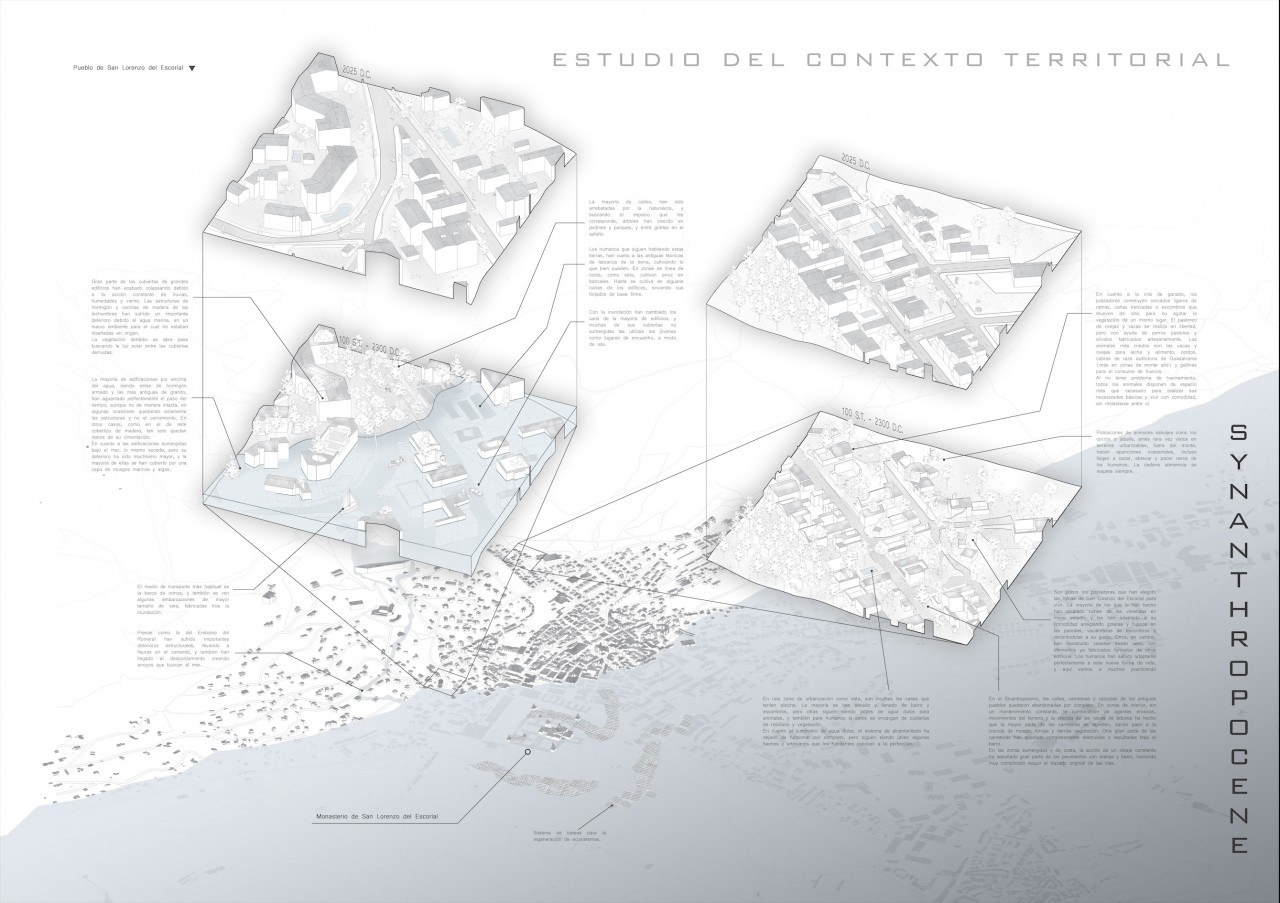
- 03 - 02 - Urban Context
- 04 - 03 - El Escorial
- 05 - 04 - Bateas
- 06 - 05 - Underwater Life
- 07 - 06 - Inside Church
- 08 - Video