
tensegrity rave
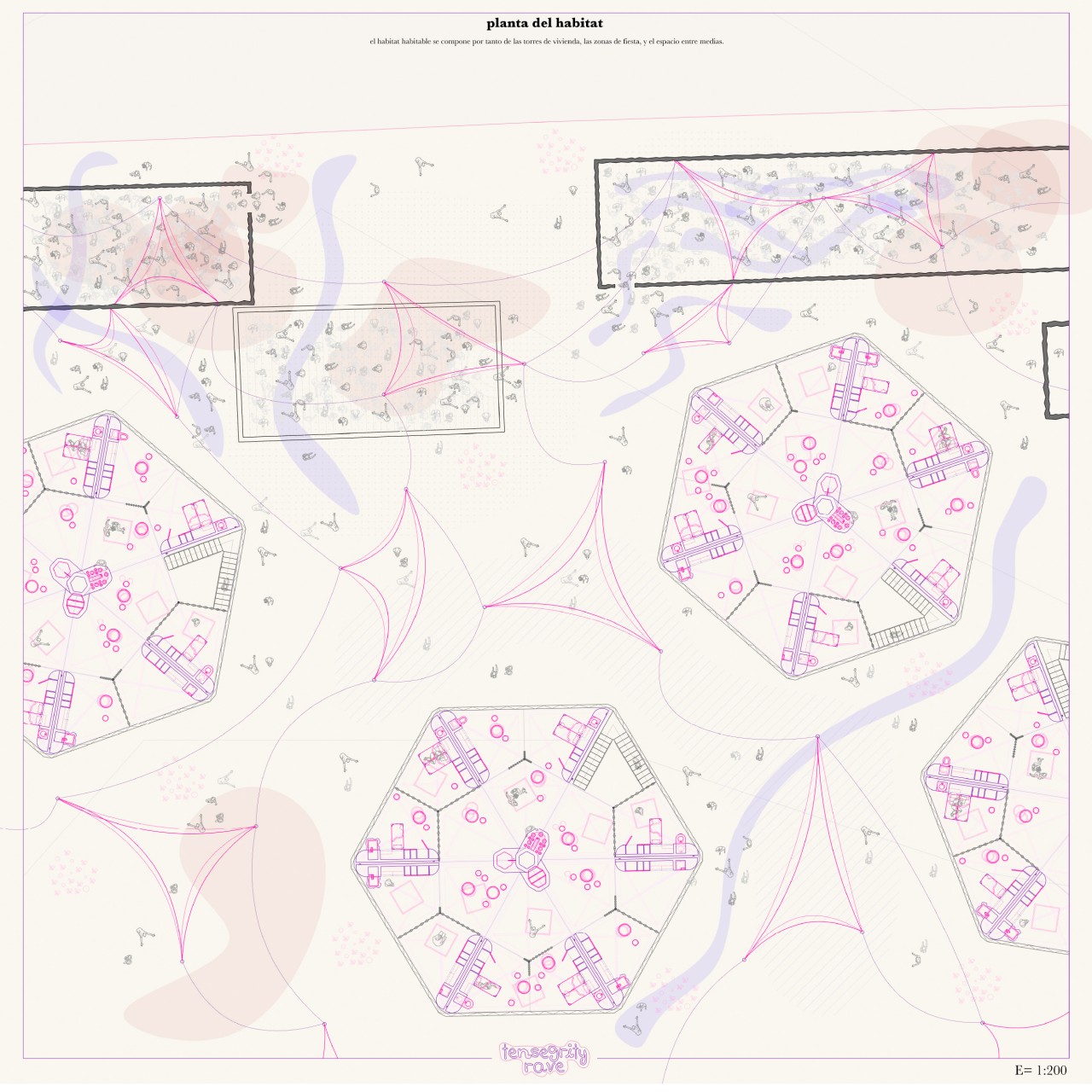
Tensegrity rave is a project based on the ideas of tensegrity and scissor structures. It aims to serve as the auxiliar housing for the rave celebrated on the abandoned buildings that the project is located on. It works as an ephemeral kind of architecture, that can be folded thanks to a structure of bars and knots that can transform this 36-meter-high tower into a folded structure of just 70 cm of height.
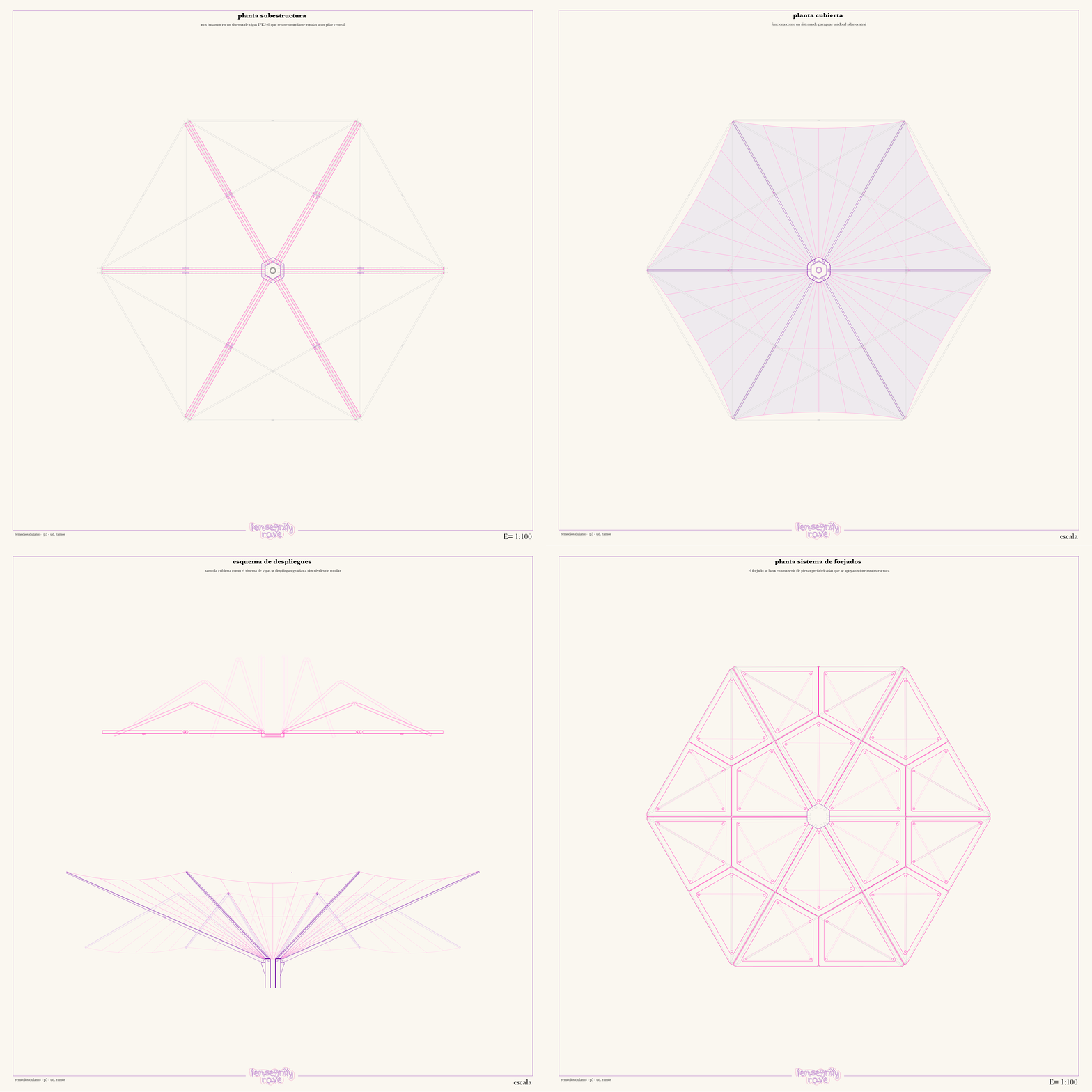
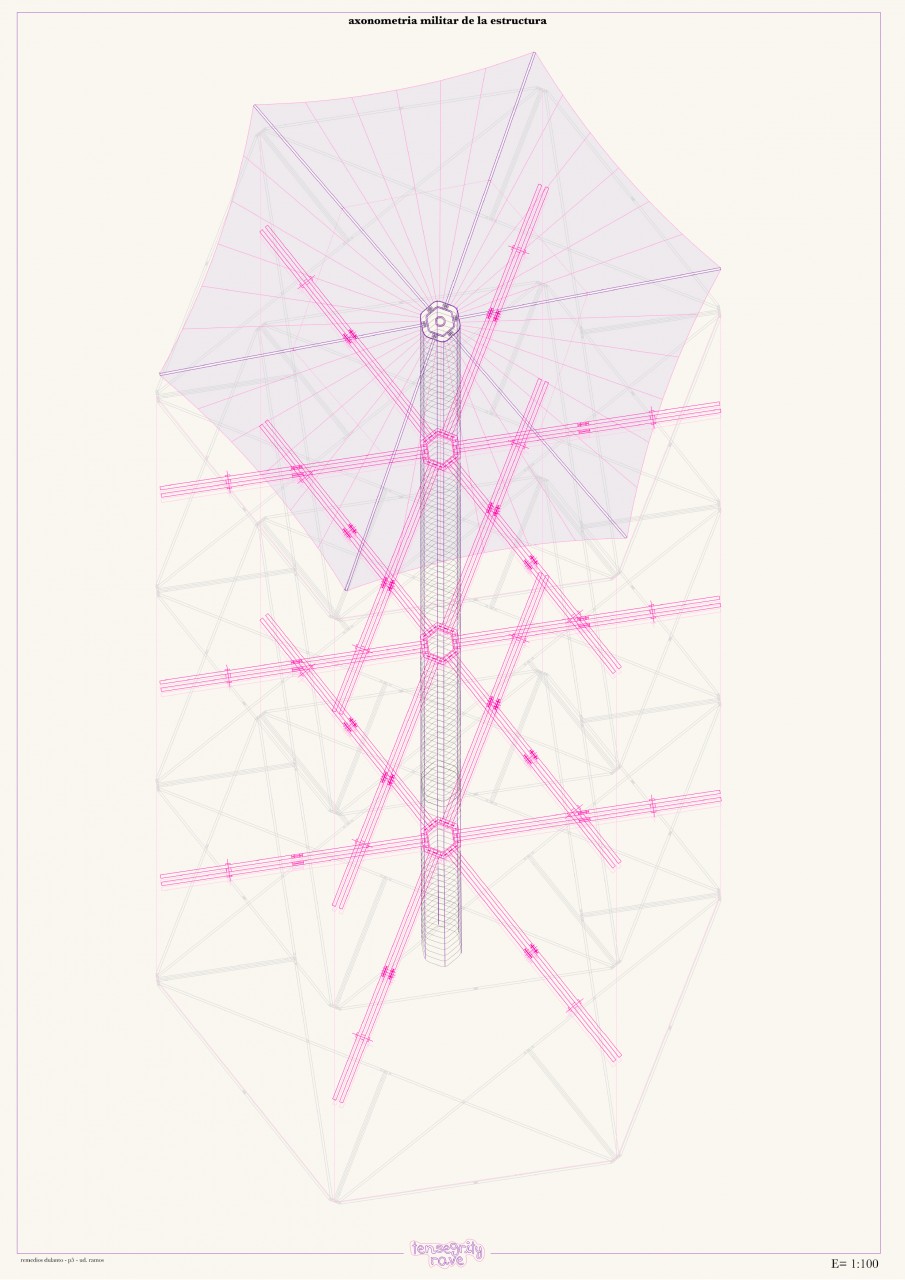
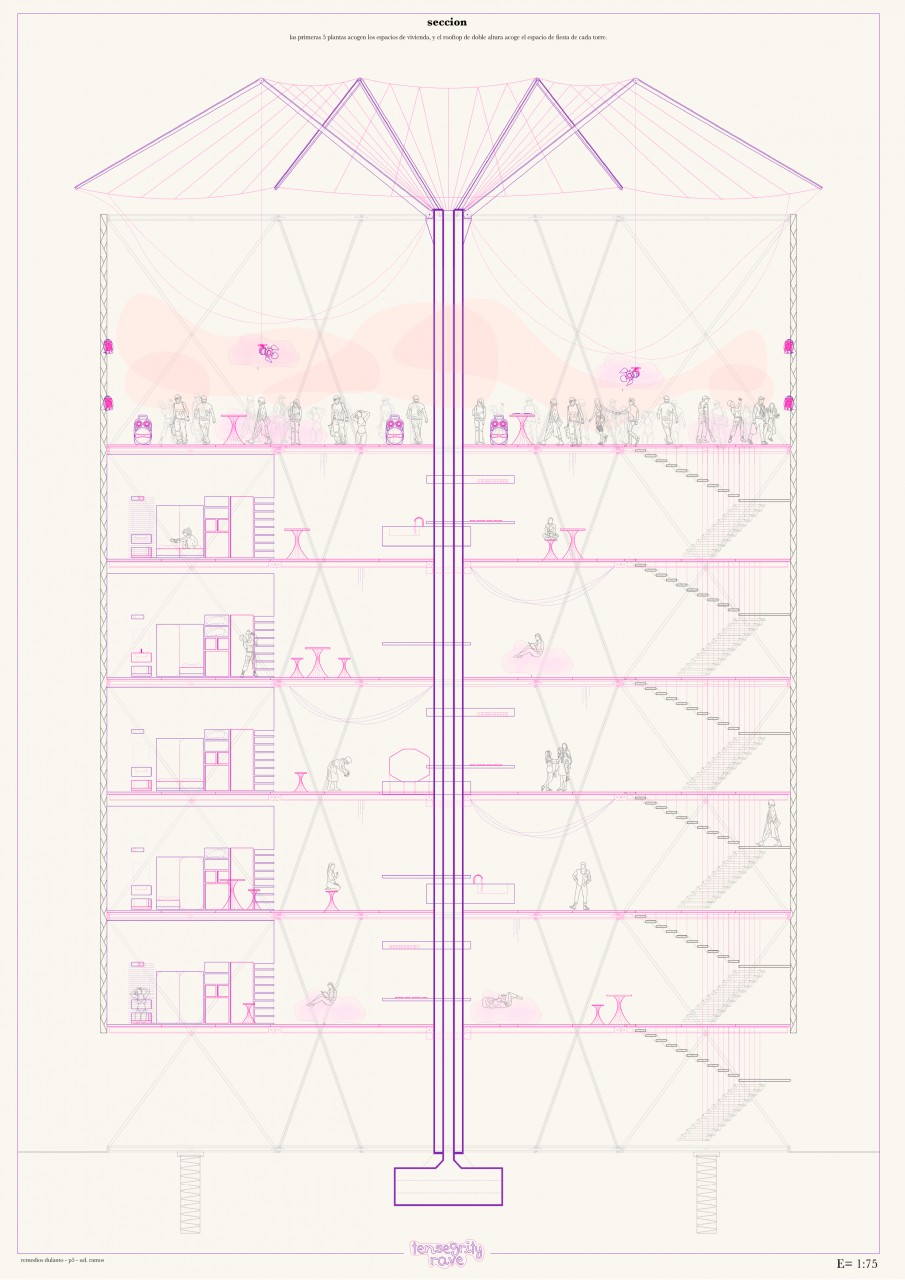
To economize its height, adding more floors, there is a second structure that leans on the primary one. It is based on a central pillar and a system of foldable beams. It ends with an umbrella-type of roof, that is also foldable as to create different atmospheres. This central pillar distributes the wiring and water systems and helps with the collection and distribution of rainwater.
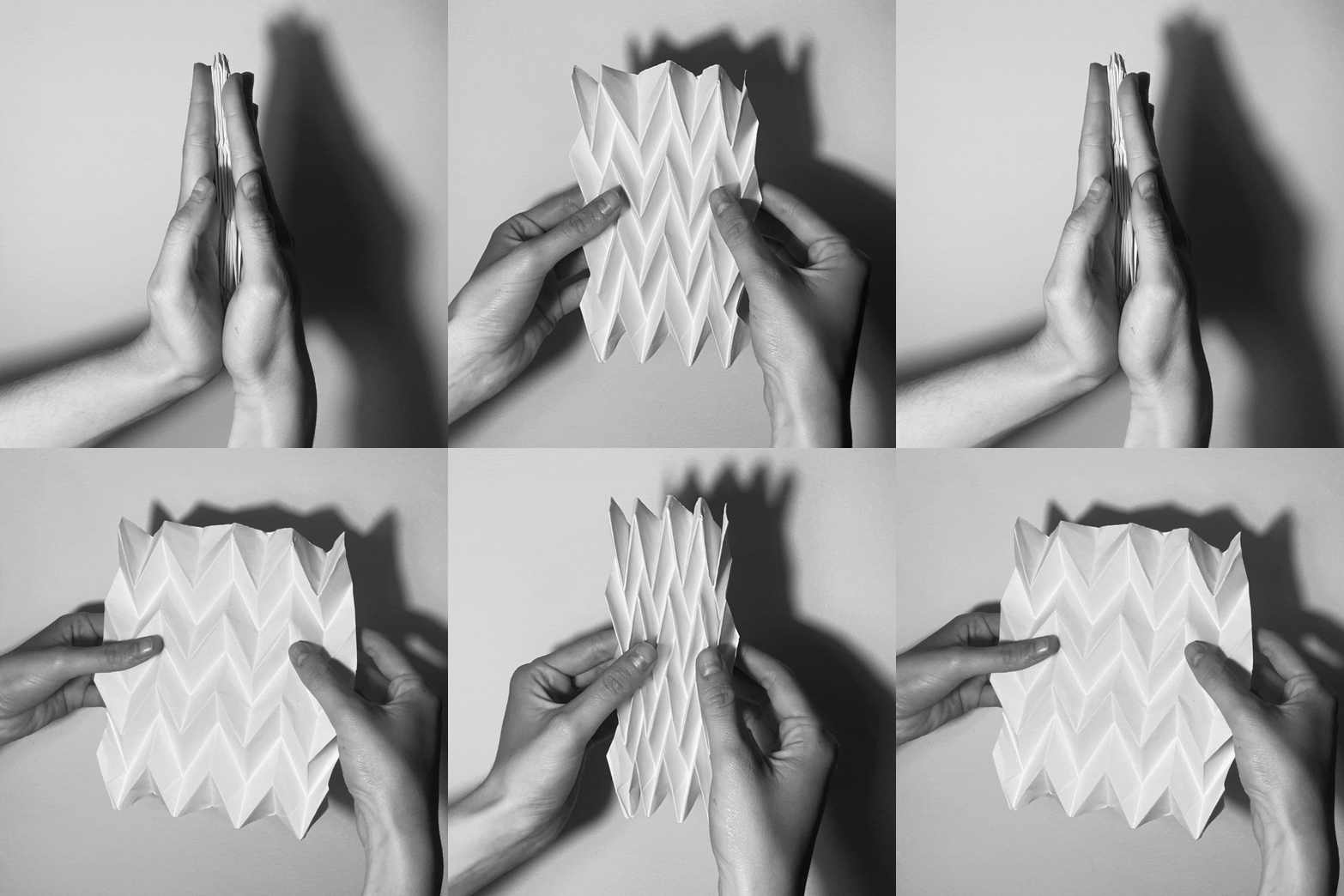
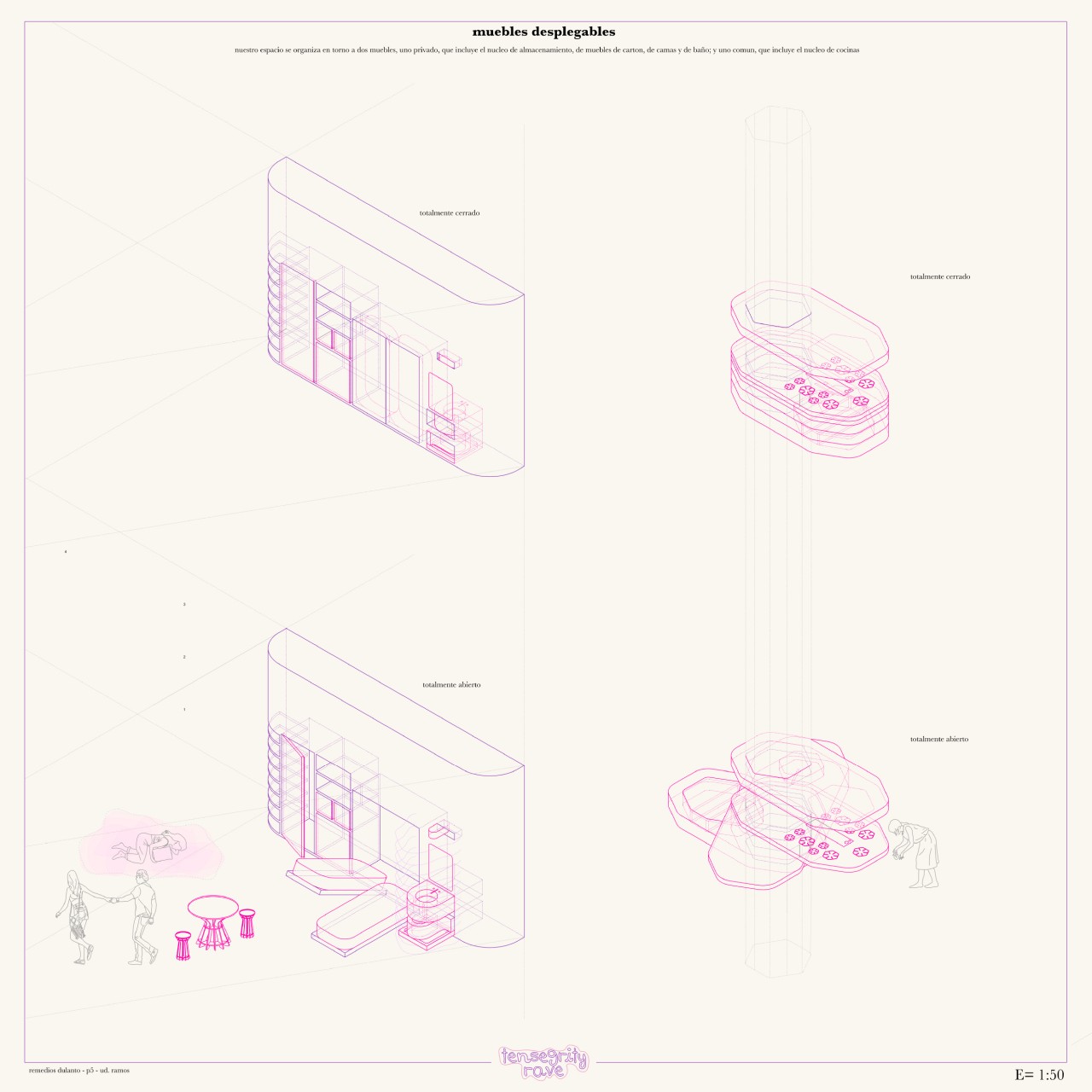
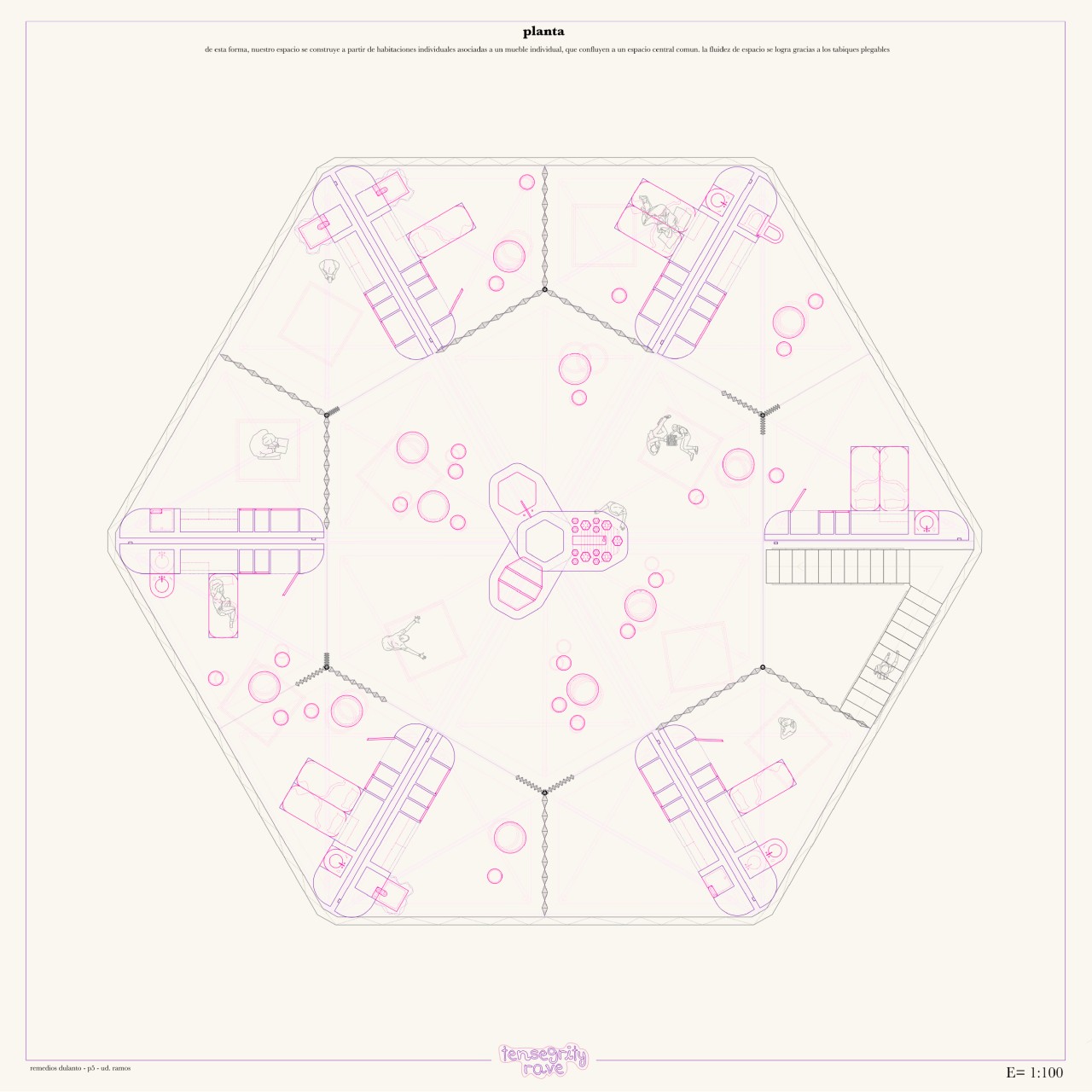
The architectural aspects of the inside of the tower also aim to transmit the foldable philosophy of the structure. The internal partition walls and the external façade are based on the miura ori origami technique, making the foldable, easy to transport and modulable. The central form of the tower is leveraged to distribute the spaces in two kinds: the central, public, and common one, and the surrounding private ones. This is achieved thanks to two pieces of furniture: one private, that includes bathroom and bedroom spaces; and one communal, that includes the kitchen spaces. Both pieces of furniture are foldable, which allows to create different simultaneous situations in one unique space.
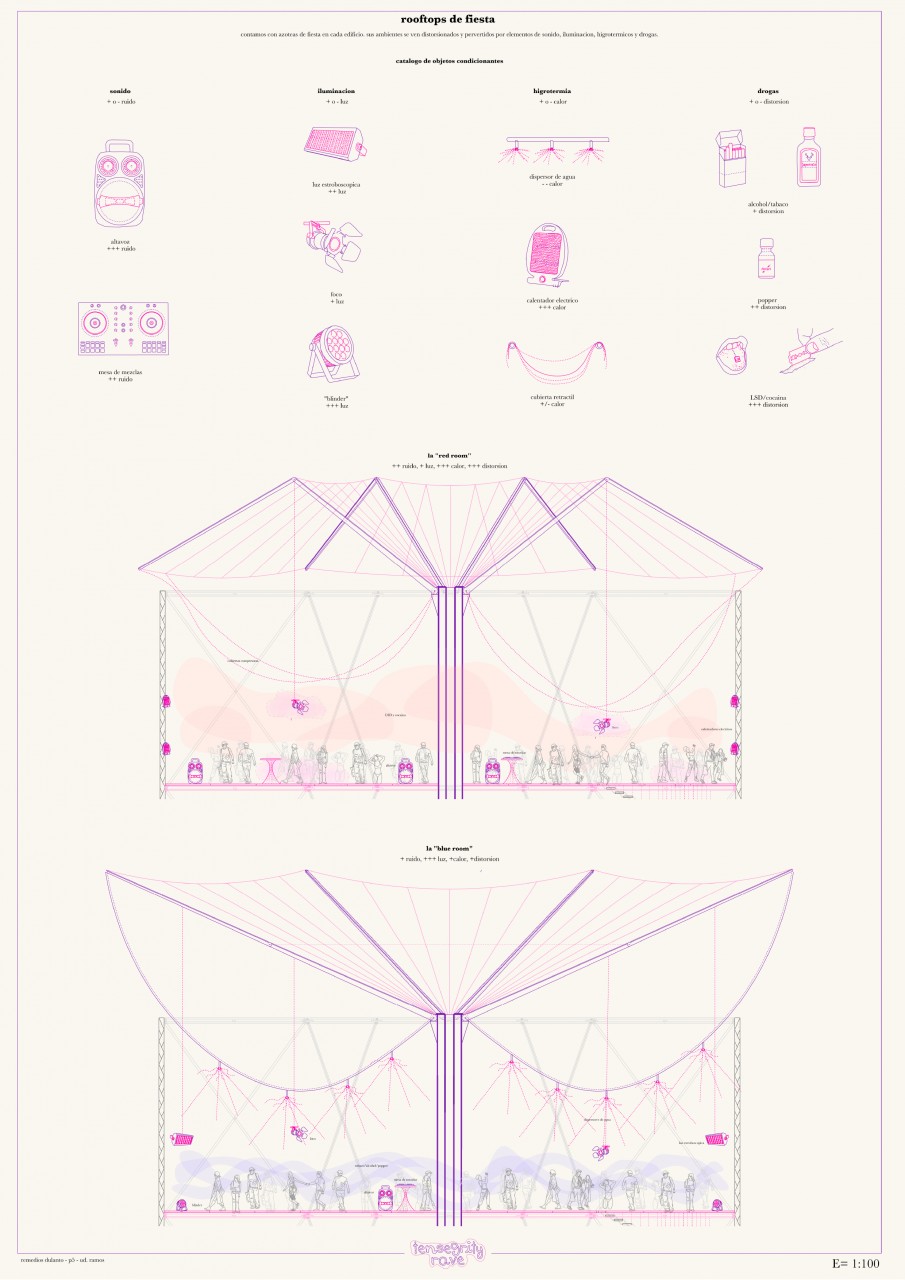
The last floor of the tower is used as a rooftop for party space. We aim to study partying spaces, understanding how the way we perceive them is more influenced by sound, light and temperature than the traditional factors of architecture: walls, roof and floor.
Tensegrity rave is, to sum up, an investigation about time as a crucial factor when making architecture.
To economize its height, adding more floors, there is a second structure that leans on the primary one. It is based on a central pillar and a system of foldable beams. It ends with an umbrella-type of roof, that is also foldable as to create different atmospheres. This central pillar distributes the wiring and water systems and helps with the collection and distribution of rainwater.
The architectural aspects of the inside of the tower also aim to transmit the foldable philosophy of the structure. The internal partition walls and the external façade are based on the miura ori origami technique, making the foldable, easy to transport and modulable. The central form of the tower is leveraged to distribute the spaces in two kinds: the central, public, and common one, and the surrounding private ones. This is achieved thanks to two pieces of furniture: one private, that includes bathroom and bedroom spaces; and one communal, that includes the kitchen spaces. Both pieces of furniture are foldable, which allows to create different simultaneous situations in one unique space.
The last floor of the tower is used as a rooftop for party space. We aim to study partying spaces, understanding how the way we perceive them is more influenced by sound, light and temperature than the traditional factors of architecture: walls, roof and floor.
Tensegrity rave is, to sum up, an investigation about time as a crucial factor when making architecture.


- 00 - Description
- 01 - context
- 02 - habitat
- 03 - main structure
- 04 - leaning structure
- 05 - axonometric view
- 06 - façades
- 07 - furniture
- 08 - top view
- 09 - section
- 10 - party rooftops
- 11 - Video