
TETRIS
The main mission of this course was to find an alternative solution to the stereotypical image of any educational institution. Sarting from the first exercise, which consisted of creating small shelters for 3 or 4 people where the students could rest and moving on to the second exercise which questioned what an average classroom should look like. In this second exercise I was greatly inspired by Sou Fujimoto’s architecture which uses modular blocks to create flexible spaces.
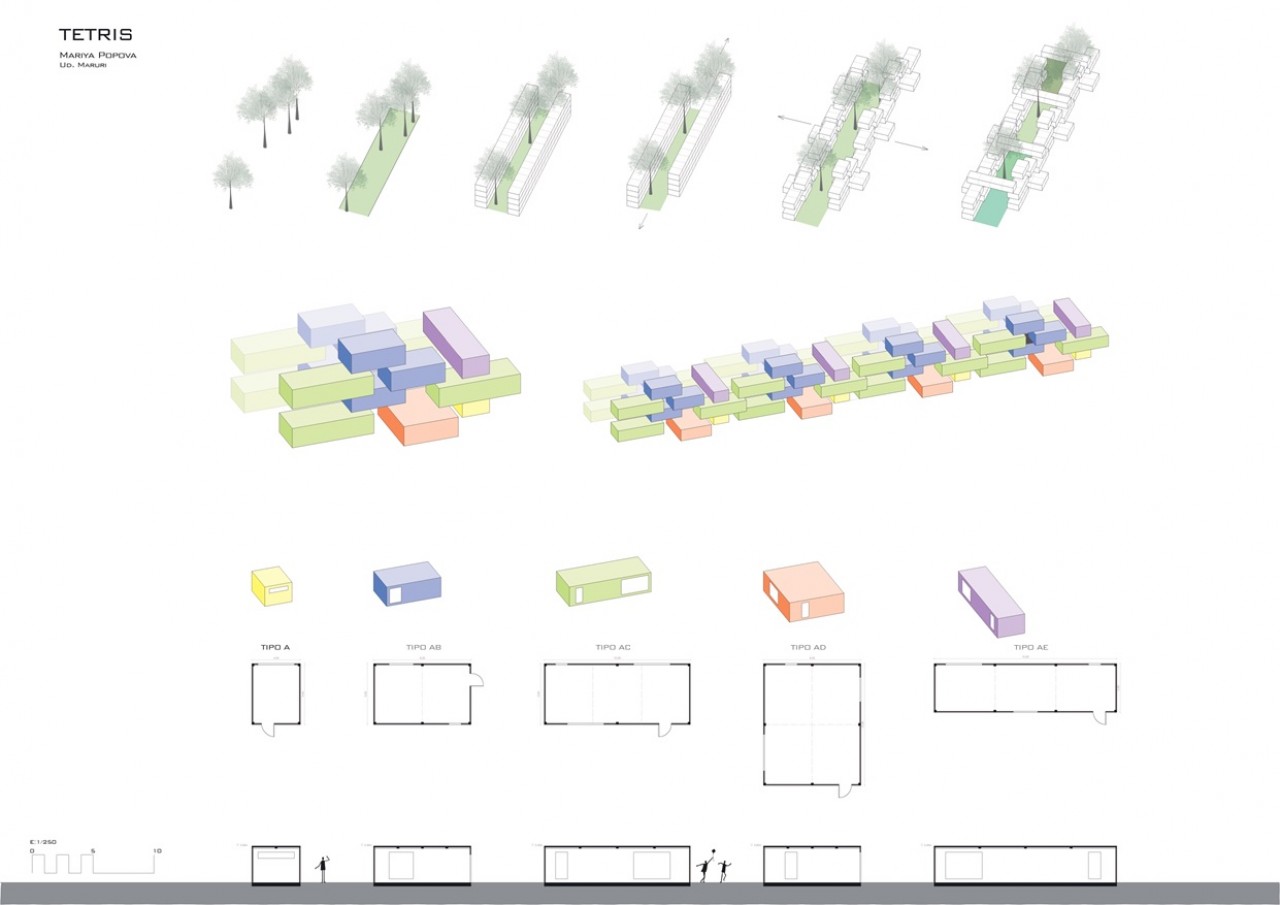
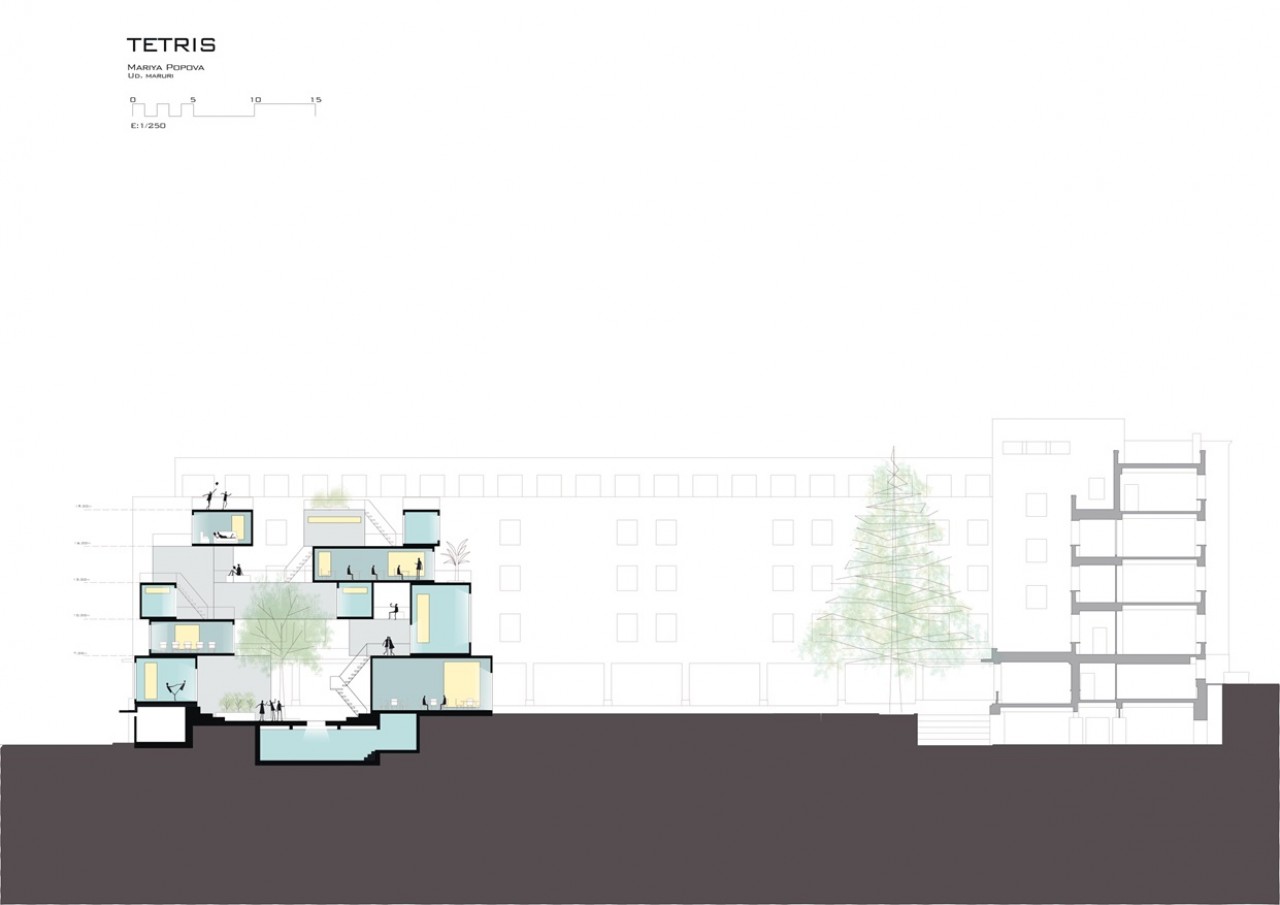
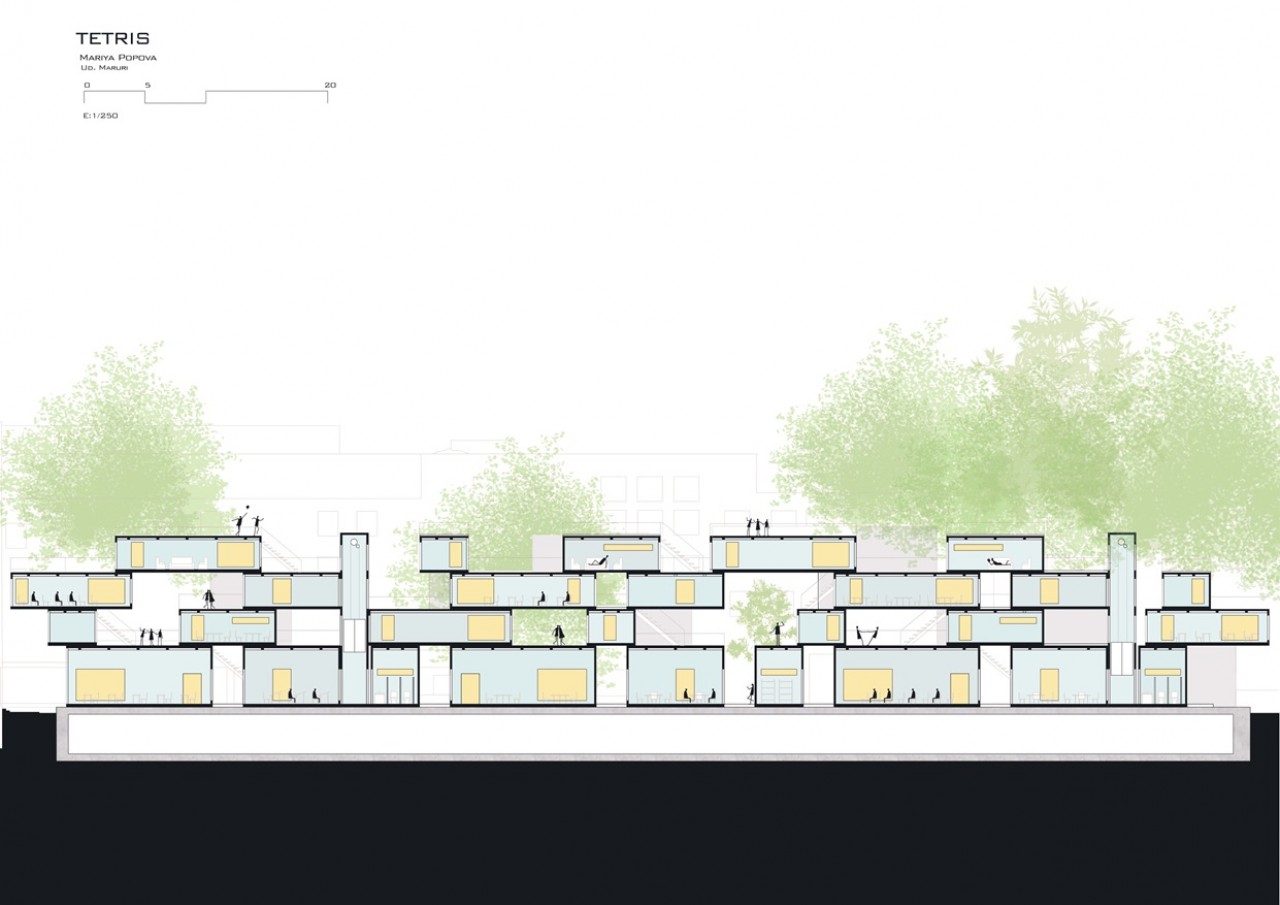
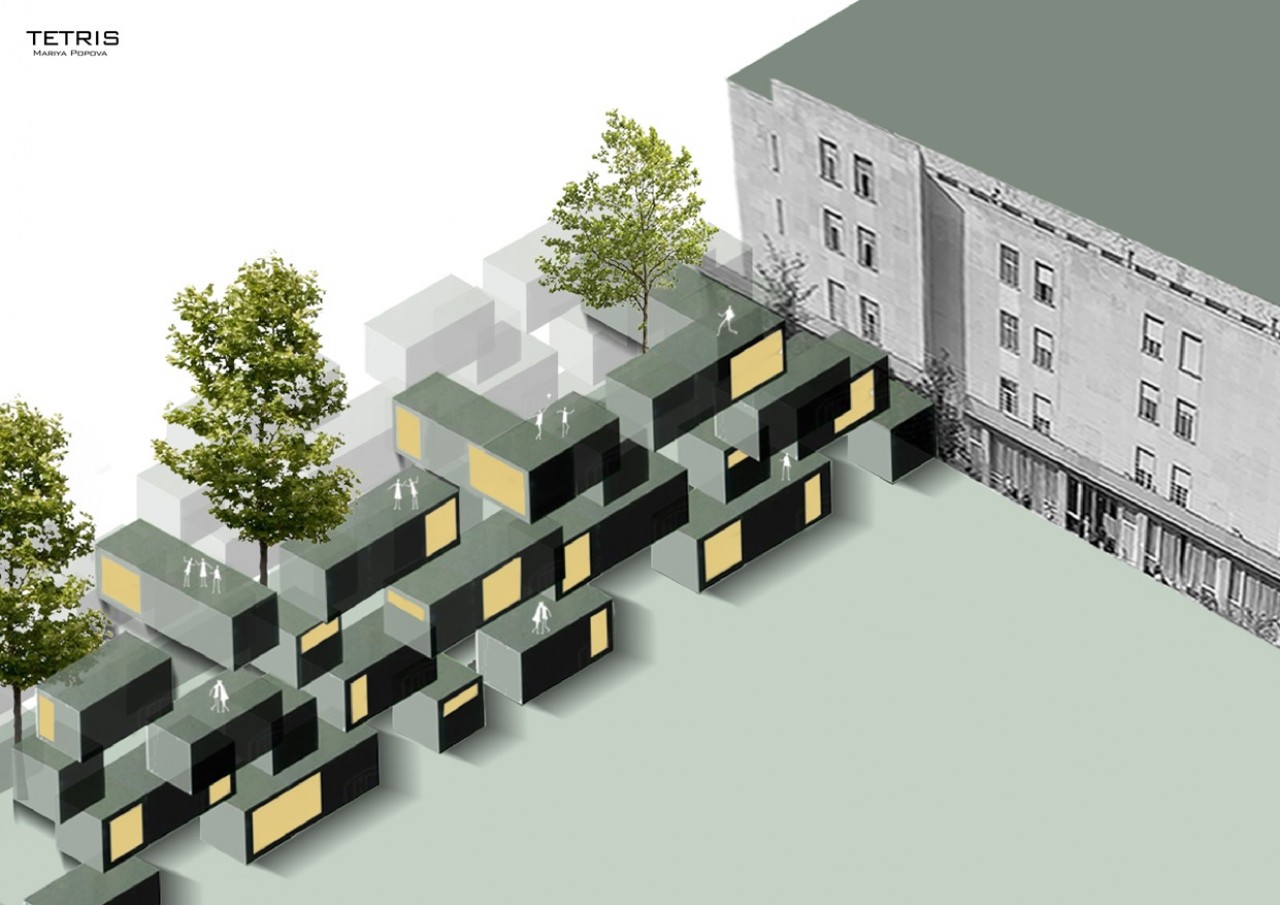
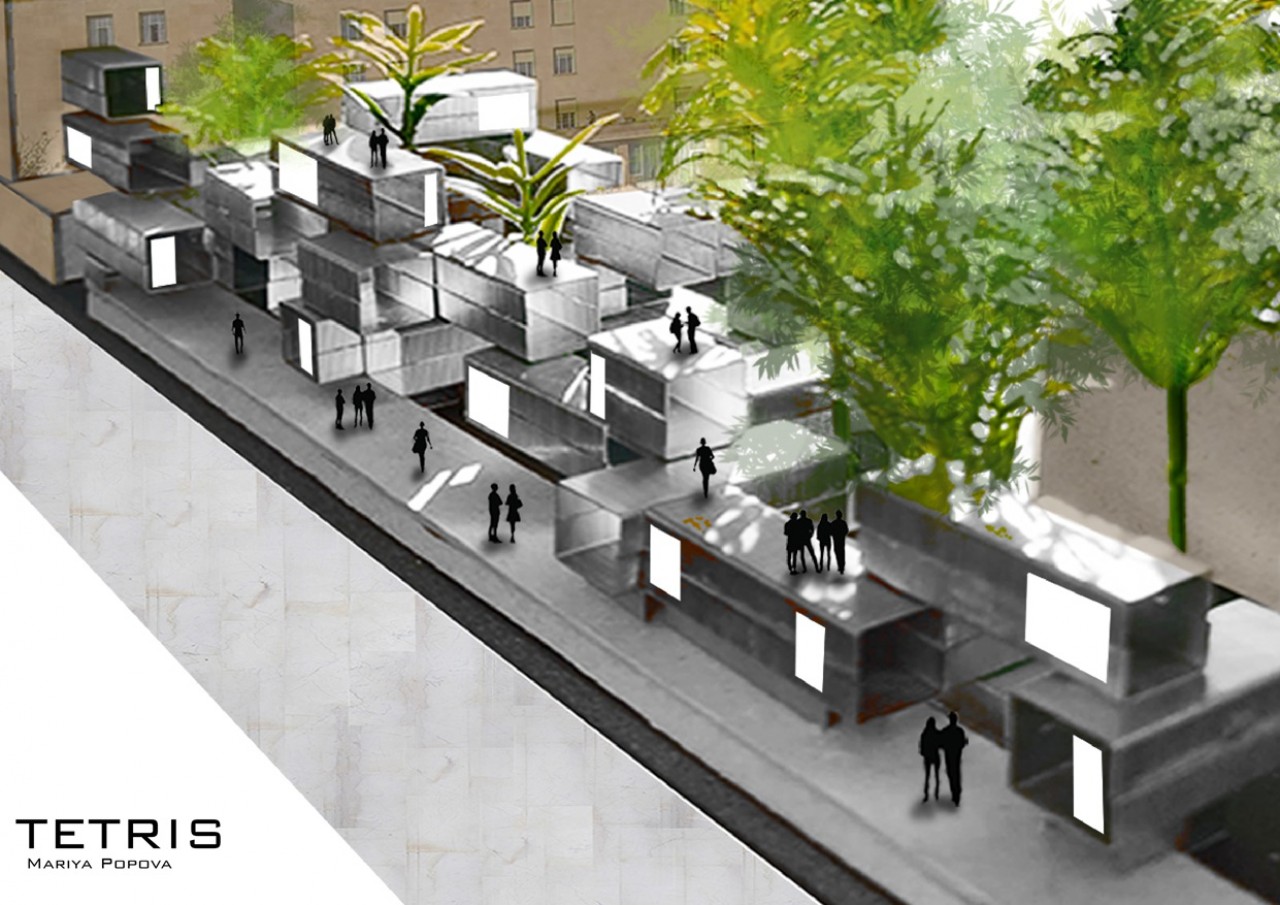
For the final project I decided to stick to the concept of modular architecture, using projects such as Ghetto (Henriquez architects), and Habitat 67 (Moshe Safdie) as my main references. Starting from a module as simple as a rectangle of 4 by 5 meters, different typologies of classrooms were created by adding the modules together in different ways. These typologies were stacked together giving way to more complicated compositions which would be repeated creating a system and a more unified sequence.
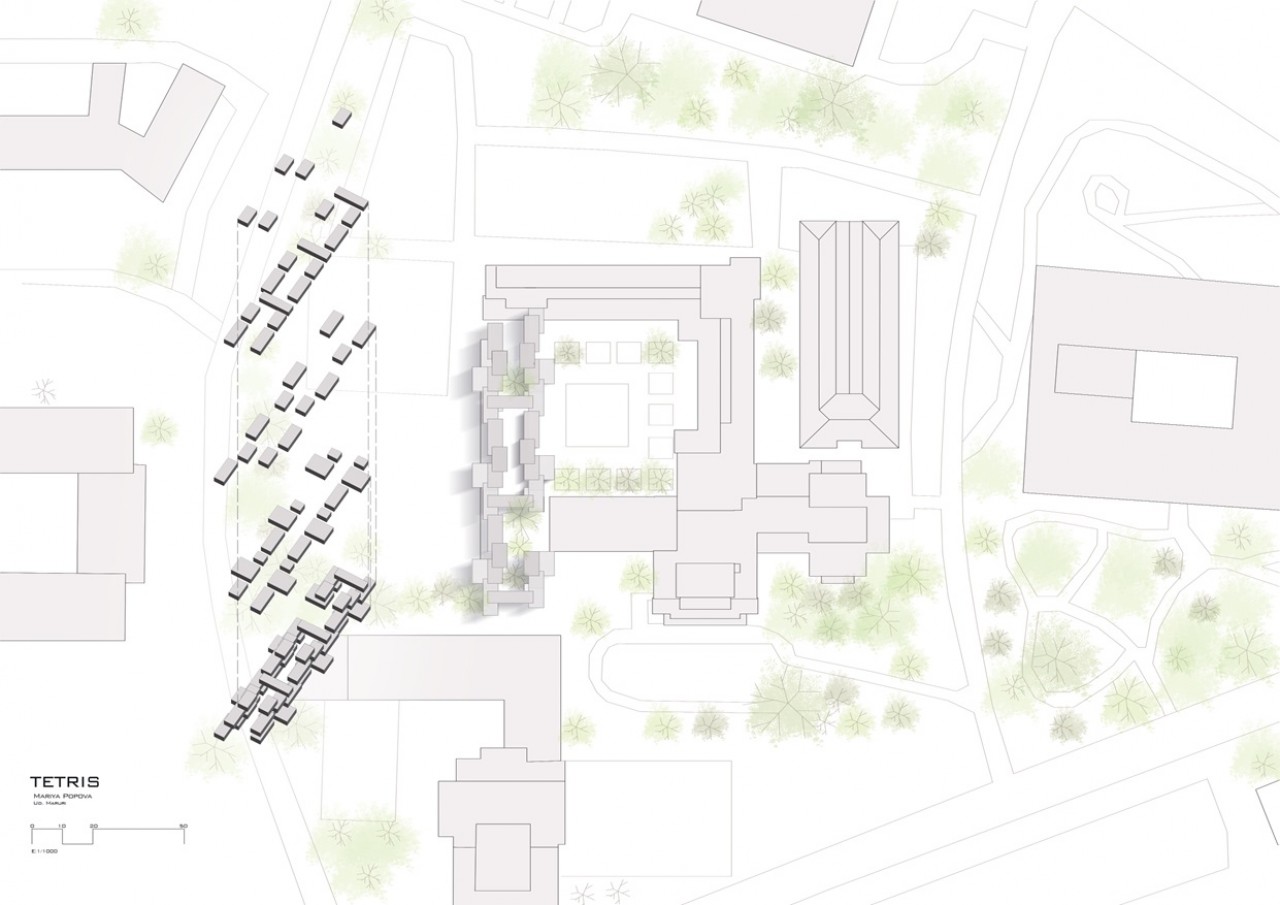
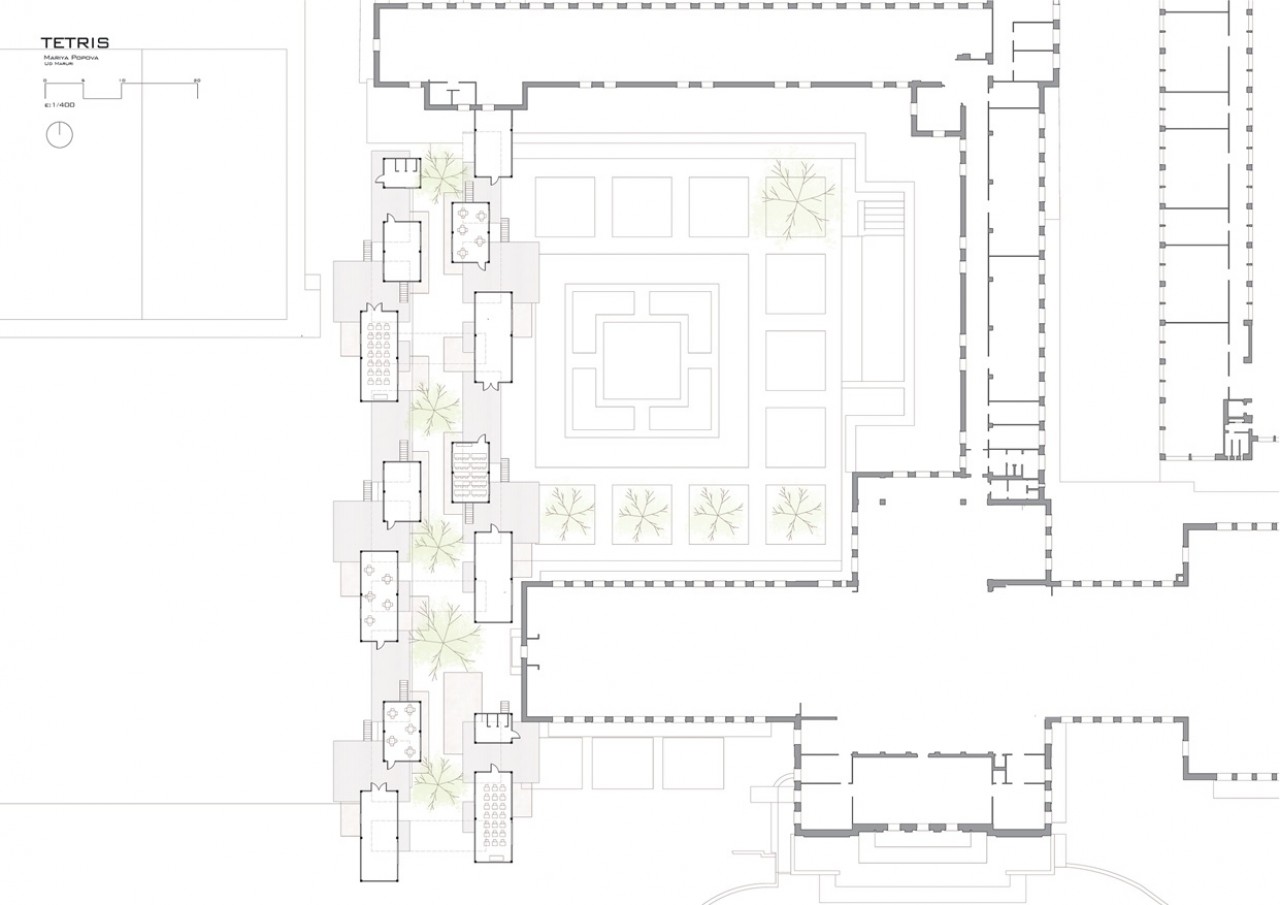
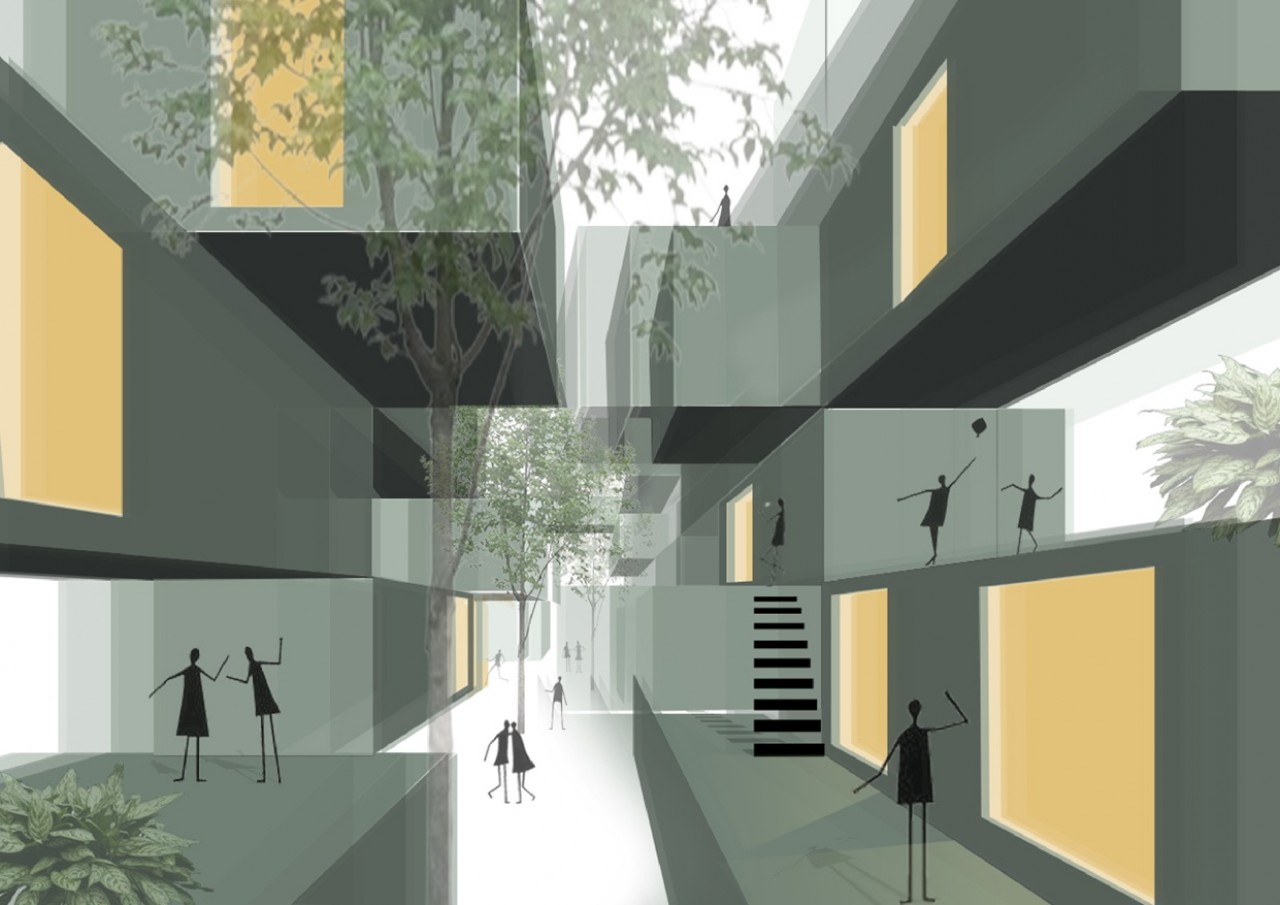
Tetris spreads out along an apparent “main street” dedicated for circulation and serving as the main gathering place for students, whereas the classrooms build up vertically on either side. Located on the west edge of the Rosaleda garden it acts as a permeable barrier and completes the geometry of the school.
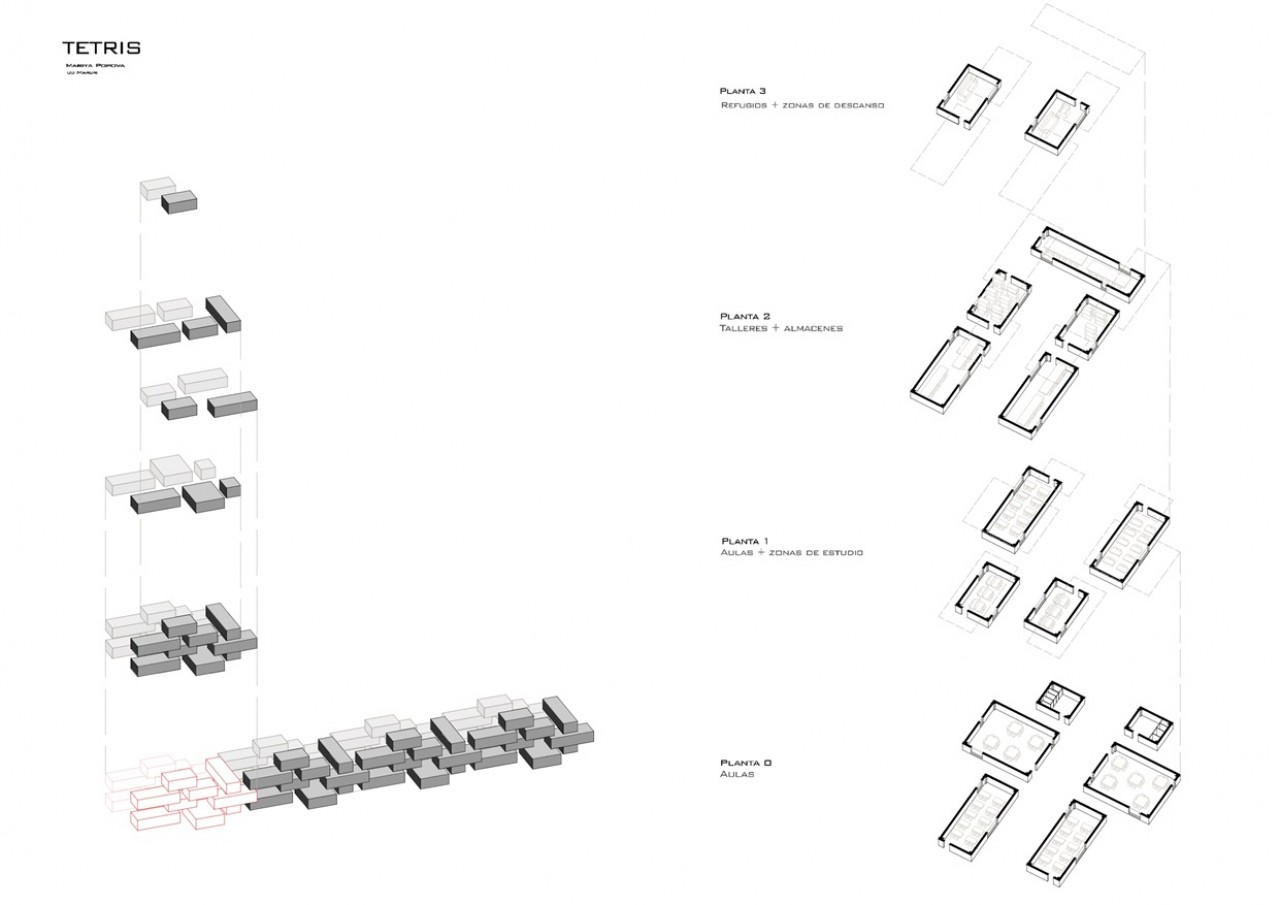
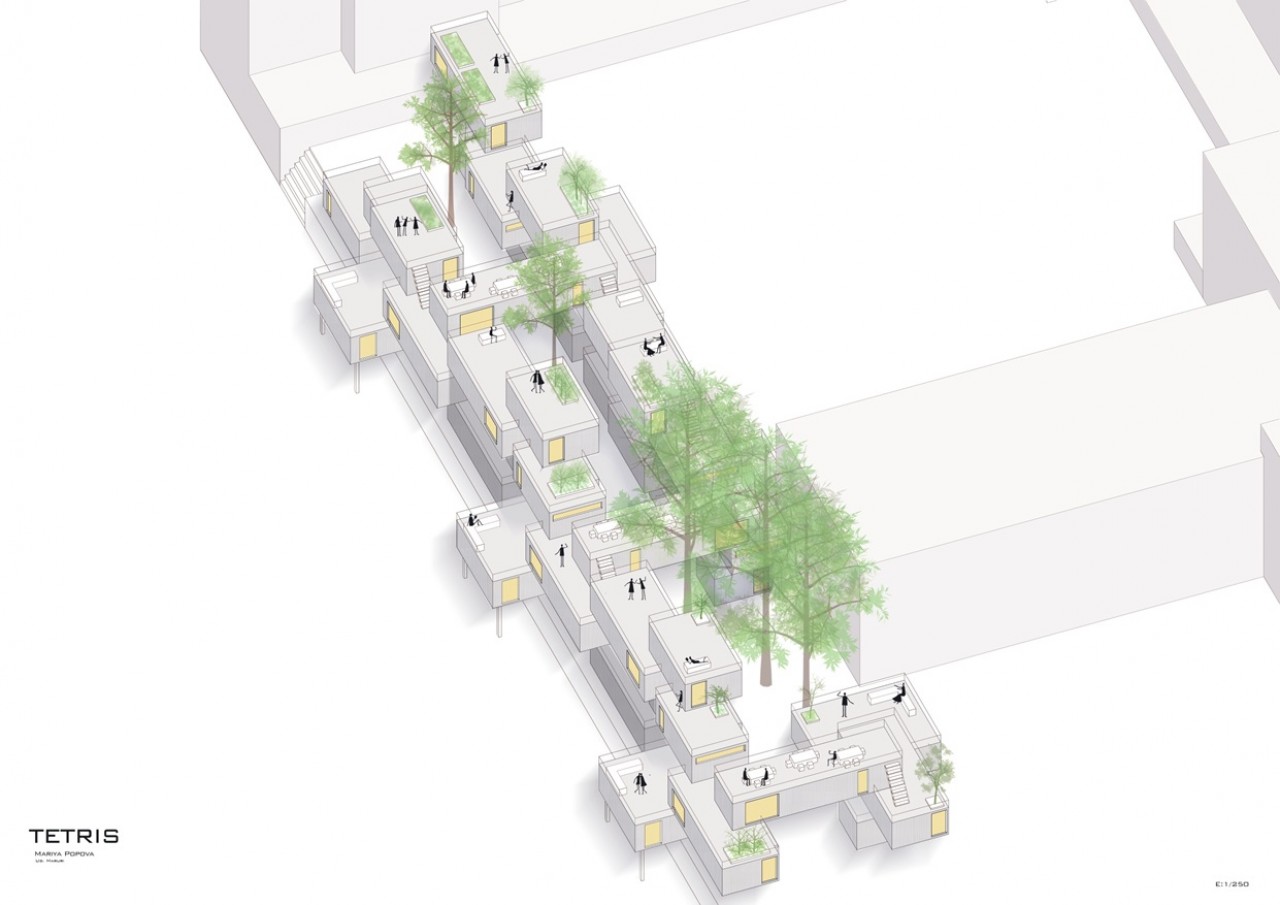
Thanks to this way of superimposing the classrooms, the roof of each one of them can serve as the terrace for the superior floors, creating new gathering spots, and allowing ventilation and illumination.
In total there are 4 levels, the first one containing classrooms, the second; classrooms and study zones, the third; workshops and storage rooms and the fourth has shelters and relaxation zones.
Tetris strives to become more than a prolongation of the school, its aim is to become a small town of its own, with its main street and small terraces, where walking into each classroom can feel like a whole new experience.
For the final project I decided to stick to the concept of modular architecture, using projects such as Ghetto (Henriquez architects), and Habitat 67 (Moshe Safdie) as my main references. Starting from a module as simple as a rectangle of 4 by 5 meters, different typologies of classrooms were created by adding the modules together in different ways. These typologies were stacked together giving way to more complicated compositions which would be repeated creating a system and a more unified sequence.
Tetris spreads out along an apparent “main street” dedicated for circulation and serving as the main gathering place for students, whereas the classrooms build up vertically on either side. Located on the west edge of the Rosaleda garden it acts as a permeable barrier and completes the geometry of the school.
Thanks to this way of superimposing the classrooms, the roof of each one of them can serve as the terrace for the superior floors, creating new gathering spots, and allowing ventilation and illumination.
In total there are 4 levels, the first one containing classrooms, the second; classrooms and study zones, the third; workshops and storage rooms and the fourth has shelters and relaxation zones.
Tetris strives to become more than a prolongation of the school, its aim is to become a small town of its own, with its main street and small terraces, where walking into each classroom can feel like a whole new experience.
- 00 - Description
- 01 - Concept
- 02 - Levels
- 03 - Site plan
- 04 - Axonometry
- 05 - Cross section
- 06 - Longitudinal section
- 07 - Floor plan
- 08 - Photomontage 1
- 09 - Photomontage 2
- 10 - Photomontage 3
- 11 - Video