
THE GARDEN OF SECRETS
During this course, three complementary exercises have been developed in the city of Manchester, exploring the meaning of the garden in the urban and domestic spheres.
THE GARDEN OF SECRETS
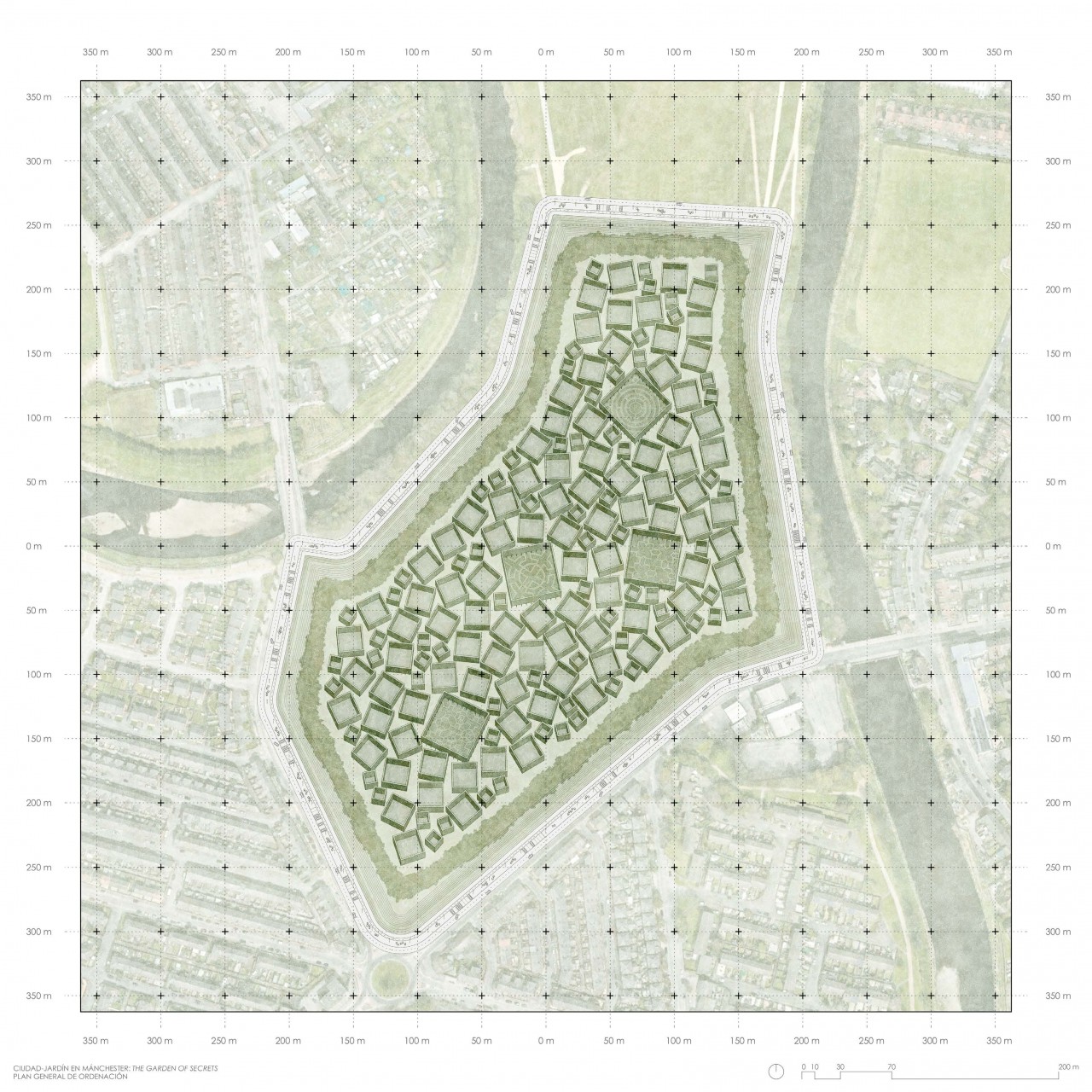
For the first exercise, the definition of a general planning plan for a garden-city in the area of Castle Irwell is proposed.
The proposal moves away from the usual approaches to the garden-city, to explore what could be considered as an inhabited garden.
The master plan inspires in topiary art gardens to establish a rigid and effective planning system in terms of composition, although, at the same time, changing and surprising from a spatial point of view.
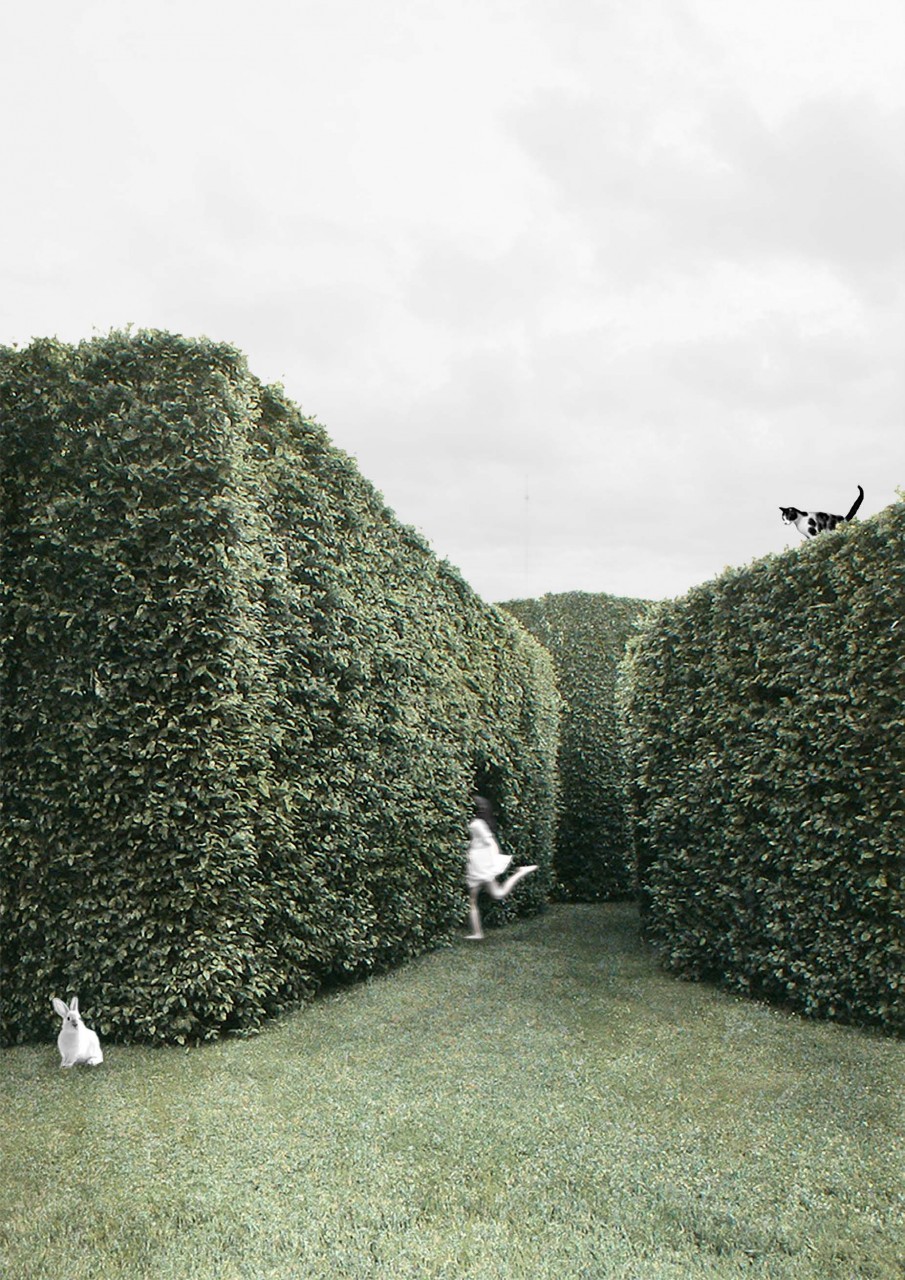
The planning is based on the random repetition of square plots, whose boundary element is constituted by a trimmed hornbeam hedge. It is generated, in this way, a garden-city that is articulated through a set of interstitial spaces between vegetal walls, a city in which everything is a garden; a labyrinthine garden with a changing and sensory character, a garden that is never the same but is always similar. A mysterious garden wants to be discovered.
AN ENGLISH STUDIOLO
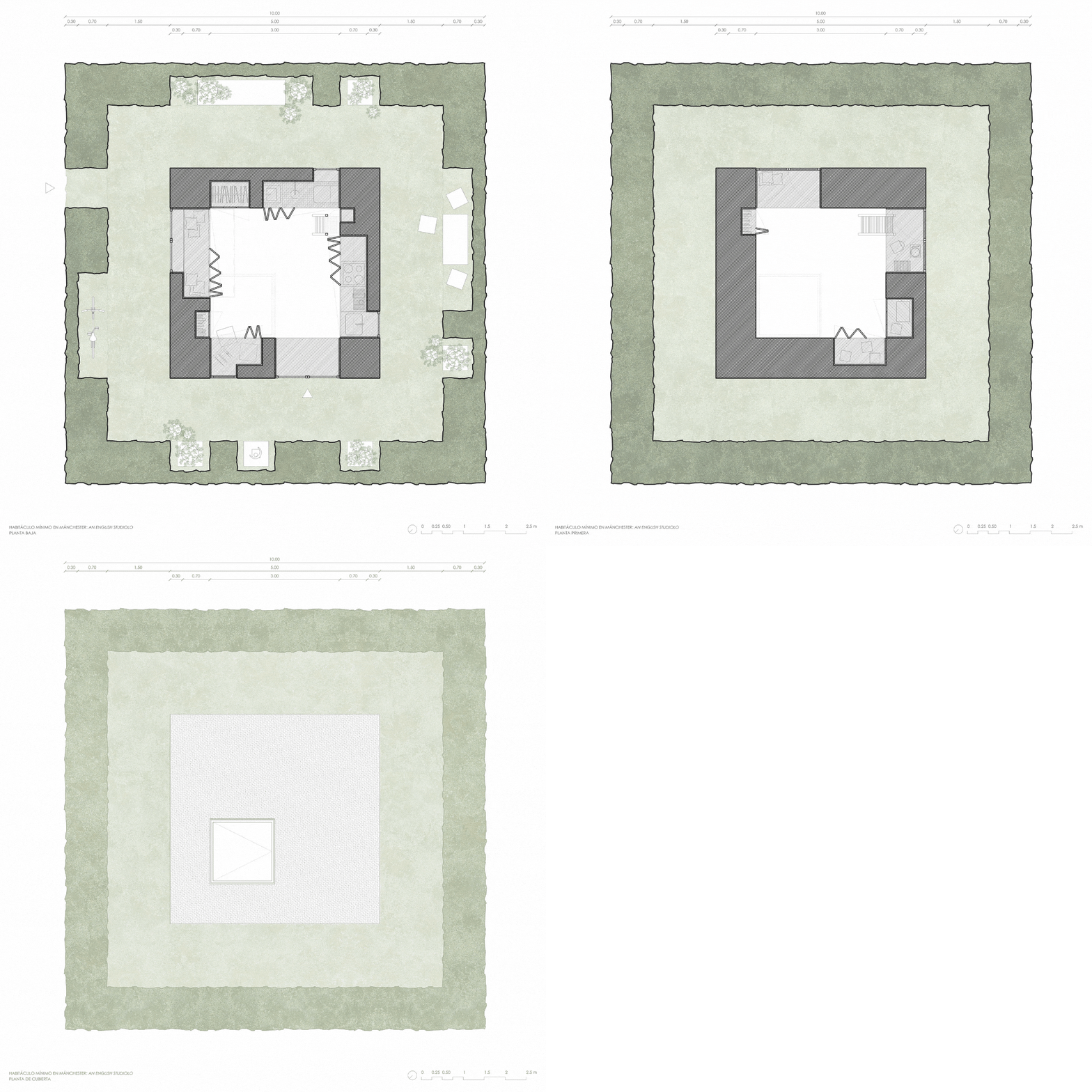
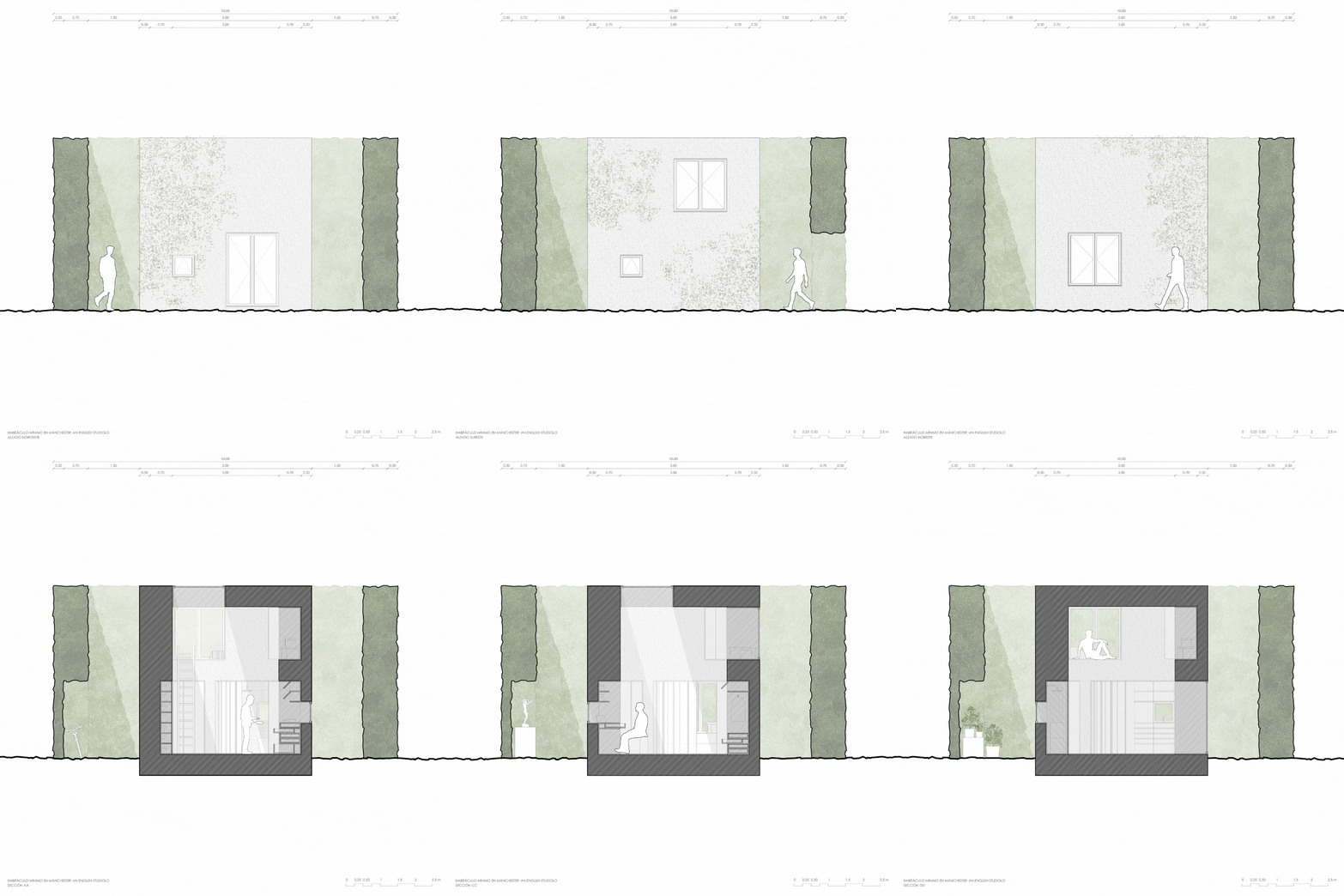
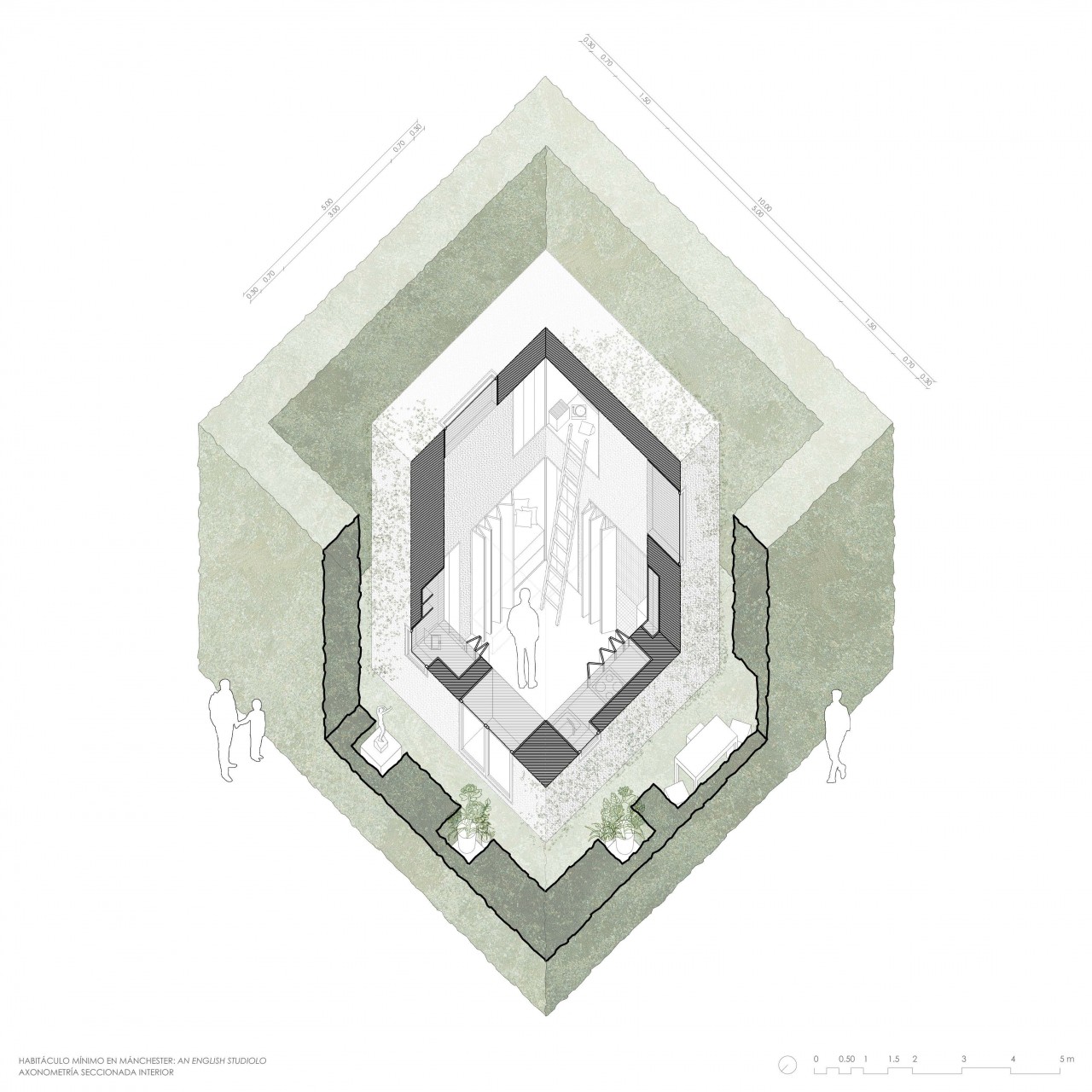
For the second exercise, the design of a minimum dwelling built in concrete is proposed, an individual and autonomous house within a perfectly cubic volume.
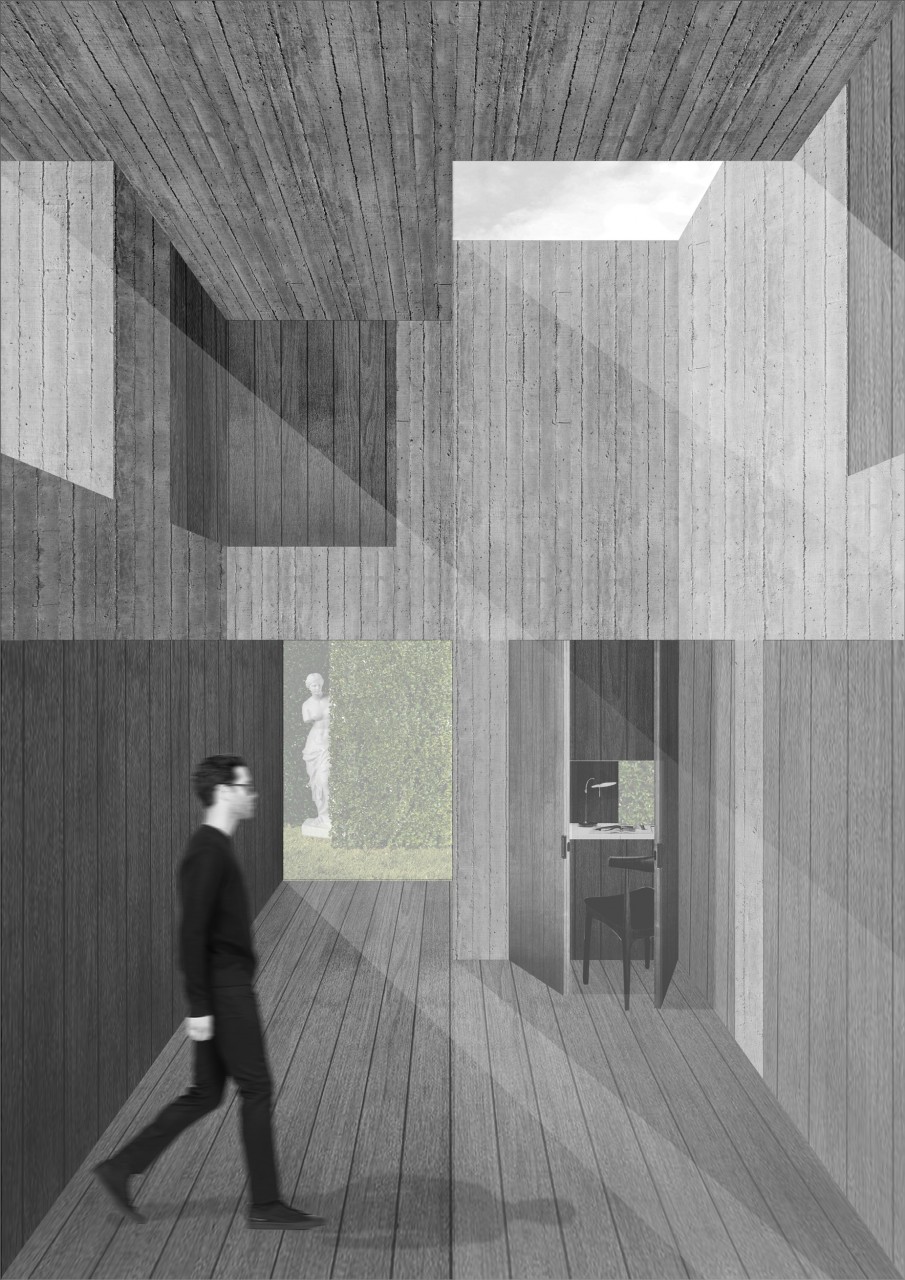
The spatial configuration of the piece is simple. It consists of a large central space delimited by an equipped perimeter wall, in which the domestic program is inserted. In this way, and through the incorporation of folding doors that cover the gaps, a single and uniform room is obtained, whose function is variable or diverse.
The configuration of the small garden delimited by the hedge of the predefined plot, is carried out using the same spatial idea as inside the house, generating wide cutouts that house different garden scenes, in opposition to the strictly functional character of the interior space.
Thus, a minimal interior is proposed, in absolute correspondence with its garden; an introspective architecture that functions, in essence, as a refuge for intimacy.
THE CHESS HOUSE
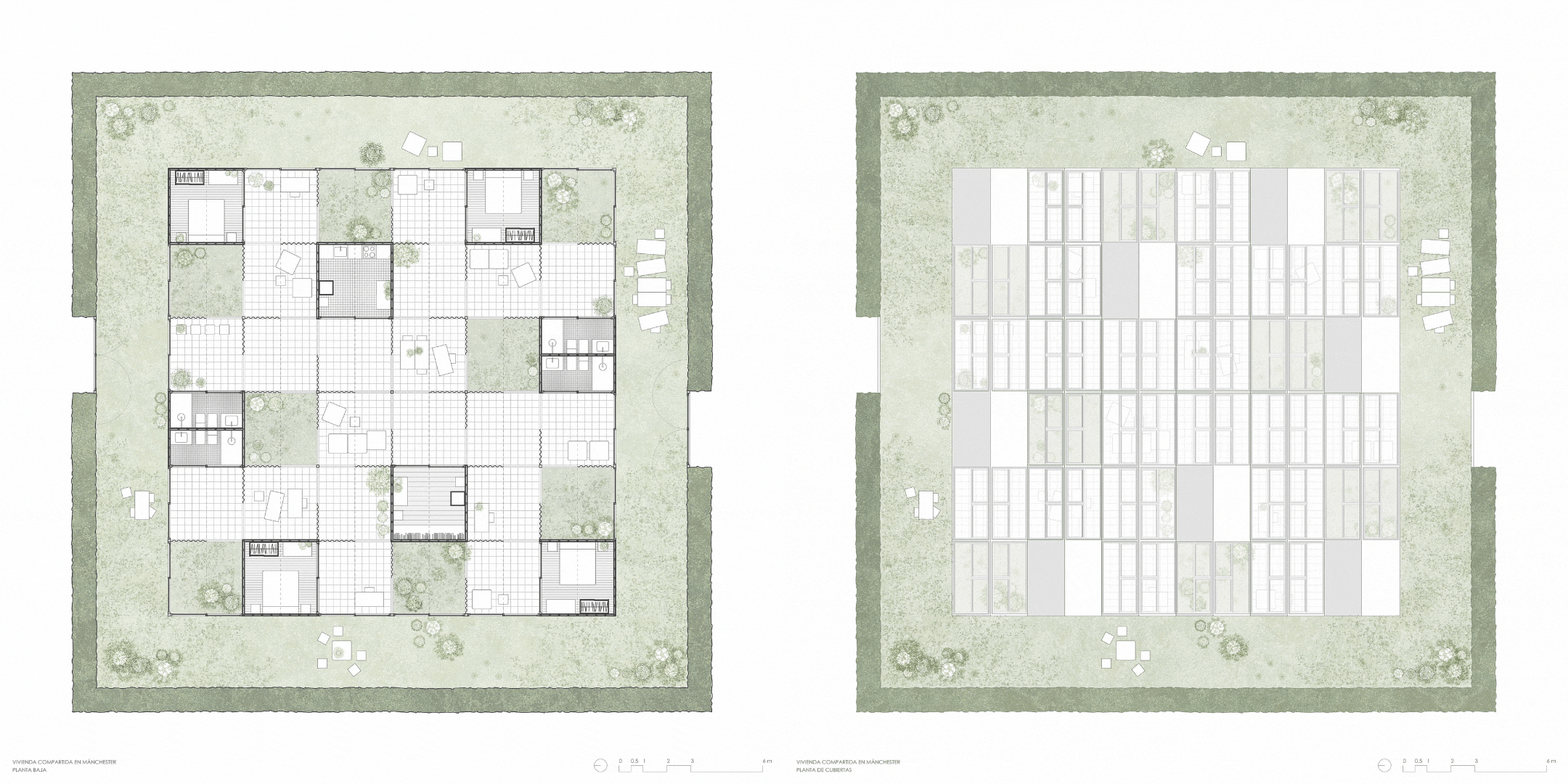
For the third exercise, the design of a shared house is proposed, exploring the idea of the collective as an alternative way to configure the domestic space.
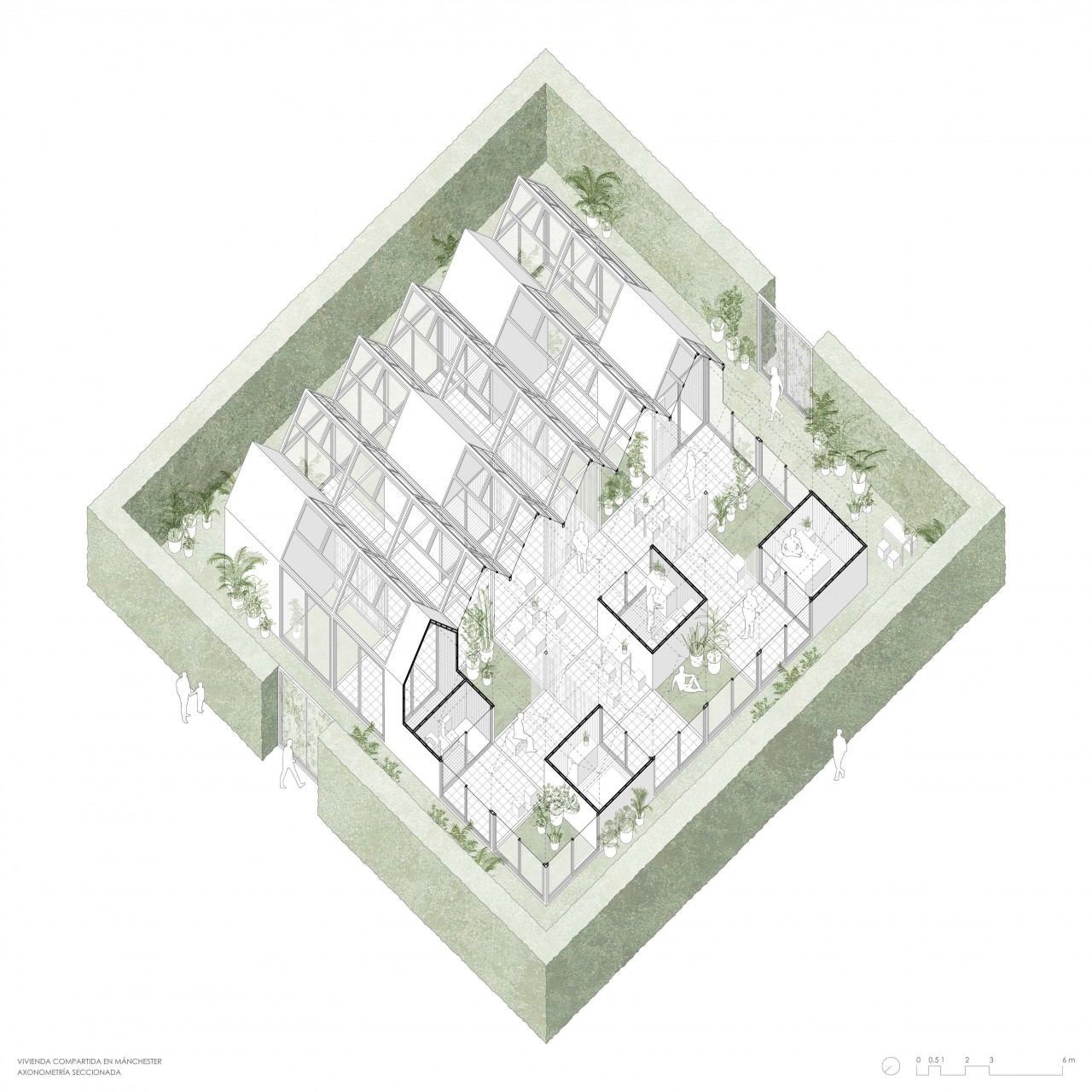
The privacy provided by the hedge of the predefined plot makes it possible to build a transparent box, understanding the green wall as a visual enclosure of the space.
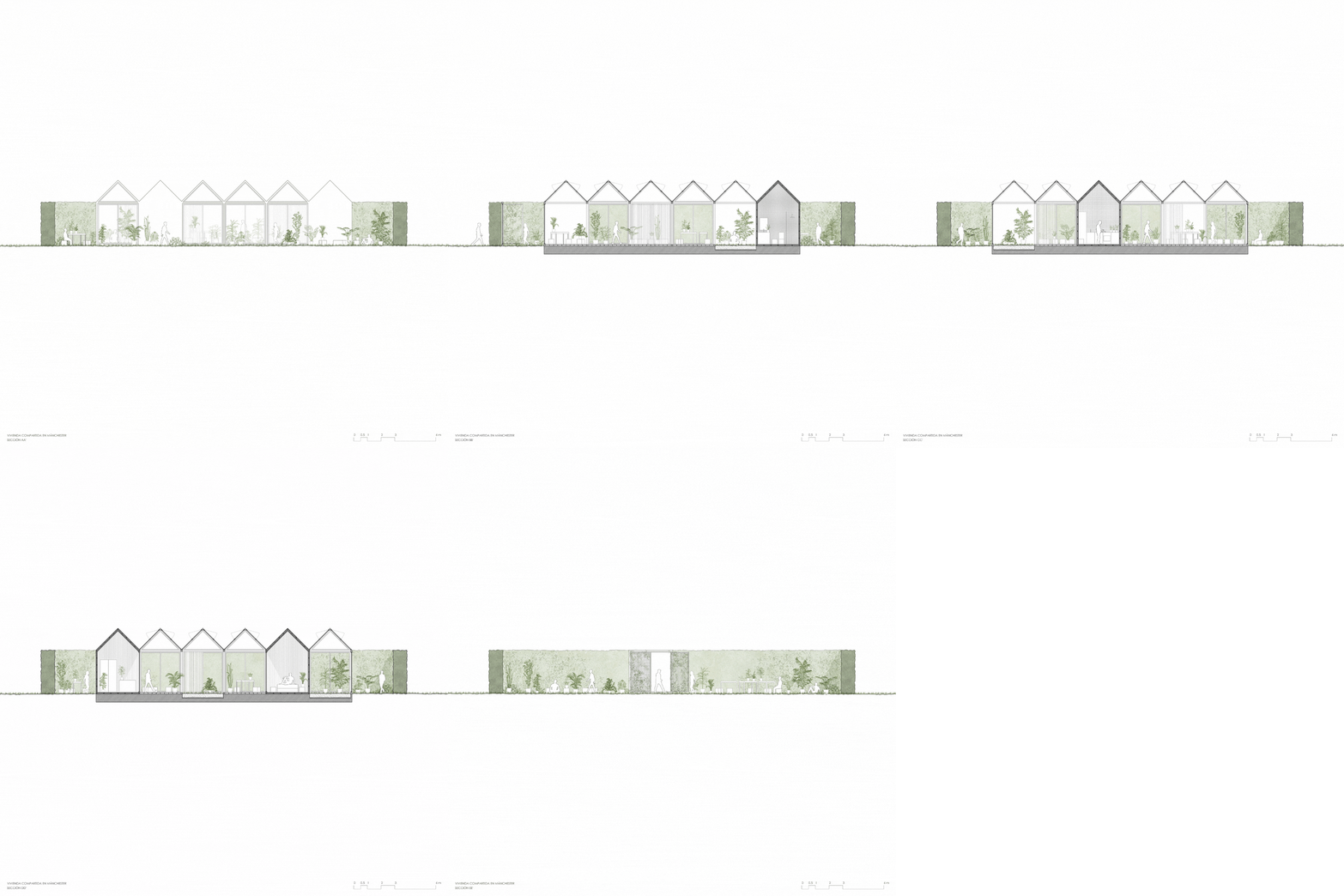
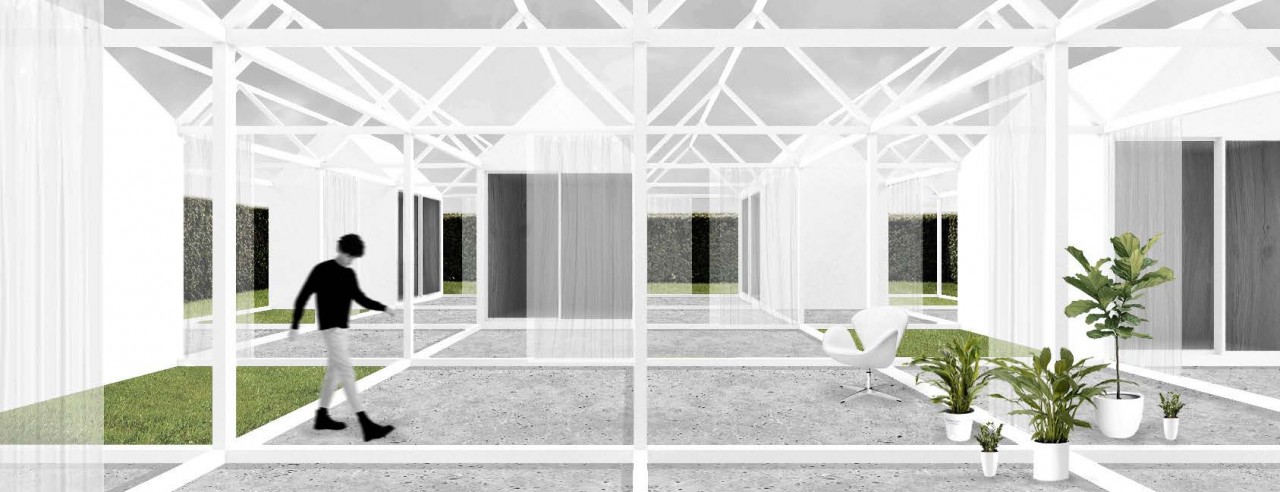
Through a modulated metal structure and a glass envelope, a greenhouse is generated, used as a support on which to develop a domestic architecture.
The functional program of the house is fragmented into several individual modules that are inserted into the structural grid, allocating the rest of the space to common use. In addition, by means of a curtain system subordinated to the structure, a free configuration of the collective space is allowed.
To introduce vegetation inside the house, a series of garden areas are arranged o the interior space, establishing a continuity with the outside garden and favouring the dissolution of the limits between the domestic space and the garden.
In short, an alternative housing typology is proposed, for collective use and with a variable configuration; a greenhouse, understanding the garden as an extension of the house and the house as an extension of the garden.
In short and to conclude, an approach to the planning of urban space has been carried out, studying the articulation of public space and deepening the definition of domestic space, always favouring the garden value.
THE GARDEN OF SECRETS
For the first exercise, the definition of a general planning plan for a garden-city in the area of Castle Irwell is proposed.
The proposal moves away from the usual approaches to the garden-city, to explore what could be considered as an inhabited garden.
The master plan inspires in topiary art gardens to establish a rigid and effective planning system in terms of composition, although, at the same time, changing and surprising from a spatial point of view.
The planning is based on the random repetition of square plots, whose boundary element is constituted by a trimmed hornbeam hedge. It is generated, in this way, a garden-city that is articulated through a set of interstitial spaces between vegetal walls, a city in which everything is a garden; a labyrinthine garden with a changing and sensory character, a garden that is never the same but is always similar. A mysterious garden wants to be discovered.
AN ENGLISH STUDIOLO
For the second exercise, the design of a minimum dwelling built in concrete is proposed, an individual and autonomous house within a perfectly cubic volume.
The spatial configuration of the piece is simple. It consists of a large central space delimited by an equipped perimeter wall, in which the domestic program is inserted. In this way, and through the incorporation of folding doors that cover the gaps, a single and uniform room is obtained, whose function is variable or diverse.
The configuration of the small garden delimited by the hedge of the predefined plot, is carried out using the same spatial idea as inside the house, generating wide cutouts that house different garden scenes, in opposition to the strictly functional character of the interior space.
Thus, a minimal interior is proposed, in absolute correspondence with its garden; an introspective architecture that functions, in essence, as a refuge for intimacy.
THE CHESS HOUSE
For the third exercise, the design of a shared house is proposed, exploring the idea of the collective as an alternative way to configure the domestic space.
The privacy provided by the hedge of the predefined plot makes it possible to build a transparent box, understanding the green wall as a visual enclosure of the space.
Through a modulated metal structure and a glass envelope, a greenhouse is generated, used as a support on which to develop a domestic architecture.
The functional program of the house is fragmented into several individual modules that are inserted into the structural grid, allocating the rest of the space to common use. In addition, by means of a curtain system subordinated to the structure, a free configuration of the collective space is allowed.
To introduce vegetation inside the house, a series of garden areas are arranged o the interior space, establishing a continuity with the outside garden and favouring the dissolution of the limits between the domestic space and the garden.
In short, an alternative housing typology is proposed, for collective use and with a variable configuration; a greenhouse, understanding the garden as an extension of the house and the house as an extension of the garden.
In short and to conclude, an approach to the planning of urban space has been carried out, studying the articulation of public space and deepening the definition of domestic space, always favouring the garden value.
- 00 - Description
- 01 - MASTER PLAN
- 02 - GARDEN COLLAGE
- 03 - STUDIOLO PLAN
- 04 - STUDIOLO SECTION
- 05 - STUDIOLO AXO
- 06 - STUDIOLO COLLAGE
- 07 - GREENHOUSE PLAN
- 08 - GREENHOUSE SECTION
- 09 - GREENHOUSE AXO
- 10 - GREENHOUSE COLLAGE
- 11 - Video