
The Path of Khan's
Aleppo is one of the oldest continuously inhabited cities in the world. It has a broad diversity of cultures and lives out of this mixture of individuals. This potpourri of people from all over the world makes the heritage of Aleppo enormous.
Sadly, this rich city underwent a dramatic change due to the Battle of Aleppo from 2012 to 2016. It suffered severe damage and the once brimming city soon went quiet.
After disasters like this, it is up to the architects to plan the recuperation of the city. They play an important role to make it easier for the inhabitants to repopulate the city. Therefore a strategy should be developed by which the city will regain its former glory.
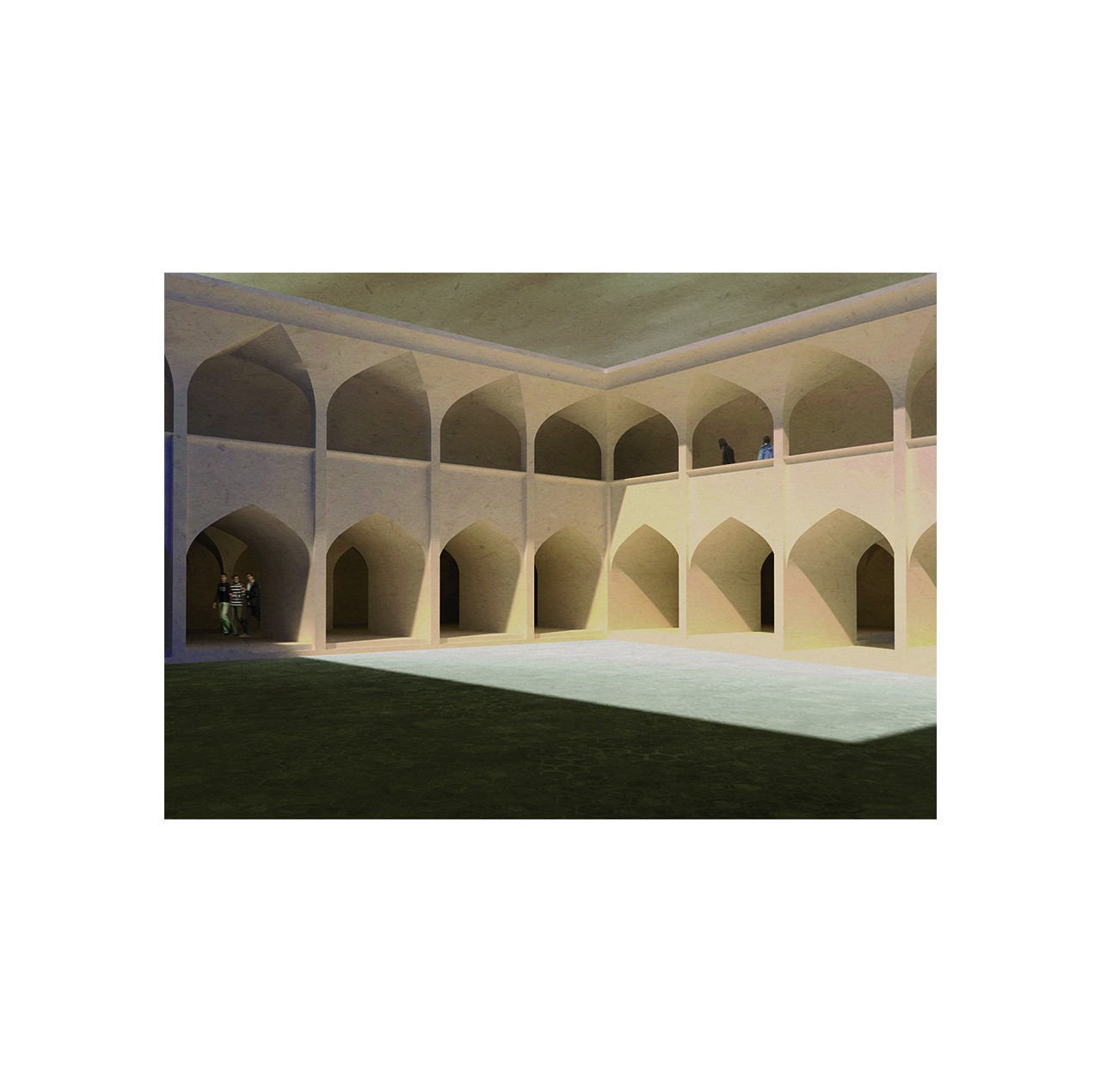
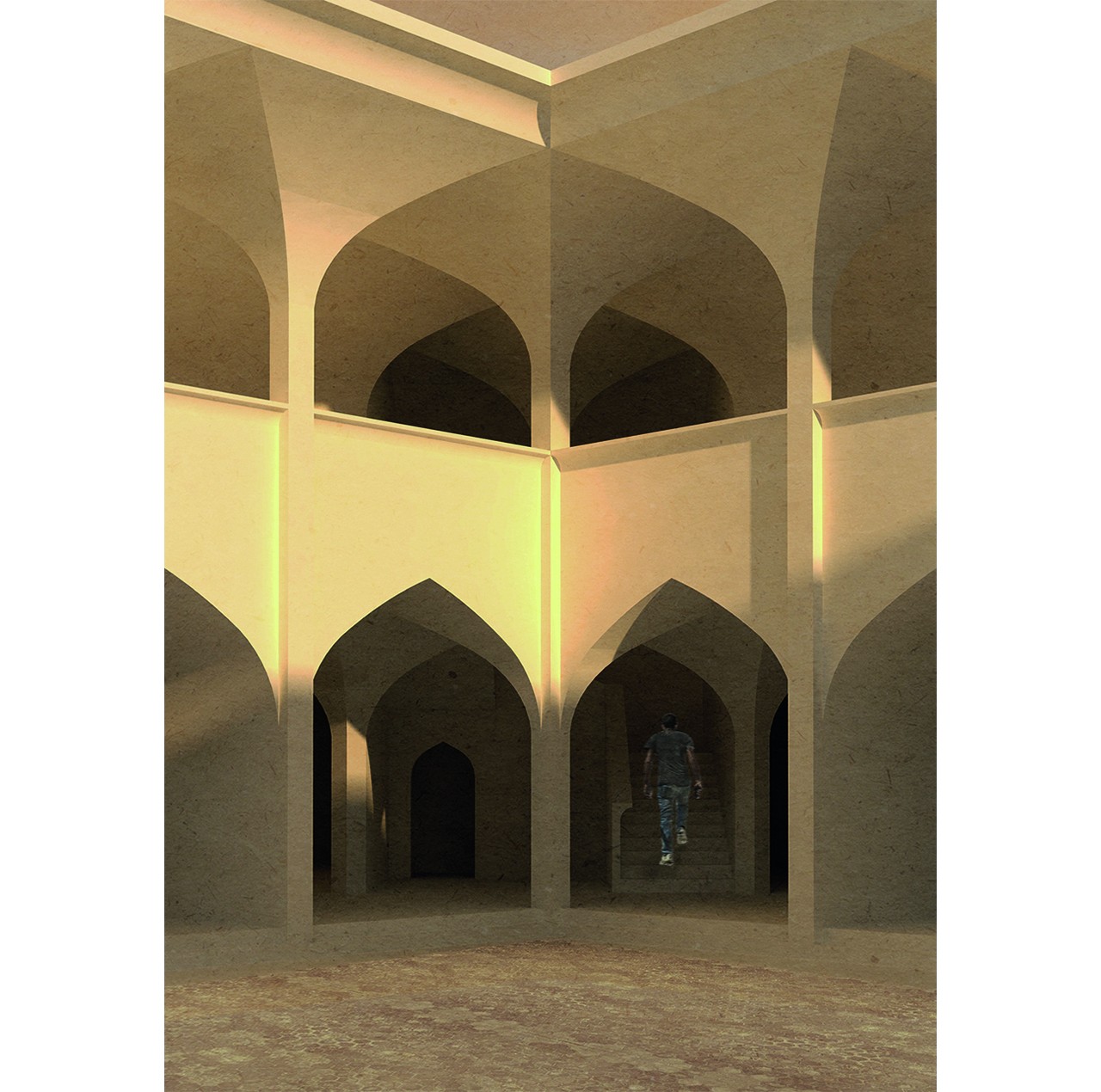
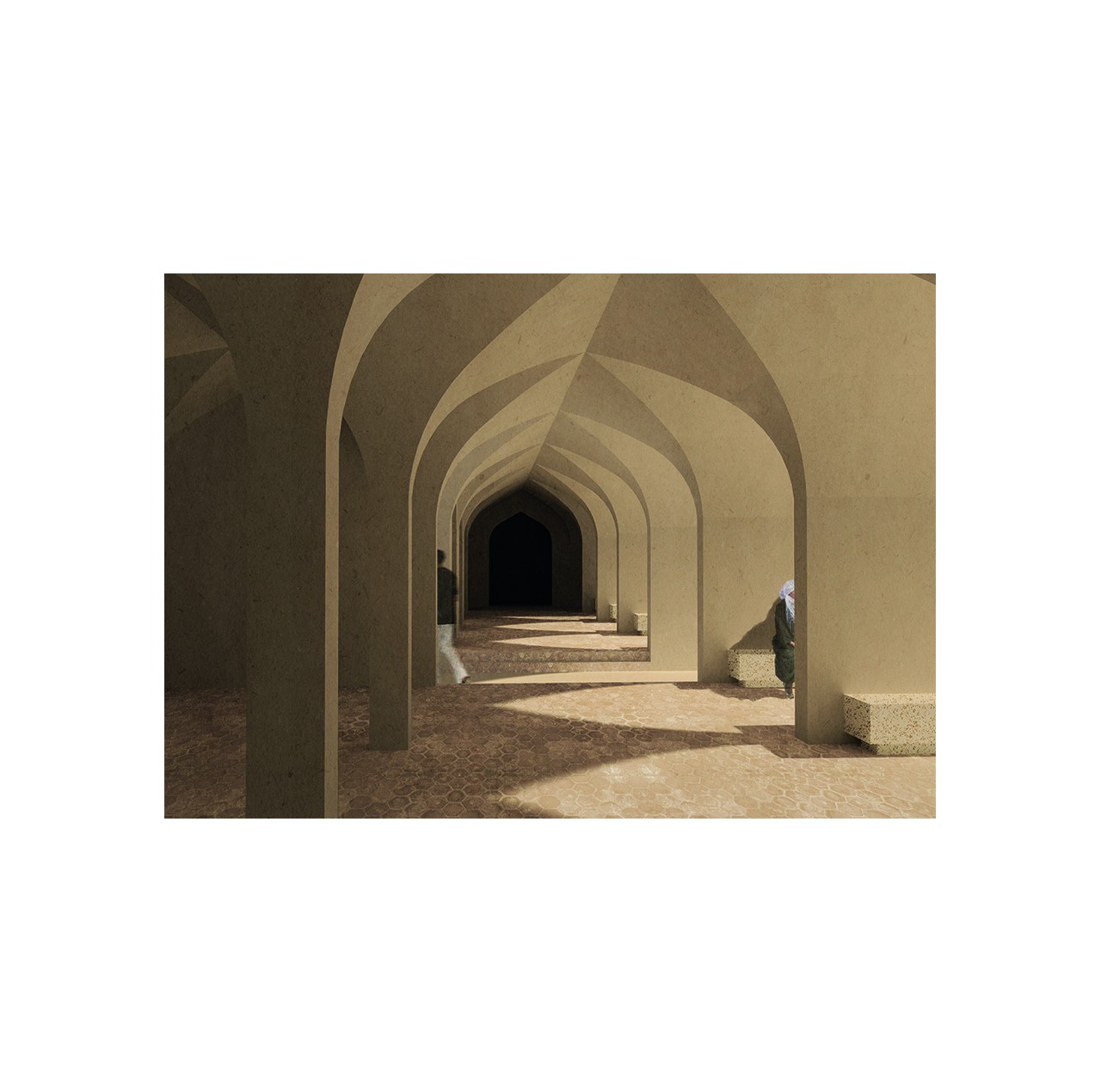
The densely inhabited city with its Arabic atmosphere nourishes from the life in public spaces. The streets are crowded by people wanting to interact and exchange their thoughts and feelings. To cover this will of interaction, the patio acts as catalyser and depicts one of the main themes of Syrian architecture.
The extroverted behaviour of the people willing to exchange in introverted places will be transformed into a new structure that inherits the old spirit of Aleppo.
A infrastructure of public patios should revitalise the streets of Aleppo to take the first step in recreating normal social life. The once abandoned city will bloom again and resurrect from its debris.
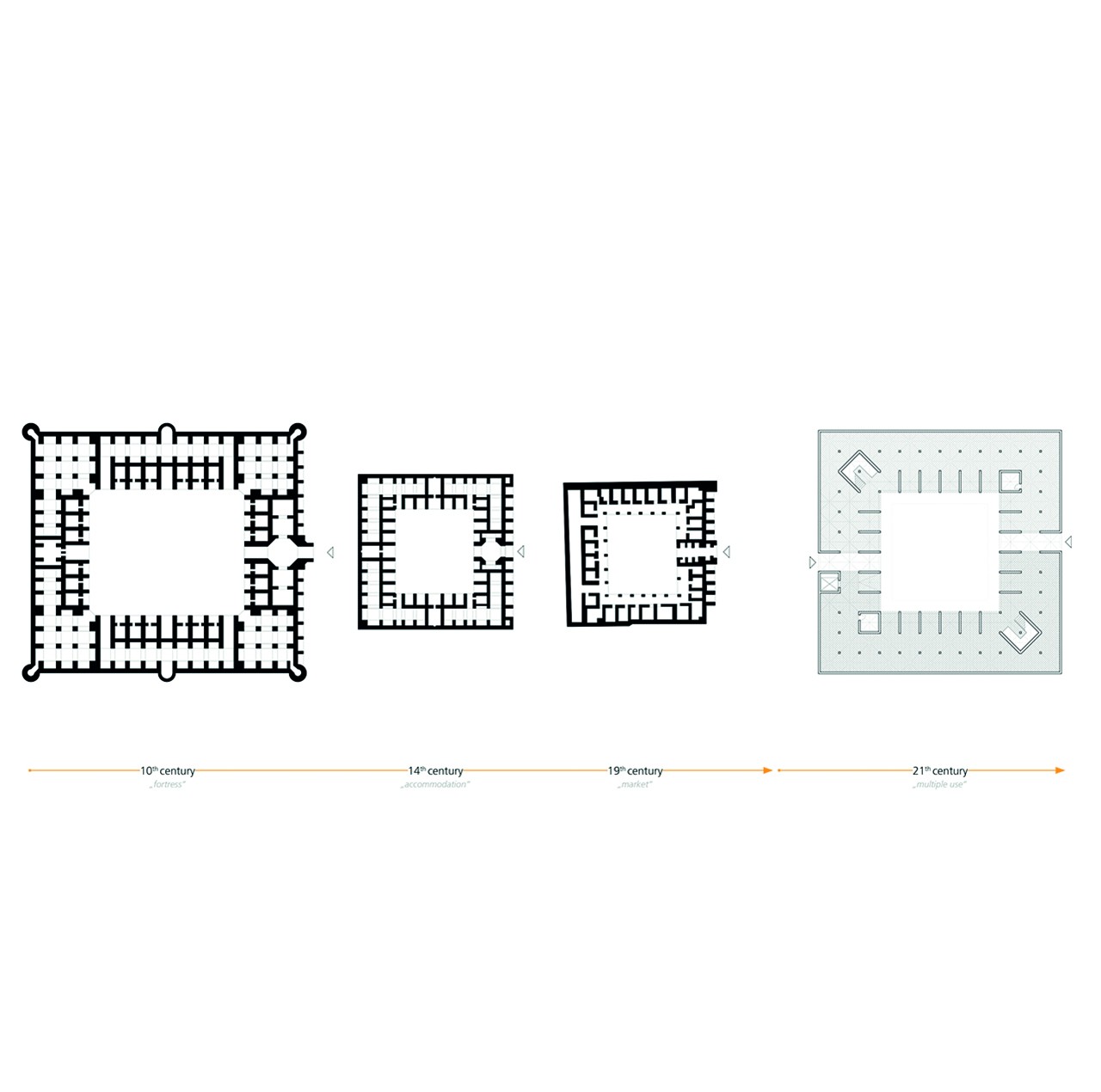
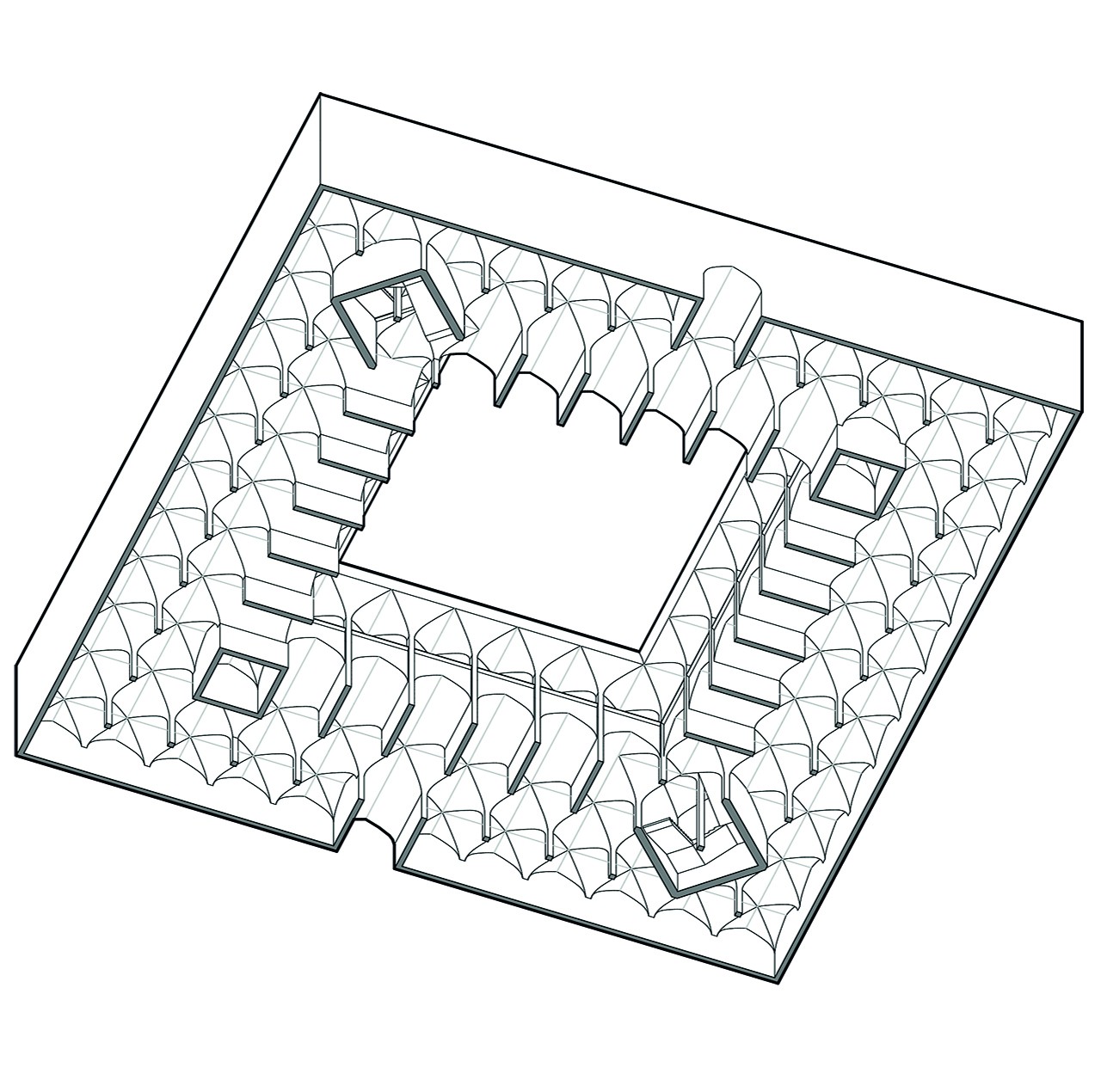
Using the old concept of the caravanserai, a road station ,outside of towns, for the former tradesmen of the Silk Road, the public squares should guide the inhabitants through their city. Originally they were used to accommodate the tradesmen and their animals and served as meeting points for travellers, merchants, scientists and many other scholars who wanted to exchange knowledge and ideas, as well as discover new civilisations.
The inner-city stations, that emerged some centuries later, got in Persian often referred to as khan (Turkish han).
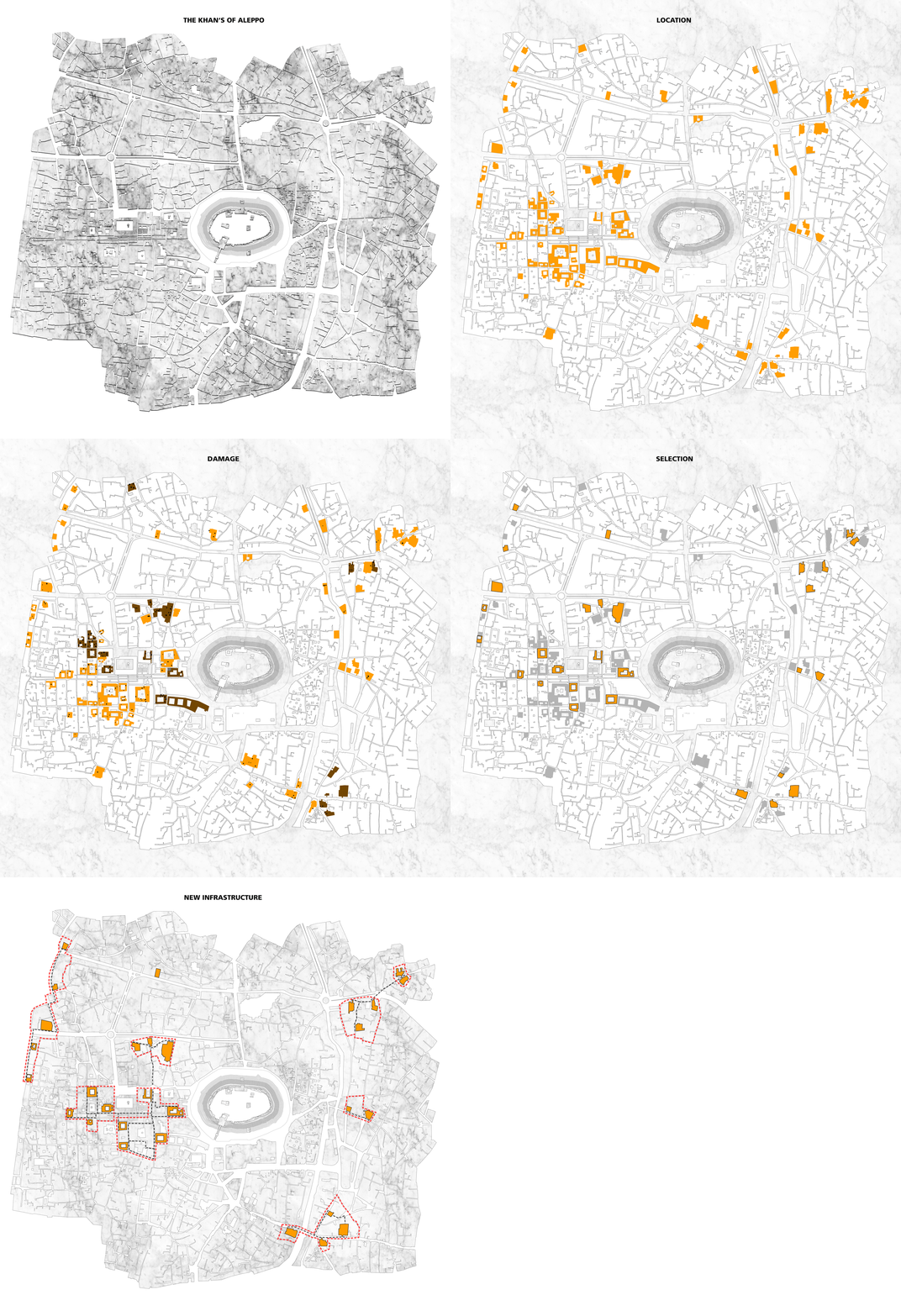
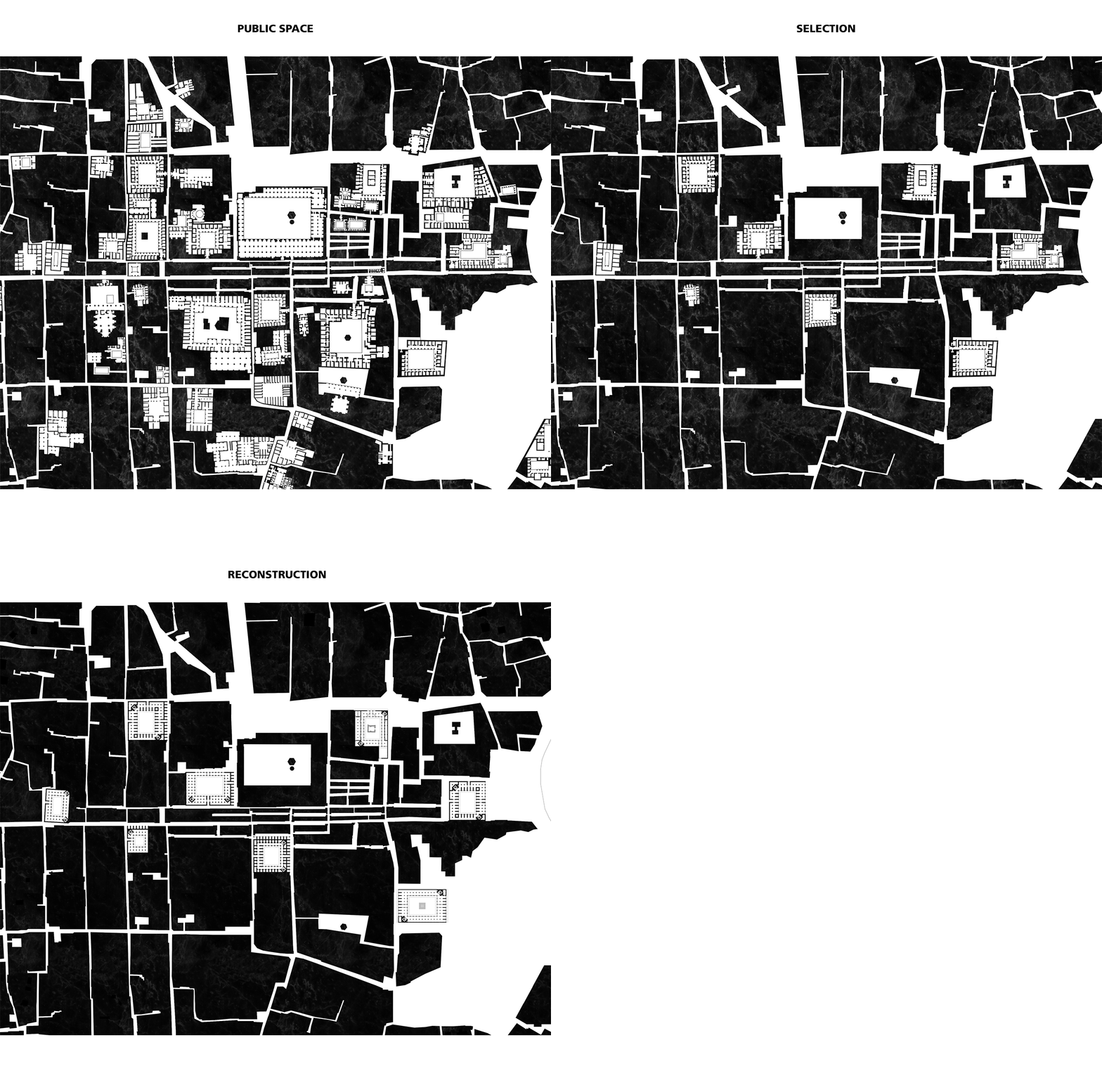
An example on how the integration of the new Khans can be performed, will be given by realising some new public places in the area of the old Souks. By pondering the interaction of all public areas it can be observed that this area mainly serves public needs.
On the debris of the old Khans the new ones will be (re-)constructed and serve one special need, concerning its location. Therefore 3 new Khans will be executed with further magnitude in grade of detailing.
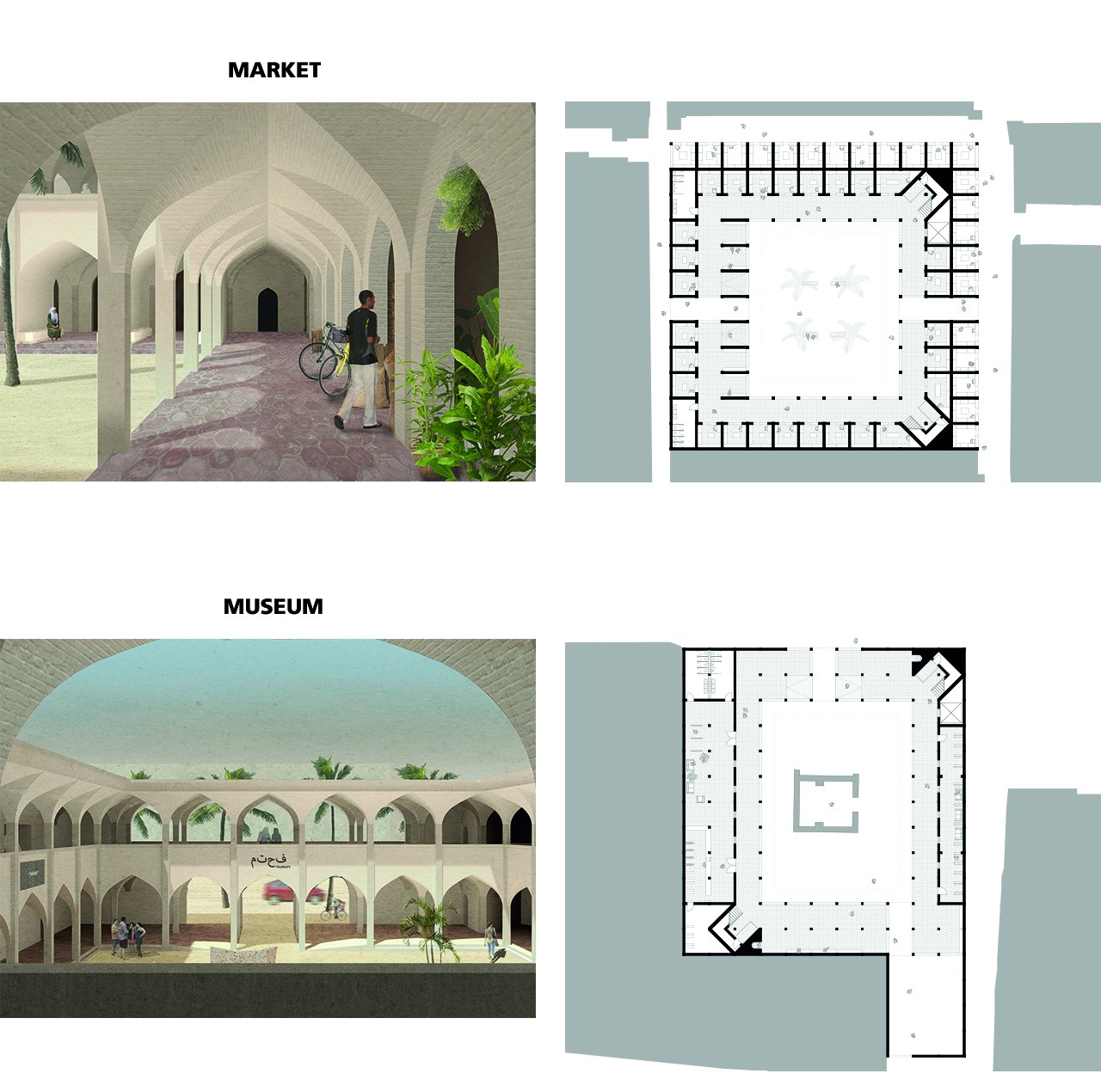
A market will be erected with the original purpose of the Khan. Located in the center of the Souks it perfectly rehabilitates the surrounding shops.
A museum concerning the cultural heritage and the events that lead to this crisis will be located near the main street and guide people into the Souks.
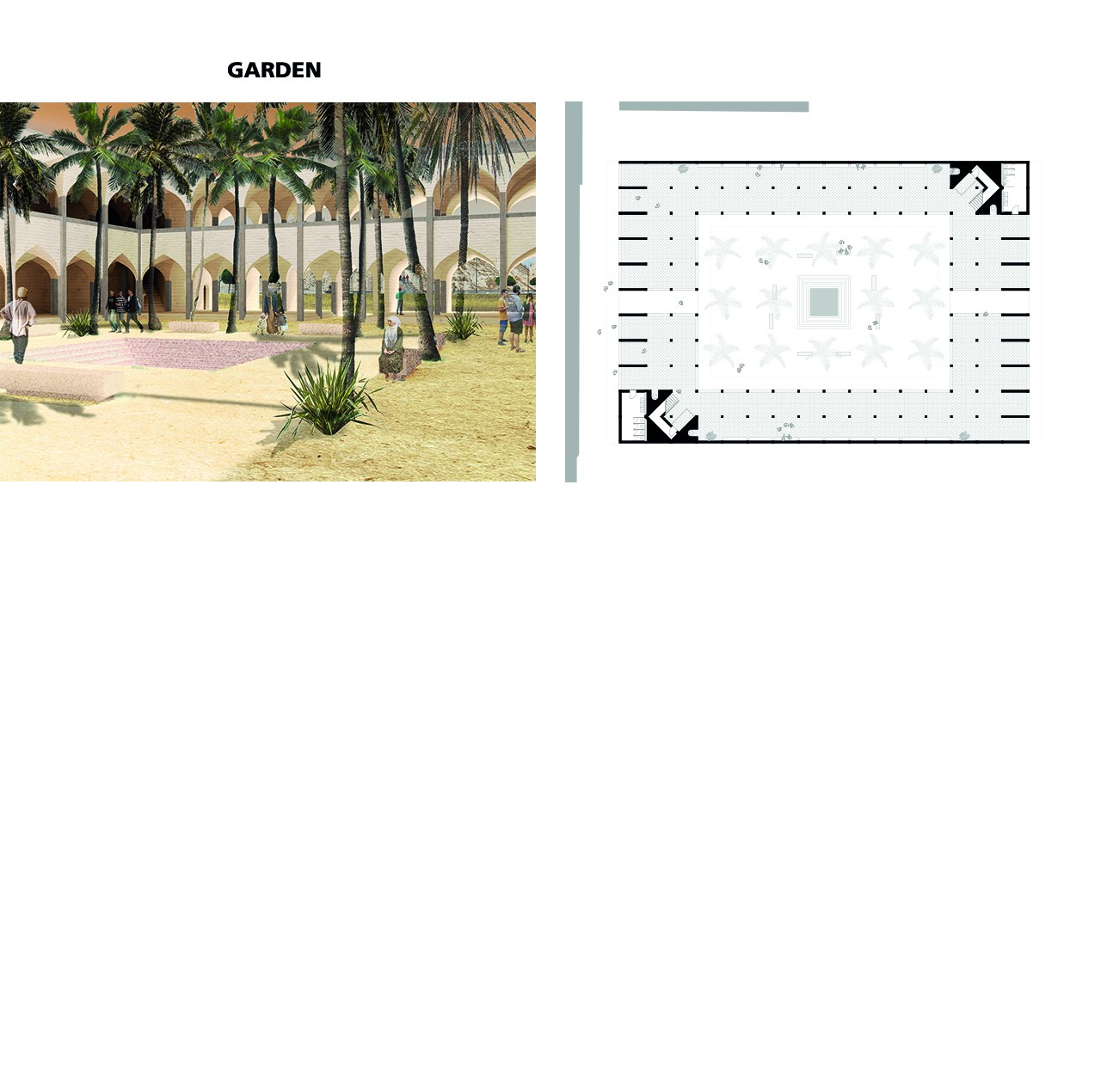
And at last, a garden with the sole purpose to recreate.
These 3 projects will show how versatile the proposal of the network of public spaces and its modular way of erection can be.
Sadly, this rich city underwent a dramatic change due to the Battle of Aleppo from 2012 to 2016. It suffered severe damage and the once brimming city soon went quiet.
After disasters like this, it is up to the architects to plan the recuperation of the city. They play an important role to make it easier for the inhabitants to repopulate the city. Therefore a strategy should be developed by which the city will regain its former glory.
The densely inhabited city with its Arabic atmosphere nourishes from the life in public spaces. The streets are crowded by people wanting to interact and exchange their thoughts and feelings. To cover this will of interaction, the patio acts as catalyser and depicts one of the main themes of Syrian architecture.
The extroverted behaviour of the people willing to exchange in introverted places will be transformed into a new structure that inherits the old spirit of Aleppo.
A infrastructure of public patios should revitalise the streets of Aleppo to take the first step in recreating normal social life. The once abandoned city will bloom again and resurrect from its debris.
Using the old concept of the caravanserai, a road station ,outside of towns, for the former tradesmen of the Silk Road, the public squares should guide the inhabitants through their city. Originally they were used to accommodate the tradesmen and their animals and served as meeting points for travellers, merchants, scientists and many other scholars who wanted to exchange knowledge and ideas, as well as discover new civilisations.
The inner-city stations, that emerged some centuries later, got in Persian often referred to as khan (Turkish han).
An example on how the integration of the new Khans can be performed, will be given by realising some new public places in the area of the old Souks. By pondering the interaction of all public areas it can be observed that this area mainly serves public needs.
On the debris of the old Khans the new ones will be (re-)constructed and serve one special need, concerning its location. Therefore 3 new Khans will be executed with further magnitude in grade of detailing.
A market will be erected with the original purpose of the Khan. Located in the center of the Souks it perfectly rehabilitates the surrounding shops.
A museum concerning the cultural heritage and the events that lead to this crisis will be located near the main street and guide people into the Souks.
And at last, a garden with the sole purpose to recreate.
These 3 projects will show how versatile the proposal of the network of public spaces and its modular way of erection can be.

- 00 - Description
- 01 - Perspective I
- 02 - Perspective II
- 03 - Perspective III
- 04 - Perspective IV
- 05 - Transformation
- 06 - Axonometry
- 07 - The Khan's of Aleppo
- 08 - Public Space
- 09 - Market & Museum
- 10 - Garden