
THE REBIRTH
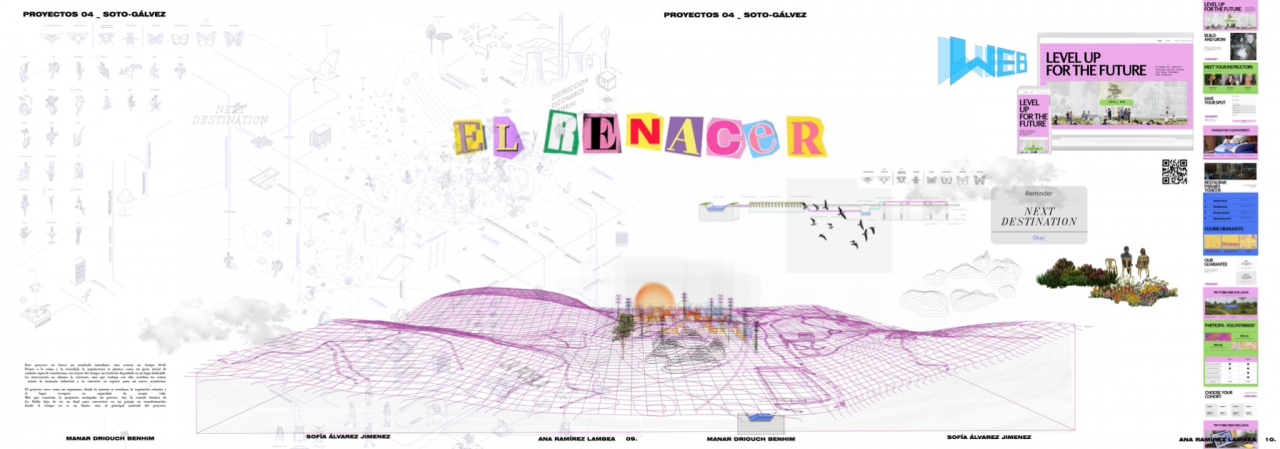
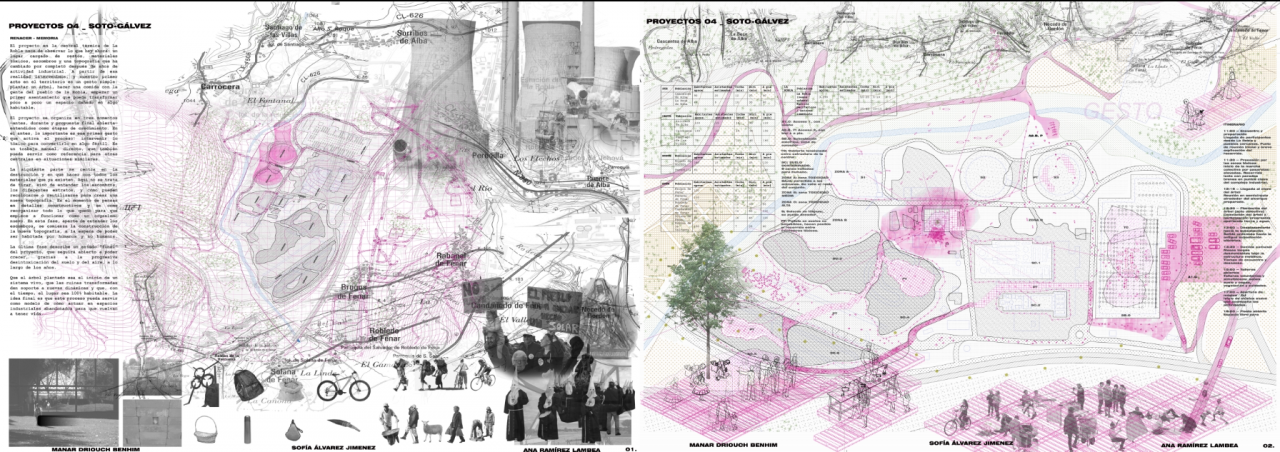
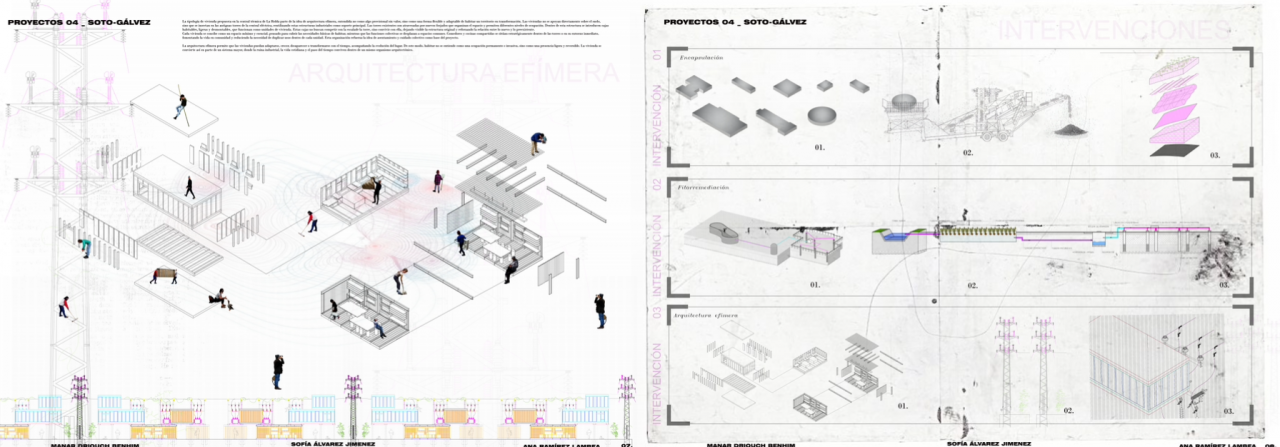
The project at the La Robla thermal power plant emerges from an observation of the site’s current condition: a landscape marked by industrial remains, toxic materials, debris, and a radically altered topography resulting from decades of activity. Rather than erasing this reality, the project takes it as its starting point. The first intervention is deliberately simple and symbolic: planting a tree, sharing a meal with the inhabitants of La Robla, and initiating a first settlement capable of gradually transforming a damaged territory into a habitable environment. The proposal is structured around three moments—before, during, and an open-ended final stage—understood as phases of growth. In the initial phase, the focus is on the activating gesture that begins the transformation process: intervening in toxic conditions to enable fertility. This phase involves direct, manual work, conceived not only as a site-specific action but also as a potential reference model for other power plants facing similar post-industrial conditions. The intermediate phase addresses destruction and the management of existing materials. Rather than removing or discarding debris, the project seeks to understand the rubble, its stratifications, and its potential for reuse. Through repositioning and recomposition, these materials contribute to the construction of a new topography. This stage emphasizes constructive details and the reorganization of remains so that the site can begin to function as a new organism. During this phase, the new topography is progressively formed, anticipating future habitation by both human and non-human agents. The final phase describes a provisional “final” state of the project, which remains open and capable of further evolution. Over time, the gradual detoxification of soil and air allows the site to become increasingly habitable. The initially planted tree becomes the origin of a living system; the transformed ruins support new spatial and ecological dynamics; and, ultimately, the site achieves full habitability. The project aims to function as a transferable model for the regeneration of abandoned industrial landscapes, proposing a process through which they can recover ecological, social, and spatial life.
- 00 - Description
- 01 - EL RENACER
- 02 - Initial gesture
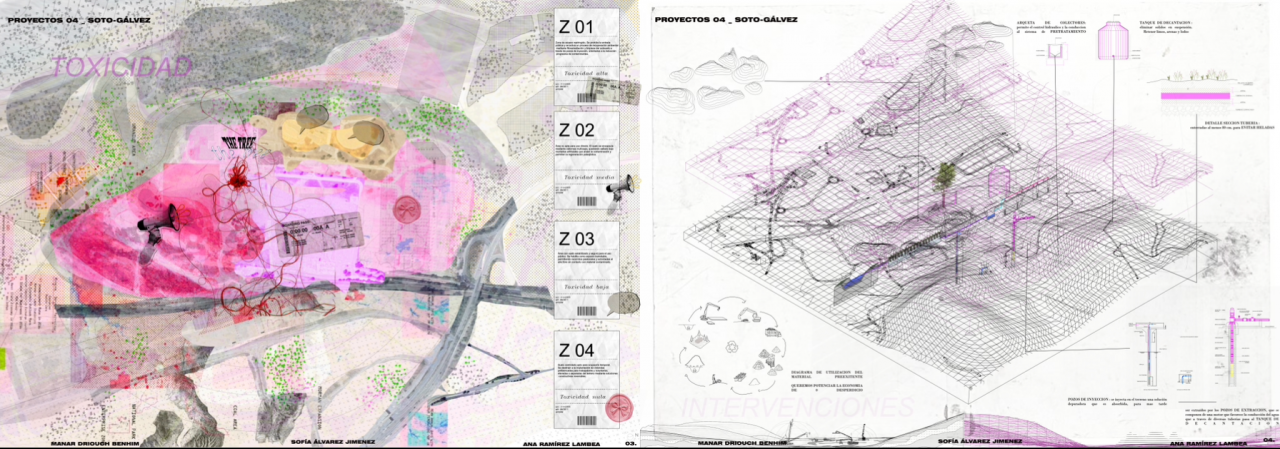
- 03 - Toxicity map
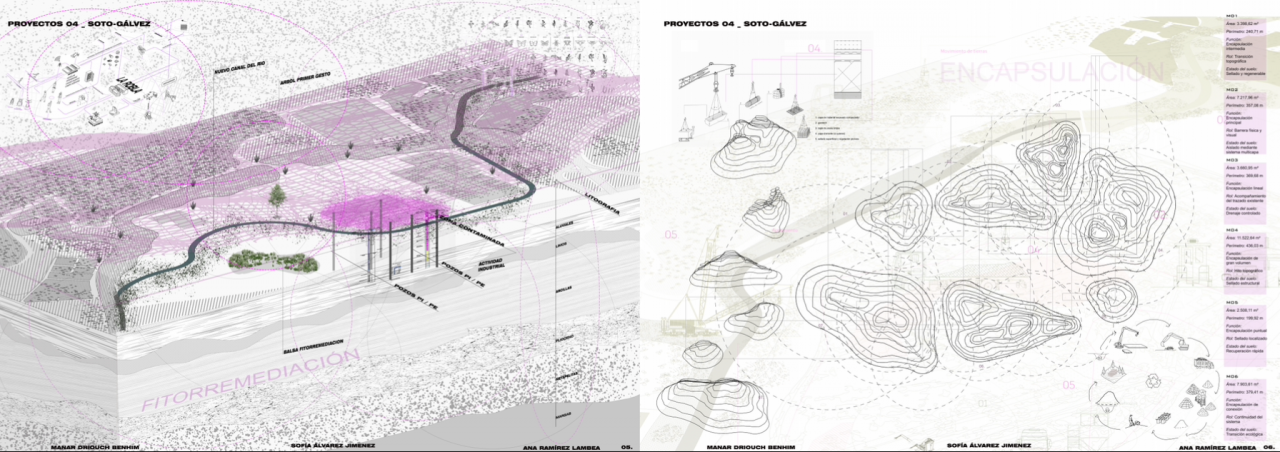
- 04 - Phytoremediation
- 05 - Ephemeral archi
- 06 - Video