
Through Identity
This project emerges from the idea of identity.
Not as a single, fixed identity, but as the coexistence of multiple identities within the same system.
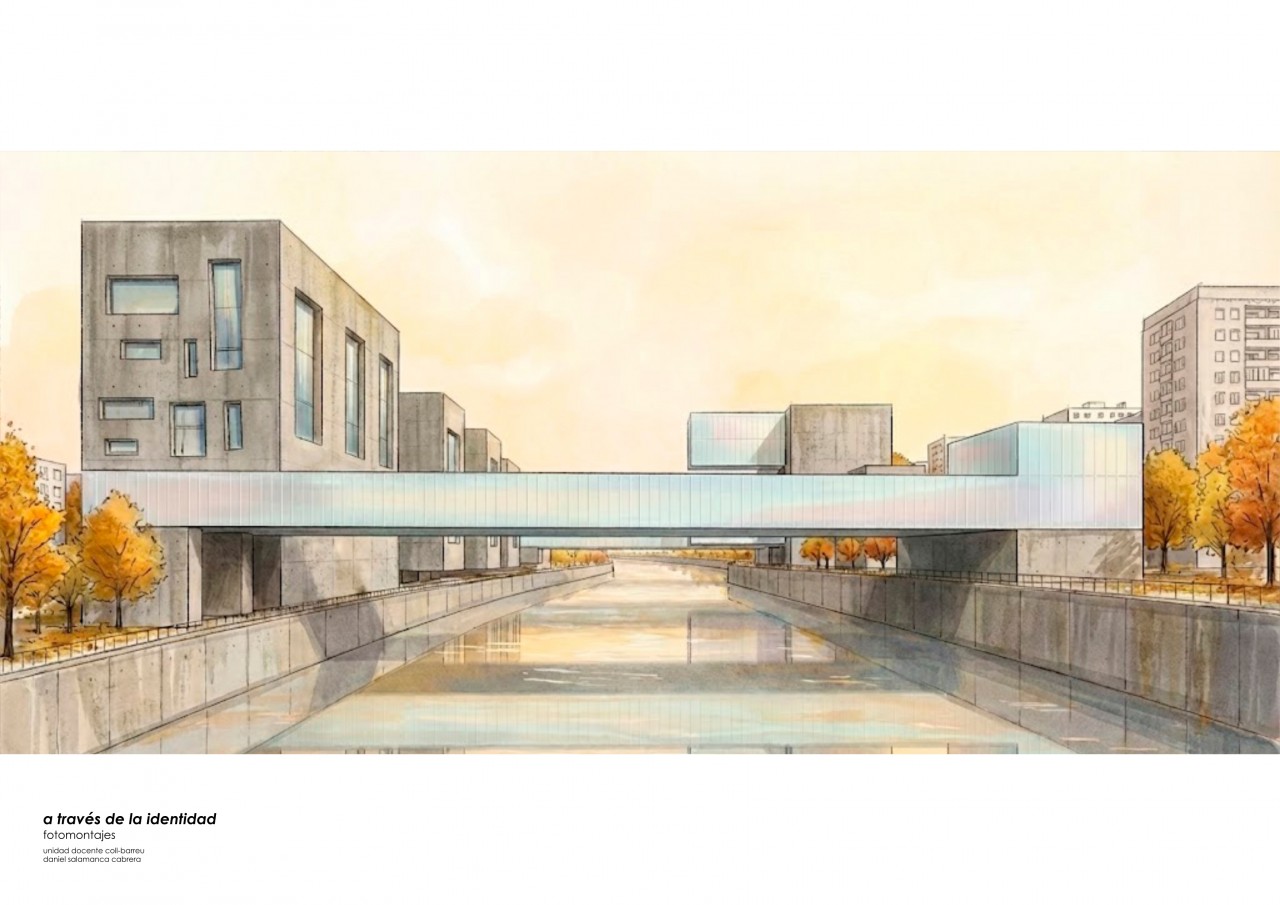
The building does not seek to impose itself, but to connect and inhabit a place that already has a strong character: the Manzanares River and its surrounding slopes.
The Manzanares is understood not only as infrastructure or a void, but as an element with its own identity, structuring the territory.
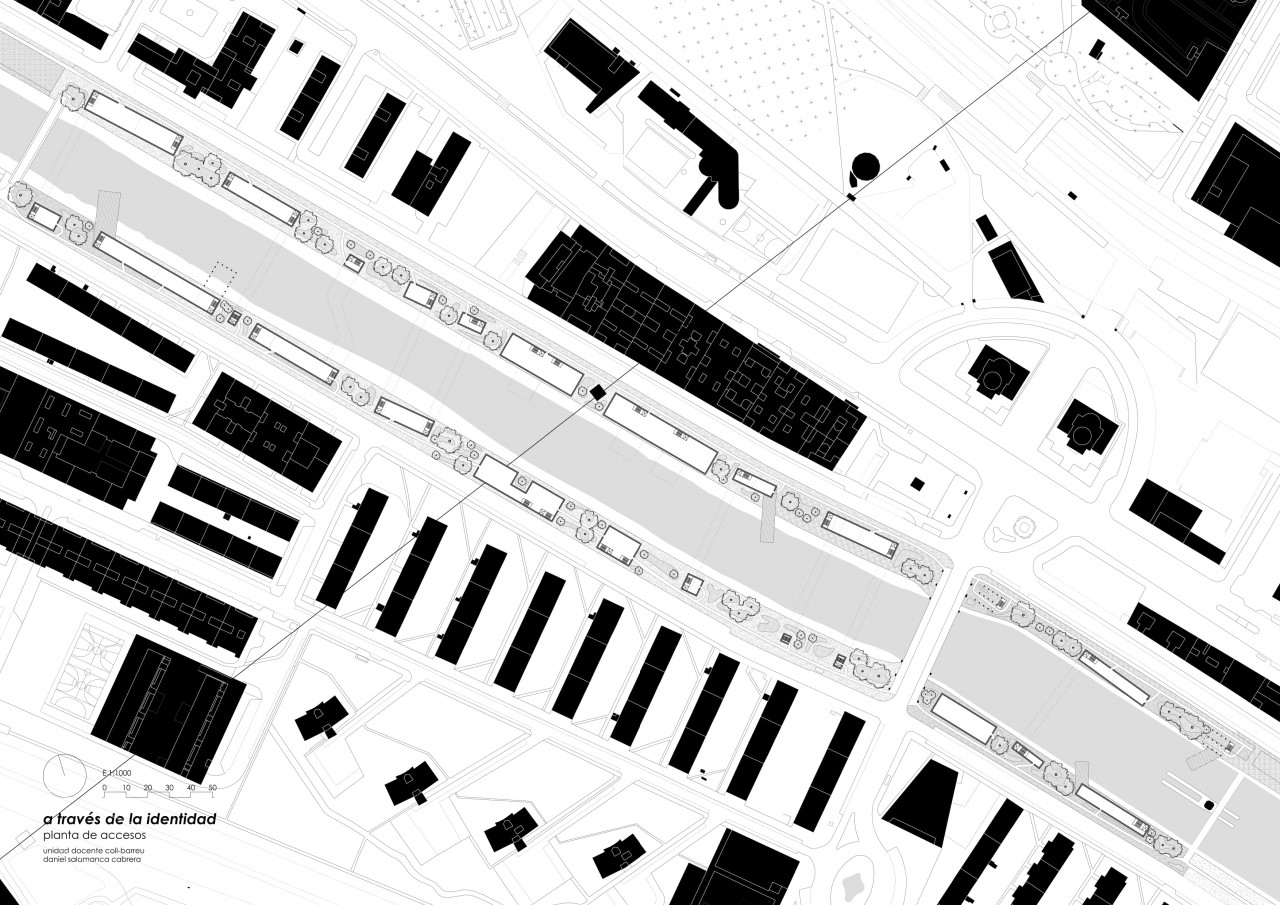
The project is located between the river and its slopes, working precisely with this intermediate, transitional condition rather than as an isolated object.
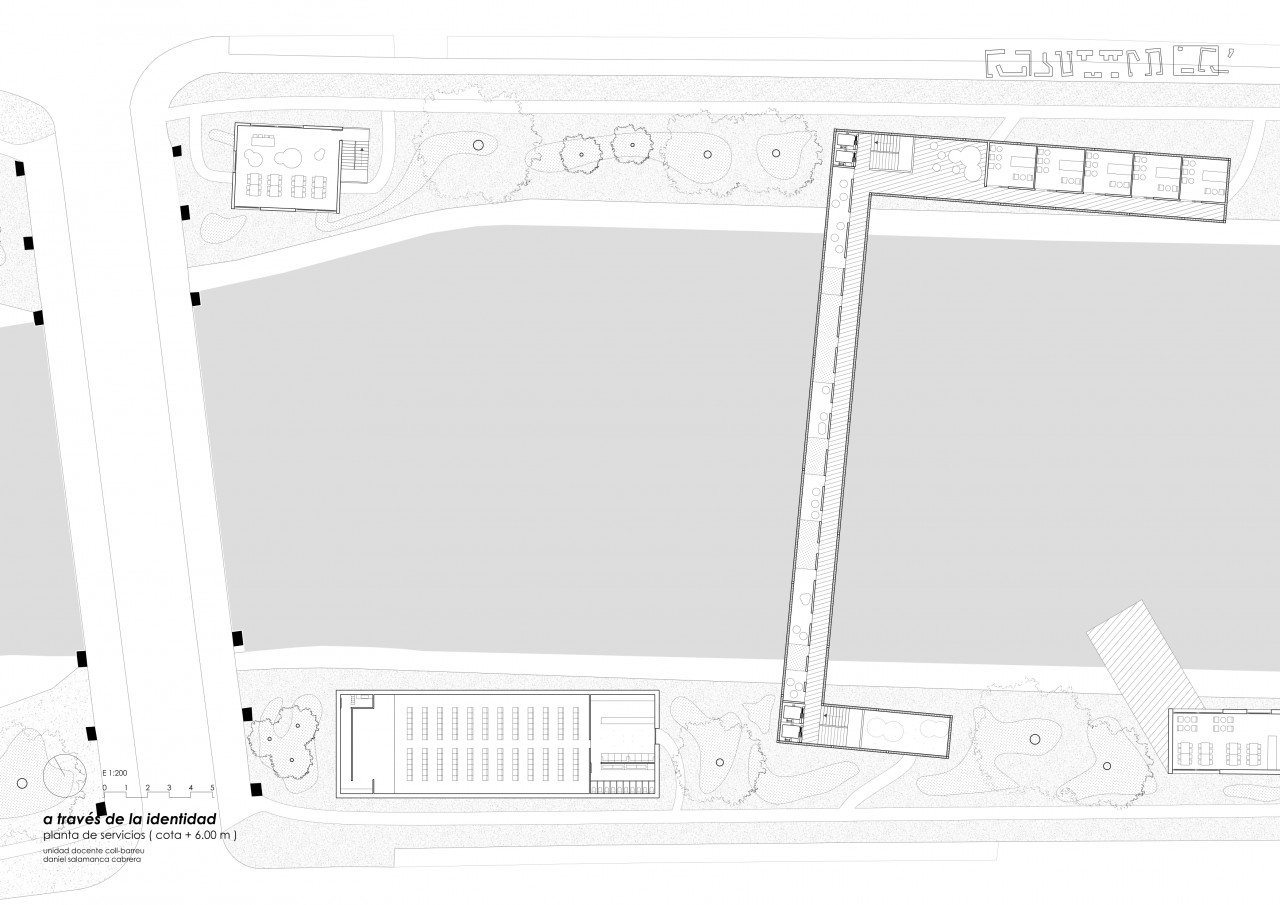
The building does not interrupt the river; instead, it accompanies it, crosses it, and makes it inhabitable.
The building is organized as a set of pieces that share a common logic, yet are not identical to one another.
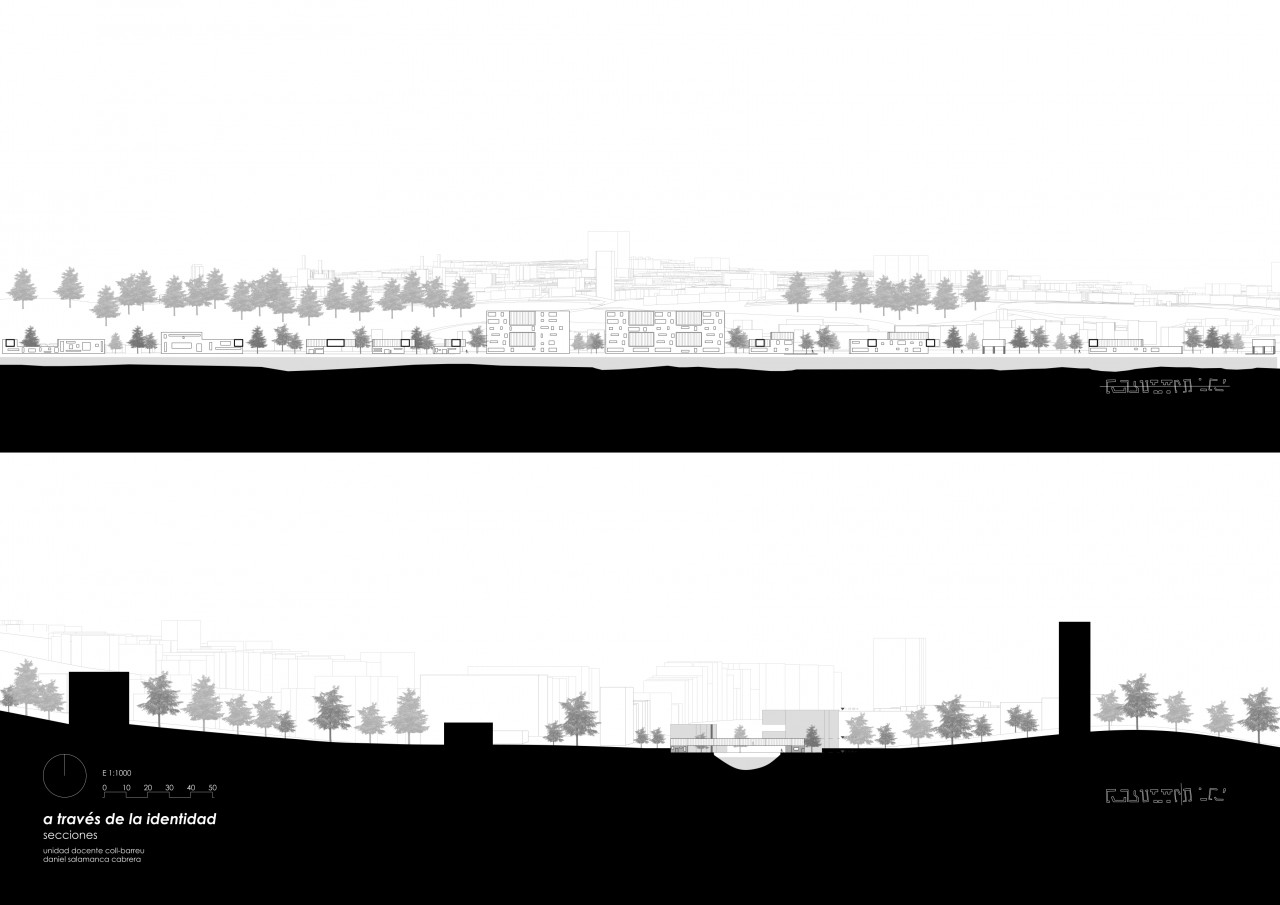
Each part preserves its own identity, shaped by its position and its relationship with the ground, the water, and the topography.
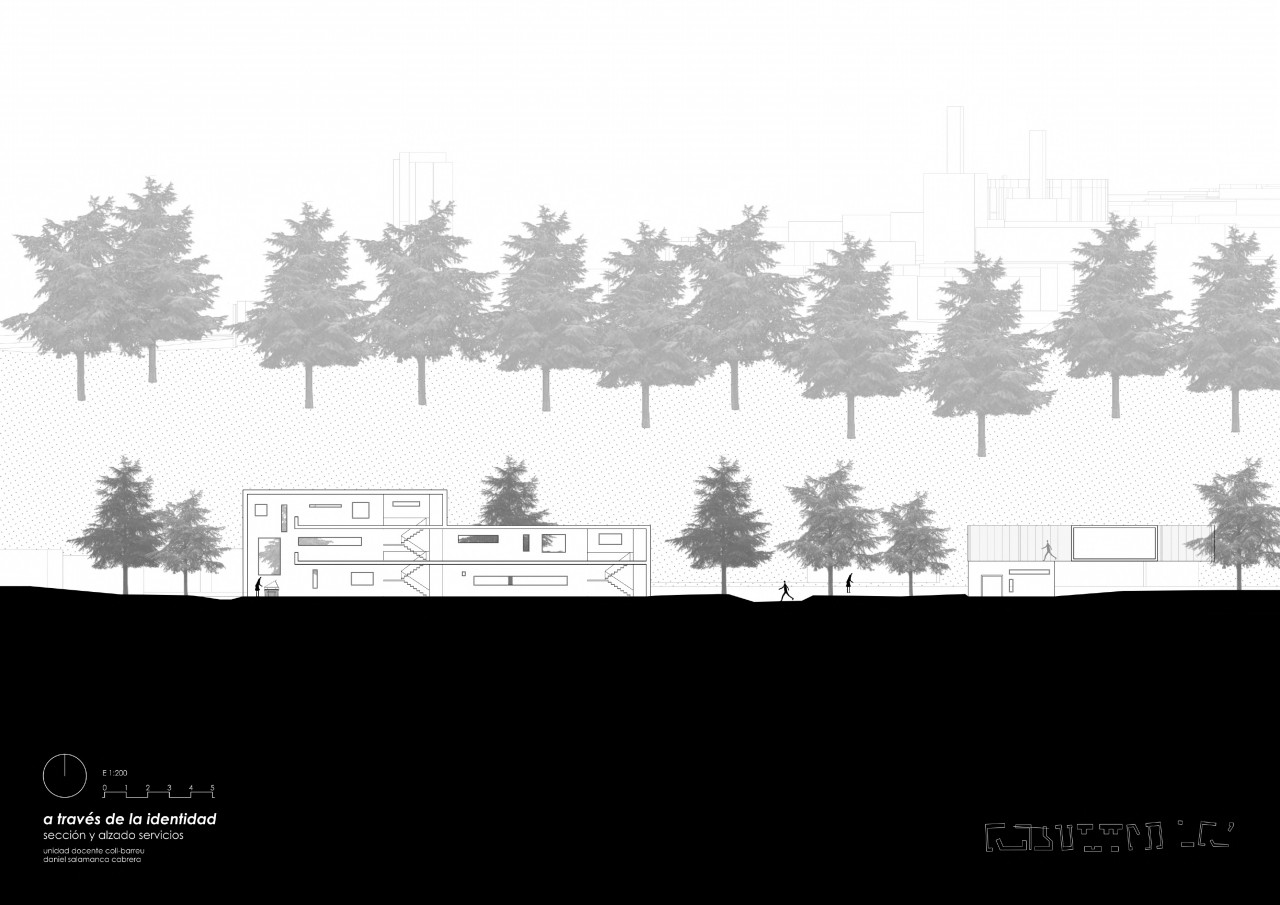
Repeated elements as structure and construction system provide unity to the whole, while each piece adapts to the place it occupies, in a way similar to the diversity found in the river landscape itself.
In this way, the project does not propose a closed form, but an open system capable of embracing the diversity of the place.
The building acts as a mediator between the river, the slopes, and the people, allowing different identities to coexist without losing their singularity.
Rather than seeking an iconic image, the project proposes an identity constructed from the place itself.
Not as a single, fixed identity, but as the coexistence of multiple identities within the same system.
The building does not seek to impose itself, but to connect and inhabit a place that already has a strong character: the Manzanares River and its surrounding slopes.
The Manzanares is understood not only as infrastructure or a void, but as an element with its own identity, structuring the territory.
The project is located between the river and its slopes, working precisely with this intermediate, transitional condition rather than as an isolated object.
The building does not interrupt the river; instead, it accompanies it, crosses it, and makes it inhabitable.
The building is organized as a set of pieces that share a common logic, yet are not identical to one another.
Each part preserves its own identity, shaped by its position and its relationship with the ground, the water, and the topography.
Repeated elements as structure and construction system provide unity to the whole, while each piece adapts to the place it occupies, in a way similar to the diversity found in the river landscape itself.
In this way, the project does not propose a closed form, but an open system capable of embracing the diversity of the place.
The building acts as a mediator between the river, the slopes, and the people, allowing different identities to coexist without losing their singularity.
Rather than seeking an iconic image, the project proposes an identity constructed from the place itself.





- 00 - Description
- 01 - Location
- 02 - Building Access and
- 03 - Sections
- 04 - Axonometric View
- 05 - Public Uses
- 06 - Sections
- 07 - Residential Units
- 08 - Sections
- 09 - View from the River
- 10 - Aerial View