
Un corredor POS-Vasariano
Un corredor POS-Vasariano para la Gran Vía de Madrid.
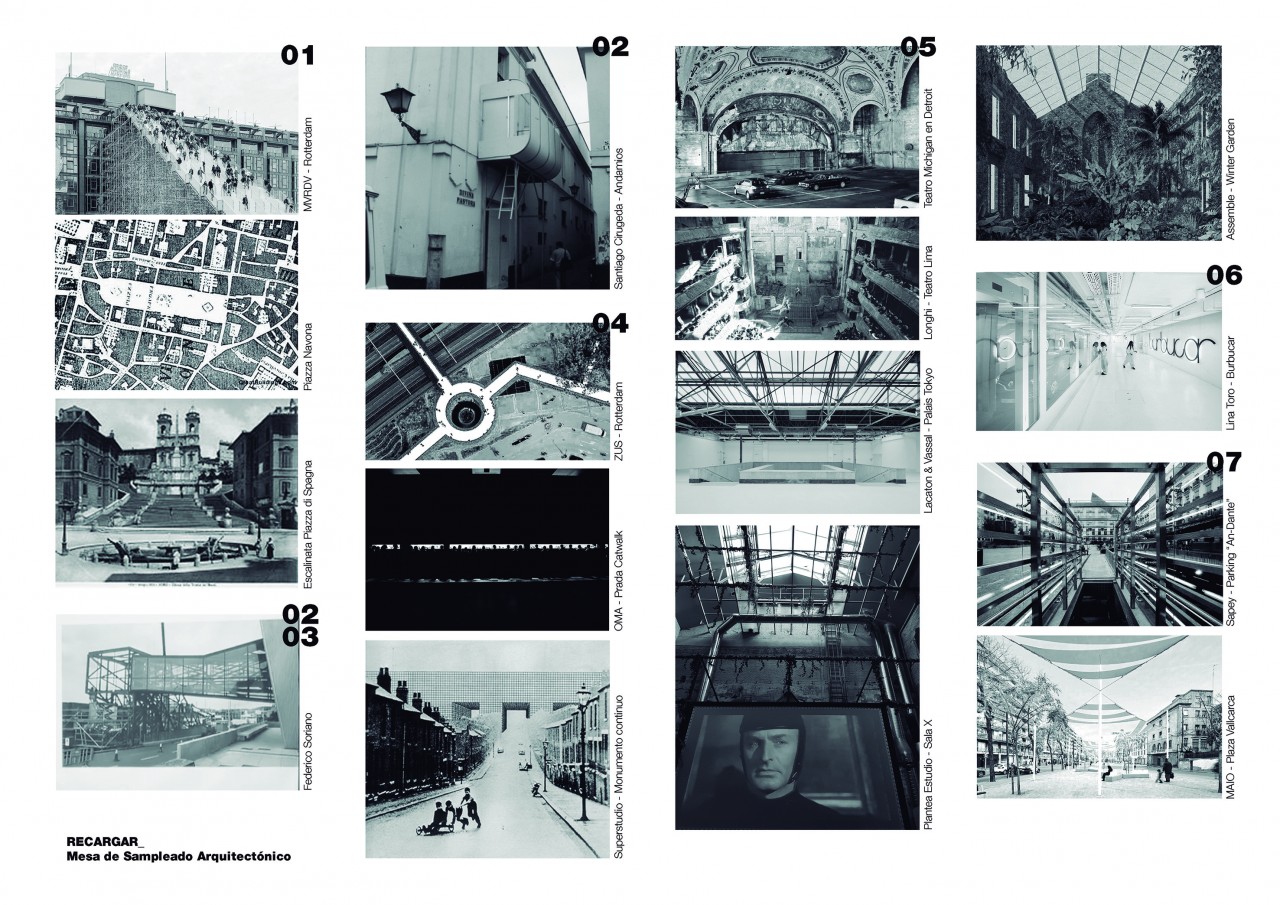
Today, architect`s work should resemble more the work of a DJ than that of a creator inspired by a kind of grace.
This project arises under this hypothesis. Taking all the architectural preexistence, not only the one from Gran Via´s context, but also the display of architectural theories and objects available to the architect nowadays, reorganizing all this information into a precise and forceful urban strategy. The result is a public corridor that crosses the Gran Vía, and sews Universidad and Sol neighborhoods.
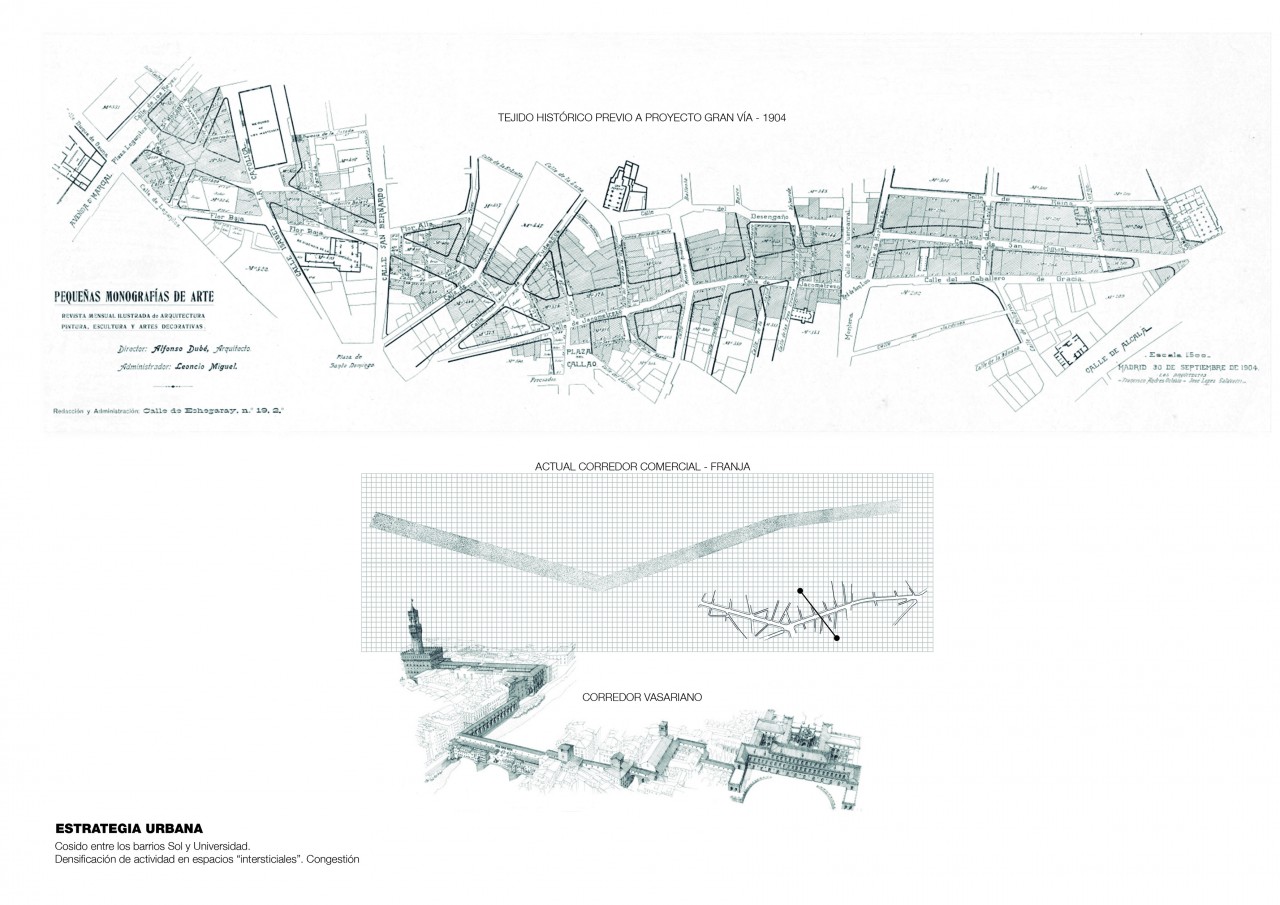
From a 1904 year´s urban plan, in which the future Gran Vía project is described, the dense and "congested" pattern, typical of a historic urban area, is detected. The project densifies by including a program of new public, cultural, residential and mobility nodes.
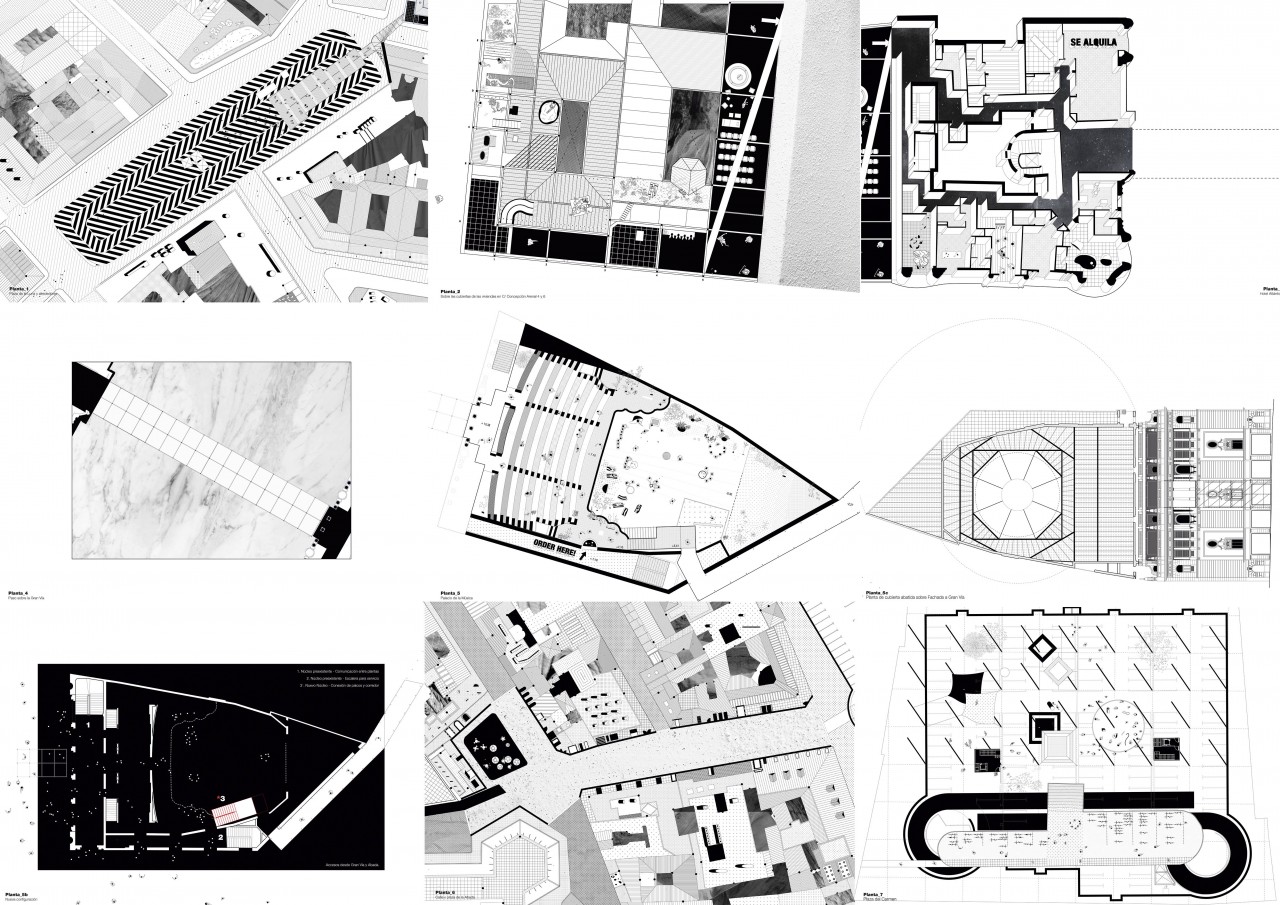
This line made of public spaces cuts across tranversely Gran Vía, that is, it crosses the current commercial and unidirectional strip that this emblematic street of Madrid entails. It folds and unfolds, adapting to the morphology of the affected buildings, relying on them and transforming their use topologically. A corridor that is based on the resources used by Vasari in Florence, but reversing the private condition to a public one.
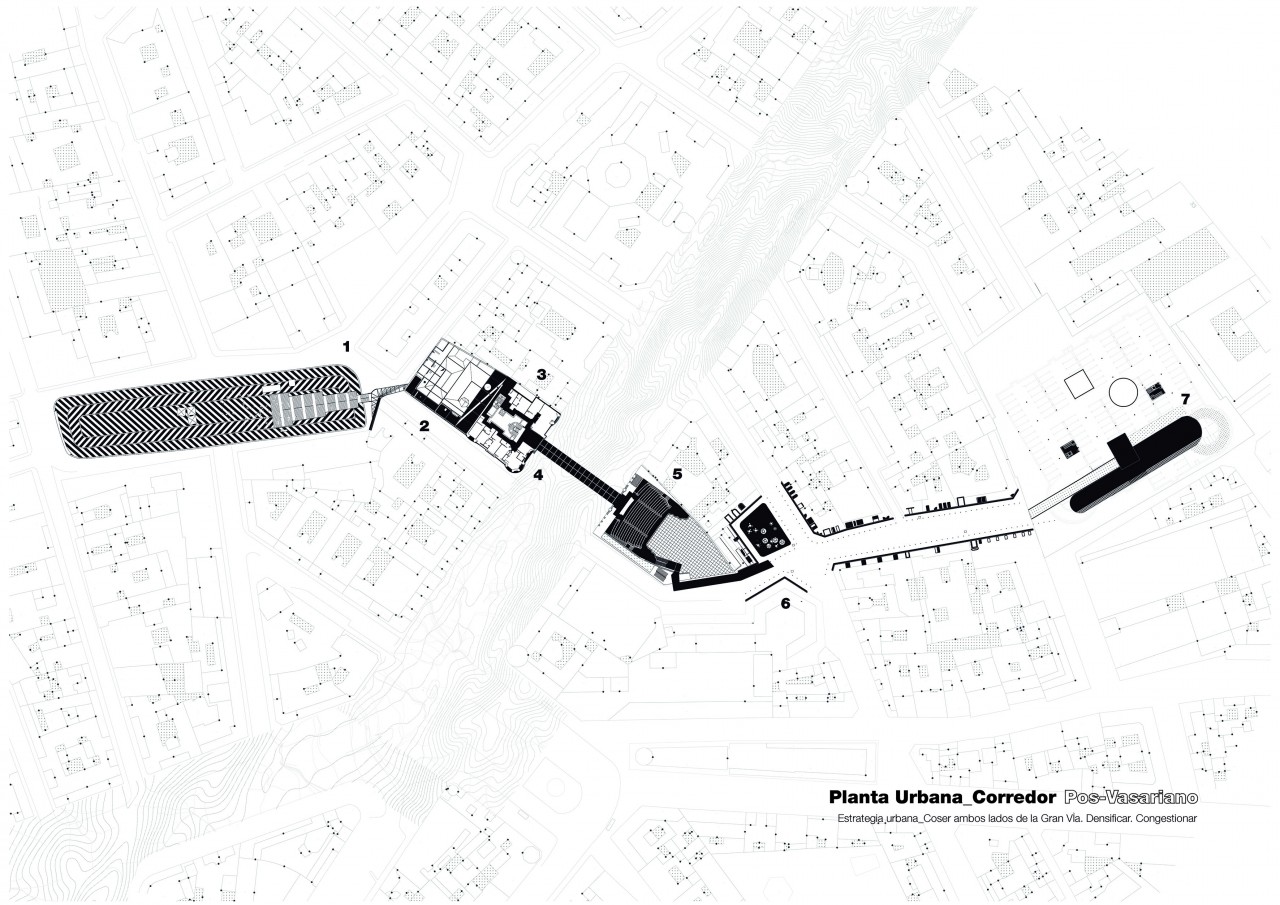
The corridor is framed between the Plaza de la Luna and the Plaza del Carmen. There are 7 seven types of architectural intervention. To systematize this strategy, 7 verbs are used. Each of them supposes a theoretical vector that, in short, tries to apply the concepts of "decrease" to the project.
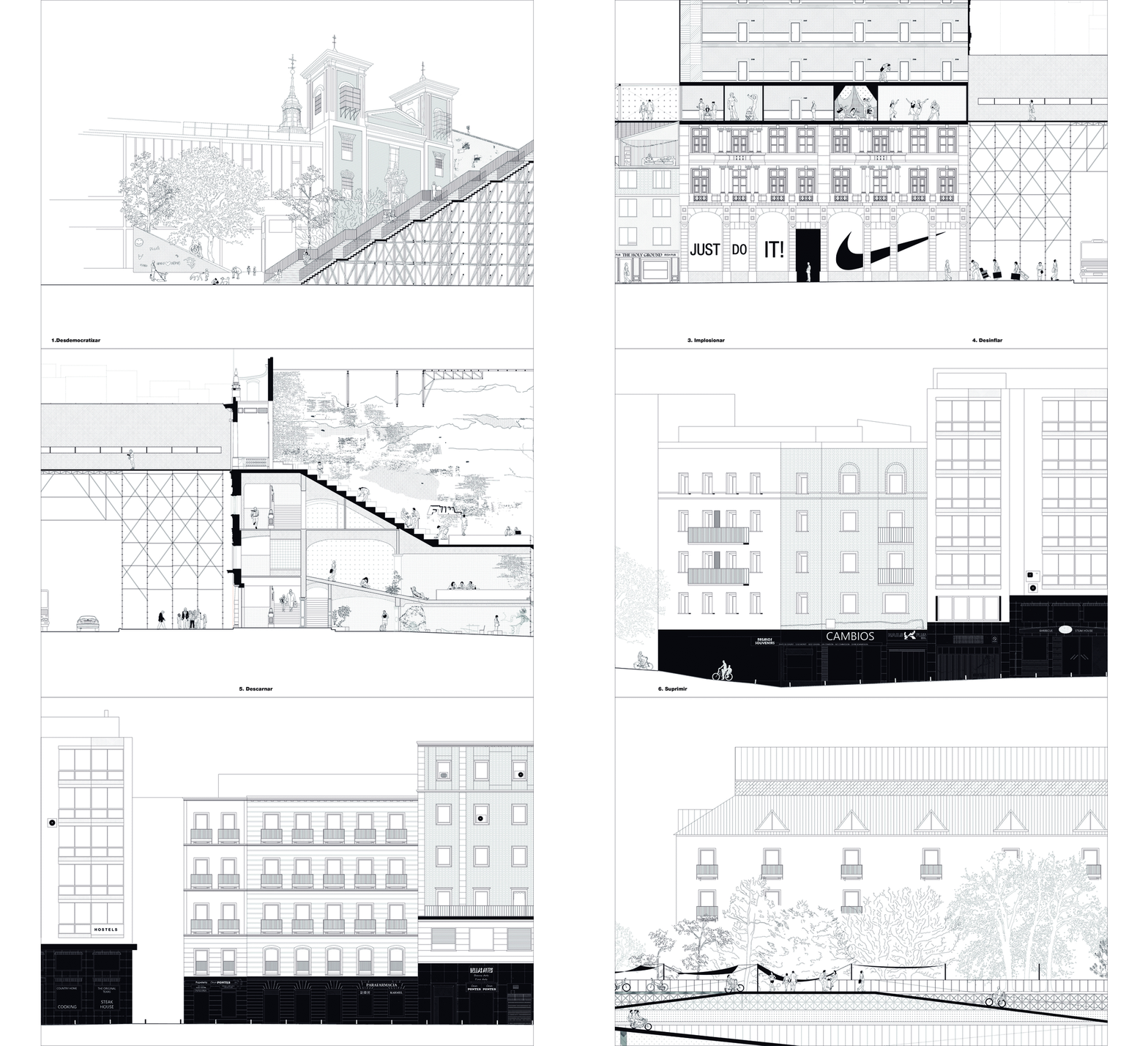
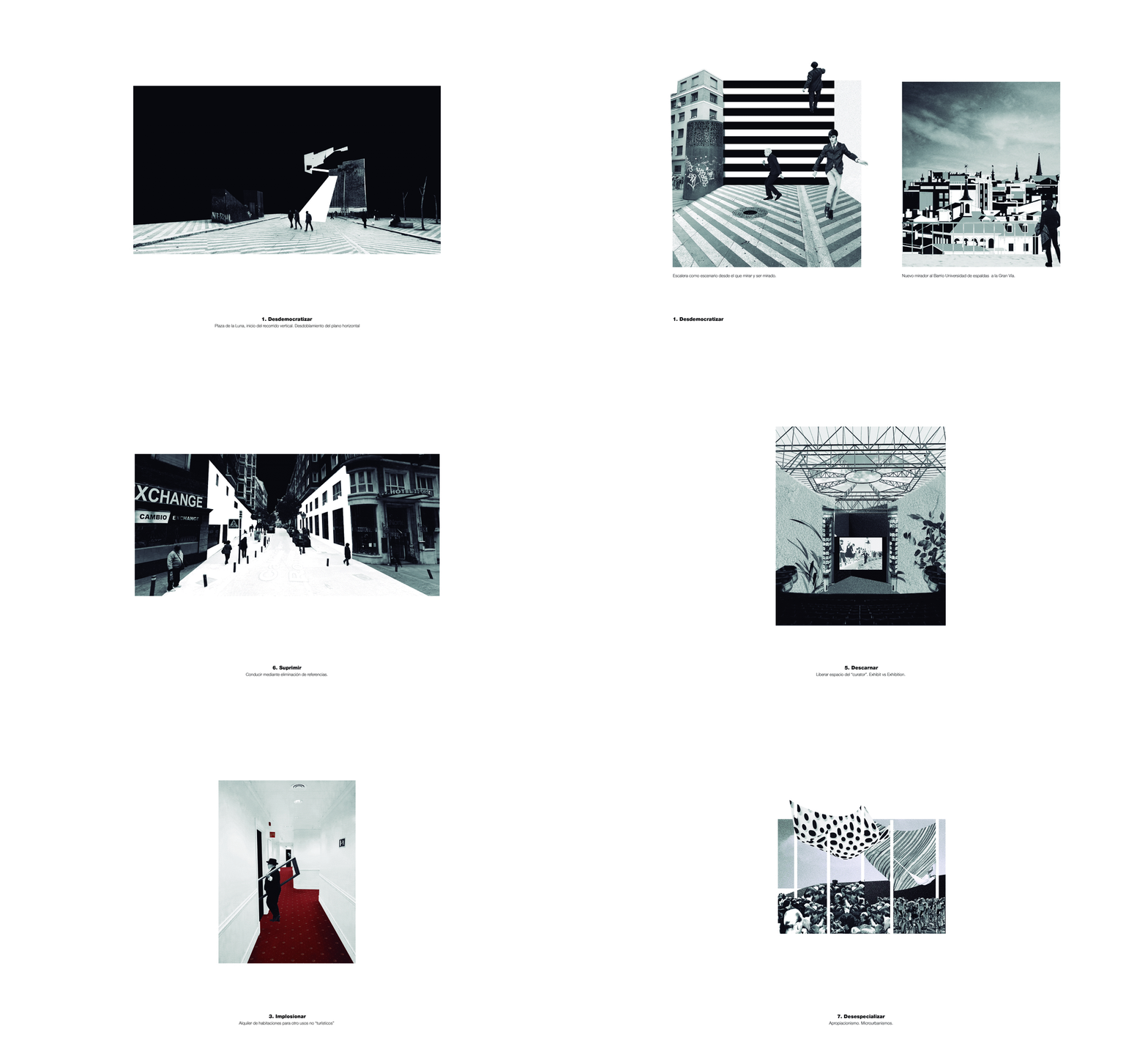
1. Dedemocratize: the “Plaza de la Luna” through a 15-meter high staircase. Beginning of the route, unfolding the horizontal street plan towards a new plan of public activity. The staircase as a stage from which to see and be seen.
2. Discomfort: allows the spontaneous increase of residential soil.
3. Implode: a program to rent spaces for non-tourist uses is introduced through the rear façade of the “Hotel Atlántico”.
4. Deflate: the Gran Vía through a new monument. Connection between the Hotel Atlántico and the “Palacio de la Música”.
5. Decarnate: free from the curator. The emptiness of the “Palacio de la Música” is transferred to the Gran Vía as a public Foyer. Cultural space for polítical conflict.
6. Remove: Abada street references are removed through the use of white paint. Visually connect the route and recover traditional shops.
7. Despecialise: car parking under the Plaza del Carmen, adding a cycling mobility node. Bicycle parking is associated with a grid of 8x8 meters, for an uncertain use of public type. Free appropriation Microurbanism
Today, architect`s work should resemble more the work of a DJ than that of a creator inspired by a kind of grace.
This project arises under this hypothesis. Taking all the architectural preexistence, not only the one from Gran Via´s context, but also the display of architectural theories and objects available to the architect nowadays, reorganizing all this information into a precise and forceful urban strategy. The result is a public corridor that crosses the Gran Vía, and sews Universidad and Sol neighborhoods.
From a 1904 year´s urban plan, in which the future Gran Vía project is described, the dense and "congested" pattern, typical of a historic urban area, is detected. The project densifies by including a program of new public, cultural, residential and mobility nodes.
This line made of public spaces cuts across tranversely Gran Vía, that is, it crosses the current commercial and unidirectional strip that this emblematic street of Madrid entails. It folds and unfolds, adapting to the morphology of the affected buildings, relying on them and transforming their use topologically. A corridor that is based on the resources used by Vasari in Florence, but reversing the private condition to a public one.
The corridor is framed between the Plaza de la Luna and the Plaza del Carmen. There are 7 seven types of architectural intervention. To systematize this strategy, 7 verbs are used. Each of them supposes a theoretical vector that, in short, tries to apply the concepts of "decrease" to the project.
1. Dedemocratize: the “Plaza de la Luna” through a 15-meter high staircase. Beginning of the route, unfolding the horizontal street plan towards a new plan of public activity. The staircase as a stage from which to see and be seen.
2. Discomfort: allows the spontaneous increase of residential soil.
3. Implode: a program to rent spaces for non-tourist uses is introduced through the rear façade of the “Hotel Atlántico”.
4. Deflate: the Gran Vía through a new monument. Connection between the Hotel Atlántico and the “Palacio de la Música”.
5. Decarnate: free from the curator. The emptiness of the “Palacio de la Música” is transferred to the Gran Vía as a public Foyer. Cultural space for polítical conflict.
6. Remove: Abada street references are removed through the use of white paint. Visually connect the route and recover traditional shops.
7. Despecialise: car parking under the Plaza del Carmen, adding a cycling mobility node. Bicycle parking is associated with a grid of 8x8 meters, for an uncertain use of public type. Free appropriation Microurbanism

- 00 - Description
- 01 - Urban Pre-Existence
- 02 - Sampling Table
- 03 - Urban Plan
- 04 - Longitudinal Section
- 05 - Plans
- 06 - Collages
- 07 - Axonometry