
Urban Dualism
The project takes place in the city of Madrid, specifically in the surroundings of the La Riviera concert hall. In the surroundings there are several outstanding elements, such as the Segovia Bridge and the buildings by Miguel Fisac and Eduardo Torroja. The natural element that most characterises the project area is the Manzanares River, which crosses the city of Madrid on a north-south axis. If we broaden the scale of observation, we can appreciate elements of incredible architectural and landscape interest. The Royal Palace, the Cathedral of Santa María la Real de la Almudena, the Royal Collections Gallery on one side, the Casa de Campo and the Campo del Moro on the other.
The element that most characterises the area closest to the project site is the Manzanares River. This element caught my attention from the first inspection in situ. Making the river an element of the project was the starting point of my analysis of the context. It is interesting to note the relationships it establishes with the architectural and natural elements. The river shapes the buildings and is in harmony with the surrounding nature. Furthermore, the river is the element around which the Madrid Rio urban regeneration and revitalisation project was developed. My design intervention aims to support and represent this operation. In this sense, the tower I am presenting is intended to be a landmark for the whole city and a symbol of the Madrid Río operation.
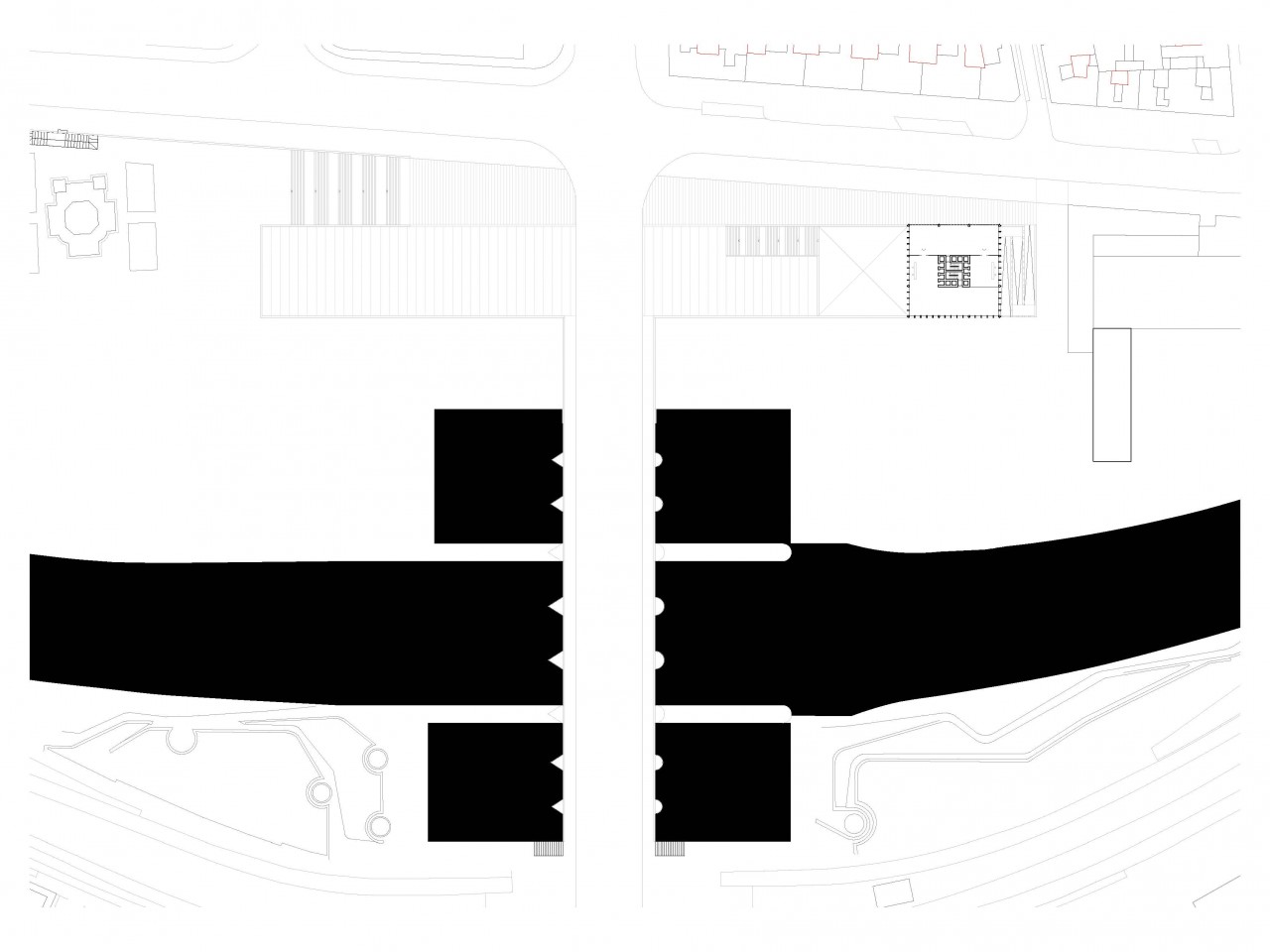
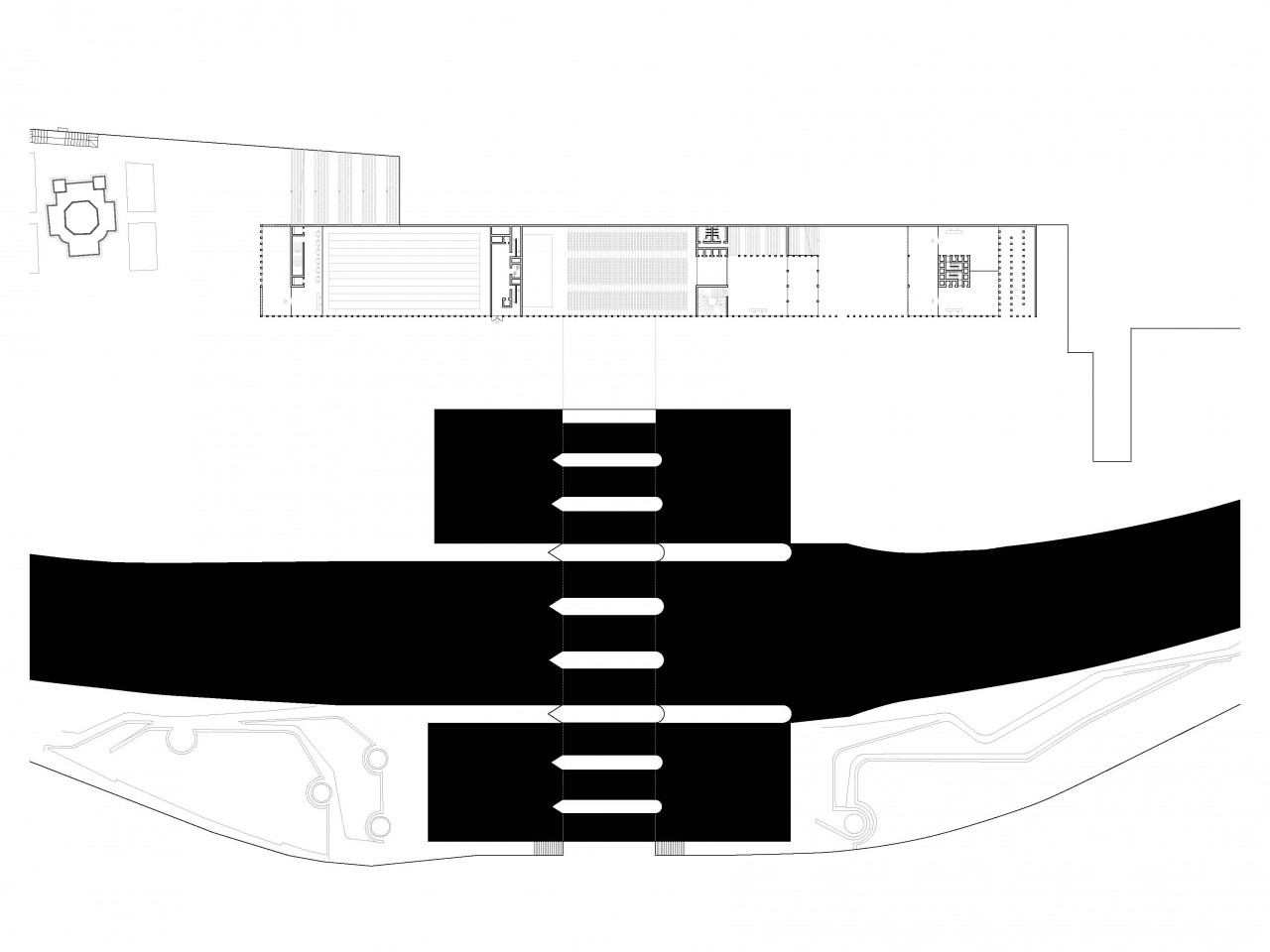
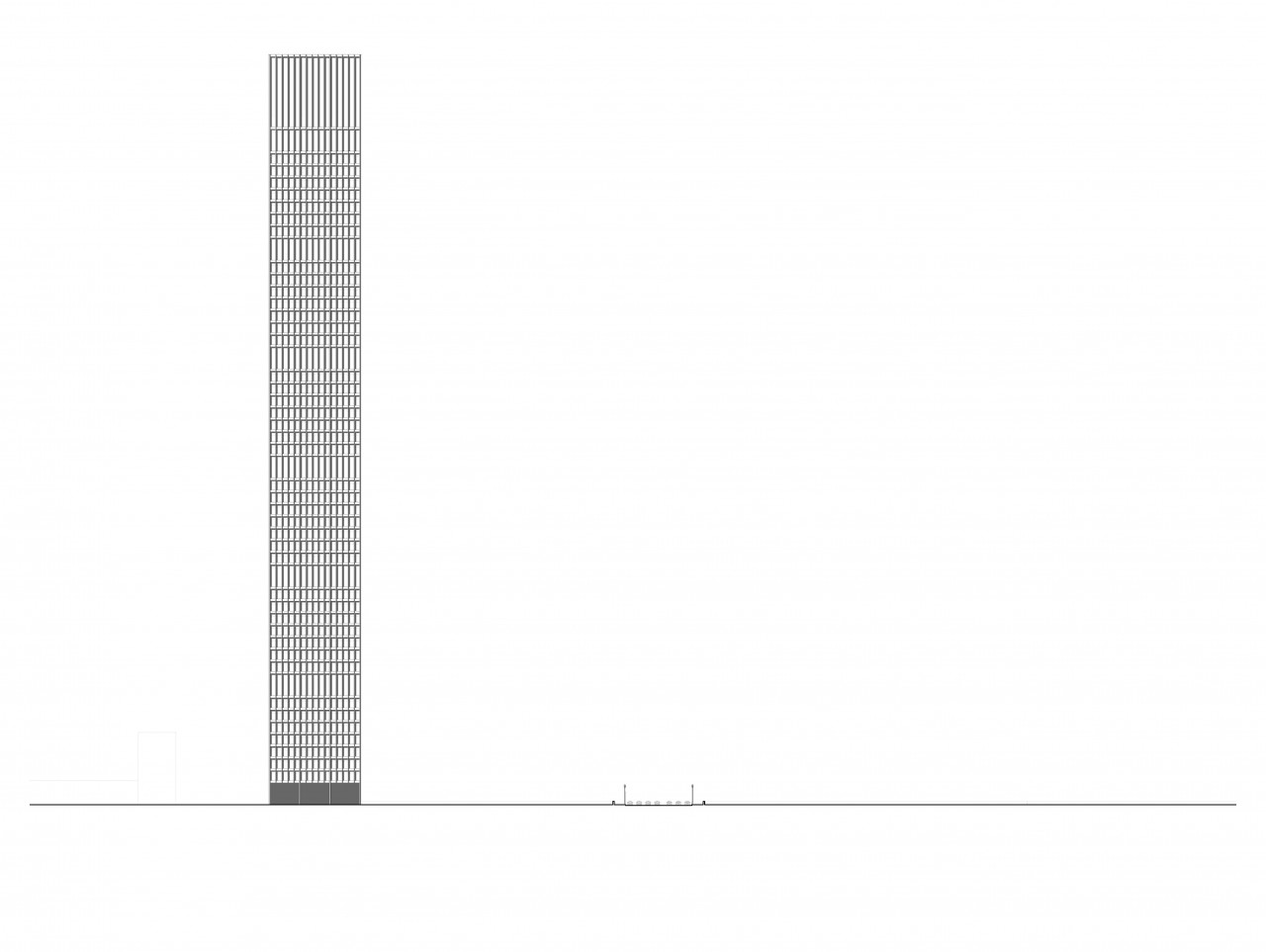
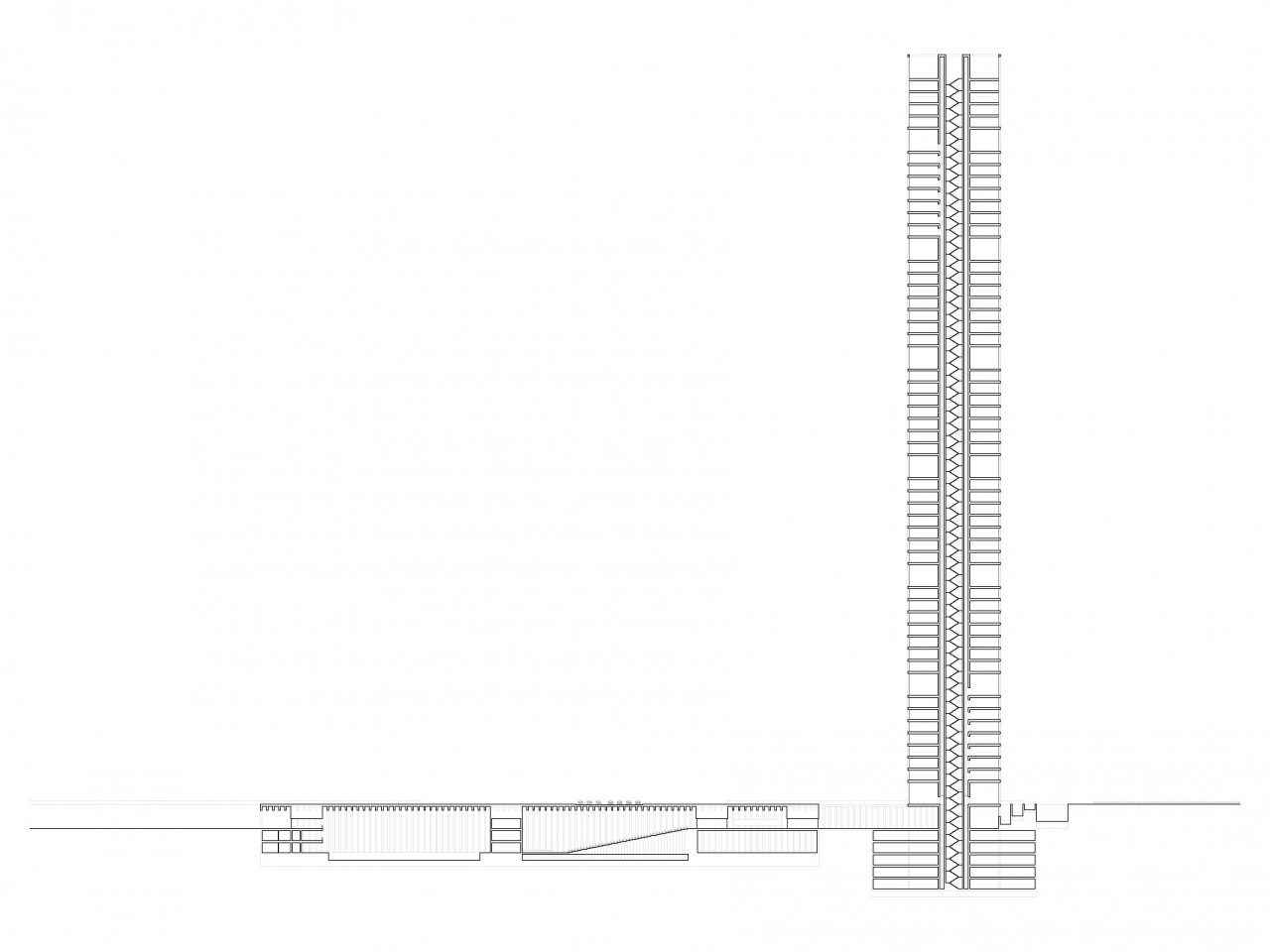
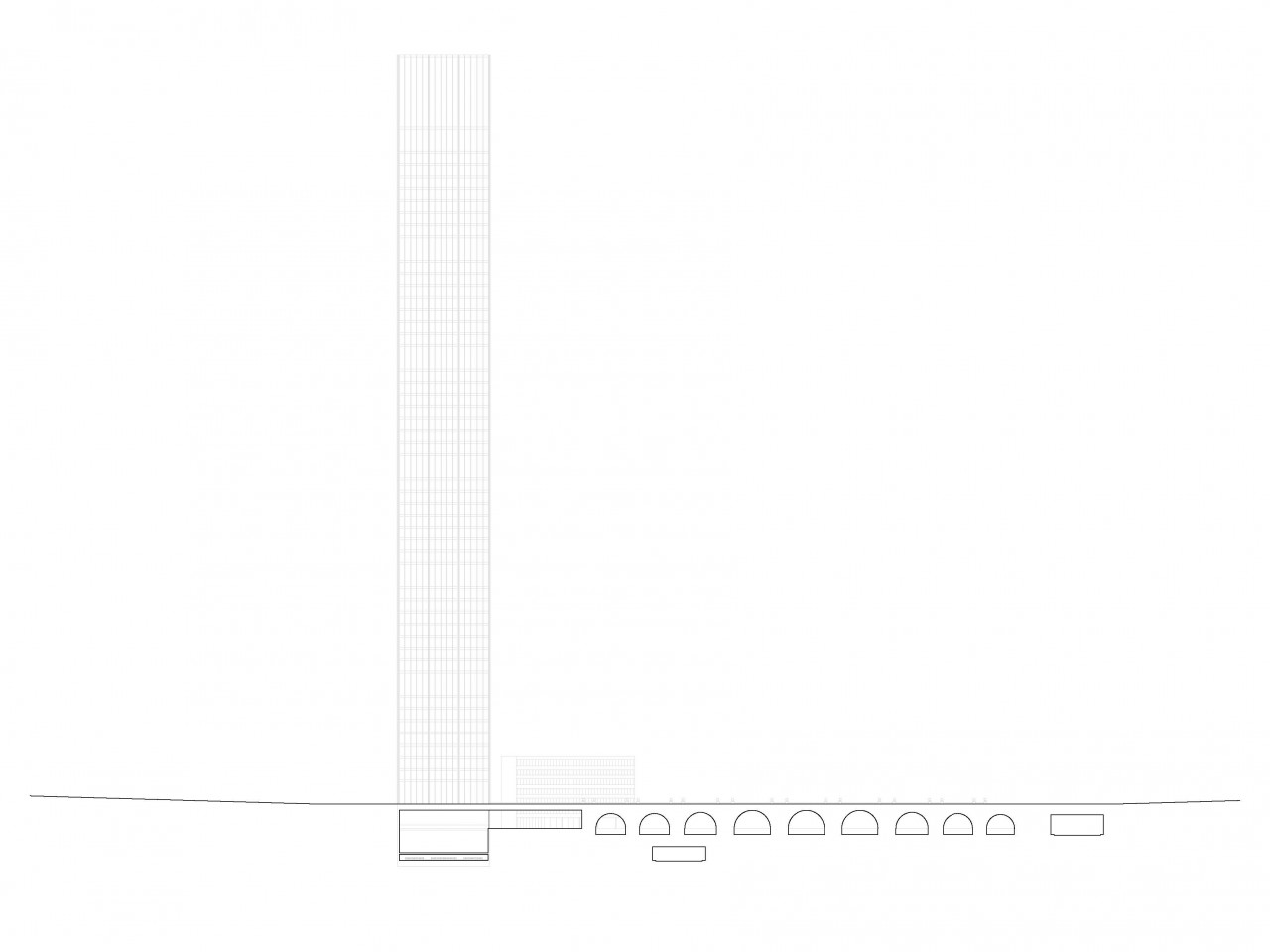
Given that the project strategy, in my idea, should be in total harmony and continuity with the Madrid Río operation, elements were needed to give shape to the idea that would root the concept to the project area. In this sense, the Segovia Bridge was immediately the unit of measurement for the project. I realised how this incredible architectural and symbolic palimpsest could uniquely resolve the project's first approach. In fact, the bridge is culturally a paradigm that connects one part to another. Because of its location and orientation, it is situated transversally to the Manzanares River, thus connecting the two ends already united by the element of water. Having reached this point in the design, and having realised the complexity of the functional programme required, the intention was to try to resolve it as clearly as possible, radicalising the proposed themes. The most rational response to the functional programme was to divide all the public functions from the private ones. The response to this was to place all the private functions inside the tower and all the necessary public functions on a large plinth. From the outset, an attempt was made to find total clarity and correspondence between function and composition. Thus, the answer of a private tower and a public plinth seemed to support this clarity. Once these initial doubts in the approach to the project had been dispelled, the element of the bridge came to the aid of the project, both by reinforcing the insertion of the project in the site and by its magnificent proportions. The Segovia Bridge, including the contact with the Paseo de la Virgen del Puerto and the Paseo de la ermita del Santo, measures 31 x 248 metres. The proportional ratio is precisely 1:8. After all these analyses and reflections, considering that the project strategy envisaged a base and a skyscraper, the idea of playing compositionally with the volume of the bridge immediately emerged. The project so acquires a volumetry that sees the Bridge, the skyscraper and the plinth as the three geometric axes of its essence. In this way, the project rigidly assumes the measurements of the bridge and makes them its own. The skyscraper will have a height of 248 m and a floor plan of 31 x 31 m. The plinth will have a length of 248 m and a floor plan of 31 m. Once the geometries and measurements of the project had been established, the research was oriented towards the orientation and placement of the volumes in the physical context. Here again, a clear response was sought that would allow the intentions to be easily understood. The project is intended to be programmatically situated in continuity with the Madrid Río operation, so that in terms of all the public functions, and therefore the base, it was decided to situate it parallel to the Manzanares River and therefore perpendicular to the Segovia Bridge. The skyscraper, in this trihedral composition, is placed as an appendix to the base, becoming a symbol of the urban regeneration carried out by the Madrid Río operation.
Once the orientations of the axes of the project have been defined, it remains to establish the relationship that the project establishes with the river and the road transversal to the bridge. In this sense, it has been decided to place the project at the level of the road and to stand back from the river, thus making a major effort in terms of public space. Considering the Madrid Río operation as a generator of public space where there was none before, we are trying to do the same. Therefore, the withdrawal of the building towards the river must be read in this key. The project aims to be an urban intervention in itself and to improve light mobility by favouring pedestrian movements.
The element that most characterises the area closest to the project site is the Manzanares River. This element caught my attention from the first inspection in situ. Making the river an element of the project was the starting point of my analysis of the context. It is interesting to note the relationships it establishes with the architectural and natural elements. The river shapes the buildings and is in harmony with the surrounding nature. Furthermore, the river is the element around which the Madrid Rio urban regeneration and revitalisation project was developed. My design intervention aims to support and represent this operation. In this sense, the tower I am presenting is intended to be a landmark for the whole city and a symbol of the Madrid Río operation.
Given that the project strategy, in my idea, should be in total harmony and continuity with the Madrid Río operation, elements were needed to give shape to the idea that would root the concept to the project area. In this sense, the Segovia Bridge was immediately the unit of measurement for the project. I realised how this incredible architectural and symbolic palimpsest could uniquely resolve the project's first approach. In fact, the bridge is culturally a paradigm that connects one part to another. Because of its location and orientation, it is situated transversally to the Manzanares River, thus connecting the two ends already united by the element of water. Having reached this point in the design, and having realised the complexity of the functional programme required, the intention was to try to resolve it as clearly as possible, radicalising the proposed themes. The most rational response to the functional programme was to divide all the public functions from the private ones. The response to this was to place all the private functions inside the tower and all the necessary public functions on a large plinth. From the outset, an attempt was made to find total clarity and correspondence between function and composition. Thus, the answer of a private tower and a public plinth seemed to support this clarity. Once these initial doubts in the approach to the project had been dispelled, the element of the bridge came to the aid of the project, both by reinforcing the insertion of the project in the site and by its magnificent proportions. The Segovia Bridge, including the contact with the Paseo de la Virgen del Puerto and the Paseo de la ermita del Santo, measures 31 x 248 metres. The proportional ratio is precisely 1:8. After all these analyses and reflections, considering that the project strategy envisaged a base and a skyscraper, the idea of playing compositionally with the volume of the bridge immediately emerged. The project so acquires a volumetry that sees the Bridge, the skyscraper and the plinth as the three geometric axes of its essence. In this way, the project rigidly assumes the measurements of the bridge and makes them its own. The skyscraper will have a height of 248 m and a floor plan of 31 x 31 m. The plinth will have a length of 248 m and a floor plan of 31 m. Once the geometries and measurements of the project had been established, the research was oriented towards the orientation and placement of the volumes in the physical context. Here again, a clear response was sought that would allow the intentions to be easily understood. The project is intended to be programmatically situated in continuity with the Madrid Río operation, so that in terms of all the public functions, and therefore the base, it was decided to situate it parallel to the Manzanares River and therefore perpendicular to the Segovia Bridge. The skyscraper, in this trihedral composition, is placed as an appendix to the base, becoming a symbol of the urban regeneration carried out by the Madrid Río operation.
Once the orientations of the axes of the project have been defined, it remains to establish the relationship that the project establishes with the river and the road transversal to the bridge. In this sense, it has been decided to place the project at the level of the road and to stand back from the river, thus making a major effort in terms of public space. Considering the Madrid Río operation as a generator of public space where there was none before, we are trying to do the same. Therefore, the withdrawal of the building towards the river must be read in this key. The project aims to be an urban intervention in itself and to improve light mobility by favouring pedestrian movements.


- 00 - Description
- 01 - Axonometric view
- 02 - Plan +0.00 m
- 03 - Plan -8.00 m
- 04 - East elevation
- 05 - West elevation
- 06 - Auditorium section
- 07 - Bridge Section
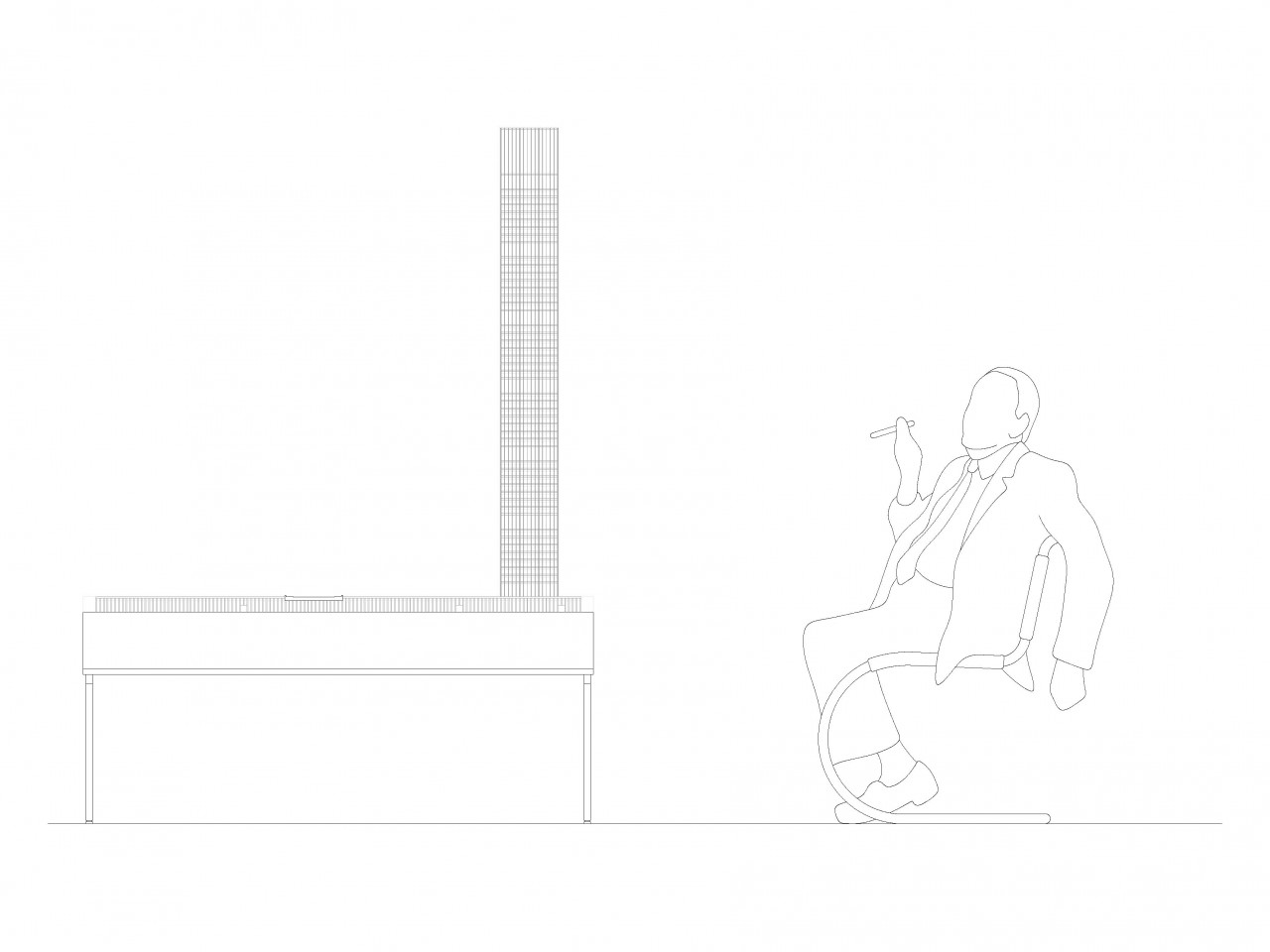
- 08 - Mies and my model
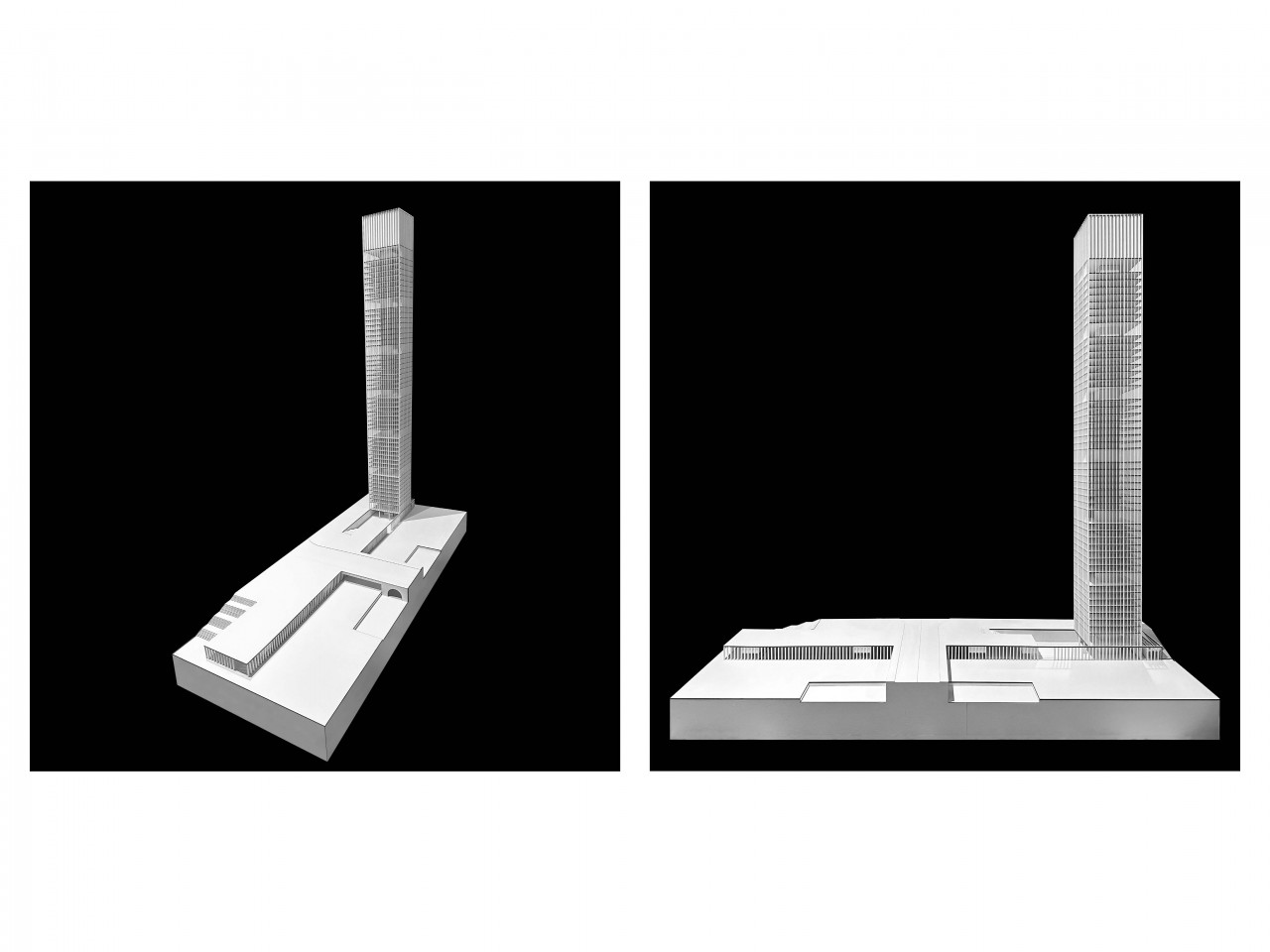
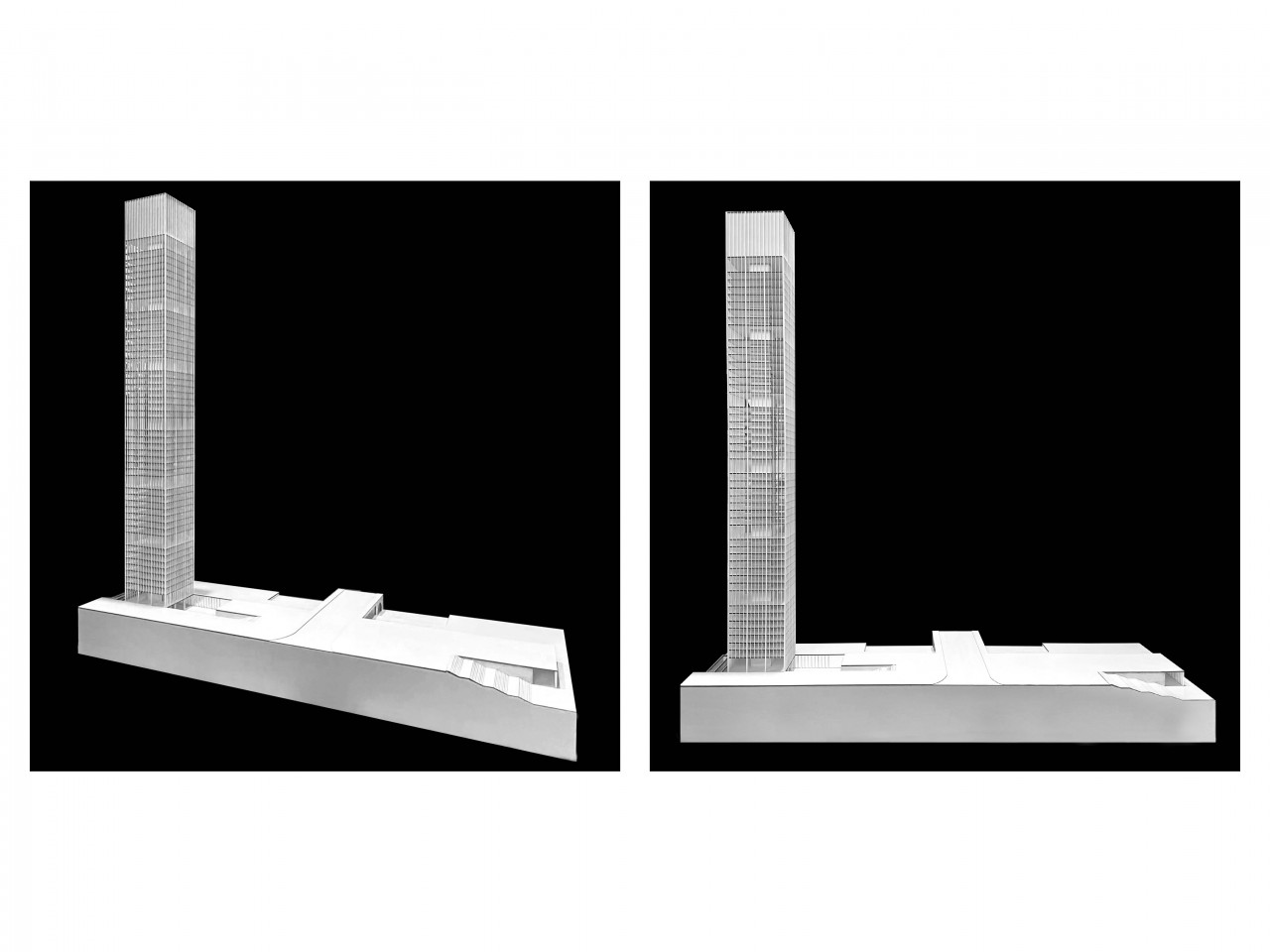
- 09 - Final model 1:200
- 10 - Final model 1:200
- 11 - Video