
Urban Matrix
The urban planning of the project stems from a prior study of the surrounding area of the planned plot, including an urban planning, typological, and housing density analysis. This analysis revealed the need to critique the existing urbanization method.
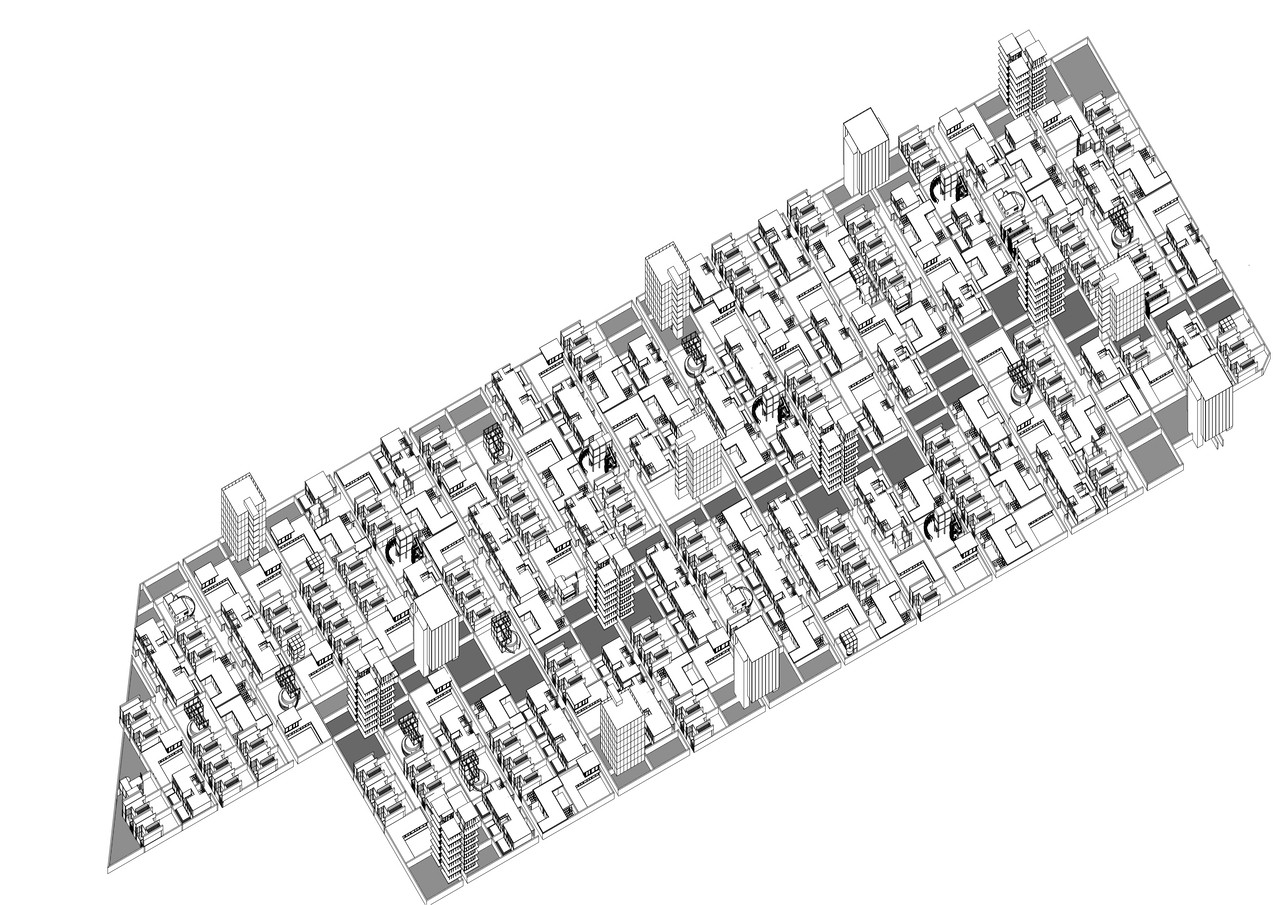
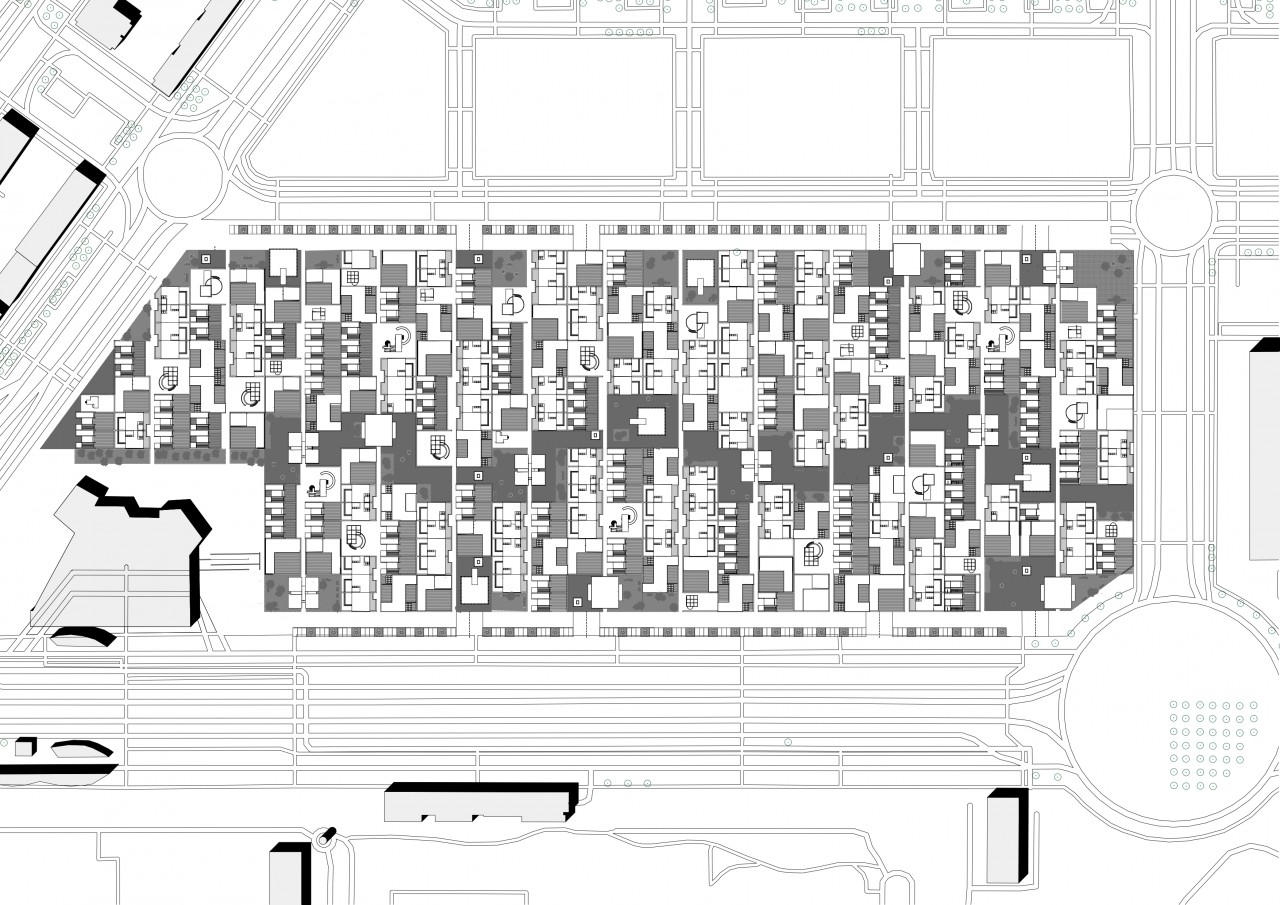
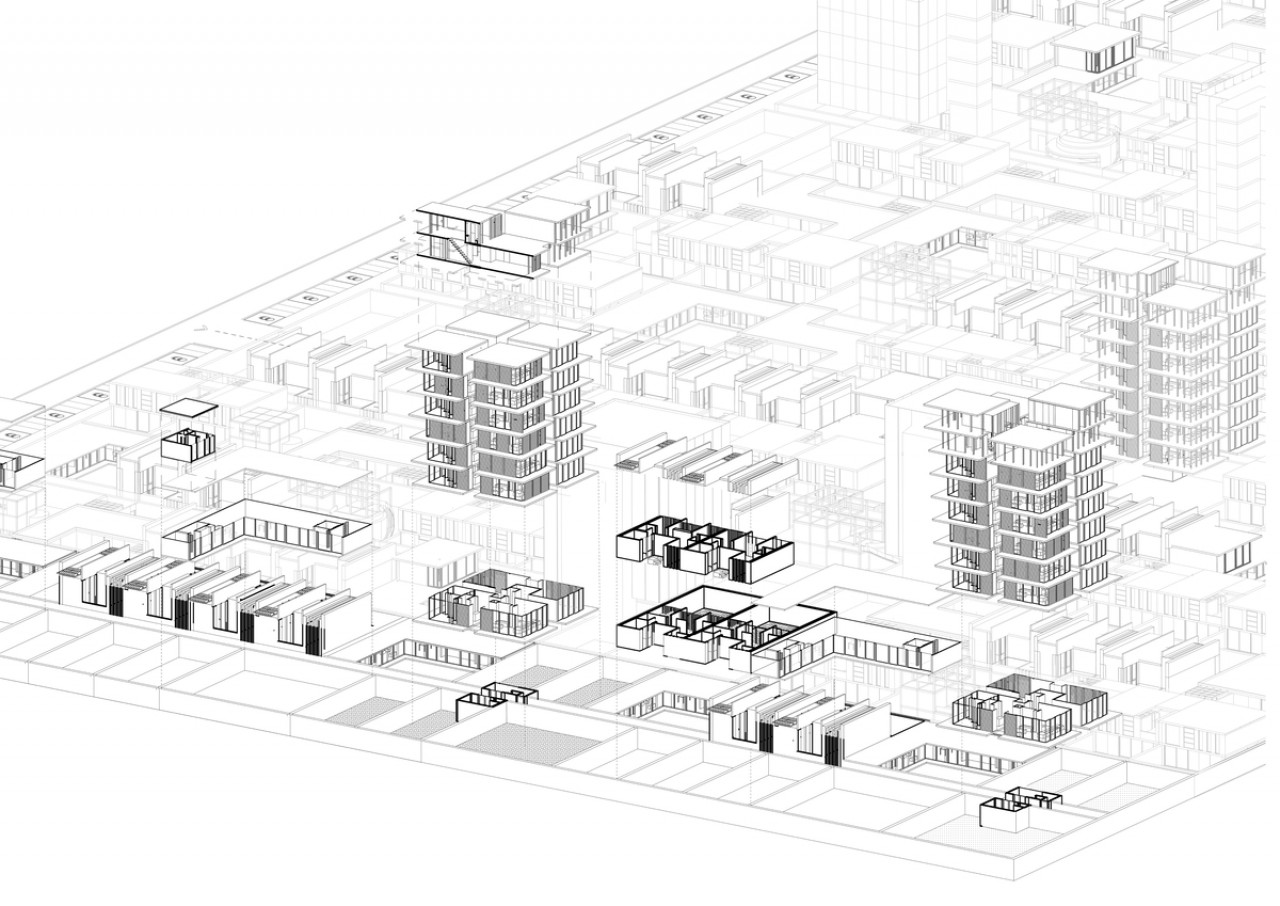
A matrix of rectangular plots is proposed, dividing the land for residential use or for connecting the interchange to the hospital via the central public axis that articulates the proposal.
The urban organization criticizes the wide streets and long distances between establishments, which are far removed from a human scale. Instead, a system of pedestrian walkways is proposed, providing access to two linear clusters of housing. This maximizes land use while minimizing access roads to the bare minimum. In this way, the minimum housing density per hectare for the area is achieved with a much more generous proposal that is more human-scale.
The proposal envisions three different housing typologies for each plot: single-family homes occupying the larger plots, terraced houses covering rows of smaller plots, and the addition of vertical elements above the public areas, maximizing the available land without obstructing the flow of pedestrian traffic.
The perimeter of this residential area will be equipped with green spaces that extend the pedestrian entrances, thus breaking the homogenization created by the walls that subdivide the dwellings.
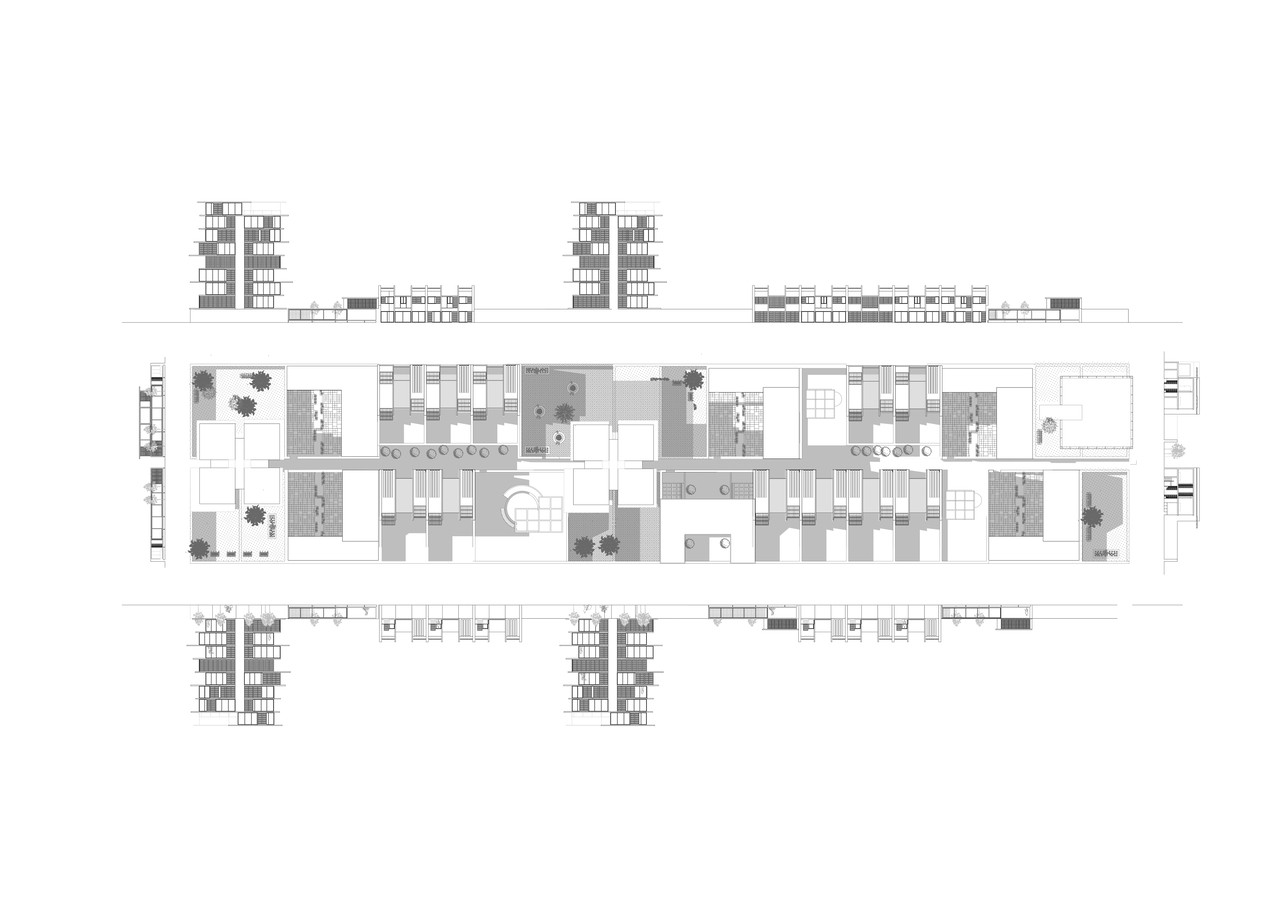
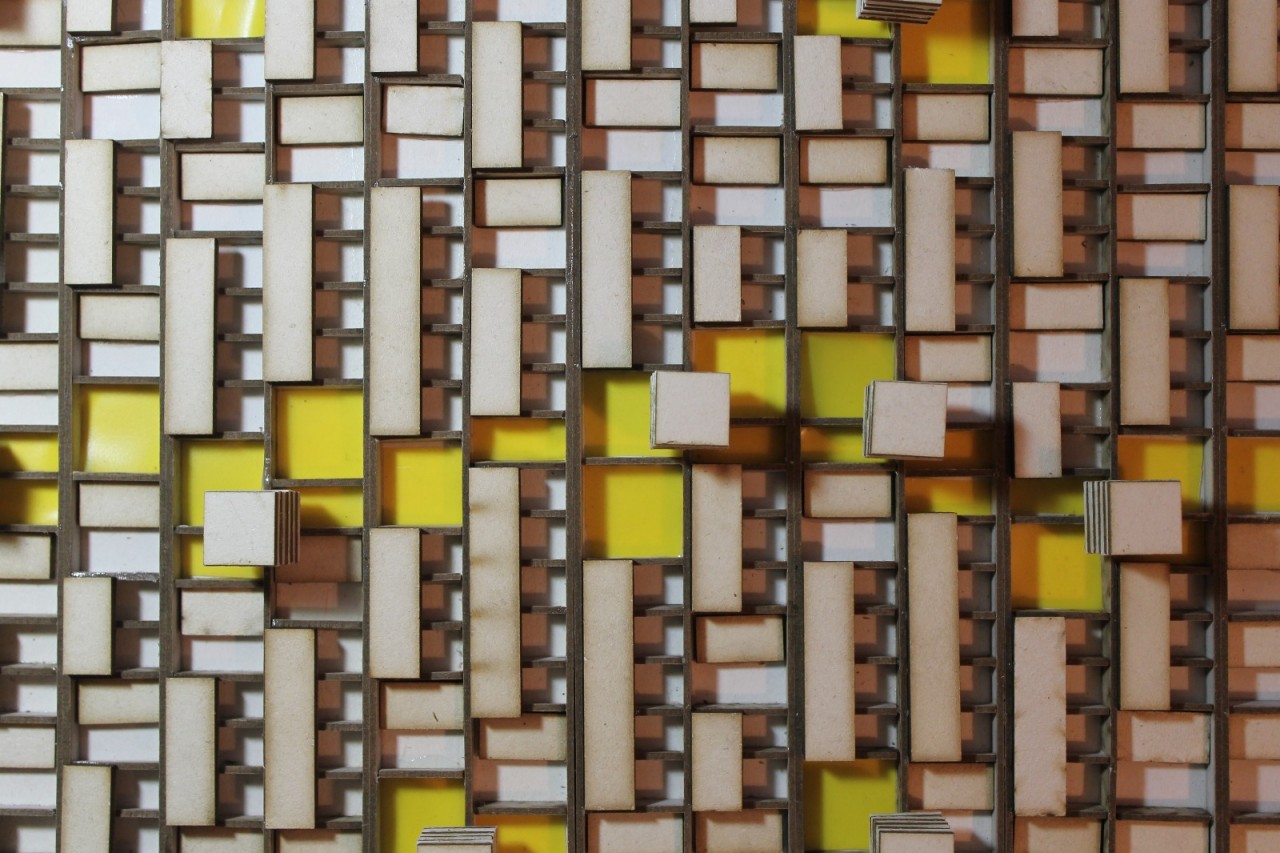
The architecture of the different housing typologies is characterized by the use of horizontal elements, primarily aimed at ensuring the privacy of each dwelling by focusing the windows on the horizon and preventing views into the dwellings above or below. Furthermore, the main facades will generally be open to the exterior through windows that ensure the homes receive ample natural light. For added comfort, a system of movable louvers will be incorporated, allowing residents to adjust the amount of light entering the home as desired.
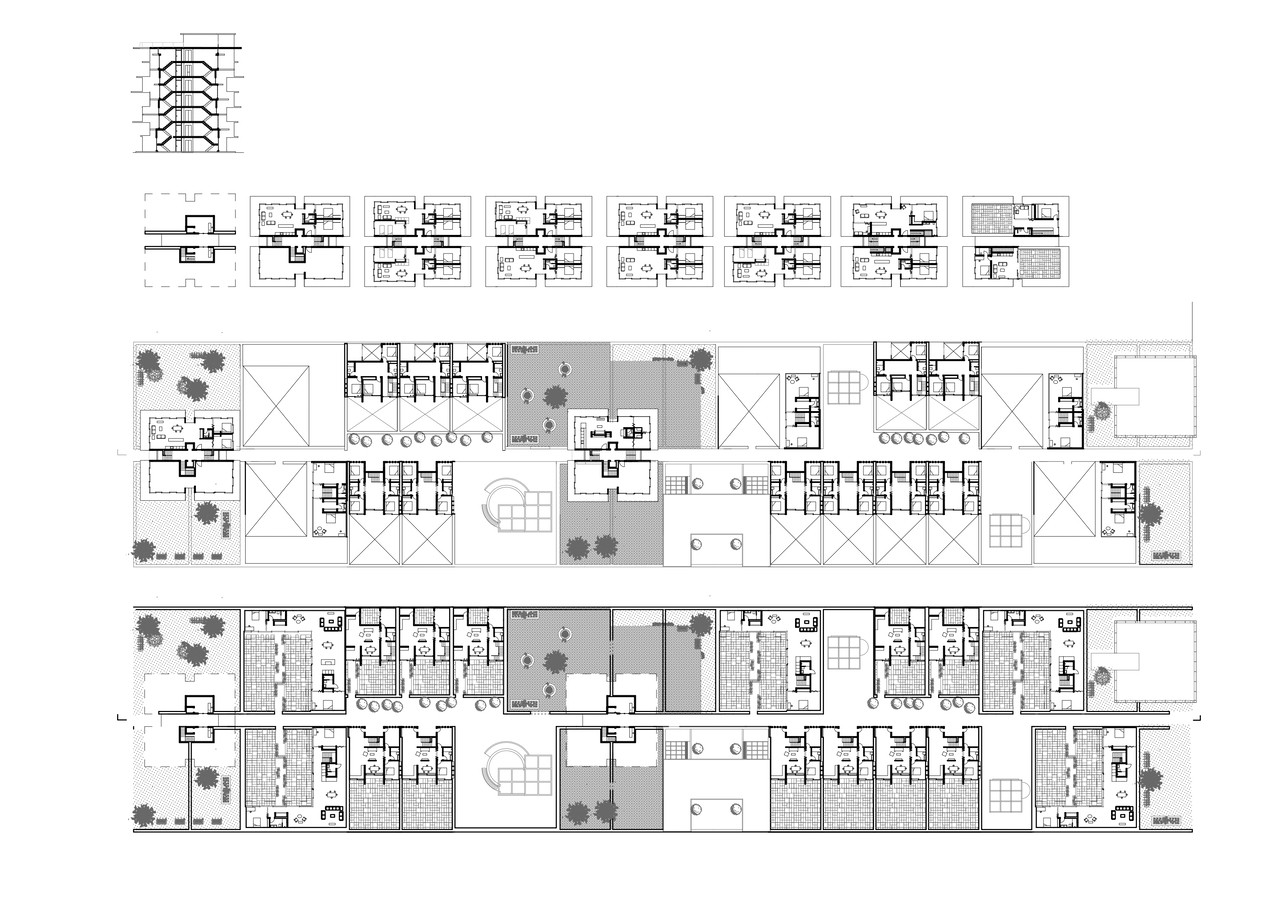
The sun exposure for each home was carefully considered to ensure that no home receives excessive natural light. Through-units were designed to allow for illumination from the west and east.
Vehicle traffic will be limited around the perimeter of the project, fostering a greater sense of community within the site. Therefore, both street-level and underground parking have been designed to ensure user convenience. The underground parking is laid out linearly, following the street grid and adapting to areas with fewer green spaces and a more structured layout to facilitate the parking structure.
The project is proposed as a compact garden city to achieve the minimum adequate housing density per hectare for the area.
A matrix of rectangular plots is proposed, dividing the land for residential use or for connecting the interchange to the hospital via the central public axis that articulates the proposal.
The urban organization criticizes the wide streets and long distances between establishments, which are far removed from a human scale. Instead, a system of pedestrian walkways is proposed, providing access to two linear clusters of housing. This maximizes land use while minimizing access roads to the bare minimum. In this way, the minimum housing density per hectare for the area is achieved with a much more generous proposal that is more human-scale.
The proposal envisions three different housing typologies for each plot: single-family homes occupying the larger plots, terraced houses covering rows of smaller plots, and the addition of vertical elements above the public areas, maximizing the available land without obstructing the flow of pedestrian traffic.
The perimeter of this residential area will be equipped with green spaces that extend the pedestrian entrances, thus breaking the homogenization created by the walls that subdivide the dwellings.
The architecture of the different housing typologies is characterized by the use of horizontal elements, primarily aimed at ensuring the privacy of each dwelling by focusing the windows on the horizon and preventing views into the dwellings above or below. Furthermore, the main facades will generally be open to the exterior through windows that ensure the homes receive ample natural light. For added comfort, a system of movable louvers will be incorporated, allowing residents to adjust the amount of light entering the home as desired.
The sun exposure for each home was carefully considered to ensure that no home receives excessive natural light. Through-units were designed to allow for illumination from the west and east.
Vehicle traffic will be limited around the perimeter of the project, fostering a greater sense of community within the site. Therefore, both street-level and underground parking have been designed to ensure user convenience. The underground parking is laid out linearly, following the street grid and adapting to areas with fewer green spaces and a more structured layout to facilitate the parking structure.
The project is proposed as a compact garden city to achieve the minimum adequate housing density per hectare for the area.
- 00 - Description
- 01 - Axonometric
- 02 - Roof Plan
- 03 - Roof and facade
- 04 - Residential plans
- 05 - Exploded axonometric
- 06 - Concept model