
Workshop in Piazzale Roma
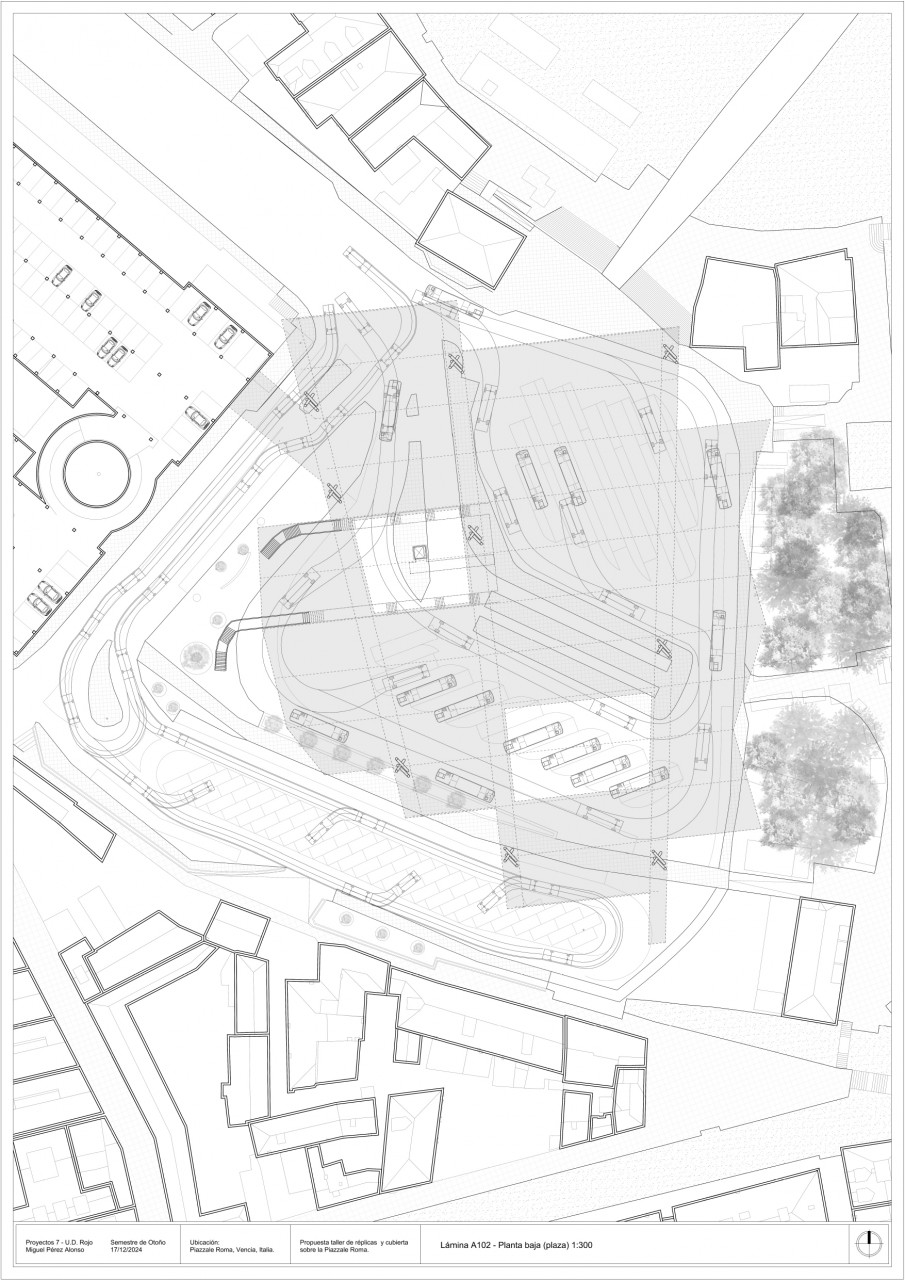
During this course we have developed a project located in the city of Venice, specifically in Piazzale Roma. A strategic point in the city due to the land connection through the Ponte della Libertà and where the main piece of the project development is located, the bus station.
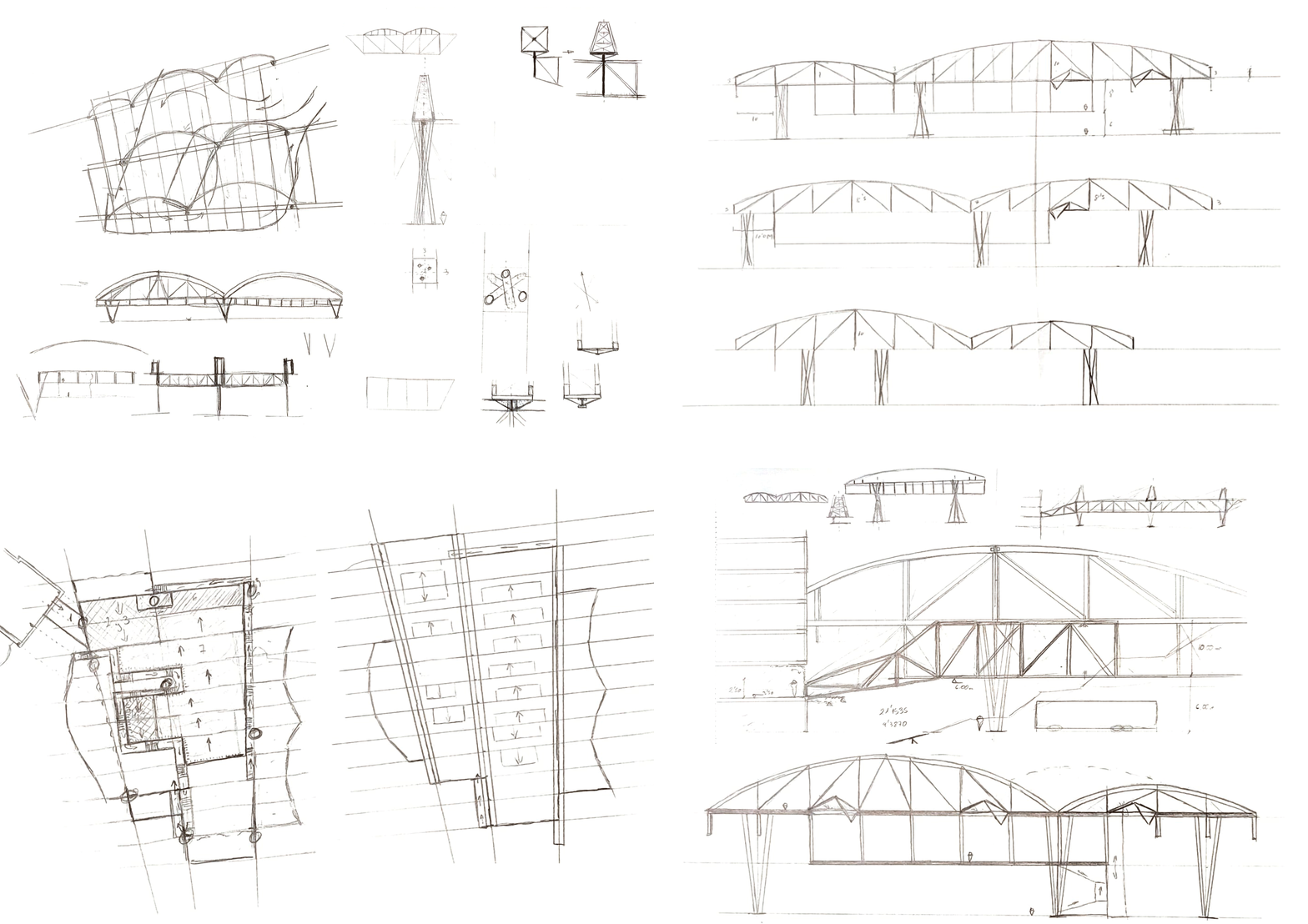
We are in a busy area, where the first problem that began to be worked on was the implementation of a roof since both the square and the station itself do not have one. To do this, the development of a large triangular structure was studied in order to obtain a greater distance between supports and interfere as little as possible with the existing station.
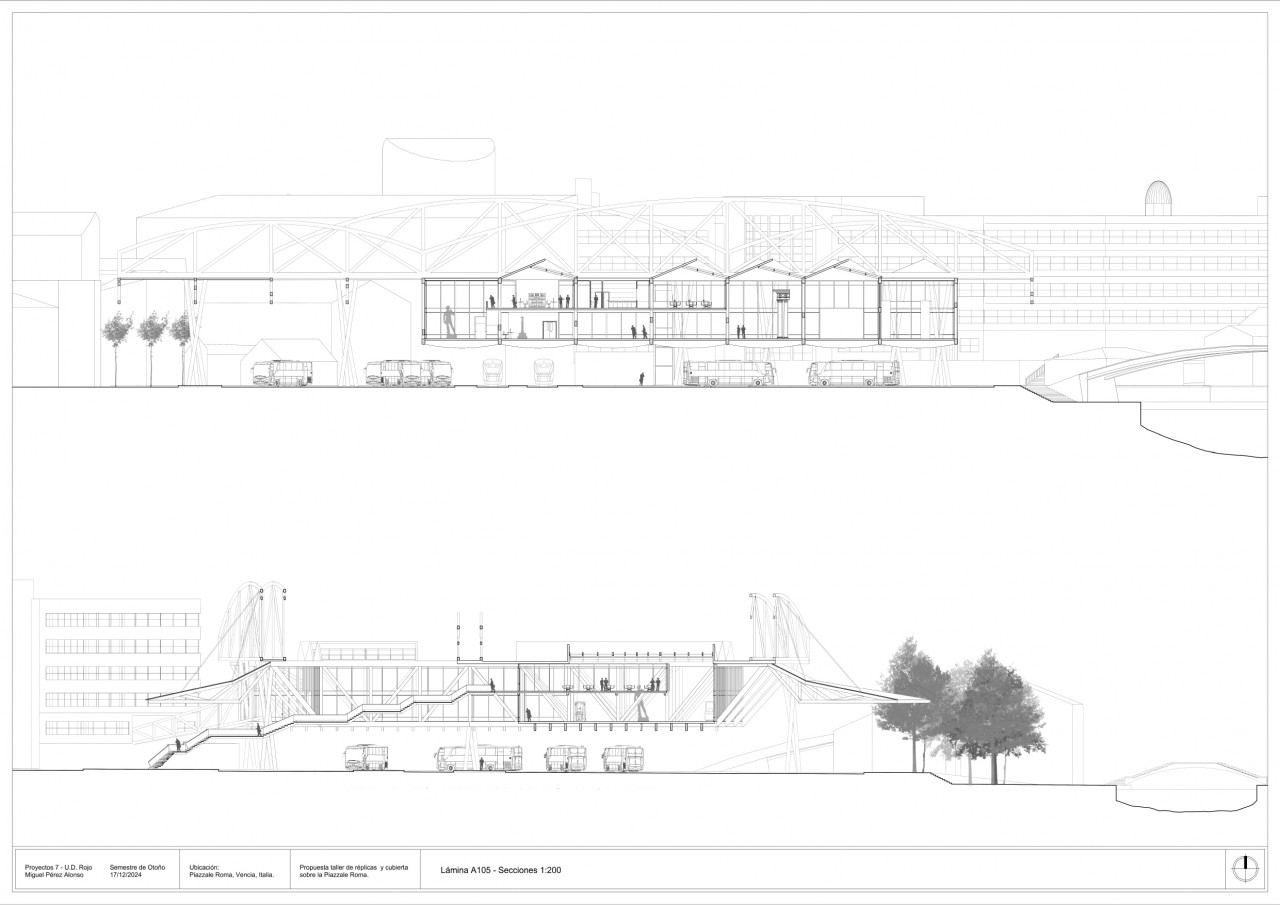
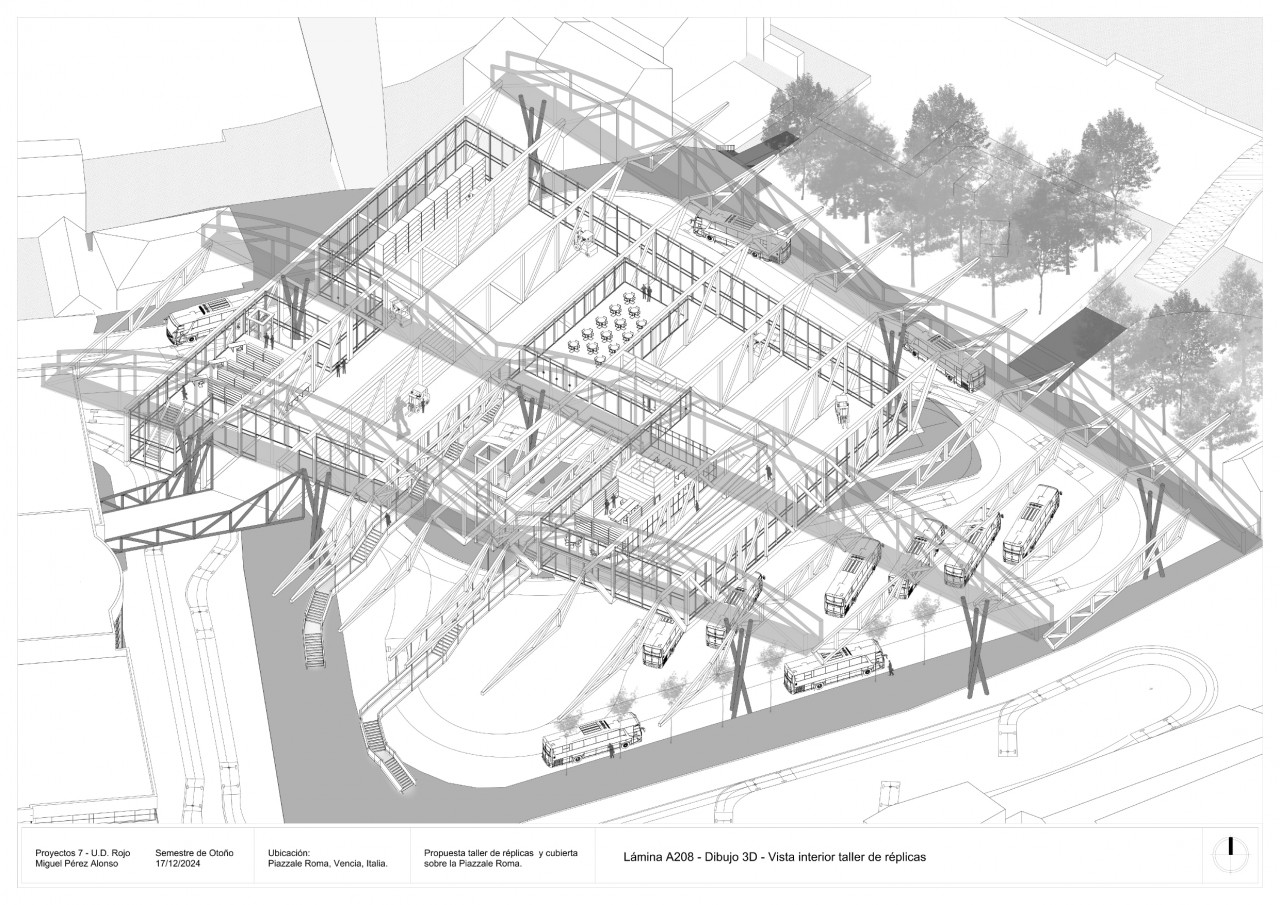
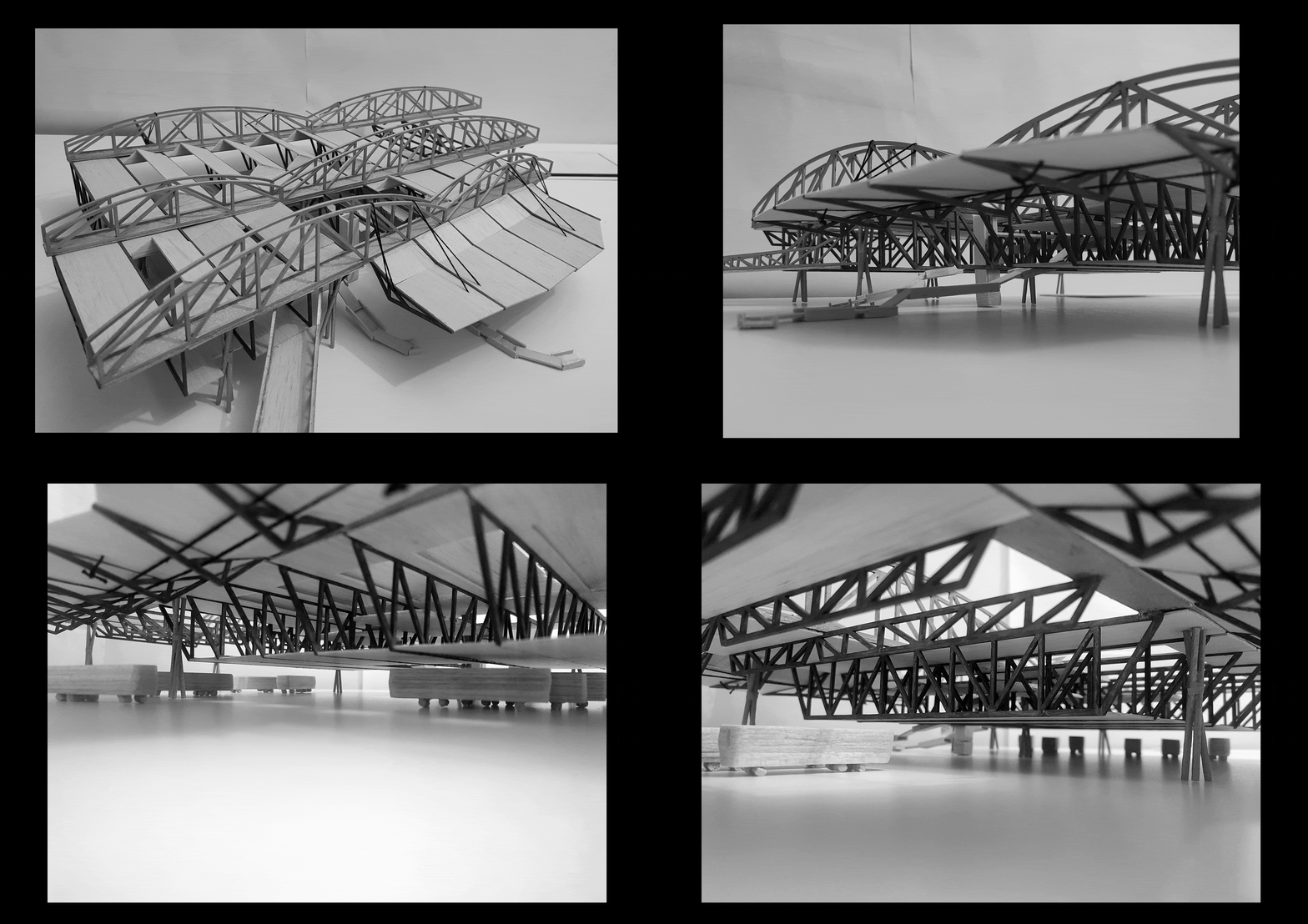
After this beginning and having a clearer idea of the main structure of the project, the implementation of a file in the structure of the roof itself is required. In this case we are talking about a workshop for replicas of works of art and architectural elements, which requires a large workspace for the correct handling of said elements. To achieve this, a first order of three curved metal trusses is raised, each with three supports that do not interfere with the daily activity of the station, raising the trusses to fourteen meters. This form that they adopt seeks to break with the image generated by the straight lines of the inclined roofs throughout the city. Anchored to these, the second order of trusses hangs, in this case made of laminated wood. Located perpendicular to the metal ones and separated from each other by ten meters, they are prepared to be able to support the roof and the larger ones, the workshop itself.
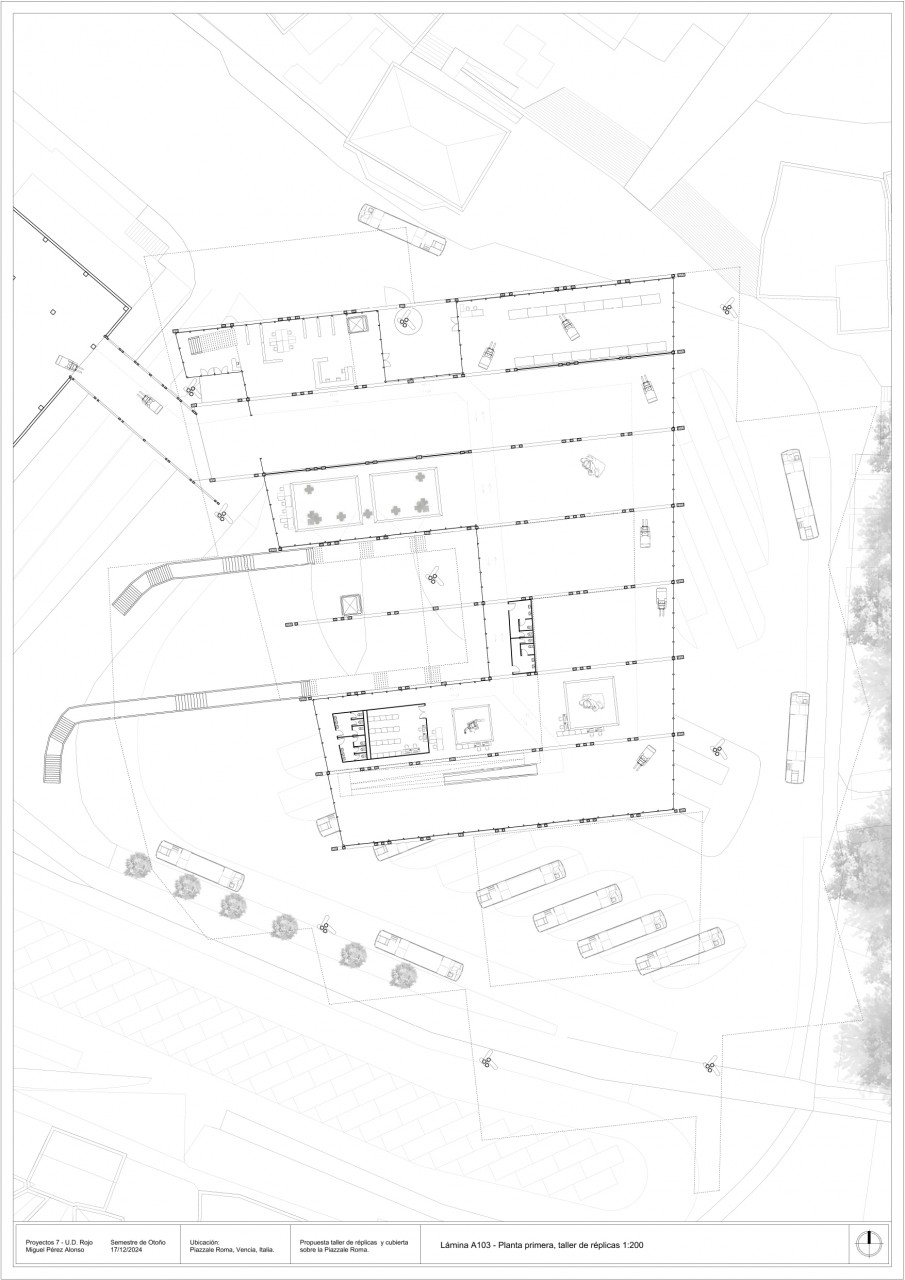
The workshop is eight meters high and six meters from the square to provide enough space for bus traffic. As the activities carried out inside require heavy machinery and elements, it is reinforced with a third order of curved beams at the bottom, reflecting the upper metal structure. The communications that give access to the workshop are linked to the large car park in the square, being the private access for loading and unloading. On the other hand, we find the public access to the cafeteria located in the center, at a double height where you can see the activities carried out inside the workshop.
To light the workshop, a series of skylights are raised with variations in orientation depending on the activity inside, the most common being north. And to allow light to enter the square, it was decided to remove part of the roof, giving rise to two large openings, where in one of them we find the communications to the cafeteria.
Ultimately, the project seeks to interfere as little as possible with the activity in the square by using large spans and lowering the workshop to hide the large main structure.
We are in a busy area, where the first problem that began to be worked on was the implementation of a roof since both the square and the station itself do not have one. To do this, the development of a large triangular structure was studied in order to obtain a greater distance between supports and interfere as little as possible with the existing station.
After this beginning and having a clearer idea of the main structure of the project, the implementation of a file in the structure of the roof itself is required. In this case we are talking about a workshop for replicas of works of art and architectural elements, which requires a large workspace for the correct handling of said elements. To achieve this, a first order of three curved metal trusses is raised, each with three supports that do not interfere with the daily activity of the station, raising the trusses to fourteen meters. This form that they adopt seeks to break with the image generated by the straight lines of the inclined roofs throughout the city. Anchored to these, the second order of trusses hangs, in this case made of laminated wood. Located perpendicular to the metal ones and separated from each other by ten meters, they are prepared to be able to support the roof and the larger ones, the workshop itself.
The workshop is eight meters high and six meters from the square to provide enough space for bus traffic. As the activities carried out inside require heavy machinery and elements, it is reinforced with a third order of curved beams at the bottom, reflecting the upper metal structure. The communications that give access to the workshop are linked to the large car park in the square, being the private access for loading and unloading. On the other hand, we find the public access to the cafeteria located in the center, at a double height where you can see the activities carried out inside the workshop.
To light the workshop, a series of skylights are raised with variations in orientation depending on the activity inside, the most common being north. And to allow light to enter the square, it was decided to remove part of the roof, giving rise to two large openings, where in one of them we find the communications to the cafeteria.
Ultimately, the project seeks to interfere as little as possible with the activity in the square by using large spans and lowering the workshop to hide the large main structure.




- 00 - Description
- 01 - Process
- 02 - Relationship of uses
- 03 - Workshop
- 04 - Public access
- 05 - Sections
- 06 - Axonometry 1
- 07 - Top view
- 08 - Axonometry 2
- 09 - Perception
- 10 - Mockup
- 11 - Video