
Back Market III
This project was developed in collaboration with Mario Beltrame and Hugo Gutiérrez.
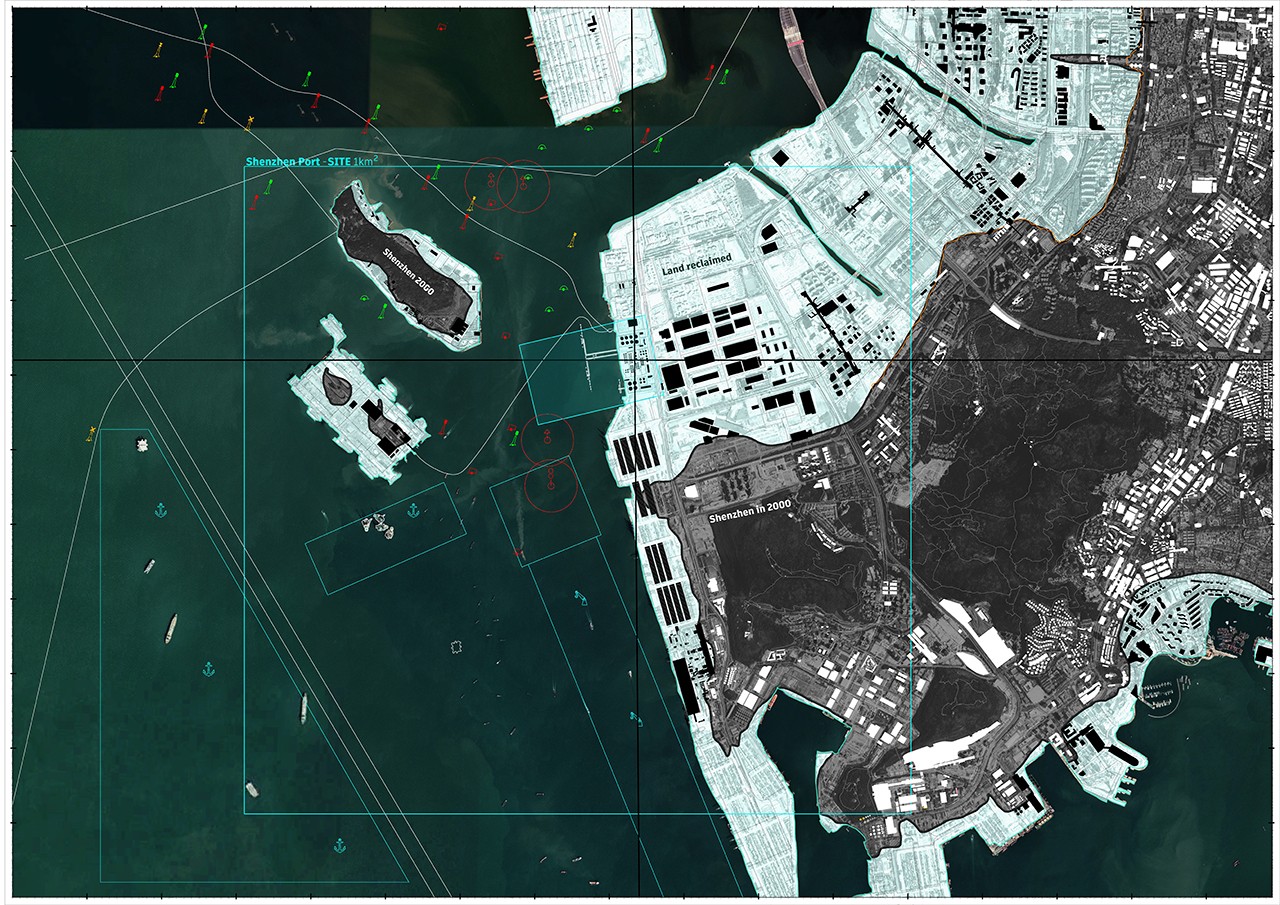
Our project is located in the port of Shenzhen, a city that, in just four decades, has transformed from a fishing village of 30,000 inhabitants into a technological megacity with over 18 million people. This rapid growth has led the city to reclaim between 200 and 300 km² from the sea through extensive land reclamation processes.
From the outset, we embraced a logic of adaptation to movement. Rather than following a linear design process, we relied on artificial intelligence platforms to generate images and volumes from the earliest stages—accelerating decision-making and enabling multiple iterations based on the inputs we defined.
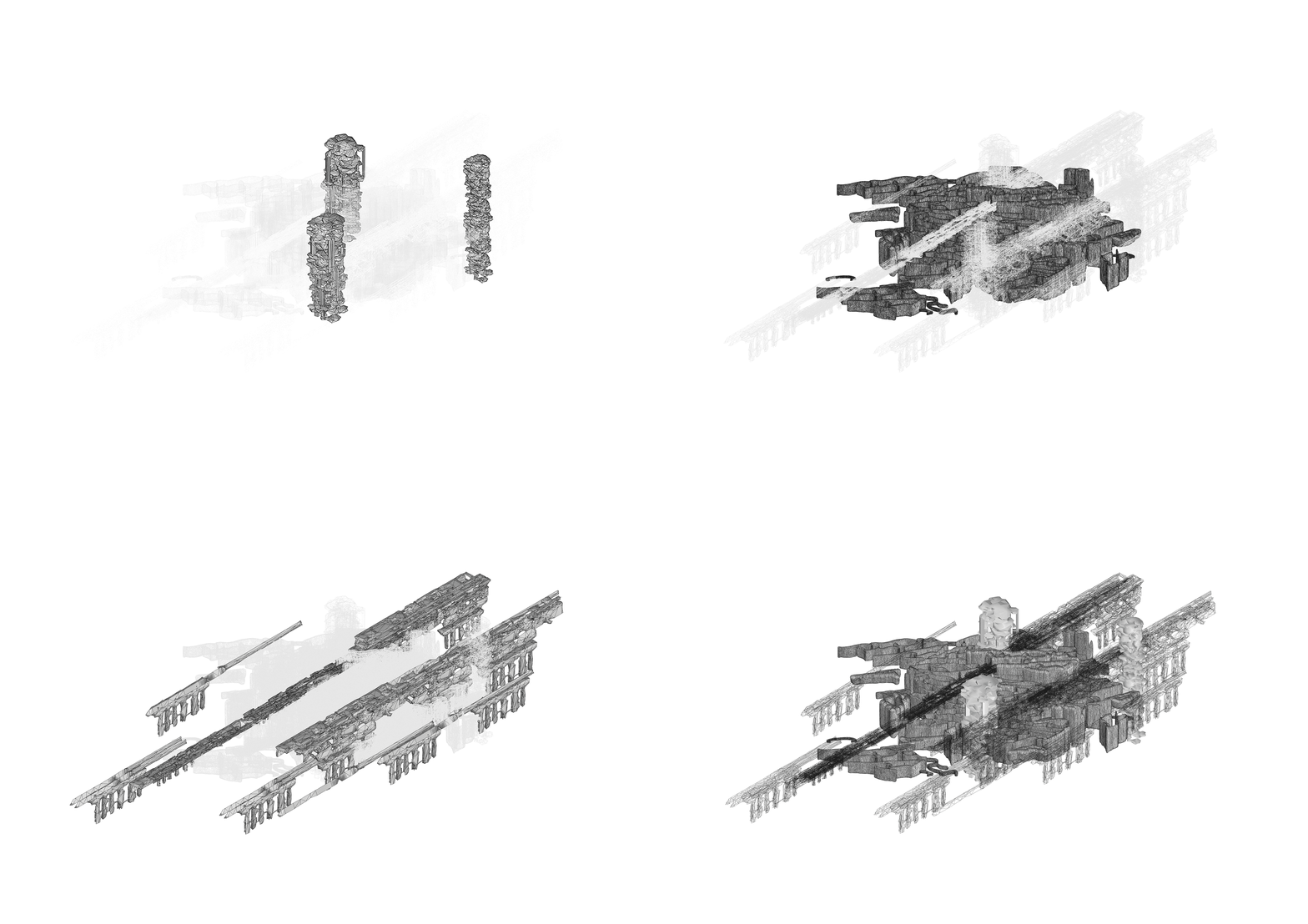
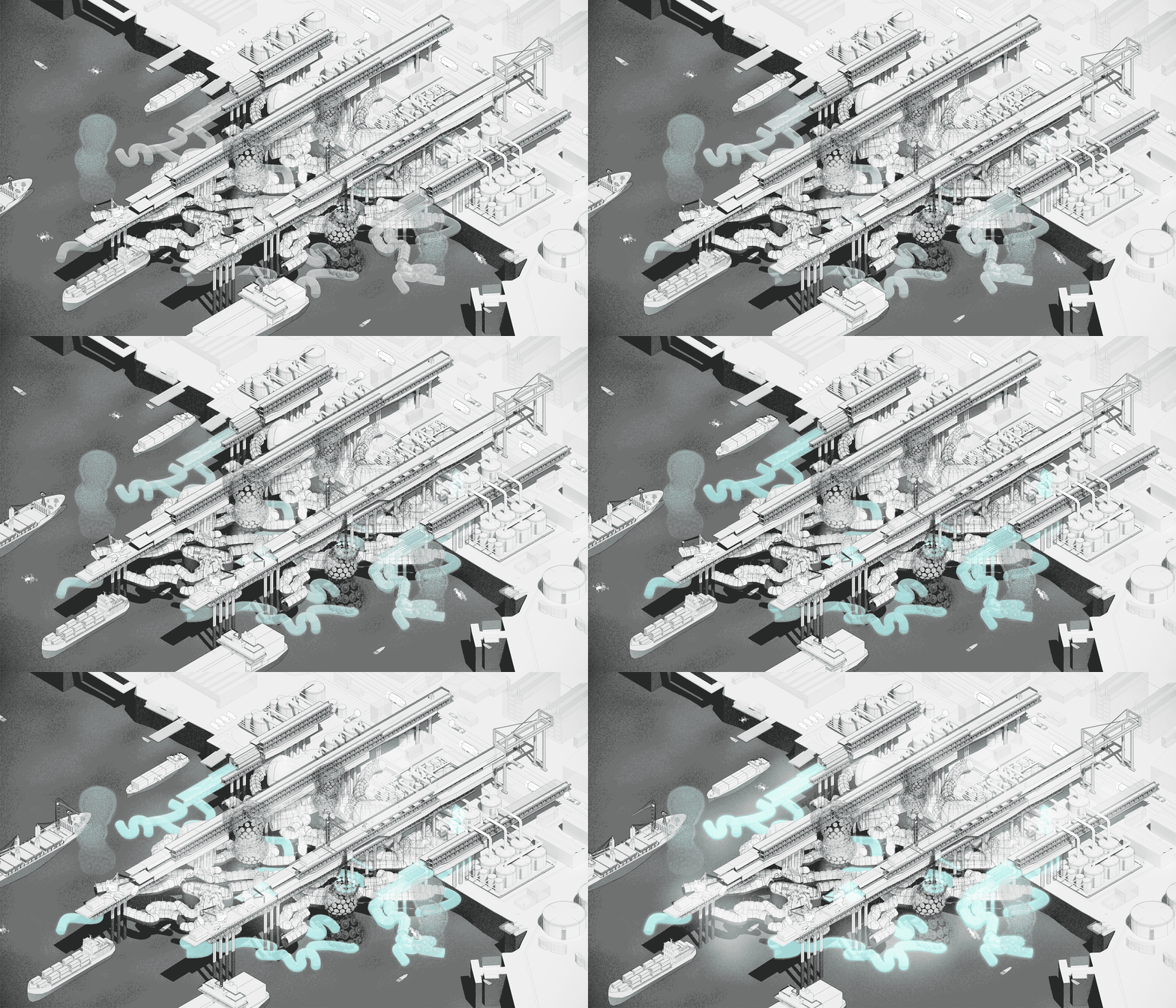
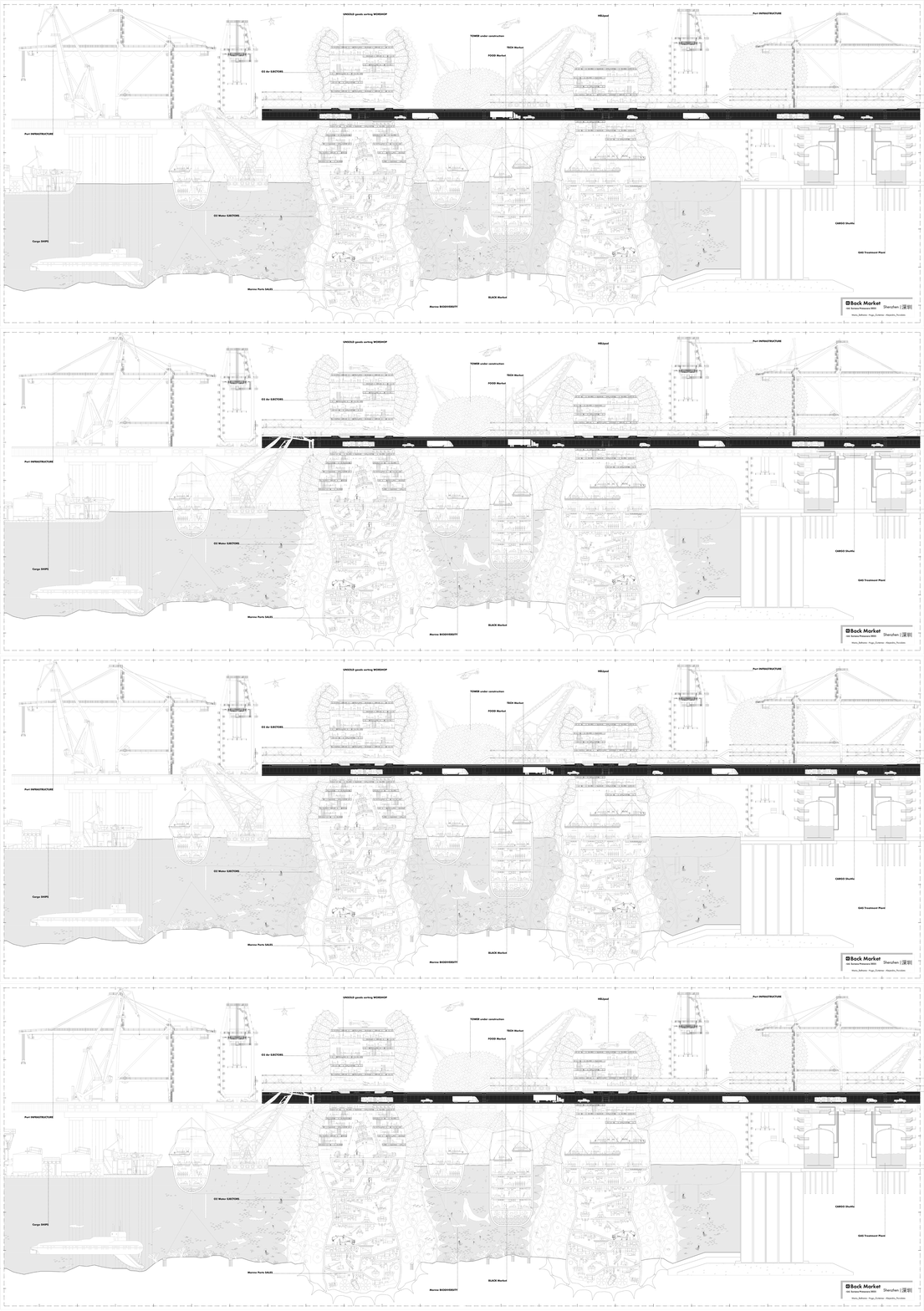
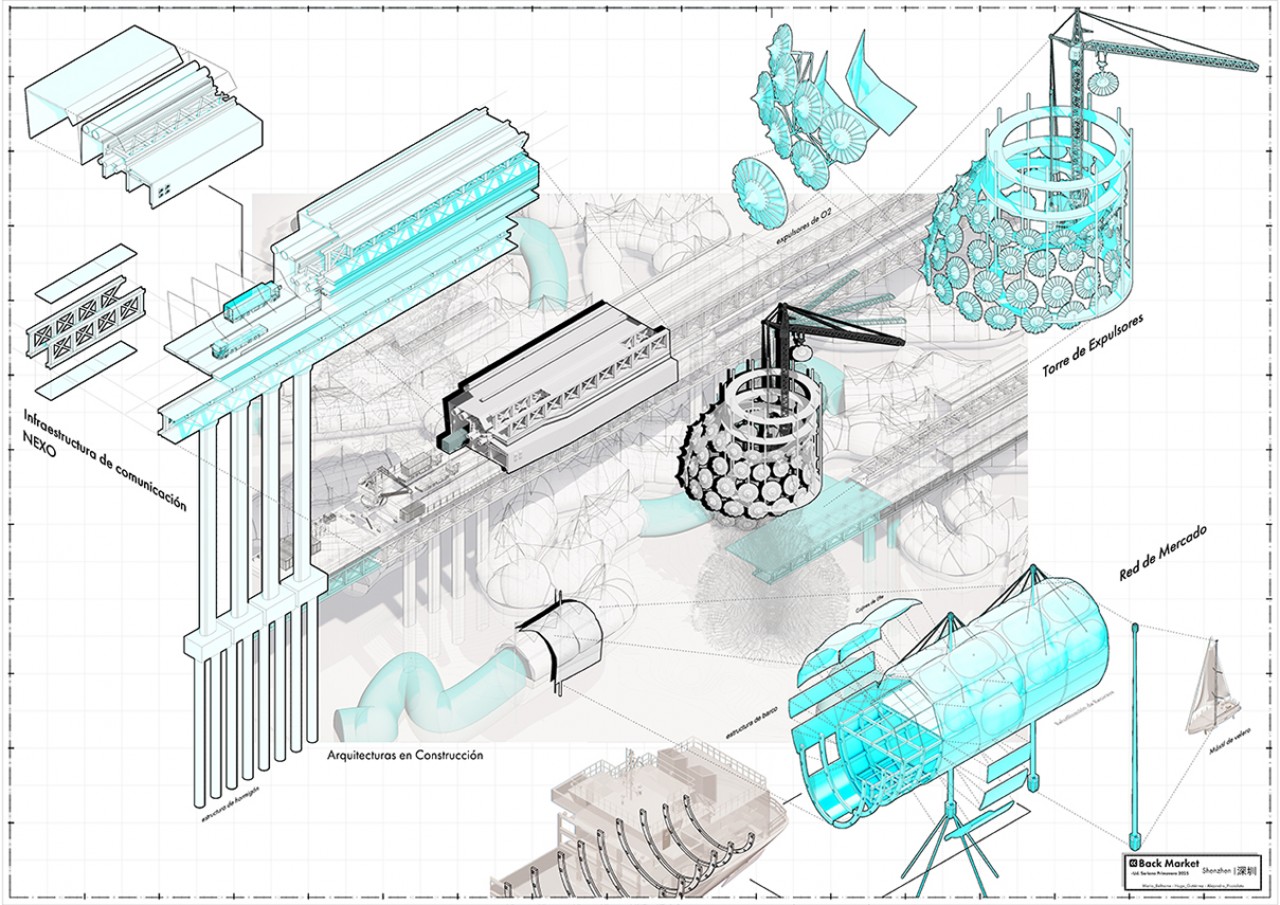
The result is a hybrid system composed of three independent yet complementary elements, each addressing specific themes related to our ever-expanding coastal site:
Vertical elements dedicated to CO₂ emissions treatment and biodiversity restoration.
A linear infrastructure that organizes the flow of goods and people, while connecting the entire system.
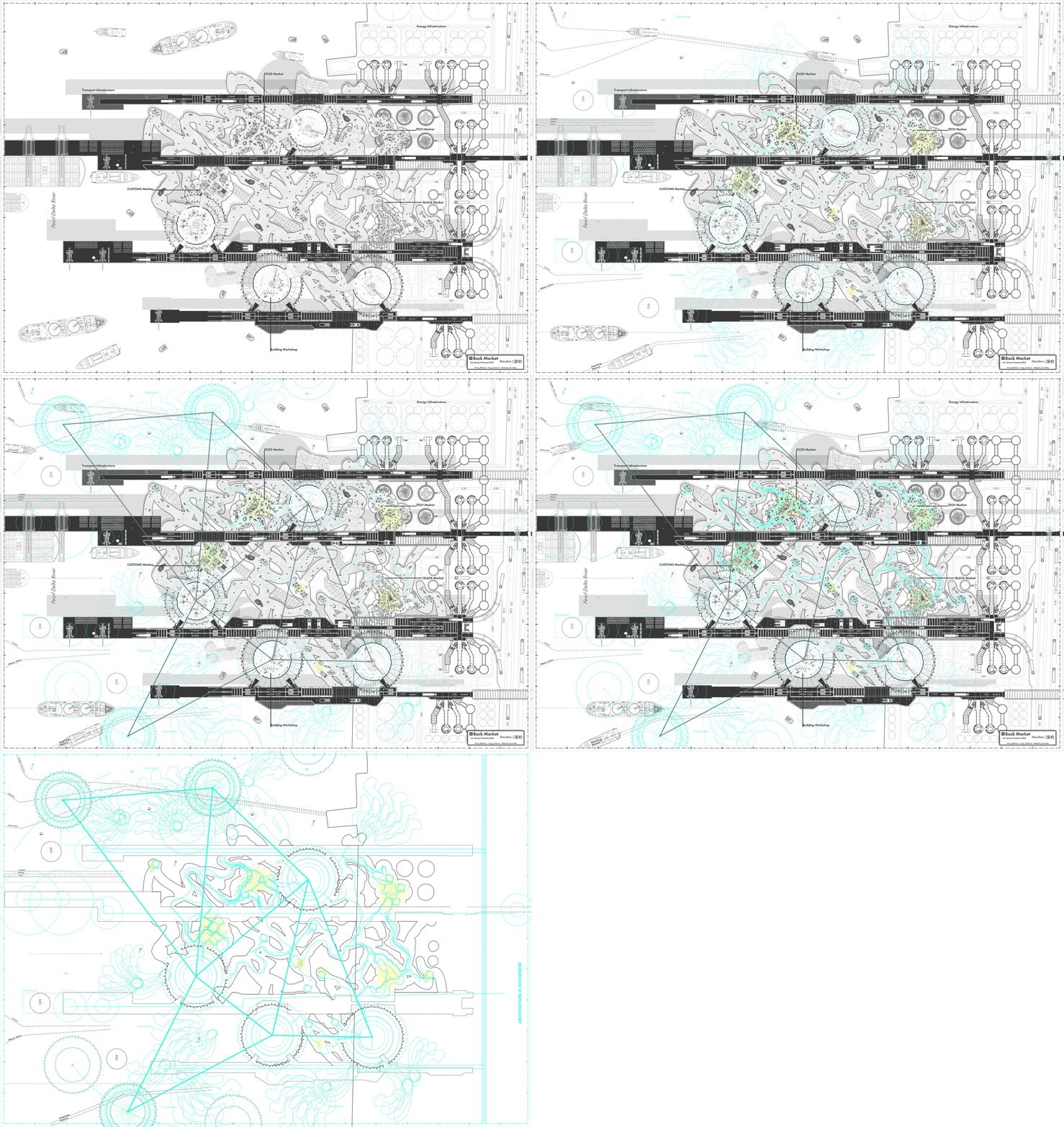
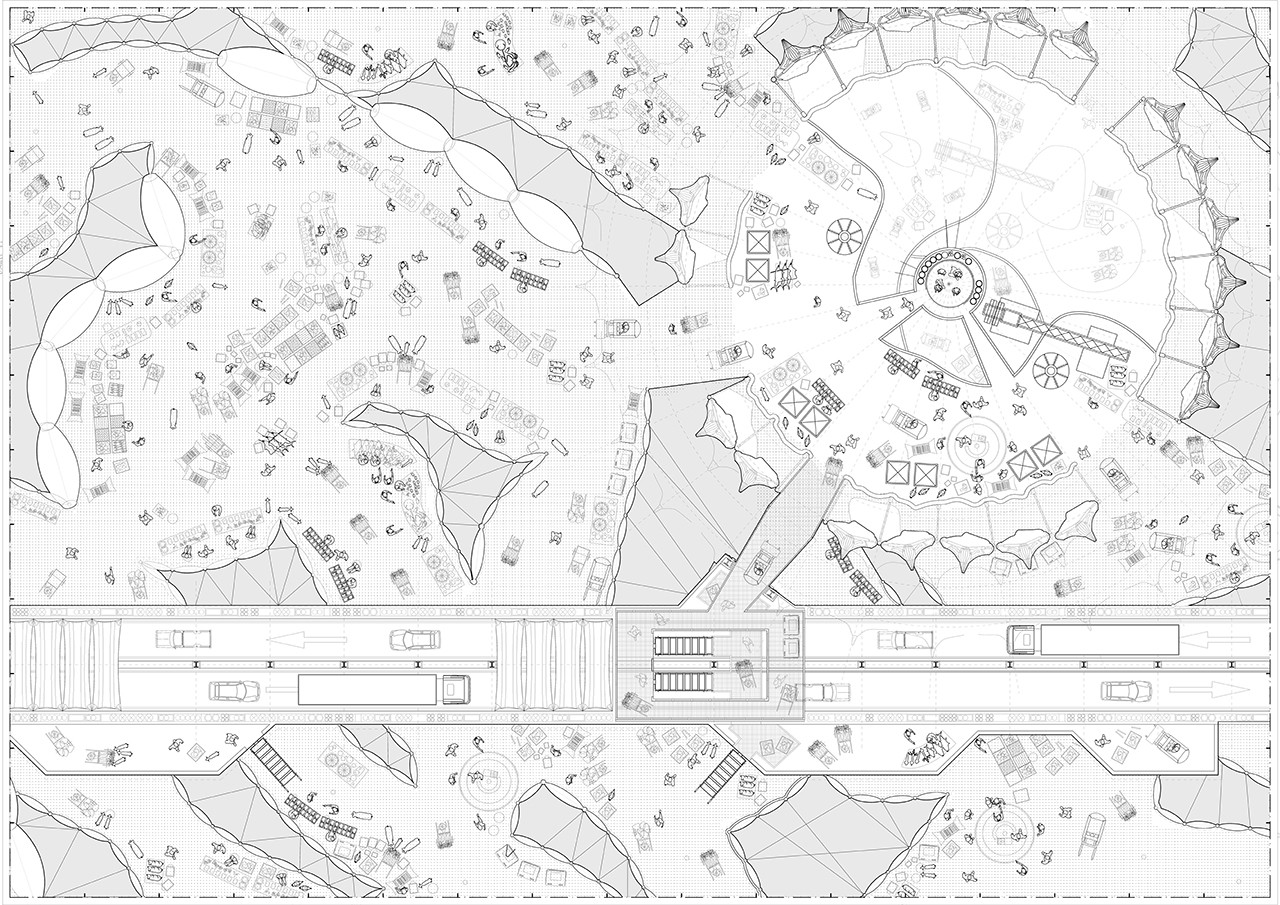
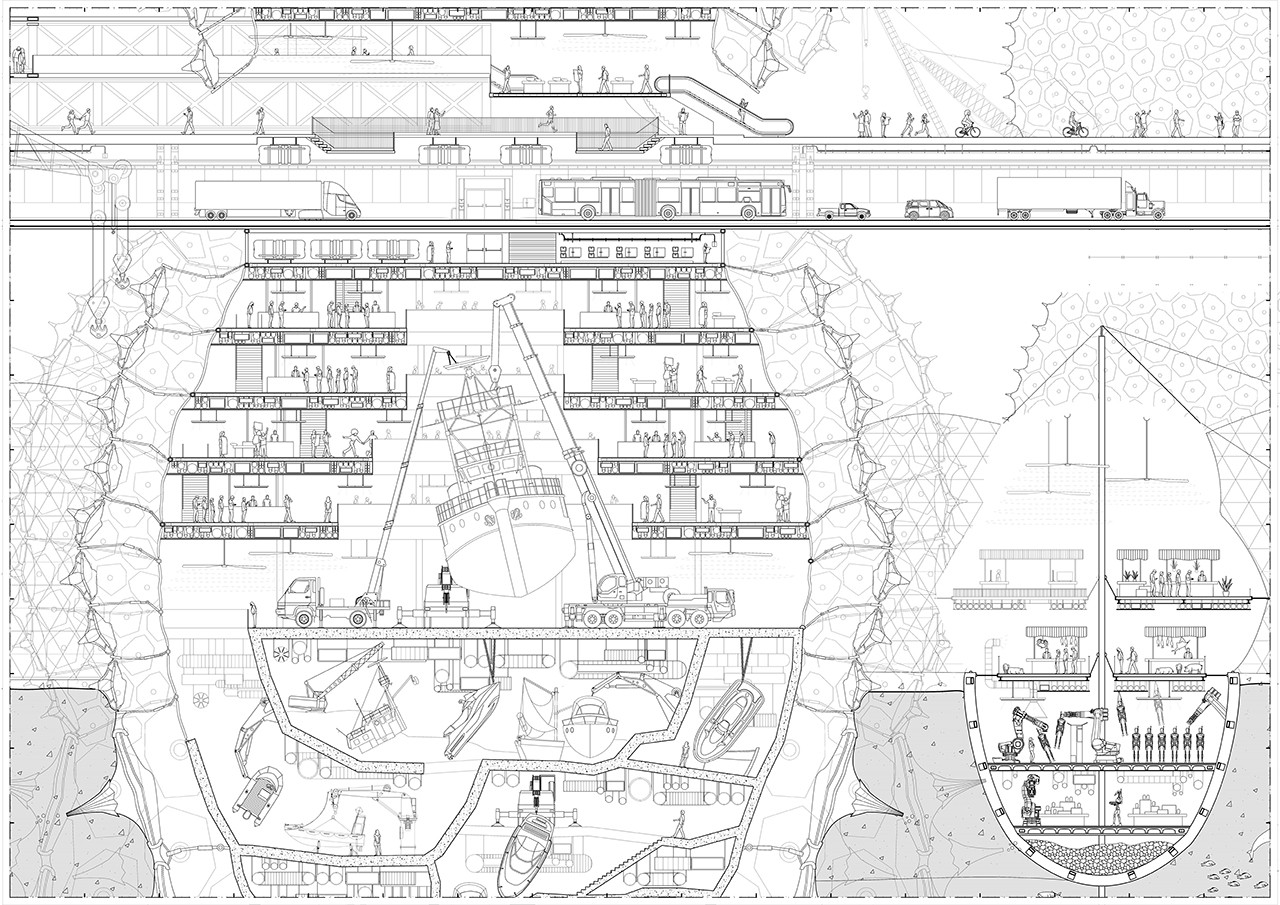
A horizontal, organically shaped volume that responds to the mutable coastal landscape and hosts a market focused on reusing goods and processing the waste produced within the port itself.
Positioned within this continuously growing strip along Shenzhen’s port, the project seeks to engage with its context by proposing a system rather than a finished product—one that evolves in parallel with the land being reclaimed from the sea.
It emerges as a response to radically different social and temporal dynamics. Instead of being defined by a fixed form or typology, it is shaped by processes—fluid, adaptive, and intrinsically connected to its environment. In this sense, the project embodies a design for change—an architecture not of permanence, but of responsiveness, transformation, and continuous dialogue with its shifting context.
Our project is located in the port of Shenzhen, a city that, in just four decades, has transformed from a fishing village of 30,000 inhabitants into a technological megacity with over 18 million people. This rapid growth has led the city to reclaim between 200 and 300 km² from the sea through extensive land reclamation processes.
From the outset, we embraced a logic of adaptation to movement. Rather than following a linear design process, we relied on artificial intelligence platforms to generate images and volumes from the earliest stages—accelerating decision-making and enabling multiple iterations based on the inputs we defined.
The result is a hybrid system composed of three independent yet complementary elements, each addressing specific themes related to our ever-expanding coastal site:
Vertical elements dedicated to CO₂ emissions treatment and biodiversity restoration.
A linear infrastructure that organizes the flow of goods and people, while connecting the entire system.
A horizontal, organically shaped volume that responds to the mutable coastal landscape and hosts a market focused on reusing goods and processing the waste produced within the port itself.
Positioned within this continuously growing strip along Shenzhen’s port, the project seeks to engage with its context by proposing a system rather than a finished product—one that evolves in parallel with the land being reclaimed from the sea.
It emerges as a response to radically different social and temporal dynamics. Instead of being defined by a fixed form or typology, it is shaped by processes—fluid, adaptive, and intrinsically connected to its environment. In this sense, the project embodies a design for change—an architecture not of permanence, but of responsiveness, transformation, and continuous dialogue with its shifting context.
- 00 - Description
- 01 - 01-ENSAMBLAJE
- 02 - 02-CONTEXTO
- 03 - 03-AXONOMETRIA
- 04 - 04-PLANTA
- 05 - 05-SECCION
- 06 - 06-zoom_PLANTA
- 07 - 07-zoom_SECCION
- 08 - 08-zoom_AXO