
CARROZAS Y OTRAS ESPECIES
01. EMERGING PHENOMENA
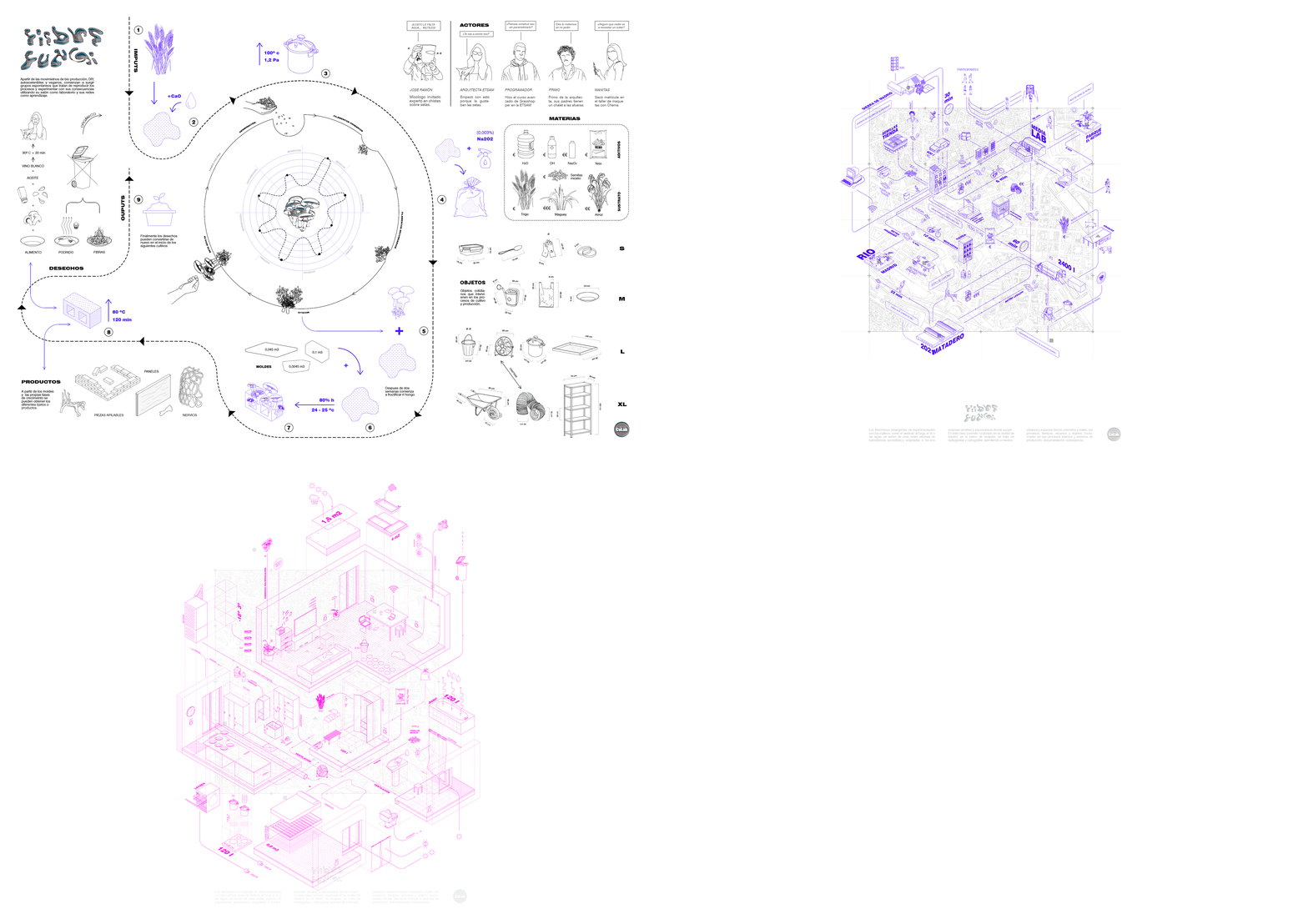
The course starts off with the search for an emerging urban phenomenon in Madrid. In this case, through the adjustment of industrial processes to the household level by hacking actions, a bunch of experiments with biomaterials is analyzed and mapped for the purpose of understanding the mechanisms, actions and spaces that sets them up.
02. PROTOTYPE
Each of the emerging phenomena, placed within a space and structured by means of actors and actions in time, are hybridized together with other existing ones (analyzed by my colleagues Carmen Leguina, Sofia Marciel and Verónica Larsson).
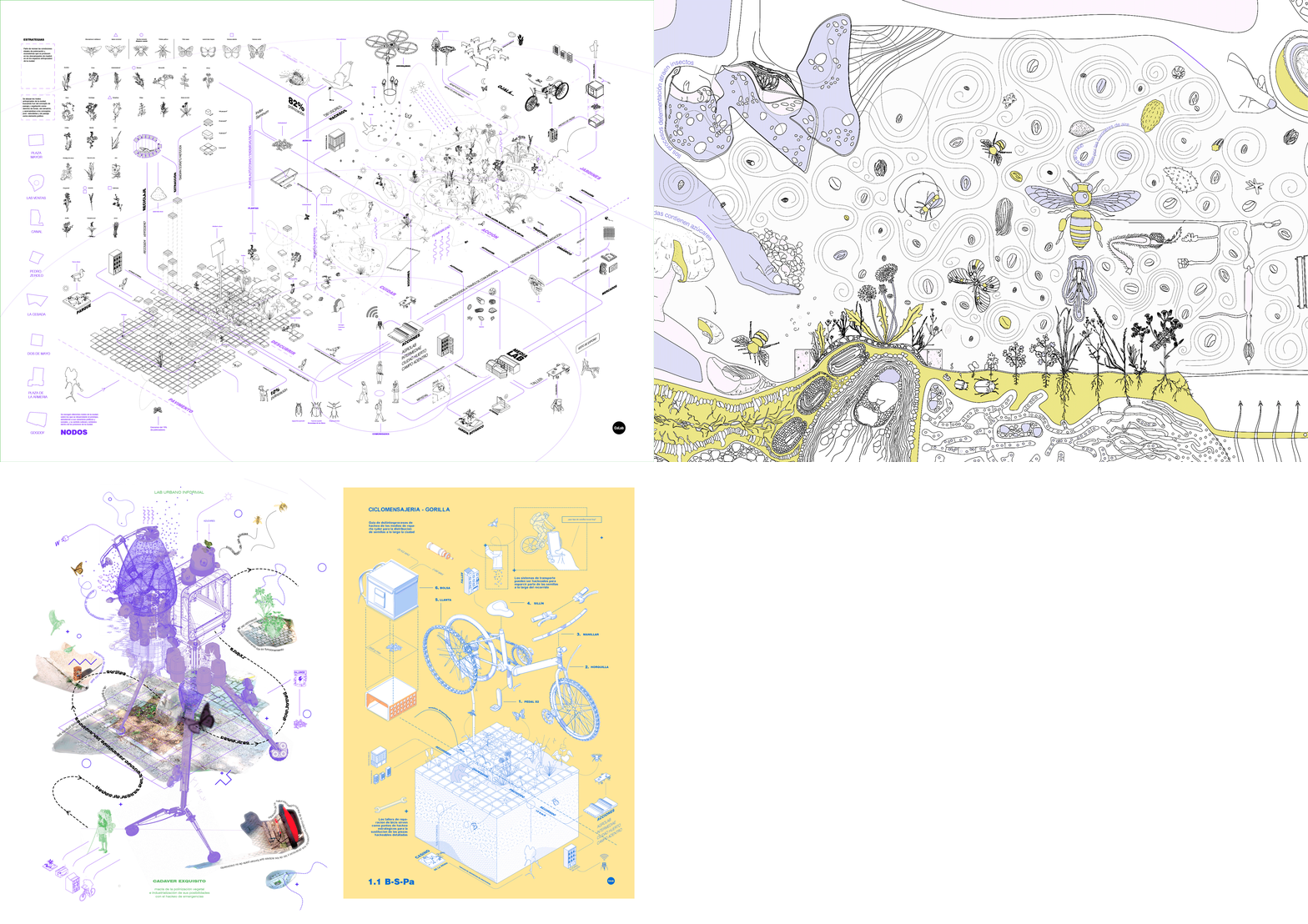
A set of prototypes that transform the urban ecosystem arises by activating the complex mechanisms of the phenomena, which is now a hybrid, on obsolete spaces and phenomena in the city.
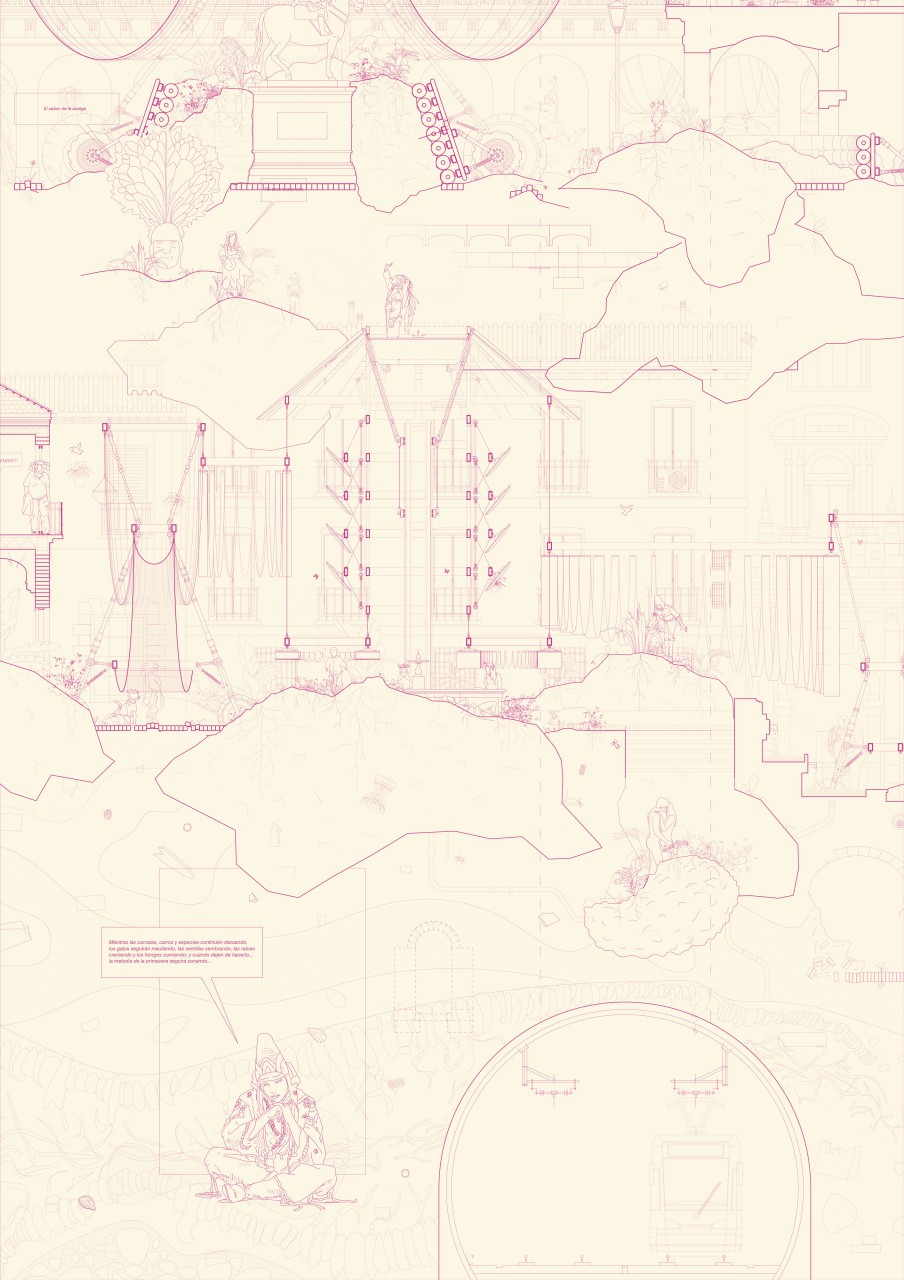
The prototype is designed from a global strategy, its leitmotif, a machine that restores the impaired soils of the city, with what is hidden under our cobblestones, as if those other ecosystems are casted through a flower blooming in an asphalt crack. Thus, taking advantage of the existing pollination threads in symbiosis with the production processes of biomaterials, it works as a mobile catalyst that travels around the city in a disruptive way, ripping off pavements, permeabilizing the ground, and enhancing the natural processes within the city.
03. HOSTING
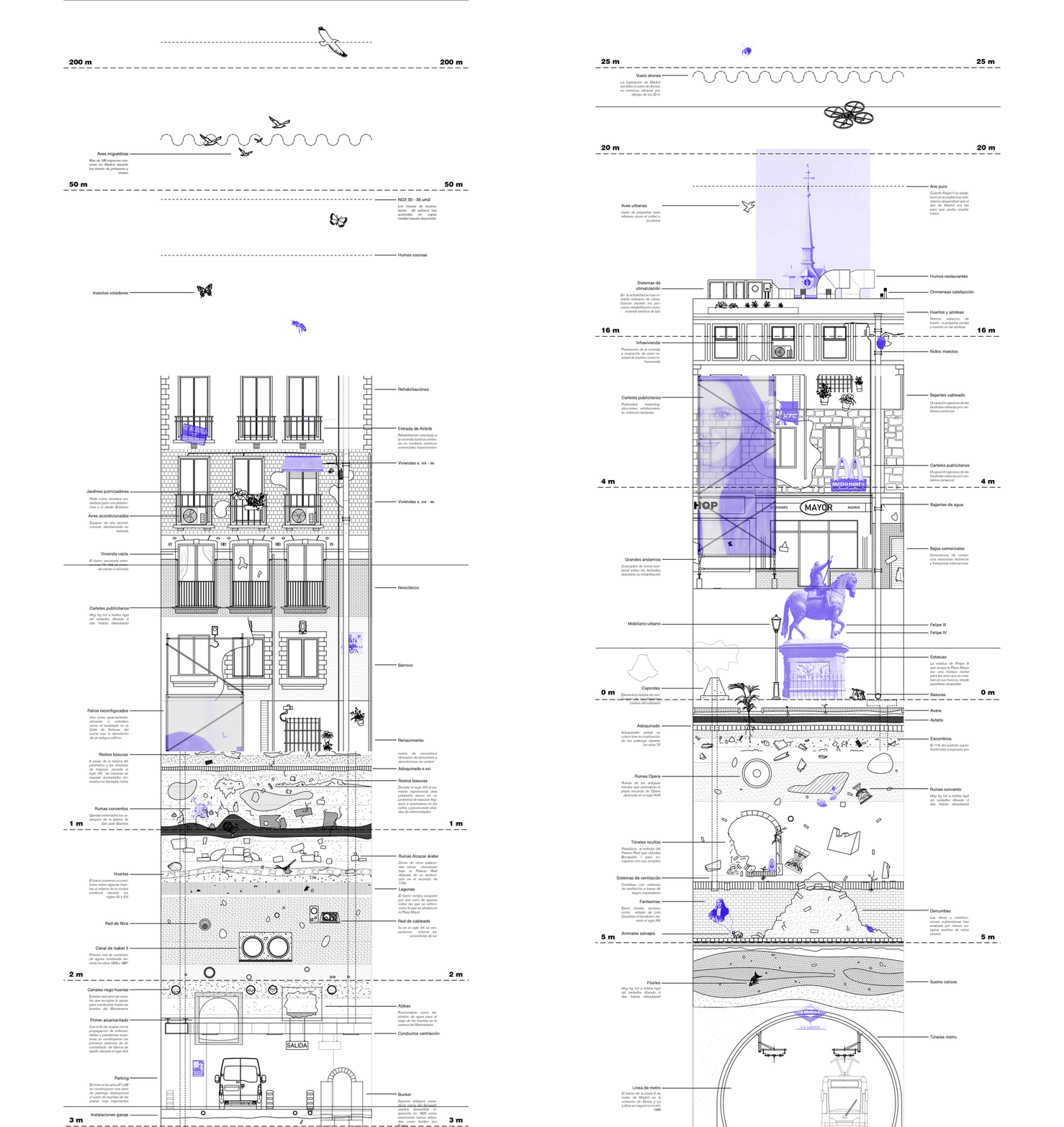
The prototype unfolds its actions in the area of El Madrid de los Austrias. An urban fabric made of granite and shady bars at street level, underground car parks and Muslim relics. The prototype begins to be characterized within a specific context by interacting with nature and the ecosystems of which it is made up by in all its strata, transcending the pavement, and understanding the dynamics of the city from the human, non-human, vegetables, historical, hidden, spores... actors' point of view, to those cars and carriages that wandered our liveliness in the neighborhood for years, now new urban species are added.
04. HANDBOOK
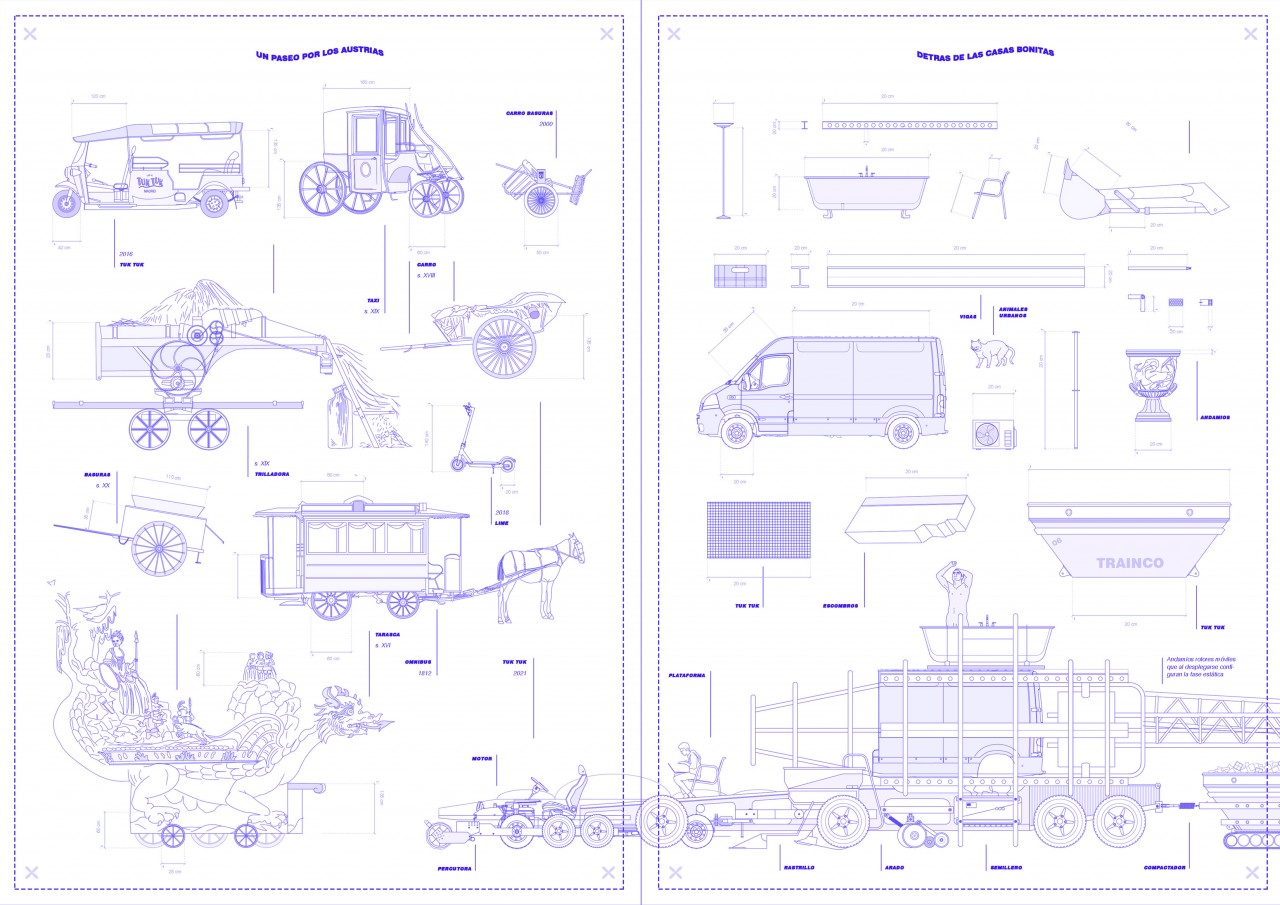
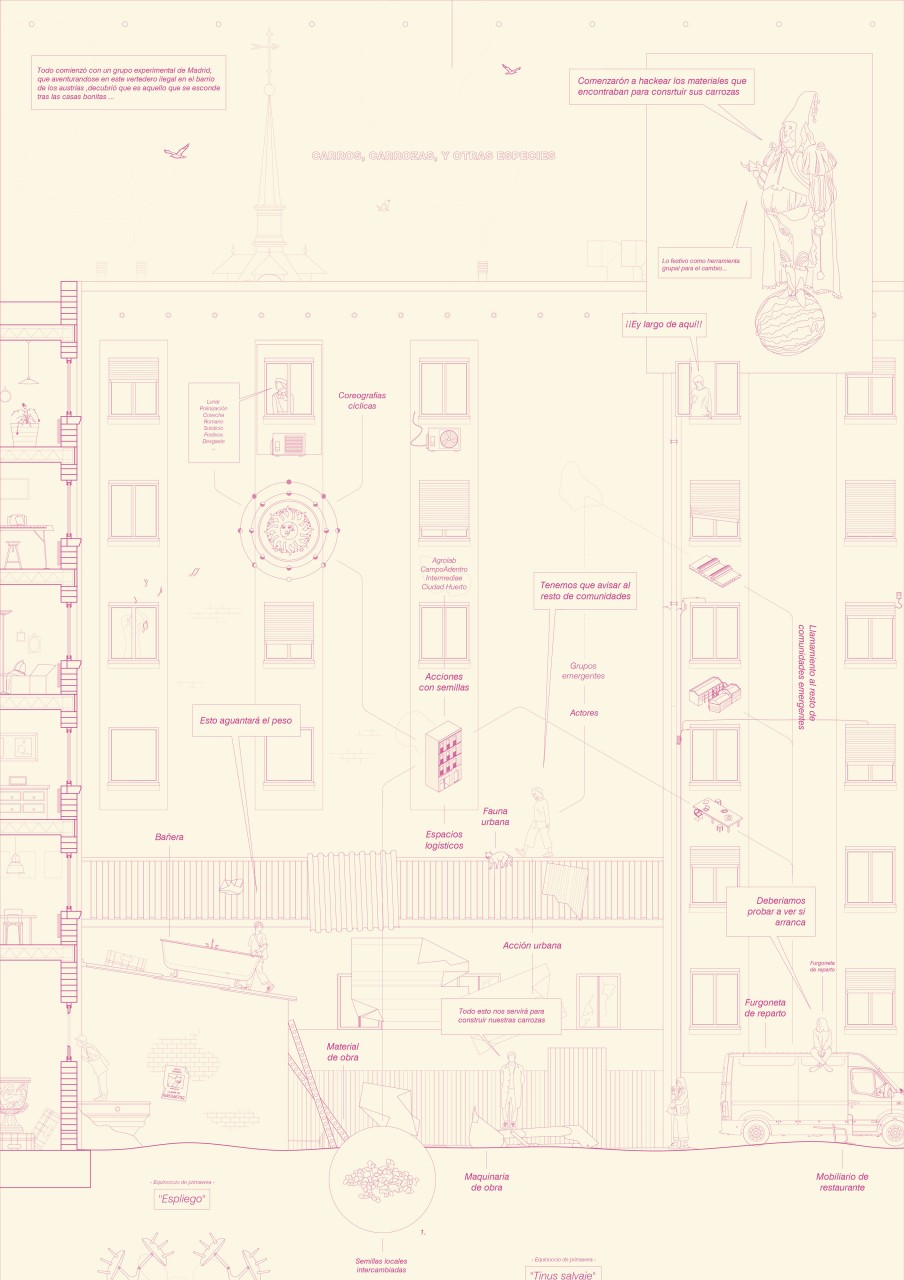
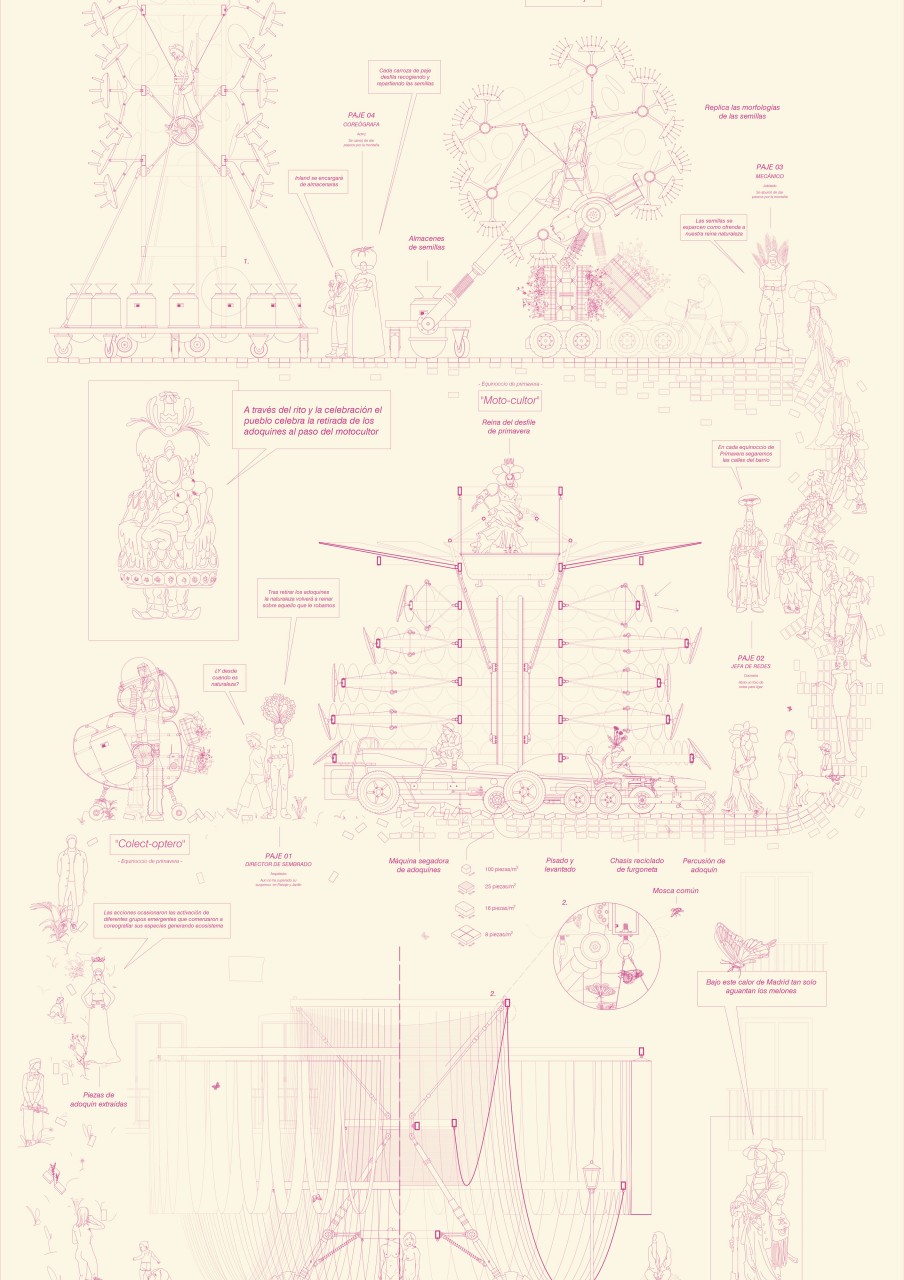
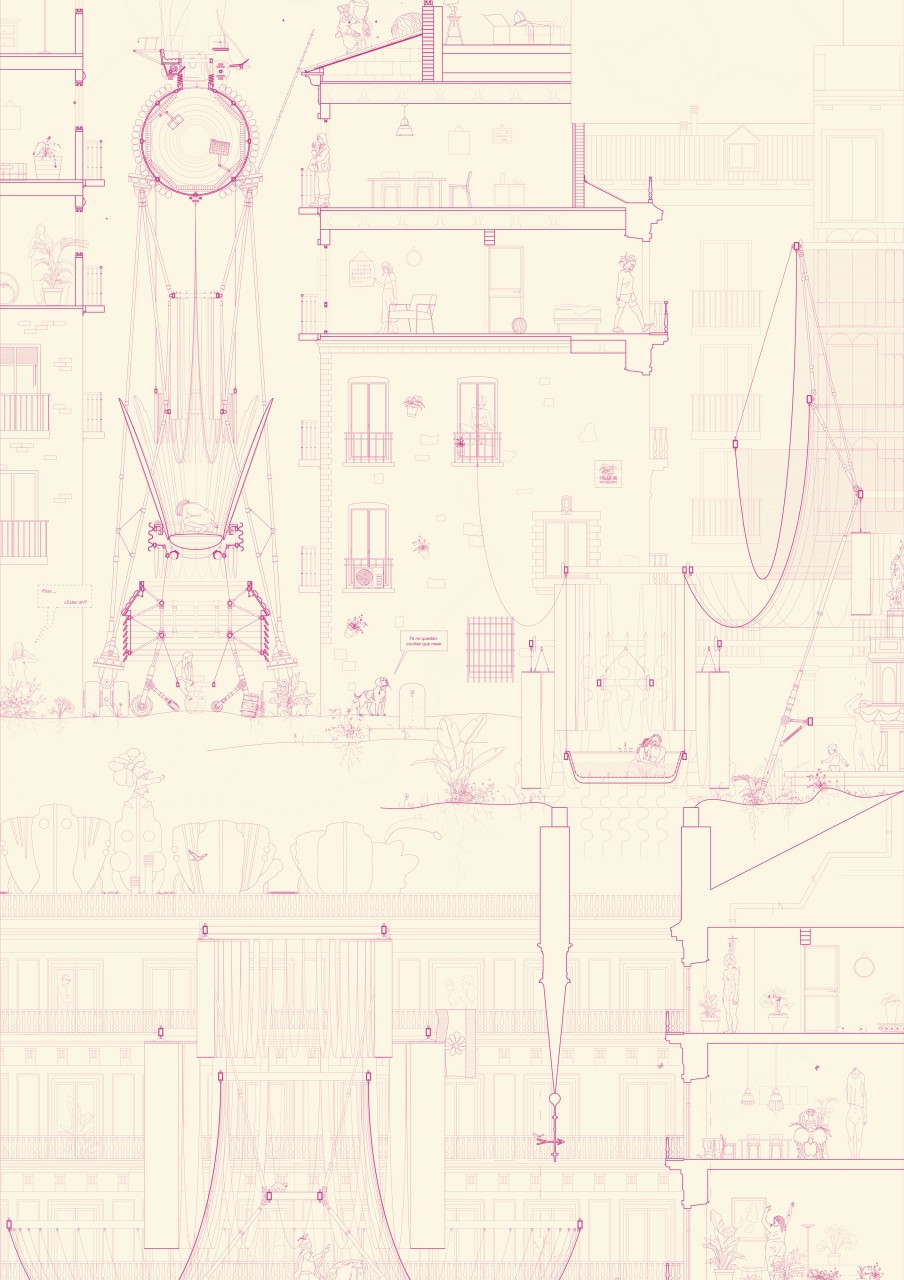
The story begins with an experimental group discovered in a dump behind the nice houses. From the hacking of an old existing van and the remains of old constructions and accumulated garbage, they started the spring festival. During the summer parade, the floats move by tearing up the pavement, experiencing together with the people, the ecological action through festivity and desire. The pages are responsible for collecting and exchanging seeds that will bloom during the year.
From this first float, the rest of the city's communities are triggered, by taking advantage of the currents generated from the parade, circulating new cars and carriages that carry out the restoration actions from the perspective of other actors involved in the city's processes.
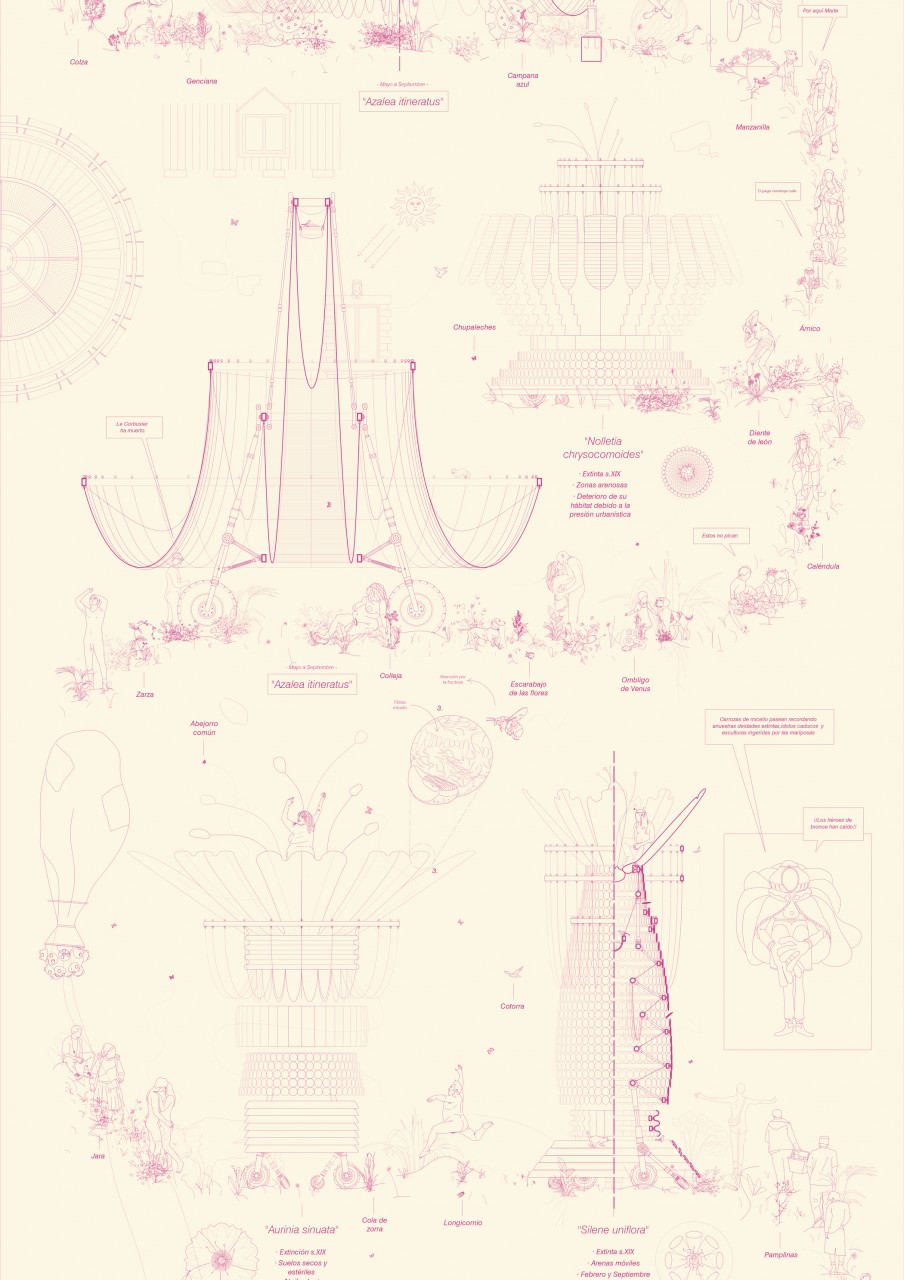
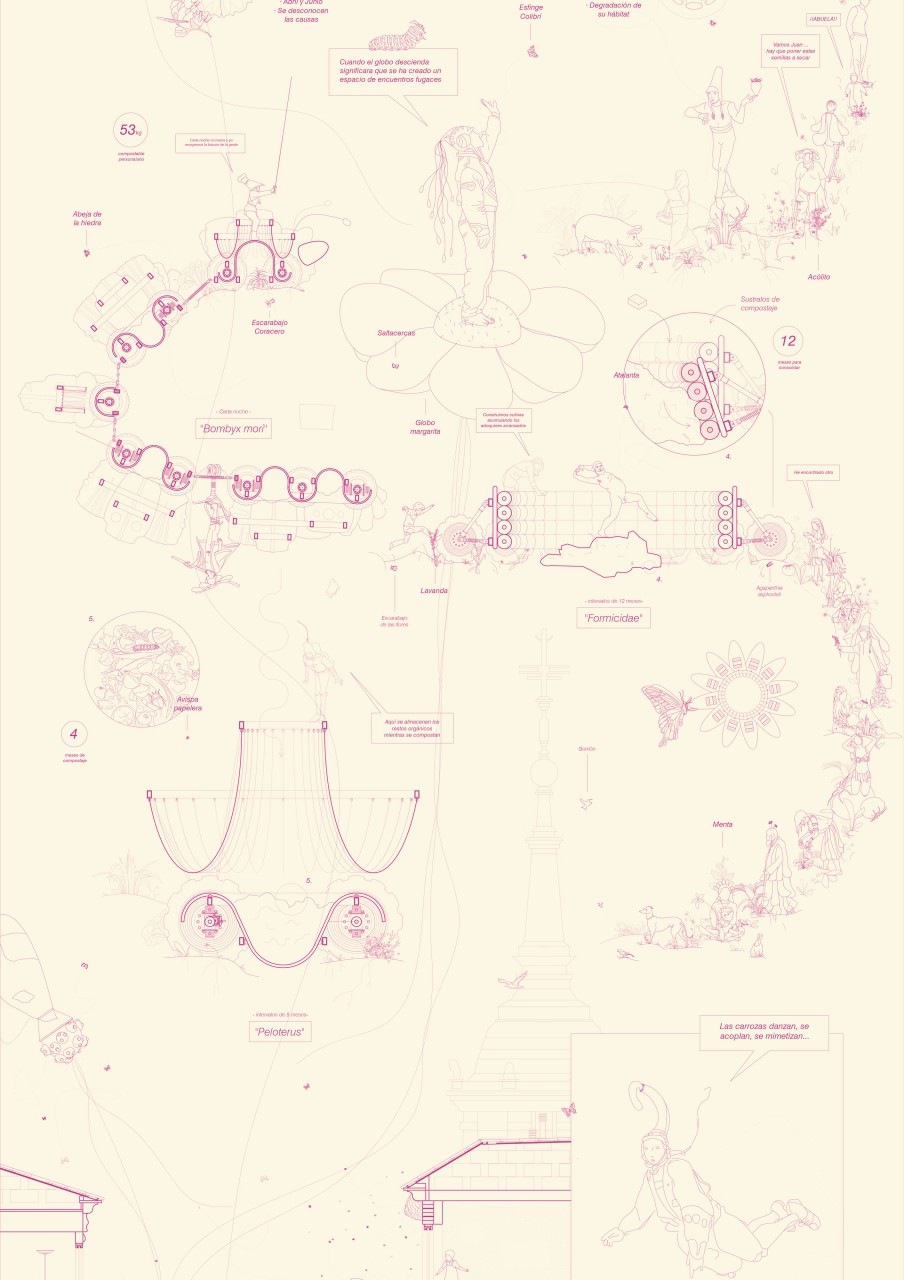
Thus, it is no longer a parade, but a choreography of species, the carriages dance around the city generating spaces of shade during the summer, migratory birds nest among their fabrics, collecting organic compounds, composting, feeding insects with the organic waste from the production of biomaterials, exposing new deities, extinct flowers, fragile idols, turning fountains into pools, and creating spaces of disuse into spaces of desire.
Each one of the carriages dances around a calendar, carrying out an agreed choreography, performing actions on the obsolescent urban environment, directed by an experimental group and associated with circulation spaces, and others of infrastructure.
In other words, unlike a parade, these are not stored passively, but instead they carry out a series of actions in each of their phases.
In relation to its construction, all the species are designed in a concentric and symmetrical way, much like a flower, made up by a set of rings, tensioners, skins, cables, textiles and arms, which creates the piece. As a result of to this system, the global choreography that arises out of each of the movements, phases and actions of all the species in the neighborhood, generates symbiosis and temporary hybridizations between the different carriages, thanks to their constructive compatibility that turns the parade into a type of ecosystem of restoration and desire with all the actors that make up the city.
The course starts off with the search for an emerging urban phenomenon in Madrid. In this case, through the adjustment of industrial processes to the household level by hacking actions, a bunch of experiments with biomaterials is analyzed and mapped for the purpose of understanding the mechanisms, actions and spaces that sets them up.
02. PROTOTYPE
Each of the emerging phenomena, placed within a space and structured by means of actors and actions in time, are hybridized together with other existing ones (analyzed by my colleagues Carmen Leguina, Sofia Marciel and Verónica Larsson).
A set of prototypes that transform the urban ecosystem arises by activating the complex mechanisms of the phenomena, which is now a hybrid, on obsolete spaces and phenomena in the city.
The prototype is designed from a global strategy, its leitmotif, a machine that restores the impaired soils of the city, with what is hidden under our cobblestones, as if those other ecosystems are casted through a flower blooming in an asphalt crack. Thus, taking advantage of the existing pollination threads in symbiosis with the production processes of biomaterials, it works as a mobile catalyst that travels around the city in a disruptive way, ripping off pavements, permeabilizing the ground, and enhancing the natural processes within the city.
03. HOSTING
The prototype unfolds its actions in the area of El Madrid de los Austrias. An urban fabric made of granite and shady bars at street level, underground car parks and Muslim relics. The prototype begins to be characterized within a specific context by interacting with nature and the ecosystems of which it is made up by in all its strata, transcending the pavement, and understanding the dynamics of the city from the human, non-human, vegetables, historical, hidden, spores... actors' point of view, to those cars and carriages that wandered our liveliness in the neighborhood for years, now new urban species are added.
04. HANDBOOK
The story begins with an experimental group discovered in a dump behind the nice houses. From the hacking of an old existing van and the remains of old constructions and accumulated garbage, they started the spring festival. During the summer parade, the floats move by tearing up the pavement, experiencing together with the people, the ecological action through festivity and desire. The pages are responsible for collecting and exchanging seeds that will bloom during the year.
From this first float, the rest of the city's communities are triggered, by taking advantage of the currents generated from the parade, circulating new cars and carriages that carry out the restoration actions from the perspective of other actors involved in the city's processes.
Thus, it is no longer a parade, but a choreography of species, the carriages dance around the city generating spaces of shade during the summer, migratory birds nest among their fabrics, collecting organic compounds, composting, feeding insects with the organic waste from the production of biomaterials, exposing new deities, extinct flowers, fragile idols, turning fountains into pools, and creating spaces of disuse into spaces of desire.
Each one of the carriages dances around a calendar, carrying out an agreed choreography, performing actions on the obsolescent urban environment, directed by an experimental group and associated with circulation spaces, and others of infrastructure.
In other words, unlike a parade, these are not stored passively, but instead they carry out a series of actions in each of their phases.
In relation to its construction, all the species are designed in a concentric and symmetrical way, much like a flower, made up by a set of rings, tensioners, skins, cables, textiles and arms, which creates the piece. As a result of to this system, the global choreography that arises out of each of the movements, phases and actions of all the species in the neighborhood, generates symbiosis and temporary hybridizations between the different carriages, thanks to their constructive compatibility that turns the parade into a type of ecosystem of restoration and desire with all the actors that make up the city.
- 00 - Description
- 01 - EMERGING PHENOMENA
- 02 - PROTOTYPE
- 03 - CARS AND CARRIAGES
- 04 - HOSTING
- 05 - 01.OTHER SPECIES
- 06 - 02. OTHER SPECIES
- 07 - 03. SPECIES
- 08 - 04. SPECIES
- 09 - 05.SPECIES
- 10 - 06. SPECIES
- 11 - Video