
EnjambrHadass
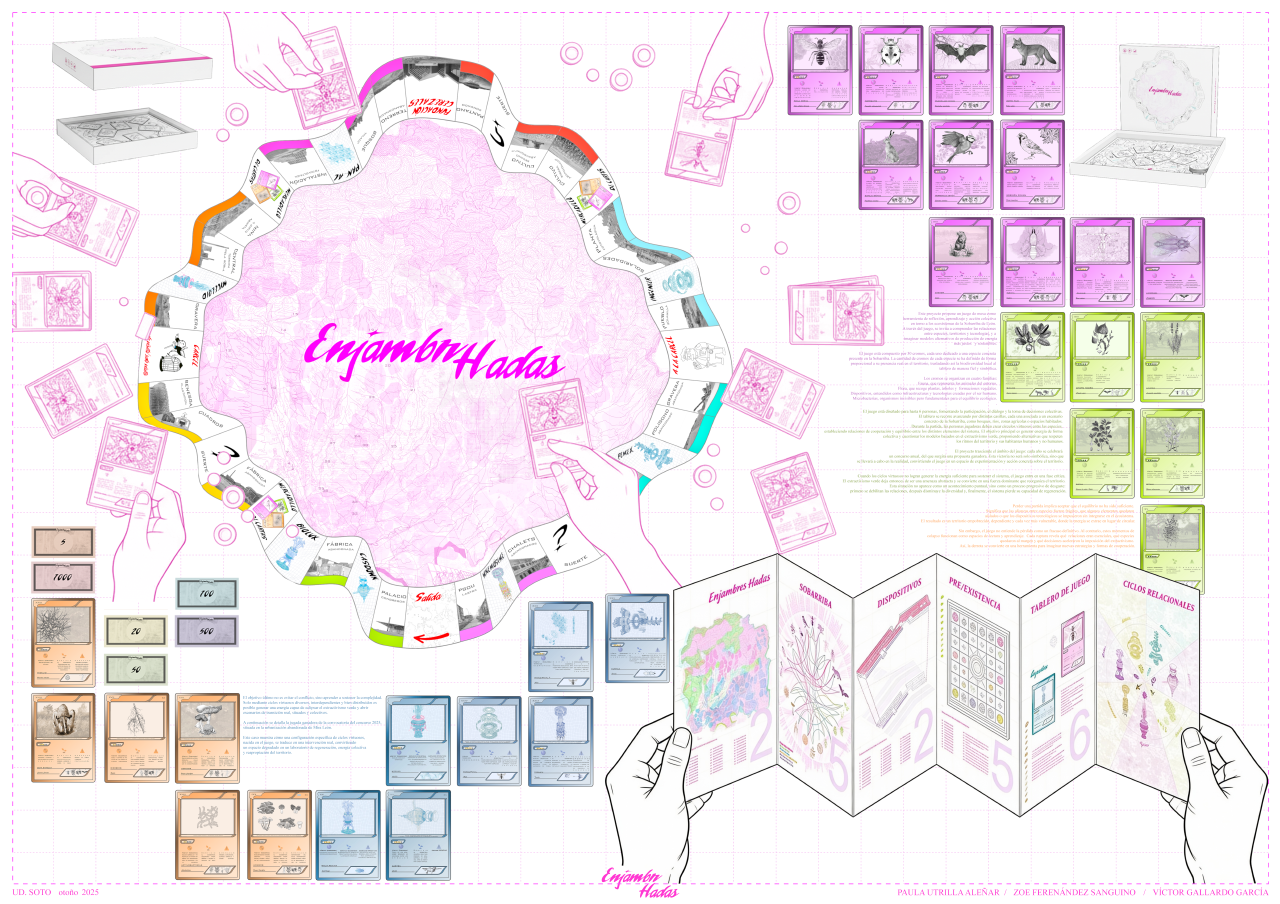
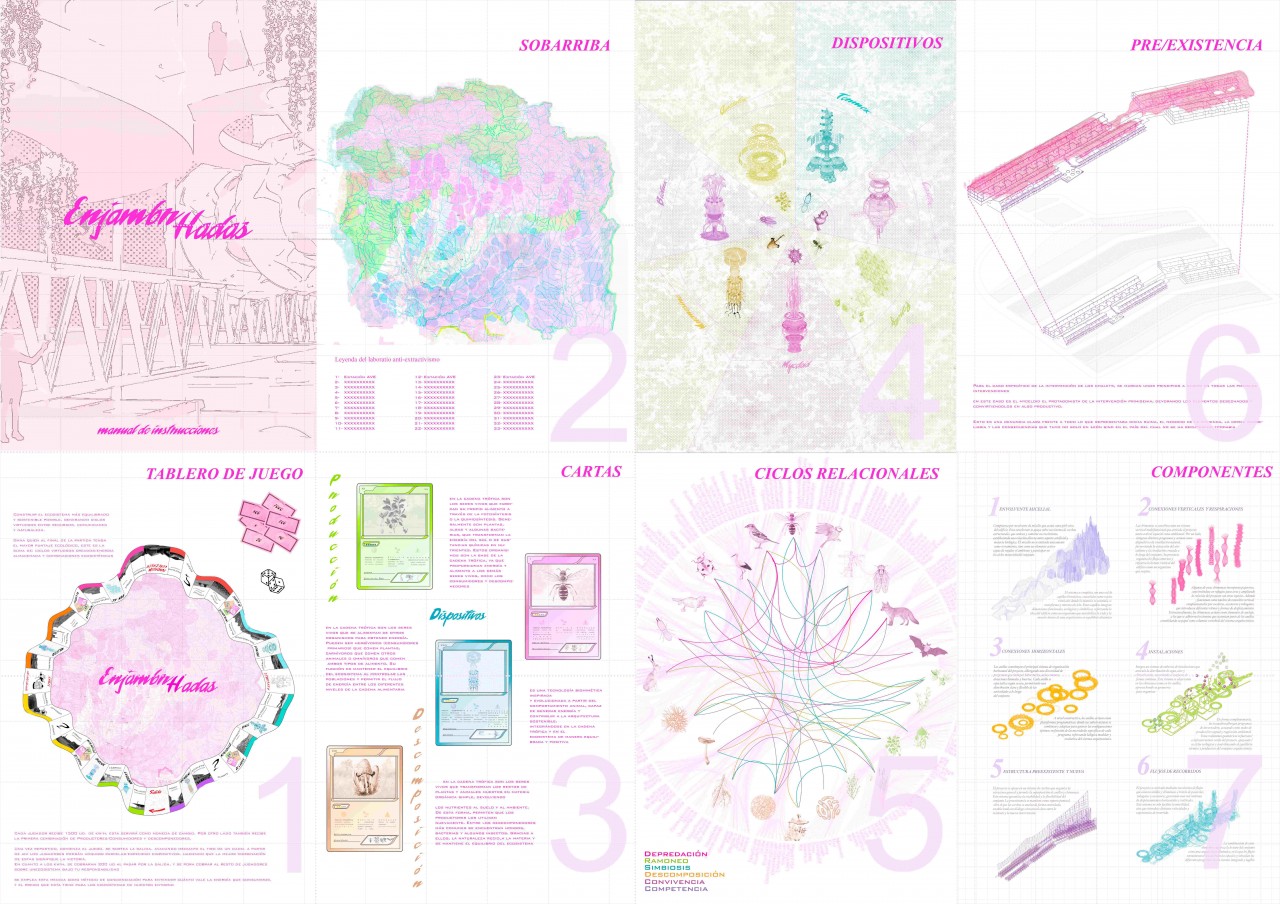
This project proposes a board game as a tool for reflection, learning, and collective action around the ecosystems of Sobarriba (León). Through play, it invites participants to understand the relationships between species, territories, and technologies, and to imagine alternative, fair, and sustainable models of energy production. The game consists of 30 cards, each dedicated to a specific species found in Sobarriba. The number of cards assigned to each species has been determined proportionally to its presence in the territory, thereby translating local biodiversity onto the board in both a faithful and symbolic way. The cards are organised into four families: Fauna, representing the animals of the environment; Flora, encompassing plants, trees, and vegetative formations; Devices, understood as infrastructures and technologies created by humans; and Microbacteria, organisms that are invisible yet fundamental to ecological balance.
EnjambrHadas proposes an energy system that operates as a swarm, in which biomass and life cycles generate local energy. The project pursues two clear objectives: to bring an end to green extractivism, and to demonstrate that community-based work and interspecies collaboration are key to sustaining life cycles that produce energy in a symbiotic, synanthropic, and sustainable way.
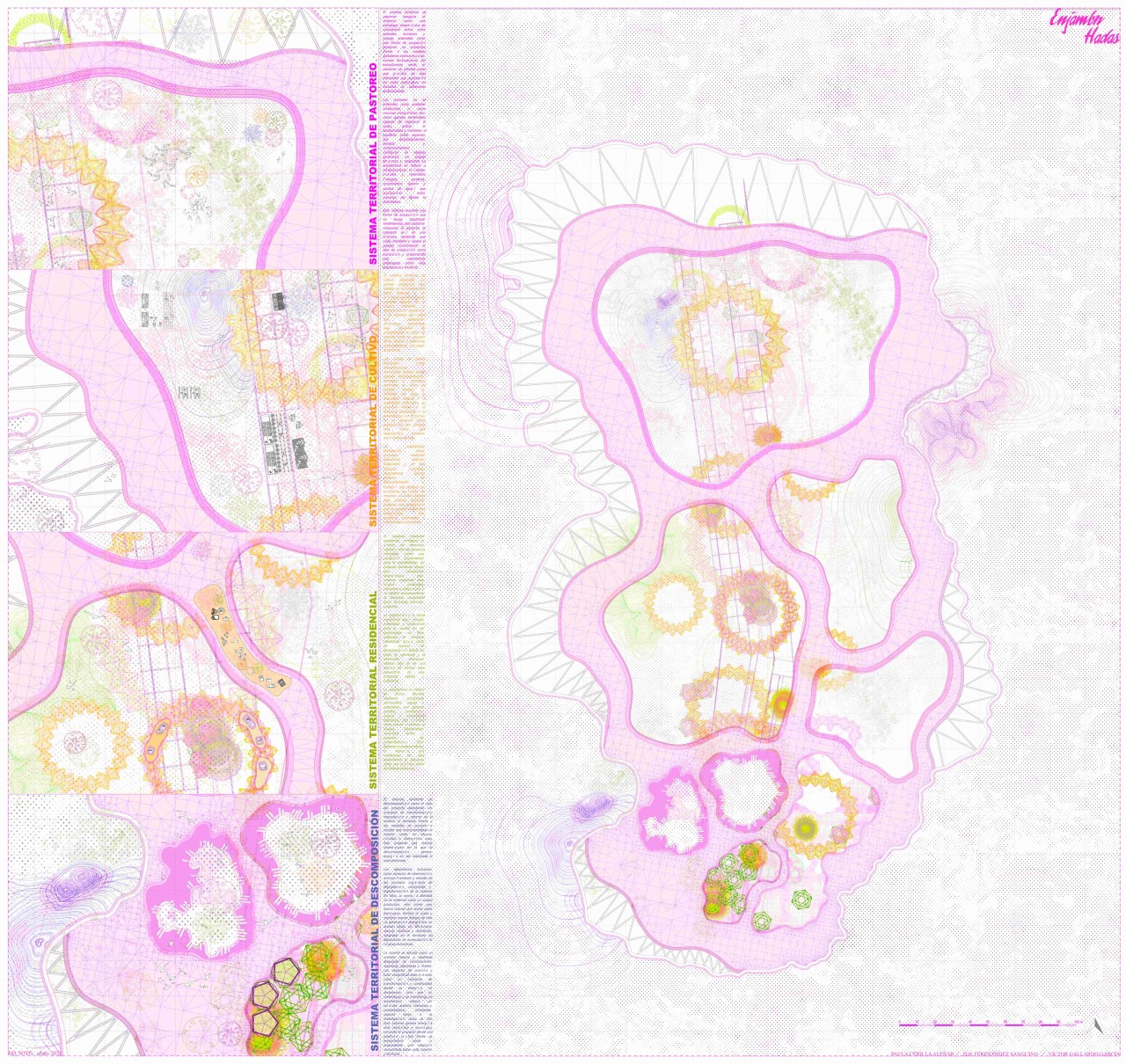
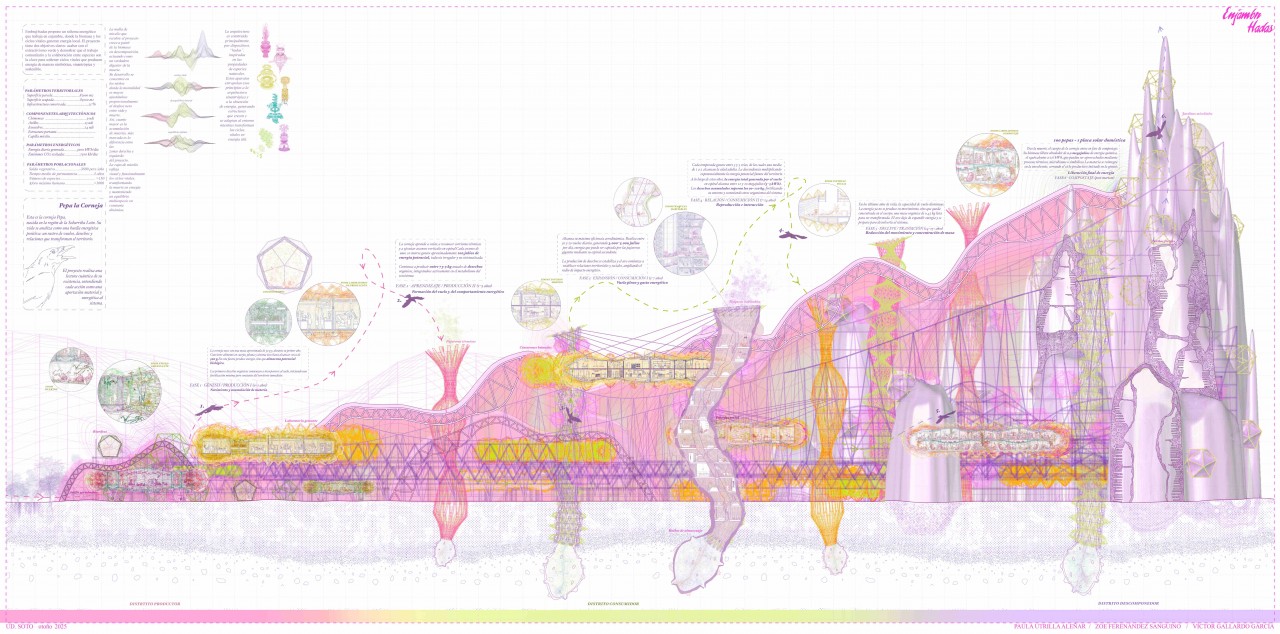
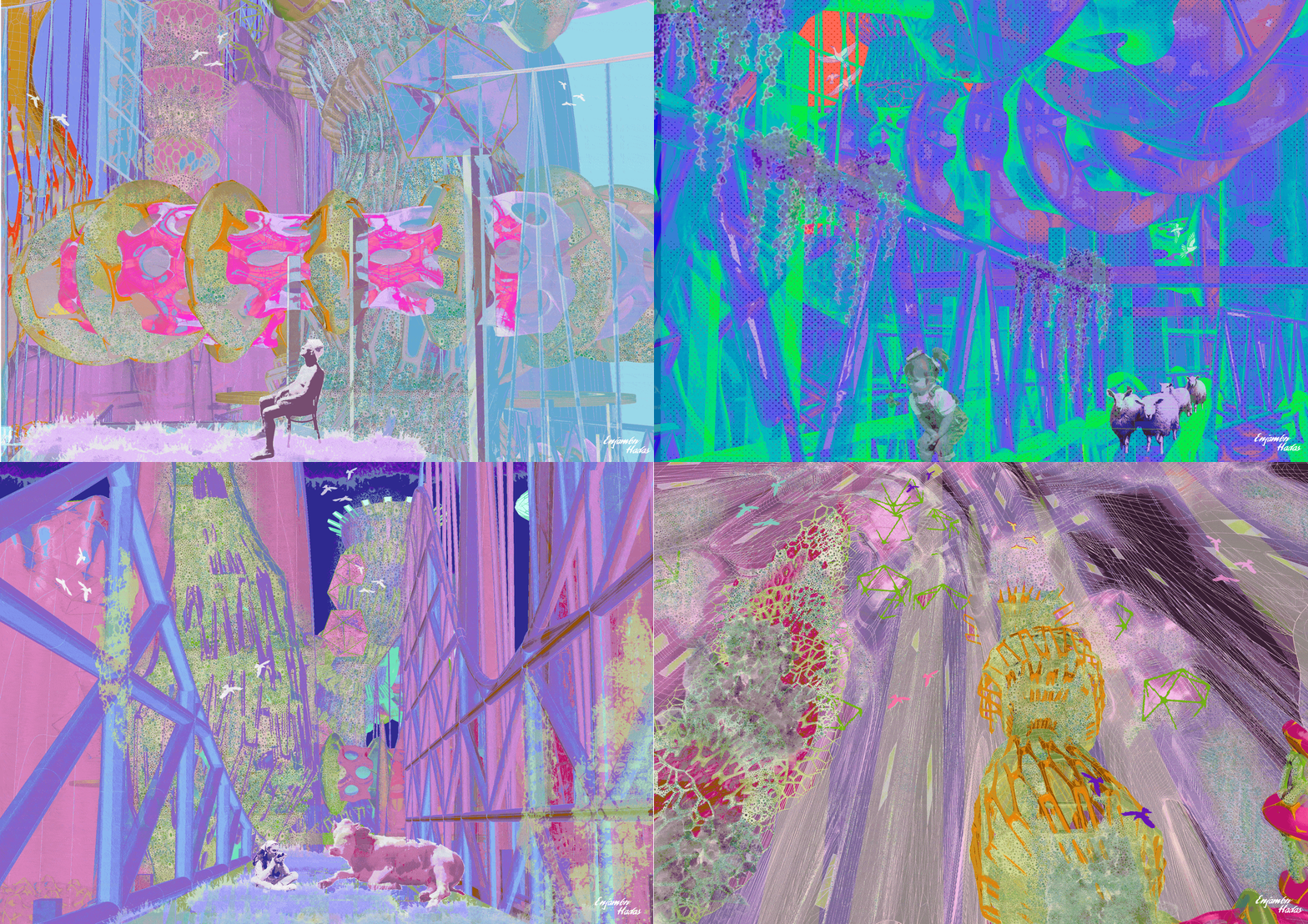
The result is a complex conceived as a meeting place for all species that visit Sobarriba, and as a hub against green extractivism. In this sense, the complex comprises four components: the infrastructure of the pre-existing structure and a newly built one; the rings as horizontal connections; the chimneys as vertical connections; and a mycelial layer that covers most of the ensemble and constitutes its strongest critique.
The mycelial mesh that envelops the project grows from decomposing biomass, operating as a true digester of death. Its development concentrates in the niches where mortality is highest, adjusting proportionally to the net imbalance between life and death. Thus, the greater the accumulation of deaths, the more pronounced the difference becomes between the right- and left-hand zones of the project. The mycelial layer reflects life cycles both visually and functionally, transforming death into energy and sustaining a constantly shifting multispecies equilibrium.
Lastly, we sought to represent the project’s metabolic function through a simulation of the energy generated by a species that uses the commune: PEPA the carrion crow.
EnjambrHadas proposes an energy system that operates as a swarm, in which biomass and life cycles generate local energy. The project pursues two clear objectives: to bring an end to green extractivism, and to demonstrate that community-based work and interspecies collaboration are key to sustaining life cycles that produce energy in a symbiotic, synanthropic, and sustainable way.
The result is a complex conceived as a meeting place for all species that visit Sobarriba, and as a hub against green extractivism. In this sense, the complex comprises four components: the infrastructure of the pre-existing structure and a newly built one; the rings as horizontal connections; the chimneys as vertical connections; and a mycelial layer that covers most of the ensemble and constitutes its strongest critique.
The mycelial mesh that envelops the project grows from decomposing biomass, operating as a true digester of death. Its development concentrates in the niches where mortality is highest, adjusting proportionally to the net imbalance between life and death. Thus, the greater the accumulation of deaths, the more pronounced the difference becomes between the right- and left-hand zones of the project. The mycelial layer reflects life cycles both visually and functionally, transforming death into energy and sustaining a constantly shifting multispecies equilibrium.
Lastly, we sought to represent the project’s metabolic function through a simulation of the energy generated by a species that uses the commune: PEPA the carrion crow.
- 00 - Description
- 01 - Game Board
- 02 - Game Instructions
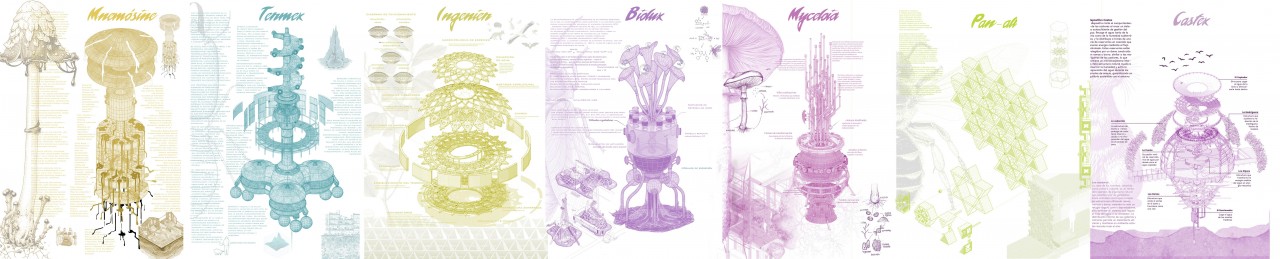
- 03 - Tech Devices
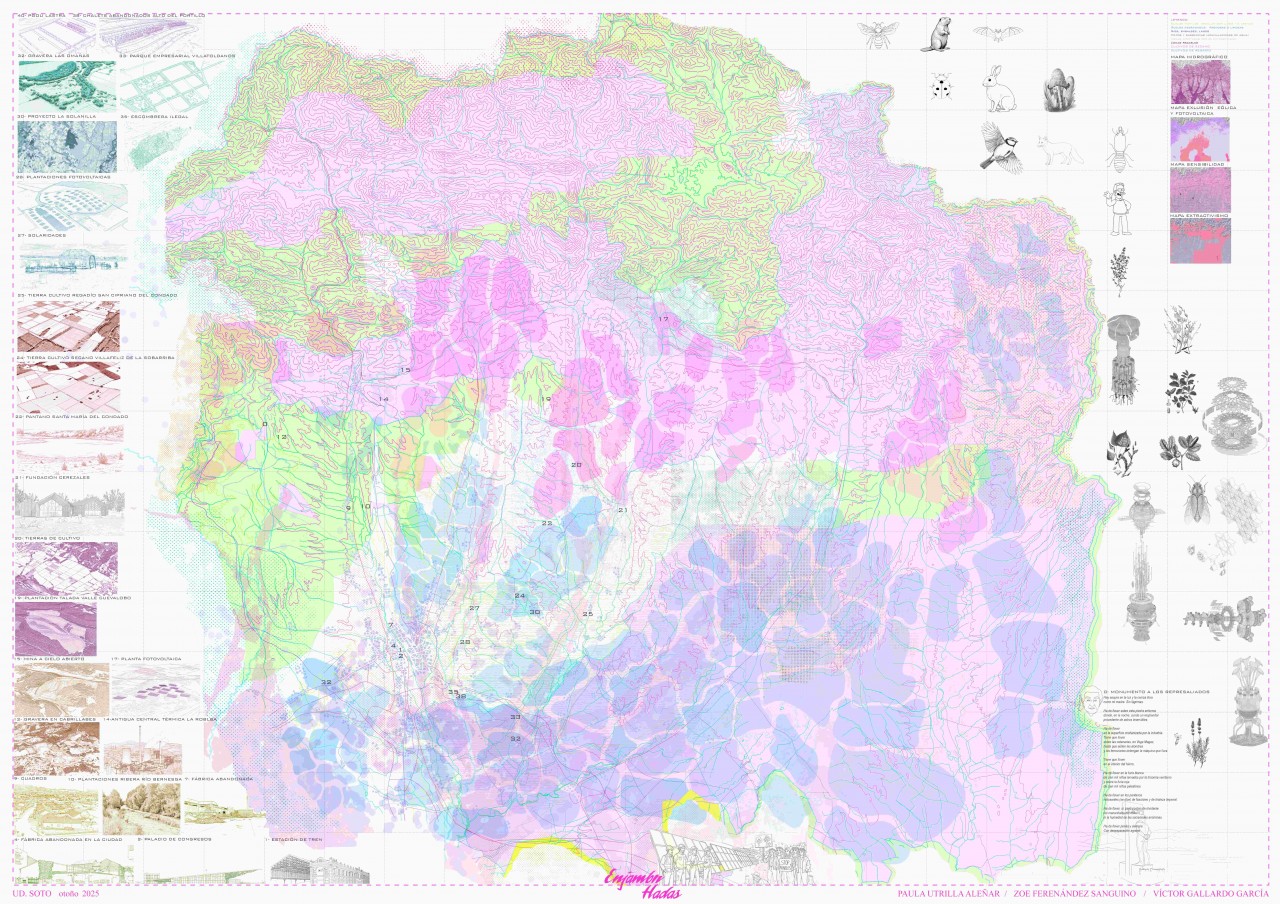
- 04 - Location Plan
- 05 - Architectural Plan
- 06 - Metabolic Section
- 07 - Project Visuals