
Esponjando Nuevos Ministerios
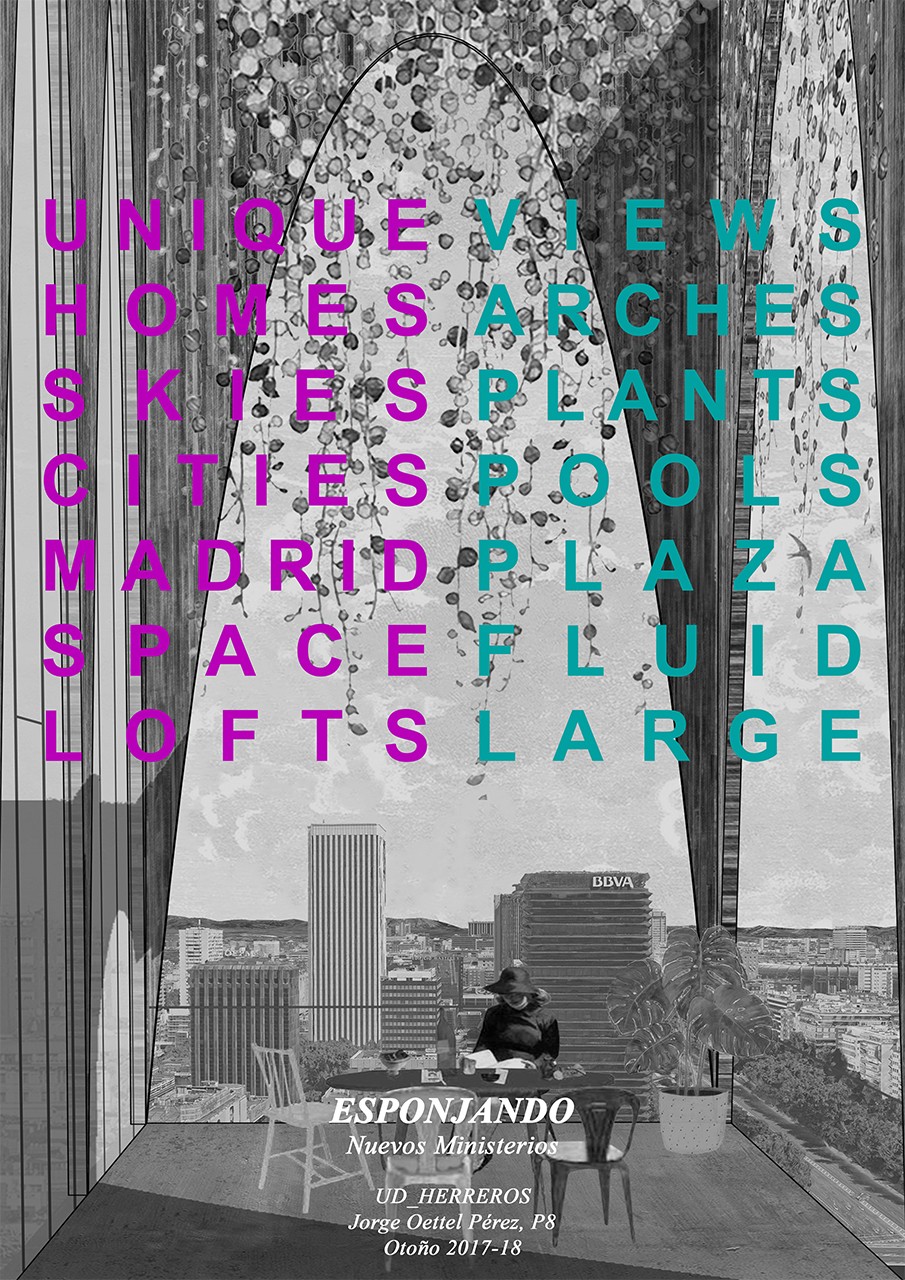
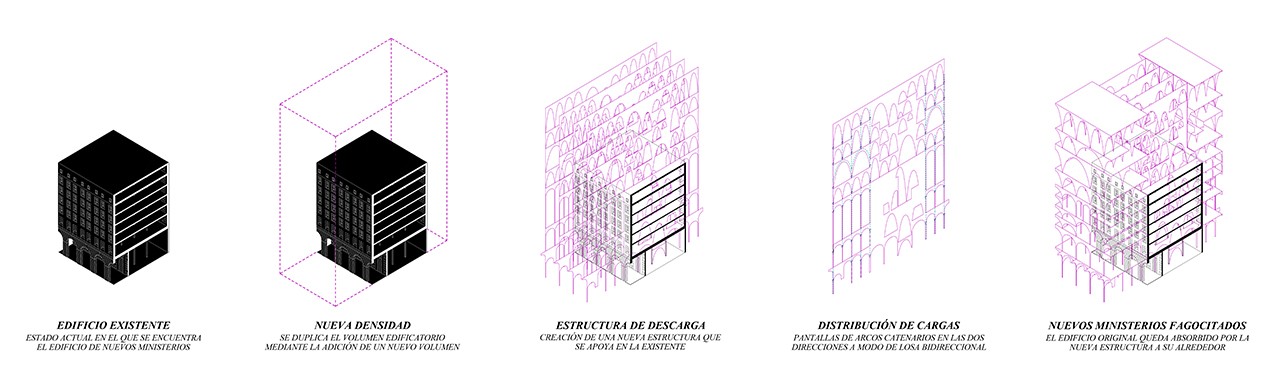
Nuevos Ministerios building used to be the north limit of Madrid when it was built. However, nowadays it has become a barrier for Chamberí neighborhood mainly because the content it houses has nothing to do with the neighborhood that surround it. With this in mind, the project lays out a new typology for the building: Housing. To do that it lays out an increase in the density of the building by the addition of a new volume to hold not only all the housing but also all the facilities that both the new tenants and Chamberí neighborhood require.
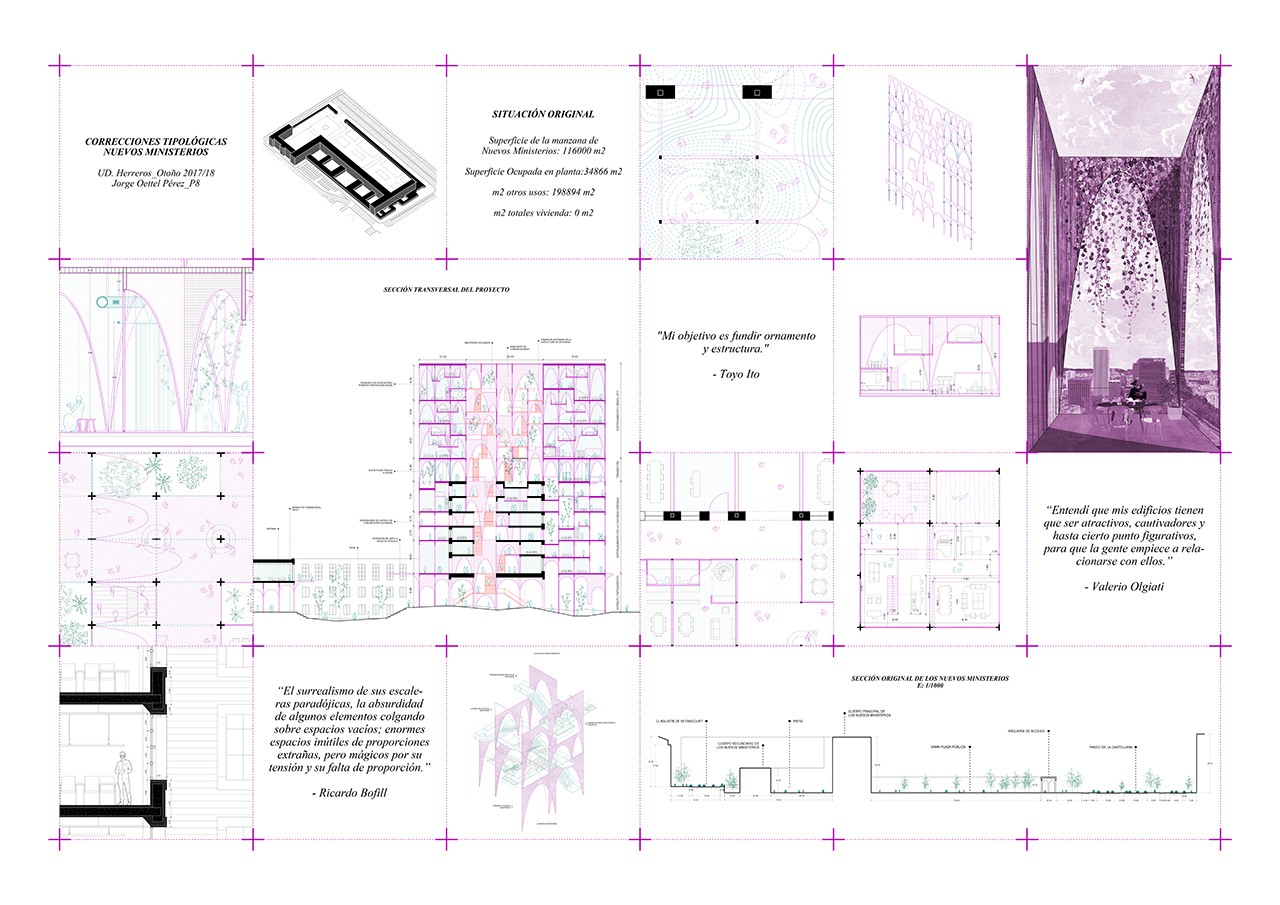
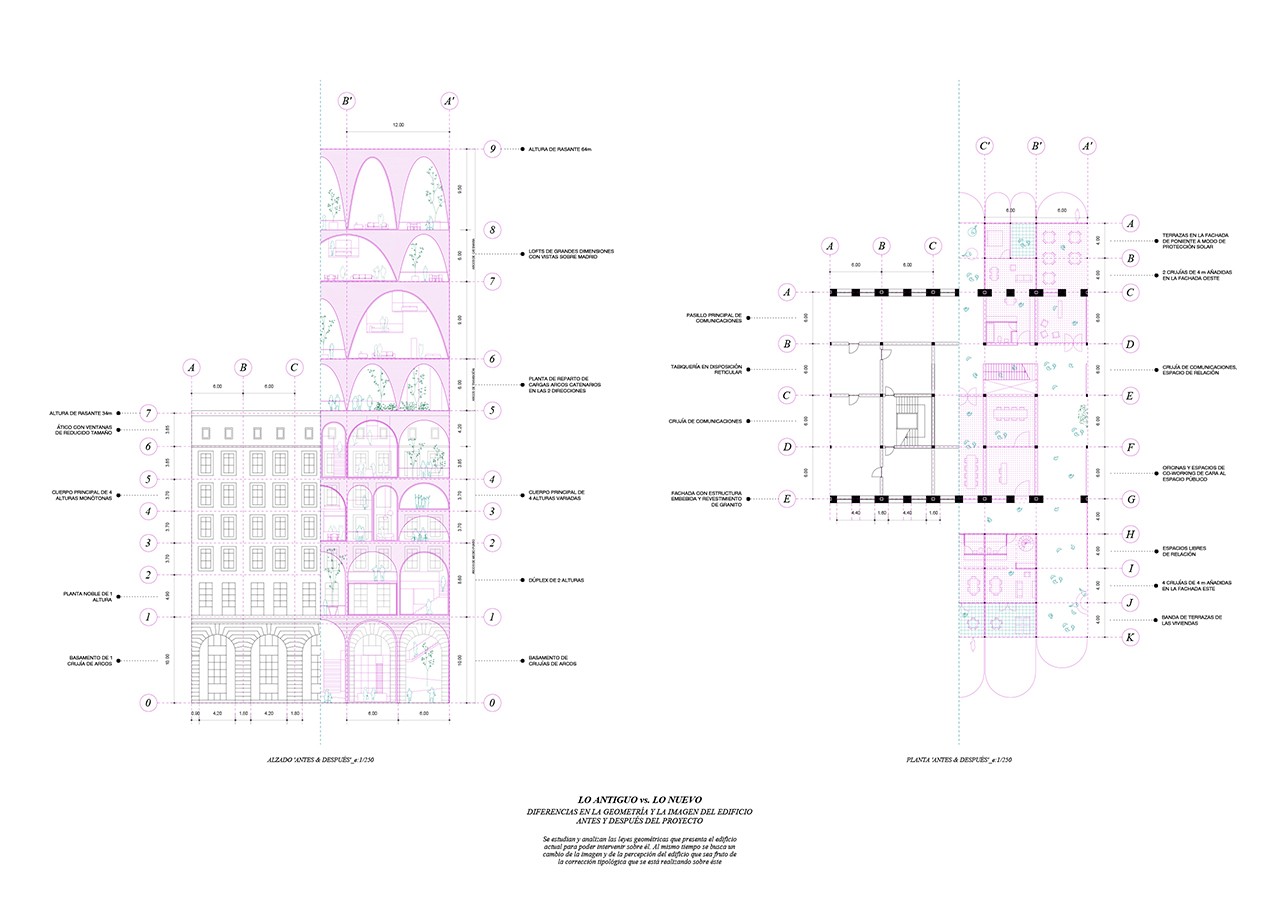
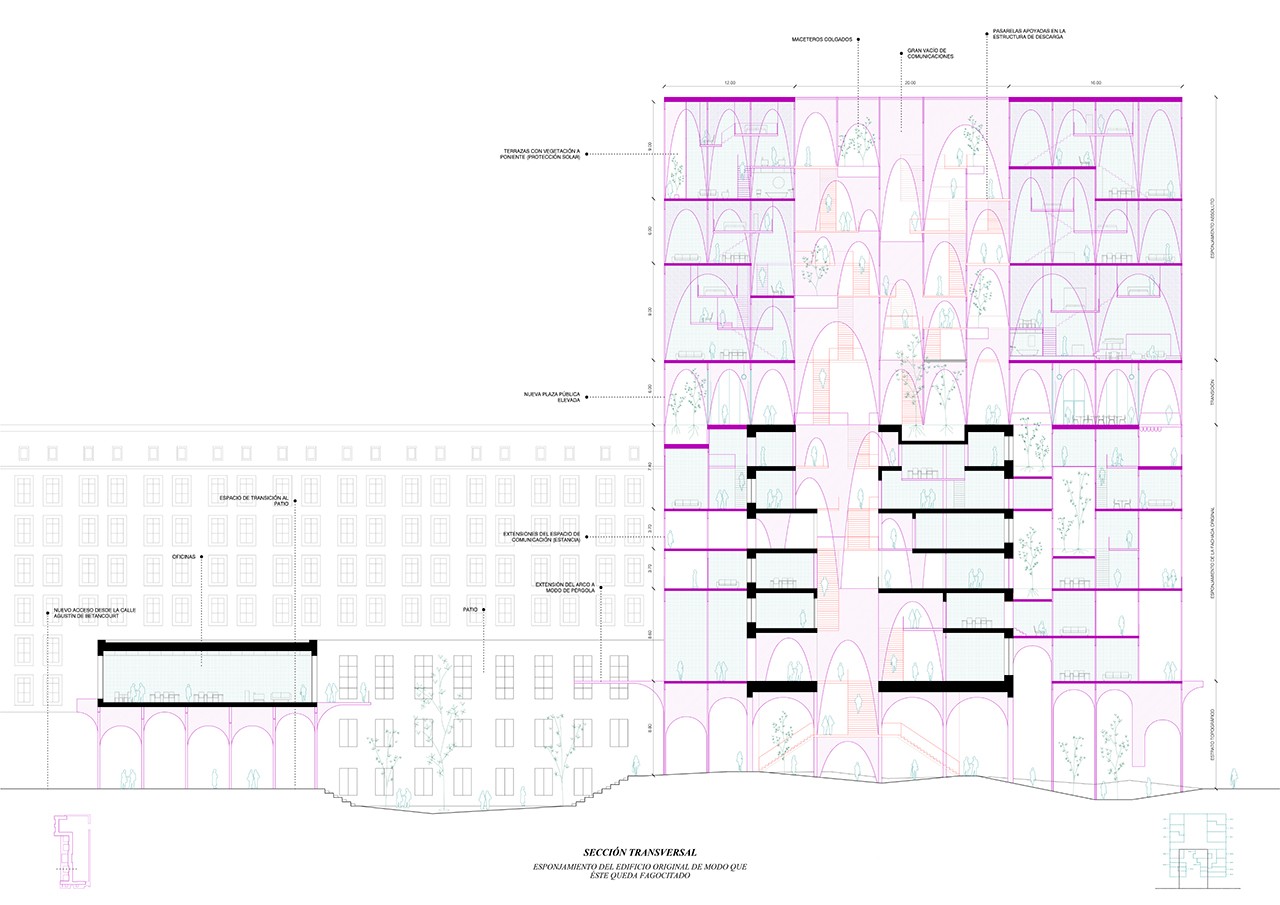
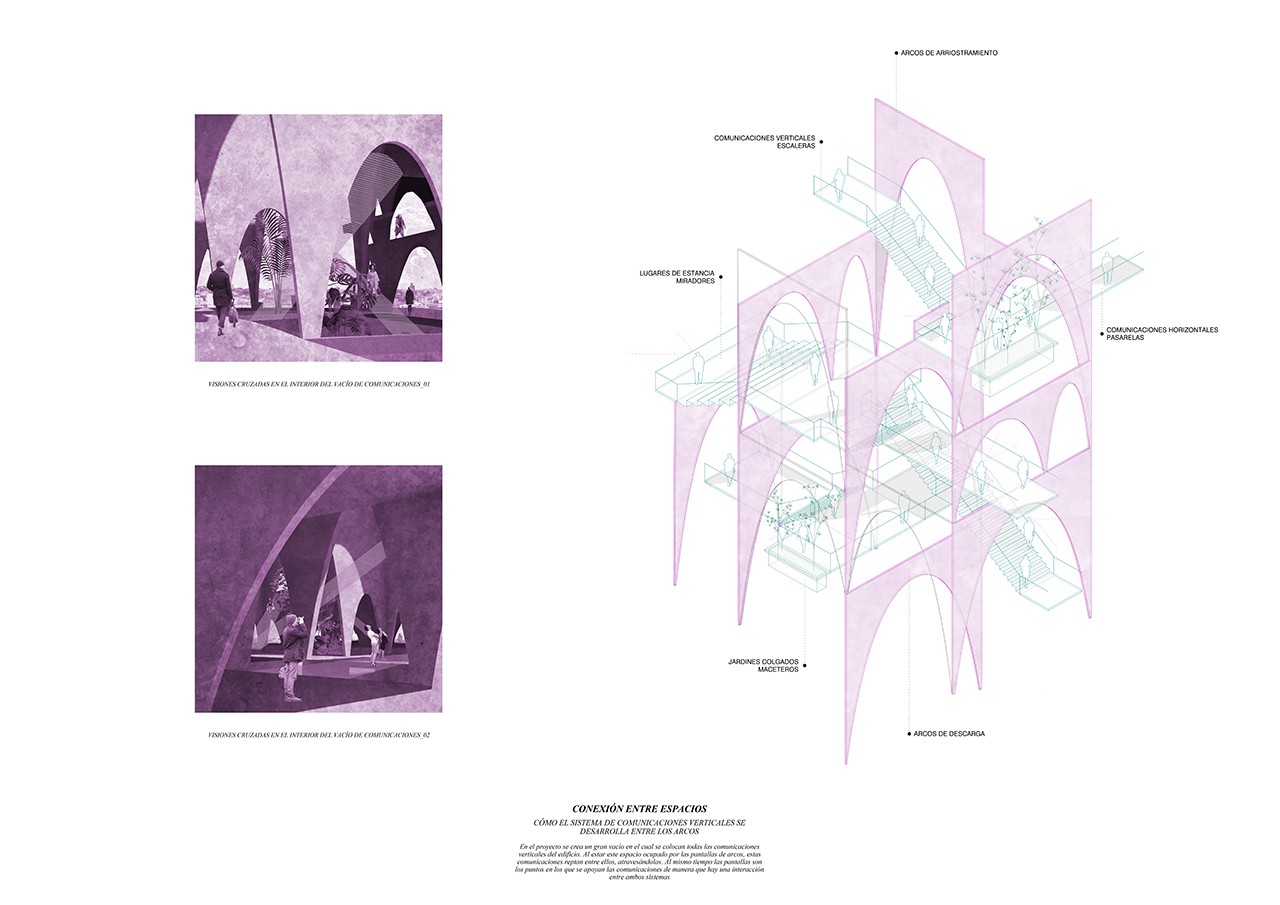
This new volume needs a structure so the project makes the decision of creating perforated ribs that works, structurally, with the original structure of the building. As result the original building is absorbed and surrounded by all this new structure. The façade is now part of the homes and the public space so some transformations take place such as making the windows became doors or walkways.
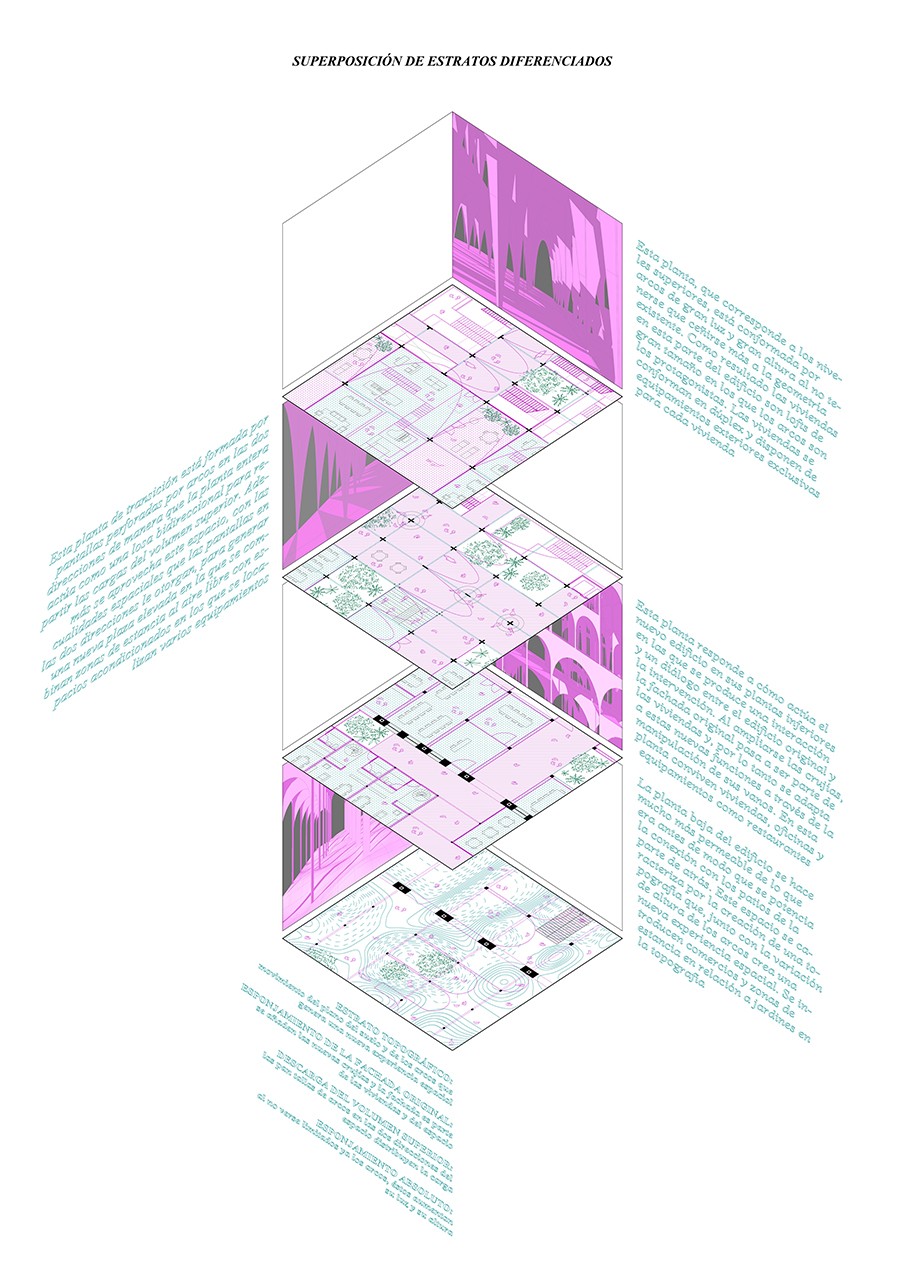
The project creates 4 different stratums depending on the position in relation with the original building and how the ribs are conceived in that part. There is a ‘Topographic Stratum’ at the ground level, which creates a new spatial experience due to the movement of both the floor and the height of the arches. The next stratum is conceived as a ‘Sponging of the Original Façade’ because, as long as there is a new façade, the original one become part of the homes and the public space. Above that -placed at what used to be the rooftop of the original building- there is the ‘Load Transition Story’ which is formed by ribs arranged in the two perpendicular directions that leads the loads from the upper volume to the structure underneath. The stratum at the top is conceived as ‘Maximum Sponging’ as long as both the span and height of the arches multiply. All the building is connected by the communication space which at the beginning, when it has to lead with the original building, is forced to the 6m corridor but once it is over the rooftop it multiples up to a 20m creating an open courtyard that let the sunlight penetrates into the building.
The project creates different types of housing because it understands that all those different stratums -as well as the relation with the original building- lead into different spatial conditions. So, there are smaller homes -located where the original façade sponges- where the original façade takes an important role in the apartments. Moreover, there are luxury penthouses at the top as well which are conceived as lofts and they have some of the rooms hanged of the ceiling as well as private outdoor spaces.
This new volume needs a structure so the project makes the decision of creating perforated ribs that works, structurally, with the original structure of the building. As result the original building is absorbed and surrounded by all this new structure. The façade is now part of the homes and the public space so some transformations take place such as making the windows became doors or walkways.
The project creates 4 different stratums depending on the position in relation with the original building and how the ribs are conceived in that part. There is a ‘Topographic Stratum’ at the ground level, which creates a new spatial experience due to the movement of both the floor and the height of the arches. The next stratum is conceived as a ‘Sponging of the Original Façade’ because, as long as there is a new façade, the original one become part of the homes and the public space. Above that -placed at what used to be the rooftop of the original building- there is the ‘Load Transition Story’ which is formed by ribs arranged in the two perpendicular directions that leads the loads from the upper volume to the structure underneath. The stratum at the top is conceived as ‘Maximum Sponging’ as long as both the span and height of the arches multiply. All the building is connected by the communication space which at the beginning, when it has to lead with the original building, is forced to the 6m corridor but once it is over the rooftop it multiples up to a 20m creating an open courtyard that let the sunlight penetrates into the building.
The project creates different types of housing because it understands that all those different stratums -as well as the relation with the original building- lead into different spatial conditions. So, there are smaller homes -located where the original façade sponges- where the original façade takes an important role in the apartments. Moreover, there are luxury penthouses at the top as well which are conceived as lofts and they have some of the rooms hanged of the ceiling as well as private outdoor spaces.



- 00 - Description
- 01 - Cover
- 02 - Process
- 03 - Project Diagram
- 04 - Old vs. New
- 05 - Section
- 06 - Stratums
- 07 - Stories
- 08 - Communication
- 09 - Housing
- 10 - Model