
EXOESTÓMAGO (EXOSTOMACH)
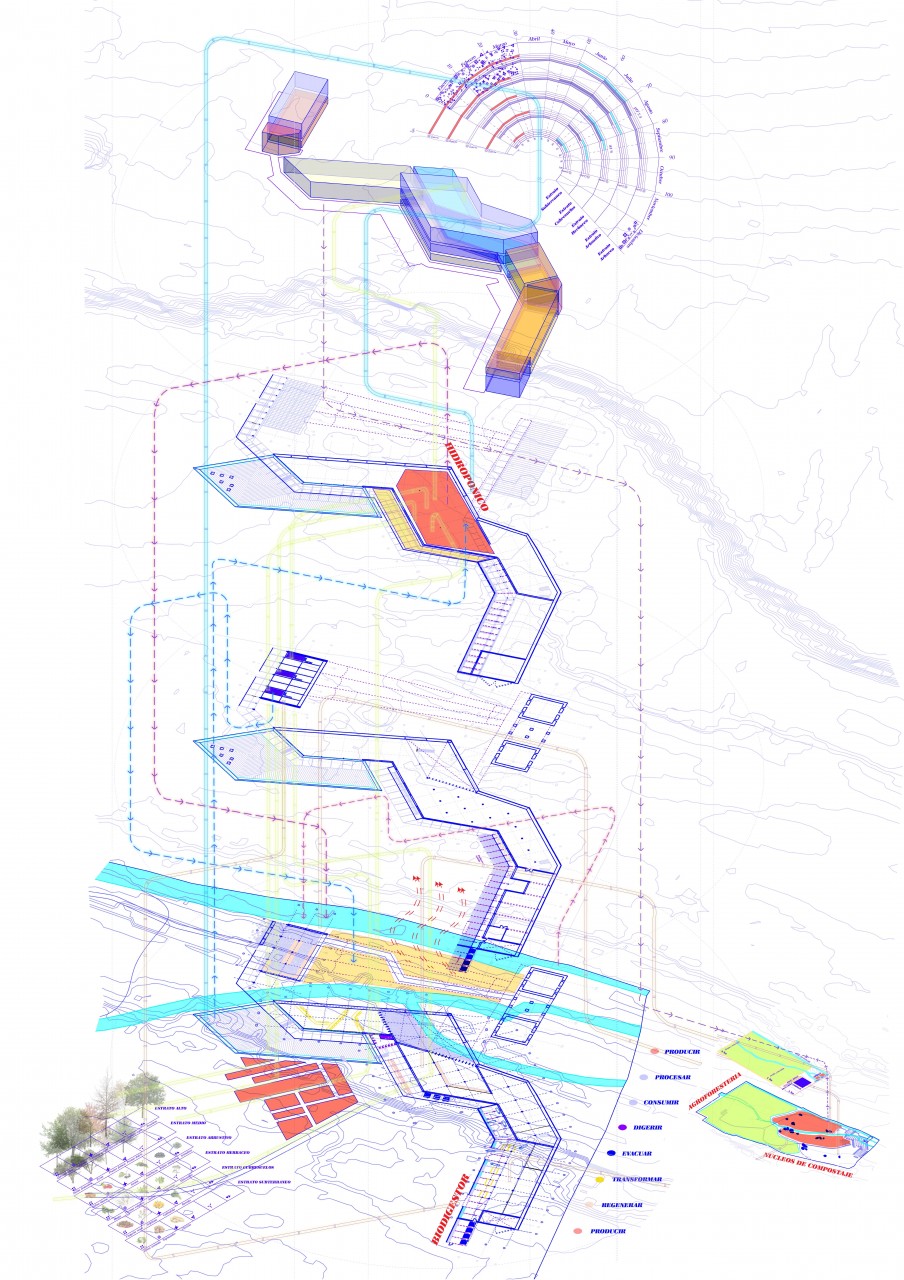
EXOESTÓMAGO responds to the traditional extractive model, where the process of production consumption and waste are conceiled, by proposing a new way of building where urban clusters become not a set of isolated buildings, but a multispecies metabolic organism. The project forms part of an agroecological cooperative inhabited by a hundred people in the territory of León, where each bulding becomes a micropowerplant that exposes its internal functionalities. Exo-stomach responds to the alimentary necessities of the cooperative and sevres as an example of green agriculture practices.
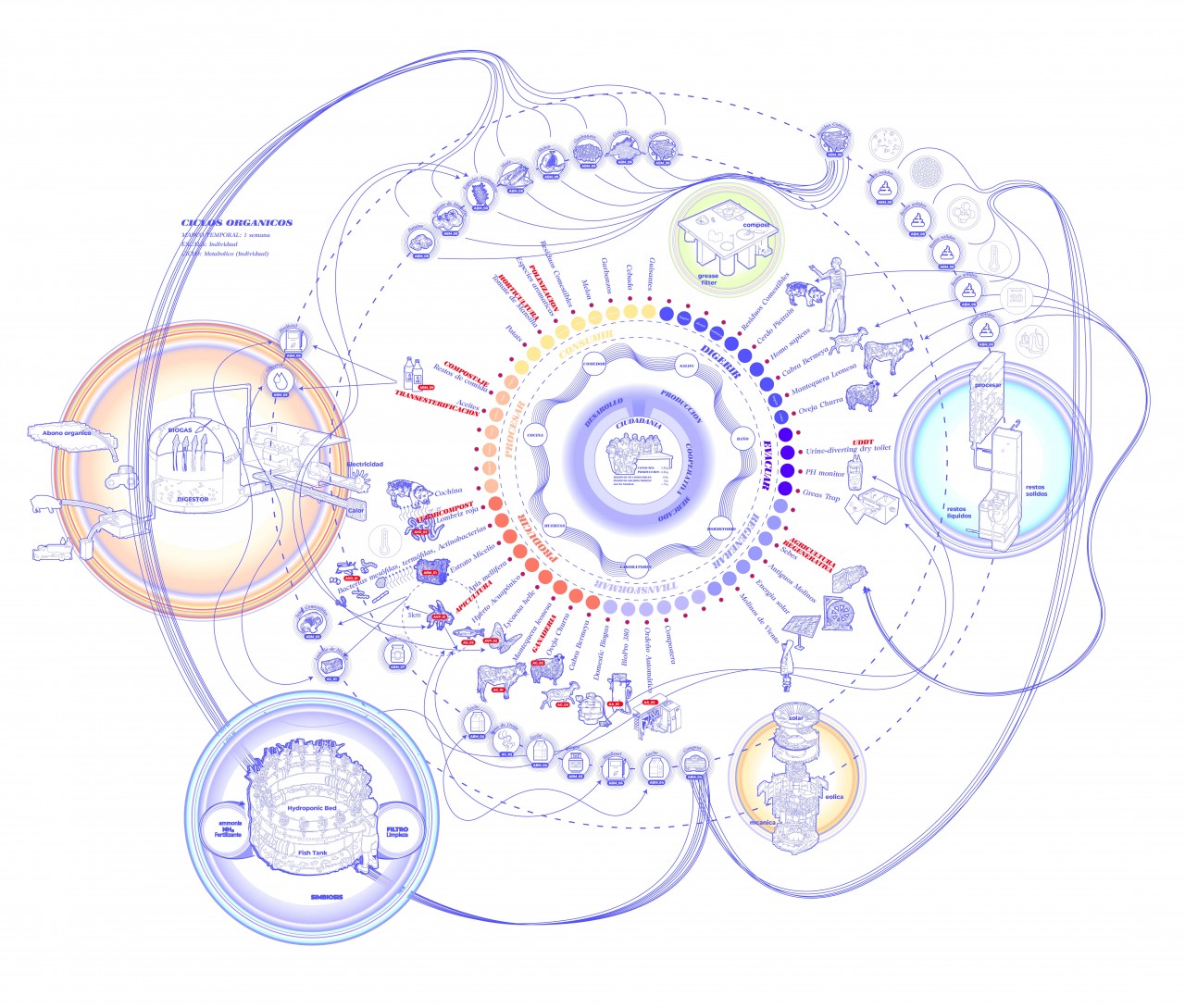
The territory is progressively transformed through the practice of agroforestry, proposing an edible forest paired with productive gardens and aquaponics systems, where production and regeneration coexist. The cycle of PRODUCE - PROCESS - CONSUME - DIGEST - EVACUATE - TRANSFORM - REGENERATE is the heart of the project and is tightley intertwined both with the bulding program and its spatial organisation, as well as all the agents interacting with it, representing a cycle that could be extrapolated to any organic process.
The project is structured through different agents that participate in the shared metabolism:
Pollinating agents (bees, butterflies, birds)
Livestock agents (cows, sheep, chickens)
Detritivorous agents (worms, bacteria, fungi)
Automating agents (machinery, digitally monitored systems)
Human agents, not as the center of the system, but as a part of a whole
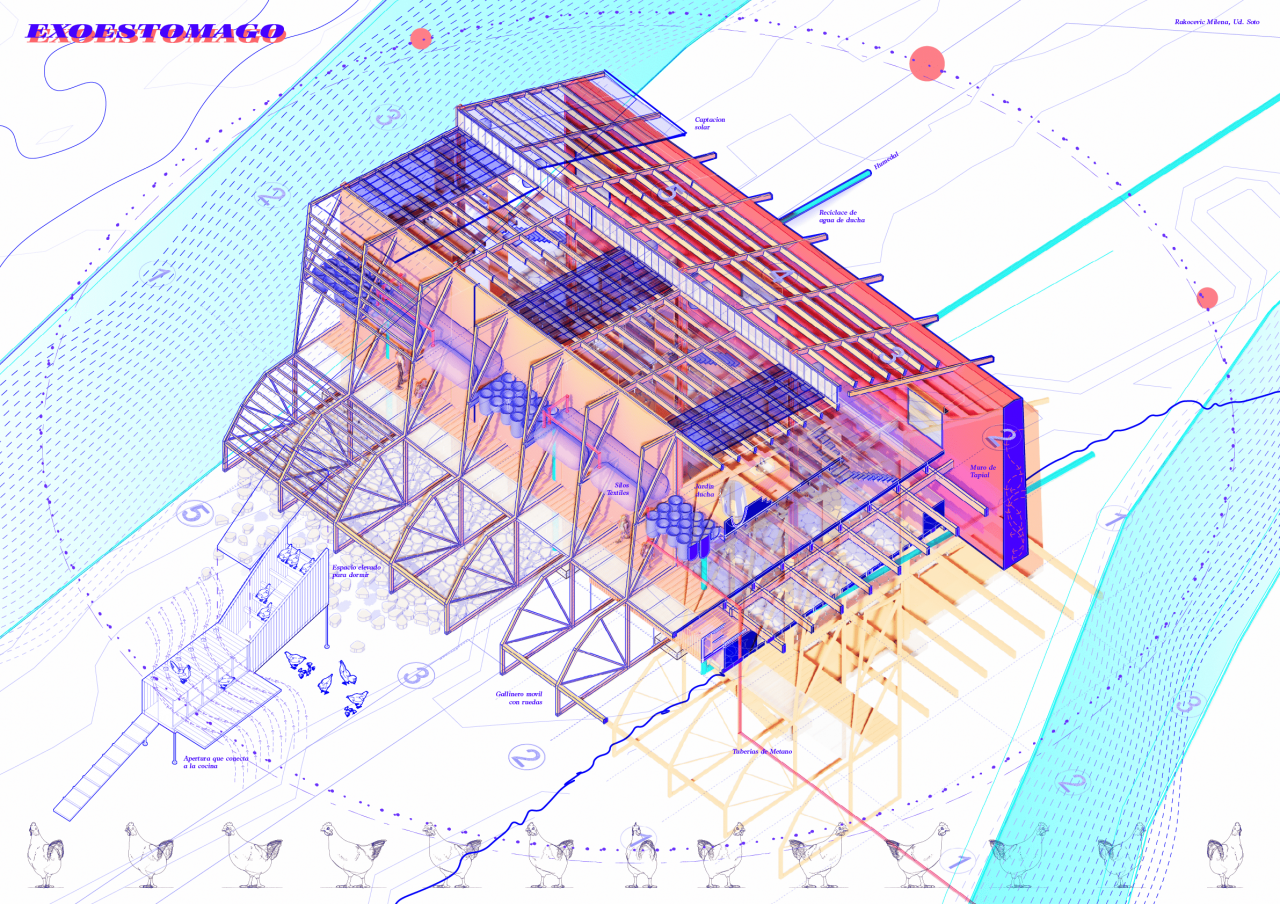
The exo-stomach functions as a collective and visible digestive system, an intermediate space between the domestic and the productive, the interior and the landscape, between the human and the non-human. This building layer hosts the perimary material transformation devices: composting, vermicomposting, biodigesters, drying spaces, aquaponics, productive gardens, apiculture, stables and chicken coops. The spaces are predominantly non-climatized, parallely serving as a climatic buffer layer for humiddity and heat.
Exo-stomach does not only process waste and food but politically exposes the metabolism of everyday life, questioning contemporary urban models and proposing an architecture that digests, breathes, transforms, and regenerates.
The territory is progressively transformed through the practice of agroforestry, proposing an edible forest paired with productive gardens and aquaponics systems, where production and regeneration coexist. The cycle of PRODUCE - PROCESS - CONSUME - DIGEST - EVACUATE - TRANSFORM - REGENERATE is the heart of the project and is tightley intertwined both with the bulding program and its spatial organisation, as well as all the agents interacting with it, representing a cycle that could be extrapolated to any organic process.
The project is structured through different agents that participate in the shared metabolism:
Pollinating agents (bees, butterflies, birds)
Livestock agents (cows, sheep, chickens)
Detritivorous agents (worms, bacteria, fungi)
Automating agents (machinery, digitally monitored systems)
Human agents, not as the center of the system, but as a part of a whole
The exo-stomach functions as a collective and visible digestive system, an intermediate space between the domestic and the productive, the interior and the landscape, between the human and the non-human. This building layer hosts the perimary material transformation devices: composting, vermicomposting, biodigesters, drying spaces, aquaponics, productive gardens, apiculture, stables and chicken coops. The spaces are predominantly non-climatized, parallely serving as a climatic buffer layer for humiddity and heat.
Exo-stomach does not only process waste and food but politically exposes the metabolism of everyday life, questioning contemporary urban models and proposing an architecture that digests, breathes, transforms, and regenerates.
- 00 - Description
- 01 - Diagrama metabólico
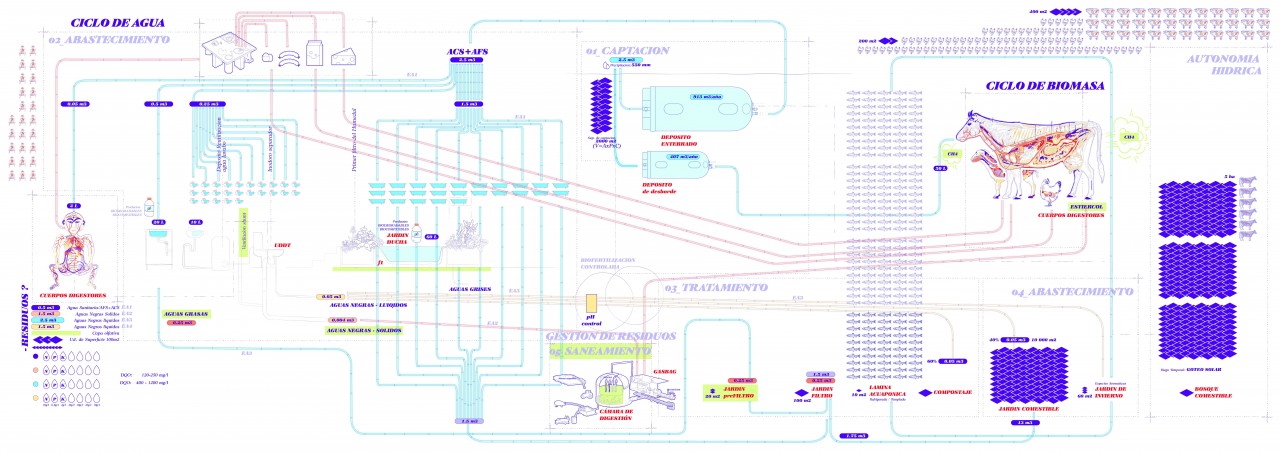
- 02 - Ciclo agua biomasa
- 03 - Exoestómago
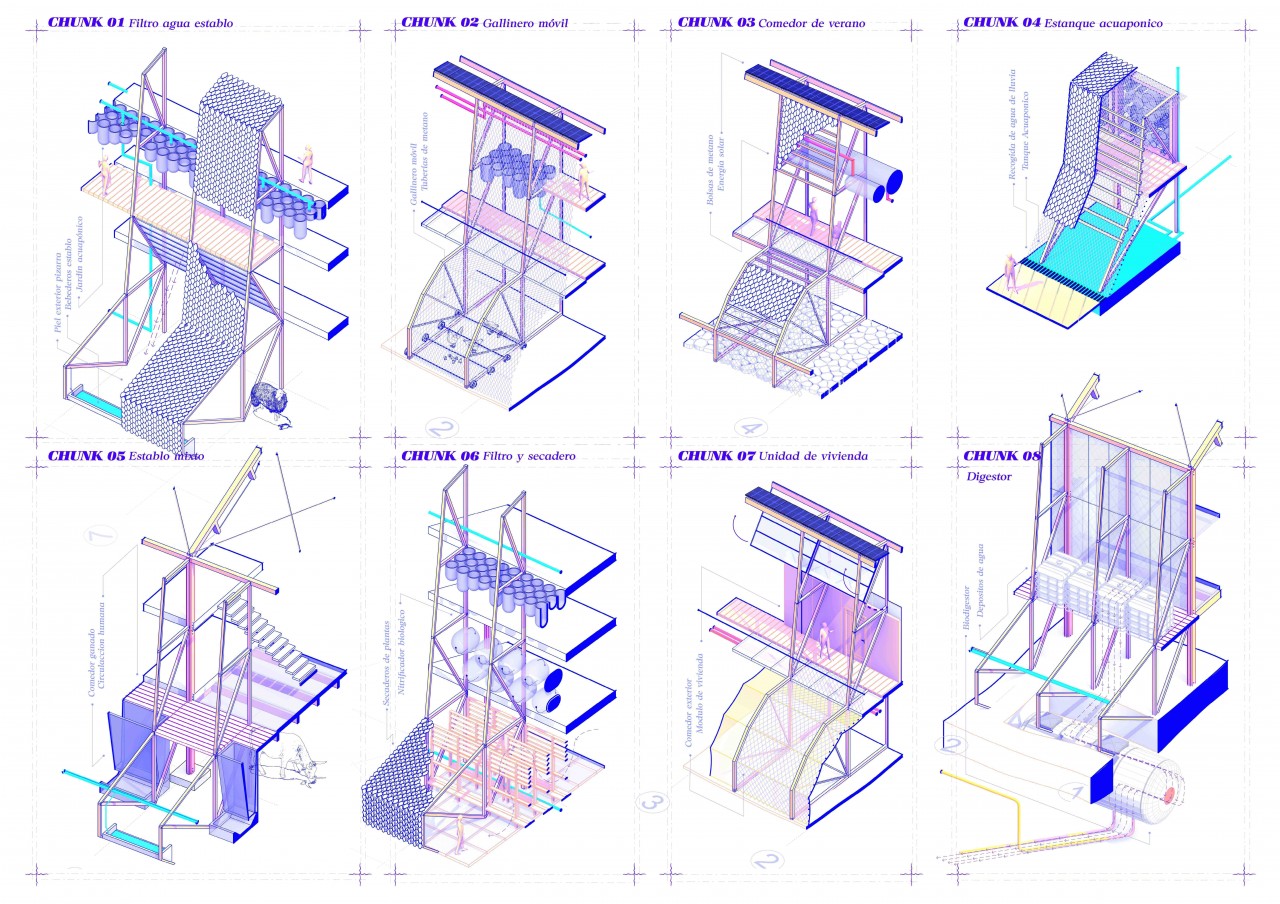
- 04 - Chunks
- 05 - Flujos plantas