
haus der materialisierung
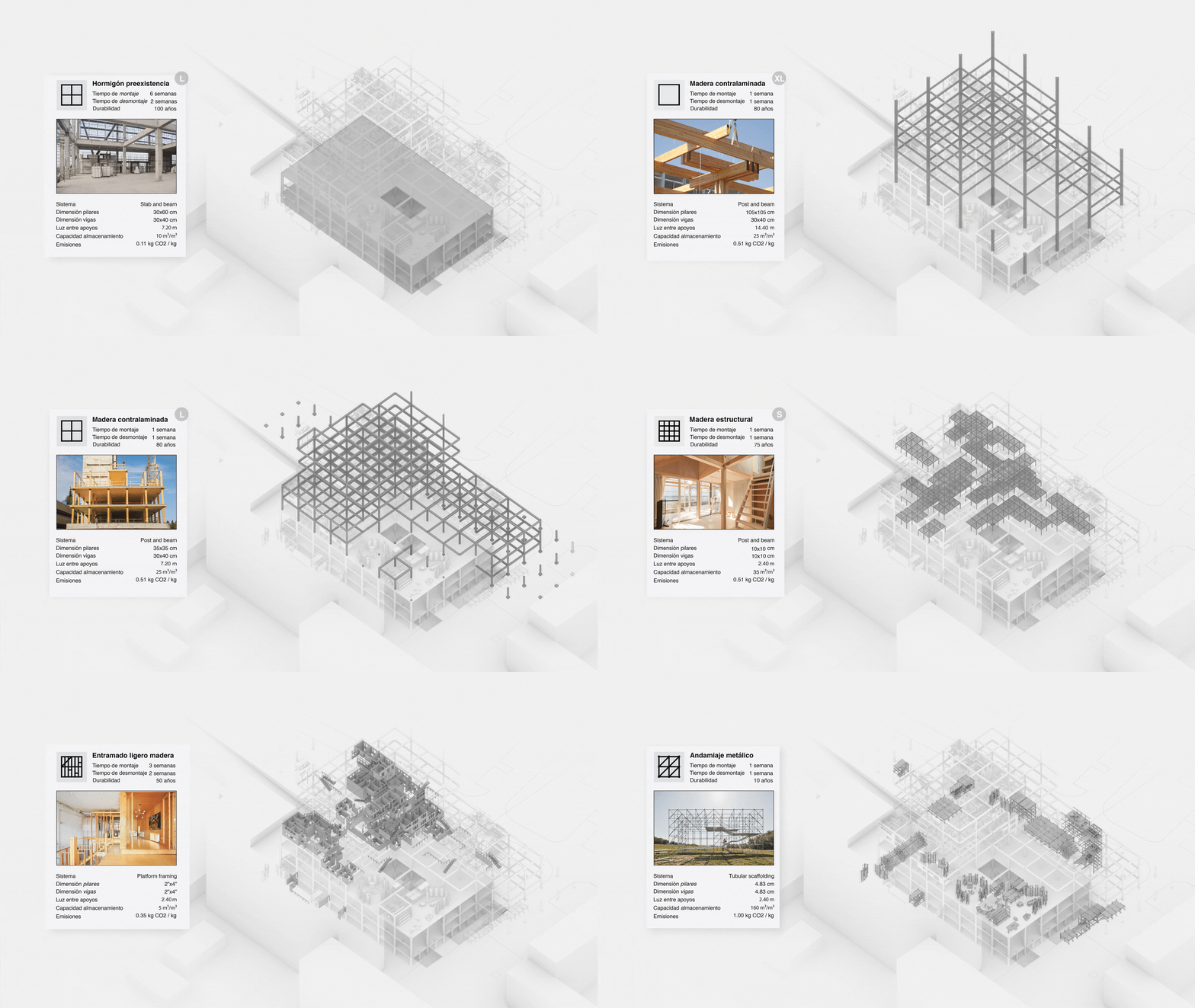
During this course, we worked on the renovation of an obsolete office building from Haus der Statistik, a building complex in Berlin from 1968. I tackle the project as an opportunity to explore how architecture may overcome obsolescence states by being able to constantly evolve. Structurally, the project consists of a series of interrelated systems that take advantage of combining different materialities. This offers different overlapping dimensional and temporal scales for the building to evolve due to their varying degrees of solidity.
The elements of the architecture are organized with a series of systems, like the skin, the services, the communications, or the space plan systems, which allow for determining their different possibilities of behavior and placement along changing states. The building and the interior of the project are managed following the main principles of german Baugruppes, but also working on different scales that overlap, similar to the organizational system for the territory of a country, with a series of principles that allow multiple ways of inhabiting and of density to coexist, promoting the aspect of community within the users. An important process that allows for all of these transformations to take place is managing the materiality of the whole building since the construction site must be integrated within the project. A series of specially designated spaces on the ground floors such as workshops and storage areas are used for processing the material brought in from the city, which once transformed into the modular elements of the architecture is transported all along the project with a system of cranes and lifts. After, once the material has aged or is not needed anymore this also allows for it to be easily dismantled and recycled.
The elements of the architecture are organized with a series of systems, like the skin, the services, the communications, or the space plan systems, which allow for determining their different possibilities of behavior and placement along changing states. The building and the interior of the project are managed following the main principles of german Baugruppes, but also working on different scales that overlap, similar to the organizational system for the territory of a country, with a series of principles that allow multiple ways of inhabiting and of density to coexist, promoting the aspect of community within the users. An important process that allows for all of these transformations to take place is managing the materiality of the whole building since the construction site must be integrated within the project. A series of specially designated spaces on the ground floors such as workshops and storage areas are used for processing the material brought in from the city, which once transformed into the modular elements of the architecture is transported all along the project with a system of cranes and lifts. After, once the material has aged or is not needed anymore this also allows for it to be easily dismantled and recycled.




- 00 - Description
- 01 - Interrelación
- 02 - Organización
- 03 - Interescalaridad
- 04 - Sistema Organizativo
- 05 - Posibilidades
- 06 - Análisis Densidad
- 07 - Estrategias Urbanas
- 08 - Ejemplo Planta
- 09 - Ejemplo Sección
- 10 - Superposición de uso
- 11 - Video